
The Impact of Solar Inverters on Renewable Energy Efficiency
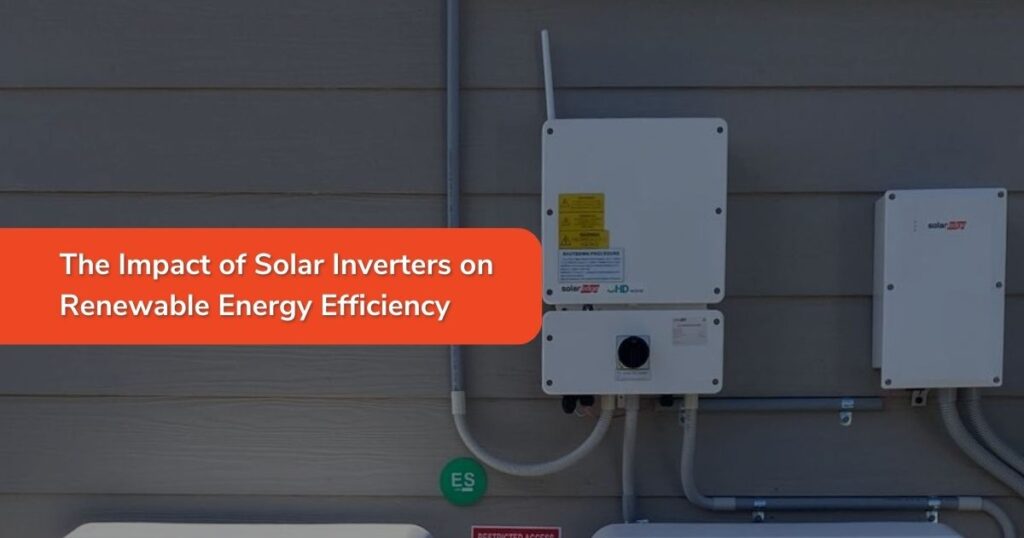
The Impact of Solar Inverters on Renewable Energy Efficiency Smart Energy Answers June 3, 2026 Australia’s embrace of renewable energy sources has seen a surge in solar power’s popularity. But beyond just slapping some panels on a rooftop, the real game-changer is the often-overlooked hero, the solar inverter. This vital component can make or break a solar energy system’s efficiency, making it essential to understand its role in enhancing our green energy footprint. What are Solar Inverters? Solar inverters are the backbone of a solar energy system. They convert the direct current, or DC, output from solar panels into usable alternating current, or AC, electricity. In an age when we’re striving for greater energy independence and sustainability, their role in the seamless integration of solar power into our daily lives cannot be overstated. Types of Solar Inverters Solar inverters come in a variety of configurations, each with its own set of advantages and applications. The three most common types are string inverters, microinverters, and power optimisers. String Inverters String inverters are the most traditional type, often used with multiple solar panels wired together in series. They’re efficient and cost-effective for larger installations but can be prone to energy loss due to shading or panel mismatch. Microinverters Microinverters, utilising Module-Level Power Electronics, are compact inverters that are connected to each solar panel. They are highly regarded for their ability to optimise the output of individual panels, resulting in improved efficiency, particularly in installations where shading is a significant factor. Power Optimisers Power optimisers utilise Module-Level Power Electronics and are connected to individual solar panels. They operate similarly to microinverters but still rely on a central inverter, offering a balance between the advantages of string inverters and microinverters. Impact on Renewable Energy Efficiency Solar inverters play a crucial role in determining just how much usable energy your solar array delivers. Their impact on renewable energy efficiency is threefold. Increased Energy Production By converting DC into AC electricity optimally, solar inverters maximise energy output from solar panels. This means homeowners and businesses can harness more power from the sun, reducing their reliance on less clean energy sources. Improved System Performance and Reliability A high-quality solar inverter ensures the entire system operates at peak performance. This, coupled with advances in inverter technology such as monitoring and control features, significantly improves the system’s reliability by quickly identifying and addressing issues. Enhancing Grid Stability and Reducing Energy Losses Modern solar inverters can support the stability of the electricity grid, particularly during peak demand times. They achieve this by managing voltage and providing power factor support. This grid support also helps in lowering energy losses, translating to a more efficient distribution system. Factors to Consider when Choosing a Solar Inverter Selecting the right solar inverter is a decision that should not be taken lightly. Several factors need to be weighed to ensure optimal performance and longevity of your solar system. Efficiency Ratings Inverter efficiency is a critical factor. Look for inverters with high European efficiency ratings, which represent the inverter’s ability to convert solar energy into electricity. High efficiency ratings mean better performance and more energy savings over time. Durability and Warranty Solar inverters are often exposed to harsh environmental conditions, so their durability and warranty terms are vital. A sturdy inverter with a reasonable warranty period can provide peace of mind and maintenance-free operation. Compatibility with Solar Panels and System Design An inverter must be compatible with the solar panels it powers and should be chosen based on the system’s design and goals. For instance, microinverters are great for systems subject to shading, while string inverters might be more suitable for unobstructed installations. Case Studies and Examples To drive home the point, it’s important to look at real-world examples of successful solar inverter installations. In the Australian context, various case studies can showcase the tangible benefits, such as increased energy savings and improved return on investment. One notable case study is this local business’ transition to solar power, detailing how the choice of solar inverters impacted energy efficiency, sustainability, and cost-effectiveness. Conclusion As Australia continues to adopt solar energy solutions, understanding the role of solar inverters is paramount. These unsung heroes are pivotal in the efficiency and success of your renewable energy projects. It pays to do your research and invest in a reliable inverter that will maximise your solar energy and help transition toward a greener tomorrow. Ready to make the switch to solar and need guidance on the best solar inverter for your needs? Contact Smart Energy Answers today! Our expert team will help you navigate the options and tailor a solution that maximises your renewable energy efficiency.
Optimising Solar Energy Output with Advanced Inverter Technology
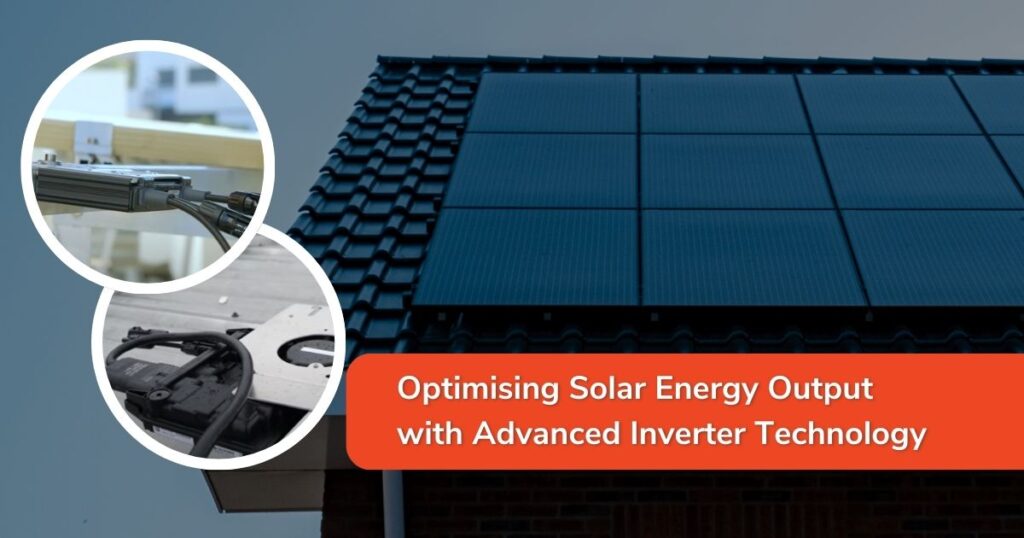
Optimising Solar Energy Output with Advanced Inverter Technology Smart Energy Answers June 3, 2026 Australia, with its abundant sunlight, is an ideal hub for harnessing solar energy. For homeowners and renewable energy enthusiasts, it’s crucial to stay abreast of advancements in technology that can amplify the benefits of solar power. In this article, we delve into the transformative role of advanced solar inverters, focusing on smart solar solutions such as module-level power electronics. Understanding Solar Energy Essentials To grasp the significance of advanced inverters, let’s first revisit the basics of solar energy. Solar panels convert sunlight into electricity, with inverters playing a vital role in transforming the generated direct current, or DC, into usable alternating current, or AC. The Evolution of Solar Inverter Technology The landscape of solar inverter technology is undergoing a remarkable transformation, marking a significant shift from conventional systems to the era of intelligent and efficient smart solar technology. Traditional inverters, while effective, are gradually making room for a new generation of advanced inverters that integrate cutting-edge features, particularly module-level power electronics. In this evolving scenario, advanced inverters are becoming the cornerstone of solar power systems, introducing a level of sophistication that enhances both efficiency and intelligence. Unlike their traditional counterparts, these advanced inverters are equipped with module-level power electronics, a revolutionary technology that optimises energy production at the level of individual solar panels. This is a game-changer, especially in scenarios where shading or panel mismatch might lead to energy losses. Module-level power electronics empower each solar panel within a system to function optimally, ensuring that even if one panel is affected by shading or doesn’t perfectly match the others, the overall energy output is maximised. This granular level of control and monitoring allows for a more precise and efficient utilisation of the available sunlight, significantly reducing the impact of external factors on the overall performance of the solar power system. The integration of module-level power electronics is akin to introducing a responsive and adaptive nervous system to a solar energy network. It allows the system to continuously assess and respond to variations in light conditions, making instantaneous adjustments to optimise energy production. This level of adaptability ensures that the solar power system operates at its peak efficiency, even in less-than-ideal environmental conditions. Furthermore, the mitigation of losses due to shading or panel mismatch is not just a theoretical advantage. It translates directly into tangible benefits for homeowners and solar enthusiasts. Improved energy production means more electricity generated from the same solar panels, providing a higher return on investment and contributing to a more sustainable and cost-effective energy solution. Key Considerations for Australian Homeowners As proud stewards of renewable energy, Australian homeowners should consider regional factors. Climate and geography significantly influence solar energy production. Moreover, navigating government incentives and rebates tailored for advanced solar technology can substantially offset upfront costs. Choosing the Right Solar Inverter for Your System When selecting a solar inverter, research and comparison are paramount. Smart solar inverters come in various models, each offering unique features. Tailor your choice based on your system’s size and capacity. Seeking guidance from reputable solar energy experts ensures personalised advice aligned with Australian conditions. Conclusion In summary, embracing advanced solar inverters marks a crucial stride in maximising solar energy output. Homeowners and enthusiasts stand to gain from heightened efficiency, real-time monitoring, and an extended system life. Uncover the potential of advanced solar inverters and module-level power electronics today. Reach out to Smart Energy Answers, your partner in shaping a more intelligent and sustainable energy landscape.
Evolution of Solar Inverters: An Innovative Journey
Evolution of Solar Inverters: An Innovative Journey Smart Energy Answers June 3, 2026 In the grand narrative of solar energy, the unsung heroes, solar inverters, are seldom in the spotlight. But step by step, through technological brinkmanship and innovation, these unassuming devices have been pivotal in our quest for renewable power. Join us on a journey through time as we unravel the transformative impact of solar inverters, punctuated by leaps and bounds in efficiency, sustainability, and integration with the modern energy landscape. A Brief on the Evolution’s Significance Before we delve into specific inverter technologies, it’s important to understand their pivotal role. Solar inverters are the workhorses that convert the direct current, or DC, generated by solar panels into the alternating current, or AC, used in our homes and the power grid. Without them, the promise of dawn-to-dusk solar power would remain a mere glimmer. Traditional Solar Inverters In the nascent days of solar power, traditional inverters were as simple as could be. Functioning on the basis of pulse-width modulation, or PWM, these inverters were the first bridge between solar panels and the electrical grid. They featured one string of panels, connecting all the panels on a single string with minimal switches and controls. Drawbacks of Yesteryears These early inverters, while functional, were far from perfect. They operated at the mercy of their weakest link. Shading or malfunctions in a single panel would dramatically reduce the entire system’s output. Additionally, their inability to track maximum power points in individual panels led to significant power losses. String Inverters The second act in the inverter chronicles saw the rise of string inverters. These were a marked improvement, allowing for several strings of panels to be used, dividing the system into multiple channels. This not only improved system efficiency but also made solar operations more flexible and troubleshooting more straightforward. The Benefits of Strings String inverters significantly improved the performance of solar arrays by reducing the impact of individual panel issues. They were a massive step forward, allowing more power from a solar array to be harvested under partially shaded conditions. Microinverters Microinverters were a disruptive innovation. These little wonders brought the inversion process to the individual panel level. Each panel was equipped with its own microinverter, effectively rendering the solar array a centrally non-centralised system that could maximise each panel’s power output independently. Decentralisation and Efficiency With microinverters, the risks associated with a single-point failure were mitigated, and the overall system efficiency was improved. Microinverters made shading concerns a thing of the past, as they allowed each panel to perform at its optimal level regardless of its neighbours’ conditions. Power Optimisers A blend of traditional and modern technologies, power optimisers stepped in to provide a midpoint between group-level inverters and microinverters. Power optimisers, while not inverters in the traditional sense, work in combination with string or central inverters to ensure that individual panels operate at peak capacity. The Middle Ground Power optimisers have enjoyed a surge in popularity due to their retrofit capabilities, improved efficiency, and compatibility with various inverter types. They are an elegant solution to the challenges presented in complex solar arrays without the need for complete system overhauls. Hybrid Inverters As the landscape of home energy solutions changed, so did the needs of the solar industry. Hybrid inverters, also known as battery inverters, arose to integrate solar with energy storage systems. This was particularly important as homes began to seek independence from the grid. Integrating Storage Hybrid inverters are capable of managing inputs and outputs from both solar arrays and storage systems like home batteries. This not only maximises self-consumption but also serves as a lifeline during grid outages, marking a significant step towards energy autonomy. Smart Inverters The most recent chapter in the inverter saga is the advent of smart or grid-tied inverters. These intelligent devices are part of a larger ecosystem. They communicate with the power grid, adjusting their power output in response to grid conditions and energy demand. The Grid’s New Best Friend Smart inverters play a crucial role in the evolution of the grid towards a smart grid. Through features like voltage and frequency control, these inverters help stabilise the grid in the face of intermittent renewable power sources, like solar, and ever-changing consumer energy needs. Conclusion The story of solar inverters is one of relentless innovation and the persistent pursuit of a sustainable energy future. As we stand on the cusp of the next technological frontier, it’s clear that these pieces of hardware, once mere facilitators of energy conversion, are now integral to the fabric of our adaptive, eco-conscious world. For homeowners and businesses, the message is clear: the inverter you choose is not just a technical choice, but a strategic one that can significantly affect your long-term energy goals. Embracing the latest inverter technologies will not only future-proof your solar investment but also propel the green energy movement forward. At Smart Energy Answers, we stand at the intersection of innovation and implementation, ready to equip you with the most cutting-edge inverter solutions. Our team of experts is poised to guide you through the solar journey, from exploration to installation. The time has never been more opportune to join the renewable revolution. Make the call to action live in your home. Install solar panels or a solar battery today and step into a cleaner, brighter energy future.
How Solar Inverters Contribute to Energy Savings in Your Home
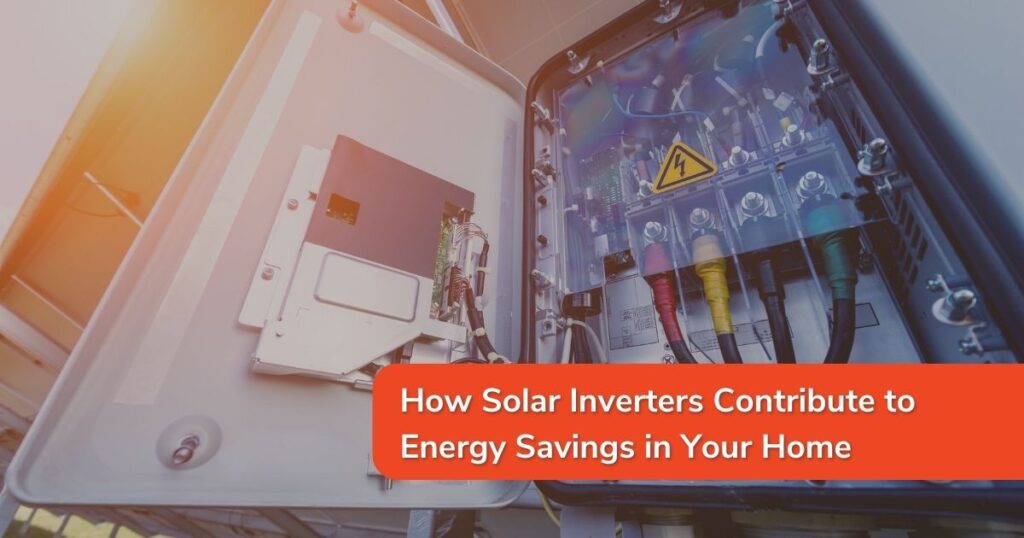
How Solar Inverters Contribute to Energy Savings in Your Home Smart Energy Answers June 3, 2026 As the Australian push for renewable energy gains strength, many homeowners are turning to solar power as a way to save money on their electricity bills and contribute positively to the environment. Central to any solar power system is the solar inverter, a vital component that converts the direct current, or DC, generated by solar panels into the alternating current, or AC, that powers the appliances in your home. But just how significant is the role of these small, boxy units in your quest for energy savings? Let’s shine a light on the sun-spun benefits that await within your home’s solar power system. Understanding Solar Inverters Solar inverters are the unsung heroes of residential solar power. They take the raw electricity generated by your solar panels and transform it into a usable form. Without them, the energy produced by the sun would be inaccessible to your regular household electronics. Their role is crucial not only for day-to-day energy consumption but also for feeding back into the grid, potentially earning you credit through feed-in tariffs, or FiTs. What Do They Do? Solar panels harvest sunlight and convert it into DC electricity. This energy flows through the solar inverter, where it’s turned into the AC electricity used by your appliances. Modern inverters with Module-Level Power Electronics, or MLPE, also harness Maximum Power Point Tracking, or MPPT, technology, enhancing energy production by ensuring that the system runs at its most efficient. Benefits of Solar Inverters The installation of a solar inverter in your home leads to a cascade of benefits, propelling your household toward a more sustainable and economical energy future. Increased Energy Efficiency By converting DC electricity to AC with minimal loss, solar inverters play a key role in your system’s overall efficiency. Newer models are designed to maximise the yield from your solar panels, ensuring that you make the most of every ray of sunshine. Reduction in Electricity Bills The Australian sun, a high yield, but earning you a high bill? A solar inverter could be the answer. By enabling the use of self-generated solar power, inverters can slash your dependence on the grid. If properly sized and optimally positioned, solar power systems could potentially eliminate your electricity bill. Environmental Impact and Sustainability Solar-powered homes significantly reduce their carbon footprint by cutting down on the greenhouse gas emissions associated with grid electricity. Solar inverters are a cornerstone of this eco-friendly approach, as they are instrumental in making solar energy a viable and greener choice. Different Types of Solar Inverters Not all solar inverters are created equal. Outdated models may not offer the efficiency and features of newer systems. Here’s a glimpse of the primary inverter types found in modern residential solar setups. String Inverters String inverters, the traditional workhorses of solar power systems, are connected to multiple solar panels wired in series, also known as strings. Despite being the oldest technology, they offer cost-effective and reliable performance for larger systems. However, a drawback is that if one panel fails, it affects the entire string. Microinverters Microinverters, on the other hand, are mounted on the back of individual solar panels. Unlike string inverters, each panel operates independently, which not only improves potential energy production but also reduces the risk of system-wide malfunctions. In the event of a panel failure, the other panels continue to operate at their maximum potential. Power Optimisers Power optimisers, similar to microinverters, work at the module level. However, instead of converting energy to AC, they optimise the DC power output. This offers some of the advantages of microinverters while still utilising a centralised inverter for energy conversion. In the case of a panel failure, the remaining panels can still operate at their maximum potential. Installation and Maintenance Thinking about going solar? The installation of your solar inverter is not a DIY project. Professional installers ensure the unit is not only placed correctly but also wired and programmed to suit your specific energy needs. Considerations for Installation The efficiency and longevity of your inverter depend on professional installation. Factors like shading, panel positioning, and the type of inverter chosen can all impact the performance of your solar power system. Regular Maintenance and Monitoring To squeeze the most value from your investment, regular maintenance is key. Monitoring your inverter and solar system performance can flag up issues early, and routine inspections can keep your solar power system running at peak efficiency. Case Studies and Success Stories Numbers speak volumes, and for Australian homeowners, the data often reveals substantial energy savings when a solar inverter enters the picture. Real-world examples like the Kingsford family in NSW, who documented annual savings of over $2,500, showcase the tangible impact of a Smart Solar Home on everyday electricity costs. Conclusion Solar inverters are more than just boxes on your wall. They’re the secret sauce that makes solar power systems hum with energy efficiency and financial savings. For anyone looking to bolster their home’s energy savings and take a powerful step toward environmental responsibility, a quality solar inverter is a non-negotiable part of the package. If you’re ready to harness the power of the sun in your home, Smart Energy Answers is here to guide you through the next steps. Our experts can help you navigate the world of solar energy solutions, ensuring you make an informed and beneficial choice for your household. Get in touch with us to learn more about how solar inverters can revolutionise your approach to home energy. Your brighter, greener tomorrow awaits.
Maximising Benefits of Solar Inverter Technology
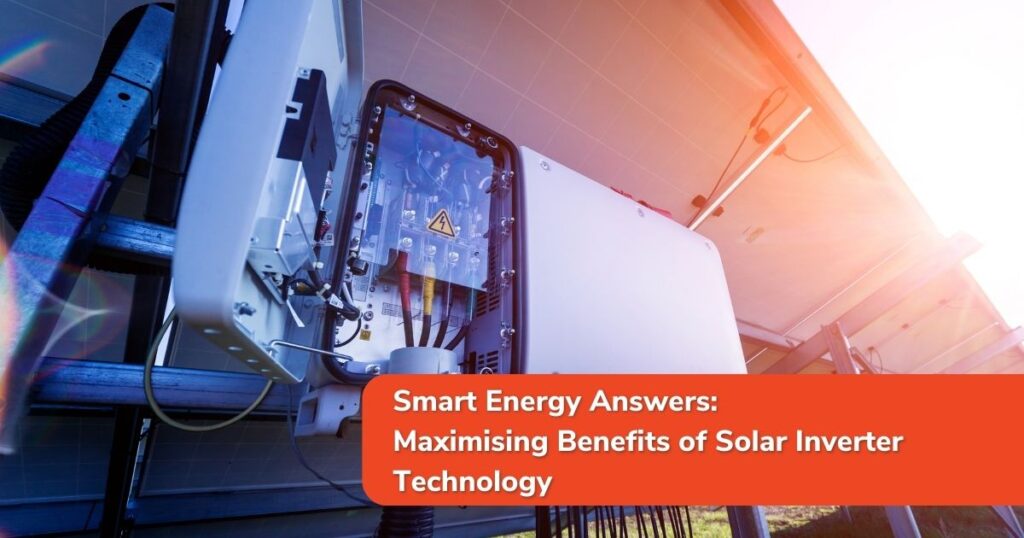
Maximising Benefits of Solar Inverter Technology Smart Energy Answers June 3, 2026 Learn How Solar Inverter Technology Can Enhance Your Solar Energy System Learn about how solar inverter technology can enhance the efficiency and effectiveness of your solar energy system. Importance of Solar Inverters in Photovoltaic Systems Solar inverters play a crucial role in photovoltaic systems by converting the direct current, or DC, generated by solar panels into alternating current, or AC, that can be used to power homes and businesses. Without inverters, the electricity produced by solar panels would be unusable. In addition to converting DC to AC, solar inverters also optimise the power output of solar panels, ensuring maximum efficiency and performance. Furthermore, solar inverters enable the integration of solar energy systems with the electrical grid, allowing for the export of excess energy and the import of electricity when solar generation is insufficient. This seamless connection to the grid ensures a reliable and continuous power supply, making solar energy a viable alternative to traditional fossil fuel-based electricity. What Solar Inverters Do Solar inverters are responsible for converting the DC electricity generated by solar panels into AC electricity that can be used to power homes and businesses. They act as the bridge between the solar panels and the electrical grid, ensuring a smooth and efficient transfer of energy. Without solar inverters, the electricity produced by solar panels would be incompatible with the appliances and devices we use every day. In addition to their role in converting DC to AC, solar inverters also perform other important functions in solar energy generation. They monitor the performance of solar panels, ensuring they are operating at their maximum capacity. They also provide safety features and protection mechanisms, such as overvoltage and overcurrent protection, to safeguard the system from potential damage. Overall, solar inverters are essential components of solar energy systems, enabling the efficient and reliable generation of clean and renewable electricity. The DC to AC Conversion Process The DC to AC conversion process is at the heart of solar inverter technology. When sunlight hits the solar panels, it generates DC electricity. However, most of our electrical appliances and devices run on AC electricity. This is where solar inverters come in. They convert the DC electricity from the solar panels into AC electricity that can be used to power our homes and businesses. The DC to AC conversion process involves several stages. First, the solar inverter receives the DC electricity from the solar panels. It then uses electronic circuitry to convert the DC electricity into AC electricity with the desired voltage and frequency. This AC electricity is then fed into the electrical grid or used to power local loads. It is important to note that the efficiency of the DC to AC conversion process can vary depending on the type and quality of the solar inverter. Choosing a high-quality inverter can maximise the energy output of your solar panels and improve the overall performance of your solar energy system. Grid-Tied, Off-Grid, and Hybrid Inverter Systems Solar inverters come in different types to suit various solar energy system configurations. The three main types of solar inverters are grid-tied, off-grid, and hybrid inverters. Grid-Tied Inverters Grid-tied inverters are the most common type and are designed to work in conjunction with the electrical grid. They allow for the seamless integration of solar energy systems with the grid, enabling the export of excess energy and the import of electricity when solar generation is insufficient. Grid-tied inverters ensure a stable power supply and often come with monitoring capabilities to track energy production and consumption. Off-Grid Inverters Off-grid inverters are used in standalone solar energy systems that are not connected to the electrical grid. These systems are typically found in remote locations where access to the grid is limited or nonexistent. Off-grid inverters are responsible for converting DC electricity from solar panels into AC electricity for immediate use or storage in batteries. They often feature built-in charge controllers and battery management systems to optimise energy storage and utilisation. Hybrid Inverters Hybrid inverters combine the functionalities of both grid-tied and off-grid inverters. They are designed for solar energy systems that are connected to the grid but also have battery storage capabilities. Hybrid inverters allow for the use of solar energy during the day and the storage of excess energy for use during the night or in case of a power outage. They offer the flexibility of grid-tied systems with the added benefit of backup power. Choosing the right type of inverter for your solar energy system depends on your specific needs and requirements. It is important to consult with a qualified solar installer to determine the best inverter solution for your situation. Microinverters: Advantages, Limitations, and Installation Considerations Microinverters are a type of solar inverter that are installed on each individual solar panel instead of being connected to a central inverter. This decentralised design offers several advantages over traditional string inverters. One of the main advantages of microinverters is that they optimise the performance of each individual solar panel. Unlike string inverters, which are affected by shading or malfunctions in one panel, microinverters allow each panel to operate independently. This means that even if one panel is underperforming, the rest of the system can still generate electricity at its maximum capacity. Microinverters also offer improved monitoring capabilities. Since each panel has its own microinverter, it is easier to track the performance of individual panels and identify any issues or malfunctions. This allows for faster troubleshooting and maintenance. However, microinverters also have some limitations. They tend to be more expensive than string inverters, as each panel requires its own microinverter. They also require more complex installation, as each microinverter needs to be mounted on the back of each panel. This can increase installation time and cost. When considering the use of microinverters, it is important to assess the specific requirements of your solar energy system and weigh the advantages against the limitations. Consulting with a qualified solar installer can help you
Maximising Solar Efficiency: Modern Inverters Are Changing the Game
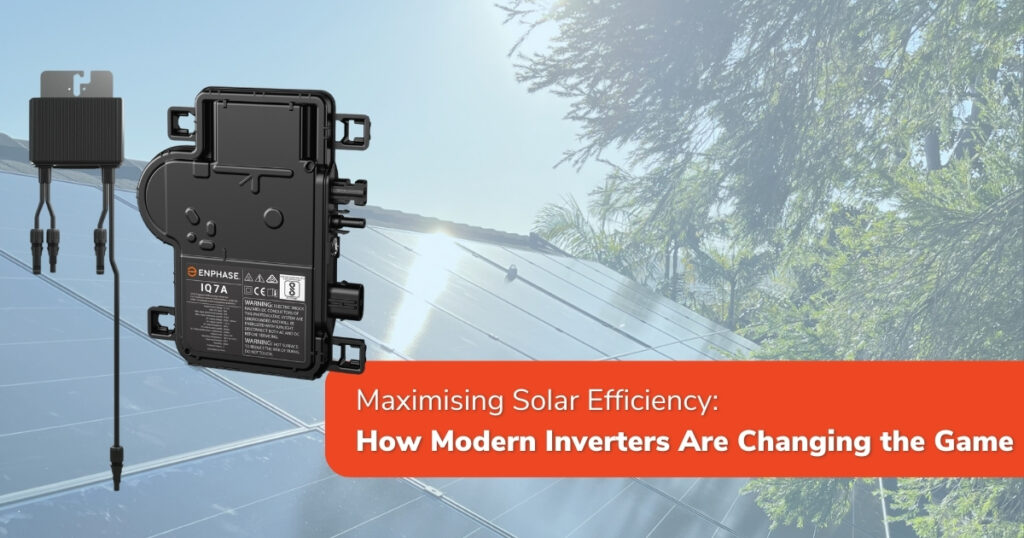
Maximising Solar Efficiency: Modern Inverters Are Changing the Game Smart Energy Answers February 21, 2024 Maximising Solar Efficiency With Modern Inverters Solar energy has emerged as a game-changer in the field of renewable resources, and its viability continues to grow more promising every day. At the heart of this green revolution are the silent heroes of the solar system: inverters. In this informative piece, we’ll explore how modern inverters are playing a crucial role in maximising the efficiency of solar power generation. They are helping pave the way for a future powered by the sun. Understanding Solar Inverters Before exploring the advancements in solar inverter technology, it is important to understand their basic function. A solar inverter, also known as a PV inverter, is an essential component of a solar power system. It is responsible for converting the variable direct current, or DC, output of a photovoltaic, or PV, solar panel into alternating current, or AC, that can be used by most household appliances. The quality and efficiency of this conversion process are critical. Any energy loss during conversion directly reduces the overall energy yield of the system. Traditionally, inverters were designed to perform this conversion with as little loss as possible. However, newer models have taken this concept to an entirely new level. Traditional Inverters vs Modern Inverters Historically, solar inverters were bulky and had limited capabilities. They were built for function over form, which often meant a trade-off between size and efficiency. Early inverters could suffer from significant energy losses due to the inherent inefficiencies of the conversion process. In contrast, modern inverters use cutting-edge technologies to achieve efficiencies nearing 99%. The shift from traditional string inverters to higher-performing Module-Level Power Electronics, or MLPE, such as microinverters and power optimisers, has revolutionised the solar industry. These modern inverters are installed on a per-panel basis, helping ensure each solar panel operates at its optimal capacity, even if one panel is shaded or underperforming. Furthermore, modern inverters are not just more efficient in converting DC to AC. They also introduce smart features that enhance system reliability and overall performance. These features include peak power tracking, where the inverter adjusts the system’s operating voltage and current to help maintain the maximum power point, even during shading or overcast conditions. Benefits of Modern Inverters The move to modern inverters has resulted in a wide range of advantages that were once difficult to achieve with traditional models. Let’s explore some of the key benefits that are making a measurable difference in solar energy systems. Higher Conversion Efficiency The high-efficiency rating of modern inverters means they waste less energy during the conversion process. Essentially, they help maximise every last electron your PV panels can produce. This not only helps reduce your electricity bill, but also ensures you get the most out of every ray of sunlight. Improved Performance in Low-Light Conditions Even optimally positioned and unshaded solar panels may receive direct sunlight for only part of the day. During the remaining hours, they rely on diffuse light. Advanced Maximum Power Point Tracking, or MPPT, algorithms in modern inverters allow the system to work more effectively with this type of light. This helps maintain a high level of power generation, even when direct sunlight is limited. Enhanced Monitoring and Control Capabilities Today’s inverters are equipped with sophisticated monitoring systems, allowing users to keep a precise eye on their system’s performance. This real-time data empowers users to identify and address issues quickly, maximising overall system efficiency. Case Studies Residential Application This project showcases the tangible difference that modern inverter technology can bring to solar energy systems. With 13,246 kWh of clean energy generated per year, this family saves $2,585 annually with smart solar, inverter, and battery technology. In a typical residential setting, an increase in energy production after upgrading to a system with modern inverters can directly translate into substantial savings. These savings, combined with a reduction in greenhouse gas emissions, underline the environmental and economic value of modern inverters. Industrial Scale For manufacturing units, where energy consumption is significantly higher, optimising solar efficiency with modern inverters can deliver major benefits. It not only helps cut costs but also stabilises energy prices, providing long-term financial predictability. Tips for Maximising Solar Efficiency In the quest for ultimate solar efficiency, every small optimisation can make a big difference. Here are some practical tips to help ensure you get the most out of your solar investment. Proper Installation and Positioning Ensure your solar panels are installed by accredited professionals and positioned optimally to receive the maximum amount of sunlight throughout the day. This includes accounting for seasonal changes in the sun’s path. Regular Maintenance and Cleaning Dirt, dust, and debris can accumulate on solar panels over time, reducing their effectiveness. Regular cleaning and maintenance help keep your system operating at peak capacity. Utilising Smart Energy Management Systems Incorporating energy storage solutions and home energy management systems can further enhance the efficiency of your solar setup. These systems allow you to store excess energy for use at night or during peak demand periods. Conclusion The solar industry has seen a surge in efficiency thanks to advancements in inverter technology. With consistent sunlight as a renewable resource and increasingly efficient solar inverters, we are paving the way for a more sustainable energy landscape. Modern inverters will remain at the forefront, helping homeowners and businesses harness the sun’s power more effectively. For a greener tomorrow, discover the right smart energy solutions for you and your family. Talk to our energy experts today.
Old String Inverters versus Micro Inverters & DC optimisers
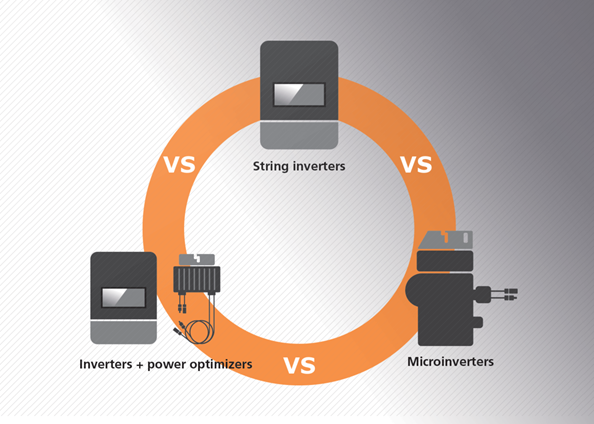
Old String Inverters versus Micro Inverters & DC optimisers Smart Energy Answers February 8, 2024 Types of Solar Inverters There are three main types of inverters currently available for your solar energy system: string inverters, power optimiser systems, and microinverters. Power optimiser systems are also known as string inverters with power optimisers. Power optimisers and microinverters are often collectively referred to as Module-Level Power Electronics, or MLPEs. String inverters are by far the most commonly deployed inverter option globally and make up the majority of the world’s inverter market. However, MLPE technologies have gained market share over the last five years as their costs have come down. String Inverters String inverters are the most cost-effective inverter option available. Traditionally, a solar installation company would propose a string inverter for your system if your roof had limited shading throughout the day and did not face multiple directions, such as a gabled roof. However, thanks to recent hardware and software updates from major string inverter companies, string inverters are now suitable for a wider range of circumstances. How String Inverters Work Your solar panels are arranged into groups connected by strings, which is where the name comes from. You can connect multiple strings of panels to a single centralised inverter, which transforms the DC electricity produced by the panels into usable AC electricity for your home or business. Power Optimisers Power optimiser systems offer many of the same benefits as microinverters. They are often considered a compromise between microinverters and standard string inverters. How Power Optimiser Systems Work Like microinverters, systems with power optimisers have an individual optimiser component located at each panel. However, instead of converting DC electricity to AC electricity at the panel, they condition the DC electricity and send it to a string inverter for conversion. If your roof experiences shade during the day, the panel-level optimisation provided by power optimisers often results in higher system efficiency than using a string inverter alone. Like microinverters, power optimisers not only reduce the impact of panel shading on system performance, but also offer panel-level performance monitoring. Microinverters Microinverters, another form of MLPE, are rapidly gaining popularity, particularly for residential solar panel systems. How Microinverters Work Systems with microinverters typically have an individual microinverter installed on the back of each solar panel. They convert the DC electricity from your solar panels into AC electricity directly on your roof, with no need for a separate string inverter. In most cases, installers mount the microinverters onto the back of the solar panel itself. They can also be placed next to the panel on your solar racking system. Microinverters take Module-Level Power Electronics, or MLPE, to the logical conclusion. While power optimisers aggregate the electricity from your panels and send it to a string inverter for DC to AC conversion, microinverters complete the DC to AC conversion directly at each individual solar panel. As a result, just like power optimiser systems, microinverters also allow you to monitor the performance of individual solar panels. Smart Modules Many microinverter and power optimiser companies are partnering with solar panel manufacturers to create smart modules. Simply put, a smart module is a solar panel with a piece of Module-Level Power Electronics, or MLPE, equipment already integrated into it. This simplifies installation and can help reduce labour costs for installers. Many of the world’s biggest panel manufacturers now have smart module options available.
Micro Inverters & DC optimisers versus traditional String Inverters

Micro Inverters & DC optimisers versus traditional String Inverters Smart Energy Answers March 11, 2022 The Evolution of Solar Inverter Technology When Australia’s Small-scale Renewable Energy Scheme was introduced in 2011, homeowners were very limited by the solar technology available at the time. The majority of solar panels had a capacity of less than 200 W, which has now been doubled by many of today’s models. Solar panels have become progressively bigger and better, but for many years there was very little technological change to the other primary component of a solar system: the inverter. The inverter is designed to do the heavy lifting of converting direct current, or DC, power from the panels into alternating current, or AC, power for use in the home. In the past, the inverter was a relatively unsophisticated box that collected the accumulated power from all the panels for conversion. If one panel was underperforming, that panel could reduce the output of all the other panels in the string. However, homeowners would often never know because the inverter had no way of identifying the issue or pinpointing which panel was faulty. These simple inverters also did not come with remote monitoring, meaning customers could go months before realising their solar system was not working or was severely underperforming. We used to recommend that customers check the small LCD screen on the inverter at least once a week to make sure the system was operating. Today, inverters have come a long way, with major improvements in technology, monitoring solutions, and reliability. The Three Main Types of Solar Inverters There are three types of inverters currently available for solar energy systems: string inverters, power optimised systems, and microinverters. Power optimisers and microinverters are often collectively referred to as Module-Level Power Electronics, or MLPEs. At Smart Energy Answers, we believe the smart way to install solar in 2022 is with MLPE technology. We recommend two of the leading brands in this space: SolarEdge and Enphase. Both are global technology companies listed on the New York market. MLPE technology is one of the safest and best-performing solutions available, and it is expected to become increasingly common as regulations and standards continue to evolve. String inverters remain the most widely deployed inverter option globally because they have been used for many years. However, MLPE technologies have continued to gain market share over the last five years as costs have come down. We understand that customers researching solar can feel confused by the many alternatives and quotes available from different companies promoting different products. It can be overwhelming. At Smart Energy Answers, we assist customers in making informed decisions when looking into solar, and our job is to make the process simple to understand. To help simplify the comparison, we will use a strong analogy. If you were buying a new phone today, in 2022, would you consider a phone from Option A or Option B below? Option A Option B If you answered Option B, you can now better understand the difference in value between a string inverter and a solar energy solution powered by MLPE technology. You may pay more upfront for Option B, but you also get much more value, performance, safety, and long-term monitoring capability from it. Important note: Do not believe salespeople who say you do not need microinverters or power optimisers simply because you do not have trees around your house. Solar panels can be affected by shade and obstruction in many ways, including trees, clouds, birds, dust, vent pipes, roof gables, chimneys, air-conditioning units, and other rooftop structures. MLPE technology can provide a safer, more efficient, better-performing, more flexible, more innovative, and easier-to-monitor solar solution in many circumstances. Simply smarter.
One Gigawatt Of Inverter Installations | Sungrow | SEA
One Gigawatt Of Inverter Installations | Sungrow | SEA Smart Energy Answers June 4, 2026 Sungrow Reaches Impressive Milestone: One Gigawatt of Inverter Installations With more than 20 years in the solar industry, Sungrow has become one of the major players in the Australian marketplace. Their innovative, reliable, and cost-effective inverters have become a favourite with customers and installers alike. The company is extremely proud of reaching the 1GW milestone, which is the equivalent of installing 200,000 five-kilowatt inverters. They see it as a testament to the quality of their products and their reputation for durability in the harsh Australian climate. In an industry where five-year warranties are the norm, Sungrow offers a 10-year warranty on most of their inverter range, showing they are more than confident in backing up their claims of longevity. Internationally, Sungrow has installed over 120GW, and their annual turnover has reached almost $2 billion. They shipped the second-highest number of inverters worldwide in 2019. With such outstanding performance and growth, the future of the company looks very good. Customers like to know that the company they invest in will still be around to service that great warranty. Smart Energy Answers is a member of the exclusive Sungrow Dealership Program, and we highly recommend their products for the reasons already mentioned. As installers, we appreciate the reliability of Sungrow inverters because we don’t have to go back to site to make repairs or replacements. No problems means happy customers, and that is our ultimate goal. Contact us now if you’re looking to upgrade your existing inverter or if you prefer a Sungrow inverter as part of your new solar package.
Sungrow Premium Partner – Smart Energy Answers
Sungrow Premium Partner – Smart Energy Answers Smart Energy Answers March 18, 2020 Sungrow Inverters: Empowering Homes with Cleaner and More Affordable Energy Smart Energy Answers is proud to be an authorised dealer of Sungrow inverters. This initiative enables Smart Energy Answers to continue empowering households to transition to cleaner and more affordable energy. Our customers can also benefit from Sungrow’s outstanding 12-year warranty offer, giving them peace of mind that they will receive high-quality products and professional installation services. Here, we discuss the key benefits of Sungrow inverters and what makes them unique. About Sungrow Sungrow is one of the three largest inverter manufacturers in the world. The company is a leader in the research and development of solar inverters and has one of the largest dedicated research and development, or R&D, teams in the industry. Sungrow has a broad product portfolio for utility-scale, commercial, and residential applications. As of June 2019, Sungrow products powered installations in more than 60 countries. The company has also launched one of the world’s largest inverter factories, with production capacity expected to reach 50 GW once fully operational. Sungrow has an excellent reputation for service and quality. It is also one of the few inverter companies to be ranked as “100% bankable” by BloombergNEF in its latest survey. What Makes Sungrow Inverters So Unique? The Sungrow Diamond Inverter uses state-of-the-art transformerless inverter technology. Without a transformer, the inverter is lighter, quieter, and more compact. It is built to withstand Australian conditions and features a robust design made from high anti-corrosion aluminium alloy casting. The inverter also comes with an outstanding 10-year manufacturer warranty. Sungrow’s hybrid inverter, on the other hand, performs the work of a grid-tied inverter and a battery-based inverter at the same time. This makes it a great value option for households looking to add battery storage in the future. Sungrow inverters are also integrated with an energy management system that can monitor household energy consumption. Hybrid inverters are becoming increasingly popular as battery storage can help improve energy savings and provide protection during grid outages. Smart Energy Answers looks forward to strengthening our partnership with Sungrow and further accelerating the growth of solar energy in Australia. Through this partnership, we aim to empower more people to make the switch to cleaner and more affordable energy. Smart Energy Answers is one of Australia’s leading energy solutions providers. We are Australian owned and operated, with nearly a decade of experience in the solar energy industry. We have completed over 3,000 residential and commercial installations, bringing together the knowledge and professionalism needed to deliver high-quality energy solutions. Our team goes above and beyond to ensure the highest level of customer satisfaction. Contact Smart Energy Answers today on 1300 948 619 to learn more about Sungrow and other high-performance inverters.