Maximising Solar Efficiency: Modern Inverters Are Changing the Game
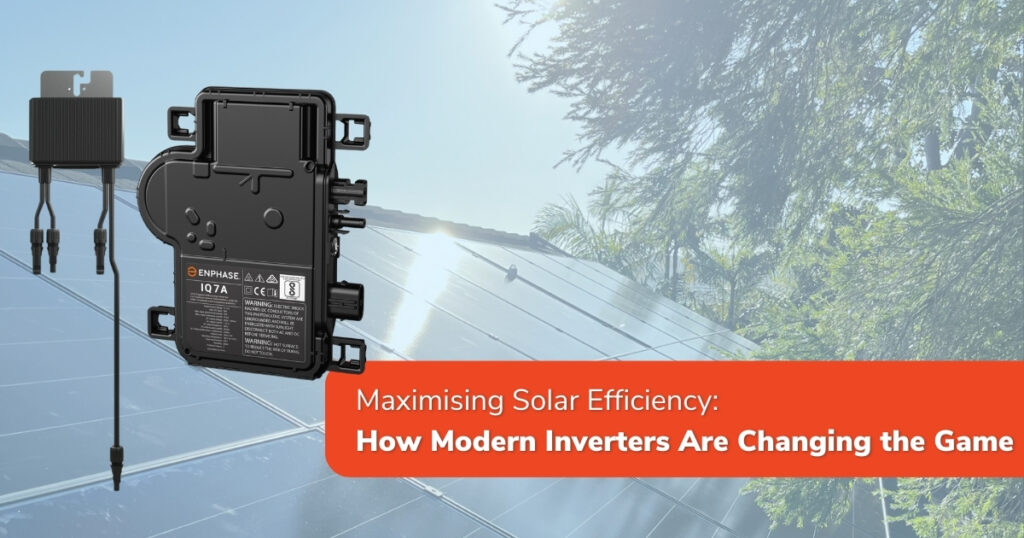
Maximising Solar Efficiency: Modern Inverters Are Changing the Game Smart Energy Answers February 21, 2024 Maximising Solar Efficiency With Modern Inverters Solar energy has emerged as a game-changer in the field of renewable resources, and its viability continues to grow more promising every day. At the heart of this green revolution are the silent heroes of the solar system: inverters. In this informative piece, we’ll explore how modern inverters are playing a crucial role in maximising the efficiency of solar power generation. They are helping pave the way for a future powered by the sun. Understanding Solar Inverters Before exploring the advancements in solar inverter technology, it is important to understand their basic function. A solar inverter, also known as a PV inverter, is an essential component of a solar power system. It is responsible for converting the variable direct current, or DC, output of a photovoltaic, or PV, solar panel into alternating current, or AC, that can be used by most household appliances. The quality and efficiency of this conversion process are critical. Any energy loss during conversion directly reduces the overall energy yield of the system. Traditionally, inverters were designed to perform this conversion with as little loss as possible. However, newer models have taken this concept to an entirely new level. Traditional Inverters vs Modern Inverters Historically, solar inverters were bulky and had limited capabilities. They were built for function over form, which often meant a trade-off between size and efficiency. Early inverters could suffer from significant energy losses due to the inherent inefficiencies of the conversion process. In contrast, modern inverters use cutting-edge technologies to achieve efficiencies nearing 99%. The shift from traditional string inverters to higher-performing Module-Level Power Electronics, or MLPE, such as microinverters and power optimisers, has revolutionised the solar industry. These modern inverters are installed on a per-panel basis, helping ensure each solar panel operates at its optimal capacity, even if one panel is shaded or underperforming. Furthermore, modern inverters are not just more efficient in converting DC to AC. They also introduce smart features that enhance system reliability and overall performance. These features include peak power tracking, where the inverter adjusts the system’s operating voltage and current to help maintain the maximum power point, even during shading or overcast conditions. Benefits of Modern Inverters The move to modern inverters has resulted in a wide range of advantages that were once difficult to achieve with traditional models. Let’s explore some of the key benefits that are making a measurable difference in solar energy systems. Higher Conversion Efficiency The high-efficiency rating of modern inverters means they waste less energy during the conversion process. Essentially, they help maximise every last electron your PV panels can produce. This not only helps reduce your electricity bill, but also ensures you get the most out of every ray of sunlight. Improved Performance in Low-Light Conditions Even optimally positioned and unshaded solar panels may receive direct sunlight for only part of the day. During the remaining hours, they rely on diffuse light. Advanced Maximum Power Point Tracking, or MPPT, algorithms in modern inverters allow the system to work more effectively with this type of light. This helps maintain a high level of power generation, even when direct sunlight is limited. Enhanced Monitoring and Control Capabilities Today’s inverters are equipped with sophisticated monitoring systems, allowing users to keep a precise eye on their system’s performance. This real-time data empowers users to identify and address issues quickly, maximising overall system efficiency. Case Studies Residential Application This project showcases the tangible difference that modern inverter technology can bring to solar energy systems. With 13,246 kWh of clean energy generated per year, this family saves $2,585 annually with smart solar, inverter, and battery technology. In a typical residential setting, an increase in energy production after upgrading to a system with modern inverters can directly translate into substantial savings. These savings, combined with a reduction in greenhouse gas emissions, underline the environmental and economic value of modern inverters. Industrial Scale For manufacturing units, where energy consumption is significantly higher, optimising solar efficiency with modern inverters can deliver major benefits. It not only helps cut costs but also stabilises energy prices, providing long-term financial predictability. Tips for Maximising Solar Efficiency In the quest for ultimate solar efficiency, every small optimisation can make a big difference. Here are some practical tips to help ensure you get the most out of your solar investment. Proper Installation and Positioning Ensure your solar panels are installed by accredited professionals and positioned optimally to receive the maximum amount of sunlight throughout the day. This includes accounting for seasonal changes in the sun’s path. Regular Maintenance and Cleaning Dirt, dust, and debris can accumulate on solar panels over time, reducing their effectiveness. Regular cleaning and maintenance help keep your system operating at peak capacity. Utilising Smart Energy Management Systems Incorporating energy storage solutions and home energy management systems can further enhance the efficiency of your solar setup. These systems allow you to store excess energy for use at night or during peak demand periods. Conclusion The solar industry has seen a surge in efficiency thanks to advancements in inverter technology. With consistent sunlight as a renewable resource and increasingly efficient solar inverters, we are paving the way for a more sustainable energy landscape. Modern inverters will remain at the forefront, helping homeowners and businesses harness the sun’s power more effectively. For a greener tomorrow, discover the right smart energy solutions for you and your family. Talk to our energy experts today.
Old String Inverters versus Micro Inverters & DC optimisers
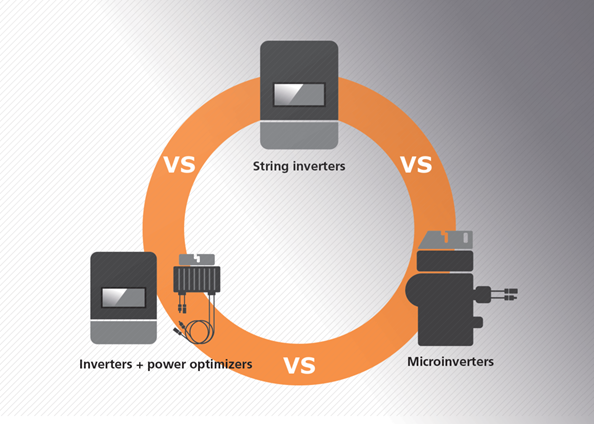
Old String Inverters versus Micro Inverters & DC optimisers Smart Energy Answers February 8, 2024 Types of Solar Inverters There are three main types of inverters currently available for your solar energy system: string inverters, power optimiser systems, and microinverters. Power optimiser systems are also known as string inverters with power optimisers. Power optimisers and microinverters are often collectively referred to as Module-Level Power Electronics, or MLPEs. String inverters are by far the most commonly deployed inverter option globally and make up the majority of the world’s inverter market. However, MLPE technologies have gained market share over the last five years as their costs have come down. String Inverters String inverters are the most cost-effective inverter option available. Traditionally, a solar installation company would propose a string inverter for your system if your roof had limited shading throughout the day and did not face multiple directions, such as a gabled roof. However, thanks to recent hardware and software updates from major string inverter companies, string inverters are now suitable for a wider range of circumstances. How String Inverters Work Your solar panels are arranged into groups connected by strings, which is where the name comes from. You can connect multiple strings of panels to a single centralised inverter, which transforms the DC electricity produced by the panels into usable AC electricity for your home or business. Power Optimisers Power optimiser systems offer many of the same benefits as microinverters. They are often considered a compromise between microinverters and standard string inverters. How Power Optimiser Systems Work Like microinverters, systems with power optimisers have an individual optimiser component located at each panel. However, instead of converting DC electricity to AC electricity at the panel, they condition the DC electricity and send it to a string inverter for conversion. If your roof experiences shade during the day, the panel-level optimisation provided by power optimisers often results in higher system efficiency than using a string inverter alone. Like microinverters, power optimisers not only reduce the impact of panel shading on system performance, but also offer panel-level performance monitoring. Microinverters Microinverters, another form of MLPE, are rapidly gaining popularity, particularly for residential solar panel systems. How Microinverters Work Systems with microinverters typically have an individual microinverter installed on the back of each solar panel. They convert the DC electricity from your solar panels into AC electricity directly on your roof, with no need for a separate string inverter. In most cases, installers mount the microinverters onto the back of the solar panel itself. They can also be placed next to the panel on your solar racking system. Microinverters take Module-Level Power Electronics, or MLPE, to the logical conclusion. While power optimisers aggregate the electricity from your panels and send it to a string inverter for DC to AC conversion, microinverters complete the DC to AC conversion directly at each individual solar panel. As a result, just like power optimiser systems, microinverters also allow you to monitor the performance of individual solar panels. Smart Modules Many microinverter and power optimiser companies are partnering with solar panel manufacturers to create smart modules. Simply put, a smart module is a solar panel with a piece of Module-Level Power Electronics, or MLPE, equipment already integrated into it. This simplifies installation and can help reduce labour costs for installers. Many of the world’s biggest panel manufacturers now have smart module options available.
3 Key Considerations for Installing Solar Panels
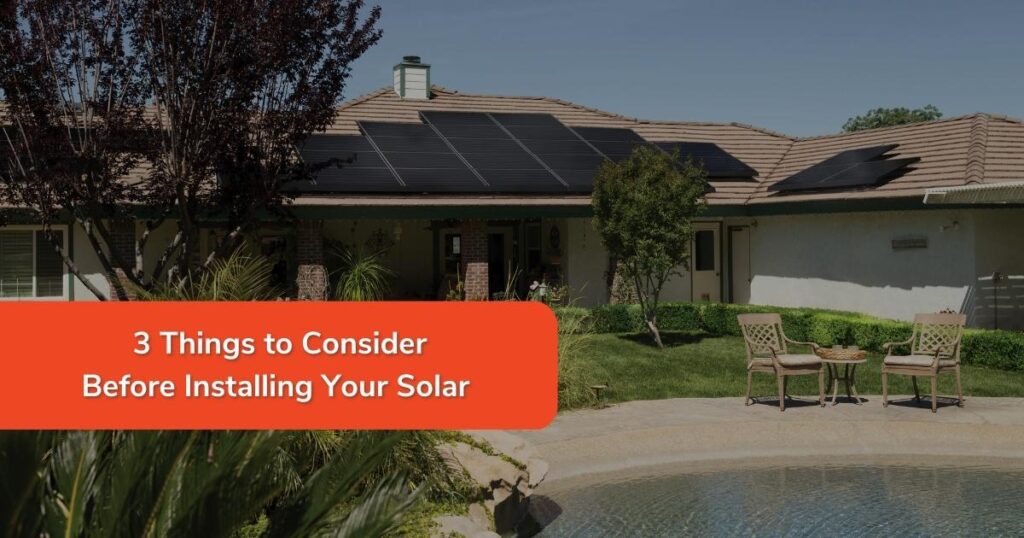
3 Key Considerations for Installing Solar Pane Smart Energy Answers January 19, 2023 3 Things to Keep in Mind When Installing Solar Installing solar panels on your property is a smart way to save on energy costs and reduce your carbon footprint. However, before making the investment, it is essential to consider a few key factors to ensure you are getting the most out of your solar panels. In this blog post, we will discuss three important things to keep in mind when installing solar: shading and performance, tilting and orientation, and the size of the system. Shading & Performance The electricity generated by your solar system is impacted by the amount of sunlight your panels receive. The more your panels are covered by shade, the less energy your system will generate. The effectiveness of your solar system also depends on where you live and how much sunlight your property receives throughout the year. If your property receives a decent amount of sun for most of the year, it is worth getting an assessment from a solar provider. A qualified solar provider should be able to estimate how much energy your system could produce and how much shading may affect its performance. Tip: Using microinverters or power optimisers on the panels, instead of relying on a single string inverter, can help reduce the impact of shading issues. Speak with your solar provider to see whether this could be a suitable solution for your solar system if you are concerned about shade. Tilting & Orientation For properties in the southern hemisphere, a north-facing roof is generally optimal for solar production. This orientation helps maximise the amount of usable sunlight your solar panels can receive throughout the day. Tilt frames may cost a little extra, depending on how many panels are included in the system and how the installer prices the labour and parts required. In most cases, panels are installed at the existing angle of the roof unless the roof is completely flat. For flat roofs, panels should usually be installed with a tilt to help improve performance and allow rain to wash away dust and debris more effectively. Flat installation is possible; however, dust and debris are less likely to be washed off when the panels are not tilted. Solar System Size Guide There are several factors to consider when deciding on the size of your solar system, including your budget, roof space, energy consumption patterns, and future plans. If you are looking to expand your system in the future, consider choosing a solar solution with expansion capability for batteries and electric vehicles. This can give you greater flexibility as your energy needs change over time. It is not always easy to calculate the exact capacity you will need for your solar panels. While the guide below can provide a rough starting point, it is still best to speak with a solar provider for a proper assessment tailored to your property and energy usage. Conclusion By considering these three factors, you can make an informed decision about whether to install solar and how to set up your system for the best possible performance. You can also reach out to our friendly energy experts to get customised solar solutions designed for your exact needs.
Micro Inverters & DC optimisers versus traditional String Inverters

Micro Inverters & DC optimisers versus traditional String Inverters Smart Energy Answers March 11, 2022 The Evolution of Solar Inverter Technology When Australia’s Small-scale Renewable Energy Scheme was introduced in 2011, homeowners were very limited by the solar technology available at the time. The majority of solar panels had a capacity of less than 200 W, which has now been doubled by many of today’s models. Solar panels have become progressively bigger and better, but for many years there was very little technological change to the other primary component of a solar system: the inverter. The inverter is designed to do the heavy lifting of converting direct current, or DC, power from the panels into alternating current, or AC, power for use in the home. In the past, the inverter was a relatively unsophisticated box that collected the accumulated power from all the panels for conversion. If one panel was underperforming, that panel could reduce the output of all the other panels in the string. However, homeowners would often never know because the inverter had no way of identifying the issue or pinpointing which panel was faulty. These simple inverters also did not come with remote monitoring, meaning customers could go months before realising their solar system was not working or was severely underperforming. We used to recommend that customers check the small LCD screen on the inverter at least once a week to make sure the system was operating. Today, inverters have come a long way, with major improvements in technology, monitoring solutions, and reliability. The Three Main Types of Solar Inverters There are three types of inverters currently available for solar energy systems: string inverters, power optimised systems, and microinverters. Power optimisers and microinverters are often collectively referred to as Module-Level Power Electronics, or MLPEs. At Smart Energy Answers, we believe the smart way to install solar in 2022 is with MLPE technology. We recommend two of the leading brands in this space: SolarEdge and Enphase. Both are global technology companies listed on the New York market. MLPE technology is one of the safest and best-performing solutions available, and it is expected to become increasingly common as regulations and standards continue to evolve. String inverters remain the most widely deployed inverter option globally because they have been used for many years. However, MLPE technologies have continued to gain market share over the last five years as costs have come down. We understand that customers researching solar can feel confused by the many alternatives and quotes available from different companies promoting different products. It can be overwhelming. At Smart Energy Answers, we assist customers in making informed decisions when looking into solar, and our job is to make the process simple to understand. To help simplify the comparison, we will use a strong analogy. If you were buying a new phone today, in 2022, would you consider a phone from Option A or Option B below? Option A Option B If you answered Option B, you can now better understand the difference in value between a string inverter and a solar energy solution powered by MLPE technology. You may pay more upfront for Option B, but you also get much more value, performance, safety, and long-term monitoring capability from it. Important note: Do not believe salespeople who say you do not need microinverters or power optimisers simply because you do not have trees around your house. Solar panels can be affected by shade and obstruction in many ways, including trees, clouds, birds, dust, vent pipes, roof gables, chimneys, air-conditioning units, and other rooftop structures. MLPE technology can provide a safer, more efficient, better-performing, more flexible, more innovative, and easier-to-monitor solar solution in many circumstances. Simply smarter.