
The home energy revolution in Australia has shifted gears.
In 2026, real independence is not just about generating solar power. It is about storing it, controlling it, and using it intelligently.
Virtual Power Plants, or VPPs, artificial intelligence energy orchestration, and next-generation battery systems have made solar storage more powerful, safer, and more financially rewarding than ever before.
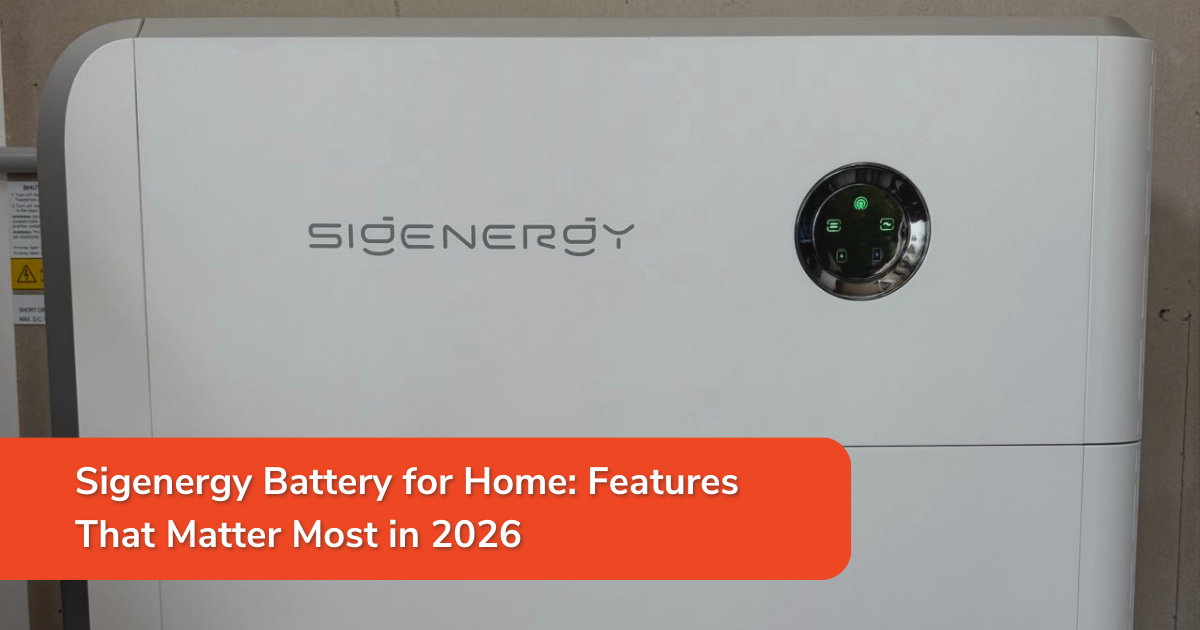
Among the standout contenders in the home battery market is the Sigenergy battery, a modular, inverter-integrated storage system built for high performance, scalability, and smart home compatibility.
But beyond the headlines, what features actually matter most to homeowners in 2026?
If you are considering adding storage to your solar system, especially while incentives such as the solar battery rebate are still available, this guide breaks down everything you should look for, understand, and compare before making a decision.
One of Sigenergy’s biggest advantages is its fully integrated architecture.
Unlike older setups where the inverter and battery were separate components, Sigenergy systems combine:
This means:
For households wanting both savings and resilience, an all-in-one system helps ensure your solar and storage communicate in real time, without unnecessary energy conversion waste.
See how Smart Energy Answers integrates smart energy systems here: Virtual Power Plant.
In 2026, flexibility is no longer a luxury. It is essential.
Energy usage in Australian homes is climbing, driven by:
Sigenergy batteries are modular, meaning you can:
This is particularly valuable for:
Modular batteries help protect you from overspending upfront while ensuring your system can adapt to future energy needs.
Australia’s climate is one of the toughest proving grounds for home batteries.
In summer, rooftop and outdoor installations can face extreme heat.
This is where Sigenergy delivers strong differentiation with:
Why this matters for homeowners:
When marketed correctly, this safety positioning is a strong trust driver for Australian homeowners who have become more educated and cautious about lithium battery safety.
A modern battery should do more than store energy.
It should power your home smoothly, without dips, delays, or throttling during peak usage.
Sigenergy batteries are engineered for:
This results in:
VPP awareness is now part of consumer decision-making.
Homeowners want to know whether their battery can create additional value in the future.
Sigenergy systems are VPP-compatible and built to:
This can unlock future benefits such as:
Pairing the right battery with the right panels matters.
High-efficiency solar modules such as Aiko solar panels work exceptionally well with smart storage systems because they can:
Outage resilience is one of the fastest-growing motivations for battery installations in Australia.
With Sigenergy, homeowners can benefit from:
Key backup use cases for 2026 homeowners include:
Battery systems are now dashboards first and hardware second.
Consumers expect:
Sigenergy platforms allow homeowners to:
For most Australian homeowners, the answer comes down to four pillars: savings, safety, future-proofing, and energy independence.
| What Homeowners Want | What Sigenergy Delivers |
|---|---|
| Lower power bills | High self-consumption and smart load balancing |
| System safety | Thermal and cell protection designed for heat |
| Future-proofing | Modular expandability without full system replacement |
| Energy independence | Solar, inverter, battery integration, and monitoring |
| Backup resilience | Stable outage performance and load prioritisation |
| Grid rewards | VPP-ready architecture for future earning potential |
In 2026, home batteries must be:
The Sigenergy battery checks these boxes for Australian households looking to maximise solar energy and prepare for the future of distributed home power.