
For decades, diesel generators have been the primary power source for many rural and remote areas in Australia.
They can provide flexible power in locations where grid access is limited, but they also come with rising costs, regular maintenance, noise, emissions, and fuel delivery challenges.
They can also become harder to rely on during extreme weather events or supply disruptions.
As energy prices rise and climate impacts become more visible, rural homeowners and businesses are asking a new question:
Is there a more sustainable and cost-effective power alternative?
With the federal solar battery rebate now active and expected to change in 2026, this question is becoming financially important.
Diesel generators were designed for a time when rural power needs were simpler and grid access was often limited.
Modern rural properties now use more energy across irrigation systems, workshops, refrigeration, electric vehicles, internet connectivity, and modern household appliances.
However, diesel is not becoming cheaper.
Fuel costs are unpredictable, and delivery expenses can be high, particularly in remote areas.
Generators also require regular maintenance, and failures often happen at the worst possible time, such as during storms, road disruptions, or supply chain delays.
Noise, fumes, and constant upkeep make diesel less appealing for families and businesses.
Rural Australians are increasingly seeing generators not as the most reliable answer, but as an expensive trade-off they would prefer to reduce or avoid.
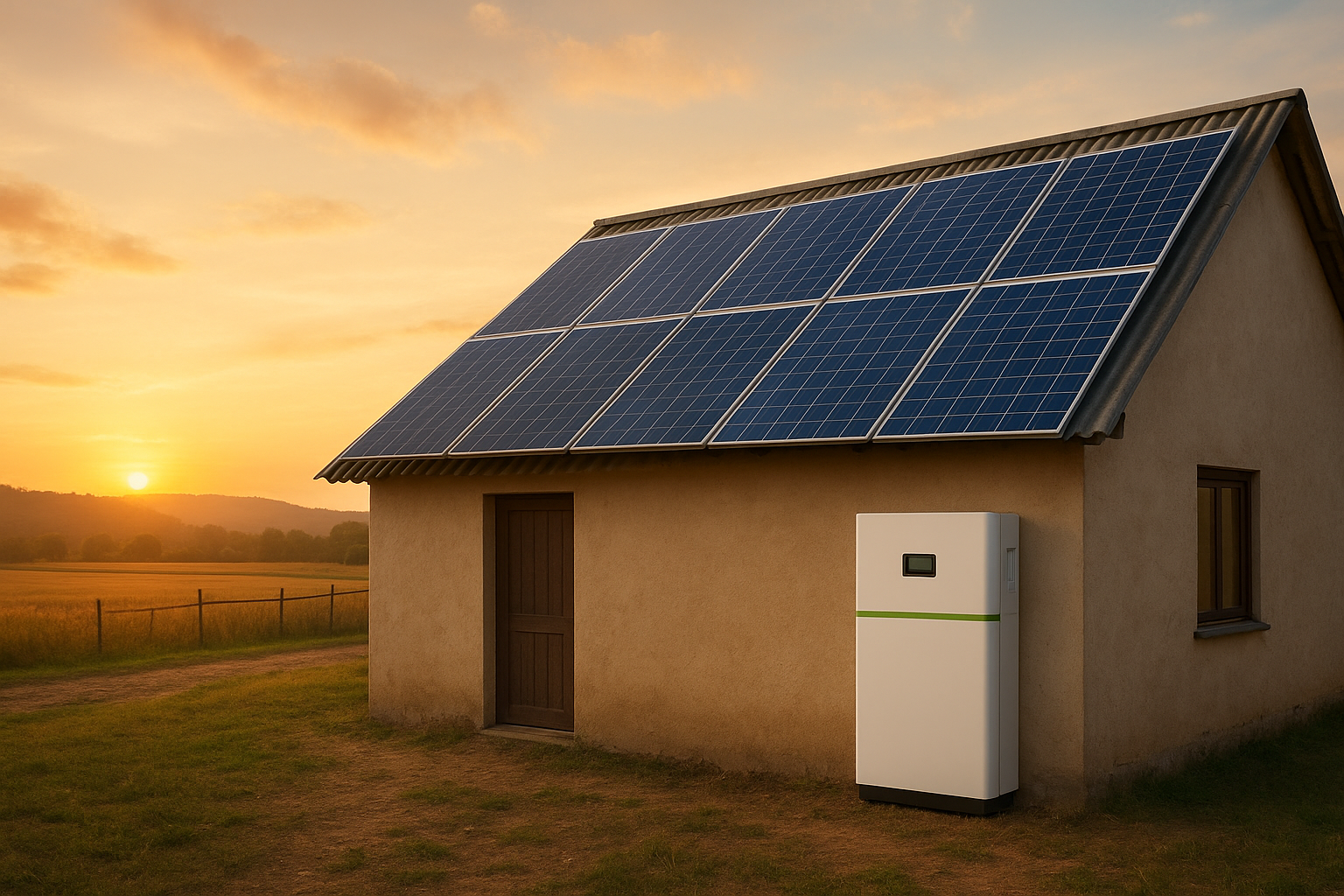
Solar battery systems allow rural homes and businesses to generate electricity from the sun, store it, and use it when they need it most, such as at night, during peak periods, or when the grid goes out.
With a well-designed solar and battery system:
Modern battery systems offer increased usable capacity, improved charge and discharge functionality, longer life, and smart controls.
This can provide reliable power even in demanding rural and off-grid conditions.
There are three factors that are almost always important when rural customers are making energy decisions.
Diesel generators operate until fuel is depleted, which can become a vulnerable point during emergencies.
Solar batteries are charged by the sun each day and, when combined with a properly sized solar array, can continue operating even when fuel deliveries are disrupted.
Diesel generators can be cheaper to purchase upfront, but they are often costly to operate over time.
Fuel, servicing, repairs, and maintenance can add up quickly.
Solar batteries usually have a higher upfront cost, but their operating costs are much lower and more predictable over a 10 to 15-year period.
Diesel generators produce fumes, noise, and vibration, which can affect comfort and working conditions.
Solar batteries operate quietly, produce no onsite emissions during use, and can help make rural living cleaner and more comfortable.
One of the biggest obstacles to battery adoption has been upfront cost.
The federal Cheaper Home Batteries Program helps reduce this cost by allowing eligible battery installations to generate Small-scale Technology Certificates, or STCs, which create an upfront discount on the system price.
Starting on 1 May 2026, the rebate system is expected to change.
Instead of a fixed approach, rebates are expected to be tiered based on battery size, and the number of STCs awarded will reduce at a faster rate over time.
Under the post-May 2026 rules:
This means smaller and right-sized battery systems may retain stronger rebate support, while larger systems installed after May 2026 may receive a reduced effective rebate per kilowatt-hour.
Installers and rural customers should understand that the rebate is not removed, but delaying installation may result in lower overall support compared with acting before 1 May 2026.
For many rural users, moving away from diesel completely overnight may not be realistic, particularly where heavy machinery or high peak loads are involved.
That is where hybrid systems can help.
In a hybrid system:
Hybrid systems provide a practical, gradual pathway towards greater battery reliance.
The 2026 rebate can also make the battery component of that transition more cost-effective when planned correctly.
In many cases, yes.
With battery technology advancing, prices improving, and government support available, solar and battery systems are becoming a strong long-term option for rural power.
Over time, diesel may increasingly become a reserve power source rather than the main source of energy.
The direction is clear: rural energy systems are moving towards solar storage and away from dependence on fossil fuels.
Rural Australia deserves access to reliable, sustainable, and affordable energy solutions that are not tied to unpredictable fuel markets and rising operating costs.
The solar battery rebate 2026 provides an opportunity to build a stronger financial case today and design energy systems that are ready for the future.
Whether the goal is to replace diesel completely or achieve substantial energy independence, solar batteries are no longer on the edge of technology.
They are now a reliable and practical answer to many rural power requirements.
Timing matters: before rebate values begin declining in May 2026, homeowners and businesses may be able to access stronger upfront support and improve payback.
Proper planning, correctly sized systems, and certified installers can help you move away from diesel at a pace that makes sense for your property and budget.
At Smart Energy Answers, we design battery systems that work particularly well in rural and off-grid settings, helping households and businesses reduce diesel reliance with confidence.