
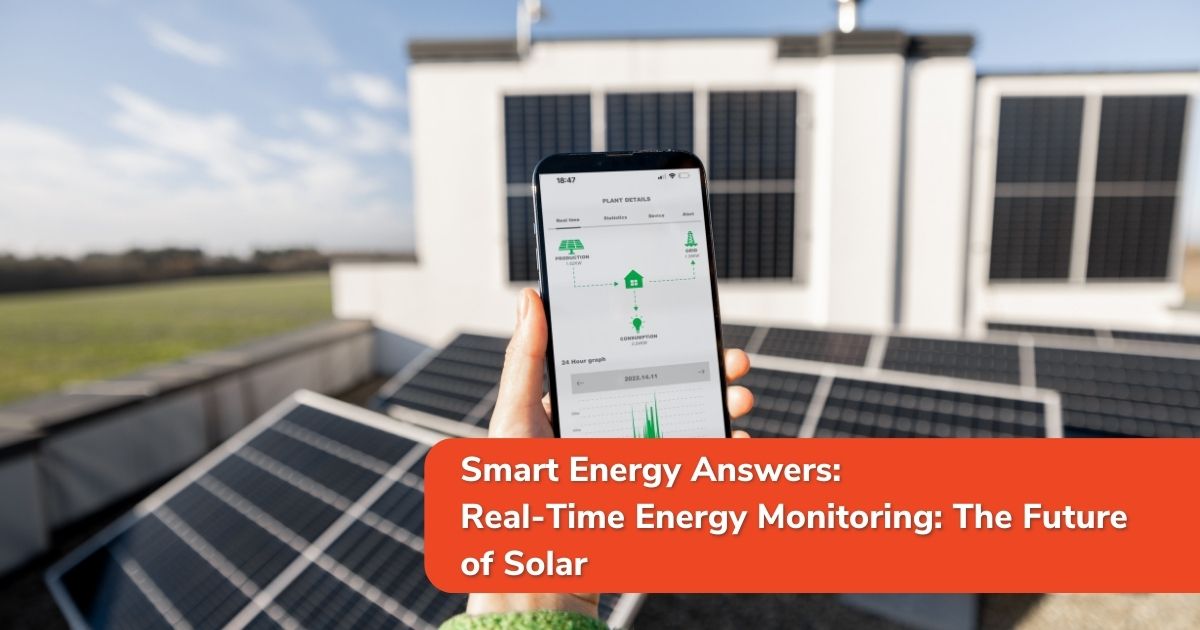
Real-time energy monitoring plays a crucial role in optimising solar energy usage. By continuously monitoring the energy production and consumption in real time, solar system owners can identify areas of inefficiency and make necessary adjustments to maximise energy generation and utilisation.
This ensures that the solar panels are operating at their full potential, allowing for the most efficient use of solar energy.
Moreover, real-time energy monitoring provides valuable insights into the performance of the solar system, allowing users to track the effectiveness of their energy-saving measures and make informed decisions to optimise energy consumption.
With real-time data, solar system owners can identify patterns and trends in energy usage, enabling them to implement strategies to reduce energy waste and increase overall efficiency.
Overall, real-time energy monitoring is essential for ensuring the optimal use of solar energy, reducing reliance on traditional power sources, and maximising the benefits of solar technology.
Real-time energy monitoring systems provide data-driven insights that are instrumental in maximising solar efficiency and performance. By analysing real-time data on energy production and consumption, solar system owners can gain a deep understanding of how their system is performing and identify opportunities for improvement.
These insights allow users to identify the most productive times for energy generation and consumption, enabling them to adjust their energy usage habits accordingly.
By aligning energy usage with peak production periods, solar system owners can optimise their energy consumption and minimise reliance on the grid.
Furthermore, data-driven insights enable users to identify potential issues or inefficiencies in their solar system.
By monitoring key performance indicators, such as energy generation efficiency and system uptime, solar system owners can proactively address any issues and ensure that their system is operating at its highest capacity.
In summary, data-driven insights provided by real-time energy monitoring systems empower solar system owners to make informed decisions, optimise energy usage, and maximise the efficiency and performance of their solar systems.
Real-time energy monitoring relies on a range of monitoring devices, sensors, and technologies to accurately measure and track energy production and consumption.
These devices and sensors are designed to provide precise and reliable data for effective monitoring and control of solar energy systems.
One commonly used device in real-time energy monitoring is the smart meter. Smart meters are advanced energy meters that record energy consumption data at regular intervals and transmit it to the energy provider in real time.
They provide accurate and up-to-date information on energy usage, allowing users to monitor and manage their energy consumption effectively.
In addition to smart meters, real-time energy monitoring systems often incorporate sensors that measure solar irradiance, ambient temperature, and other environmental factors that can affect energy generation.
These sensors provide valuable data for assessing the performance of solar panels and optimising energy production.
Furthermore, real-time energy monitoring systems rely on connectivity technologies, such as Internet of Things, or IoT, devices and wireless communication protocols, to transmit data between the monitoring devices and the central monitoring system.
This ensures that the data is accessible in real time and facilitates remote monitoring and control of solar energy systems.
Overall, real-time energy monitoring systems leverage a combination of monitoring devices, sensors, and technologies to provide accurate and timely data for effective monitoring and control of solar energy systems.
One of the key advantages of real-time energy monitoring systems is the immediate visibility they provide into solar energy production and usage patterns.
By monitoring energy production in real time, solar system owners can quickly identify any issues or deviations from expected performance.
For example, if the energy production suddenly drops, it could indicate a malfunctioning solar panel or a problem with the system.
With real-time visibility, users can promptly address the issue and prevent any further loss of energy generation.
Similarly, real-time energy monitoring systems provide immediate visibility into energy usage patterns.
Users can track their energy consumption in real time and identify areas of high usage or wastage.
This allows for timely adjustments to energy usage habits and the implementation of energy-saving measures.
Immediate visibility into solar energy production and usage patterns enables solar system owners to take proactive measures to optimise energy generation and consumption, ensuring the most efficient use of solar energy.
Real-time energy monitoring systems are designed to be compatible with smart home automation systems, enabling seamless integration and enhanced control over energy usage.
By integrating real-time energy monitoring with smart home automation systems, users can automate energy-saving measures and optimise energy consumption based on real-time data.
For example, the system can automatically adjust the temperature settings of the HVAC system based on energy production and usage patterns, ensuring optimal comfort while minimising energy waste.
Furthermore, the integration of real-time energy monitoring with smart home automation systems allows for remote monitoring and control of energy usage.
Users can access real-time energy data and control energy-consuming devices from their smartphones or other connected devices, providing convenience and flexibility in managing energy consumption.
The compatibility of real-time energy monitoring systems with smart home automation systems offers users greater control and flexibility in optimising energy usage, leading to increased energy efficiency and cost savings.
Real-time energy monitoring systems leverage Internet of Things, or IoT, devices and connectivity to enable real-time monitoring and control of solar energy systems.
IoT devices, such as smart meters and sensors, are interconnected through wireless communication protocols, allowing for seamless data transmission between the devices and the central monitoring system.
This enables real-time monitoring of energy production, consumption, and other key performance indicators.
The connectivity provided by IoT devices also facilitates remote monitoring and control of solar energy systems.
Users can access real-time energy data and control energy-consuming devices from anywhere, using their smartphones or other connected devices.
This remote accessibility enhances convenience and enables users to make timely adjustments to energy usage to optimise energy consumption.
By leveraging IoT devices and connectivity, real-time energy monitoring systems enable effective monitoring and control of solar energy systems, leading to increased efficiency, improved performance, and optimised energy usage.
Real-time energy monitoring systems play a crucial role in balancing energy usage and storage to minimise reliance on the grid.
By continuously monitoring energy production and consumption, solar system owners can optimise the use of solar energy and reduce their dependence on traditional power sources.
The real-time data provided by energy monitoring systems allows users to identify periods of high energy production and low energy consumption.
During these periods, excess energy can be stored in batteries or other energy storage systems for later use.
This enables solar system owners to maximise the utilisation of solar energy and minimise the need to draw electricity from the grid during periods of low energy production.
Furthermore, real-time energy monitoring systems enable users to monitor the state of charge of their energy storage systems and optimise their usage accordingly.
By ensuring that the energy storage systems are adequately charged during periods of high energy production, solar system owners can maximise the amount of solar energy they can use during periods of low energy production.
By balancing energy usage and storage through real-time monitoring, solar system owners can significantly reduce their reliance on the grid, increase their energy independence, and contribute to a more sustainable energy future.
Real-time energy monitoring systems contribute to grid stability and reliability by enabling intelligent solar integration.
By continuously monitoring energy production and consumption, these systems allow for better coordination and management of solar energy within the grid.
Real-time energy monitoring systems provide valuable data on the amount of solar energy being generated and consumed at any given time.
This information can be used by grid operators to optimise the integration of solar energy into the grid, ensuring a smooth and stable supply of electricity.
For example, if there is an excess of solar energy being generated, the grid operators can redirect the surplus energy to other areas or store it in energy storage systems for later use.
On the other hand, if there is high energy demand and low solar energy production, the grid operators can adjust the energy supply from other sources to maintain grid stability.
By facilitating intelligent solar integration, real-time energy monitoring systems help to balance the supply and demand of electricity within the grid, ensuring grid stability and reliability even as the share of solar energy in the grid increases.
Overall, real-time energy monitoring systems play a critical role in enabling the seamless integration of solar energy into the grid, contributing to a more efficient and reliable electricity supply.
Real-time energy monitoring systems prioritise data protection and comply with relevant regulations and industry standards to ensure privacy assurance for users.
These systems adhere to data protection regulations, such as the General Data Protection Regulation, or GDPR, and implement robust security measures to safeguard the privacy and integrity of the data collected.
User data, including energy consumption patterns and other sensitive information, is securely stored and transmitted, ensuring confidentiality and privacy.
Moreover, real-time energy monitoring systems follow industry standards for data encryption, access control, and authentication to prevent unauthorised access or tampering of data.
This ensures that the data remains confidential and protected from potential security threats.
By complying with data protection regulations and industry standards, real-time energy monitoring systems provide users with the assurance that their data is handled securely and their privacy is respected.
In summary, real-time energy monitoring systems prioritise data protection and adhere to relevant regulations and industry standards to provide users with privacy assurance.
Real-time energy monitoring systems offer numerous benefits and capabilities that are instrumental in optimising solar energy usage and maximising the benefits of solar technology.
These systems provide immediate visibility into solar energy production and usage patterns, enabling users to identify and address any issues or inefficiencies promptly.
They also offer data-driven insights that empower users to make informed decisions and optimise energy consumption.
Real-time energy monitoring systems are compatible with smart home automation systems, allowing for seamless integration and enhanced control over energy usage.
They leverage IoT devices and connectivity to enable real-time monitoring and control of solar energy systems, facilitating remote accessibility and flexibility in managing energy consumption.
Furthermore, real-time energy monitoring systems contribute to grid stability and reliability through intelligent solar integration.
They help balance energy usage and storage to minimise reliance on the grid and increase energy independence.
These systems also prioritise data protection and comply with relevant regulations and industry standards to ensure privacy assurance for users.
In conclusion, real-time energy monitoring systems are revolutionising the solar industry and shaping the future of renewable energy.
By harnessing the power of real-time data, these systems enable users to optimise energy usage, maximise solar efficiency, and contribute to a more sustainable and reliable energy future.
To take advantage of the benefits of real-time energy monitoring for your solar system, consider implementing a real-time energy monitoring system today and start maximising the potential of your solar energy.