
As energy costs in Australia continue to rise, the country is seeing a significant increase in interest in Tesla solar batteries.
Among the energy storage solutions available in the market, Tesla Powerwall has emerged as a popular choice.
It offers residents and businesses a path towards a more sustainable and self-sufficient energy future.
The Tesla Powerwall is a home battery storage system that allows you to store excess solar energy generated during the day for use later, such as during peak evening hours or power outages.
Compatible with solar panels and the grid, it serves as a reliable backup during blackouts and an efficient way to maximise the self-consumption of your solar energy during both day and night.
Since Tesla Powerwall reduces your reliance on the grid, it can also help lower your electricity bills.
The transition from Powerwall 1 to Powerwall 2 marked significant advancements in home battery storage technology.
These improvements were designed to meet the evolving needs of consumers seeking sustainable energy solutions.
Powerwall 2 stands out with notable upgrades, including a higher capacity of 13.5 kWh compared to the original version’s 7 kWh.
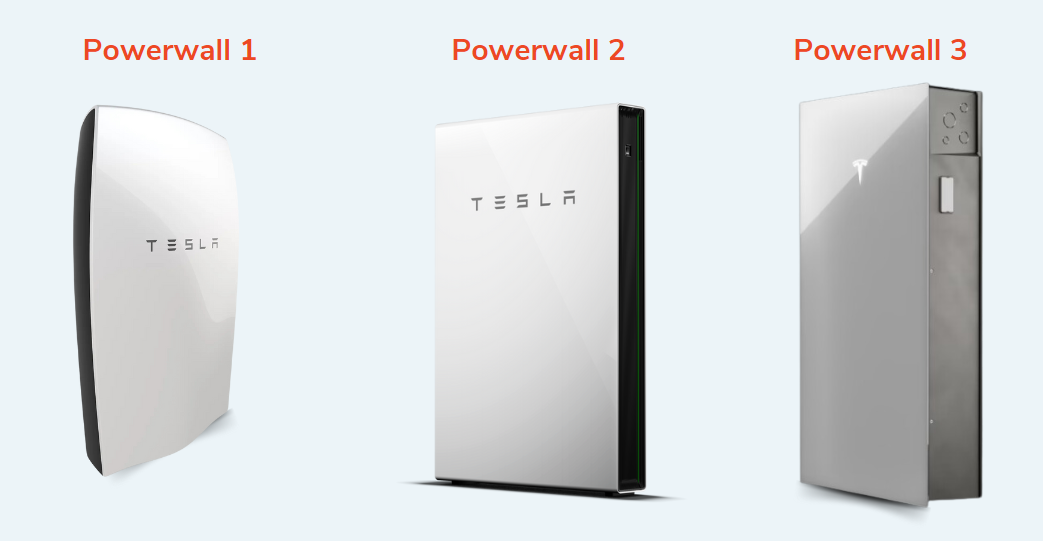
Looking ahead, anticipation for the Tesla Powerwall 3 price in Australia is remarkable, with availability expected around December 2024.
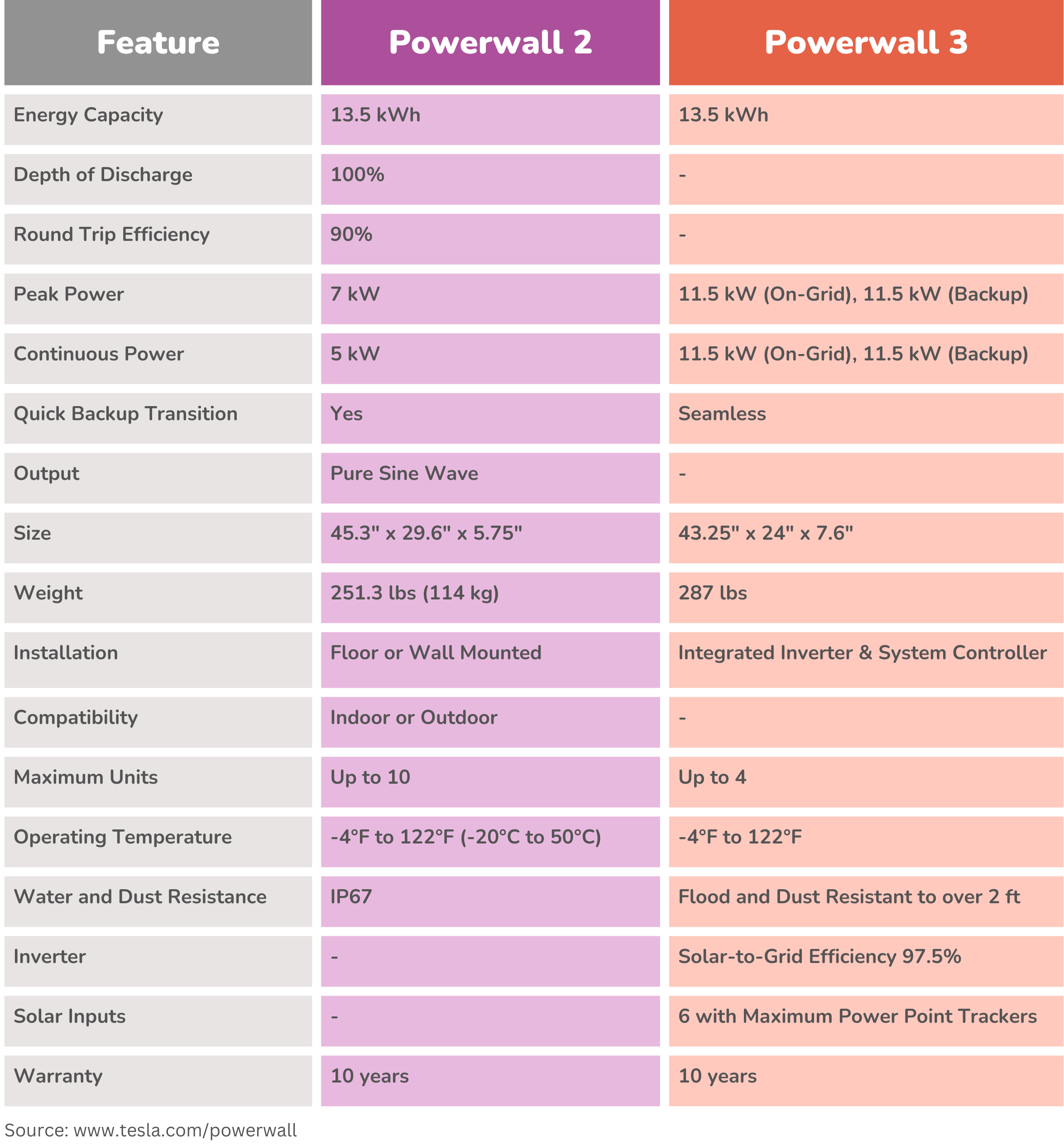
This latest version maintains the 13.5 kWh capacity of its predecessor but introduces several innovative features.
Notably, Powerwall 3 offers a maximum continuous power output of 11.5 kW for both on-grid and backup operations, helping ensure reliable performance in various scenarios.
It also introduces flood resistance up to 2 feet, or approximately 0.6 metres.
In terms of scalability, Powerwall 3 can connect up to four units, compared to Powerwall 2, which can scale up to ten units.
However, the most important innovation is its integrated DC solar inverter.
While Powerwall 2 is an ideal solution for add-on battery installations in homes with existing solar, Powerwall 3 is designed with an integrated DC solar inverter instead of an AC-coupled inverter.
This makes Powerwall 3 a strong solution for new solar and battery installations.
It eliminates the need for an additional DC solar inverter and can increase efficiency in energy conversion.
As Tesla continues to push the boundaries of renewable energy technology, Powerwall 3 represents a promising step forward in empowering homeowners with sustainable, reliable, and cost-effective energy solutions.
At this stage, the price for Powerwall 3 is not confirmed.
However, there are market rumours about its launch price being around $16,000 fully installed.
In recent years, Tesla has made significant reductions in the Tesla Powerwall 2 price, making it more accessible to Australian homeowners and businesses.
Currently, the installed cost of a Powerwall 2, including the battery, inverter, and installation, can range from $13,000 to $15,000.
However, it is important to remember that this is an estimate.
The actual Tesla Powerwall 2 price in Australia can vary based on factors such as installation complexity and location.
Furthermore, Smart Energy Answers offers an exclusive $750 rebate and an additional $750 rebate for Sydney Metro installations before 30 March.
Several government rebates and incentives are also available to make Powerwall ownership even more attractive.
These incentives vary across states and territories, so it is recommended to research the specific programmes applicable to your region.
The adoption rate of Powerwall in Australia is steadily increasing, driven by its potential to reduce reliance on the grid, manage energy bills, and contribute to a more sustainable future.
Recent case studies show that Tesla Powerwall can effectively help homeowners and businesses lower their reliance on the grid and reduce energy bills.
With Tesla smart monitoring apps, users can also maximise their solar energy usage by optimising their time of use.
While Tesla Powerwall is undeniably a popular choice for home battery storage, there are other battery solutions available in the Australian market, such as Alpha and SolarEdge.
It is good to know that there are options, each with its own features and capabilities.
Therefore, it is important to assess your energy needs, research available options, and select the battery solution that fits your specific requirements.
While the initial cost of a Powerwall system may seem high, the potential long-term benefits in terms of energy savings, grid independence, and environmental impact are significant.
With recent price decreases and various solar battery rebates, the Tesla Powerwall presents an increasingly attractive option for Australian homeowners looking to take control of their energy future.
However, it is important to carefully consider your specific needs and conduct thorough research before making an investment.
Consulting with a qualified solar installer can provide personalised guidance and help ensure the Powerwall is the right fit for your home.