
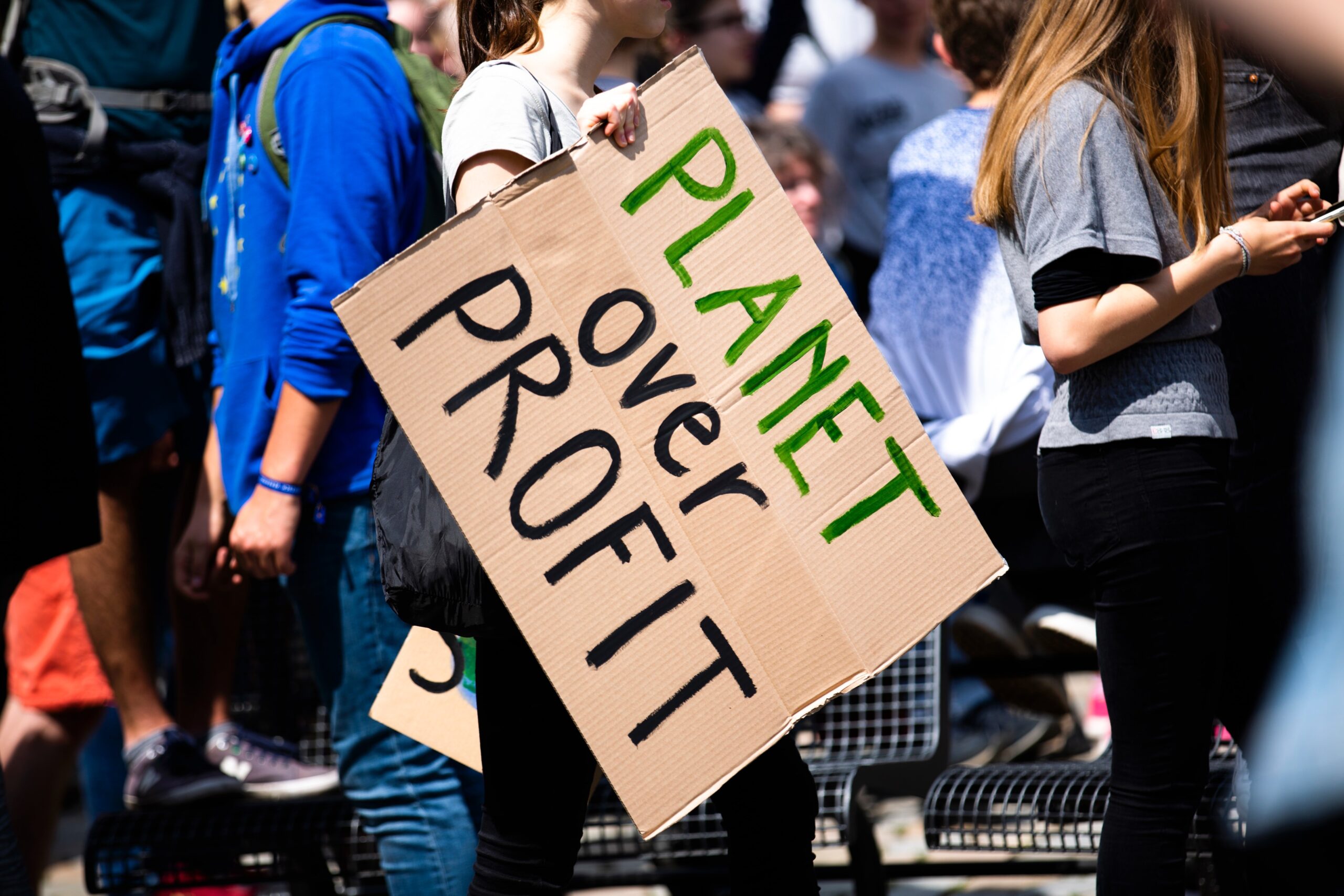
Prime Minister Scott Morrison’s refusal in August to commit to an Australian target of net zero emissions was met with strong public criticism, sparking protests at Parliament House and the Prime Minister’s residence.
Mr Morrison’s refusal to commit to the target came after world leaders issued a “code red” warning on the global climate change situation.
The Intergovernmental Panel on Climate Change, or IPCC, widely recognised as one of the world’s most authoritative bodies on climate science, released a major report described by United Nations Secretary-General António Guterres as “a code red for humanity”.
Mr Guterres warned that greenhouse gas emissions from fossil fuel burning and deforestation are placing the planet and billions of people at immediate risk.
He also stated that the report should serve as a strong warning about the need to move away from coal and fossil fuels before they cause further damage to the planet.
While UK Prime Minister Boris Johnson described the report as a wake-up call for world leaders to act while there is still time, Mr Morrison did not commit to a net zero target.
He cited concerns about increased taxes and a reliance on future technological advances.
“I won’t be signing a blank cheque on behalf of Australians to targets without plans,” said Mr Morrison.
“Blank cheque commitments you always end up paying for, and you always end up paying in higher taxes.”
In a February address to the National Press Club, Mr Morrison stated that getting to net zero should be about technology, not taxes and high prices.
He also referred to the government’s $18 billion technology investment roadmap, including a $1.9 billion commitment to develop clean energy technologies such as hydrogen, green steel, and carbon capture and storage.
Mr Morrison was expected to further outline the government’s plans for emissions reductions by 2030 at the UN Climate Change Conference in Glasgow, Scotland.
While government hesitation on one of the most pressing environmental issues of our generation can be disheartening, millions of Australian households and businesses are already doing their part.
Many have committed to a cleaner, greener future by reducing their reliance on harmful fossil fuels and investing in renewable energy solutions.
According to the Clean Energy Council’s Clean Energy Australia Report 2021, the renewable energy sector showed strong growth throughout 2020.
The industry passed a significant milestone, with more than a quarter of the country’s total electricity generation coming from renewable sources for the first time.
Almost 30% of Australia’s total electricity generated in 2020 came from renewable sources, with small and medium-scale solar systems producing a quarter of the country’s clean energy total.

We have a job to do by 2050, and everyone has a part to play in helping the world transition to renewable energy.
Through the Smart Energy Ambassador Program, you can help spread the word about renewables and be rewarded for your efforts.
Smart Energy Answers is supporting the Smart Energy Ambassador Program by offering cash incentives for referrals.
Refer like-minded friends and family members to the programme and get rewarded with cash incentives.
It is time to join the Smart Energy Ambassador Program.
See how much you could save on your next electricity bill with our Savings Calculator.
You can also discover which rebates and incentives may be available to you with the Smart Energy Answers Solar Rebate Calculator.