
Solar energy is an environmentally friendly way to generate renewable energy.
Currently, approximately 25% of Australian households have a solar system installed, allowing them to generate their own electricity and significantly reduce power bills.
As technology continues to advance, the cost of solar installations continues to reduce, making solar energy increasingly accessible to more households.
If you want to move closer to going off-grid, you may also need to install a solar battery system alongside your solar panels.
The cost of solar battery storage is also reducing over time, making it a more practical option for many homeowners.
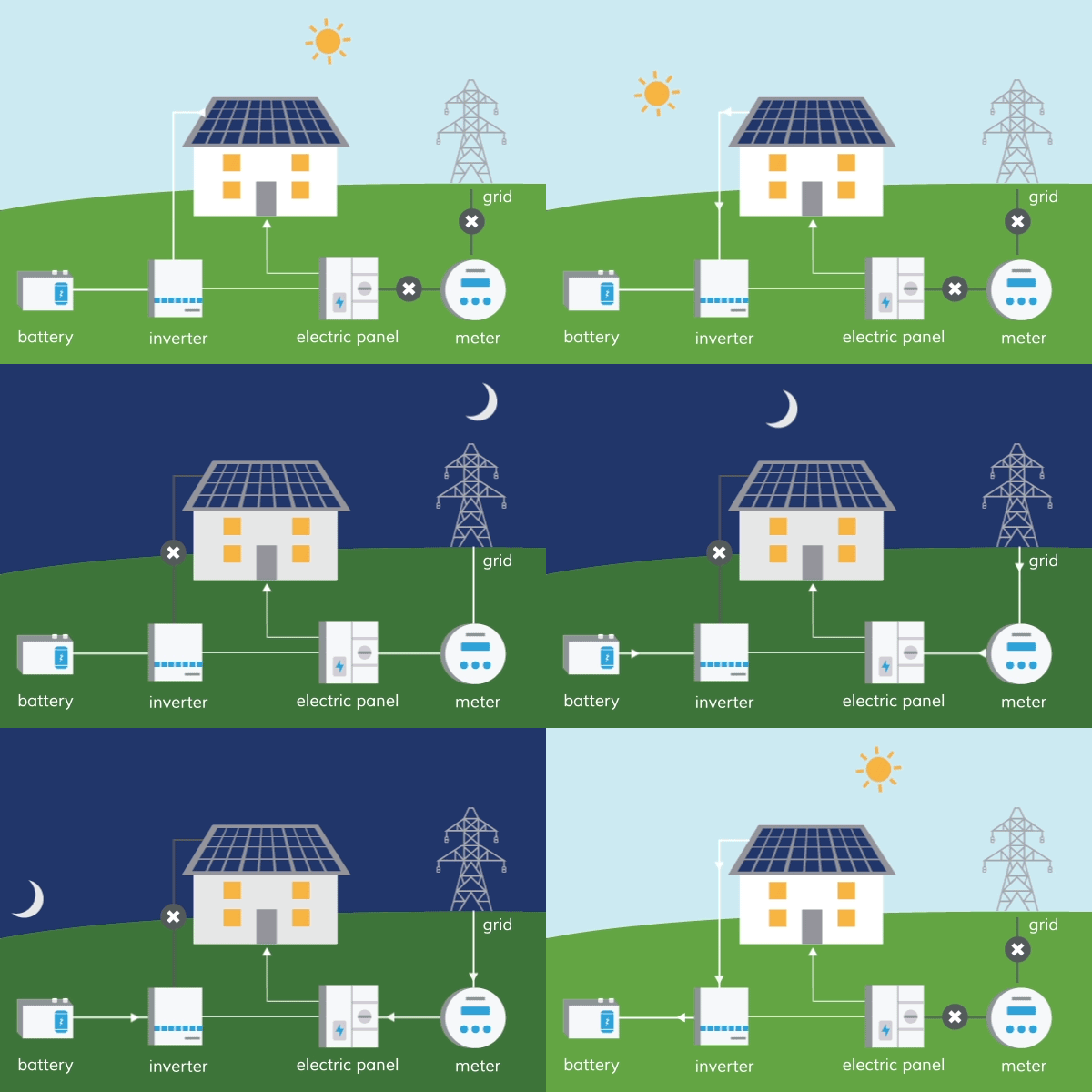
The photovoltaic, or PV, cells inside the solar panels on your roof absorb sunlight and convert it into direct current, or DC, electricity.
However, DC electricity cannot be used directly by most household appliances.
This means it must be converted into alternating current, or AC, electricity by an inverter.
Once converted, the electricity can be used to power your home, including appliances, televisions, computers, and other everyday devices.
If your solar system generates more electricity than your home uses during the day, the excess electricity can be exported back into the power grid.
In return, your electricity retailer may provide a credit for this exported power through a feed-in tariff.
However, this benefit can be offset by the cost of electricity drawn from the grid at night when your solar system is not generating power.
On the other hand, if you install a solar battery storage system, the battery can store excess electricity generated during the day.
This stored energy can then be used at night, helping reduce your need to draw power from the main grid.
The amount of electricity you can generate at home depends on the size of your solar installation.
Many homeowners install 3 kW or 5 kW systems, although larger 10 kW systems are becoming increasingly popular.
An average household may use around 21 kWh of electricity each day to power everyday appliances and home energy needs.
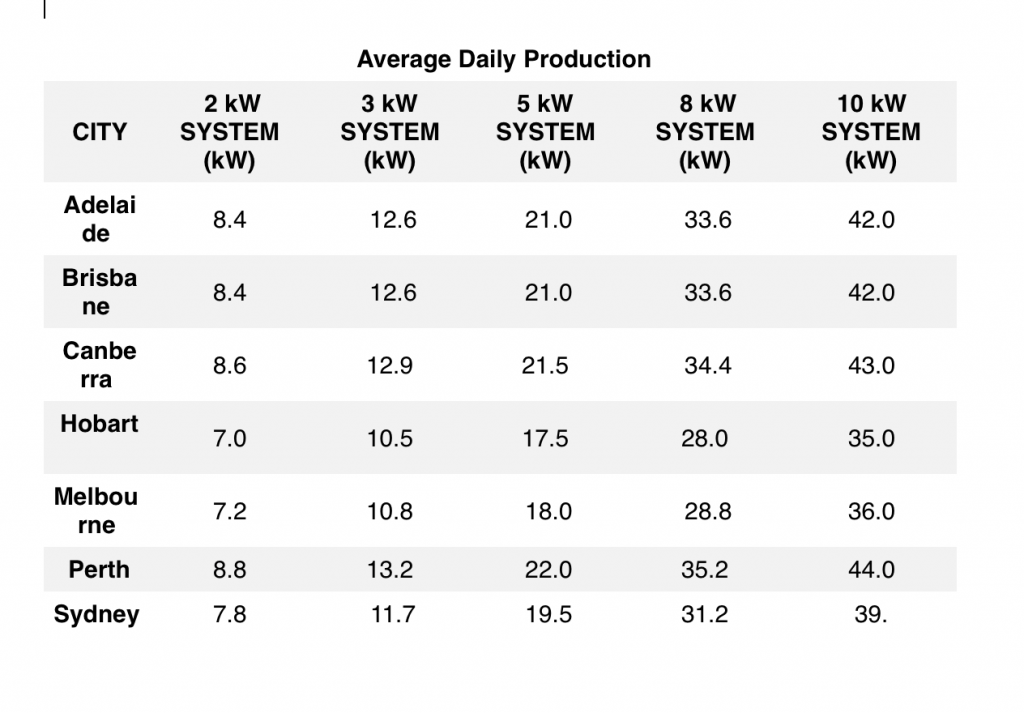
If you install a 3 kW solar system in Sydney, you may be able to generate around 11.7 kWh per day.
This is less than the average household may need over a 24-hour period, meaning you may still need to draw some electricity from the grid.
A 5 kW solar system in Sydney may generate around 19.5 kWh per day, which is still slightly below the average daily household usage.
A 10 kW solar system may generate around 39 kWh per day, which could be more than the average household needs.
If you add a solar battery to your system, you can store excess electricity generated during the day and use it later when your solar panels are not producing energy.
This can help reduce your reliance on the grid and move your home closer to energy independence.
For more information on installing solar systems in your Sydney home, call Smart Energy Answers on 1300 948 619 or send us an email.