
Residential vs. Commercial Solar Battery Applications
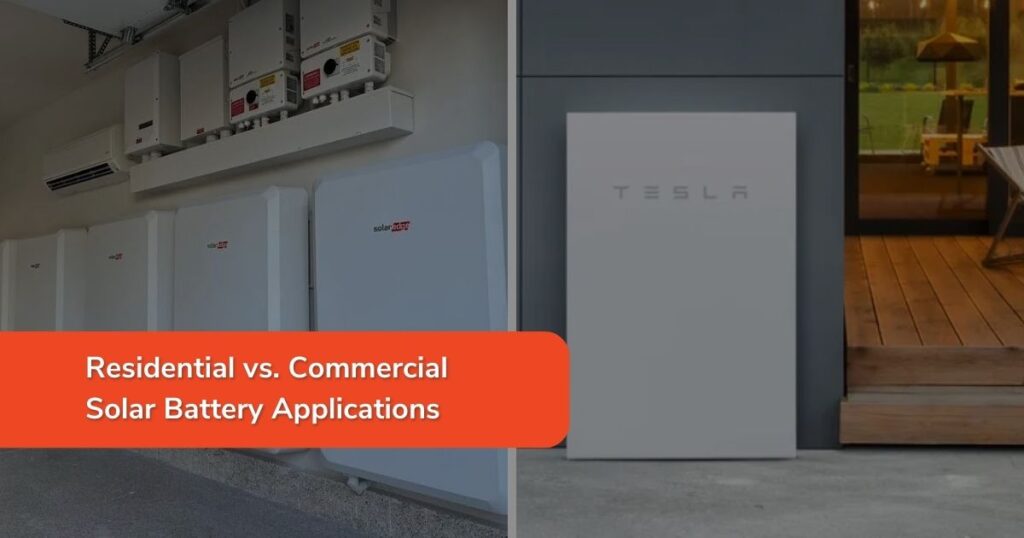
Residential vs. Commercial Solar Battery Applications Smart Energy Answers June 3, 2026 Australia’s abundant sunshine makes it a prime destination for solar energy solutions, playing a pivotal role in the country’s sustainable energy future. Among the innovative technologies transforming the landscape, solar battery systems stand out as an essential tool for harnessing and managing solar power effectively. In this comparison, we explore the unique applications and benefits of residential and commercial solar battery systems within the Australian context. The Power of Australian Solar Energy Solar power is a cornerstone of Australia’s energy mix, with a vast potential for growth and adoption. As a country blessed with extensive sunlight, Australia’s solar energy capacity has surged in recent years, bolstering the nation’s green profile. The move towards solar energy is not just an environmental imperative. It’s also an economic opportunity for Australians to reduce their energy bills and secure a more sustainable future. Residential Solar Battery Applications: A Bright Future for Homeowners For Australian homeowners, installing a solar battery system presents a compelling proposition. The benefits are manifold, from increased energy self-sufficiency to significant cost savings over the system’s lifetime. Let’s delve into what makes residential solar batteries so advantageous. Why Choose Residential Solar Batteries Energy Independence and Resilience One of the primary reasons homeowners opt for solar batteries is the promise of energy independence. With the ability to store excess solar energy for use during peak demand or at night, battery systems offer a local, reliable source of power that is immune to grid failures. Financial Returns and Environmental Impact In addition to reducing dependence on the grid, homeowners with solar batteries can maximise their return on investment. Excess energy can often be fed back into the grid, leading to further financial benefits. Furthermore, reduced reliance on fossil fuels contributes to a cleaner environment. Real-World Results: Case Studies In Pottsville, New South Wales, the installation of an 8.5kW Smart Solar and 13.5kWh Smart Battery system led to an annual saving of $2500. This system not only covered the household’s energy needs but also demonstrated the financial viability of residential solar batteries in the Australian market. Commercial Solar Battery Applications: Empowering Australian Businesses The applications of solar batteries in commercial settings in Australia are equally compelling. From small enterprises to large corporations, solar energy storage helps manage operational costs and enhances the sustainability profile of businesses. Benefits of Commercial Solar Batteries Scalability and Consistency Commercial solar battery systems can be tailored to the specific needs of a business. They provide a scalable energy solution that maintains a consistent power supply, crucial for businesses where downtime is not an option. Operational Cost Reduction and Peak Shaving By storing solar energy, businesses can significantly cut their operational costs, particularly during peak tariff periods when electricity is most expensive. This strategy, known as peak shaving, is an efficient way to manage energy expenses. Showcase of Success: Commercial Projects At Star Cosmetic Medicine, a solar battery integration of 13kW Smart Solar with a 13.5kWh Smart Battery resulted in annual savings exceeding $7000. The project stands as a testament to how commercial battery systems can deliver substantial economic value with a short payback period. Financial Accessibility and Government Initiatives Financially, residential and commercial solar solutions are becoming increasingly more accessible and affordable, thanks to several financing options and government initiatives. A variety of loans are available, tailored to both residential and commercial solar projects, making the initial setup costs manageable with flexible repayment plans. Innovative schemes such as Pay As You Save allow consumers to pay for the systems using the savings earned from their monthly energy bills, effectively causing no additional out-of-pocket expenses. Additionally, government incentives and rebates play a significant role in reducing the overall cost of solar installations. In Australia, the Small-scale Renewable Energy Scheme (SRES) and the Large-scale Renewable Energy Target (LRET) offer tradable certificates that can be sold to recoup a portion of the solar system costs. These financial mechanisms, combined, are making solar power more accessible to a wider demographic, accelerating the transition to a sustainable energy future. Conclusion Whether it’s for your home or business, integrating solar battery technology is a powerful move towards energy sustainability and financial autonomy. In Australia, where the sun shines plentifully, the potential for solar battery applications is undeniable. Ready to make the switch to solar? Contact our energy experts at Smart Energy Answers for tailored advice on how residential or commercial solar battery applications can benefit you. Embrace the power of the sun and take control of your energy future, one solar battery at a time.
Storing Sunshine: The Latest in Solar Battery Technology
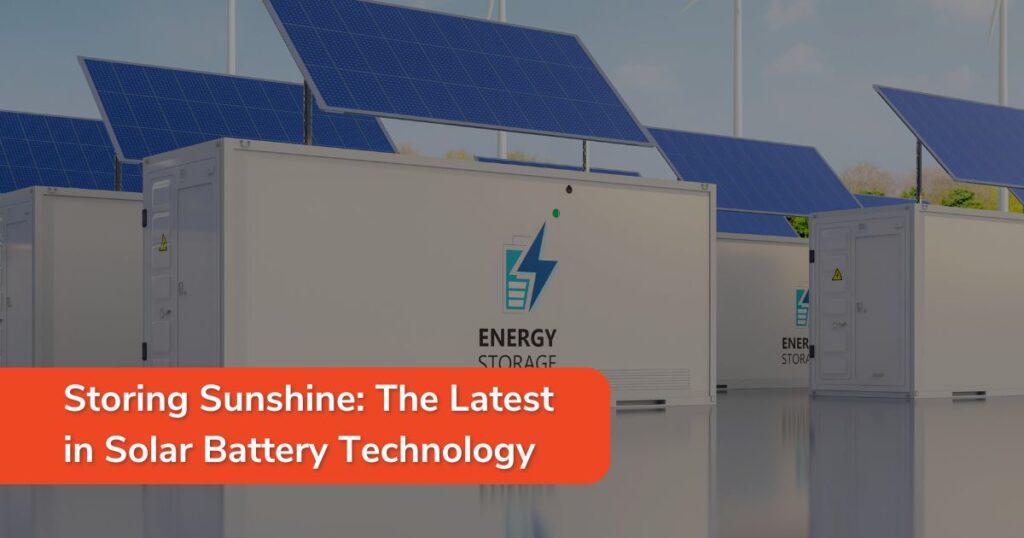
Storing Sunshine: The Latest in Solar Battery Technology Smart Energy Answers June 3, 2026 The shift from fossil fuels to renewable energy is no longer an idealistic vision but an urgent global imperative. Solar energy, with its infinite potential, has taken the lead in our quest for a more sustainable future. One of the critical advancements that have propelled solar energy into the spotlight is the evolution of solar battery technology. As the name suggests, solar batteries are the sun-powered reservoirs of energy, capable of storing the golden light from the day for use in the dark of night. They are the linchpin in turning sunshine into a reliable, round-the-clock energy source. This article examines the significant strides in solar battery technology, their practical applications, and the potential to revolutionise not just how we power our homes and businesses, but also the very infrastructure of our energy grids. Why Solar Battery Technology Matters The Benefits of Energy Storage For decades, the Achilles’ heel of renewable energy has been the intermittency of its sources. The sun doesn’t always shine, and the wind doesn’t always blow. Solar battery storage serves as a bulwark against this fundamental constraint, ensuring a seamless and continuous supply of energy. With energy storage, excess power generated during peak sunlight hours can be captured and used during those non-productive cloudy days or dark nights. Impact on Renewable Energy Adoption The rise of solar battery technology has been instrumental in accelerating the adoption of solar power. By mitigating the variability of solar energy, it makes the transition to renewables more reliable for both consumers and the grid as a whole. Cost Savings and Energy Independence Energy storage systems, particularly those powered by solar, can lead to significant cost savings for consumers. They offer a pathway to energy independence, reducing reliance on the central grid and, by extension, the volatility of energy prices. Advancements in Solar Battery Technology In the pursuit of more efficient and sustainable energy storage, several technologies have emerged as frontrunners. Lithium-Ion Batteries Lithium-ion batteries, which have seen immense success in the consumer electronics and electric vehicle markets, are now dominating the solar energy storage market. With high energy density and relatively low maintenance requirements, they are the go-to option for many residential and commercial solar installations. Solid-State Batteries Solid-state batteries use solid electrodes and an electrolyte, unlike traditional lithium-ion batteries that use liquid or polymer electrolytes. This offers higher energy densities, faster charge times, and improved safety. While they are still in the development phase, their potential to exceed the performance of current batteries is undeniable. Flow Batteries Flow batteries are a type of rechargeable battery where energy is stored directly in the electrolyte solution. Their advantage lies in their ability to decouple power and energy, providing scalable solutions for stationary storage applications. Graphene-Based Batteries Graphene, an allotrope of carbon, has gained attention because of its unique properties, including exceptional electrical conductivity. Graphene-based batteries promise energy storage with higher charge rates, longer life cycle, and lighter weight. Applications of Solar Battery Technology Solar batteries are not a one-size-fits-all solution. They find use across a spectrum of applications, each with its unique set of demands and benefits. Residential Use In residential settings, solar batteries enable self-consumption of solar power, potentially eliminating the need for drawing electricity from the grid. They also serve as backup power sources, ensuring that essential appliances keep running in the event of an outage. Commercial and Industrial Use For commercial and industrial users, solar batteries can provide substantial financial benefits by reducing demand charges, which can constitute a significant portion of their electricity bills. Grid-Scale Energy Storage At the utility level, solar batteries offer grid stability through services like frequency regulation and peak shaving. This function is pivotal as the energy mix continues to diversify, incorporating more intermittent renewable sources. Case Studies and Success Stories The real-world impact of solar battery technology is perhaps best illustrated through case studies of successful installations. From remote villages in developing countries gaining access to reliable electricity to suburban households becoming self-sufficient, these stories highlight the transformative potential of solar batteries. One such success story is that of the SolarEdge Home Battery, which has revolutionised the home energy storage landscape. With cutting-edge features like roundtrip efficiency of up to 94.5%, a 10-year warranty without cycle limitations, and the ability to stack up to three batteries per inverter, it has set new benchmarks for efficiency and safety. Additionally, its seamless integration with the SolarEdge app provides homeowners with unprecedented control over their energy usage and savings. Another standout player is the Tesla Powerwall, renowned for its 100% depth of discharge, 90% round-trip efficiency, and a 10-year warranty. Through its user-friendly app interface, it not only enables homeowners to monitor their energy usage but also to optimise their settings for energy independence, outage protection, or savings. Challenges and Limitations Despite the promising advancements, solar battery technology faces a set of challenges that must be addressed for widespread adoption. Cost Considerations One of the most significant barriers is the upfront cost of battery installations. While the prices have been steadily declining, they remain a significant investment for many consumers. Technical Challenges Throughout the industry, there is ongoing research to address the technical limitations of current battery technologies, such as energy density, cycle life, and the availability of certain materials required for their manufacture. Policy and Regulatory Barriers The nascent stage of the solar battery market has led to a patchwork of regulations. Adopting a more streamlined and supportive policy framework is crucial to enable the full potential of solar batteries to be realised. Future Trends and Innovations Looking ahead, the future of solar battery technology is rife with potential for innovation and growth. Emerging Technologies and Research Scientists and engineers around the world are exploring cutting-edge materials and designs for the next generation of batteries. The development of high-capacity, long-lasting, and sustainable batteries is a key area of focus. Integration with Smart Grid Systems The integration of solar batteries
Driving Towards Tomorrow: Solar Battery-Powered Transportation

Driving Towards Tomorrow: Solar Battery-Powered Transportation Smart Energy Answers June 3, 2026 Explore the Innovative Use of Solar Batteries in Revolutionising Transportation Towards a More Sustainable Future Importance of Sustainable Energy Solutions in Mitigating Environmental Impact and Promoting Energy Independence Sustainable energy solutions play a crucial role in mitigating the environmental impact of transportation and promoting energy independence. By harnessing renewable energy sources such as solar power, we can significantly reduce greenhouse gas emissions and dependence on fossil fuels. Using solar batteries to power electric vehicles, or EVs, is a prime example of a sustainable energy solution. Solar energy is clean, abundant, and can be harnessed with minimal environmental impact. By utilising solar batteries, EVs can operate without relying solely on the electricity grid, reducing carbon emissions and promoting energy independence. How Solar Batteries Power Vehicles and Extend Their Range Solar batteries power vehicles by converting sunlight into electricity. Photovoltaic cells within the solar panels absorb photons from sunlight, which then generate an electric current. This current is stored in the solar battery, which can be used to power the EV’s motor and other electrical components. Solar batteries also have the capability to extend the range of electric vehicles. By continuously charging the battery during daylight hours, EVs can operate for longer periods without needing to rely on grid electricity. This extended range makes EVs more practical and convenient for daily commuting and long-distance travel. Importance of Reliable Energy Storage for Enhancing the Efficiency and Sustainability of Transportation Systems Reliable energy storage is crucial for enhancing the efficiency and sustainability of transportation systems. Solar batteries provide a reliable and efficient means of storing solar energy for later use. By storing excess energy generated during daylight hours, solar batteries ensure a continuous power supply for EVs even during periods of low sunlight or at night. This reliable energy storage system not only increases the overall efficiency of transportation systems but also reduces reliance on the electricity grid. By utilising solar batteries, EVs can operate independently, reducing strain on the grid and enhancing the overall sustainability of transportation. Advancements in Solar Panel Efficiency and Vehicle Integration Advancements in solar panel efficiency have significantly contributed to the integration of solar power in vehicles. Over the years, the efficiency of solar panels has greatly improved, allowing for the generation of more electricity from a smaller surface area. This increased efficiency has enabled the integration of solar panels into various parts of electric vehicles, such as the roof, hood, or even the body. By maximising the surface area available for solar panels, EVs can generate more solar energy and increase their overall range and efficiency. Overview of Solar-Assisted Charging Systems for Electric Vehicles Solar-assisted charging systems for electric vehicles utilise solar energy to supplement grid electricity for charging. These systems typically consist of solar panels installed on charging stations or carports, which generate electricity to charge the EV’s battery. By incorporating solar-assisted charging systems, EV owners can reduce their reliance on the electricity grid and further decrease their carbon footprint. Additionally, these systems provide an opportunity for EV owners to utilise clean, renewable energy for charging, regardless of the availability of grid electricity. Pilot Projects and Initiatives Implementing Solar-Powered Public Transportation Pilot projects and initiatives implementing solar-powered public transportation have shown promising results in terms of reducing carbon emissions and promoting sustainable mobility. Many cities around the world have introduced solar-powered buses and trams, utilising solar panels installed on the vehicle’s roof to generate electricity for propulsion and other systems. These initiatives not only reduce the environmental impact of public transportation but also showcase the feasibility and benefits of solar-powered transportation. By analysing the success and challenges of these pilot projects, we can gain valuable insights into the implementation and scalability of solar-powered public transportation systems. Importance of Solar-Powered Commercial Vehicles in Reducing Operating Costs and Carbon Emissions for Businesses Solar-powered commercial vehicles offer significant benefits to businesses, including reduced operating costs and carbon emissions. By integrating solar panels on the roofs of delivery trucks, vans, or other commercial vehicles, businesses can generate electricity to power the vehicle’s operations. This solar power not only reduces the reliance on fossil fuels but also lowers operating costs by decreasing the need for grid electricity or fuel. Additionally, solar-powered commercial vehicles contribute to a greener brand image, attracting environmentally conscious customers. Scaling Up Infrastructure for Solar-Powered Transportation To fully realise the potential of solar-powered transportation, it is essential to scale up the infrastructure, including charging stations and energy storage systems. Increasing the number of charging stations equipped with solar panels enables more EV owners to access clean and renewable energy for charging. Furthermore, expanding the capacity of energy storage systems ensures a reliable and continuous supply of solar power for transportation. By investing in the infrastructure required for solar-powered transportation, we can accelerate the transition to a more sustainable and efficient mobility system. Market Trends and Consumer Demand for Solar-Powered Transportation Solutions Market trends and consumer demand play a crucial role in shaping the future of solar-powered transportation. As awareness of climate change and environmental issues grows, there is an increasing demand for sustainable transportation solutions. Assessing market trends and consumer demand helps identify the potential for growth in solar-powered transportation and enables stakeholders to tailor their offerings to meet the needs of consumers. By understanding the market dynamics, we can foster innovation and collaboration to drive the adoption of solar-powered transportation solutions. The Transformative Potential of Solar Battery Technology Solar battery technology has the transformative potential to drive the transition to a cleaner and more sustainable transportation future. By harnessing the power of the sun, we can reduce our dependence on fossil fuels, mitigate climate change, and improve air quality. To fully realise this potential, it is crucial for governments, businesses, and individuals to take action. Governments can incentivise the adoption of solar-powered transportation through policies and regulations. Businesses can invest in solar infrastructure and integrate solar-powered vehicles into their fleets. Individuals can choose solar-powered transportation
Harnessing Solar Power: Innovative Battery Solutions
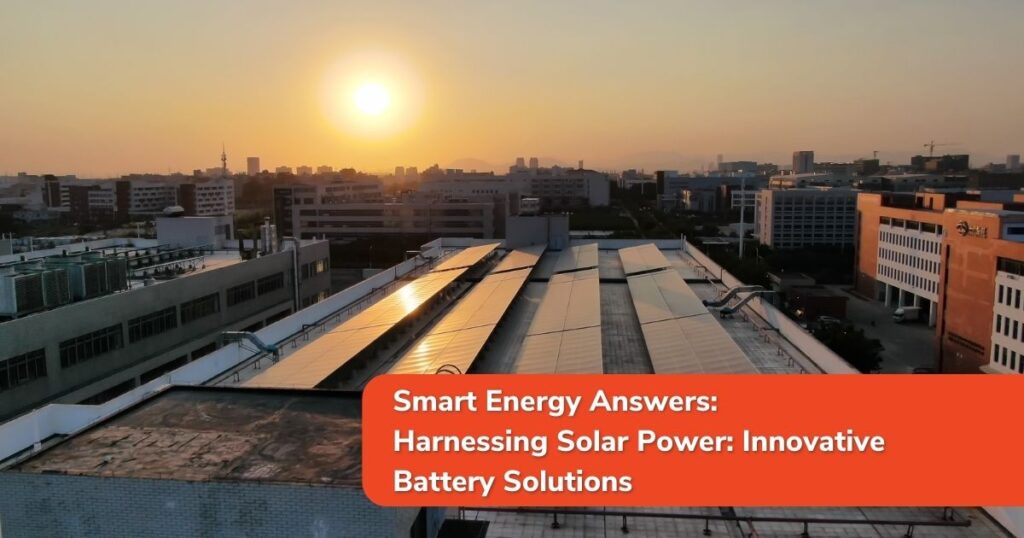
Harnessing Solar Power: Innovative Battery Solutions Smart Energy Answers June 3, 2026 Discover the Latest Advancements in Solar Battery Solutions for Sustainable Energy Usage Significance of Battery Storage in Maximising the Efficiency of Solar Power Systems Battery storage plays a significant role in maximising the efficiency of solar power systems. By storing excess energy generated during the day, batteries provide a reliable source of power during periods of low sunlight or high energy demand. This helps to ensure a consistent and uninterrupted supply of electricity, reducing reliance on the grid and promoting energy independence. Additionally, batteries allow for the optimisation of solar power systems by enabling the capture and utilisation of excess energy that would otherwise go to waste. This improves the overall efficiency of the system and maximises the return on investment for solar panel installations. How Solar Power Batteries Store and Distribute Energy Solar power batteries store and distribute energy through a process known as charge and discharge. During periods of excess solar energy production, the batteries absorb and store the energy for later use. This stored energy can then be discharged when the demand for electricity exceeds the supply from the solar panels. The charging process involves converting the solar energy into chemical energy, which is stored in the battery cells. This chemical energy is then converted back into electrical energy when needed. The distribution of energy from the battery to the electrical system is facilitated through an inverter, which converts the direct current, or DC, stored in the battery into alternating current, or AC, that can be used to power household appliances and devices. High-Capacity and High-Efficiency Lithium-Ion Batteries for Solar Applications Lithium-ion batteries have emerged as a popular choice for solar applications due to their high capacity and efficiency. These batteries offer a greater energy density, allowing for more energy storage in a smaller physical footprint. This is particularly beneficial for residential solar installations where space is limited. Furthermore, lithium-ion batteries have a longer lifespan compared to other battery technologies, making them a reliable and cost-effective solution for long-term energy storage. Their ability to handle high charge and discharge rates also contributes to their suitability for solar applications, as they can efficiently handle the fluctuating energy demands of a solar power system. Advancements in Flow Battery Technology Flow battery technology has seen significant advancements in recent years, offering improved efficiency and lifespan for solar applications. Flow batteries utilise two electrolyte solutions that flow through separate chambers and are separated by a membrane. This design allows for the independent scaling of energy storage capacity and power output. The advancements in flow battery technology have led to increased energy efficiency, with higher round-trip efficiency rates and reduced energy losses during the charging and discharging process. Additionally, the lifespan of flow batteries has improved, enabling longer-term and more reliable energy storage solutions for solar power systems. Introduction to Solid-State Battery Technology Solid-state battery technology is an emerging innovation in the field of energy storage and holds great potential for solar applications. Unlike traditional lithium-ion batteries, solid-state batteries replace the liquid or gel electrolyte with a solid material, which enhances their performance and safety. The use of solid-state electrolytes in batteries offers several benefits for solar storage. Higher energy density: Solid-state batteries allow for increased energy storage capacity in a smaller size. Improved safety: The solid electrolyte is less prone to leakage or thermal runaway. Longer cycle life: Solid-state batteries offer greater longevity and durability for solar power systems. Importance of Solid-State Batteries for Solar Applications Solid-state batteries are of significant importance in the realm of solar applications due to their enhanced safety, energy density, and longevity. The use of solid-state electrolytes eliminates the risk of leakage or combustion associated with traditional liquid electrolytes, ensuring a safer energy storage solution for both residential and commercial solar installations. Furthermore, solid-state batteries offer a higher energy density, allowing for greater energy storage capacity in a smaller physical footprint. This is particularly advantageous for applications where space is limited, such as rooftop solar systems. Additionally, the longer cycle life of solid-state batteries ensures a more durable and sustainable energy storage solution for solar power systems. Integration of Multiple Battery Technologies into Hybrid Energy Storage Systems The integration of multiple battery technologies into hybrid energy storage systems offers a comprehensive solution for solar applications. By combining different types of batteries, such as lithium-ion and flow batteries, hybrid energy storage systems can leverage the unique advantages of each technology and optimise their performance. For example, lithium-ion batteries can provide high-power output and handle rapid charge and discharge rates, while flow batteries can offer long-duration energy storage and high energy capacity. This combination allows for a more flexible and efficient energy storage solution that can adapt to varying energy demands and maximise the utilisation of solar power. Hybrid Energy Storage Systems in Optimising Performance, Reliability, and Cost-Effectiveness Hybrid energy storage systems play a crucial role in optimising the performance, reliability, and cost-effectiveness of solar power systems. By integrating multiple battery technologies, these systems can achieve a balance between power output, energy capacity, and longevity. The combination of different battery technologies allows for better load management, ensuring a stable and reliable power supply even during periods of high energy demand. This enhances the overall performance of the solar power system and reduces the reliance on the grid. Moreover, hybrid energy storage systems can contribute to cost-effectiveness by maximising the utilisation of renewable energy sources. By storing excess solar energy and utilising it during peak demand periods, homeowners can reduce their reliance on grid electricity and potentially lower their energy bills. Current Market Landscape for Innovative Solar Power Battery Solutions The current market landscape for innovative solar power battery solutions is rapidly evolving, driven by the increasing demand for sustainable energy storage options. Various companies and manufacturers are developing and introducing new battery technologies that offer improved performance, efficiency, and safety. The market is witnessing advancements in lithium-ion batteries, flow batteries, and solid-state batteries, each offering
Harnessing Renewable Energy Storage through Solar Batteries
Harnessing Renewable Energy Storage through Solar Batteries Smart Energy Answers June 3, 2026 Discover How Solar Batteries Are Revolutionising Renewable Energy Storage Discover how solar batteries are revolutionising renewable energy storage and paving the way for energy independence. Significance of Solar Batteries in Achieving Energy Independence Solar batteries play a crucial role in achieving energy independence by allowing us to rely on renewable energy sources. As we transition away from fossil fuels and towards renewable energy, it becomes essential to find effective ways to store and utilise the energy generated from sources like solar power. Solar batteries provide the backbone of energy independence by storing excess energy produced during periods of high sunlight and making it available for use during low sunlight periods or when demand exceeds supply. This ability to store and distribute renewable energy is a game-changer in our journey towards a sustainable future. Furthermore, solar batteries help to reduce our dependence on the traditional electrical grid. By storing energy locally, we can provide electricity to areas without access to grid infrastructure, such as remote communities or disaster-stricken regions. This decentralisation of energy production and distribution not only enhances energy independence but also improves the resilience and reliability of our energy systems. In addition, solar batteries support load-shifting strategies, allowing us to align our energy usage with solar production. This means we can prioritise using stored solar energy when the sun is not shining, reducing our reliance on non-renewable energy sources during peak demand times. By implementing load-shifting strategies, we can optimise our energy consumption and minimise our carbon footprint. Overall, the significance of solar batteries in achieving energy independence cannot be overstated. They enable us to harness the power of renewable energy sources like solar power, store excess energy, and distribute it when needed. Solar batteries are the key to unlocking the full potential of renewable energy and paving the way towards a sustainable and independent energy future. Overview of Different Types of Solar Batteries Solar batteries come in various types, each with its own set of advantages and characteristics. Two commonly used types of solar batteries are lithium-ion batteries and lead-acid batteries. Lithium-Ion Batteries Lithium-ion batteries are known for their high energy density, long lifespan, and fast charging capabilities. They are commonly used in portable electronic devices and electric vehicles. When it comes to solar energy storage, lithium-ion batteries are preferred for their efficiency in storing and releasing energy. They are also lightweight and require minimal maintenance. Lead-Acid Batteries Lead-acid batteries have been used for decades and are known for their reliability and affordability. They are suitable for applications that require deep cycling, such as solar energy storage. While lead-acid batteries have a lower energy density compared to lithium-ion batteries, they make up for it with their lower cost and wide availability. It’s important to consider the specific requirements of your solar energy system when choosing between different types of solar batteries. Factors such as energy storage capacity, lifespan, cost, and maintenance requirements should be taken into account to ensure optimal performance and longevity of your solar battery system. Ability to Store Excess Solar Energy for Low Sunlight Periods One of the key advantages of solar batteries is their ability to store excess solar energy for use during periods of low sunlight. Solar power generation is dependent on sunlight availability, which can vary throughout the day and across seasons. During times of high solar power generation, such as sunny days, the excess energy can be stored in solar batteries instead of being wasted. When sunlight is limited or not available, such as during nighttime or cloudy days, the stored solar energy can be utilised to power homes and businesses. This ensures a consistent and reliable energy supply, even when direct solar power generation is insufficient. By storing excess solar energy, solar batteries help to maximise the utilisation of renewable energy and reduce reliance on non-renewable energy sources. Additionally, solar batteries enable homeowners and businesses to become more self-sufficient by reducing their dependence on the electrical grid. With a properly sized solar battery system, it is possible to meet a significant portion of energy needs through stored solar power, reducing electricity bills and providing energy security. Implementing Load-Shifting Strategies Load-shifting strategies involve adjusting energy usage patterns to align with solar production. By shifting energy-intensive activities to times when solar power generation is high, we can maximise the utilisation of solar energy and reduce reliance on non-renewable energy sources. For example, using appliances such as washing machines, dishwashers, or charging electric vehicles during daytime hours when solar power generation is at its peak can help to optimise energy consumption. By utilising solar energy directly, rather than relying on grid electricity, we can reduce our carbon footprint and lower energy costs. Load-shifting strategies can be implemented through smart energy management systems that monitor solar power generation and adjust energy usage accordingly. These systems can prioritise using stored solar energy and automatically switch to grid electricity only when necessary. By implementing load-shifting strategies, we can make the most of our solar energy production and contribute to a more sustainable and efficient energy system. Providing Electricity in Areas Without Traditional Grid Infrastructure One of the significant benefits of solar batteries is their ability to provide electricity in areas without access to traditional grid infrastructure. Remote communities, off-grid locations, and disaster-stricken regions often face challenges in accessing reliable electricity sources. Solar batteries offer a solution by storing solar energy and providing a consistent power supply even in the absence of grid connections. By installing solar panels and batteries, these communities can generate their own electricity and become self-sufficient. Solar power systems combined with batteries can power essential appliances, such as lights, refrigeration, and communication devices, improving the quality of life and enabling economic activities. Additionally, solar batteries can serve as a backup power source during emergencies, ensuring critical services such as healthcare facilities, schools, and community centres remain operational. The ability of solar batteries to provide electricity in areas without access
Solar Batteries vs. Traditional Backup Generators
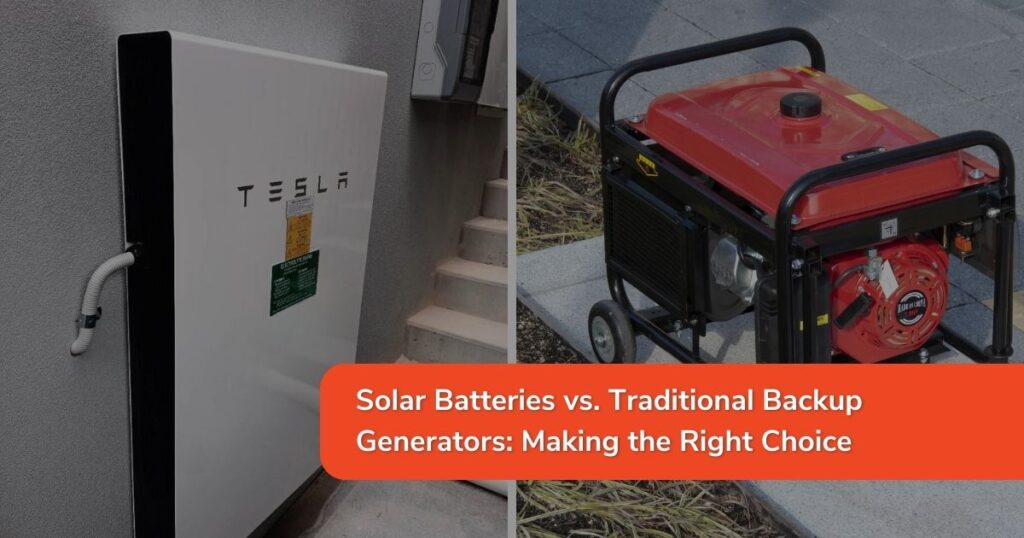
Solar Batteries vs. Traditional Backup Generators Smart Energy Answers June 3, 2026 In a country that’s no stranger to power outages due to extreme weather conditions, the decision between adopting solar batteries or sticking with traditional backup generators is becoming increasingly pertinent. As consumers weigh the environmental benefits against costs and practicality, it’s essential to understand which solution aligns best with their needs and values. Here, we dive into the specifics to help Australian homeowners navigate this pivotal choice. Traditional Backup Generators: The Workhorse of Blackouts When it comes to reliability during power cuts, traditional backup generators have long been the go-to solution for Australian homes. Known for their robustness and ability to deliver a significant amount of power, generators are undeniably effective. However, they do come with their own set of drawbacks. Pros of Generators Generators can offer a substantial and immediate power supply, particularly important for those needing to maintain critical electrical systems, such as medical equipment. They also do not rely on the sun or weather conditions, ensuring a constant energy supply even during prolonged overcast periods. Cons of Generators Despite their dependability, generators are not without fault. The need for regular maintenance and refuelling makes them a relatively high-maintenance investment. Moreover, their emissions contribute to air pollution, a growing concern for sustainability in Australia. Solar Batteries: The Rising Star of Renewable Resilience As the solar industry advances, solar batteries like SolarEdge Home Battery and Tesla Powerwall represent a significant leap in the efficiency and convenience of backup power solutions. Unlike generators, they harness the power of the sun, making them an environmentally friendly alternative with an edge in the long term. Pros of Solar Batteries Solar batteries store energy from your solar panels for use when the sun isn’t shining, effectively making them a clean, sustainable, and increasingly cost-effective solution. They require minimal upkeep, are virtually silent in operation, and can be seamlessly integrated into your existing solar system. Cons of Solar Batteries It’s not all sunshine with solar batteries, as their upfront cost remains a barrier for many. Additionally, their storage capacity can be limiting, especially if the frequency and duration of outages are unpredictable or varied. Comparison and Considerations: What Fits Your Lifestyle? The choice between solar batteries and traditional backup generators isn’t cut and dry. It depends on various factors, including your home’s energy consumption, budget, and commitment to sustainability. Cost Comparison In terms of initial cost, traditional backup generators are commonly cheaper to install. However, when considering the life cycle of the investment, ongoing fuel and maintenance costs may tip the balance in favour of solar batteries. Reliability and Performance Comparison In terms of reliability, generators offer immediate power, but they do require fuel that may not always be readily accessible. Conversely, solar batteries are constantly charged during daylight hours, ensuring a renewable and consistent supply of power. However, the system itself may be less powerful in a single burst than a generator. Suitability for Different Energy Needs For homeowners with high energy needs during outages, such as those with large families or extensive home office requirements, a generator’s high output capacity may be more suitable. Smaller households or those with more modest energy needs could easily be covered by a solar battery system. Making an Informed and Green Choice Ultimately, the decision between solar batteries and traditional backup generators is a personal one, guided by your specific needs and values. As Australia continues its green energy revolution, considering the long-term environmental impact of your choice is crucial. It’s about creating a resilient and sustainable energy plan that not only keeps the lights on but also ensures a brighter, greener future for all Australians. For expert guidance tailored to your specific needs, contact Smart Energy Answers today.
Exploring Lithium-Ion vs. Lead-Acid Batteries for Solar
Exploring Lithium-Ion vs. Lead-Acid Batteries for Solar Smart Energy Answers June 3, 2026 Choosing the right battery for your solar energy system is a crucial decision that can have a lasting impact on your system’s performance and your long-term energy goals. As solar energy gains popularity across Australia, the comparison between the two primary alternatives in energy storage becomes increasingly significant. This discussion revolves around the choice between lithium-ion batteries, such as Tesla Powerwall and SolarEdge Home Battery, and lead-acid batteries. Let’s delve into the details to help you make an informed decision tailored to your needs and environmental concerns. Lithium-Ion Batteries: The Pinnacle of Solar Storage When it comes to lithium-ion batteries and solar energy, the buzzword is efficiency. These batteries have set a new standard in energy storage technology, and for good reason. Advantages of Lithium-Ion High Energy Density Compared to lead-acid batteries, lithium-ion batteries can store more energy per unit volume. This high energy density is a game-changer for homeowners with limited space or those aiming to store a large amount of solar energy for later use. Longer Lifespan The durability of lithium-ion batteries is impressive. They can withstand thousands of charge cycles, potentially outlasting the solar panels they support. Their resilience makes them a cost-effective option in the long run. Faster Charging Lithium-ion batteries can be charged at a significantly faster rate than lead-acid counterparts, making them more effective at capturing and storing the intermittent energy produced by solar panels. Disadvantages of Lithium-Ion Higher Initial Cost The downside of lithium-ion technology is the initial investment, which can be quite steep. However, the plummeting prices due to technological advancements are making them more accessible over time. Temperature Sensitivity Extreme temperatures can degrade the performance of lithium-ion batteries. While some models come with built-in temperature control, this is a factor to consider, particularly in the Australian climate. Lead-Acid Batteries: Traditional Reliability Lead-acid batteries have been the go-to for solar energy storage for decades, and they still hold their own against their newer, flashier lithium-ion rivals. Advantages of Lead-Acid Lower Initial Cost Perhaps the most significant advantage of lead-acid batteries is their cost. The lower upfront investment can be an attractive proposition for those on a tighter budget or for whom immediate affordability is a priority. Wide Availability Lead-acid batteries are ubiquitous, with a robust infrastructure designed to support them. This means easier access to replacement parts and a wider network of service providers. Tolerance to High Temperatures Unlike lithium-ion batteries, lead-acid batteries are less likely to be negatively affected by the hotter Australian climate. This can translate to greater operational stability, especially in regions with extreme weather. Disadvantages of Lead-Acid Lower Energy Density One of the main drawbacks of lead-acid batteries is their larger size and weight for the same energy storage capacity provided by lithium-ion batteries. This can limit their use, particularly in residential settings with space constraints. Shorter Lifespan Lead-acid batteries typically offer fewer charge cycles than lithium-ion batteries, which means more frequent replacements and a potentially higher long-term cost of ownership. Slower Charging The charging speed of lead-acid batteries can be a sticking point when it comes to efficient use of solar power, especially during periods where rapid energy storage is crucial. Critical Factors to Weigh The decision between lithium-ion and lead-acid batteries isn’t just about the technology. It’s about finding the best fit for your unique scenario. Cost Evaluate not only the initial cost but the total cost of ownership over the battery’s lifespan. Consider maintenance, replacement, and energy savings when making your calculations. Additionally, it’s crucial to explore available government rebates or interest-free loans for solar battery storage, as these incentives can significantly impact the overall financial equation. Energy Efficiency Higher energy efficiency means more of your solar energy is stored for use. Lithium-ion batteries’ ability to charge and discharge without significant energy loss could be a significant factor in the return on investment of your solar investment. Lifespan A more extended battery lifespan might justify a higher upfront cost. Compare warranties and expected lifespans to determine which option aligns with your financial and environmental objectives. Environmental Impact For eco-conscious homeowners, the environmental impact of the manufacturing and disposal of batteries is a key concern. Lithium-ion batteries tend to have a smaller carbon footprint, but the entire lifecycle must be considered. Making the Right Investment in Solar Energy The benefits of incorporating a battery into your solar energy system are increasingly clear, not only for personal energy independence but also for the health of our planet. As you explore lithium-ion and lead-acid batteries, keep in mind the unique strengths and weaknesses of each technology. Consider consulting a professional to conduct an energy audit and help you select the best storage solution. Your solar energy system should be tailored to meet your specific needs, climate conditions, and long-term sustainability goals. It’s time to take charge, literally and figuratively, of your energy future. Ready to invest in sustainable solar storage? Make sure to weigh your options carefully and don’t shy away from embracing the technology that will take your solar energy game to the next level. Contact us today to help you make an informed decision on your solar and battery needs.
Enhancing Home Resilience with Solar Battery Backup
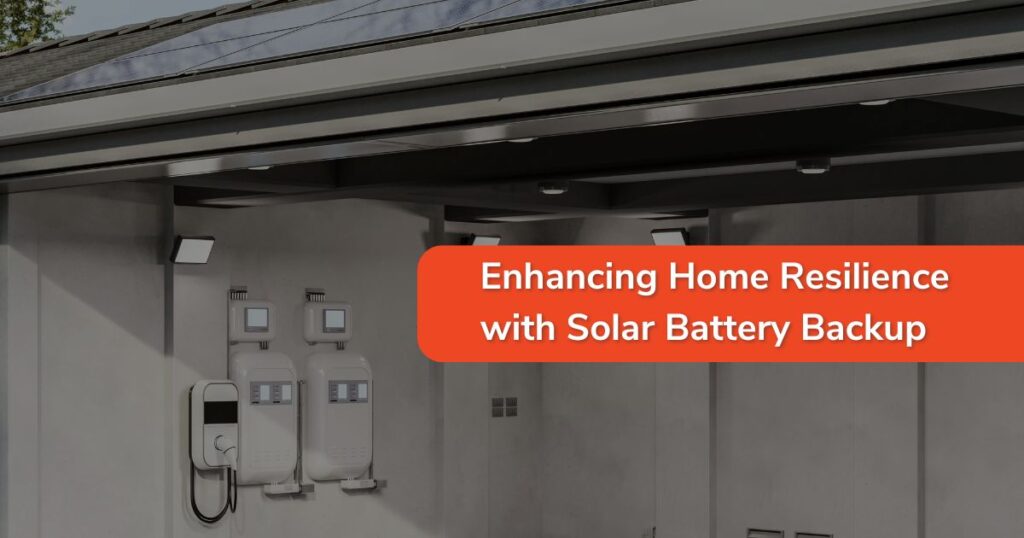
Enhancing Home Resilience with Solar Battery Backup Smart Energy Answers June 3, 2026 In our ever-changing world, resilience has become a virtue, especially when it comes to our homes and the energy that powers them. As the environmental landscape shifts and our power grids are tested, the quest for sustainable and reliable energy solutions takes centre stage. This desire for stability is driving a surge in home solar technologies, particularly those equipped with battery backup systems capable of turning homes into self-sustaining power hubs. Smart Energy Answers, a leader in the Australian market, is at the forefront of this green revolution, offering homeowners Smart Solar Panels, SolarEdge Home Battery, the Tesla Powerwall Battery, Enphase Microinverters, SolarEdge Power Optimisers, SolarEdge Inverters, and EV chargers. The selection is vast, but the message is clear: solar battery technology has evolved, and it’s ready to transform the way we think about home energy. The Solar Revolution Down Under In Australia, the allure of solar energy is undeniable. With its abundant sunshine and a community that increasingly values environmental stewardship, solar power is not just a trend. It’s a movement. The Australian government’s commitment to sustainability through initiatives like the Renewable Energy Target has further fuelled the adoption of solar technologies. But harnessing the sun is only half the battle. The key to unlocking solar energy’s full potential lies in storage, securing a way to capture and reuse solar power even when the sun sets. This is where solar battery backup systems shine, promising homes an uninterrupted and self-generated power supply. The Power Players: Solar Battery Choices for Modern Homes As homeowners set out to embrace this solar narrative, they are presented with a critical choice: the device that will store their solar energy and safeguard their energy independence. Here’s a closer look at two standout options: SolarEdge Home Battery The SolarEdge Home Battery combines cutting-edge efficiency with an easy-to-use interface. With an impressive 94.5% round-trip efficiency and the ability to stack up to 3 batteries per inverter, SolarEdge’s offering is positioned for homes with a substantial energy appetite. The battery’s DC-coupled technology not only averts the triple-conversion efficiency penalty but also generates up to 30 days’ worth of additional power annually. One of the first residential batteries to meet the stringent UL9540A unit level test for fire safety, the SolarEdge Home Battery is designed for indoor installations, making it an ideal space-saving solution. Integrate the SolarEdge Home Battery with the Home Hub Inverter and Home Backup Interface, and your home will have a reliable backup system that ensures your essentials keep running during outages. Tesla Powerwall Battery The Tesla Powerwall is a symbol of innovation and modern design. Boasting 13.5 kWh of energy capacity and 90% round-trip efficiency, the Powerwall has the muscle to power homes through the night and beyond. Its quick backup transition ensures a seamless switch to battery power when the grid falters, and its compact design offers versatile mounting options for indoor or outdoor use. More than just a battery, the Powerwall is a smart energy hub. With its app, homeowners can monitor their energy usage, set customised preferences, and control their power system remotely. Whether used in tandem with solar panels or as a standalone solution, the Powerwall keeps homes running with clean energy. Why Choose Smart Energy Answers for Your Solar Journey? Smart Energy Answers goes beyond providing a mere transaction. It offers a partnership in the solar journey. Superior Products for Longevity The Smart Energy Answers product range is carefully curated to offer the best value and performance. From the longevity of HT Smart Solar Panels with their 30-year warranty, to the reliability of SolarEdge and the streamlined efficiency of Enphase Microinverters, the company takes pride in offering quality that lasts. Expertise in Solar Systems and Beyond With a team of seasoned consultants, Smart Energy Answers simplifies the complexities of solar installation. From the initial assessment to choosing the right system and guiding through sun-power financing, the company’s expertise is a reassuring hand in the solar journey. Tailored Solutions for Financial Freedom The financial landscape should not be a barrier to sustainable energy. Through innovative partnerships like the one with Nectr, Smart Energy Answers brings solar within financial reach. The pay-as-you-save model allows for low upfront costs at zero interest, a testament to the company’s dedication to accessibility. Steadfast Commitment to Customer Comfort A solar system is more than a transaction. It’s a lifestyle enhancement. Smart Energy Answers focuses on ensuring customers are delighted with their choice. The commitment to a smooth experience, from installation to post-sales support, encapsulates the company’s ethos of customer satisfaction. Embracing the Future with Solar Resilience The solar battery market not only represents the vanguard of renewable energy but also the forefront of home resilience. As we navigate a future that demands adaptability, the security and sustainability that solar battery backups offer are indispensable. For homeowners in Australia, the decision to embrace solar energy transcends a financial or environmental investment. It paves the way for an empowered lifestyle. With options like those provided by Smart Energy Answers, the transition to solar becomes not just a practical upgrade, but a smart, thoughtful, and resilient leap into the future. If you’re ready to make the solar shift, Smart Energy Answers stands ready to be your ally. Contact us today to start your solar journey and fortify your home with the power of the sun.
Advancements in Battery Chemistry for Solar Applications
Advancements in Battery Chemistry for Solar Applications Smart Energy Answers June 4, 2026 The Australian solar landscape is evolving, and nowhere is this more apparent than in the dynamic advancements of battery chemistry within the solar energy industry. As the world seeks sustainable and efficient power solutions, the role of cutting-edge battery technology cannot be overstated. This blog post dives deep into the intricacies of battery chemistry, exploring not just the science but also the practical impact of the latest innovations in solar applications. Understanding Battery Chemistry Basics Before we can grasp the significance of advancements, it is vital to understand the fundamental battery chemistries at play in solar applications. These chemistries, though diverse, share a common goal: to store the energy harvested by solar panels for later use. The Chemistry of Lead-Acid Batteries Historically significant in the storage of solar energy, lead-acid batteries are renowned for their robustness and cost efficiency. The simple chemical reaction between lead dioxide, sulphuric acid, and lead provides a reliable means of energy storage, albeit with limitations in cycle life and energy density. Lithium-Ion’s Reign in Energy Storage Lithium-ion, or Li-ion, batteries have revolutionised energy storage with superior energy density and longer cycle life compared to lead-acid batteries. They operate on the transfer of lithium ions between the positive and negative electrode materials, typically graphite and a high-energy cathode, during charge and discharge. Vanadium Redox Flow Batteries Flow batteries conceptually differ from traditional Li-ion technology. They use vanadium dissolved in an acid electrolyte, with the energy storage taking place in two separate tanks, making the battery’s energy capacity and power independent of each other. The Emergence of Solid-State Batteries Solid-state batteries, an exciting frontier in solar applications, avoid the liquid electrolytes of traditional batteries in favour of solid electrolytes. This offers the potential for safer, denser, and more robust energy storage devices. The Cutting Edge: Advancements in Battery Chemistry With the basics in our arsenal, we now explore the significant strides being made in battery chemistry and what they mean for solar in Australia. The Lithium-Ion Leap Lithium-ion batteries continue to see advancements not just in energy density, which is crucial for increasing the amount of renewable energy that can be effectively stored, but also in safety features. These include solid ceramic electrolytes that help prevent the growth of dendrites, which can cause short circuits. The Rise of Solid-State Batteries Solid-state batteries present the possibility of an order-of-magnitude jump in energy density due to the elimination of flammable liquid components and the use of lithium metal anodes. Furthermore, solid-state design may allow for wider temperature ranges, a critical factor for solar applications in variable environments. Flow Batteries: A Long-Duration Play Flow batteries, with a focus on decoupling power and energy, offer extended cycle life and are not as susceptible to performance degradation over time as Li-ion batteries. This technology may prove pivotal in storing solar energy for long durations, a key requirement for grid stability. Impact on Solar Energy Systems Advanced battery chemistries are not mere theoretical concepts. They have tangible impacts on the efficacy and sustainability of solar energy systems. Unleashing Greater Energy Storage The most immediate impact is expanded storage capacity. Batteries built on advanced chemistries can store more energy in less space, which is critical for residential applications where space is a premium. Enhancing Efficiency and Performance Lithium-ion’s high charge and discharge efficiency translates to lower energy losses, especially when coupled with solar panels. Additionally, the ability of smart batteries to learn usage patterns and optimise charging and discharging further boosts performance. Democratising Solar with Cost-Effective Solutions As advancements drive down costs, solar with storage becomes more accessible. Homeowners in Australia can now equip systems that harness renewable energy and reduce dependency on the grid, even during peak demand hours. Case Studies and Real-World Examples To understand the practical implications of advanced battery chemistry, case studies provide crucial insights. Off-Grid Solutions Redefined Remote Australian communities that were once reliant on expensive and environmentally harmful diesel generators are now turning to solar paired with advanced batteries to ensure a reliable power supply. The Suburban Powerhouse Residential properties with solar and storage solutions are achieving unprecedented energy independence. Not only are they minimising their carbon footprint, but they’re also gaining a degree of power security that was once the preserve of large corporations. The Industrial Sector Awaits Large-scale solar installations, coupled with cutting-edge storage solutions, are poised to transform the industrial sector. They offer clean and reliable power, reduce operational costs, and contribute to a greener economy. Looking to the Future As we gaze towards the horizon, the potential for even more transformative battery technologies is compelling. Beyond Lithium: Other Future Perspectives Lithium, though the current poster child of battery chemistry, is not the only contender for the future. Research into post-lithium technologies like sodium, zinc, and even organic compounds could further diversify the energy storage landscape. The Synergy of Electric Mobility and Solar As electric vehicles, or EVs, proliferate, the synergy between EV batteries and solar systems presents yet another avenue for sustainable power solutions. The bidirectional charging capability of future EVs could turn them into mobile energy storage units, enhancing grid stability. Australian Innovations at the Vanguard Australia’s unique energy challenges and abundance of renewable resources position it as a crucible for innovation in solar battery technology. Market leaders including SolarEdge and Tesla are at the forefront, developing and deploying solutions that are shaping the future of solar energy, not just in the country, but globally. The Path Forward for Australian Consumers Understanding the trajectory of battery technology allows Australian consumers to make informed decisions about embracing solar. It’s an exciting time to harness the power of the sun, converting it into clean, reliable, and efficient energy to power our everyday lives. Embracing Advanced Solar and Storage Solutions For Australians considering a switch to solar energy, the message is clear: advanced battery technology like the SolarEdge Home Battery and Tesla Powerwall can make your solar investment more effective and future-proof.
Old String Inverters versus Micro Inverters & DC optimisers
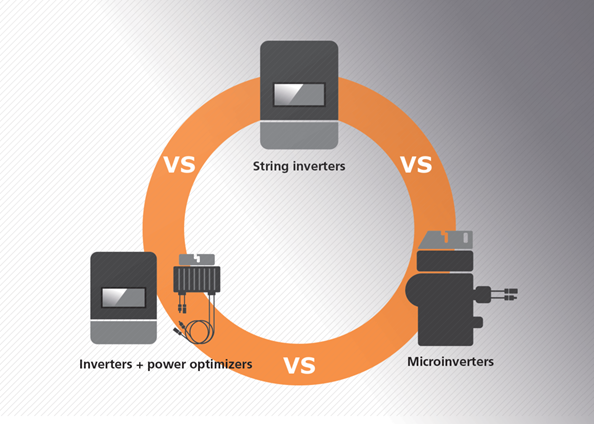
Old String Inverters versus Micro Inverters & DC optimisers Smart Energy Answers February 8, 2024 Types of Solar Inverters There are three main types of inverters currently available for your solar energy system: string inverters, power optimiser systems, and microinverters. Power optimiser systems are also known as string inverters with power optimisers. Power optimisers and microinverters are often collectively referred to as Module-Level Power Electronics, or MLPEs. String inverters are by far the most commonly deployed inverter option globally and make up the majority of the world’s inverter market. However, MLPE technologies have gained market share over the last five years as their costs have come down. String Inverters String inverters are the most cost-effective inverter option available. Traditionally, a solar installation company would propose a string inverter for your system if your roof had limited shading throughout the day and did not face multiple directions, such as a gabled roof. However, thanks to recent hardware and software updates from major string inverter companies, string inverters are now suitable for a wider range of circumstances. How String Inverters Work Your solar panels are arranged into groups connected by strings, which is where the name comes from. You can connect multiple strings of panels to a single centralised inverter, which transforms the DC electricity produced by the panels into usable AC electricity for your home or business. Power Optimisers Power optimiser systems offer many of the same benefits as microinverters. They are often considered a compromise between microinverters and standard string inverters. How Power Optimiser Systems Work Like microinverters, systems with power optimisers have an individual optimiser component located at each panel. However, instead of converting DC electricity to AC electricity at the panel, they condition the DC electricity and send it to a string inverter for conversion. If your roof experiences shade during the day, the panel-level optimisation provided by power optimisers often results in higher system efficiency than using a string inverter alone. Like microinverters, power optimisers not only reduce the impact of panel shading on system performance, but also offer panel-level performance monitoring. Microinverters Microinverters, another form of MLPE, are rapidly gaining popularity, particularly for residential solar panel systems. How Microinverters Work Systems with microinverters typically have an individual microinverter installed on the back of each solar panel. They convert the DC electricity from your solar panels into AC electricity directly on your roof, with no need for a separate string inverter. In most cases, installers mount the microinverters onto the back of the solar panel itself. They can also be placed next to the panel on your solar racking system. Microinverters take Module-Level Power Electronics, or MLPE, to the logical conclusion. While power optimisers aggregate the electricity from your panels and send it to a string inverter for DC to AC conversion, microinverters complete the DC to AC conversion directly at each individual solar panel. As a result, just like power optimiser systems, microinverters also allow you to monitor the performance of individual solar panels. Smart Modules Many microinverter and power optimiser companies are partnering with solar panel manufacturers to create smart modules. Simply put, a smart module is a solar panel with a piece of Module-Level Power Electronics, or MLPE, equipment already integrated into it. This simplifies installation and can help reduce labour costs for installers. Many of the world’s biggest panel manufacturers now have smart module options available.
Smart Energy Answers: Tesla Premium Certified Installer in 2024
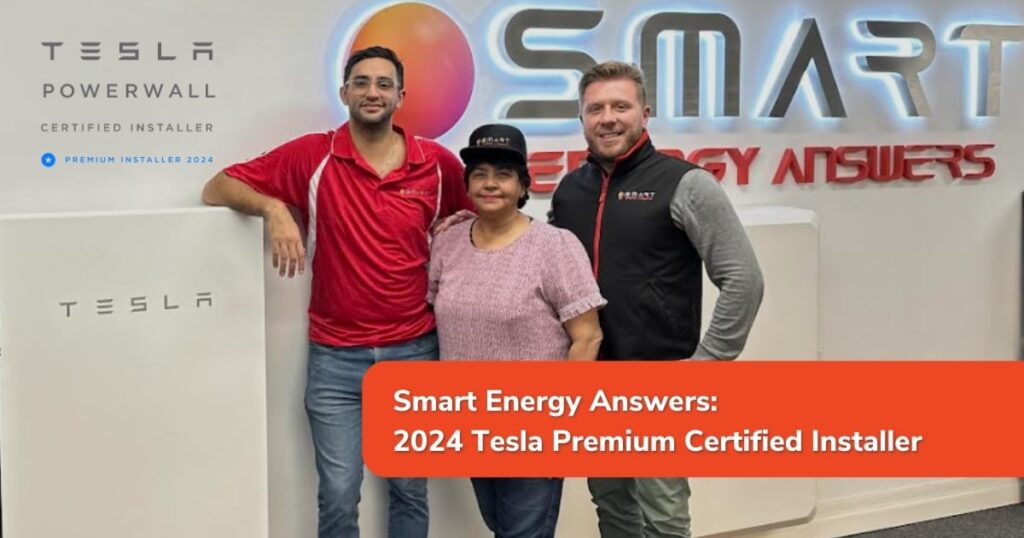
Smart Energy Answers: Tesla Premium Certified Installer in 2024 Smart Energy Answers February 2, 2024 Smart Energy Answers Retains Tesla Premium Certified Installer Status in 2024 At Smart Energy Answers, we are proud to retain our prestigious title as a Tesla Premium Certified Installer in 2024. This certification is not just a badge of honour. It is a testament to our unwavering commitment to excellence and innovation in the renewable energy sector. We are excited to share this news with you, and we have a special offer just for you. You will not want to miss this incredible opportunity. Our Journey to Certification Becoming a Tesla Premium Certified Installer is no easy achievement. It requires fulfilling rigorous criteria, including: Exceptional installation quality. In-depth product knowledge. Outstanding customer experience. A long-standing partnership with Tesla. Most importantly, alignment with Tesla’s mission. This alignment goes beyond believing in the product. It reflects a dedication to pushing the boundaries of sustainability. Through our rigorous training and certification programmes, we have demonstrated proficiency and unwavering dedication to every aspect of the solar energy ecosystem. This helps us guarantee premium service to our valued clients. The Significance of Tesla Certification Why does being a Tesla Premium Certified Installer matter? Apart from its exclusivity, this certification represents a seal of quality. It assures customers that the certified installer has the necessary expertise and training to handle Tesla products and technologies with precision. For customers, our certification provides assurance that they are dealing with a reputable company with a proven track record of successful installations. With Tesla’s innovative line of energy products, our designation as a Premium Certified Installer means we are at the forefront of technology. It allows us to offer the latest and best solutions to our customers. A Partnership With Countless Benefits Choosing to work with a Tesla Premium Certified Installer brings numerous advantages for those investing in solar and renewable energy solutions. The primary consideration is the guarantee of quality. By having Tesla products installed by a certified installer, you can be confident that the product will reach its full potential without compromising performance. Moreover, the extensive training our installers undergo translates into an enhanced customer experience. They are equipped to address queries with confidence and offer valuable advice throughout the process. Exceeding Certification Standards At Smart Energy Answers, our commitment to maintaining our Tesla certification goes beyond satisfactory compliance. It represents a promise to surpass benchmark standards. We continually invest in our team to ensure they remain at the forefront of product knowledge. We also continuously enhance our installation processes to align with the latest Tesla guidelines and product updates. These continuous improvements not only help us retain our certification, but also drive growth, innovation, and best service practices for our valued customers. Your Premium Partner for Sustainable Solutions With Smart Energy Answers’ Tesla Premium Certification, the future of renewable energy in 2024 and beyond shines brightly. As the world increasingly embraces sustainable living, companies like ours play an important role in unlocking the potential of clean energy solutions. This accreditation not only acknowledges our hard work, but also serves as a clear signal to those looking to invest in renewable energy. It shows that they have a premium partner in their sustainability journey. It is not just about the title. It is about the capability that comes with it. Smart Energy Answers’ Tesla Premium Certification ensures that when you choose us, you get a partner who is trained, trusted, and at the forefront of technology. So, why settle for less when you can have one of the best in the business to power your progress towards a greener future? Celebrating With an Exclusive Offer We are thrilled to announce an exclusive offer for our Tesla Powerwall 2 installations. To celebrate our prestigious title as a Tesla Premium Certified Installer, we are offering a $750 rebate on the installation of Tesla Powerwall 2, making it even more affordable to switch to renewable energy. You can secure this cutting-edge technology with just a $750 deposit and enjoy interest-free payments of $235 monthly for 5 years. For our customers in the Sydney Metro area, we’re delivering an additional bonus: an extra $750 rebate if the system is installed before 29 February 2024. This is our way of helping you make the move towards a more sustainable future. Ready to make a positive change for the planet and your pocket? Don’t delay. Contact one of our energy experts today. We’re eager to provide a personalised solar energy solution tailored to your home’s specific needs. Experience the difference of working with a Tesla Premium Certified partner: Smart Energy Answers. Make the switch to a sustainable future now. Contact us today.
2024 Best-Value Solar Battery Prices in Australia
2024 Best-Value Solar Battery Prices in Australia Smart Energy Answers January 19, 2024 Best-Value Solar Battery Prices for 2023 to 2024 In the quest for a sustainable future, the combination of solar energy and batteries should be a top priority. Adopting a solar battery is a powerful move towards energy resilience. It is essential for households to consider energy storage to save more on electricity bills, earn credits, and become more environmentally friendly. In this in-depth blog, we’re uncovering the best-value solar battery prices for 2023 to 2024. So, take a seat, relax, and let’s navigate the solar battery landscape together for the most value. What Is a Solar Battery? Ever wish you could bottle up sunshine? Solar batteries are the next best thing. These advanced devices present a practical solution for those exploring solar energy for the first time. By efficiently storing surplus energy generated by solar panels, solar batteries serve as a dependable reservoir, helping ensure continuous power availability even when faced with cloudy skies. For experienced solar users, this can feel like having a virtual power plant readily accessible. The stored energy becomes a valuable asset during peak-demand periods and offers a strategic solution when grid reliability falters. Whether you’re new to solar or a seasoned enthusiast, solar batteries empower you with greater control, regardless of weather conditions. The Absolute List of Solar Battery Prices in 2023 to 2024 It does not take an economics degree to understand that electricity prices are likely to become more expensive over time. This is because solar and other green energy sources are now preferred over non-renewable sources to help protect the planet. So, if you’re in the market for home solar batteries, it is smart to stay informed, not just for the environment but also for your wallet. Below, you will find a list of popular solar battery prices by brand, along with their key features. Alpha ESS B3+ 5 kWh Approximate installation cost: $6,500 Tailored for retrofit applications, the SMILE-B3-PLUS is a cost-effective and easily installable solution. With a 3 kW AC-coupled design and a built-in 5.04 kWh battery, it caters to various retrofit needs. It also offers scalability, with the option to expand its capacity up to 30.24 kWh. Modular Design Battery for Easy Installation and Expansion Compatible with all solar inverters: The Alpha Smile B3 Plus offers versatility by being compatible with all solar inverters, ensuring seamless integration with various solar power systems for maximum energy efficiency. All-in-one module: This residential energy storage system combines multiple functions into a single, compact unit, streamlining its design and providing users with a comprehensive solution that optimises space and functionality. VPP ready: With Virtual Power Plant, or VPP, readiness, the Alpha Smile B3 Plus enables users to participate in advanced energy management systems, contribute to grid stability, and access potential benefits through demand response programmes. Slim but powerful: Despite its sleek and space-saving design, the Alpha Smile B3 Plus delivers strong performance with its 3 kW capacity, helping homeowners effectively store and utilise solar energy without compromising on performance. Franklin Home 13.6 kWh Approximate installation cost: $12,000 Franklin Home Power extends beyond the need for secure backup. It prioritises the optimisation of daily household energy management for comprehensive whole-home energy independence. At the core of Franklin Home Power are the aGate intelligent controller, aPower batteries, and the FranklinWH app. Energy Independence and Security Robust: Franklin Home Power offers a robust solution with a remarkable 12-year product and performance warranty, ensuring long-term reliability and peace of mind for users. Safe: Safety is prioritised with Franklin Home Power’s cobalt-free Lithium Iron Phosphate, or LFP, battery, providing a secure and environmentally conscious energy storage solution. Reliable: The system provides a level of reliability comparable to Uninterrupted Power Supply, or UPS, standards, helping ensure a continuous and stable power source. Versatile: Franklin Home Power is generator-compatible, supports full off-grid scenarios, and provides comprehensive blackout backup for entire homes. Scalable: With a scalable 13.6 kWh battery and the capability for up to 15 parallel connections, Franklin Home Power offers adaptability to various energy needs, making it suitable for a range of applications. Smart: The system’s intelligence is demonstrated through auto load-shedding, a smart feature that optimises backup time by dynamically adjusting to changing power demands and ensuring efficient energy utilisation. Qcells Q.HOME – 6.86 kWh Approximate installation cost: $7,000 This AC-coupled storage solution seamlessly integrates with any solar system and offers an exclusive 15-year product warranty. The modular Q.SAVE battery, with a base capacity of 6.86 kWh, can be easily scaled up to a maximum of 20.5 kWh by combining up to three units. The Q.SAVE system is complemented by the high-performance Q.VOLT H5 inverter, providing a robust 5 kW of charge and discharge power. Performance and Flexibility Without Compromise Easy installation: The improved design ensures convenience and a straightforward installation process for an optimal user experience. Dynamic optimiser mode: Leveraging real-time weather data, the dynamic optimiser mode is designed to maximise energy yields through an algorithmic approach. Scalable battery: The battery is scalable, offering options ranging from 6.8 kWh, 13.7 kWh, and 20.5 kWh, ensuring a tailored solution to meet your unique energy requirements. ATS-free seamless control: Experience continuous and stable backup without the need for an Automatic Transfer Switch, or ATS, during grid faults and restoration. Extended warranty: Benefit from an extended 15-year product and performance warranty, supported by rigorous quality control measures for added assurance. Enhanced reliability: The system offers outstanding reliability through the use of Samsung SDI battery cells, helping ensure consistent performance. Tesla Powerwall – 13.5 kWh Approximate installation cost: $15,000 Tesla’s dominance in solar storage and solar battery systems is the result of combining sophisticated design with exceptional functionality and market-leading features. Renowned for reliability, Tesla has emerged as a leading name in solar storage solutions. Tesla home batteries come into their own when solar panels face limitations, such as during nighttime, overcast weather, or power outages. This helps ensure a seamless and continuous power supply, even when
Power of Tesla Powerwall 2: Efficiency, Savings, and Reliability
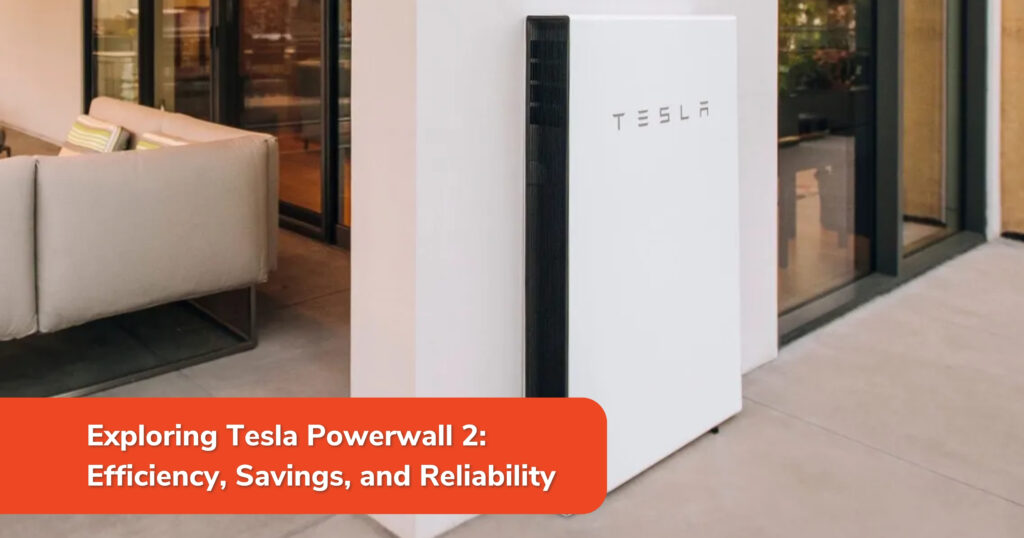
Power of Tesla Powerwall 2: Efficiency, Savings, and Reliability Smart Energy Answers September 14, 2023 The Power of Tesla Powerwall 2: Efficiency, Savings, and Reliability In today’s world, the popularity of Tesla Powerwall 2 is undeniable. As more homeowners and businesses in Australia seek cleaner and more efficient energy solutions, the Powerwall stands out as a favourite premium choice. However, we understand that embracing this cutting-edge technology can feel like a daunting task. At Smart Energy Answers, we are here to demystify the Powerwall’s features and help you make informed decisions about your energy future. Let’s explore what makes Tesla Powerwall 2 so popular and how it can benefit you. Saving Money with Tesla Powerwall Wondering how the Tesla Powerwall can help you save money on electricity bills in Australia? By storing excess solar energy generated during the day, the Powerwall allows you to use that energy when the sun sets. This reduces your reliance on the grid and can significantly lower your energy costs. Not only does the Powerwall help you save money, but it can also support access to government incentives and rebates available in Australia. The government offers various incentives for solar and battery installations, and the Powerwall may qualify for these programmes depending on your location and eligibility. This makes your investment even more appealing, helping you recoup costs faster. And what about those dreaded blackouts or grid outages in Australia? Tesla Powerwall has your back. It helps ensure your home stays powered, even when the grid falters. Say goodbye to disruptions and hello to uninterrupted power, no matter what nature throws your way. Performance and Comparison Tesla Powerwall packs a punch when it comes to energy storage. It can store a significant amount of energy, and the duration it can power your home depends on your energy consumption. Our experts can calculate the ideal setup for your needs, helping ensure you maximise your investment. In the Australian climate, efficiency and durability are essential. Tesla Powerwall’s battery is built to withstand the rigours of Australian weather, helping it remain efficient and serve you for years to come. How does Tesla Powerwall compare to other solar battery options available in Australia? It is a standout choice. With cutting-edge technology, reliability, efficiency, and a high 13.5 kWh capacity, it is a top performer in its class. Is Tesla Powerwall compatible with different types of solar panel systems in Australia? Absolutely. It seamlessly integrates with various solar panel systems, ensuring compatibility with your setup. Installation and Costs Curious about the installation process for Tesla Powerwall? At Smart Energy Answers, we have it down to a science as a Tesla Premium Certified Installer. We have also been awarded the Tesla Performance Excellence Award for Q1 2023. Our expert team makes the installation process seamless and hassle-free. Depending on your setup, installation typically takes just a day or two, so you can start enjoying the benefits in no time. When it comes to costs, the price typically starts at $14,497 if eligible for rebates. But we have fantastic news. As a Tesla Powerwall Certified Installer, we are thrilled to offer you an exclusive deal. You can claim a $750 upfront discount and receive an additional $750 cashback when you install Tesla Powerwall 2 before 31 December 2023. It is a smart investment that can pay off in more ways than one. And there is more. Now, embracing the power of Tesla has never been more affordable. You can now have a Tesla Powerwall 2 installed for a low upfront cost and for as low as $216 per month. Off-Grid Considerations Tesla Powerwall can be a game-changer for off-grid living in Australia. To go off-grid, you will typically need multiple Powerwalls, depending on your energy needs and goals. Powerwalls can power essential appliances and electronics in your off-grid home, offering comfort and convenience. The best part is that it requires minimal maintenance. While Tesla Powerwall undeniably offers a reliable solution for those seeking off-grid living in remote Australian regions, it is important to note that our specialisation lies in grid-connected systems. Off-grid installations are unique and may not be the optimal choice for everyone, especially if you reside in metropolitan areas. Living on the grid presents distinct advantages, such as the opportunity to join a Virtual Power Plant, or VPP. With VPP participation, you can harness the power of collective energy and potentially earn energy credits, which can substantially reduce or even eliminate your energy bills. This innovative approach provides a practical and cost-effective way to achieve energy sustainability, particularly in urban settings. Conclusion The Tesla Powerwall 2 is more than just a battery; it is a gateway to a greener and more economical future. With Smart Energy Answers as your partner, you are not just investing in a product, you are investing in a sustainable tomorrow. Contact us today to begin your clean energy journey with Tesla Powerwall 2.
Solar Batteries Decoded : Top FAQs & Insights for Savvy Consumers
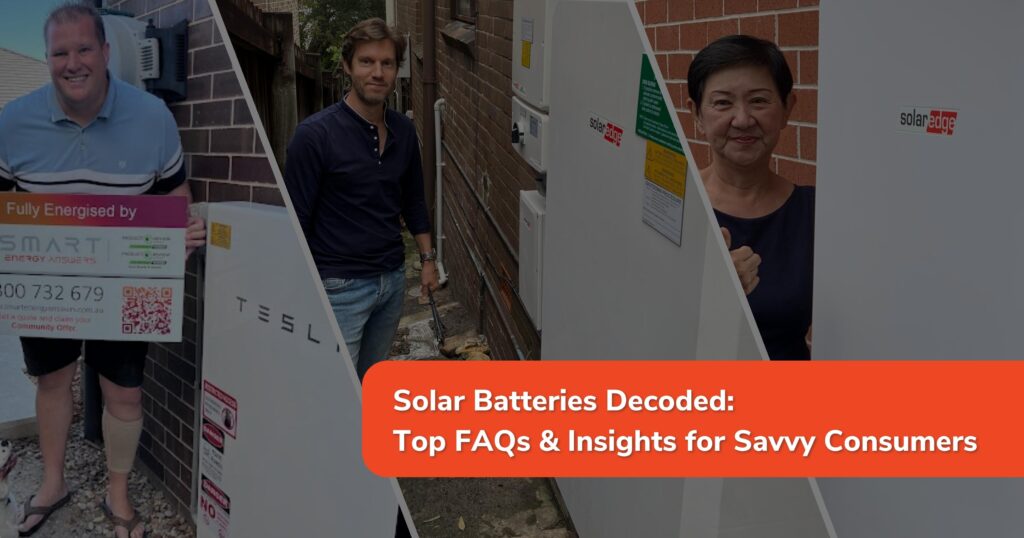
Solar Batteries Decoded : Top FAQs & Insights for Savvy Consumers Smart Energy Answers September 6, 2023 Understanding Solar Batteries In an era where sustainability meets innovation, the demand for solar with batteries has increased significantly. More families in Australia want to use cleaner energy and take greater control of their power, which is why solar batteries are becoming increasingly popular. At Smart Energy Answers, we are excited to explain solar batteries in this blog. We are also here to share some of our customers’ top questions to help you make informed decisions about your energy future. Solar Battery FAQs FAQ 1: How Can Solar Batteries Save Me Money on Electricity Bills? Solar batteries offer potential savings on electricity bills by capturing surplus energy produced by your solar panels during sunny periods. This stored energy becomes available during less sunny hours, including nights, rainy days, and cloudy weather. By reducing reliance on grid power during peak periods, you can cut down on costly electricity expenses and move closer to energy independence. With a properly sized solar and battery system, some customers can aim for $0 electricity bills. FAQ 2: Do Solar Batteries Qualify for Incentives or Rebates in Australia? Yes, incentives are available in different states across Australia. In addition, some of our partners also offer special Virtual Power Plant, or VPP, rebates for specific networks and territories. FAQ 3: What Size Solar Battery Do I Need for My Home? The size of the solar battery you need for your home in Australia depends on several factors, including the following: Energy consumption: Understand your household’s daily energy consumption. Review your past electricity bills to see how much energy you use on average. A larger battery may be suitable if you have higher energy needs. Solar panel system size: The capacity of your solar panel system matters. A larger system can produce more surplus energy, which can then be stored in the battery. Usage patterns: Consider when you use the most electricity. If you typically consume more energy in the evening, a larger battery can help you rely less on grid power during those times. Grid connectivity: If you are aiming for energy independence and want to reduce grid reliance, a larger battery may be beneficial. Smaller batteries are often used for backup power during outages. Budget: Larger batteries tend to be more expensive. Balance your energy needs with your budget to find the right size that offers the best value. Future expansion: If you plan to expand your household or increase energy usage in the future, factor in potential changes when selecting the battery size. It is recommended to consult with a solar energy expert to determine the optimal battery size that aligns with your household’s needs and usage patterns. FAQ 4: What Factors Should I Consider When Selecting a Solar Battery for My Home? Capacity: Choose a battery with sufficient capacity to meet your energy needs. Efficiency: Look at how efficiently the battery stores and releases energy. Higher-efficiency batteries can save more of the energy generated by your solar panels. Installation and compatibility: Ensure the battery is compatible with your existing solar panel system and inverter. Consider installation requirements, space, and placement options. Scalability: If you plan to expand your solar system in the future, choose a battery that can be easily integrated with additional panels. Warranty and support: Research the manufacturer’s reputation, warranty terms, and customer support. A reliable warranty can provide peace of mind. Cost and value: Balance the upfront cost of the battery with the potential savings it can offer over its lifetime. Consider any available government incentives or rebates. Safety: Battery safety features are crucial. Look for batteries with built-in protection against overcharging, overheating, and other potential risks. Smart features: Some batteries come with smart management systems that optimise energy usage and enable remote monitoring and control, with the potential for additional revenue through VPPs. Brand and installer reputation: Choose well-established brands and installers known for quality and reliability. Check customer product and service reviews from reputable websites. FAQ 5: Are Lithium-Ion Batteries the Best Choice for Residential Solar Systems in Australia? Yes, lithium-ion batteries are often considered one of the best choices for residential solar systems in Australia due to their high energy density, efficiency, long lifespan, and compact size. FAQ 6: How Long Do Solar Batteries Typically Last in the Australian Climate? Solar batteries typically last around 15 to 25 years in the Australian climate. Factors such as battery chemistry, usage patterns, maintenance, and manufacturer quality can influence their lifespan. Regular maintenance and proper usage can help extend the life of solar batteries. In addition, manufacturers typically offer warranties of up to 15 years. FAQ 7: Is It Necessary to Have an Existing Solar Panel System to Install Solar Batteries in Australia? No, it is not always necessary to have an existing solar panel system to install solar batteries in Australia. While many people choose to combine solar panels with batteries to maximise energy self-sufficiency, you can also install a solar battery system on its own. However, without solar panels, the battery will primarily charge from the grid, and its effectiveness in reducing electricity bills may be limited compared to when it is paired with solar panels. It is recommended to consult with experts to determine the most suitable setup based on your energy needs and goals. FAQ 8: What Are the Installation Requirements and Costs Associated with Solar Batteries in Australia? The costs and installation requirements for solar batteries in Australia can vary based on factors such as available space, inverter compatibility, electrical upgrades, permits, and ventilation needs. The expenses typically include the battery unit cost, installation labour, potential inverter upgrades, additional components, permits, and maintenance. The total cost can range from several thousand to tens of thousands of dollars, with government incentives and financing options available to help offset expenses. It is advisable to seek quotes from professional installers for accurate cost estimates based on your specific circumstances. FAQ 9:
A Greener World: 1000 Smart Batteries by Smart Energy Answers

A Greener World: 1000 Smart Batteries by Smart Energy Answers Smart Energy Answers June 16, 2023 Smart Energy Answers Reaches 1,000 Smart Battery Installations Smart Energy Answers is thrilled to share that we have successfully installed 1,000 smart batteries, and counting. This remarkable achievement marks a major step towards a greener and more energy-independent future. With the installation of 1,000 smart batteries, Smart Energy Answers has become a trusted solar energy solutions partner for homeowners and businesses alike. These cutting-edge batteries help reduce energy bills and promote energy independence by harnessing renewable energy more efficiently. Through the power of smart solar technology, Smart Energy Answers enables customers to take control of their energy consumption and contribute to a cleaner planet. These 1,000 smart batteries represent our collective effort towards mitigating climate change and reducing carbon footprints. We extend our heartfelt gratitude to all the homeowners and businesses who have trusted us as their partners on this journey towards sustainability. Together, Smart Energy Answers and our customers are making a tangible difference in the fight against climate change. In addition to expressing gratitude to our valued customers, we would like to extend a special thank you to our esteemed partners who have played a vital role in our journey towards sustainability. Tesla, SolarEdge, Alpha ESS, and Qcells have been instrumental in providing us with cutting-edge technologies and innovative solutions that have helped shape the success of our smart energy installations. Their unwavering commitment to sustainability, reliability, and efficiency has been invaluable in achieving this significant milestone. This milestone further powers our drive to keep pushing the boundaries of innovation. Our team of energy experts will continue to explore and introduce groundbreaking energy solutions. We remain committed to staying at the forefront of the industry, empowering individuals and businesses to embrace sustainable energy practices.
Solar Victoria Moves From Rebates to Interest-Free Loans For Batteries
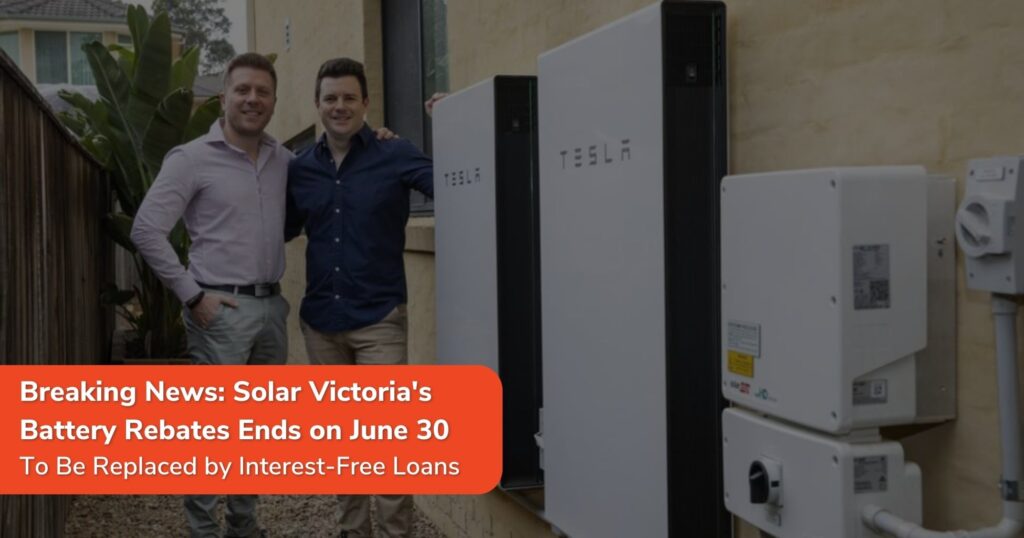
Solar Victoria Moves From Rebates to Interest-Free Loans For Batteries Smart Energy Answers May 29, 2023 Solar Victoria’s Transition: From Rebates to Interest-Free Loans for Home Batteries Solar Victoria is ushering in a significant change to its incentive programme. By 30 June, the battery rebate worth up to $2,950 will come to an end, making way for interest-free loans of up to $8,800 starting from 1 July. This new Solar Homes Program is only open to the first 4,500 Victorian households. With the shift from the battery rebate to interest-free loans, Solar Victoria aims to enhance the affordability and accessibility of renewable energy storage systems. While the rebate offered a grant or discount on battery purchases, the interest-free loan opens the door to a larger funding option. This means homeowners can now explore more high-quality battery choices and overcome the upfront cost barrier. The Solar Homes Program remains focused on making renewable energy accessible to Victorians. Whether through the rebate or the interest-free loan, the goal is to enable individuals to harness the power of battery storage. By utilising battery storage, consumers can reduce their energy bills and protect themselves against rising electricity prices. Battery systems can also provide reliable backup during power outages, helping ensure an uninterrupted energy supply. Additionally, households can sell excess power back to the grid and earn credits or money from it. Solar Victoria’s incentive programme plays a crucial role in promoting sustainable energy practices. By encouraging the adoption of battery storage, the programme aims to reduce reliance on fossil fuel-based power generation, decrease greenhouse gas emissions, and help protect our planet. Conclusion Solar Victoria’s upcoming transition from the battery rebate to interest-free loans presents an exciting opportunity for Victorian households. To receive the state government grant, it is essential to act fast. The battery rebate worth $2,950 will only be available until 30 June. After that, interest-free loans of up to $8,800 will take effect from 1 July. Do not miss out on securing your preferred choice through this progressive initiative that promotes renewable energy adoption and empowers you to create a greener, more sustainable future. Talk to our energy experts today to get a personalised quote and guidance on the available battery storage systems. Our team can help you navigate the options available and choose the right solution for your home.
Tesla Powerwall 2 Price Drops Again: Time to Add Home Batteries
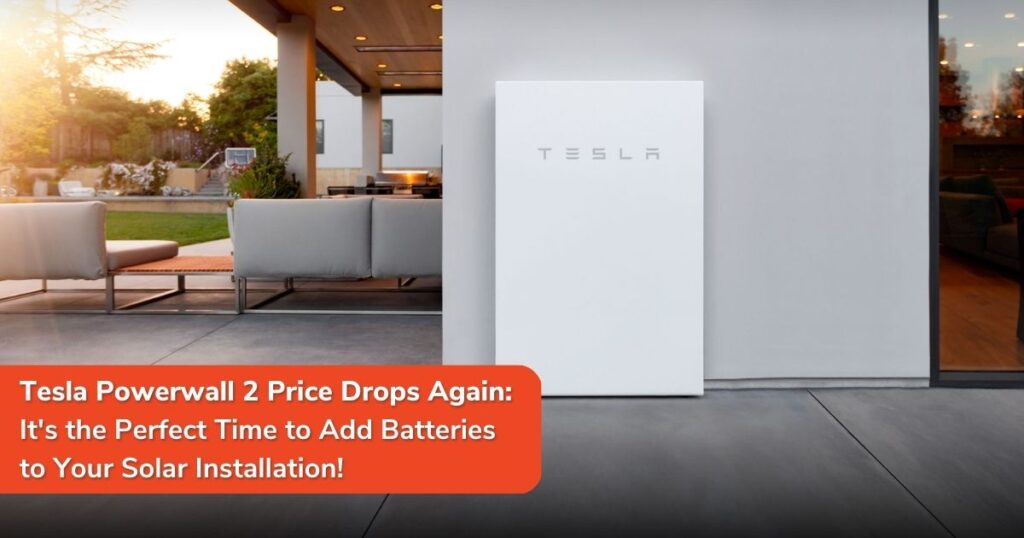
Tesla Powerwall 2 Price Drops Again: Time to Add Home Batteries Smart Energy Answers April 18, 2023 Tesla Powerwall 2 Price Drops Again: Upgrade Your Solar Installation with Battery Storage Now Are you considering adding batteries to your solar installation? Or maybe you are thinking about getting a new solar installation with batteries? We have some fantastic news for you. Tesla has announced another price reduction for the Powerwall 2. As a Tesla Premium Installer in 2023, Smart Energy Answers is here to share all the details with you. Tesla has reduced the price of the Powerwall 2 by a significant $1,699, effective from 12 April. This comes on top of the earlier price drop in February, which means the Powerwall 2 has now dropped in price by a total of $3,330 this year alone. This presents an incredible opportunity for battery buyers in the market right now. This opportunity becomes even more attractive when combined with our Amber Battery Program offer. The Amber Battery Program is an AI-driven energy trading system that allows customers to earn from their battery by using the extra stored energy in their Tesla Powerwall 2. It can sell stored energy when electricity prices are high and buy energy when prices are low. This means you do not have to worry about a thing; you can simply sit back and watch the credits roll in. As an example, one of our members, Adam, was able to generate $700 in credits within 2 months of installing his Tesla Powerwall and joining Amber’s battery programme. This is especially important as electricity prices across Australia are set to increase by up to 22% from 1 July, as permitted by the Australian Energy Regulator. By installing your battery now and joining the Amber Battery Program, you can help protect yourself as much as possible from future uncertainty in the energy market. For both small and large households, as well as small and medium-sized enterprises, the Tesla Powerwall 2 is a robust battery solution. If your business operates until 8 pm or late into the night, the Powerwall 2 can help offset electricity demand charges and save you even more on your energy bills. It is a smart investment that not only helps you save money but also contributes to a more sustainable future. As a Tesla Premium Installer for the past 3 years, Smart Energy Answers has been a trusted partner in delivering leading Tesla installations in the market. We have a proven track record of delivering high-quality solar installations with batteries, and our team of experts is ready to help you make the most of this incredible offer. Do not miss out on the opportunity to add batteries to your solar installation or get a new solar installation with batteries at a discounted price. Contact us today to learn more and take advantage of this amazing deal. Conclusion With the recent price drops of the Tesla Powerwall 2, combined with our Amber Battery Program, now is an incredible time to invest in a solar installation with batteries. You can enjoy savings on your energy bills, protect yourself from rising electricity prices, and contribute to a greener future. Do not wait until electricity prices go up on 1 July. Secure the best investment for your home or business now with Smart Energy Answers, a trusted Tesla Premium Installer. Contact us today to claim your quote and your $3,330 in savings.
Reduce Energy Consumption: Key Steps Before Going Solar
Reduce Energy Consumption: Key Steps Before Going Solar Smart Energy Answers April 6, 2023 Before Going Solar: Key Steps to Reduce Energy Consumption As families and businesses seek to reduce their carbon footprint and lower energy costs, many are considering the installation of solar panels as a practical solution. While solar power can provide a significant reduction in energy costs and carbon emissions, it is important to note that it should not always be the first step in reducing energy consumption. Before you start considering solar as an option, it is important to ensure that you have taken steps to reduce your energy consumption as much as possible. This can be achieved through a number of simple changes, including improving air conditioning efficiency, replacing lights with LED bulbs, and improving insulation. By reducing energy consumption, you will not only lower your carbon footprint but also save money on energy costs. This can make the investment in solar panels and batteries even more financially viable. Improve Air Conditioning Efficiency Improving air conditioning efficiency is an easy way to reduce energy consumption. By regularly servicing your air conditioning system, you can help ensure it runs efficiently and does not waste energy. You may also want to consider installing programmable thermostats. These can automatically adjust the temperature of your home or building based on occupancy patterns, helping save energy when the space is unoccupied. Replace Traditional Light Bulbs with LED Bulbs Replacing traditional light bulbs with LED bulbs is another easy way to reduce energy consumption. LED bulbs use significantly less energy than traditional bulbs and last much longer, making them a cost-effective investment in the long run. In addition to replacing bulbs, consider installing motion sensors or timers to automatically turn off lights in areas that are not frequently used. Improve Insulation Improving insulation is also an important step in reducing energy consumption. By ensuring that your home or building is well insulated, you can help prevent energy from escaping through cracks and gaps in your walls and roof. This not only reduces energy consumption but also makes the space more comfortable for employees, customers, and occupants. Consider Solar and Batteries After Reducing Energy Use Once you have taken steps to reduce your energy consumption, it is time to consider solar and batteries as viable options. Solar panels can provide a significant reduction in energy costs and carbon emissions. Batteries allow you to store excess solar energy generated during the day and use it at night or during periods of low solar generation. You may also potentially generate additional income from your battery by selling excess energy back to the grid. Solar and battery systems can provide greater energy independence and help reduce your reliance on the grid. However, it is important to note that they require a significant upfront investment. By reducing your energy consumption first, you can help ensure that your investment in solar panels and batteries is as cost-effective as possible. Happily tearing his electricity bill. Conclusion Solar power and batteries can be a great way for your home or business to reduce energy costs and carbon emissions. However, it is important to note that they should be considered after taking steps to reduce energy consumption first. Before investing in solar and batteries, homes and businesses should consider improving air conditioning efficiency, replacing lights with LED bulbs, and improving insulation. By reducing energy consumption first, you can help ensure that your investment in solar panels and batteries is as cost-effective as possible should you decide to proceed.
Smart Energy Answers: A Tesla Premium Installer for 2023
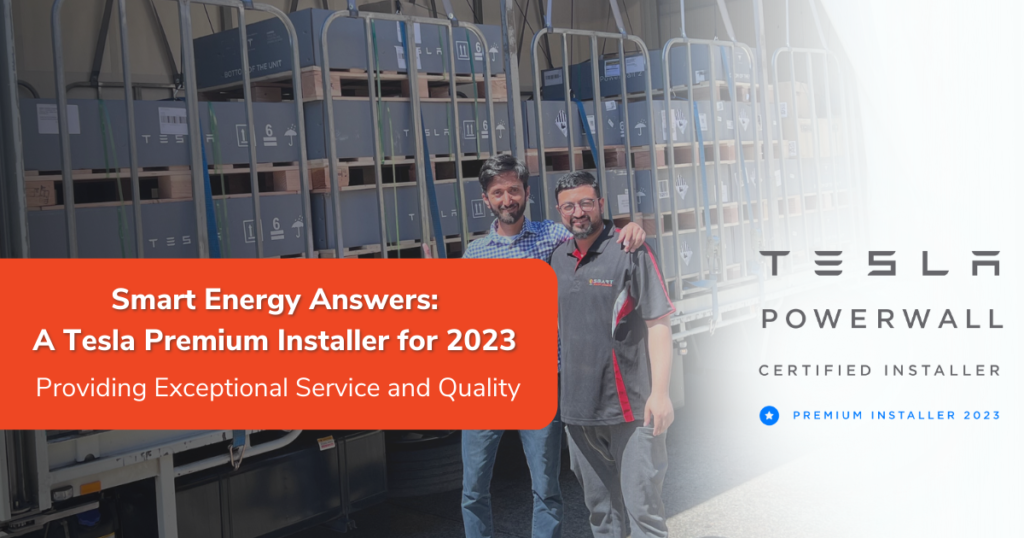
Smart Energy Answers: A Tesla Premium Installer for 2023 Smart Energy Answers January 24, 2023 Smart Energy Answers: Your Trusted Tesla Powerwall Premium Installer for 2023 We are thrilled to announce that Smart Energy Answers will continue to be a Tesla Powerwall Premium Installer for 2023. This certification is a testament to our commitment to providing customers with outstanding service, exceptional installation quality, and extensive product knowledge. As a Tesla Powerwall Premium Installer, we have the honour of working with some of the most advanced technology in the renewable energy industry. Our team of certified installers is trained to install and maintain Tesla Powerwall battery systems for both residential and commercial properties. Our customers can trust that our dedicated team will provide a high level of customer service from start to finish. We ensure every installation is completed to the highest and safest standards, with the goal of delivering complete customer satisfaction. We are proud to continue our partnership with Tesla and are excited to help even more customers make the switch to clean energy in 2023. Choosing Smart Energy Answers as your Tesla Powerwall Premium Installer means you can expect high-quality service, expert product knowledge, and a professional installation completed to industry-leading standards. We take pride in helping our clients reduce their carbon footprint and increase their energy independence by providing efficient and reliable Tesla Powerwall systems. Talk to our energy expert today to learn more about Tesla Powerwall and how it can support your home or business energy needs.
5 Tips to Maximise Your Solar Energy and Save Money

5 Tips to Maximise Your Solar Energy and Save Money Smart Energy Answers November 23, 2022 You’ve Got Solar, Now What? It is time to get the most out of it. Solar panels are a great way to reduce your carbon footprint, save money on your energy bills, and power your home in a more sustainable way. The amount of energy your solar panels produce can be maximised by using them alongside other energy-saving measures. With these tips, you can make the most of your solar energy and run your home more efficiently. It is important to have an idea of how much electricity each appliance and device in your home uses. This can help you plan your electricity usage more effectively and make better use of the solar energy your system produces. 1. Take Advantage of Daytime Get the most out of your solar system when the sun is out. Use appliances that require a lot of electricity during the daytime, when your solar panels are generating the most power. 2. Stagger Your Use of High-Energy Appliances Avoid using high-energy appliances and devices all at once, as this can increase your electricity demand and cause you to draw power from the grid. This includes appliances such as washing machines, dishwashers, and tumble dryers. By staggering their use throughout the day, you can make better use of the solar energy your system is generating. 3. Maintain and Monitor Your Solar System Regularly It is important to keep your solar panels clean and free of debris so they can operate at maximum efficiency. Regularly check your panels and arrange cleaning when needed to help ensure your system is working properly. You should also monitor your solar system’s performance so you can quickly identify any issues and keep your energy production on track. 4. Invest in a Solar Battery Another way to get the most out of your solar panels is to store unused energy in a solar battery. Solar batteries allow you to keep excess energy generated by your solar panels and use it when needed, such as at night or during periods with less sunlight. This can help reduce your dependence on the grid and may help you save more on your energy bills over time. 5. Get a Heat Pump One way to optimise your solar panels is to install a heat pump hot water system. Heat pump hot water systems use a heat exchange process that absorbs heat from the surrounding air and uses it to heat your water. These electric water heaters can provide hot water very efficiently in most climates. Compared with a standard resistive element heater, a heat pump hot water system can help reduce energy use and may save up to 78% on hot water running costs. Conclusion Solar panels are a great way to help power your home and save on energy costs. By following these tips, you can maximise the amount of energy your solar panels produce and make your investment in solar power work even harder for you. Best of all, using solar energy helps create a better and more sustainable world for everyone.
Solar Power & Electric Vehicle Charging
Solar Power & Electric Vehicle Charging Smart Energy Answers January 17, 2022 Can You Charge an EV with Solar Power? With Australia’s share of electric vehicles, or EVs, continuing to increase and more private rooftop solar power systems in use than ever before, it is natural that energy-conscious homeowners are starting to look at how these two technologies can work together. The transport sector is Australia’s third-largest source of greenhouse gas emissions, and these emissions have been increasing faster than any other sector. The large-scale uptake of EVs can clearly make a significant impact. EVs are a cleaner option for the environment, even when powered fully by energy from the grid. Using solar power to charge EV batteries is an even greater improvement and can help homeowners reduce reliance on traditional energy sources. CSIRO Supported One of the challenges that must be addressed for large-scale EV adoption in Australia is the need for widespread charging infrastructure. A collaboration between CSIRO, Nissan Australia, and Delta Electronics, with funding from the Victorian Government, is trialling a renewable energy system in Victoria. The system links solar photovoltaic, or PV, panels, batteries, and smart charging technology. According to CSIRO, this creates a solar-powered EV charging system that can use renewable energy to charge a vehicle at any time of day and in different weather conditions, while placing minimal impact on the electricity grid. CSIRO researchers developed and tested the system and implemented the thermal management controls. Three solar charging modules have been installed at Nissan Headquarters in Dandenong, with each module capable of charging four vehicles at a time. The modules will be evaluated over 200 days, including the peak summer period, before the project partners determine the next steps for this technology. Charging Your EV at Home As owners of private solar power systems understand, meaningful change in renewable energy adoption often begins at home. Just as it is possible to install solar panels and a storage battery at home, it is also possible to use your solar power system to charge your EV. The simplest way to charge your EV is to plug it in at home during the day while the sun is shining and solar energy is being generated. If the capacity of your home solar power system is greater than the charging input required by your EV, no additional energy from the grid may be needed. Grid power can still be used to make up any shortfall, which can be useful on cloudy days or during periods when household energy usage is particularly high. The amount of energy used to power an EV over a certain distance is known as kilowatt-hours per kilometre, or kWh per km. This rate varies between EV models, although on average, many EVs can achieve around 6 km of range from 1 kWh of energy in their battery pack. An average Australian driver is said to drive around 50 km per day, which would require approximately 8 kWh of electricity. Solar power system owners could offset the charging needs of an EV driven 50 km per day by installing an additional 2 kW of solar panels, which is roughly around eight panels depending on the panel size. EV Charger Levels 1, 2 & 3 In reality, most energy-conscious EV owners will charge their vehicles primarily at home for everyday driving needs. However, they may still rely on external charging facilities from time to time when driving longer distances. There are three different levels of EV chargers currently available, with Level 1 being the slowest and Level 3 being the fastest. Level 1 charging uses a standard power point and charges an EV battery pack at the slowest commonly available rate. On average, Level 1 chargers can add around 20 km of range per hour of charging time. This means charging an EV for 24 hours using a Level 1 charger could add around 480 km of range. Level 2 charging is achieved by installing a specialised EV charger. These chargers are around twice as powerful as basic Level 1 chargers and can add approximately 40 km of range in an hour. Over 24 hours, this could add approximately 960 km of range. The cost of installing a Level 2 charger at home can vary, but has been trending downwards in recent years. Most of the cost is usually the hardware itself, which can range from around $1,000 to $2,500. Level 3 charging refers to rapid EV charging using specialised public chargers, such as Tesla Superchargers. These high-powered chargers are capable of adding around 400 km of range per hour of charging. Level 3 chargers are ideal for drivers travelling longer distances than usual. However, users should be aware of where public Level 3 chargers are located, as the network is not yet widely distributed throughout Australia. Smart Energy Answers EV Charging Offer Smart Energy Answers has played a key role in the development and testing of the SolarEdge inverter with built-in EV charging. This unit comes with all the features of standard SolarEdge inverters, as well as a powerful EV charging feature, making it ideal for current and future EV owners. The device is plug and play, easy to use, and quick to charge. It also includes a monitoring app that provides instant and accurate system information. The inverter is available in 3 kW and 5 kW single-phase versions. It can also be combined with one or two standard SolarEdge inverters to integrate with larger solar systems. Buyers are protected with an impressive 12-year warranty on the inverter and charger, as well as a 25-year warranty on the individual power optimisers installed under each panel. Interested in This Unique Solar EV Charging Solution? If you are interested in a quote for this unique solar EV charging solution offered by Smart Energy Answers, contact our team today. Our energy experts can help assess your home, solar system, and EV charging needs to recommend the right solution for you.
Using Batteries To Increase Your Solar Earnings
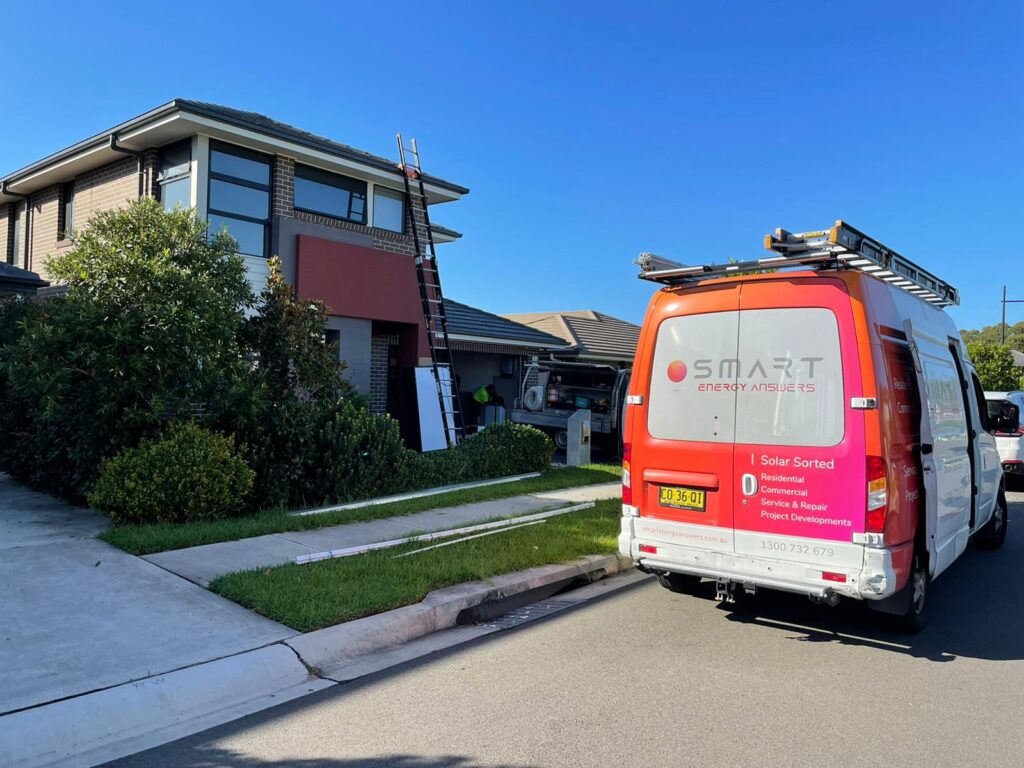
Using Batteries To Increase Your Solar Earnings Smart Energy Answers December 15, 2021 Maximising Solar Earnings: The Power of Batteries in Australia’s Clean Energy Future Small-scale solar power is critical in Australia’s transition to a clean energy future. Australia already has one of the highest uptakes of rooftop solar panels globally, and renewable energy can account for up to half of the power supplied to the national energy grid during peak periods. The uptake of solar is happening at a grassroots level. Many thousands of individual households and businesses have done their research and chosen to install private solar power systems on their properties. The growth of Australia’s renewable energy industry has continued strongly, with the Clean Energy Council’s Clean Energy Australia 2021 Report indicating that in 2020, more than a quarter of Australia’s total energy generation came from renewable sources for the first time. Much of this renewable energy came from the small-scale solar sector, which added more than 3 GW of new capacity that year, marking a fourth straight record-breaking year. Energy Commission Charging Solar Households As reported in October, controversial plans by the Australian Energy Market Commission, or AEMC, to charge solar households for exporting power back into the grid were scaled back earlier in the year to help protect the investments of private solar system owners. The commission’s initial draft determination addressed the issue of “traffic jams” within the power network, which can occur during peak times when energy is being exported back to the grid. The proposed reforms were designed to change distribution network incentives and help users send power back to the grid more effectively. The reforms also introduced the idea of two-way pricing, where users could be rewarded for sending power to the grid when it is needed and charged for sending power back when the system is busy. The initial proposal received significant pushback from lobbyists and consumers. This resulted in an updated package that allowed power networks to offer private solar power users a range of options, including a free basic service, to encourage users to limit solar waste, save money, and support the grid. “We’ve listened to the feedback we have received and have tightened protections for consumers to increase certainty,” AEMC Chief Executive Ben Barr said. “This means that networks will have to offer a free basic service alongside any paid solar export plans, so people won’t have to pay if they don’t want to.” Batteries = Smart Solar While the reforms help protect solar households from being charged for exporting power back to the grid, Australia’s energy landscape has changed dramatically. In the past, small-scale rooftop solar power systems made sense for many private households on their own. However, as energy demands and costs increase, and technology continues to improve, fully integrated solar power systems with batteries are becoming the smarter long-term solution. The ability to capture as much solar energy as possible during sunny periods and then store a portion of that energy for later use when the sun is not shining is a practical and powerful advantage. Not only does adding a battery reduce reliance on the traditional power grid, it can also help users increase the value and profitability of their solar system. Smart Batteries, More Income Smart Energy Answers has partnered with selected smart energy retailers to help solar users capitalise on their investments. These solutions can help users sell solar-generated power back to the grid at the optimum time to maximise returns. Our smart batteries, together with Virtual Power Plant, or VPP, solutions, can offer users premium solar feed-in tariffs, profit sharing on energy trading, or credits for participating. With a new Tesla Powerwall installation from 1 December, eligible customers can receive a $2,000 upfront credit when signing up with one of the smart energy retailer VPPs. With an Alpha battery installation, customers may be eligible for $1,300 in credits over time. Users can monitor and manage their account and check usage data online at any time using an intuitive smartphone app. Choosing a System Choosing a battery and solar power system that perfectly matches your needs is very important. Ask for a tailored consultation to learn which solar energy solutions best suit your power consumption, budget, roof space, and savings goals.