
How Solar Energy Reduces Your Carbon Footprint: A Comprehensive Guide
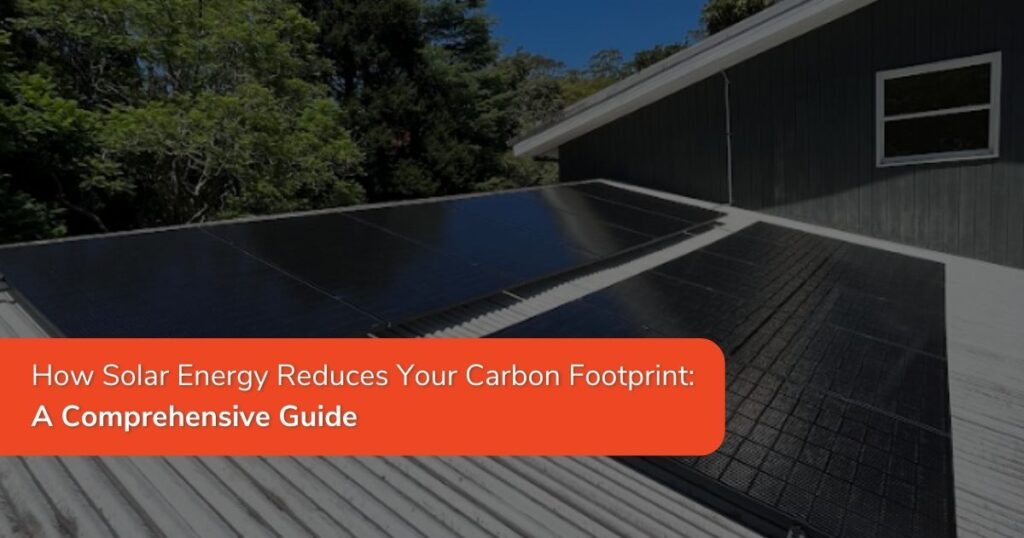
How Solar Energy Reduces Your Carbon Footprint: A Comprehensive Guide Smart Energy Answers June 4, 2026 Australia, at the forefront of the renewable energy revolution, is embracing sustainable solutions to combat climate change. Did you know that as of the latest data, Australia ranks among the top nations for installed solar capacity, with over 30% of households harnessing the power of the sun? Aussies are leading the charge towards a cleaner, greener future, and in this comprehensive guide, we’ll explore how solar energy can significantly minimise your carbon footprint. Understanding Carbon Footprint Before we delve into the positive impacts of solar energy, let’s get a grip on what a carbon footprint is. Simply put, it’s the total amount of greenhouse gases, particularly carbon dioxide, that is directly or indirectly produced by an individual, organisation, event, or product. The bad effects of a high carbon footprint include contributing to global warming, climate change, and environmental degradation. Australians are becoming increasingly aware of their carbon footprints and are seeking ways to minimise their environmental impact. Solar Energy: A Clean and Renewable Power Source Australia’s commitment to renewable energy is evident in the rapid adoption of solar power. With over 3.6 million solar installations nationwide, Australia is not only reducing its reliance on traditional energy sources but is also making significant strides towards the national goal of achieving net-zero emissions by 2050. Smart Energy Answers is at the forefront of this movement, transforming roofs into powerhouses of green energy and providing a reliable, eco-friendly alternative to traditional electricity sources. Reducing Dependence on Fossil Fuels Addressing Australia’s historical reliance on fossil fuels for energy needs, which often includes sources like coal, oil, and natural gas, solar panels emerge as a crucial catalyst in breaking free from this dependency. By transforming sunlight into electricity, solar panels actively reduce the demand for these non-renewable resources, mitigating the carbon footprint associated with their extraction and combustion. For instance, coal, a prevalent fossil fuel in Australia, not only contributes to greenhouse gas emissions when burned but also poses environmental challenges during extraction and transportation. Embracing solar energy not only curtails reliance on such sources but also champions a sustainable path towards a cleaner, greener future. Lowering Greenhouse Gas Emissions Solar power systems stand out for their ability to generate electricity with significantly fewer greenhouse gas emissions than traditional power sources. Greenhouse gases, such as carbon dioxide, methane, and nitrous oxide, trap heat in the Earth’s atmosphere, contributing to the greenhouse effect and global warming. Unlike conventional energy sources that release substantial amounts of these gases, solar energy production produces minimal emissions, making it a key player in mitigating climate change. Financial Incentives and Savings Opting for solar energy not only brings environmental benefits but also offers substantial financial advantages. By generating electricity that offsets or eliminates the need for grid-supplied power, solar panels can significantly reduce monthly electricity bills, providing a shield against potential future price increases. The Australian government’s financial incentives and rebates further enhance the economic appeal of transitioning to solar power. Beyond cost savings, the installation of solar panels adds value to homes, attracting potential buyers with the promise of reduced operating costs and a positive environmental footprint. Conclusion In summary, the adoption of solar energy presents Australians with an opportunity to play a vital role in environmental conservation by significantly diminishing their carbon footprint. By tapping into the sun’s energy, individuals not only contribute to fostering a sustainable future but also reap financial rewards. Take the first step towards a greener and cleaner Australia with Smart Energy Answers, your trustworthy solar energy solutions provider. Together, let’s create a brighter, more sustainable future for generations to come.
Smart Energy Answers: A Tesla Premium Installer for 2023

Smart Energy Answers: A Tesla Premium Installer for 2023 Smart Energy Answers January 24, 2023 Smart Energy Answers: Your Trusted Tesla Powerwall Premium Installer for 2023 We are thrilled to announce that Smart Energy Answers will continue to be a Tesla Powerwall Premium Installer for 2023. This certification is a testament to our commitment to providing customers with outstanding service, exceptional installation quality, and extensive product knowledge. As a Tesla Powerwall Premium Installer, we have the honour of working with some of the most advanced technology in the renewable energy industry. Our team of certified installers is trained to install and maintain Tesla Powerwall battery systems for both residential and commercial properties. Our customers can trust that our dedicated team will provide a high level of customer service from start to finish. We ensure every installation is completed to the highest and safest standards, with the goal of delivering complete customer satisfaction. We are proud to continue our partnership with Tesla and are excited to help even more customers make the switch to clean energy in 2023. Choosing Smart Energy Answers as your Tesla Powerwall Premium Installer means you can expect high-quality service, expert product knowledge, and a professional installation completed to industry-leading standards. We take pride in helping our clients reduce their carbon footprint and increase their energy independence by providing efficient and reliable Tesla Powerwall systems. Talk to our energy expert today to learn more about Tesla Powerwall and how it can support your home or business energy needs.
Understanding the Urgency: Decoding the ‘Code Red’ Climate Change Warning

Understanding the Urgency: Decoding the ‘Code Red’ Climate Change Warning Smart Energy Answers September 13, 2021 Cracking the Code: Understanding the “Code Red” Climate Change Warning Prime Minister Scott Morrison’s widely criticised refusal to commit to a national net zero emissions target by 2050 came amid growing international concern over the “code red” climate change situation. The Prime Minister’s comments followed the release of the Intergovernmental Panel on Climate Change, or IPCC, Sixth Assessment Report, Climate Change 2021: The Physical Science Basis. The IPCC is the United Nations body responsible for assessing the science related to climate change. It is made up of hundreds of international scientists and experts and is widely recognised as one of the world’s most authoritative bodies on climate science. The comprehensive report provided evidence and timelines for reaching a number of critical climate change milestones, leading United Nations Secretary-General António Guterres to describe it as “a code red for humanity”. 1.5°C Increase by 2030 The IPCC report shows new evidence that the Earth could be on track to see an average temperature increase of 1.5°C within just 10 years. In 2015, under the Paris Agreement, world governments identified a 1.5°C increase as a key milestone and agreed to try to limit global warming to this point. The IPCC stated that scientists are observing changes in the Earth’s climate in every region and across the whole climate system. Many of these changes are unprecedented in thousands, if not hundreds of thousands, of years. Some changes already set in motion, such as continued sea level rise, are expected to be irreversible over hundreds to thousands of years. The report shows evidence of an average global temperature increase of 1.1°C since 1850 to 1900, caused by greenhouse gas emissions from human activities. Averaged over the next two decades, global temperatures are predicted to reach or exceed the 1.5°C warming milestone. “This report is a reality check,” said IPCC Working Group I Co-Chair Valérie Masson-Delmotte. She explained that the report gives a much clearer picture of the past, present, and future climate, helping people understand where we are headed, what can be done, and how we can prepare. Act Now Australia is expected to bear a significant share of the impacts of continued climate change, according to evidence and timelines outlined in the report. Coastal areas are expected to see continued sea level rise throughout the 21st century. More frequent and severe coastal flooding could impact low-lying regions, resulting in worsening coastal erosion. The report warned that extreme sea level events that previously occurred once in 100 years could happen every year by the end of this century. Bushfires are predicted to worsen and become more frequent, with fire seasons lasting longer, as seen during the devastating 2019 season. More frequent and intense flooding is also expected in certain regions. The report explains that climate change is intensifying the water cycle, bringing more intense rainfall and associated flooding, as well as more intense drought in many regions. Climate change is also affecting rainfall patterns, with precipitation likely to increase in high latitudes and decrease across large parts of the subtropics. Increased frequency and severity of drought are predicted to impact the east coast and southern parts of Australia, particularly if total warming reaches 2°C. Time for Change While the impact of the report is worrying, there is hope that it can become a catalyst for change nationally and internationally. At a grassroots level, there is more promising news. The Clean Energy Council’s Clean Energy Australia 2021 report highlighted significant growth in the renewable energy sector across Australia. Almost 30% of the country’s electricity generated in 2020 came from renewable sources. If a similar trajectory is maintained, Australia is well on its way to reaching 50% renewable energy in the coming years. The Smart Energy Ambassador Program We have a job to do by 2050, and everyone has a part to play in helping the world transition to renewable energy. Through the Smart Energy Ambassador Program, you can spread the word about renewables and be rewarded for your efforts. Smart Energy Answers is supporting the Smart Energy Ambassador Program with generous cash incentives for both existing and new customers. For existing customers: Refer friends and neighbours to the programme and get rewarded with generous cash incentives. For new customers: Join the Smart Energy Ambassador Program and take advantage of generous cash incentives of up to $2,000 on a range of new smart energy systems installed by Smart Energy Answers. Once you begin making your own referrals, you can continue to earn cash rewards into the future. It is time to join the Smart Energy Ambassador Program. See how much you could save on your next electricity bill with our Savings Calculator. You can also discover which rebates and incentives may be available to you with the Smart Energy Answers Solar Rebate Calculator.