
The LG Solar Partner Program
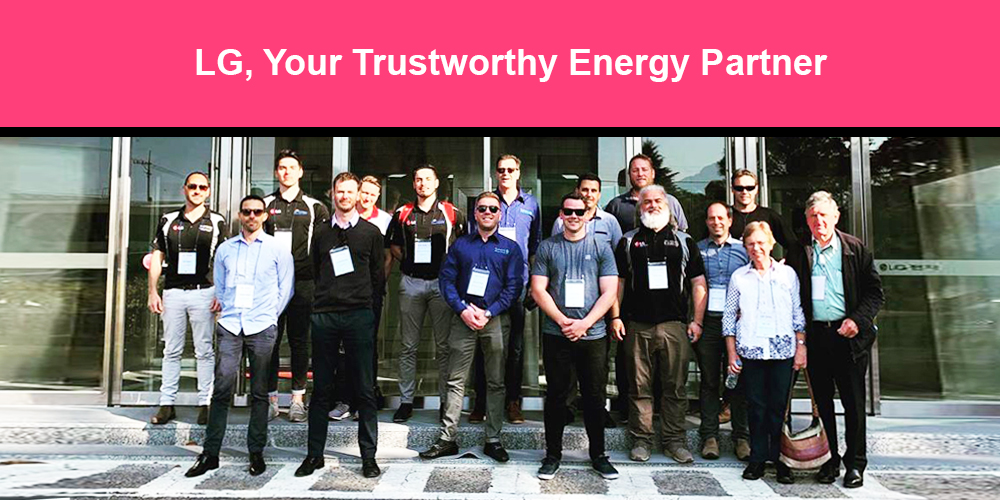
The LG Solar Partner Program Smart Energy Answers June 11, 2026 Join the LG Solar Partner Program for Exceptional Solar Solutions Being part of the LG Solar Installation Partner Program is a valuable opportunity to join a trusted network made up of leading solar companies. This programme helps ensure customers have access to exceptional solar solutions, high-quality products, and professional installation standards. LG Solar has a very selective number of installation partners as part of its Australia-wide Authorised Solar Dealer Network. These partners provide free solar advice, inspect customer premises, and deliver high-quality installation services for solar systems and battery solutions. What Does LG Look for When Choosing a Partner? When choosing a company to join the network, LG looks for key qualities such as: Excellent customer service Longevity in the industry Commitment to best installation practices Strong ongoing service, including support with warranty claims To join this network, a company must combine LG panels with high-quality products. The equipment needs to work together properly to create a reliable long-term solution for each customer. Due to challenges in the solar industry, an average of 690 different companies have left the trade since 2011. This has resulted in many customers being left without proper support. LG, on the other hand, has been operating in Australia for over 20 years and has been in existence for over 60 years. As a billion-dollar business in Australia, LG provides customers with a strong sense of security, stability, and long-term support. That is the difference with the LG Partner Network. Smart Energy Answers has been awarded Platinum Partner status by LG in recognition of the excellent long-term service we provide to our clients. A quality solar panel needs a quality installation company to provide the right system design and installation. This helps maximise long-term performance and financial savings for the household. As a Platinum Partner, Smart Energy Answers undergoes regular specialist installation and product training. We also have a direct line to LG for technical enquiries, warranty support, and commercial support. Smart Energy Answers has also had the privilege of being invited to observe the quality workmanship behind each product being manufactured at LG’s head office facilities in South Korea. Being part of the extensive LG dealer network also assures our clients that we are here to support them long term. Customers can rely on Smart Energy Answers to handle all aspects of their residential and commercial solar panel installations, including design, installation, rebate information, and system maintenance. At Smart Energy Answers, we continue to strengthen our partnership with LG to deliver the highest quality energy solutions. Our goal is to ensure every customer receives reliable technology, professional support, and the highest level of satisfaction every time. To learn more about LG and our other solar products, contact Smart Energy Answers today on 1300 948 619.
VPP Incentives in NSW: How to Earn Up to $1,500 Starting This July 2025

VPP Incentives in NSW: How to Earn Up to $1,500 Starting This July 2025 Smart Energy Answers June 3, 2026 From 1 July 2025, NSW households and small businesses can earn up to $1,500 just by connecting their solar battery to a Virtual Power Plant (VPP), and yes, this can be stacked with the Federal Government’s battery rebate. Here’s how to make the most of these combined savings. What Is a Virtual Power Plant (VPP)? A Virtual Power Plant (VPP) connects home solar batteries into a virtual energy network. Instead of your stored solar power sitting idle, your battery can export electricity back to the grid when demand spikes, and you’ll be paid for the contribution. VPPs help: Reduce pressure on the energy grid Stabilise electricity prices Support a cleaner and more resilient energy future What’s Changing in NSW’s VPP Incentive? The NSW Government has boosted the incentive starting 1 July 2025, with new, upfront rebates available through the Peak Demand Reduction Scheme (PDRS). New Structure: Incentives now range from $400–$550 for 10 kWh batteries and up to $1,000–$1,500 for 27 kWh systems. One-Time Payment: Homeowners can now receive up to 6 years’ worth of VPP incentive payments upfront. Eligibility: Only batteries installed and connected after 1 July 2025 via an Accredited Certificate Provider (ACP) are eligible. NSW VPP + Federal Battery Rebate = Massive Savings This new VPP incentive can now be stacked with the Federal Government’s Cheaper Batteries Program, which offers up to $17,500 off eligible battery installations. Important: The older NSW battery installation rebate has ended and cannot be combined with the federal rebate. Example Savings Battery Size Usable kWh NSW VPP Incentive Federal Rebate* 10 kWh $400–$550 ≈ $3,300 27 kWh $1,000–$1,500 ≈ $9,000 *Estimated 30% of installed system value. Why Consider a VPP? When you join a VPP, you’re not just saving money. You’re also contributing to a smarter energy future: Ongoing Payments: After the initial rebate, VPP members continue to earn money by exporting energy during peak demand periods. Grid Support: Help reduce blackouts and support renewable integration. Lower Emissions: Reduce fossil fuel dependency across NSW. Maximise Your Benefits with Smart Energy Answers As a leading solar and battery retailer in Australia, Smart Energy Answers helps you: Navigate NSW VPP and Federal rebate schemes Choose VPP-eligible batteries like the Sigenergy Battery or Tesla Powerwall 3 Pair with high-efficiency Aiko Solar Panels for maximum return Frequently Asked Questions Can I stack NSW VPP incentives with the federal battery rebate? Yes. As of 1 July 2025, the NSW VPP incentive can be combined with the federal Cheaper Batteries Program. How much is the VPP payment per kWh? Roughly $40–$55 per usable kWh. A 10 kWh battery earns around $400–$550, while a 27 kWh battery earns around $1,000–$1,500. Who is eligible for the VPP rebate? Homeowners or small businesses installing an eligible battery system after July 1, 2025, and connecting through an ACP. Is there a lock-in period for joining a VPP? No. You may exit the VPP after receiving your upfront payment. Final Thoughts With the NSW battery rebate, solar battery rebate NSW, and federal incentives working together, there has never been a better time to invest in smart energy storage. Smart Energy Answers is here to guide you through every step, from choosing a top-performing Sigenergy Battery to unlocking every available incentive. Speak with our expert team today to check eligibility, claim your rebate, and start saving. Let’s make clean energy smarter, and more rewarding, together.
Comparing Solar Financing Options for Businesses: Finding the Best Fit for Your Energy Goals
Comparing Solar Financing Options for Businesses: Finding the Best Fit for Your Energy Goals Smart Energy Answers June 3, 2026 Investing in solar energy can deliver long-term savings, reduce operational costs, and enhance your business’s sustainability profile. But for many companies, the key question isn’t whether to go solar. It’s how to finance it. From outright purchases to long-term agreements, each financing model comes with its own advantages, costs, and implications for your return on investment (ROI). Here’s a breakdown of the most common options for commercial solar financing. 1. Outright Purchase (Cash Payment) If your business has available capital, paying for a solar system upfront can be the most cost-effective option over the system’s lifetime. Pros No ongoing finance costs or interest Immediate ownership of the asset Maximum benefit from incentives like LGCs, Large-scale Generation Certificates, and the solar battery rebate Cons Requires substantial upfront cash flow May tie up funds that could be invested elsewhere Best suited for: Businesses with strong liquidity that want maximum savings over the life of the system. 2. Commercial Solar Loans A traditional loan spreads the cost of your solar system over several years, allowing you to preserve working capital while still owning the system from day one. Pros Ownership from the start Interest may be tax-deductible, consult your accountant System qualifies for incentives such as the solar battery rebate and other government programs Cons Interest costs can increase total system price Requires credit approval 3. Power Purchase Agreements (PPAs) A PPA allows your business to host a solar system owned by a third party. You pay only for the electricity generated, often at a lower rate than the grid. Pros No upfront capital required Predictable energy pricing Maintenance handled by the system owner Cons You don’t own the asset Savings are generally smaller compared to owning Long-term contracts can limit flexibility Best suited for: Businesses wanting zero upfront cost and minimal involvement in system management. 4. Leasing Under a lease arrangement, you pay a fixed monthly fee for use of the solar system, similar to leasing equipment or vehicles. Pros No large upfront outlay Fixed costs make budgeting easier Cons You don’t own the system until the lease ends Total cost may be higher than purchase Less benefit from incentives compared to ownership Choosing the Right Model for Your Business When comparing solar financing options, consider: Cash flow: How much capital can you commit upfront? Ownership goals: Do you want to own the system for maximum long-term benefit? Incentives: Which financing methods let you claim LGCs and rebates, such as the solar battery rebate or solar battery rebate NSW if applicable? Technology preferences: Are you looking for premium solar panels like Aiko solar panel products, advanced storage like the Sigenergy battery, or the proven performance of the Tesla Powerwall 3 Australia and its competitive Tesla Powerwall 3 price? Energy goals: Are you aiming for maximum savings, energy independence, or sustainability leadership? A tailored financial analysis will help you determine which model delivers the fastest payback and highest ROI for your business. Final Word Commercial solar is no longer just an environmental choice. It’s a financial strategy. Whether you fund it outright, finance it through a commercial loan, or enter into a PPA, the right structure can make your project cash-flow positive from day one. Ready to explore your financing options? Contact us today to run the numbers for your business and discover how quickly your solar investment can pay for itself.
Maximising ROI with Commercial Solar Installations
Maximising ROI with Commercial Solar Installations Smart Energy Answers June 3, 2026 With electricity prices continuing to rise and sustainability targets becoming standard across industries, more businesses are turning to solar as a long-term investment. But going solar isn’t just about reducing carbon emissions, it’s about generating real, measurable returns. Whether you’re operating a retail chain, warehouse, school, farm, or manufacturing plant, a well-designed solar system, especially when paired with a solar battery rebate, can deliver substantial ROI in just a few short years. In this guide, we’ll break down how to calculate return on investment from commercial solar and what steps to take to maximise value, from choosing the right components like Aiko solar panels and the Sigenergy battery, to accessing rebates and VPP revenue streams. Why ROI Matters in Commercial Solar For businesses, solar energy is a capital investment that must be justified with hard numbers. Calculating ROI helps you: Understand how quickly your investment pays off Forecast total lifetime energy savings Position solar as both a sustainability and financial asset Many businesses are pleasantly surprised to find that solar isn’t just environmentally sound, it’s one of the most financially strategic moves they can make today. 1. Key Factors That Influence Solar ROI Energy Usage and System Sizing A right-sized system ensures maximum self-consumption and minimal waste. Oversizing can reduce ROI, while undersizing limits your savings. Electricity Tariffs If your business is paying premium daytime rates, solar can dramatically offset those costs, especially in industries with high machinery or HVAC usage. Installation Costs & Rebates Federal incentives such as the solar battery rebate and solar battery rebate NSW, where applicable, significantly reduce upfront expenses. This makes it easier for businesses to see returns within 3 to 5 years. VPP Programs Selling excess stored energy through Virtual Power Plant (VPP) participation is an additional income stream. Devices like the Tesla Powerwall 3 Australia and the Sigenergy battery are VPP-compatible, allowing commercial systems to become revenue-generating assets. Large-Scale Generation Certificates (LGCs) For systems over 100 kW, businesses can earn LGCs for every megawatt-hour (MWh) of renewable electricity generated. These certificates can be sold on the open market, providing an ongoing financial incentive and boosting ROI. Unlike STCs, typically for residential or small commercial systems, LGCs create long-term revenue potential for larger commercial operations. 2. How to Calculate ROI on Commercial Solar Here’s a simplified formula to estimate your ROI: ROI (%) = (Total Savings Over Time – Initial Investment) / Initial Investment x 100 For example: Upfront system cost: $100,000 Estimated federal/state rebates: $25,000 Net investment: $75,000 Annual savings: $25,000 Year 1 ROI = (25,000 / 75,000) x 100 = 33.3% At this pace, the system pays for itself in 3 years, with 20+ years of savings ahead. 3. Tips to Maximise Solar ROI Invest in High-Performance Panels Modern Aiko solar panels are engineered for ultra-high efficiency, even in low-light conditions, helping you squeeze more power and value from your roof space. Use Smart Batteries Products like the Sigenergy battery offer modular scalability, smart thermal protection, and seamless VPP integration, ideal for commercial environments where performance and safety are non-negotiable. Access All Eligible Rebates If your business is located in New South Wales, the solar battery rebate NSW can cut a significant chunk from your initial investment. All commercial sites nationwide can also access federal rebates and STCs to reduce costs. Add Monitoring & Maintenance Plans Real-time energy monitoring ensures peak performance, while proactive maintenance protects your long-term ROI. 4. Sample ROI Table for Different Businesses Business Type System Size Total Cost Post-Rebate Annual Savings Payback Period Retail Franchise 50 kW $60,000 $15,000 4 years Manufacturing Plant 100 kW $120,000 $30,000 4 years Agriculture Facility 80 kW $90,000 $22,000 4.1 years After the payback period, these systems continue to produce clean energy and savings for 15 to 20 more years, all while reducing your carbon footprint. Conclusion Commercial solar is no longer just a sustainability measure, it’s a smart financial strategy. With careful planning, the right technology, and access to rebates, your solar system can deliver fast, consistent, and long-term returns. Here’s how to maximise your commercial solar investment: Choose proven components like Aiko solar panels and Sigenergy batteries Leverage all available rebates, including the solar battery rebate NSW for VPP Participate in VPPs using smart batteries like the Tesla Powerwall 3 Australia or Sigenergy Work with a trusted installer to ensure precision design and future-proof scalability Ready to calculate ROI for your site? Talk to our commercial solar specialists today for a tailored assessment and rebate guidance.
Melbourne Homeowners: Here’s How to Save Thousands on Solar Battery Installation

Melbourne Homeowners: Here’s How to Save Thousands on Solar Battery Installation Smart Energy Answers June 3, 2026 Thinking about installing a solar battery in Melbourne? Now’s the perfect time to act. Thanks to generous federal incentives, Melbourne residents can now save up to $17,500 on solar battery installation. On top of that, programs like Virtual Power Plants (VPPs) allow you to earn ongoing income from your system, turning your home into an active part of Australia’s clean energy future. Let’s break down how it all works. Step 1: Take Advantage of the Federal Solar Battery Rebate Federal Solar Battery Rebate: Cheaper Batteries for Homes Program The Federal Government’s “Cheaper Batteries for Homes” rebate has officially launched and is already transforming energy affordability for homeowners across the country, including Victorians. The rebate covers up to 30% of the cost of eligible battery and inverter systems. Depending on the battery size and system specs, that means you could receive anywhere between $6,000 to $9,000 off your installation. Key details as we know them: Available across all states, including Victoria Likely to include income-based eligibility Must be installed with or connected to a solar system This rebate significantly reduces the upfront investment, opening the door for more Melbourne households to embrace clean energy and energy independence. Step 2: Choose the Best Solar Battery in Australia for Melbourne Weather Melbourne’s climate is famously unpredictable, with scorching heat in summer and freezing nights in winter. That’s why it’s crucial to install a battery that’s designed to handle temperature extremes safely and efficiently. Enter Sigenergy batteries: Built with smart thermal management to protect your system in hot and cold conditions Equipped with internal fire protection and safety sensors for peace of mind Scalable modular design from 5 kWh to 60 kWh+ Fully compatible with solar panels and EV chargers Whether you’re a solo homeowner or running a busy household, Sigenergy batteries adapt to your energy needs while keeping your home powered year-round. Step 3: Join a Virtual Power Plant (VPP) and Get Paid Once your battery is installed, you can take things a step further by enrolling in a Virtual Power Plant (VPP) program. VPPs allow your battery to export stored energy back to the grid during times of high demand, and you get paid for it. Programs like Amber for Batteries offer: Monthly income for grid participation Access to high wholesale energy rates when exporting Smart technology to maximise your battery’s performance and revenue It’s not just about savings, it’s about earning. And the best part? You’re helping balance the energy grid and contribute to a more sustainable future. Sample Savings Breakdown for Melbourne Homes Battery Size Federal Rebate Est. Potential VPP Earnings Est./Yr 10 kWh $3,000–$3,300* $300–$600 15 kWh $4,500–$5,000* $500–$800 20+ kWh $6,000–$8,000* $700+ *Final rebate figures may vary based on system configuration and eligibility. Final Thoughts: Make 2025 the Year You Go Battery-Ready There’s never been a better time to take charge of your home’s energy. With the new federal solar battery rebate now launched and no competing state rebate in Victoria, this incentive fills a crucial gap, helping Victorian homeowners finally make the switch. Save thousands upfront with the federal solar battery rebate Earn regular income with VPP programs like Amber for Batteries Protect your home with a durable, smart battery like Sigenergy batteries Boost your energy resilience and reduce reliance on the grid Want to learn more about your eligibility or get a custom quote? Contact us today to get started on your solar battery journey.
Why ACT Homeowners Are Switching to Solar + Battery in 2025 (And How You Can Save Thousands)
Why ACT Homeowners Are Switching to Solar + Battery in 2025 (And How You Can Save Thousands) Smart Energy Answers June 3, 2026 The Australian Capital Territory (ACT) continues to lead the charge when it comes to sustainability and clean energy. As of 2025, ACT is powered by 100% renewable electricity and remains one of the most solar-savvy regions in the country. With over 40% of households already equipped with rooftop solar, ACT residents are no strangers to innovation. For those looking to take the next step, adding a battery like the Sigenergy battery or Tesla Powerwall 3 can significantly improve savings, reduce grid dependence, and unlock powerful rebates. Federal Support: The Cheaper Batteries Rebate The Federal Government’s Household Energy Upgrades Fund provides another opportunity. You can claim up to $17,500 off the cost of installing a battery system like the Tesla Powerwall 3, Sigenergy batteries, or Alpha ESS. This national rebate is especially useful for those who’ve already installed solar but want to upgrade their setup with high-quality battery storage. Why Choose Sigenergy in the ACT? The Sigenergy battery is becoming a top choice in Canberra and throughout the ACT, and for good reason. Designed with resilience and versatility in mind, Sigenergy’s modular all-in-one system thrives in the region’s harsh seasonal extremes. Canberra’s climate is no joke: summers can soar above 40°C while winters frequently drop below freezing. Sigenergy is built to handle it all. With internal fire protection, smart thermal sensors, and aerogel insulation, the system continuously monitors and regulates its core temperature, keeping your home safe and your system performing no matter the season. Key Features for ACT Residents Built for Extreme Temperatures: Designed to operate safely and efficiently during scorching summers and sub-zero winter nights. All-in-One Tower: Combines inverter, battery, and EV charger in a single smart unit. Scalable Storage: Easily expand from 5kWh to 48kWh based on your home’s needs. Real-Time Monitoring: Track performance, usage, and savings via the Sigenergy app. When it comes to value, Sigenergy battery price is highly competitive, especially when compared to the Tesla Powerwall 3 price. Its flexibility, safety, and future-ready design make it one of the best solar battery options in Australia, and a particularly smart pick for ACT households looking to invest for the long haul. What About Virtual Power Plants (VPP)? You can still join a Virtual Power Plant (VPP) in the ACT to benefit from energy trading, demand response, and reduced grid dependency. Programs like Amber allow you to earn ongoing credits by sharing stored energy during peak demand periods. While there’s no upfront bonus, the long-term savings and grid support make VPPs a worthwhile option for battery owners. Don’t Forget Solar Panels! If you’re starting fresh, pairing your battery with high-efficiency Aiko solar panels ensures you get the most out of your energy system. These panels are known for: Advanced cell technology High power output in shaded or cloudy conditions 30-year linear performance warranties Make the Smart Switch in 2025 Whether you’re looking to cut electricity bills, boost your home’s value, or reduce your carbon footprint, the ACT offers all the right ingredients for a successful solar and battery investment. Smart Energy Answers is your trusted partner, with deep experience in both federal and ACT-based programs. We’ll help you choose the right solution and maximise your savings. Talk to our team today and find out which rebate works best for you! Learn more about eligible solar batteries like Sigenergy, Tesla Powerwall 3, and Aiko solar panels.
Breathwork Breakthrough: A Powerful Reset for the SEA Sales Team
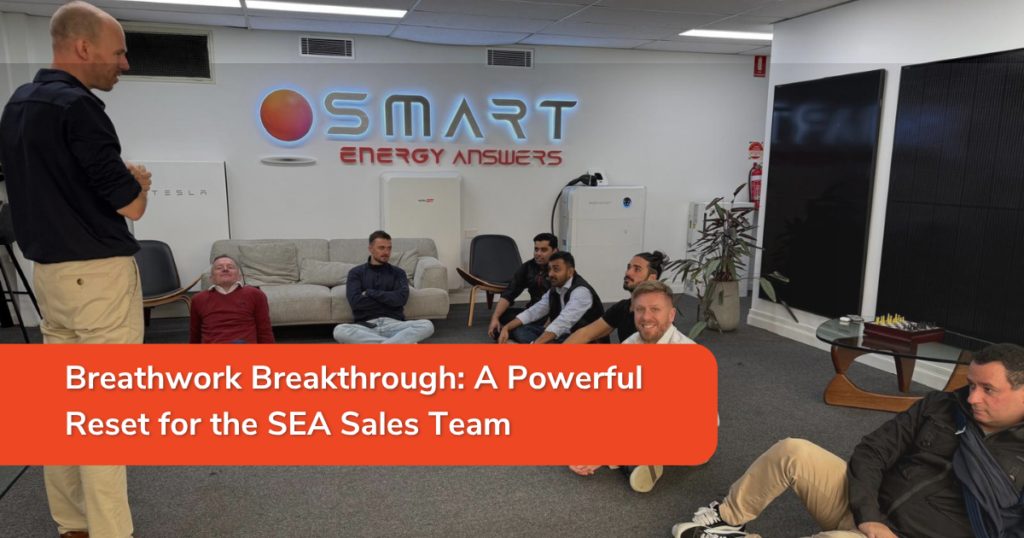
Breathwork Breakthrough: A Powerful Reset for the SEA Sales Team Smart Energy Answers June 24, 2025 In the middle of one of the busiest and most high-pressure periods of the year, the Smart Energy Answers Sales Team did something truly radical: we paused and took a deep breath. We had the incredible privilege of welcoming Sjoerd Coenders, a seasoned and inspiring breath coach, to lead our team through a much-needed reset. With his calm energy and wealth of experience, Sjoerd introduced our sales team to the profound yet simple power of breathwork, a practice many of us hadn’t yet explored but quickly came to appreciate. From Overwhelm to Clarity The session was perfectly timed. Amid targets, deadlines, and high-volume campaigns, stress can creep in quickly. But Sjoerd’s guided techniques offered an immediate and tangible shift, from tension and mental clutter to calmness and clear focus. The techniques were practical, easy to apply, and most importantly, effective. Within minutes, the entire team experienced a reset. Minds settled. Breathing deepened. Energy recalibrated. Sjoerd’s core message resonated deeply: “Your breath is always with you. Use it.” Just a few conscious minutes a day can be enough to recharge and re-centre, especially in a fast-paced sales environment. Why It Mattered As a team that prides itself on being high-performing, innovative, and customer-first, it’s easy to forget the foundation of all our success: our people. This session served as a reminder that caring for our wellbeing isn’t a luxury. It’s a necessity. The feedback from the session was overwhelmingly positive. Many described it as “eye-opening” and “exactly what we needed.” In fact, the experience was so impactful that we’re now exploring the idea of incorporating breathwork into our regular monthly sales meetings. A New Kind of Energy At SEA, energy is our business: solar energy, battery storage, and smart solutions. But we also believe in cultivating personal energy, the kind that drives creativity, focus, and resilience. Thanks to Sjoerd, we’ve discovered a powerful new tool to fuel that energy from within. Here’s to More Mindful Moments As we continue to grow and support thousands of customers on their journey to cleaner energy, we remain committed to also supporting our team mentally, emotionally, and physically. Because when we care for our people, the results take care of themselves. Here’s to a more balanced, focused, and energised SEA team, one breath at a time.
Smart Energy Answers Strengthens Strategic Partnership with Sigenergy in Shanghai
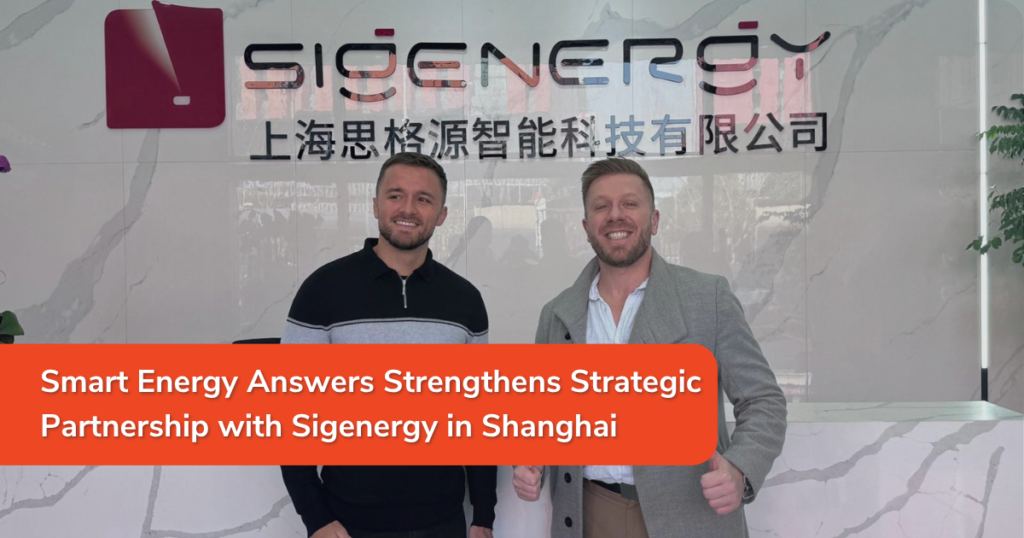
Smart Energy Answers Strengthens Strategic Partnership with Sigenergy in Shanghai Smart Energy Answers June 23, 2025 Strengthening Our Alliance With Australia’s Most Advanced Battery Technology Smart Energy Answers, or SEA, is proud to announce a milestone in our journey as a clean energy leader: our recognition as a Platinum Partner of Sigenergy, one of the most innovative solar battery manufacturers in the world. In April 2025, SEA CEO Daniel Lanzetta and our #1 Sigenergy Consultant, Brad, were honoured with an exclusive invitation to Sigenergy’s headquarters and world-class manufacturing facility in Shanghai. This invitation marked more than a factory tour. It was a celebration of innovation, trust, and shared growth. Since adopting Sigenergy batteries in October 2024, SEA has become one of the Top 3 Sigenergy partners in Australia, positioning us at the forefront of battery storage innovation. Sigenergy: The Future of Battery Storage The Sigenergy battery has quickly earned its place among the best solar batteries in Australia, thanks to its all-in-one modular design, superior performance, and future-ready features. With expandable capacity, a built-in hybrid inverter, EV charging capability, and advanced AI-powered energy management, Sigenergy is setting a new standard in smart storage. What truly sets it apart is the value it delivers. Despite its high-end features, the Sigenergy battery price remains competitive, especially when paired with rebates like the Federal Cheaper Batteries rebate and the NSW VPP incentive. During our visit to Shanghai, we discussed future growth strategies and reaffirmed our shared goal: to make Sigenergy the #1 battery in Australia and SEA its leading partner nationwide. Why Sigenergy Is the Best Solar Battery in Australia With smart modular designs, advanced safety features, and industry-leading efficiency, Sigenergy batteries are quickly becoming the go-to solution for future-proof home and commercial storage. And the numbers speak for themselves. According to SunWiz, Sigenergy reached 31.4% of Australia’s residential battery market in May 2025, more than double the share of the next competitor. This follows exponential growth: 17.4% in March, 22% in April, and 31.4% in May, making Sigenergy the #1 battery brand in Australia for three consecutive months. Key advantages include: All-in-one tower design: Battery, hybrid inverter, and optional EV charger in one sleek unit. Scalable capacity: Expand from 5kWh to 48kWh to suit any home or business. Superior safety: Seven-layer safety architecture, including fire extinguishing technology, AI thermal management, and temperature sensors. Advanced monitoring: Full app control and analytics. Eligible for rebates: Claim up to $17,500 through the Federal Battery Rebate. With this momentum, Sigenergy isn’t just an option. It’s the leading choice. The Sigenergy battery price offers excellent value for its premium features, making it a top competitor to Tesla Powerwall 3 and Alpha ESS, with superior flexibility and safety. Celebrating Our Success in Style The visit culminated in a high-energy celebration at the F1 Grand Prix in Shanghai, where the excitement of the racetrack mirrored our joint commitment to speed, innovation, and precision. The night ended with a private dinner at the iconic Shanghai Tower, where we reflected on our achievements and looked ahead to future success. We also had the opportunity to meet with Tony, Founder and CEO of Sigenergy, and Roy, VP of Global Sales, as well as Will Hall, Managing Director of Sigenergy Australia, to align on upcoming opportunities in the local market. Already a Top 3 Sigenergy partner in Australia, SEA is now proudly committed, alongside CEO Tony Xu, to becoming the #1 Sigenergy partner in the country. Real-World Results: Sigenergy Case Studies Melrose Park, NSW | 15.675kW Solar + 24.18kWh Battery Challenge: Reduce daily energy costs, install around partial shade, and meet strict compliance standards. Solution: 33 x AIKO Neostar 2P 475W panels, 3 x SigenStor batteries, and a 15kW inverter. The system also includes full energy monitoring and a 10-year workmanship guarantee. Result: 24,182kWh per year, saving $123,034 over the system’s lifetime, with $3,484 in annual savings. Read Full Case Study: Melrose Park Epping, NSW | 9.025kW Solar + 24.18kWh Battery Challenge: Deliver affordable solar despite overcast conditions and tight compliance requirements. Solution: 19 x AIKO Neostar panels, a SigenStor battery, and a 10kW single-phase inverter. Result: 10,819kWh per year, $104,695 in lifetime savings, and $2,796 in annual savings. Read Full Case Study: Epping South Coogee, NSW | 10.925kW Solar + 16.12kWh Battery Challenge: Maximise long-term savings, handle partial shading, and ensure top-tier safety. Solution: 23 x AIKO panels, 2 x SigenStor batteries, and a 6kW inverter. The system also includes full monitoring and an extended warranty. Result: 12,831kWh per year, $89,420 in lifetime savings, and $2,674 in annual savings. Read Full Case Study: South Coogee Looking Ahead At SEA, we’ve always believed in working with the best, and Sigenergy is exactly that. As one of the best solar battery solutions in Australia, Sigenergy’s rapid rise reflects its world-class technology and deep understanding of customer needs. We’re incredibly honoured to be one of their top partners and remain committed to delivering this smart battery innovation to more Australian homes and businesses. Whether you’re planning to go off-grid, add battery backup to your solar system, or take advantage of the latest battery rebates, Sigenergy batteries installed by SEA offer unbeatable value and performance. Contact us today to learn more about installing a Sigenergy battery and claim your rebates while they last.
Major Update: NSW VPP Battery Rebate Now Stackable with Federal Battery Rebate
Major Update: NSW VPP Battery Rebate Now Stackable with Federal Battery Rebate Smart Energy Answers June 3, 2026 As solar battery adoption grows across Australia, many homeowners are turning to state and federal rebate programs to help reduce the upfront cost of battery installation. If you live in New South Wales, there’s a crucial update you need to be aware of, especially heading into the second half of 2025. The NSW Government and the Federal Government are both currently offering generous rebate programs to support the installation of home batteries. Even better, these new rebates can now be combined for maximum savings. The New Opportunity: Stackable Rebates for Bigger Savings The most recent change allows eligible NSW homeowners to combine the new NSW Virtual Power Plant (VPP) Battery Rebate with the Federal Government’s Cheaper Batteries program, a game-changer for those considering battery installation in 2025. Starting July 1, 2025, a new NSW VPP Battery Rebate will be available, offering up to $1,500 in upfront incentives. The only condition? You must connect your battery to an approved Virtual Power Plant. This means you can now: Claim the NSW battery rebate, which provides upfront discounts for installing eligible batteries up to 28kWh. Combine it with the Federal rebate, offering up to $17,500 off for systems like Sigenergy, Tesla Powerwall 3, and ESY Batteries. This dual-rebate opportunity allows homeowners to reduce the overall system cost significantly while maximising their return on investment. Understanding the Two Programs Here’s a quick overview of what each program offers: NSW Battery Rebate Aims to reduce upfront battery costs for eligible homeowners. Requires installation of approved battery models by Clean Energy Council (CEC)-certified installers. Can be stacked with the Federal rebate. Virtual Power Plant Incentive Effective 1 July 2025 From 1 July 2025, the NSW Government is significantly increasing the incentive to connect your battery to a Virtual Power Plant (VPP). For example, if you own a 27 kWh battery, your VPP payment will jump from around $750 to approximately $1,500, almost double the current support. This VPP rebate can also be combined with the Federal battery rebate, offering homeowners substantial savings and a quicker return on investment. By participating in a VPP, you’re not just saving more. You’re also helping stabilise the grid and contributing to a cleaner, more resilient energy future. What if I Already Have a Battery Installed? You can still join an eligible VPP and claim the rebate starting July 1. There is currently no minimum lock-in period. You can leave the VPP after receiving the payment. This applies especially to VPP programs like Amber. Federal Cheaper Batteries Rebate Offers up to $17,500 in savings, depending on your system and location. Available across Australia through the Federal Government’s Household Energy Upgrades Fund. Designed to promote uptake of high-quality battery systems. Covers systems like Sigenergy, Tesla Powerwall 3, and ESY. What This Means for NSW Homeowners If you’re considering adding a battery to your solar system, or upgrading your existing setup, this could be the most financially rewarding time to act. Not sure where you stand? Smart Energy Answers can help you check your eligibility and recommend the most cost-effective solution. How to Maximise Your Rebate Potential To take full advantage of these new rebate opportunities: Choose an Approved Battery: Ensure your system is listed as eligible under both rebate schemes, such as Sigenergy or Tesla Powerwall 3. Use a Trusted Installer: You must go through a CEC-accredited installer like Smart Energy Answers to claim either rebate. Act Before Funding Runs Out: Like all rebate programs, both the state and federal schemes are subject to budget limits. Apply early to avoid missing out. We’re Here to Help At Smart Energy Answers, we’ve helped thousands of Aussie households make smart, sustainable upgrades to their homes, and this includes navigating the ever-changing rebate landscape. Our team can: Assess your current setup and rebate history. Confirm your eligibility for the new NSW and Federal rebates. Design a tailored battery solution that maximises your savings. Conclusion This major update offers a massive opportunity for NSW homeowners to take advantage of stackable battery rebates and the new VPP incentive launching in July. If you’re ready to cut energy costs, boost your home’s independence, and claim thousands in rebates, Smart Energy Answers is here to guide you through every step.
Australia’s New Mandatory ESG Reporting Requirements for Business
Australia’s New Mandatory ESG Reporting Requirements for Business Smart Energy Answers June 3, 2026 Australia is entering a new era of corporate accountability with the introduction of mandatory ESG, Environmental, Social, and Governance, reporting requirements for businesses. These changes, which align Australia with international reporting standards, were rolled out in July 2024 and are now actively impacting thousands of companies across the country. What Is ESG Reporting? ESG reporting involves disclosing how a business is managing its environmental impact, social responsibilities, and governance practices. This includes carbon emissions, energy use, supply chain ethics, board diversity, and more. ESG has become a crucial benchmark for investors, regulators, and consumers alike. Who Is Affected? The new framework is being implemented in stages: Group 1, since July 2024: Large listed and unlisted companies with over 500 employees and over $1 billion in assets or turnover. Group 2, from July 2026: Companies with over 250 employees and over $500 million in turnover or assets. Group 3, from July 2027: Companies with over 100 employees and over $250 million in turnover or assets. Over time, more businesses, especially those aiming for government contracts or capital funding, will need to voluntarily report ESG performance. Why Does It Matter? Mandatory ESG reporting is more than a compliance requirement. It’s a powerful strategic lever for business growth and resilience. By proactively managing their environmental impact, businesses can not only reduce operational risks and align with evolving regulations, but also unlock new value. This includes enhancing brand reputation, attracting ESG-focused investors, improving stakeholder relationships, and opening doors to government contracts and sustainable financing. Companies that act early are also more likely to gain a competitive edge as sustainability becomes a core criterion in business evaluations. How Does This Relate to Smart Energy Solutions? With environmental impact being a key ESG pillar, energy consumption and emissions reporting will be closely scrutinised. That’s where Smart Energy Answers can help. Businesses that invest in clean energy solutions, like solar panels, solar battery storage, EV charging stations, and energy management systems, will be better positioned to: Lower operational emissions, Scope 1 and 2, reducing their carbon footprint Access solar battery rebates such as the Federal Battery Rebate and NSW Battery Rebate Improve ESG reporting scores through measurable reductions in energy usage and emissions Meet procurement criteria for ESG-conscious customers and governments How Smart Energy Answers Supports ESG Goals At Smart Energy Answers, we’ve helped hundreds of commercial clients reduce their emissions through: Tailored solar energy systems High-efficiency batteries like the Tesla Powerwall 3, Sigenergy, and Sungrow Monitoring tools to track and report savings and carbon offsets Guidance on rebates and incentives like the Cheaper Home Batteries Program We don’t just install solar. We help businesses build a cleaner, compliant, and future-ready energy profile. Final Thoughts Australia’s new ESG reporting mandates represent a turning point in how businesses approach sustainability. Whether your company already falls under the current requirements or is preparing for future phases, now is the time to take control of your environmental impact. Get a head start on ESG compliance and unlock long-term energy savings with Smart Energy Answers. Contact us today for a free commercial energy consultation.
How the Federal and NSW Battery Rebates Can Benefit Your Business
How the Federal and NSW Battery Rebates Can Benefit Your Business Smart Energy Answers June 3, 2026 With electricity prices rising and solar export tariffs, often referred to as the sun tax, cutting into feed-in profits, more Australian businesses are turning to solar battery storage for better energy control and long-term savings. Thanks to significant government support, including the Federal Battery Rebate through The Cheaper Home Batteries Program and the NSW Battery Rebate, businesses now have an unprecedented opportunity to invest in clean energy at a reduced upfront cost. Why Solar Batteries Make Business Sense For commercial properties, especially those with high daytime electricity usage, pairing solar with battery storage provides major financial and operational benefits: Energy cost savings by reducing reliance on the grid Avoidance of peak demand charges Backup power for operational resilience during outages Protection from the sun tax, which penalises grid exports Higher return on solar investment through greater self-consumption This is especially important now that many businesses face reduced feed-in tariffs and increased energy volatility. A battery allows you to store and use solar energy on your terms. The Federal Battery Rebate: Up to $17,500 Available The newly launched Cheaper Home Batteries Program is a Federal Government initiative offering generous battery rebates of up to $17,500, making solar battery systems significantly more affordable for eligible households and small businesses. This rebate covers a wide range of premium battery options, including: Tesla Powerwall 3 Sigenergy Battery ESY Sunhome Battery The rebate is scaled depending on your system size, location, and income eligibility, making it especially appealing for small to medium-sized businesses aiming to cut operating costs and future-proof against grid instability. Key Features of the Federal Rebate Covers batteries from an approved list of high-performing products Available for new installations or battery retrofits with existing solar Must be installed by accredited providers Available nationwide with some state-specific delivery partners The NSW Battery Rebate In addition to the Federal program, NSW businesses and households may also qualify for support under the NSW Battery Rebate, depending on their location and usage. This rebate is typically smaller, ranging from $1,600 to $4,000, but can be stacked with the Federal incentive for even greater savings. Eligible businesses must: Have an operational solar PV system or plan to install one Meet location and income eligibility for some programs Use approved batteries and accredited installers How the Sun Tax Impacts Your Business The introduction of solar export tariffs, or the so-called sun tax, means businesses are now being charged for sending excess solar energy back to the grid. This makes storing and consuming your own energy far more attractive. Rather than losing value through exports or being penalised, businesses with battery storage can store energy during the day and use it when needed, maximising returns and reducing grid dependency. Next Steps for Your Business If your business is considering a solar battery upgrade, now is the time to act. The combination of the Federal rebate, up to $17,500, and state-level programs like the NSW Battery Rebate makes premium battery systems more accessible than ever. At Smart Energy Answers, we’re helping businesses across Australia take advantage of these rebates, design high-efficiency systems, and simplify the application process. Final Thoughts Whether you’re running a commercial facility, warehouse, or small office, battery storage is no longer just a sustainability upgrade. It’s a smart financial decision. Get in touch today for a free business energy consultation and see how much you could save with Tesla Powerwall 3, Sigenergy, or ESY Battery, backed by the Federal and NSW battery rebate programs.
Top Reasons Commercial Properties Are Switching to Solar Batteries – Up to $18,000 in Rebates

Top Reasons Commercial Properties Are Switching to Solar Batteries – Up to $18,000 in Rebates Smart Energy Answers June 3, 2026 As electricity costs rise and energy security becomes a growing concern, more commercial properties across Australia are investing in solar and battery solutions. While solar panels have long been a favourite for reducing power bills, businesses are now turning to solar batteries to take control of their energy usage and future-proof their operations. Whether you’re running an office, warehouse, retail store, or school, integrating battery storage can provide substantial financial and operational benefits. Here’s why commercial properties are making the switch and how incentives like the solar battery rebate can make the transition even more affordable. 1. Slash Peak Demand Charges One of the most compelling reasons for switching to solar batteries is the ability to reduce peak demand charges. These are the fees energy retailers charge when your business draws large amounts of electricity during peak hours. A battery allows you to store excess solar power and use it during high-tariff periods, significantly reducing your dependence on the grid and saving thousands of dollars per year. 2. Maximise the ROI of Your Solar Investment Without battery storage, your excess solar energy is sent back to the grid, often for a low feed-in tariff. With a battery, you can store that energy for later use, such as after sunset or during overcast days. This improves your solar system’s return on investment and increases energy independence. If you’re looking for the best solar battery in Australia, it’s essential to consider usable capacity, efficiency, and compatibility with your solar setup. 3. Protection Against Power Outages In industries where uptime is critical, a blackout can cost thousands in lost revenue or damaged stock. Solar batteries provide backup power, ensuring your essential systems, such as security, refrigeration, lighting, or internet, stay operational. This resilience is especially valuable in regions prone to extreme weather or grid instability. 4. Greater Energy Independence Relying solely on the grid leaves your business exposed to volatile electricity prices and policy changes. With a solar battery system, you gain more control over when and how you use your energy. Many businesses are now aiming to become energy self-sufficient, and battery storage is a critical part of that journey. 5. Support Your Sustainability Goals Customers and investors increasingly expect businesses to operate sustainably. By storing and using your own clean energy, you’re actively reducing your carbon footprint and contributing to a greener future. For organisations focused on ESG, Environmental, Social and Governance, targets, a battery-supported solar system is a visible and measurable step toward your sustainability goals. 6. Earn From Virtual Power Plants (VPPs) Many of the best solar batteries in Australia are now VPP-ready. This means your business can join a Virtual Power Plant, which allows you to sell excess stored energy back to the grid during peak demand periods. Not only does this support a decentralised, resilient energy network, but it also creates additional revenue streams for your business. 7. Access up to $18,000 in Solar Battery Rebates and Incentives Incentives such as the NSW battery rebate and federal solar battery rebates can significantly reduce the upfront cost of installing a commercial battery system. Programs like the solar battery rebate NSW are designed to accelerate the adoption of energy storage by supporting eligible businesses with financial assistance. This means that switching to solar batteries is not only a smart long-term investment. It’s more affordable than ever. Our team at Smart Energy Answers stays up to date with the latest rebates and can help you access the maximum savings available. 8. Choose the Best Solar Battery for Your Needs The commercial battery market has evolved rapidly, with a growing range of products to suit different business sizes and energy profiles. From Tesla Powerwall to cutting-edge solutions like Sigenergy, choosing the best solar battery in Australia depends on factors like: Usable capacity Round-trip efficiency Warranty and lifespan Scalability and integration At Smart Energy Answers, we assess your current and future energy needs to recommend the most effective solution for your business. Is Your Business Ready to Switch to Solar Batteries? If you’re looking to cut energy costs, boost sustainability, and gain energy resilience, solar batteries are the next logical step. Whether you already have a commercial solar system or are planning a new installation, our expert team can design a solution tailored to your energy goals and help you take advantage of every available solar battery rebate. Start your solar battery journey today. Contact Smart Energy Answers for a free commercial energy consultation and discover how your business can benefit from solar battery storage in NSW and across Australia.
Storing Sunshine: The Latest in Solar Battery Technology
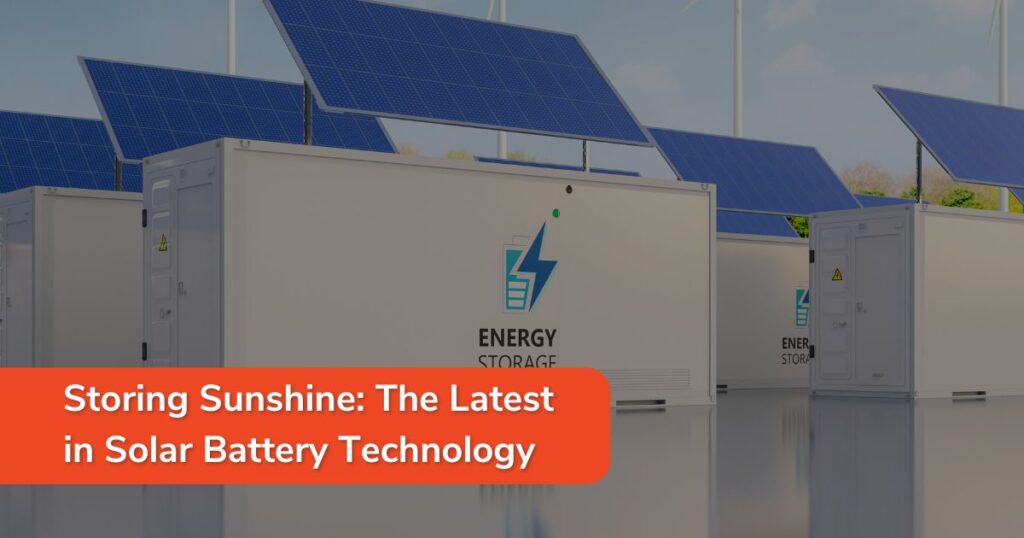
Storing Sunshine: The Latest in Solar Battery Technology Smart Energy Answers June 3, 2026 The shift from fossil fuels to renewable energy is no longer an idealistic vision but an urgent global imperative. Solar energy, with its infinite potential, has taken the lead in our quest for a more sustainable future. One of the critical advancements that have propelled solar energy into the spotlight is the evolution of solar battery technology. As the name suggests, solar batteries are the sun-powered reservoirs of energy, capable of storing the golden light from the day for use in the dark of night. They are the linchpin in turning sunshine into a reliable, round-the-clock energy source. This article examines the significant strides in solar battery technology, their practical applications, and the potential to revolutionise not just how we power our homes and businesses, but also the very infrastructure of our energy grids. Why Solar Battery Technology Matters The Benefits of Energy Storage For decades, the Achilles’ heel of renewable energy has been the intermittency of its sources. The sun doesn’t always shine, and the wind doesn’t always blow. Solar battery storage serves as a bulwark against this fundamental constraint, ensuring a seamless and continuous supply of energy. With energy storage, excess power generated during peak sunlight hours can be captured and used during those non-productive cloudy days or dark nights. Impact on Renewable Energy Adoption The rise of solar battery technology has been instrumental in accelerating the adoption of solar power. By mitigating the variability of solar energy, it makes the transition to renewables more reliable for both consumers and the grid as a whole. Cost Savings and Energy Independence Energy storage systems, particularly those powered by solar, can lead to significant cost savings for consumers. They offer a pathway to energy independence, reducing reliance on the central grid and, by extension, the volatility of energy prices. Advancements in Solar Battery Technology In the pursuit of more efficient and sustainable energy storage, several technologies have emerged as frontrunners. Lithium-Ion Batteries Lithium-ion batteries, which have seen immense success in the consumer electronics and electric vehicle markets, are now dominating the solar energy storage market. With high energy density and relatively low maintenance requirements, they are the go-to option for many residential and commercial solar installations. Solid-State Batteries Solid-state batteries use solid electrodes and an electrolyte, unlike traditional lithium-ion batteries that use liquid or polymer electrolytes. This offers higher energy densities, faster charge times, and improved safety. While they are still in the development phase, their potential to exceed the performance of current batteries is undeniable. Flow Batteries Flow batteries are a type of rechargeable battery where energy is stored directly in the electrolyte solution. Their advantage lies in their ability to decouple power and energy, providing scalable solutions for stationary storage applications. Graphene-Based Batteries Graphene, an allotrope of carbon, has gained attention because of its unique properties, including exceptional electrical conductivity. Graphene-based batteries promise energy storage with higher charge rates, longer life cycle, and lighter weight. Applications of Solar Battery Technology Solar batteries are not a one-size-fits-all solution. They find use across a spectrum of applications, each with its unique set of demands and benefits. Residential Use In residential settings, solar batteries enable self-consumption of solar power, potentially eliminating the need for drawing electricity from the grid. They also serve as backup power sources, ensuring that essential appliances keep running in the event of an outage. Commercial and Industrial Use For commercial and industrial users, solar batteries can provide substantial financial benefits by reducing demand charges, which can constitute a significant portion of their electricity bills. Grid-Scale Energy Storage At the utility level, solar batteries offer grid stability through services like frequency regulation and peak shaving. This function is pivotal as the energy mix continues to diversify, incorporating more intermittent renewable sources. Case Studies and Success Stories The real-world impact of solar battery technology is perhaps best illustrated through case studies of successful installations. From remote villages in developing countries gaining access to reliable electricity to suburban households becoming self-sufficient, these stories highlight the transformative potential of solar batteries. One such success story is that of the SolarEdge Home Battery, which has revolutionised the home energy storage landscape. With cutting-edge features like roundtrip efficiency of up to 94.5%, a 10-year warranty without cycle limitations, and the ability to stack up to three batteries per inverter, it has set new benchmarks for efficiency and safety. Additionally, its seamless integration with the SolarEdge app provides homeowners with unprecedented control over their energy usage and savings. Another standout player is the Tesla Powerwall, renowned for its 100% depth of discharge, 90% round-trip efficiency, and a 10-year warranty. Through its user-friendly app interface, it not only enables homeowners to monitor their energy usage but also to optimise their settings for energy independence, outage protection, or savings. Challenges and Limitations Despite the promising advancements, solar battery technology faces a set of challenges that must be addressed for widespread adoption. Cost Considerations One of the most significant barriers is the upfront cost of battery installations. While the prices have been steadily declining, they remain a significant investment for many consumers. Technical Challenges Throughout the industry, there is ongoing research to address the technical limitations of current battery technologies, such as energy density, cycle life, and the availability of certain materials required for their manufacture. Policy and Regulatory Barriers The nascent stage of the solar battery market has led to a patchwork of regulations. Adopting a more streamlined and supportive policy framework is crucial to enable the full potential of solar batteries to be realised. Future Trends and Innovations Looking ahead, the future of solar battery technology is rife with potential for innovation and growth. Emerging Technologies and Research Scientists and engineers around the world are exploring cutting-edge materials and designs for the next generation of batteries. The development of high-capacity, long-lasting, and sustainable batteries is a key area of focus. Integration with Smart Grid Systems The integration of solar batteries
Efficiency Boost: Best Practices for Integrating Solar Power in Business
Efficiency Boost: Best Practices for Integrating Solar Power in Business Smart Energy Answers June 4, 2026 Discover the Top Strategies for Incorporating Solar Power Into Your Business Operations Discover the top strategies for seamlessly incorporating solar power into your business operations and maximising efficiency. Significance of Solar Power Adoption for Businesses Solar power adoption holds significant benefits for businesses looking to reduce their carbon footprint and lower energy costs. By harnessing solar energy, businesses can contribute to a cleaner environment while also cutting down on electricity expenses. This move towards sustainability can enhance a company’s reputation and attract environmentally conscious customers. Embracing solar power demonstrates a commitment to renewable energy and showcases forward-thinking leadership within the industry. Understanding the Specific Needs and Constraints of Businesses Before integrating solar power into business operations, it is crucial to understand the specific needs and constraints of each individual company. Factors such as available space for solar panels, energy consumption patterns, budgetary considerations, and regulatory requirements must be carefully assessed. Tailoring the solar power system to meet the unique requirements of the business ensures optimal performance and maximum benefits. Exploring On-Site Versus Off-Site Solar Options Businesses have the option to install solar panels on-site or participate in off-site solar projects through virtual net metering or community solar programmes. On-site solar installations provide direct access to solar energy and potential cost savings, while off-site options offer flexibility and scalability for businesses with limited space or resources. Understanding the pros and cons of each approach is essential for making an informed decision that aligns with the business goals. Calculating Return on Investment and Payback Periods for Solar Projects Assessing the financial viability of solar projects involves calculating the return on investment, or ROI, and determining the payback period. By analysing the upfront costs, energy savings, available incentives, and tax benefits, businesses can make informed decisions about the economic feasibility of solar power adoption. Understanding the financial implications helps businesses evaluate the long-term benefits and make strategic investments in renewable energy. Navigating Utility Interconnection Processes and Net Metering Policies Connecting a solar power system to the utility grid requires navigating complex interconnection processes and understanding net metering policies. Businesses must comply with regulations, obtain permits, and establish agreements with utility companies to ensure seamless integration of solar energy. By staying informed about interconnection requirements and incentive programmes, businesses can streamline the process and maximise the benefits of solar power generation. Overseeing Installation to Minimise Disruption to Business Operations Installing solar panels may require temporary disruptions to business operations, such as roof access and equipment installation. By planning the installation process carefully and coordinating with experienced solar contractors, businesses can minimise downtime and ensure a smooth transition to solar energy. Proper project management and communication are essential for overseeing the installation without impacting daily business activities. Establishing a Maintenance Schedule to Ensure System Longevity and Efficiency Regular maintenance and monitoring are essential for ensuring the longevity and efficiency of a solar power system. Establishing a maintenance schedule that includes inspections, cleaning, and performance checks helps prevent potential issues and maximise energy production. By investing in proactive maintenance, businesses can protect their solar investment and enjoy reliable performance for years to come. Staying Informed About Changes in Incentive Programmes and Eligibility Criteria Incentive programmes and eligibility criteria for solar power adoption are subject to change, making it essential for businesses to stay informed about updates and opportunities. By keeping abreast of new incentives, rebates, and tax credits, businesses can take advantage of cost-saving measures and maximise their return on investment. Regularly reviewing incentive programmes ensures that businesses make the most of available benefits and remain competitive in the renewable energy landscape. Highlighting Cost Savings, Environmental Benefits, and Other Positive Outcomes Emphasising the cost savings, environmental benefits, and positive outcomes of solar power adoption can help businesses communicate the value of renewable energy investments. By showcasing the financial advantages, environmental impact, and sustainability initiatives associated with solar energy, businesses can attract customers, investors, and employees who align with their values. Highlighting the holistic benefits of solar power reinforces the business case for sustainable practices and sets a positive example for the industry. The Transformative Potential of Solar Energy in Business Operations Solar energy has the transformative potential to revolutionise business operations and drive sustainability in various industries. By embracing solar power, businesses can reduce reliance on fossil fuels, decrease greenhouse gas emissions, and contribute to a greener future. The integration of solar energy into business operations not only improves efficiency and cost-effectiveness but also positions companies as leaders in environmental stewardship and innovation. Emphasising the transformative power of solar energy inspires positive change and propels businesses towards a more sustainable future.
Reduce Energy Consumption: Key Steps Before Going Solar
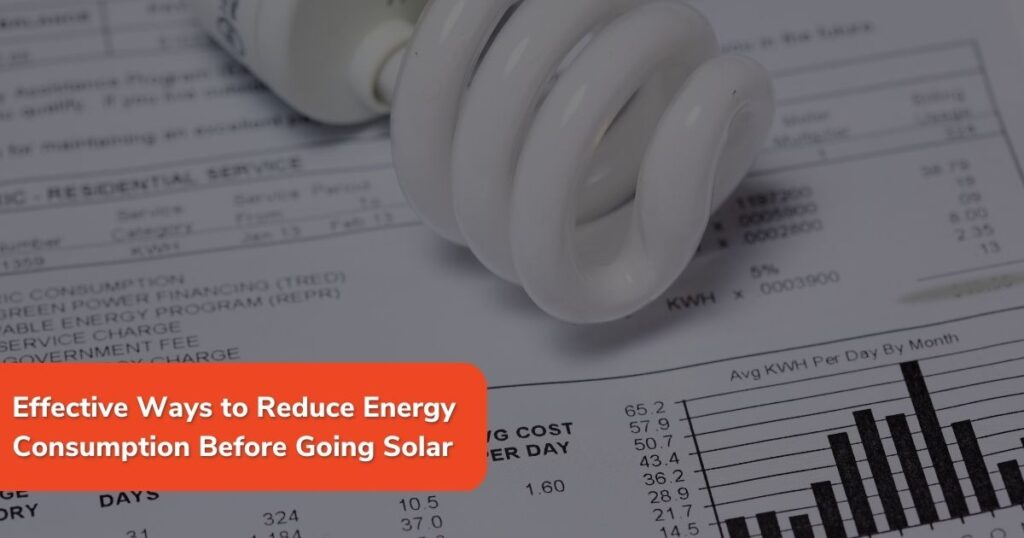
Reduce Energy Consumption: Key Steps Before Going Solar Smart Energy Answers April 6, 2023 Before Going Solar: Key Steps to Reduce Energy Consumption As families and businesses seek to reduce their carbon footprint and lower energy costs, many are considering the installation of solar panels as a practical solution. While solar power can provide a significant reduction in energy costs and carbon emissions, it is important to note that it should not always be the first step in reducing energy consumption. Before you start considering solar as an option, it is important to ensure that you have taken steps to reduce your energy consumption as much as possible. This can be achieved through a number of simple changes, including improving air conditioning efficiency, replacing lights with LED bulbs, and improving insulation. By reducing energy consumption, you will not only lower your carbon footprint but also save money on energy costs. This can make the investment in solar panels and batteries even more financially viable. Improve Air Conditioning Efficiency Improving air conditioning efficiency is an easy way to reduce energy consumption. By regularly servicing your air conditioning system, you can help ensure it runs efficiently and does not waste energy. You may also want to consider installing programmable thermostats. These can automatically adjust the temperature of your home or building based on occupancy patterns, helping save energy when the space is unoccupied. Replace Traditional Light Bulbs with LED Bulbs Replacing traditional light bulbs with LED bulbs is another easy way to reduce energy consumption. LED bulbs use significantly less energy than traditional bulbs and last much longer, making them a cost-effective investment in the long run. In addition to replacing bulbs, consider installing motion sensors or timers to automatically turn off lights in areas that are not frequently used. Improve Insulation Improving insulation is also an important step in reducing energy consumption. By ensuring that your home or building is well insulated, you can help prevent energy from escaping through cracks and gaps in your walls and roof. This not only reduces energy consumption but also makes the space more comfortable for employees, customers, and occupants. Consider Solar and Batteries After Reducing Energy Use Once you have taken steps to reduce your energy consumption, it is time to consider solar and batteries as viable options. Solar panels can provide a significant reduction in energy costs and carbon emissions. Batteries allow you to store excess solar energy generated during the day and use it at night or during periods of low solar generation. You may also potentially generate additional income from your battery by selling excess energy back to the grid. Solar and battery systems can provide greater energy independence and help reduce your reliance on the grid. However, it is important to note that they require a significant upfront investment. By reducing your energy consumption first, you can help ensure that your investment in solar panels and batteries is as cost-effective as possible. Happily tearing his electricity bill. Conclusion Solar power and batteries can be a great way for your home or business to reduce energy costs and carbon emissions. However, it is important to note that they should be considered after taking steps to reduce energy consumption first. Before investing in solar and batteries, homes and businesses should consider improving air conditioning efficiency, replacing lights with LED bulbs, and improving insulation. By reducing energy consumption first, you can help ensure that your investment in solar panels and batteries is as cost-effective as possible should you decide to proceed.
Don’t Miss Out: Time Running Out for Solar Tax Break for Businesses
Don’t Miss Out: Time Running Out for Solar Tax Break for Businesses Smart Energy Answers April 4, 2023 Instant Asset Write-Off for Australian Businesses If you are a business owner in Australia, you may have heard about the instant asset write-off programme. This programme allows businesses to claim an immediate deduction for the business portion of the cost of an asset in the year the asset is first used or installed and ready for use. It has been particularly useful for businesses looking to invest in renewable energy solutions, such as solar power. However, the instant asset write-off is set to end on 30 June 2023. This means businesses looking to take advantage of the programme must act quickly. Investing in solar power can be expensive, but the instant asset write-off programme can help businesses save a significant amount of money. By installing solar power before the end of the financial year, businesses may be able to write off the full cost of the installation in the same year, helping reduce their tax bill. Solar power is an excellent way for businesses to reduce their energy costs. With electricity prices continuing to increase, businesses that invest in solar power can achieve significant savings on their electricity bills. Furthermore, solar power is a sustainable energy source that can help businesses reduce their carbon footprint and demonstrate their commitment to sustainability. Solar Rebates for Businesses In addition to the instant asset write-off programme, the government also offers solar rebates for businesses. These incentives, such as Small-scale Technology Certificates, or STCs, can help businesses save even more on their solar installation costs. STCs are tradeable, meaning businesses can sell them to generate additional value from their solar investment. If you are considering investing in solar power for your business, working with a reputable solar installer who can guide you through the installation process is essential. A good installer can advise you on the best system for your business, help you apply for government incentives, and ensure that your system is installed to the highest standard. Many of our clients have claimed up to $60,000 immediately upon installing a solar solution by leveraging government incentives such as the instant asset write-off and STCs. We encourage all business owners to speak with a tax accountant or financial advisor to fully understand the potential savings. You can also book a consultation with one of our energy experts to explore the best solar options for your business. Conclusion The instant asset write-off programme for businesses installing solar power in Australia is coming to an end soon. Business owners who have yet to invest in solar power should act fast to take advantage of this programme before it is too late. With additional solar rebates offered by the government and continuously increasing electricity prices, investing in solar power is an excellent opportunity for businesses to save money on energy bills while contributing to a more sustainable future. Do not wait any longer. Take advantage of this opportunity today.
The 5 Biggest Myths of Solar Energy: Debunking Misconceptions
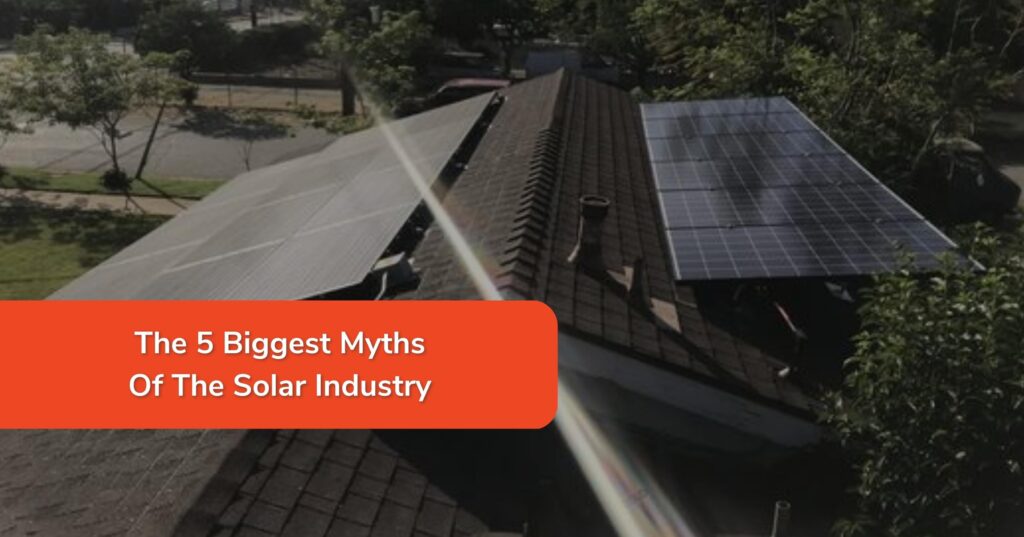
The 5 Biggest Myths of Solar Energy: Debunking Misconceptions Smart Energy Answers February 7, 2023 Debunking 5 Common Solar Energy Myths The solar industry has grown rapidly in recent years. With that growth has come a number of misconceptions and myths about how solar energy works and the benefits it can provide. Here are the five biggest myths in the solar industry, along with the facts that debunk them. Myth 1: Solar Panels Only Work in Sunny Locations Fact: Solar panels are actually quite efficient at converting sunlight into electricity, even on cloudy days. In fact, some studies have shown that solar panels can produce up to 25% of their rated capacity on a cloudy day. So, even if you live in a location with less-than-ideal weather, you can still benefit from solar energy. Myth 2: Solar Energy Is Too Expensive Fact: The cost of solar energy has dropped significantly in recent years, making it a more affordable option for homeowners and businesses. In addition, many government incentives and rebates are available for installing solar panels, which can help offset the initial cost. With the savings on monthly energy bills, a solar energy system can pay for itself over time. Myth 3: Solar Panels Will Ruin the Appearance of Your Home Fact: Solar panels are available in a variety of styles and sizes to suit the appearance of different homes. Many homeowners find that adding solar panels can increase the value of their property while also giving the home a more eco-friendly look, depending on the design. Solar panels can also be installed on the roof or on the ground, allowing you to choose the location that works best for your home. Myth 4: Solar Energy Is Unreliable During a Power Outage Fact: Solar energy systems are reliable and can provide a steady supply of electricity to your home during normal operation. For power outages, many solar systems can be paired with battery backup solutions to keep essential appliances and devices running. With the right solar and battery setup, you can have greater peace of mind knowing you may still have access to stored electricity during an emergency. Image: CHOICE Australia has chosen Smart Energy Answers as their preferred solar energy provider, helping customers achieve more than $1 million in lifetime savings. Myth 5: Solar Energy Is Only for Homeowners, Not Businesses Fact: Solar energy can be a great option for businesses as well as homeowners. Many businesses are turning to solar energy to reduce their energy costs and improve their sustainability. As of 2023, more than 7,000 businesses have switched to solar, with IBISWorld showing 8.1% annualised growth in businesses adopting solar energy. With various incentives and rebates available for commercial solar installations, solar can be a cost-effective choice for businesses of all sizes. Conclusion Overall, solar energy is a clean, renewable, and affordable option for powering your home or business. Do not be fooled by the myths. The facts about solar energy speak for themselves.
Solar-Battery Incentives | Australia | Smart Energy Answers

Solar-Battery Incentives | Australia | Smart Energy Answers Smart Energy Answers April 9, 2021 Solar-Battery Incentives in Australia: Cut Energy Bills and Help the Environment By accessing rebates and discounts, you may be able to reduce your energy use, save on power bills, and help the environment. Solar battery incentive programmes are available in several Australian states and territories. The ACT Government Incentive The ACT Government’s Next Generation Energy Storage, or Next Gen, programme is subsidising the installation of batteries for roughly 5,000 homes and small businesses. The current rebate is: $825 per kilowatt, or kW, of Sustain Peak Output, or SPO Up to a maximum of 30 kW or $24,750 for households Up to 50 kW or $41,250 for businesses The SA Government Incentive The South Australian Government incentive is calculated based on the kilowatt-hour capacity of the battery purchased. Energy concession holders may be eligible for a higher subsidy, helping support low-income households to access the scheme. The current rebate is: $3,000 maximum subsidy per battery installation $300 per kWh for energy concession holders $200 per kWh for all other households The VIC Government Incentive The Solar Homes Program is supporting eligible Victorian households to install a solar battery by providing a point-of-sale discount of up to $4,174. Solar battery rebates are now available in every Victorian postcode. Solar battery rebates will maintain their current value of up to $4,174 until 30 June 2021. The NSW Government Incentive The NSW Government has recently introduced support to make it easier for homeowners to access clean, renewable energy and reduce electricity bills. Through the Empowering Homes Program, homeowners may be able to access interest-free loans to install a solar battery system. This programme is initially running as a pilot to refine its design before rolling out across the state. Eligible households may be able to apply for interest-free loans for a battery added to an existing solar system, or for a new solar and battery system. The two options available are: An interest-free loan of up to $14,000 towards a solar photovoltaic, or PV, plus battery system, repayable over terms of up to eight years An interest-free loan of up to $9,000 towards retrofitting a battery system to an existing solar PV system, repayable over terms of up to 10 years For a solar battery installation, you must use the loan to either: Increase the size of your existing solar system and install a solar battery Install a new solar system and battery For a battery-only installation, you must: Already have a solar system of sufficient size to support a solar battery Have an appropriate, technologically equipped inverter system Upgrade an older inverter system if required, which may involve using part of the loan towards the upgrade The Smart Energy Answers Incentive Smart Energy Answers has gone one step further by launching our own interest-free loan offer, now available nationwide for a limited number of customers per postcode. This offer can help homeowners access interest-free loans to install solar and battery systems, or fit solar batteries to an existing system. The interest-free loan is available up to $35,000 and is repayable over terms of up to seven years. Click here to request an obligation-free energy assessment and see if you are eligible today. What Are the Benefits of Installing Solar and Batteries? Installing solar panels with battery storage can provide a range of benefits for your home, energy use, and long-term savings. Helps reduce your electricity bill Provides access to clean, renewable energy Improves self-use of the solar electricity you generate Allows you to sell excess electricity back to the grid Supports greater energy independence with your own reliable energy source Provides protection against blackouts when paired with the right battery setup You could also potentially access additional credits on your bill by signing up with a Virtual Power Plant, or VPP. A VPP may help you receive higher feed-in tariffs in the market, with rates of up to 45 cents per kWh depending on eligibility and programme availability. To learn more about our VPP, please click here to view the Smart Community Program. It is important to fully understand the potential costs and savings so you can make an informed decision about whether this offer is right for you. To learn more, contact Smart Energy Answers today on 1300 948 619 or get a quote today.
How Our Partnership with SolarEdge Works for You!
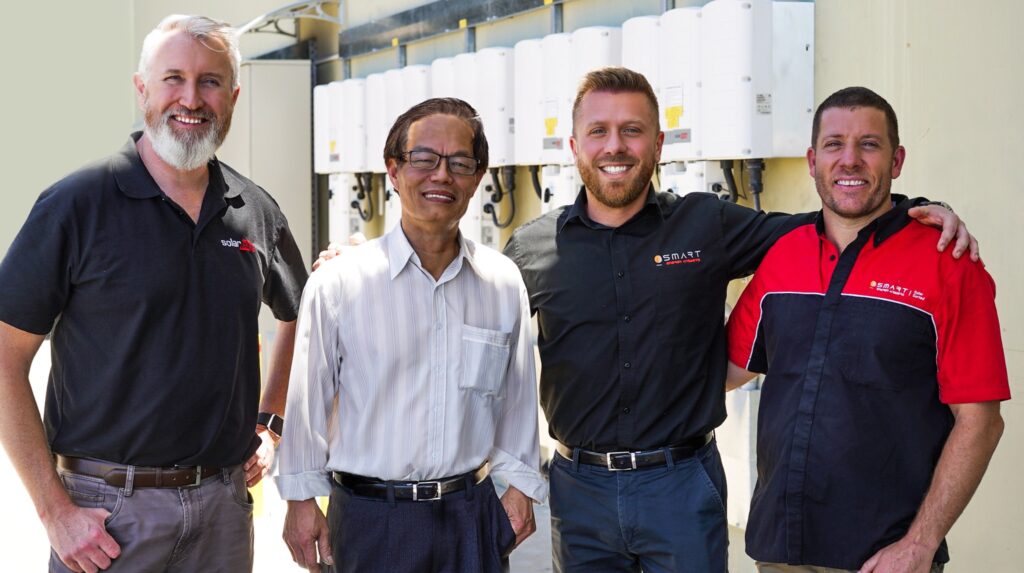
How Our Partnership with SolarEdge Works for You! Smart Energy Answers June 4, 2026 How Our SolarEdge Partnership Benefits You SolarEdge hardly needs an introduction. They have been one of the most innovative companies in the industry, with patented individual panel optimisation and monitoring, as well as unique safety features such as panel-level shutdown. SolarEdge offers a large portfolio of solar power system components, including power optimisers, inverters, and a web platform for module-level monitoring. With over 1 million products shipped worldwide and installations in 130 countries, SolarEdge is leading the solar market. Smart Energy Answers has worked with SolarEdge on several successful projects, each time with a great result. Interested in getting the same outcome? Give us a call on 1300 948 619.
SEA and Smart Design Studio Teams Up

SEA and Smart Design Studio Teams Up Smart Energy Answers June 4, 2026 SEA and Smart Design Studio: Partnering for Sustainable Design Excellence Smart Design Studio has teamed up with Smart Energy Answers to achieve sustainable design excellence with its headquarters. Leading solar solutions provider Smart Energy Answers, or SEA, and award-winning architecture and interior design practice Smart Design Studio, or SDS, announced that they are in the final stages of constructing a photovoltaic solar power system for SDS’s new headquarters in Alexandria as part of their aim to be carbon neutral by the end of 2020. “The studio has been an exciting testing ground for new concepts and techniques to push the practice forward,” said Joan Ann Kok at Smart Design Studio. “Our practice, along with Architects Declare, is committed to going carbon neutral by 2020. Going green means using energy that doesn’t release carbon emissions, reducing our environmental impact, and supporting renewable energy development.” SDS’s goal is to achieve a six Green Star rating with the design. Once finalised, the building located in the North Alexandria Conservation Area will accommodate the team in one light-filled space. Achieving the Green Star Rating To achieve the Green Star rating, SEA and SDS planned and executed the following: All materials have been carefully selected for their embodied energy, impact on the environment, and reuse opportunities. The building will be energy positive with 255 roof-mounted 93.1kW LG NeON® R solar panels, bringing SDS’s total PV capacity to 365kW. The solar system solution features 82.8kW SolarEdge inverters and 255 panel power optimisers to further increase the efficiency of the system. To increase SDS’s energy independence, a 15kW sonnenBatterie Eco 9.43 has been integrated into the system. SDS awarded the project to SEA in April 2019. The partnership was formed to help pave the way to mainstream sustainable design in Australia. The project was completed at the beginning of August 2020. With these cutting-edge elements in place, SDS aims to showcase its sustainable design pedigree and promote environmentally conscious design, not only as a design philosophy but also as an aesthetic pursuit. “We were excited to partner with Smart Design Studio on this project and are looking forward to the opportunities this project will bring,” said Daniel Lanzetta, Business Development Director at Smart Energy Answers. “They have made exemplary efforts in showing their commitment to environmentally sustainable design. The project highlights our commonality of providing quality services, a meaningful platform to set the standards for companies to switch to cleaner energy and inspire environmental responsibility as well as social change,” Lanzetta said. About Smart Energy Answers Smart Energy Answers is Australia’s leading solar solutions provider based in Sydney. We have a combined 100 years’ experience in the solar PV industry and have completed over 5,000 installations across Australia. Our vision is to accelerate the transition to 100% renewable energy through the adoption of cutting-edge sustainable technologies. We are a CEC Approved Solar Retailer and are proud to have won the 2020 ProductReview.com.au Award for the Solar Retailer Category. About Smart Design Studio Smart Design Studio, founded in 1997, is a multi-discipline design studio of more than 40 staff offering professional services in architecture, interior architecture, and design. Smart Design Studio’s portfolio includes master planning for urban centres, multi-unit residential developments, private dwellings, retail and commercial developments and fit-outs, as well as product design.