
Urgent Call for Rapid Shutdown: Is Australia Behind in Solar Safety?
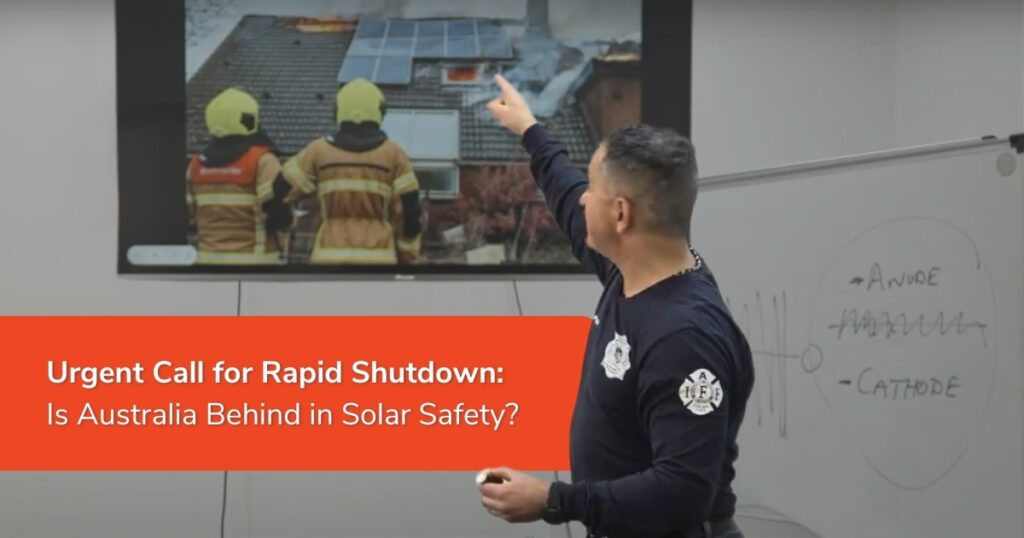
Urgent Call for Rapid Shutdown: Is Australia Behind in Solar Safety? Smart Energy Answers June 5, 2024 The Importance of Fire Safety in Solar and Battery Installations Solar energy’s rapid growth in popularity across Australia is well established. Solar energy offers the nation a sustainable and cost-effective alternative to traditional energy sources. However, as more households and businesses adopt solar power, the importance of applying proper fire safety measures to installations cannot be overstated. Most recently, an incident at the Sydney Olympic Park Aquatic Centre underscored the potential risks associated with solar systems. This has further highlighted the need for robust safety measures, such as rapid shutdown capabilities, to be implemented across Australia. Let’s take a closer look at the importance and critical aspects of fire safety in solar and battery installations. Fire Safety Risks in High-Voltage Solar Installations Captain Richard Birt from Las Vegas, Nevada, is a dedicated firefighter with extensive experience in fire safety. He has conducted thorough research on the dangers associated with solar energy systems and has shared his findings with Smart Energy Answers. This helps ensure that, as providers, we are also protecting our customers and that our smart solar and battery solutions are designed to help prevent solar fires. Captain Birt’s research emphasises the inherent risks of high-voltage electricity in solar installations and the unique challenges faced by firefighters during such incidents. High-voltage solar systems can pose significant fire risks, especially when the electricity cannot be quickly shut down. Traditional firefighting methods are often inadequate for solar-related fires because solar panels can continue generating electricity when exposed to sunlight, unless a rapid shutdown system is in place. Real-world examples, such as the Amazon solar roof fire in 2020, illustrate the difficulties in managing these fires and the critical need for rapid shutdown systems. High-voltage solar installations can operate at voltages of up to 1500 volts, which presents serious risks. In the event of a fire, shutting down a high-voltage inverter can be challenging because solar panels continue to generate electricity as long as they are exposed to sunlight. This creates dangerous situations where firefighters may need to wait for panels to de-energise, which can sometimes mean waiting until nightfall to safely address the fire. This was seen in the Amazon solar roof fire incident. Continuous power generation from solar panels during daylight hours increases the risk of electric shock and complicates firefighting efforts. The limited ability to quickly and safely shut down the system can delay effective fire suppression, making the situation even more hazardous. Why Do We Need Rapid Shutdown and Module-Level Power Electronics? Rapid shutdown systems are essential for enhancing the safety of solar installations. These systems allow each module, or solar panel, to be independently controlled and quickly shut down during installation, maintenance, or in the event of a fire. This drastically reduces the risk of electric shock and enables firefighters to safely address the fire. By adopting global standards for rapid shutdown, the safety of solar installations in Australia can be significantly improved. Module-Level Power Electronics, or MLPE, such as SolarEdge Power Optimisers and Enphase Microinverters, play a crucial role in this process. SolarEdge Power Optimisers automatically shut down the DC voltage in the PV wires, helping protect installers, maintenance personnel, and firefighters. Enphase Microinverters convert DC to AC at each solar panel, eliminating high-voltage DC lines and providing rapid shutdown capabilities by isolating each module. The four key safety effects of rapid shutdown are: Fire safety. Civilian safety. Incident stabilisation. Property conservation. Calls for Improved Solar Safety After Sydney Olympic Park Fire On 13 May 2024, a fire broke out at the Sydney Olympic Park Aquatic Centre, affecting its rooftop solar system. The fire prompted an immediate evacuation, ensuring the safety of all attendees. However, the incident again highlighted the need for effective fire safety measures in large-scale solar installations. The investigation revealed that the lack of rapid shutdown capabilities delayed the response, which could have been mitigated if SolarEdge Power Optimisers or Enphase Microinverters were in place. Therefore, the identified safety gaps outlined above underscore the need for mandatory safety measures, including rapid shutdown systems, to help prevent similar incidents in the future. The Need for Mandating Rapid Shutdown in Australia Rapid shutdown systems are already required or regulated in countries such as the United States, Canada, the UK, Poland, Thailand, and others, but they are not yet mandatory in Australia. However, the benefits of implementing these systems are clear. Rapid shutdown systems enhance safety for firefighters and occupants, allowing for quicker and more effective fire suppression. They help protect human lives, reduce the risk of asset damage, and lower the risk of electric shock. When Australia is compared with international safety standards, the difference is significant. Countries such as the United States have implemented strict regulations that require rapid shutdown systems in solar installations. By adopting similar standards in Australia, we would align with global best practices and improve overall safety. Why Choosing the Right Provider Matters Solar and battery system providers also carry a significant responsibility for fire safety. This includes first-class installation, the use of high-quality and compatible materials, compliance with regulations, and educating customers on how to protect themselves. Together, these elements help ensure end-to-end best practices are in place for owners and occupants of the premises. When choosing a provider, prioritise those who demonstrate a rigorous commitment to safety throughout the entire process, from installation to after-sales service. At Smart Energy Answers, we are strong advocates for mandatory rapid shutdown systems becoming the standard in Australia. This would further enhance safety within the solar and battery investments of our customers. Conclusion The importance of rapid shutdown systems in solar installations cannot be overstated. The recent fire at Sydney Olympic Park serves as a stark reminder of the potential risks and the need for robust safety measures. Mandating rapid shutdown systems in Australia is essential to help protect lives and properties. Homeowners and businesses should prioritise fire safety when installing solar systems and