
Using Sigenergy Battery in Cold Climates: What to Expect
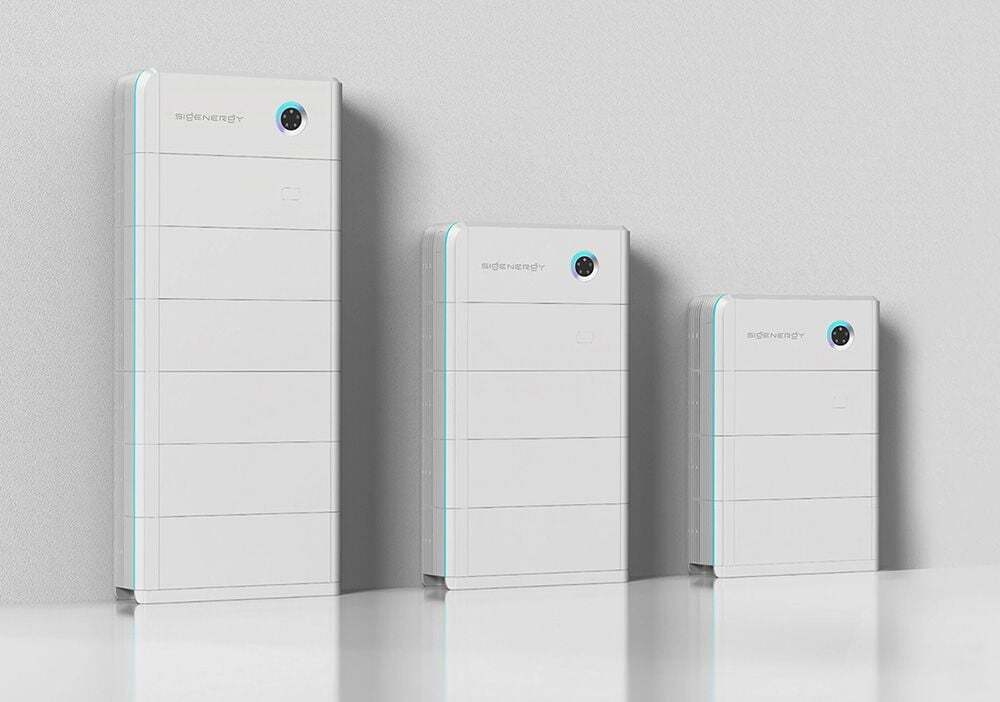
Using Sigenergy Battery in Cold Climates: What to Expect Smart Energy Answers June 3, 2026 At Smart Energy Answers, we assist homeowners and companies in the switch to smarter, cleaner energy sources. Due to renewable energy becoming more mainstream, battery storage has grown in significance, particularly in regions with unpredictable weather. A typical question we get is: Is a battery system suitable in a cold climate? This blog is dedicated to those who consider the Sigenergy battery and want to know what to expect in cold areas where the battery is to be used. Why Temperature Matters for Battery Performance? Firstly, it is essential to know how temperature influences battery technology overall before getting into the performance of the Sigenergy battery. A battery is a device that stores and releases energy. At colder temperatures, the battery reactions slow down, which reduces efficiency, capacity, and charge rate. This is especially the case for homeowners in regions of the country that experience winter temperatures below freezing. In the absence of an appropriate technology, you may have a battery that would not perform during times of necessity. This is where these batteries come in with advanced thermal and battery management systems. Designed for All Climates We’ve had experience with many batteries over the years, but the Sigenergy battery stands out for its ability to operate across a wide range of environments. It is designed to operate effectively in a great range of outdoor temperatures, including sub-zero temperatures. So whether your home is on a snowy mountain lake or experiences frosty mornings, these batteries offer features to support ongoing performance in the cold specifically. These batteries also have internal heaters as well as a smart thermal management system. If it is cold outside, the battery can maintain its internal operating temperature above optimal levels, allowing the system to continue functioning without a sudden loss of power output and capacity. Benefits of Using Sigenergy Battery in Cold Climates When it comes to cold winters and the use of a Sigenergy battery, there are several very definite advantages to using these batteries: 1. Reliable Backup Power In most regions that experience cold temperatures, power outages occur during storms or when the racks become overloaded. These batteries can provide power as backup when the grid fails. Irrespective of the need to maintain your heaters, lights, or internet, this battery has got you covered. 2. Stable Efficiency A large number of batteries fail under freezing conditions. However, the Sigenergy battery offers a higher usable energy level than most systems under cold conditions, thanks to its temperature regulation technology. 3. Long-Term Durability Batteries that work under extreme conditions are more likely to fail. These batteries feature components and defence mechanisms that ensure it maintains its battery life, and despite fluctuating temperatures, its battery levels adjust throughout the year. 4. Minimal User Intervention The system is automatically activated once installed. You no longer need to manually adjust settings or think about how to adjust the system yourself when the seasons change. It can change with the temperature automatically. Installation Considerations for Cold Regions In colder climates, we take slightly different precautions when we install the Sigenergy battery and ensure that things are well in order: Location Matters: We recommend placing the battery in a semi-enclosed space, such as a garage or an enclosed wall mount, to act as a buffer layer against temperature extremes. Insulated Housing: If you are in an area with prolonged cold spells, we can provide additional insulation or a weatherproofed cabinet to protect your system better. Monitoring System Setup: We will ensure the installation of your mobile app or a web-based monitoring dashboard, allowing you to view live performance data and receive alerts. These minor changes will help your system operate at its optimum and will help protect your investment. Energy Cost Savings Even in Winter Solar generation may reduce in winter, but that doesn’t mean your energy savings stop. The Sigenergy battery helps you store any excess solar energy generated during the day, even on cloudy days, and use it at night when electricity rates are often higher. This strategy reduces your reliance on the grid and saves you money even during colder months. Plus, with time-of-use billing becoming more common, storing energy during off-peak hours and using it during peak times becomes a smart financial decision, all year round. Our Experience with Sigenergy Battery At Smart Energy Answers, we have installed dozens of these batteries under various conditions across Australia. We have received enthusiastic feedback for the Sigenergy from customers, particularly in situations where we were somewhat apprehensive, such as colder regions of Australia, where customers expressed no concerns related to battery performance. The Sigenergy battery provides our clients with unwavering confidence that, regardless of the weather, their homes will remain powered, efficient, and green. Final Thoughts Cold weather should never prevent anyone from transferring to clean, autonomous energy. The Sigenergy battery is not just a power storage system, it is a smart, reputable energy solution that has been designed to accommodate different climate conditions. We think about solutions all year round, not just in the winter. This is why we always recommend these batteries to our clients who reside in locations that experience high alpine conditions. It is strong, intelligent, and versatile, everything you are looking for if you are purchasing a new energy storage system. Now that you are ready to upgrade from your old battery, which might freeze on you, let Smart Energy Answers guide you through the process and demonstrate how a Sigenergy battery can enhance your energy experience, no matter the weather.
Best Solar Panel Placement Tips
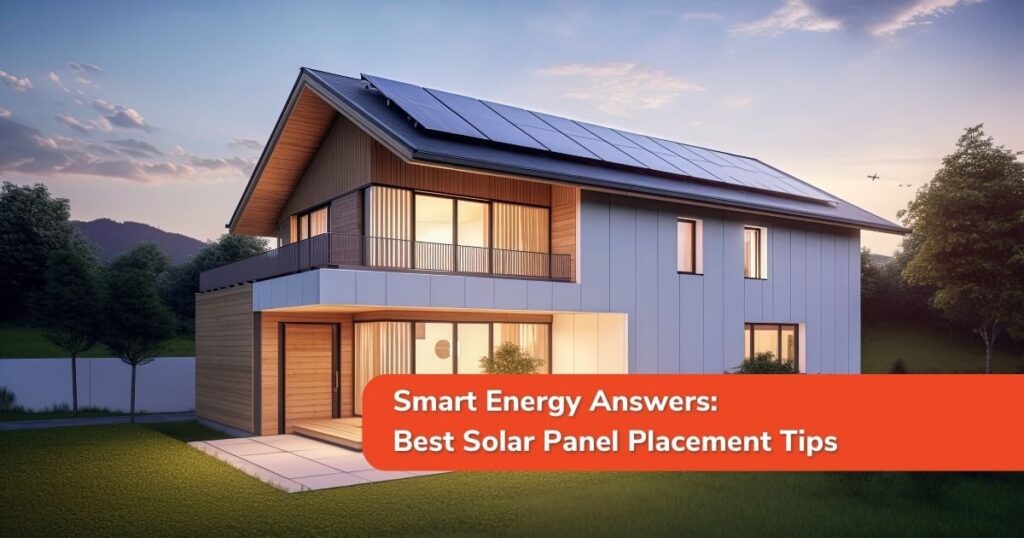
Best Solar Panel Placement Tips Smart Energy Answers June 3, 2026 Discover the Key Tips for Optimal Solar Panel Placement to Maximise Energy Efficiency and Savings Maximising Solar Efficiency through Proper Placement Proper placement is crucial for maximising the efficiency of solar panels. By positioning the panels in the right location, you can ensure that they receive the maximum amount of sunlight throughout the day. This will result in higher energy generation and greater savings on your electricity bills. When determining the placement of your solar panels, there are a few factors to consider. These include the orientation of your roof, potential shading obstacles, and the tilt and angle adjustment of the panels. Understanding Sun Exposure and Angle One important aspect of proper placement is understanding the sun exposure and angle. Solar panels should ideally be placed in an area where they receive direct sunlight for the majority of the day. This means avoiding locations that are heavily shaded by trees or buildings. By maximising sun exposure, you can optimise the energy generation of your solar panels. Evaluating Roof Orientation for Optimal Sunlight Capture Another factor to consider is the evaluation of roof orientation for optimal sunlight capture. The direction your roof faces can significantly impact the amount of sunlight your panels receive. In general, a south-facing roof is considered the best option for solar panel installation. This orientation allows the panels to capture the maximum amount of sunlight throughout the day. However, east and west-facing roofs can also be viable options, depending on the specific circumstances of your property. Assessing Potential Shading Obstacles Assessing potential shading obstacles is also crucial for proper solar panel placement. Shading can greatly reduce the efficiency of your panels, as it limits the amount of sunlight they receive. Before installing your solar panels, carefully evaluate the surrounding environment for any objects that may cast shadows on the panels, such as nearby buildings, trees, or even chimneys. If shading is unavoidable, consider implementing shading mitigation techniques, such as trimming trees or adjusting the panel positioning. Considerations for Tilt and Angle Adjustment Considerations for tilt and angle adjustment are another important aspect of solar panel placement. The tilt and angle of your panels can affect their energy generation. In general, the optimal tilt angle for solar panels in Australia is equal to the latitude of your location. However, adjusting the tilt angle based on the season can further maximise energy generation. For example, tilting the panels more upright during winter can help capture more sunlight during shorter days. Ground-Mounted Solar Panel Options Ground-mounted solar panel options are worth exploring, especially if your roof is not suitable for installation. Ground-mounted panels can be positioned in an optimal location on your property to maximise sun exposure. This option also provides flexibility in terms of panel orientation and tilt angle adjustment. Optimising Solar Panel Placement for Seasonal Variations Optimising solar panel placement for seasonal variations is another important consideration. As the angle of the sun changes throughout the year, adjusting the tilt angle of your panels can help capture the maximum amount of sunlight. This can be done manually or through the use of solar tracking systems that automatically adjust the panel position based on the sun’s movement. Incorporating Solar Tracking Systems Incorporating solar tracking systems can further enhance the efficiency of your solar panels. These systems use sensors to track the movement of the sun and adjust the panel position accordingly. By continuously optimising the panel’s angle towards the sun, solar tracking systems can significantly increase energy generation. Compliance and Planning Permission When planning for solar panel placement, it is important to consider compliance and planning permission. Depending on your location and the regulations in place, you may need to obtain permits or adhere to specific guidelines. Research the local regulations and consult with professionals to ensure that your solar panel installation complies with all requirements. Conclusion In conclusion, implementing effective solar panel placement is crucial for maximising energy generation and savings. By considering factors such as proper orientation, shading obstacles, tilt and angle adjustment, and the use of solar tracking systems, you can optimise the efficiency of your panels. Additionally, ensure compliance with local regulations to avoid any legal issues. With the right placement, you can harness the power of the sun and enjoy the benefits of renewable energy.
Solar Energy: Powering Sustainable Cities
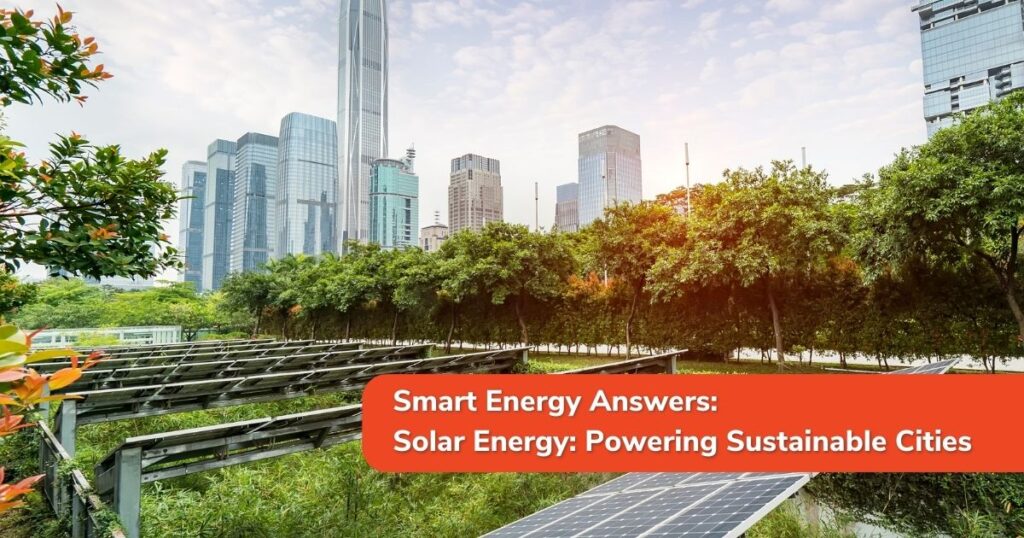
Solar Energy: Powering Sustainable Cities Smart Energy Answers June 3, 2026 Discover the Role of Solar Energy in Creating Sustainable Cities and Promoting Environmental Conservation The Role of Solar Energy in Urban Sustainability Solar energy plays a crucial role in achieving urban sustainability by providing a clean and renewable source of power. As cities continue to grow and expand, the demand for energy increases, leading to higher greenhouse gas emissions and environmental degradation. Solar power offers a sustainable solution to this problem, as it harnesses the energy from the sun and converts it into electricity without producing harmful emissions or depleting finite resources. By utilising solar energy, cities can reduce their carbon footprint and mitigate the negative impacts of traditional energy sources. Solar power systems can be installed on rooftops, open spaces, and even integrated into urban infrastructure such as buildings and transportation systems. This decentralised approach to energy production reduces the reliance on centralised power plants and transmission lines, improving the overall resilience of the city’s energy grid. Furthermore, solar energy promotes energy independence and security for cities. By generating electricity locally, cities can reduce their dependence on external sources of power and mitigate the risk of disruptions caused by natural disasters or geopolitical tensions. This self-sufficiency not only ensures a stable energy supply but also empowers cities to take control of their energy future and reduce their vulnerability to external factors. In addition to its environmental and energy security benefits, solar energy also has positive social and economic impacts. The installation and maintenance of solar power systems create job opportunities and stimulate local economies. Moreover, solar energy can be harnessed to power public spaces and facilities, providing clean and reliable electricity for parks, streetlights, and community centres. This improves the quality of life for citizens and enhances the overall livability of the city. Overall, solar energy is a key component of sustainable urban development. By harnessing the power of the sun, cities can reduce their environmental footprint, enhance energy security, and promote social and economic well-being. The integration of solar power into urban environments is a crucial step towards creating sustainable cities for future generations. Understanding the Potential of Solar Power in Urban Environments Solar power has immense potential in urban environments, offering a sustainable and reliable source of electricity. However, to fully leverage this potential, it is important to understand the unique characteristics and challenges of urban settings. One of the key advantages of solar power in urban environments is its scalability. Solar panels can be installed on various surfaces, including rooftops, parking lots, and facades of buildings, maximising the use of available space. Additionally, advancements in solar technology have made it possible to integrate solar panels into windows, roads, and other urban infrastructure, further expanding their potential. Another important aspect to consider is the intermittent nature of solar energy. To ensure a stable electricity supply, energy storage systems such as batteries can be utilised to store excess energy generated during sunny periods and provide power during cloudy or nighttime conditions. This enables cities to make the most of solar power and reduce their reliance on the traditional energy grid. However, there are also challenges to overcome when implementing solar projects in urban areas. Limited space, shading from tall buildings, and the need to preserve the aesthetic appeal of the city can pose obstacles to the widespread adoption of solar power. Innovative solutions such as floating solar panels on water bodies and utilising vertical surfaces for solar installations can help overcome these challenges and maximise the potential of solar energy in urban environments. In conclusion, understanding the potential of solar power in urban environments is essential for creating sustainable and resilient cities. By leveraging its scalability and addressing the challenges, cities can harness the full benefits of solar energy and pave the way towards a greener and more sustainable future. Harnessing Solar Energy for City-Wide Electricity Needs As cities strive to reduce their carbon footprint and transition to sustainable energy sources, harnessing solar energy for city-wide electricity needs is a promising solution. By utilising the abundant energy from the sun, cities can meet a significant portion of their electricity demands in a clean and renewable manner. To harness solar energy for city-wide electricity needs, large-scale solar power plants can be established on the outskirts of the city. These solar farms consist of numerous solar panels that convert sunlight into electricity on a utility scale. The generated electricity can then be distributed through the existing power grid to meet the needs of residential, commercial, and industrial sectors. In addition to solar farms, rooftop solar installations play a crucial role in meeting city-wide electricity needs. By incentivising and promoting the installation of solar panels on rooftops, cities can tap into the vast potential of unused space and generate clean electricity closer to the point of consumption. This decentralised approach reduces transmission losses and enhances the overall efficiency of the electricity supply. Moreover, the integration of smart grid technologies enables cities to effectively manage and optimise the use of solar energy. By leveraging advanced monitoring and control systems, cities can balance the supply and demand of electricity, store excess solar energy in batteries, and ensure a reliable and stable power supply throughout the day. Harnessing solar energy for city-wide electricity needs not only reduces greenhouse gas emissions and dependency on fossil fuels but also provides long-term cost savings. Solar power is a renewable resource, and once the initial investment is recovered, the electricity generated is essentially free. This can result in significant savings for both the city and its residents, promoting economic growth and sustainability. In conclusion, by harnessing solar energy for city-wide electricity needs, cities can achieve significant environmental, economic, and social benefits. The transition to solar power not only reduces greenhouse gas emissions and promotes energy independence but also stimulates job creation, reduces energy costs, and enhances the overall quality of life for citizens. Integrating Solar Panels into Urban Infrastructure One of the key strategies for promoting
Integrating Solar Power into Urban Infrastructure: A Sustainable Solution
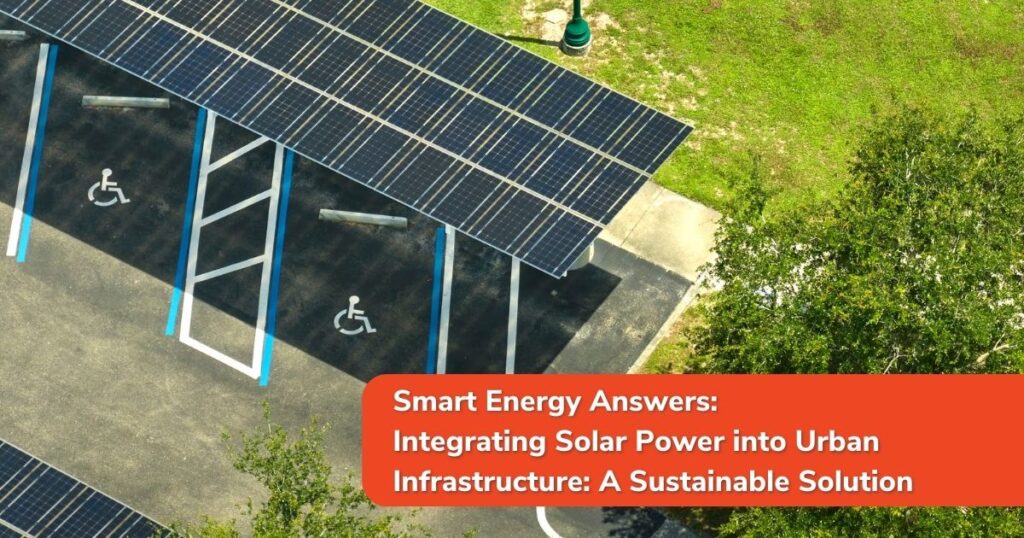
Integrating Solar Power into Urban Infrastructure: A Sustainable Solution Smart Energy Answers June 3, 2026 Discover How Integrating Solar Power into Urban Infrastructure Can Lead to a More Sustainable Future for Cities Addressing Urban Energy Needs with Solar Power Integration Delving into the possibilities of incorporating solar power into the fabric of urban infrastructure is not just a step towards meeting the energy needs of cities. It is a crucial leap towards building a sustainable future. By carefully examining both the advantages and obstacles of integrating solar solutions in urban settings, we can unlock the door to a realm of innovative and environmentally friendly energy options. This exploration is not merely about embracing a new technology. It is about reimagining the very essence of our cities and redefining their relationship with the environment. Understanding the Role of Urban Infrastructure in Sustainable Energy Solutions Understanding the role of urban infrastructure in sustainable energy solutions goes beyond just meeting energy demands. It is about creating a more resilient and environmentally conscious future for our cities. By integrating renewable energy sources like solar power into the very foundation of urban environments, cities can not only reduce their carbon footprint but also enhance their overall capacity to withstand the challenges of climate change. This proactive approach not only demonstrates a commitment to environmental stewardship but also sets a precedent for other cities to follow suit in embracing innovative and eco-friendly energy solutions. Ultimately, by leveraging their infrastructure to support renewable energy initiatives, cities can pave the way for a greener and more sustainable urban landscape for generations to come. Identifying Opportunities for Solar Integration in Urban Environments Exploring the myriad opportunities for integrating solar power into urban environments is not just a forward-thinking approach. It is a revolutionary step towards shaping a more sustainable and environmentally conscious future for our cities. By carefully pinpointing key areas within urban landscapes where solar solutions can seamlessly blend in, cities can tap into the abundant energy resource of the sun to power their infrastructure efficiently and effectively. Moreover, by proactively addressing and overcoming the challenges and barriers that may arise during the implementation of urban solar projects, cities can set the stage for a greener, cleaner, and more sustainable urban environment that prioritises renewable energy solutions. This strategic integration of solar power is not just a trend. It is a transformative journey towards a more resilient and eco-friendly urban landscape that benefits both current and future generations. Overcoming Challenges in Urban Solar Implementation Navigating the obstacles and hurdles of implementing solar power in urban environments is a multifaceted journey that requires a strategic and collaborative approach. Securing funding for solar projects can be a significant challenge, but by engaging with investors, government grants, and innovative financing options, cities can overcome financial barriers and make sustainable energy a reality. Additionally, navigating the regulatory processes involved in implementing solar solutions requires a deep understanding of local policies and regulations. By working closely with government officials and regulatory bodies, cities can streamline the approval process and ensure that solar projects comply with all necessary guidelines. Overcoming technical challenges is another crucial aspect of integrating solar power into urban infrastructure. From designing efficient solar panel layouts to optimising energy storage systems, cities must leverage the expertise of engineers, architects, and technology experts to ensure the successful implementation of solar solutions. By proactively addressing technical issues and embracing cutting-edge innovations, cities can harness the full potential of solar energy and reduce their reliance on fossil fuels. Collaboration with stakeholders is key to the successful integration of solar power in cities. By engaging with local communities, businesses, and non-profit organisations, cities can build partnerships that support the development and implementation of solar projects. These collaborative efforts not only foster a sense of ownership and pride among residents but also create a network of support that can help overcome challenges and drive sustainable change. In conclusion, by proactively addressing funding, regulatory, technical, and collaborative challenges, cities can pave the way for a brighter and more sustainable future powered by the sun. Through strategic planning, innovative solutions, and a commitment to environmental stewardship, urban environments can embrace solar power integration as a catalyst for advancing sustainable urban development. Integrating Solar Panels into Buildings and Rooftops Exploring the integration of solar panels into buildings and rooftops opens up a world of possibilities for harnessing solar energy in urban environments. By seamlessly incorporating solar solutions into the architecture of structures, cities can not only reduce their carbon footprint but also showcase a commitment to sustainable energy practices. Additionally, utilising rooftops as a platform for solar panels can maximise energy production and efficiency, further contributing to a greener and more environmentally conscious urban landscape. Incorporating Solar Solutions in Public Spaces and Facilities Exploring the integration of solar solutions in public spaces and facilities presents a myriad of opportunities to harness renewable energy in urban settings. By incorporating solar panels into public buildings and facilities, cities can not only showcase their commitment to sustainability but also provide a tangible example of environmentally conscious infrastructure. Additionally, utilising public spaces for solar installations can maximise energy production and efficiency, contributing to a greener and more sustainable urban landscape. Harnessing Solar Power for Street Lighting and Traffic Systems Harnessing solar power for street lighting and traffic systems is a game-changer in urban infrastructure development. By installing solar-powered street lights, cities can significantly reduce their energy consumption and greenhouse gas emissions. These lights can be equipped with sensors to automatically adjust brightness levels based on natural light conditions, ensuring optimal energy efficiency. In addition, solar-powered traffic systems, such as traffic lights and signage, can enhance safety on the roads while reducing the city’s reliance on traditional electricity sources. By harnessing the power of the sun for these critical urban functions, cities can take a proactive step towards a more sustainable and environmentally friendly future. Furthermore, integrating solar power into street lighting and traffic systems can also have a positive impact on the
Sustainable Land Use Practices: Harnessing Solar Energy for a Greener Future
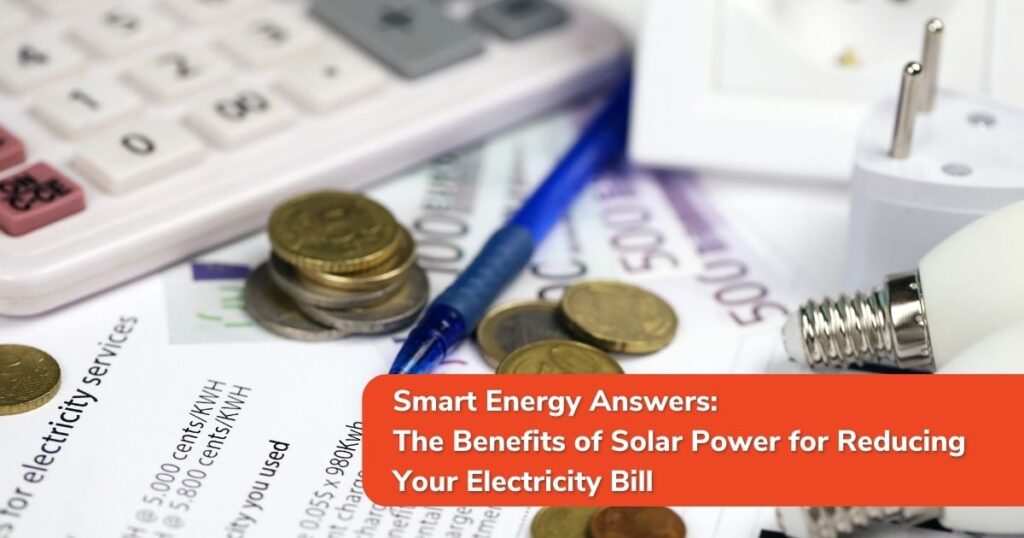
Sustainable Land Use Practices: Harnessing Solar Energy for a Greener Future Smart Energy Answers March 1, 2024 Discover how the integration of solar energy into sustainable land use practices can pave the way for a more environmentally friendly future. The Intersection of Sustainable Land Use and Solar Energy Sustainable land use practices and solar energy are two important aspects of creating a greener future. By combining these two elements, we can maximize the benefits for both the environment and society. Sustainable land use involves managing land resources in a way that meets the needs of the present generation without compromising the ability of future generations to meet their own needs. Solar energy, on the other hand, is a renewable and clean source of power that can help reduce our reliance on fossil fuels and mitigate climate change. The intersection of sustainable land use and solar energy offers numerous opportunities for innovation and sustainability. By harnessing solar energy on sustainable land, we can generate clean electricity while minimizing the environmental impact. This integration can contribute to a more sustainable and resilient energy system that supports the transition to a greener future. Understanding the Potential of Solar Energy in Land Use Planning Solar energy has immense potential when it comes to land use planning. Understanding this potential is crucial for developing effective strategies to harness solar power while maintaining sustainable land use practices. Solar energy can be harnessed through various methods, such as photovoltaic (PV) panels and solar thermal systems. These technologies can be integrated into buildings, infrastructure, and open spaces to generate clean electricity and heat. In land use planning, it is important to identify suitable sites for solar installations. Factors such as solar resource availability, land suitability, and proximity to electricity infrastructure play a crucial role in determining the feasibility of solar projects. By understanding the potential of solar energy and considering these factors, we can optimize the placement of solar installations to maximize energy generation and minimize environmental impacts. Identifying Suitable Sites for Solar Installations Identifying suitable sites for solar installations is a key step in integrating solar energy into sustainable land use practices. Several factors need to be considered during site selection, including solar resource availability, land characteristics, and environmental considerations. Solar resource availability refers to the amount of sunlight a site receives throughout the year. Sites with high solar resource availability are ideal for solar installations as they can generate more electricity. Land characteristics, such as slope, orientation, and shading, also play a role in determining the suitability of a site for solar installations. Flat and unshaded areas are generally more favorable for solar projects. Environmental considerations are crucial in order to minimize the impact of solar installations on natural ecosystems. It is important to avoid sensitive areas such as protected habitats, wetlands, and prime agricultural land. By identifying suitable sites that have high solar resource availability, favorable land characteristics, and minimal environmental impact, we can ensure the effective integration of solar energy into sustainable land use practices. Maximising Solar Energy Generation on Different Types of Land Solar energy generation can be maximized on different types of land by adopting appropriate strategies and technologies. The suitability of land for solar installations depends on its characteristics and existing land use. Here are some approaches to maximize solar energy generation on different types of land: Rooftop Solar: Installing solar panels on rooftops of buildings can utilize underutilized space and generate clean electricity without occupying additional land. Brownfield Solar: Converting brownfield sites, such as abandoned industrial areas, into solar power plants can repurpose underutilized land for renewable energy generation. Floating Solar: Installing solar panels on bodies of water, such as lakes and reservoirs, can maximize land use efficiency and reduce water evaporation. Agrivoltaics: Integrating solar panels with agricultural activities can optimize land use by utilizing the same area for both solar energy generation and crop cultivation. By adopting these approaches and technologies, we can maximize solar energy generation on different types of land while minimizing the use of additional land resources. Balancing Solar Development with Environmental Conservation Balancing solar development with environmental conservation is crucial to ensure the long-term sustainability of solar energy projects. While solar energy offers numerous environmental benefits, it is important to minimize any potential negative impacts on ecosystems and biodiversity. To achieve this balance, it is important to conduct thorough environmental assessments before initiating solar projects. These assessments can help identify potential risks and develop appropriate mitigation measures. Additionally, incorporating nature-friendly design features into solar installations can help minimize impacts on wildlife and their habitats. Collaboration between solar developers, environmental organizations, and local communities is key to achieving a balance between solar development and environmental conservation. By working together, we can ensure that solar energy projects contribute to a greener future without compromising the integrity of our natural ecosystems. Integrating Solar Energy into Agricultural and Rural Landscapes Integrating solar energy into agricultural and rural landscapes offers numerous benefits for farmers, landowners, and the environment. Solar installations can be strategically placed in agricultural areas to generate clean electricity while allowing for continued farming activities. Agrivoltaics, which combines solar energy generation and crop cultivation, is a promising approach to integrate solar energy into agricultural landscapes. By utilizing the same land for both solar panels and crops, agrivoltaics optimizes land use efficiency and provides additional income streams for farmers. In rural landscapes, solar installations can provide decentralized and renewable energy sources, reducing reliance on centralized power grids. This can lead to increased energy independence and resilience in rural communities. By integrating solar energy into agricultural and rural landscapes, we can promote sustainable land use practices while contributing to the development of a cleaner and more resilient energy system. Benefits of Solar Land Use Agreements for Landowners and Communities Solar land use agreements offer several benefits for landowners and communities. These agreements provide opportunities for landowners to generate income from their land while contributing to the transition to renewable energy. For landowners, solar land use agreements can provide long-term
The Benefits of Solar Power for Reducing Your Electricity Bill
The Benefits of Solar Power for Reducing Your Electricity Bill Smart Energy Answers June 3, 2026 Discover How Solar Power Can Help You Save Money on Your Electricity Bill and Reduce Your Carbon Footprint Introduction: The Rising Costs of Electricity Electricity costs have been steadily increasing over the years, putting a strain on household budgets. As the demand for electricity continues to rise, so does its price. This upward trend in electricity costs has led many homeowners to explore alternative energy sources that can help reduce their dependence on the grid and save money in the long run. One such alternative is solar power. Solar energy is a renewable and abundant source of power that harnesses the sun’s rays to generate electricity. By installing solar panels on your roof, you can generate your own clean and sustainable energy, reducing your reliance on traditional fossil fuel-based power. In this blog post, we will explore the benefits of solar power and how it can help you lower your electricity bill while also contributing to a greener and more sustainable future. Understanding Solar Power Basics Before we delve into the benefits of solar power, it’s important to understand the basics of how solar energy works. Solar panels are made up of photovoltaic cells that convert sunlight into electricity through the photovoltaic effect. When sunlight hits these cells, it excites the electrons, creating an electric current that can be used to power your home. Solar power systems also include inverters, which convert the direct current (DC) generated by the solar panels into alternating current (AC) that can be used to power your appliances and electronics. Excess electricity generated by your solar panels can be stored in batteries or fed back into the grid through a process called net metering. Lowering Energy Costs with Solar Power One of the biggest advantages of solar power is its ability to lower your energy costs. By generating your own electricity, you can significantly reduce or even eliminate your monthly electricity bill. The amount of money you can save depends on several factors, including the size of your solar system, your energy consumption, and the amount of sunlight your location receives. In addition to saving money on your electricity bill, solar power can also protect you from future electricity price hikes. As electricity costs continue to rise, your solar power system will continue to produce free energy from the sun, shielding you from the impact of increasing rates. Furthermore, some states and territories offer feed-in tariffs, which allow you to earn credits for the excess electricity you feed back into the grid. These credits can further offset your electricity costs, making solar power an even more financially attractive option. Exploring Net Metering and Energy Credits Net metering is a billing arrangement that allows homeowners with solar power systems to receive credits for the excess electricity they generate and feed back into the grid. This means that when your solar panels produce more electricity than your home consumes, the excess energy is sent back to the grid, and you receive credits for it. These credits can then be used to offset the electricity you consume from the grid when your solar panels are not generating enough power, such as during nighttime or cloudy days. Net metering effectively allows you to use the grid as a virtual battery, storing the excess energy you generate during the day for use when you need it. In addition to net metering, some states and territories also offer feed-in tariffs, where you can earn a fixed amount for every kilowatt-hour of excess electricity you feed back into the grid. This can provide an additional financial incentive for installing solar panels and further reduce your electricity costs. Long-Term Savings: Solar as an Investment Investing in solar power is not only a smart financial decision but also a long-term investment. While the upfront cost of installing a solar power system may seem high, the savings you can achieve over its lifetime can far outweigh the initial investment. Solar panels have an average lifespan of 25 to 30 years, during which they can generate a significant amount of electricity. By taking advantage of the sun’s free energy, you can reduce your reliance on the grid and protect yourself from future electricity price hikes. Moreover, installing solar panels can increase the value of your home. Studies have shown that homes with solar power systems tend to sell faster and at higher prices compared to homes without solar. This means that not only can you enjoy the benefits of solar power while you live in your home, but you can also potentially recoup your investment when you decide to sell. Environmental Benefits of Solar Energy In addition to the financial advantages, solar power also offers significant environmental benefits. Traditional electricity generation relies heavily on fossil fuels such as coal, oil, and natural gas, which release harmful greenhouse gases into the atmosphere when burned. Solar energy, on the other hand, is clean and renewable. By harnessing the power of the sun, we can reduce our dependence on fossil fuels and mitigate the negative impacts of climate change. Switching to solar power can help reduce carbon emissions, air pollution, and water usage associated with traditional electricity generation. By going solar, you can make a positive impact on the environment and contribute to a more sustainable future for generations to come. Financial Incentives for Solar Installation To encourage the adoption of solar power, various financial incentives are available to homeowners. These incentives can help offset the upfront cost of installing a solar power system and make it more affordable for households. One of the most common financial incentives is the solar rebate or incentive provided by the government. These rebates can significantly reduce the cost of purchasing and installing solar panels. Additionally, some states and territories offer low-interest loans or grants for solar installations. It’s important to research and understand the financial incentives available in your area to maximise the benefits of
Reducing Your Carbon Footprint: The Power of Solar Energy
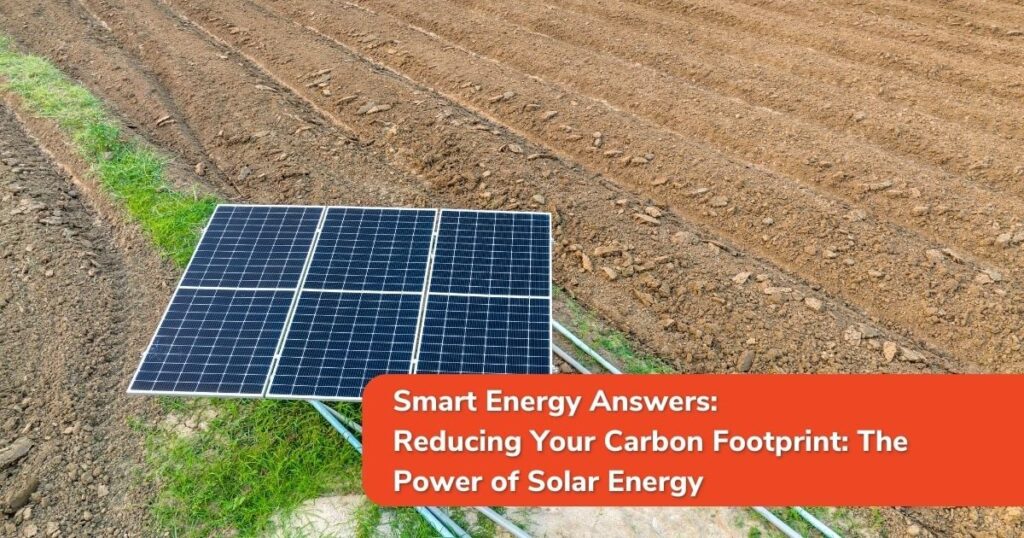
Reducing Your Carbon Footprint: The Power of Solar Energy Smart Energy Answers June 3, 2026 Discover the Impactful Ways in Which Solar Energy Can Help Reduce Your Carbon Footprint and Contribute to a More Sustainable Future The Urgency of Addressing Climate Change Through Renewable Energy Climate change is one of the most pressing challenges of our time. The Earth’s temperature is rising, leading to more frequent and severe weather events, such as hurricanes, droughts, and heatwaves. These changes have devastating impacts on ecosystems, economies, and human lives. To mitigate the effects of climate change, it is crucial to transition to renewable energy sources like solar power. Solar energy is a sustainable solution that harnesses the power of the sun to generate electricity. Unlike fossil fuels, solar power does not produce greenhouse gas emissions, which are the primary drivers of climate change. By adopting solar energy, we can reduce our reliance on fossil fuels and significantly decrease carbon emissions. Understanding Solar Energy as a Sustainable Solution Solar energy is a sustainable and renewable source of power. It harnesses the sun’s energy through the use of photovoltaic panels or solar thermal systems. Photovoltaic panels convert sunlight directly into electricity, while solar thermal systems use the sun’s heat to generate power or heat water. One of the key advantages of solar energy is its infinite supply. The sun is an abundant resource that provides us with a constant source of energy. Additionally, solar power systems have a long lifespan and require minimal maintenance. By understanding the benefits of solar energy, we can make informed choices to reduce our carbon footprint. Quantifying the Environmental Benefits of Solar Power Solar power offers numerous environmental benefits. By harnessing the sun’s energy, we can reduce our reliance on fossil fuels, which emit harmful pollutants and greenhouse gases. The use of solar energy can help decrease air pollution, improve air quality, and mitigate climate change. In addition to reducing carbon emissions, solar power also conserves water resources. Traditional energy generation methods, such as coal and natural gas power plants, require large amounts of water for cooling and steam production. Solar energy, on the other hand, does not require water for its operation, making it a more sustainable choice. Exploring the Role of Solar Energy in Reducing Carbon Emissions Solar energy plays a crucial role in reducing carbon emissions. The electricity generated from solar power is clean, renewable, and emission-free. By transitioning to solar energy, we can displace the use of fossil fuels in various sectors, including electricity generation, transportation, and heating. According to studies, widespread adoption of solar energy could lead to a significant reduction in global carbon emissions. Solar power has the potential to replace coal-fired power plants, which are major contributors to greenhouse gas emissions. By exploring the role of solar energy in decarbonising our energy systems, we can make substantial progress in combating climate change. Case Studies Demonstrating Solar’s Impact on Carbon Footprints Numerous case studies have demonstrated the positive impact of solar energy on reducing carbon footprints. For example, in countries like Germany and Australia, the rapid growth of solar power installations has resulted in a significant decrease in carbon emissions. One notable case study is the city of Adelaide in Australia, which has made significant strides in adopting solar energy. The city’s solar energy initiatives have led to a substantial reduction in carbon emissions and have positioned Adelaide as a leader in sustainable development. These case studies highlight the effectiveness of solar energy in reducing carbon footprints and provide valuable insights for other regions and communities looking to embrace renewable energy solutions. Overcoming Barriers to Solar Adoption for Carbon Reduction While solar energy offers numerous benefits for carbon reduction, there are various barriers that need to be overcome for widespread adoption. One of the main challenges is the initial cost of installing solar panels. However, with advancements in technology and government incentives, the cost of solar installations has significantly decreased in recent years. Another barrier is the availability of suitable space for solar panel installations, especially in urban areas. Innovative solutions such as rooftop solar panels and community solar projects can help overcome this challenge and make solar energy accessible to a wider range of individuals and businesses. By identifying and addressing these barriers, we can accelerate the transition to solar energy and achieve significant reductions in carbon emissions. Financial Incentives and Policy Support for Solar Transition To encourage the transition to solar energy, governments and organisations around the world provide financial incentives and policy support. These incentives include tax credits, grants, and rebates for installing solar panels. Additionally, some regions have implemented feed-in tariffs, which allow individuals and businesses to sell excess solar power back to the grid. Policy support is also essential for driving solar adoption. Governments can implement renewable energy targets, enact favourable regulations, and invest in research and development to further advance solar technology. By combining financial incentives and policy support, we can create an enabling environment for a successful solar transition. Community Engagement and Collective Action in Solar Initiatives Community engagement and collective action play a vital role in promoting solar initiatives. By fostering collaboration between community members, businesses, and local governments, we can create a shared vision for a sustainable future powered by solar energy. Community solar projects, where multiple households or businesses collectively invest in a solar installation, are excellent examples of community engagement in solar initiatives. These projects not only reduce individual carbon footprints but also strengthen community bonds and create a sense of ownership and pride. Through community engagement and collective action, we can inspire and empower individuals and organisations to transition to solar energy and work towards a greener, low-carbon future. Tips for Individuals and Businesses to Transition to Solar Transitioning to solar energy can be a significant step towards reducing your carbon footprint. Here are some tips for individuals and businesses looking to embrace solar: Conduct a solar feasibility assessment to determine the suitability of your location for solar installations. Seek
The Impact of Solar Inverters on Renewable Energy Efficiency
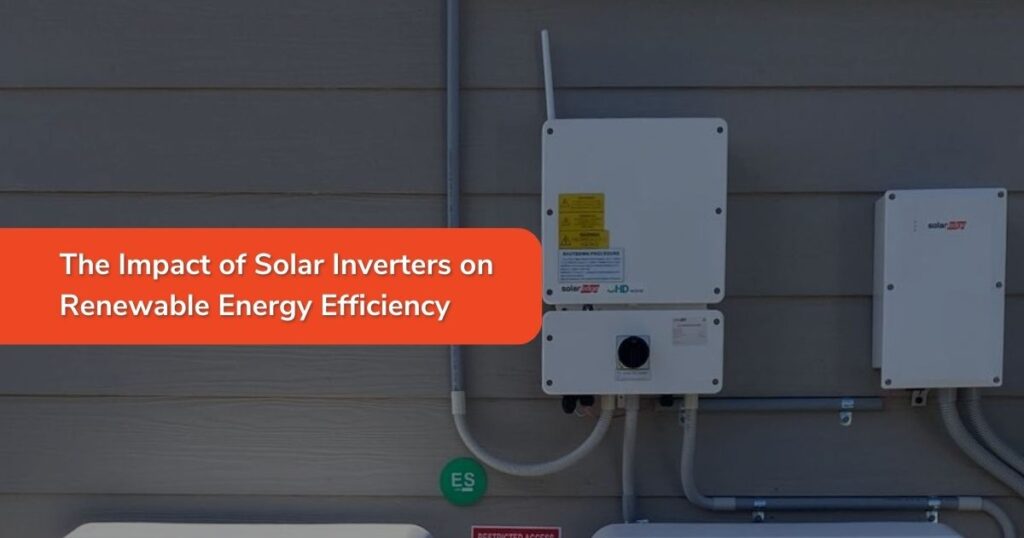
The Impact of Solar Inverters on Renewable Energy Efficiency Smart Energy Answers June 3, 2026 Australia’s embrace of renewable energy sources has seen a surge in solar power’s popularity. But beyond just slapping some panels on a rooftop, the real game-changer is the often-overlooked hero, the solar inverter. This vital component can make or break a solar energy system’s efficiency, making it essential to understand its role in enhancing our green energy footprint. What are Solar Inverters? Solar inverters are the backbone of a solar energy system. They convert the direct current, or DC, output from solar panels into usable alternating current, or AC, electricity. In an age when we’re striving for greater energy independence and sustainability, their role in the seamless integration of solar power into our daily lives cannot be overstated. Types of Solar Inverters Solar inverters come in a variety of configurations, each with its own set of advantages and applications. The three most common types are string inverters, microinverters, and power optimisers. String Inverters String inverters are the most traditional type, often used with multiple solar panels wired together in series. They’re efficient and cost-effective for larger installations but can be prone to energy loss due to shading or panel mismatch. Microinverters Microinverters, utilising Module-Level Power Electronics, are compact inverters that are connected to each solar panel. They are highly regarded for their ability to optimise the output of individual panels, resulting in improved efficiency, particularly in installations where shading is a significant factor. Power Optimisers Power optimisers utilise Module-Level Power Electronics and are connected to individual solar panels. They operate similarly to microinverters but still rely on a central inverter, offering a balance between the advantages of string inverters and microinverters. Impact on Renewable Energy Efficiency Solar inverters play a crucial role in determining just how much usable energy your solar array delivers. Their impact on renewable energy efficiency is threefold. Increased Energy Production By converting DC into AC electricity optimally, solar inverters maximise energy output from solar panels. This means homeowners and businesses can harness more power from the sun, reducing their reliance on less clean energy sources. Improved System Performance and Reliability A high-quality solar inverter ensures the entire system operates at peak performance. This, coupled with advances in inverter technology such as monitoring and control features, significantly improves the system’s reliability by quickly identifying and addressing issues. Enhancing Grid Stability and Reducing Energy Losses Modern solar inverters can support the stability of the electricity grid, particularly during peak demand times. They achieve this by managing voltage and providing power factor support. This grid support also helps in lowering energy losses, translating to a more efficient distribution system. Factors to Consider when Choosing a Solar Inverter Selecting the right solar inverter is a decision that should not be taken lightly. Several factors need to be weighed to ensure optimal performance and longevity of your solar system. Efficiency Ratings Inverter efficiency is a critical factor. Look for inverters with high European efficiency ratings, which represent the inverter’s ability to convert solar energy into electricity. High efficiency ratings mean better performance and more energy savings over time. Durability and Warranty Solar inverters are often exposed to harsh environmental conditions, so their durability and warranty terms are vital. A sturdy inverter with a reasonable warranty period can provide peace of mind and maintenance-free operation. Compatibility with Solar Panels and System Design An inverter must be compatible with the solar panels it powers and should be chosen based on the system’s design and goals. For instance, microinverters are great for systems subject to shading, while string inverters might be more suitable for unobstructed installations. Case Studies and Examples To drive home the point, it’s important to look at real-world examples of successful solar inverter installations. In the Australian context, various case studies can showcase the tangible benefits, such as increased energy savings and improved return on investment. One notable case study is this local business’ transition to solar power, detailing how the choice of solar inverters impacted energy efficiency, sustainability, and cost-effectiveness. Conclusion As Australia continues to adopt solar energy solutions, understanding the role of solar inverters is paramount. These unsung heroes are pivotal in the efficiency and success of your renewable energy projects. It pays to do your research and invest in a reliable inverter that will maximise your solar energy and help transition toward a greener tomorrow. Ready to make the switch to solar and need guidance on the best solar inverter for your needs? Contact Smart Energy Answers today! Our expert team will help you navigate the options and tailor a solution that maximises your renewable energy efficiency.
Improving Efficiency of Home Solar Systems
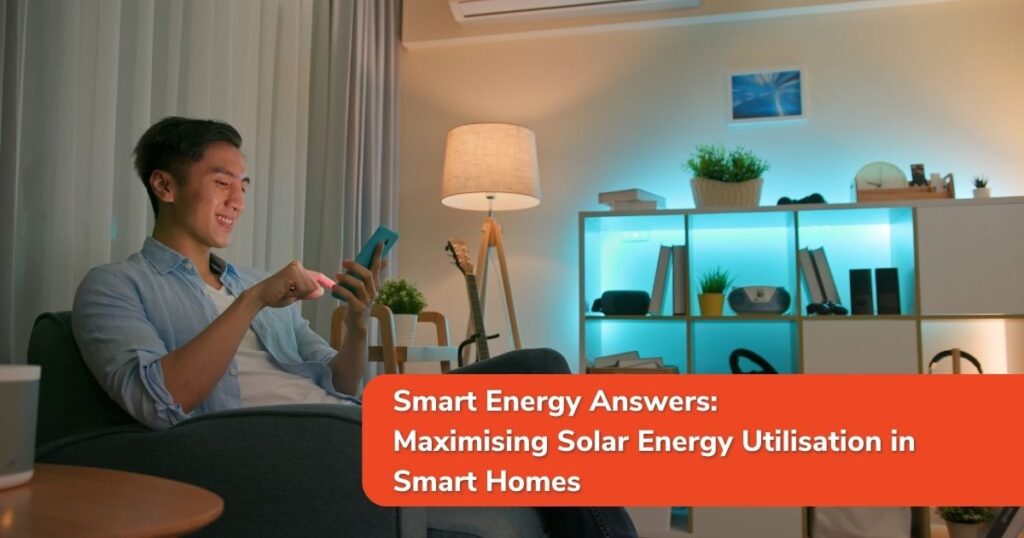
Improving Efficiency of Home Solar Systems Smart Energy Answers June 3, 2026 Discover How to Maximise the Efficiency of Your Home Solar System with Battery Storage Increasing Prevalence of Smart Home Technologies and Solar Energy Systems With the increasing prevalence of smart home technologies and solar energy systems, more and more homeowners are harnessing the power of the sun to meet their energy needs. Smart home technologies, such as solar panels and battery storage, allow homeowners to generate their own clean energy and reduce their reliance on the grid. One of the key benefits of smart home technologies is their ability to provide sustainable and cost-effective energy solutions. By utilising solar energy systems with battery storage, homeowners can maximise their energy efficiency and save on electricity costs. As the demand for renewable energy sources continues to grow, the integration of smart home technologies and solar energy systems is becoming increasingly common. It is important for homeowners to understand the benefits and potential of these systems in order to make informed decisions and take advantage of the available opportunities. Importance of Efficient Management for Cost Savings and Sustainability Efficient management of home solar systems with battery storage is crucial for both cost savings and sustainability. By effectively managing the energy output of your solar system, you can optimise its performance and reduce waste. One of the main advantages of efficient management is the ability to maximise cost savings. By tracking and analysing energy production in real time, homeowners can identify areas where energy can be saved and adjust their energy settings and schedules accordingly. This not only helps reduce electricity bills, but also contributes to a more sustainable future by minimising energy waste. In addition to cost savings, efficient management also plays a key role in sustainability. By utilising energy storage systems to store excess solar energy for later use, homeowners can reduce their reliance on the grid and promote the use of clean, renewable energy sources. Furthermore, by leveraging grid interaction features, homeowners can even sell excess energy back to the grid, further enhancing their cost savings and sustainability efforts. Therefore, efficient management of home solar systems is not only beneficial for homeowners in terms of cost savings, but also for the environment in terms of reducing carbon emissions and promoting a greener future. Utilising Smart Monitoring Systems to Track Solar Energy Production in Real Time Smart monitoring systems play a crucial role in optimising the performance of home solar systems. By tracking solar energy production in real time, homeowners can gain valuable insights into the efficiency and output of their system. These smart monitoring systems provide homeowners with detailed information about key performance metrics such as kilowatt-hour, or kWh, production and system efficiency. By understanding these metrics, homeowners can identify any issues or inefficiencies in their system and take appropriate actions to address them. Real-time tracking of solar energy production also allows homeowners to make data-driven decisions regarding their energy usage. By monitoring energy production throughout the day, homeowners can adjust their energy settings and schedules on the go to optimise solar energy output. This ensures that the maximum amount of solar energy is generated and utilised, resulting in greater cost savings and sustainability. Understanding Key Performance Metrics To effectively manage and optimise your home solar system, it is important to understand key performance metrics such as kilowatt-hour production and system efficiency. Kilowatt-hour production refers to the amount of energy generated by your solar system over a specific period of time. By tracking kWh production, homeowners can determine how much energy their system is producing and compare it to their energy consumption. System efficiency, on the other hand, measures how effectively your solar system converts sunlight into usable electricity. Higher system efficiency means more energy is being generated from the same amount of sunlight, resulting in greater cost savings and sustainability. By regularly monitoring and analysing these key performance metrics, homeowners can identify any underperforming areas in their system and take appropriate actions to improve its efficiency. This can include cleaning the solar panels, optimising their tilt and orientation, or even upgrading to more efficient technologies. Understanding and acting upon these key performance metrics is essential for maximising the efficiency and effectiveness of your home solar system. Utilising Energy Storage Systems to Store Excess Solar Energy One of the key advantages of home solar systems with battery storage is the ability to store excess solar energy for later use. By utilising energy storage systems, homeowners can maximise their energy efficiency and reduce their reliance on the grid. During periods of high solar energy production, when the energy generated exceeds the immediate energy needs of the home, the excess energy can be stored in the battery storage system instead of being wasted. This stored energy can then be used during periods of low solar energy production or high energy demand, ensuring a continuous and reliable power supply. By storing excess solar energy for later use, homeowners can significantly reduce their dependence on the grid and promote the use of clean, renewable energy sources. This not only helps reduce electricity bills but also contributes to a more sustainable and environmentally friendly future. Energy storage systems also provide homeowners with greater energy resilience, as they can continue to power their homes during grid outages or emergencies. This added peace of mind is another benefit of utilising energy storage systems in conjunction with home solar systems. Therefore, by incorporating energy storage systems into home solar systems, homeowners can maximise their energy efficiency, reduce their reliance on the grid, and contribute to a more sustainable future. Leveraging Grid Interaction Features to Sell Excess Energy Back to the Grid Home solar systems with battery storage not only allow homeowners to store excess solar energy for later use but also provide the opportunity to sell excess energy back to the grid. By leveraging grid interaction features, homeowners can participate in net metering programmes or feed-in tariffs, depending on their location and local regulations. Net metering
Navigating Summer Challenges: Harnessing the Power of Solar Energy
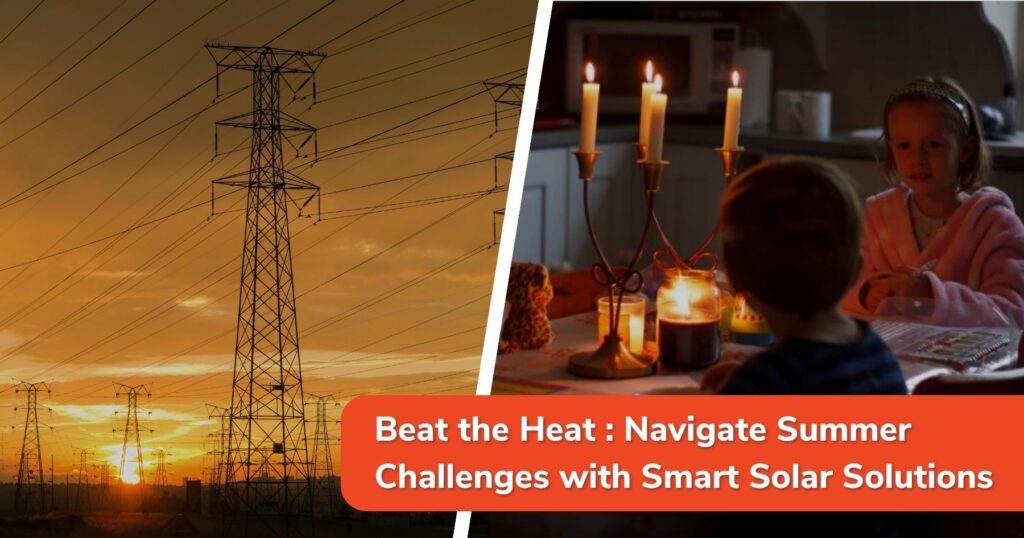
Navigating Summer Challenges: Harnessing the Power of Solar Energy Smart Energy Answers November 23, 2023 Stay Powered This Summer with Solar Energy and Batteries As the scorching Australian summer approaches, so do the challenges that come with it. Rising temperatures can place strain on power grids, while the looming threat of bushfires can increase the risk of potential outages. However, there is a shining solution on the horizon: solar energy and batteries. With the potential to keep your home powered when the grid goes dark, solar energy is not only an eco-friendly alternative but also a reliable source of power during the sweltering summer months. Join us as we explore the transformative potential of solar energy and discover how it can keep you powered when you need it most. The Impact of Summer on Power Distribution During the summer season in Australia, electricity demand can skyrocket due to the increased use of cooling systems, air conditioners running continuously, and reliance on power-intensive appliances. This puts tremendous strain on the power grid, which can lead to widespread blackouts and expose the limitations of traditional power sources during peak summer periods. The risk of power outages is further amplified by Australia’s susceptibility to bushfires, which can damage transmission lines and substations, causing prolonged power disruptions. To address these challenges effectively, it is crucial to take proactive measures that provide immediate relief while contributing to a sustainable, long-term energy strategy. The Importance of Solar Power and Battery Systems to Be Ready for Summer You can now say goodbye to power outages during the summer months with the help of solar energy and storage. Solar panels capitalise on the abundance of sunlight to deliver a steady stream of power, helping reduce the impact of grid disruptions. No longer will you need to endure sweaty discomfort during outages, and worries about food spoilage can become a thing of the past. By choosing solar and batteries, you gain greater energy independence from the traditional grid while demonstrating a commitment to cleaner, more sustainable energy sources. This aligns with a future-focused vision for reliable, efficient, and environmentally responsible energy use. In Australia, solar and battery prices are now more accessible and affordable, supported by government rebates, incentives, and innovative Pay As You Save options. Homeowners can offset a significant portion of the initial installation costs by taking advantage of these programmes. Moreover, the option to sell excess electricity generated by solar panels back to the grid enhances the financial advantages of going solar. This makes solar energy an attractive investment for homeowners seeking cost-effective and reliable power solutions. One notable advantage of embracing solar power is the substantial electricity cost savings it can offer. Solar energy with storage not only benefits your wallet but also helps provide a seamless and uninterrupted power supply when the traditional grid faces challenges. Additional Tips to Be Energy Efficient in Summer Beyond embracing solar energy and batteries, here are other practical steps you can take to prepare for the summer months. Air conditioning maintenance: Schedule regular maintenance for your air conditioning units to ensure they operate efficiently. Clean or replace filters, check for any issues, and consider upgrading to energy-efficient models. Sealing and insulation: Ensure your home is well insulated and sealed to prevent cool air from escaping. Seal gaps around windows and doors, and consider adding insulation to your attic if needed. Natural ventilation: Take advantage of cool evening breezes by strategically opening windows to promote cross-ventilation. This can help cool your home without relying solely on air conditioning. Energy-efficient appliances: Upgrade to energy-efficient appliances, especially those that generate heat, such as refrigerators and stoves. Look for appliances with high energy star ratings to reduce overall energy consumption. Shading solutions: Use blinds, curtains, or shades to block out the sun during the hottest parts of the day. This can significantly reduce the heat entering your home and lessen the load on your cooling systems. Hydration and health precautions: Stay hydrated and take necessary health precautions during heatwaves. Make sure your family understands the importance of staying cool and hydrated, especially vulnerable individuals such as the elderly and young children. Smart home technology: Invest in smart home technology that allows you to remotely control and monitor your home’s energy usage. Smart thermostats, for example, enable you to adjust temperatures based on your schedule, optimising energy consumption. Conclusion In the face of summer’s energy challenges, the choice is clear: embrace the power of the sun to secure a reliable and sustainable energy future. From reducing dependence on the grid and saving on electricity costs to mitigating the impact of bushfires, solar energy emerges as a resilient solution. By taking practical steps and adopting solar technology, you not only prepare for the summer months but also contribute to a cleaner, greener, and more energy-efficient Australia. Take the proactive step towards energy independence and a cleaner future. Contact us today for a consultation and discover how solar solutions can transform your summer experience.
Solar Batteries Decoded : Top FAQs & Insights for Savvy Consumers
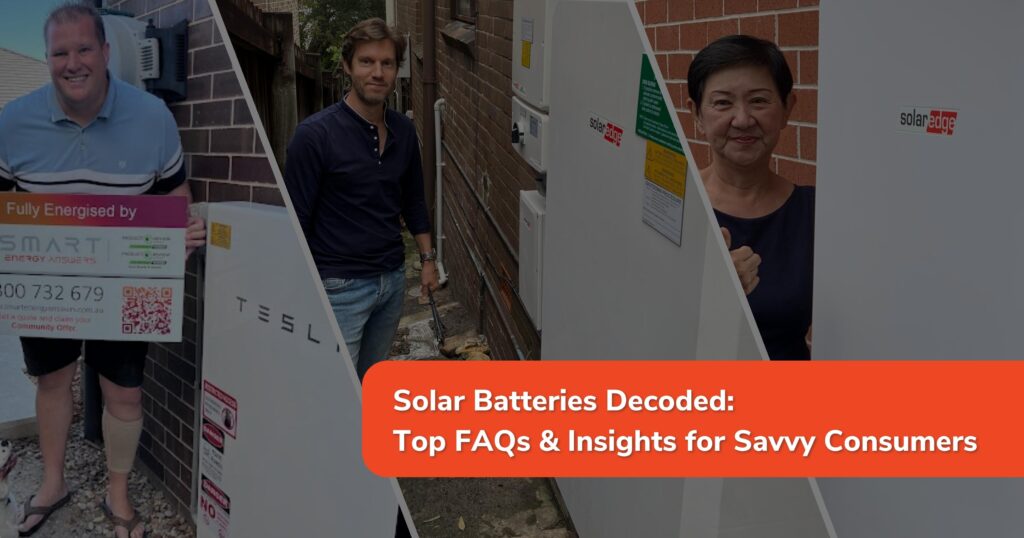
Solar Batteries Decoded : Top FAQs & Insights for Savvy Consumers Smart Energy Answers September 6, 2023 Understanding Solar Batteries In an era where sustainability meets innovation, the demand for solar with batteries has increased significantly. More families in Australia want to use cleaner energy and take greater control of their power, which is why solar batteries are becoming increasingly popular. At Smart Energy Answers, we are excited to explain solar batteries in this blog. We are also here to share some of our customers’ top questions to help you make informed decisions about your energy future. Solar Battery FAQs FAQ 1: How Can Solar Batteries Save Me Money on Electricity Bills? Solar batteries offer potential savings on electricity bills by capturing surplus energy produced by your solar panels during sunny periods. This stored energy becomes available during less sunny hours, including nights, rainy days, and cloudy weather. By reducing reliance on grid power during peak periods, you can cut down on costly electricity expenses and move closer to energy independence. With a properly sized solar and battery system, some customers can aim for $0 electricity bills. FAQ 2: Do Solar Batteries Qualify for Incentives or Rebates in Australia? Yes, incentives are available in different states across Australia. In addition, some of our partners also offer special Virtual Power Plant, or VPP, rebates for specific networks and territories. FAQ 3: What Size Solar Battery Do I Need for My Home? The size of the solar battery you need for your home in Australia depends on several factors, including the following: Energy consumption: Understand your household’s daily energy consumption. Review your past electricity bills to see how much energy you use on average. A larger battery may be suitable if you have higher energy needs. Solar panel system size: The capacity of your solar panel system matters. A larger system can produce more surplus energy, which can then be stored in the battery. Usage patterns: Consider when you use the most electricity. If you typically consume more energy in the evening, a larger battery can help you rely less on grid power during those times. Grid connectivity: If you are aiming for energy independence and want to reduce grid reliance, a larger battery may be beneficial. Smaller batteries are often used for backup power during outages. Budget: Larger batteries tend to be more expensive. Balance your energy needs with your budget to find the right size that offers the best value. Future expansion: If you plan to expand your household or increase energy usage in the future, factor in potential changes when selecting the battery size. It is recommended to consult with a solar energy expert to determine the optimal battery size that aligns with your household’s needs and usage patterns. FAQ 4: What Factors Should I Consider When Selecting a Solar Battery for My Home? Capacity: Choose a battery with sufficient capacity to meet your energy needs. Efficiency: Look at how efficiently the battery stores and releases energy. Higher-efficiency batteries can save more of the energy generated by your solar panels. Installation and compatibility: Ensure the battery is compatible with your existing solar panel system and inverter. Consider installation requirements, space, and placement options. Scalability: If you plan to expand your solar system in the future, choose a battery that can be easily integrated with additional panels. Warranty and support: Research the manufacturer’s reputation, warranty terms, and customer support. A reliable warranty can provide peace of mind. Cost and value: Balance the upfront cost of the battery with the potential savings it can offer over its lifetime. Consider any available government incentives or rebates. Safety: Battery safety features are crucial. Look for batteries with built-in protection against overcharging, overheating, and other potential risks. Smart features: Some batteries come with smart management systems that optimise energy usage and enable remote monitoring and control, with the potential for additional revenue through VPPs. Brand and installer reputation: Choose well-established brands and installers known for quality and reliability. Check customer product and service reviews from reputable websites. FAQ 5: Are Lithium-Ion Batteries the Best Choice for Residential Solar Systems in Australia? Yes, lithium-ion batteries are often considered one of the best choices for residential solar systems in Australia due to their high energy density, efficiency, long lifespan, and compact size. FAQ 6: How Long Do Solar Batteries Typically Last in the Australian Climate? Solar batteries typically last around 15 to 25 years in the Australian climate. Factors such as battery chemistry, usage patterns, maintenance, and manufacturer quality can influence their lifespan. Regular maintenance and proper usage can help extend the life of solar batteries. In addition, manufacturers typically offer warranties of up to 15 years. FAQ 7: Is It Necessary to Have an Existing Solar Panel System to Install Solar Batteries in Australia? No, it is not always necessary to have an existing solar panel system to install solar batteries in Australia. While many people choose to combine solar panels with batteries to maximise energy self-sufficiency, you can also install a solar battery system on its own. However, without solar panels, the battery will primarily charge from the grid, and its effectiveness in reducing electricity bills may be limited compared to when it is paired with solar panels. It is recommended to consult with experts to determine the most suitable setup based on your energy needs and goals. FAQ 8: What Are the Installation Requirements and Costs Associated with Solar Batteries in Australia? The costs and installation requirements for solar batteries in Australia can vary based on factors such as available space, inverter compatibility, electrical upgrades, permits, and ventilation needs. The expenses typically include the battery unit cost, installation labour, potential inverter upgrades, additional components, permits, and maintenance. The total cost can range from several thousand to tens of thousands of dollars, with government incentives and financing options available to help offset expenses. It is advisable to seek quotes from professional installers for accurate cost estimates based on your specific circumstances. FAQ 9:
Solar Victoria Moves From Rebates to Interest-Free Loans For Batteries
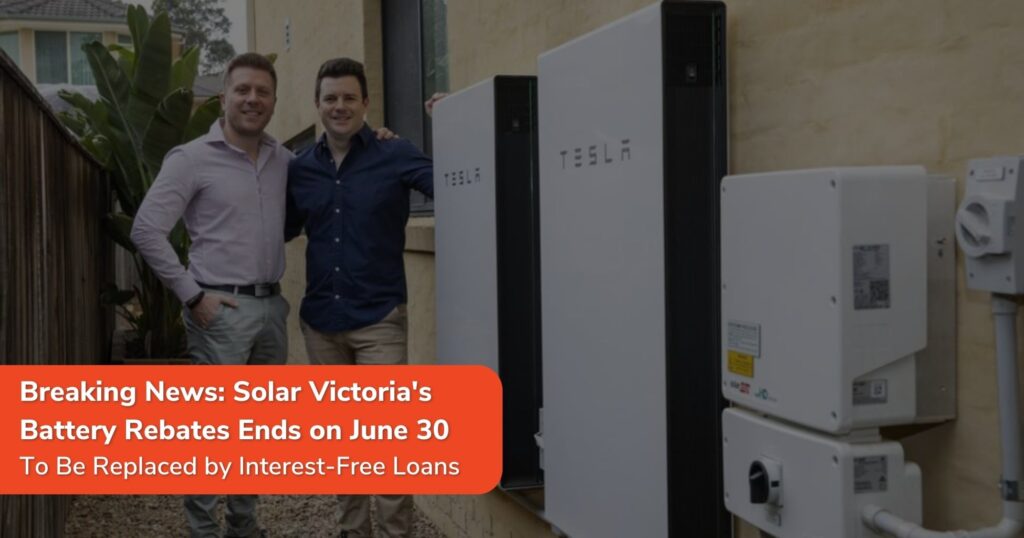
Solar Victoria Moves From Rebates to Interest-Free Loans For Batteries Smart Energy Answers May 29, 2023 Solar Victoria’s Transition: From Rebates to Interest-Free Loans for Home Batteries Solar Victoria is ushering in a significant change to its incentive programme. By 30 June, the battery rebate worth up to $2,950 will come to an end, making way for interest-free loans of up to $8,800 starting from 1 July. This new Solar Homes Program is only open to the first 4,500 Victorian households. With the shift from the battery rebate to interest-free loans, Solar Victoria aims to enhance the affordability and accessibility of renewable energy storage systems. While the rebate offered a grant or discount on battery purchases, the interest-free loan opens the door to a larger funding option. This means homeowners can now explore more high-quality battery choices and overcome the upfront cost barrier. The Solar Homes Program remains focused on making renewable energy accessible to Victorians. Whether through the rebate or the interest-free loan, the goal is to enable individuals to harness the power of battery storage. By utilising battery storage, consumers can reduce their energy bills and protect themselves against rising electricity prices. Battery systems can also provide reliable backup during power outages, helping ensure an uninterrupted energy supply. Additionally, households can sell excess power back to the grid and earn credits or money from it. Solar Victoria’s incentive programme plays a crucial role in promoting sustainable energy practices. By encouraging the adoption of battery storage, the programme aims to reduce reliance on fossil fuel-based power generation, decrease greenhouse gas emissions, and help protect our planet. Conclusion Solar Victoria’s upcoming transition from the battery rebate to interest-free loans presents an exciting opportunity for Victorian households. To receive the state government grant, it is essential to act fast. The battery rebate worth $2,950 will only be available until 30 June. After that, interest-free loans of up to $8,800 will take effect from 1 July. Do not miss out on securing your preferred choice through this progressive initiative that promotes renewable energy adoption and empowers you to create a greener, more sustainable future. Talk to our energy experts today to get a personalised quote and guidance on the available battery storage systems. Our team can help you navigate the options available and choose the right solution for your home.
Reduce Energy Consumption: Key Steps Before Going Solar
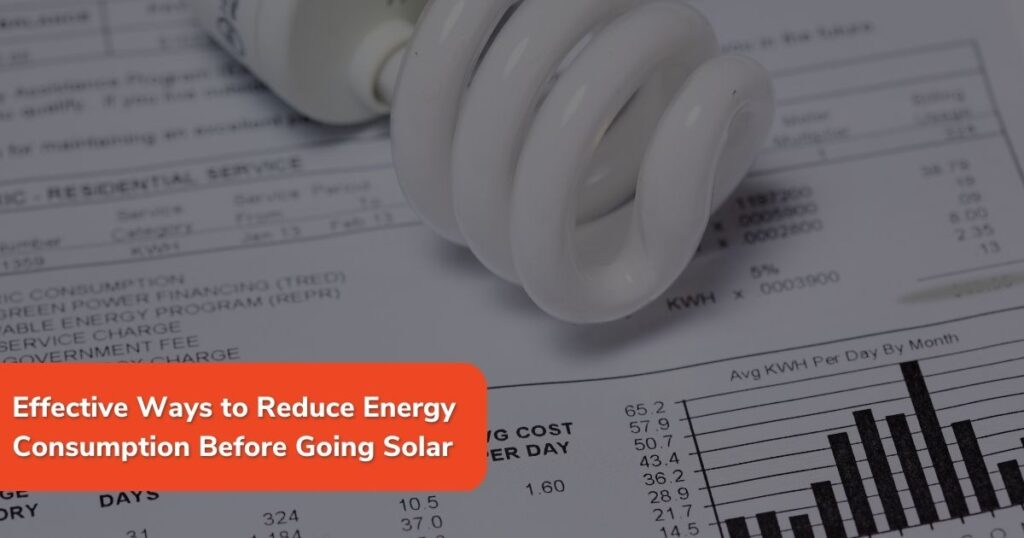
Reduce Energy Consumption: Key Steps Before Going Solar Smart Energy Answers April 6, 2023 Before Going Solar: Key Steps to Reduce Energy Consumption As families and businesses seek to reduce their carbon footprint and lower energy costs, many are considering the installation of solar panels as a practical solution. While solar power can provide a significant reduction in energy costs and carbon emissions, it is important to note that it should not always be the first step in reducing energy consumption. Before you start considering solar as an option, it is important to ensure that you have taken steps to reduce your energy consumption as much as possible. This can be achieved through a number of simple changes, including improving air conditioning efficiency, replacing lights with LED bulbs, and improving insulation. By reducing energy consumption, you will not only lower your carbon footprint but also save money on energy costs. This can make the investment in solar panels and batteries even more financially viable. Improve Air Conditioning Efficiency Improving air conditioning efficiency is an easy way to reduce energy consumption. By regularly servicing your air conditioning system, you can help ensure it runs efficiently and does not waste energy. You may also want to consider installing programmable thermostats. These can automatically adjust the temperature of your home or building based on occupancy patterns, helping save energy when the space is unoccupied. Replace Traditional Light Bulbs with LED Bulbs Replacing traditional light bulbs with LED bulbs is another easy way to reduce energy consumption. LED bulbs use significantly less energy than traditional bulbs and last much longer, making them a cost-effective investment in the long run. In addition to replacing bulbs, consider installing motion sensors or timers to automatically turn off lights in areas that are not frequently used. Improve Insulation Improving insulation is also an important step in reducing energy consumption. By ensuring that your home or building is well insulated, you can help prevent energy from escaping through cracks and gaps in your walls and roof. This not only reduces energy consumption but also makes the space more comfortable for employees, customers, and occupants. Consider Solar and Batteries After Reducing Energy Use Once you have taken steps to reduce your energy consumption, it is time to consider solar and batteries as viable options. Solar panels can provide a significant reduction in energy costs and carbon emissions. Batteries allow you to store excess solar energy generated during the day and use it at night or during periods of low solar generation. You may also potentially generate additional income from your battery by selling excess energy back to the grid. Solar and battery systems can provide greater energy independence and help reduce your reliance on the grid. However, it is important to note that they require a significant upfront investment. By reducing your energy consumption first, you can help ensure that your investment in solar panels and batteries is as cost-effective as possible. Happily tearing his electricity bill. Conclusion Solar power and batteries can be a great way for your home or business to reduce energy costs and carbon emissions. However, it is important to note that they should be considered after taking steps to reduce energy consumption first. Before investing in solar and batteries, homes and businesses should consider improving air conditioning efficiency, replacing lights with LED bulbs, and improving insulation. By reducing energy consumption first, you can help ensure that your investment in solar panels and batteries is as cost-effective as possible should you decide to proceed.
Don’t Miss Out: Time Running Out for Solar Tax Break for Businesses

Don’t Miss Out: Time Running Out for Solar Tax Break for Businesses Smart Energy Answers April 4, 2023 Instant Asset Write-Off for Australian Businesses If you are a business owner in Australia, you may have heard about the instant asset write-off programme. This programme allows businesses to claim an immediate deduction for the business portion of the cost of an asset in the year the asset is first used or installed and ready for use. It has been particularly useful for businesses looking to invest in renewable energy solutions, such as solar power. However, the instant asset write-off is set to end on 30 June 2023. This means businesses looking to take advantage of the programme must act quickly. Investing in solar power can be expensive, but the instant asset write-off programme can help businesses save a significant amount of money. By installing solar power before the end of the financial year, businesses may be able to write off the full cost of the installation in the same year, helping reduce their tax bill. Solar power is an excellent way for businesses to reduce their energy costs. With electricity prices continuing to increase, businesses that invest in solar power can achieve significant savings on their electricity bills. Furthermore, solar power is a sustainable energy source that can help businesses reduce their carbon footprint and demonstrate their commitment to sustainability. Solar Rebates for Businesses In addition to the instant asset write-off programme, the government also offers solar rebates for businesses. These incentives, such as Small-scale Technology Certificates, or STCs, can help businesses save even more on their solar installation costs. STCs are tradeable, meaning businesses can sell them to generate additional value from their solar investment. If you are considering investing in solar power for your business, working with a reputable solar installer who can guide you through the installation process is essential. A good installer can advise you on the best system for your business, help you apply for government incentives, and ensure that your system is installed to the highest standard. Many of our clients have claimed up to $60,000 immediately upon installing a solar solution by leveraging government incentives such as the instant asset write-off and STCs. We encourage all business owners to speak with a tax accountant or financial advisor to fully understand the potential savings. You can also book a consultation with one of our energy experts to explore the best solar options for your business. Conclusion The instant asset write-off programme for businesses installing solar power in Australia is coming to an end soon. Business owners who have yet to invest in solar power should act fast to take advantage of this programme before it is too late. With additional solar rebates offered by the government and continuously increasing electricity prices, investing in solar power is an excellent opportunity for businesses to save money on energy bills while contributing to a more sustainable future. Do not wait any longer. Take advantage of this opportunity today.
7 Key Benefits of EV Chargers for Aussie Homes and Businesses
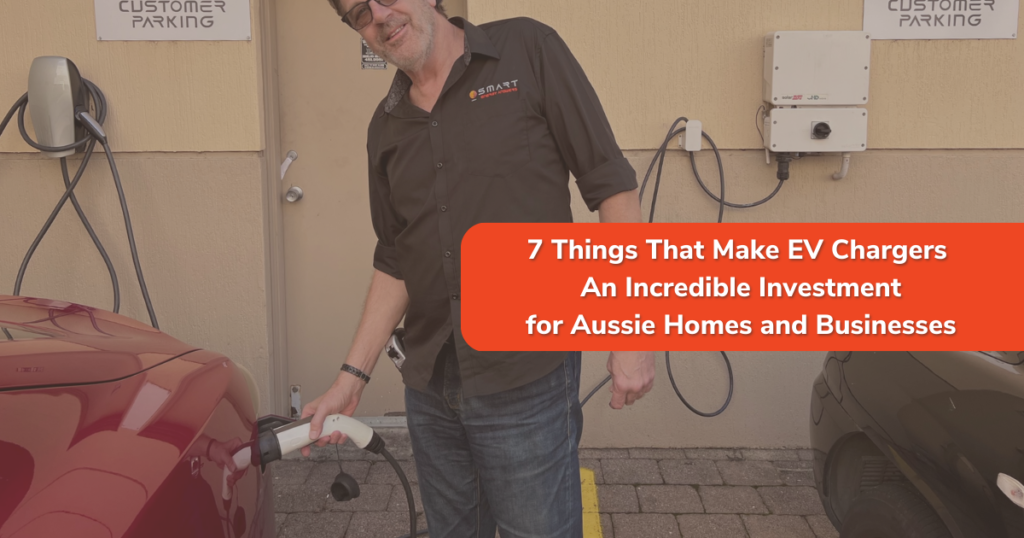
7 Key Benefits of EV Chargers for Aussie Homes and Businesses Smart Energy Answers March 21, 2023 7 Biggest Advantages of EV Chargers As the use of electric vehicles, or EVs, continues to grow, the demand for EV charging infrastructure is also increasing. EV chargers offer many advantages over traditional petrol stations, making them a convenient and eco-friendly option for charging your vehicle. Here are the seven biggest advantages of EV chargers. 1. Convenience One of the biggest advantages of having an EV charger at your home or business is convenience. Instead of searching for charging locations at shopping centres, grocery stores, or petrol stations while you are out and about, you can charge your EV from a location that works best for you. 2. Faster Charging Most EV chargers can charge an electric vehicle battery much faster than a standard household power outlet. This means you can spend less time waiting and get back on the road faster. 3. Variety of Charging Options EV chargers come in different sizes and styles, allowing you to choose the option that best fits your needs. Some chargers are designed for home use, while others are built for public or commercial charging locations. 4. Environmentally Friendly Electric vehicles produce zero tailpipe emissions, and using an EV charger to power your vehicle can help reduce your carbon footprint. By switching to EV charging, you can support cleaner transport and help protect the environment. 5. Cost Savings Although the initial cost of installing an EV charger may require an upfront investment, EV charging can offer lower operating costs over time. Many utility providers and government programmes may also offer rebates or incentives for installing an EV charger. These savings can help make EV charging a cost-effective option for homes and businesses. 6. Improved Customer Reputation for Businesses Providing an EV charging option for your team or customers demonstrates your commitment to sustainability. It also helps meet the growing demand for eco-friendly charging solutions. This can help attract customers who own electric vehicles, boost your business reputation, and increase customer loyalty. 7. Future-Proof As the use of electric vehicles continues to grow, having an EV charger at your home or business will become increasingly important. EV chargers offer many benefits and provide a convenient, eco-friendly way to charge your electric vehicle. Investing in an EV charger now helps ensure you are ready for the future of transport while supporting a cleaner and more sustainable planet. Conclusion Installing an EV charger at your home or business is a smart move towards a more sustainable future. With the increasing popularity of electric vehicles, offering EV charging options can enhance your reputation as an environmentally conscious homeowner, business, or organisation. It can also provide a convenient and valuable service to the growing number of EV owners, helping increase satisfaction, loyalty, and long-term value. Whether you are a homeowner or a business owner, investing in an EV charger is a valuable and forward-thinking decision.
The 5 Biggest Myths of Solar Energy: Debunking Misconceptions
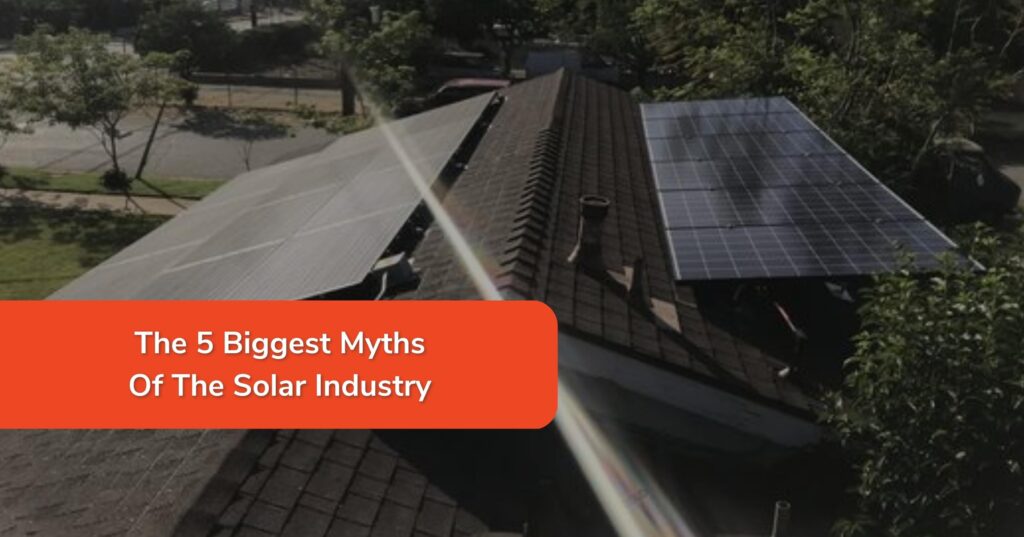
The 5 Biggest Myths of Solar Energy: Debunking Misconceptions Smart Energy Answers February 7, 2023 Debunking 5 Common Solar Energy Myths The solar industry has grown rapidly in recent years. With that growth has come a number of misconceptions and myths about how solar energy works and the benefits it can provide. Here are the five biggest myths in the solar industry, along with the facts that debunk them. Myth 1: Solar Panels Only Work in Sunny Locations Fact: Solar panels are actually quite efficient at converting sunlight into electricity, even on cloudy days. In fact, some studies have shown that solar panels can produce up to 25% of their rated capacity on a cloudy day. So, even if you live in a location with less-than-ideal weather, you can still benefit from solar energy. Myth 2: Solar Energy Is Too Expensive Fact: The cost of solar energy has dropped significantly in recent years, making it a more affordable option for homeowners and businesses. In addition, many government incentives and rebates are available for installing solar panels, which can help offset the initial cost. With the savings on monthly energy bills, a solar energy system can pay for itself over time. Myth 3: Solar Panels Will Ruin the Appearance of Your Home Fact: Solar panels are available in a variety of styles and sizes to suit the appearance of different homes. Many homeowners find that adding solar panels can increase the value of their property while also giving the home a more eco-friendly look, depending on the design. Solar panels can also be installed on the roof or on the ground, allowing you to choose the location that works best for your home. Myth 4: Solar Energy Is Unreliable During a Power Outage Fact: Solar energy systems are reliable and can provide a steady supply of electricity to your home during normal operation. For power outages, many solar systems can be paired with battery backup solutions to keep essential appliances and devices running. With the right solar and battery setup, you can have greater peace of mind knowing you may still have access to stored electricity during an emergency. Image: CHOICE Australia has chosen Smart Energy Answers as their preferred solar energy provider, helping customers achieve more than $1 million in lifetime savings. Myth 5: Solar Energy Is Only for Homeowners, Not Businesses Fact: Solar energy can be a great option for businesses as well as homeowners. Many businesses are turning to solar energy to reduce their energy costs and improve their sustainability. As of 2023, more than 7,000 businesses have switched to solar, with IBISWorld showing 8.1% annualised growth in businesses adopting solar energy. With various incentives and rebates available for commercial solar installations, solar can be a cost-effective choice for businesses of all sizes. Conclusion Overall, solar energy is a clean, renewable, and affordable option for powering your home or business. Do not be fooled by the myths. The facts about solar energy speak for themselves.
Smart Energy Answers: A Tesla Premium Installer for 2023
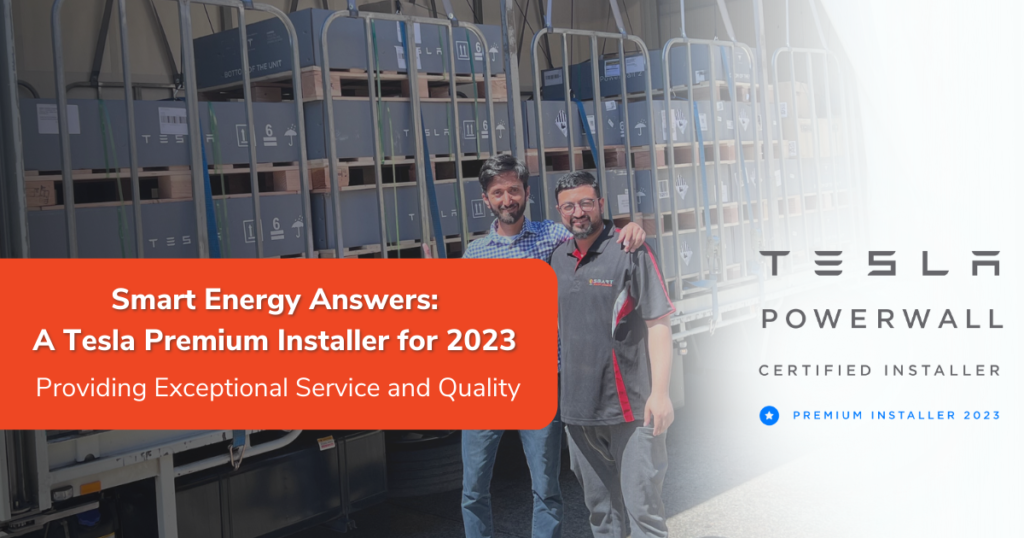
Smart Energy Answers: A Tesla Premium Installer for 2023 Smart Energy Answers January 24, 2023 Smart Energy Answers: Your Trusted Tesla Powerwall Premium Installer for 2023 We are thrilled to announce that Smart Energy Answers will continue to be a Tesla Powerwall Premium Installer for 2023. This certification is a testament to our commitment to providing customers with outstanding service, exceptional installation quality, and extensive product knowledge. As a Tesla Powerwall Premium Installer, we have the honour of working with some of the most advanced technology in the renewable energy industry. Our team of certified installers is trained to install and maintain Tesla Powerwall battery systems for both residential and commercial properties. Our customers can trust that our dedicated team will provide a high level of customer service from start to finish. We ensure every installation is completed to the highest and safest standards, with the goal of delivering complete customer satisfaction. We are proud to continue our partnership with Tesla and are excited to help even more customers make the switch to clean energy in 2023. Choosing Smart Energy Answers as your Tesla Powerwall Premium Installer means you can expect high-quality service, expert product knowledge, and a professional installation completed to industry-leading standards. We take pride in helping our clients reduce their carbon footprint and increase their energy independence by providing efficient and reliable Tesla Powerwall systems. Talk to our energy expert today to learn more about Tesla Powerwall and how it can support your home or business energy needs.
5 Tips to Maximise Your Solar Energy and Save Money
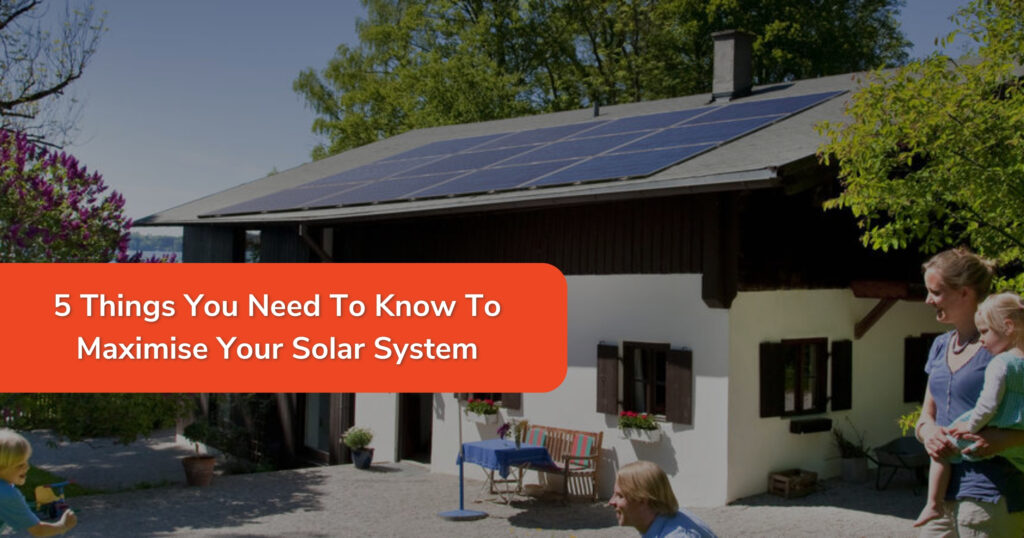
5 Tips to Maximise Your Solar Energy and Save Money Smart Energy Answers November 23, 2022 You’ve Got Solar, Now What? It is time to get the most out of it. Solar panels are a great way to reduce your carbon footprint, save money on your energy bills, and power your home in a more sustainable way. The amount of energy your solar panels produce can be maximised by using them alongside other energy-saving measures. With these tips, you can make the most of your solar energy and run your home more efficiently. It is important to have an idea of how much electricity each appliance and device in your home uses. This can help you plan your electricity usage more effectively and make better use of the solar energy your system produces. 1. Take Advantage of Daytime Get the most out of your solar system when the sun is out. Use appliances that require a lot of electricity during the daytime, when your solar panels are generating the most power. 2. Stagger Your Use of High-Energy Appliances Avoid using high-energy appliances and devices all at once, as this can increase your electricity demand and cause you to draw power from the grid. This includes appliances such as washing machines, dishwashers, and tumble dryers. By staggering their use throughout the day, you can make better use of the solar energy your system is generating. 3. Maintain and Monitor Your Solar System Regularly It is important to keep your solar panels clean and free of debris so they can operate at maximum efficiency. Regularly check your panels and arrange cleaning when needed to help ensure your system is working properly. You should also monitor your solar system’s performance so you can quickly identify any issues and keep your energy production on track. 4. Invest in a Solar Battery Another way to get the most out of your solar panels is to store unused energy in a solar battery. Solar batteries allow you to keep excess energy generated by your solar panels and use it when needed, such as at night or during periods with less sunlight. This can help reduce your dependence on the grid and may help you save more on your energy bills over time. 5. Get a Heat Pump One way to optimise your solar panels is to install a heat pump hot water system. Heat pump hot water systems use a heat exchange process that absorbs heat from the surrounding air and uses it to heat your water. These electric water heaters can provide hot water very efficiently in most climates. Compared with a standard resistive element heater, a heat pump hot water system can help reduce energy use and may save up to 78% on hot water running costs. Conclusion Solar panels are a great way to help power your home and save on energy costs. By following these tips, you can maximise the amount of energy your solar panels produce and make your investment in solar power work even harder for you. Best of all, using solar energy helps create a better and more sustainable world for everyone.
Skyrocketing Electricity Costs in Australia
Skyrocketing Electricity Costs in Australia Smart Energy Answers November 20, 2022 The Soaring Costs of Electricity in Australia: A Financial Crisis for Homeowners and Businesses Electricity prices have been increasing rapidly across Australia, with the average homeowner feeling the pinch. For households across the country, the rapid rise in power costs has placed noticeable pressure on the household budget. An unprecedented combination of events has impacted the energy industry, leading to price increases that have created financial challenges for many homeowners and business owners alike. Areas such as Queensland and New South Wales have already faced energy bill increases of 12% to 18%. However, the price hikes do not stop there. Local news reports have also warned of a potential 35% jump in electricity prices as wholesale electricity costs continue to rise. There are several contributing factors driving these energy price increases, including: The Russia-Ukraine war Unplanned energy plant outages Inflation Increased network costs Retailers seeking higher profits for owners and investors Wholesale gas and electricity prices increased by 200% in 2022 compared with the previous year, while gas prices rose by approximately 250%. For the average homeowner, this can equate to electricity bills increasing by as much as $180 to $260 per month. This sharp increase has sent many property owners searching for ways to save energy through home improvements and cheaper energy providers. It is not just homeowners who have been affected by the current economic climate. Some energy retailers have been unable to cope with soaring energy and operational costs, forcing them to close down operations. Companies such as Social Energy shut their doors earlier this year, with their customers transferred to an alternative energy retailer to maintain their service. Energy Retailers Under Pressure Elysian Energy has been one of the most recent casualties of rising energy costs, with its authorisation to trade halted in September. This affected approximately 2,500 customers across Queensland, New South Wales, Victoria, Tasmania, and South Australia, with customers transferred to other retailers. While this short-term strategy keeps customers supplied with essential energy services, it can worsen the crisis for retail customers who may have to deal with unfamiliar plans and higher pricing from new providers. Inflation and Cost of Living Pressures Compounding the already difficult situation, inflation is placing even more pressure on Australians. As the cost of living rises and interest rates continue to climb, the prices of essentials such as food and household supplies are steadily increasing. This leaves many consumers digging even deeper into already stretched cash reserves. Food products such as fruit, meat, and vegetables now cost more, while higher gas prices have caused major disruptions across the supply chain. Inflation has peaked at 7%, and with so much uncertainty around the country’s economy, the worst may not yet be over. The rising cost of services and the higher cost of borrowing may also reduce spending on luxury or non-essential items and slow down major purchases such as new cars or homes. A Global Energy Crisis Australia is not the only country affected, as rising energy prices have become a global issue. Many countries are also experiencing significant increases in energy costs. With sanctions imposed on Russian exports and the ongoing invasion of Ukraine, energy costs have spiralled out of control. Even though Australia is far from the ongoing war, the impact is still being felt through the rising costs of gas, oil, and coal. Global refusals to trade with Russia have also helped drive the price spike. Russia is the third-largest coal exporter in the world, and buyers are working to protect their supplies in case sanctions remain in place throughout the conflict in Ukraine. The Role of Renewable Energy In the face of this difficult situation, it is likely that the Australian government will continue increasing renewable energy efforts through higher investment in solar and wind energy. This can help make better use of sustainable resources and reduce reliance on volatile energy markets. While this may do little to immediately ease the current state of affairs, it can be a smart long-term strategy to future-proof the country. Greater investment in renewable energy may help protect Australians and the economy from similar energy crises in the future. We are all in this together, so any energy price reductions or even price stability, such as locked-in energy rates for up to five years, can be a valuable benefit for many customers. If you would like to discuss your current energy situation and explore ways to access cheaper energy bills, please give us a call to chat things through. Related topic: 4 Home Energy Saving Tips & Tricks
Choosing Between Blue, Black, or Smart Solar Panels: What You Need to Know
Choosing Between Blue, Black, or Smart Solar Panels: What You Need to Know Smart Energy Answers September 26, 2022 Choosing the Right Solar Panel Colour: Blue, Black, or Smart Panels For homeowners who have made the decision to switch to solar power, the benefits are clear. Clean energy, reduced grid consumption, and lower energy bills all make solar an attractive investment. However, choosing the right solar panel system is essential to getting the best long-term result. Some homes feature blue solar panels, while others use black panels, which can leave many homeowners wondering whether there is a real difference between the two. Understanding the difference between each panel starts with how they are manufactured and the materials used. Modern solar panels rely heavily on silicon because of its ability to effectively absorb sunlight and convert it into usable electricity. The colour and appearance of solar panels are influenced by the manufacturing process, including the use of anti-reflective coatings and how the panel reacts when exposed to light. The type of material used in a panel also affects its colour, giving it either a shiny blue appearance or a sleek black finish. Generally speaking, blue solar panels are often less expensive than black panels, but there can be trade-offs between heat performance and efficiency. Black panels tend to perform better in low-light conditions and warmer temperatures. Recent advancements in design and manufacturing have also led to the development of PERC monocrystalline smart panels. What Are Smart Panels? The latest energy research and innovation have used technology and connectivity to develop a new generation of smart all-black solar panels. These panels bring distinct advantages, combining a sleek and modern appearance with high efficiency and robust performance. Each panel is designed to deliver a more aesthetic look while remaining strong, reliable, and efficient. Constructed with PERC monocrystalline technology and aerospace-grade components, these high-spec panels are designed to withstand extreme weather conditions, including high winds. Their all-black finish also helps them blend seamlessly into almost any roof design. As a top performer for reliability, PERC panels are rigorously tested for strength and lasting durability. Longevity is a key consideration for homeowners, and with a 25-year full replacement warranty, PERC panels can offer greater peace of mind. Which Panels Are Better for Homes? One of the questions homeowners often ask is which type of solar panel is better for a home solar system. Due to their light-absorbing properties and efficient performance, many homeowners prefer black panels. In a typical installation, fewer black panels may be needed compared with blue panels, helping reduce the amount of roof space required. Although black panels can be more expensive upfront, they may deliver better long-term value through improved efficiency and performance. However, if cost is the main factor and the installation needs to stay within a limited budget, blue panels can require less upfront investment. While they may not be as efficient as black panels, blue panels can still be suitable for home solar systems and smaller commercial applications. What to Consider When Selecting Solar Panels When selecting solar panels, it is useful to have some key information at hand, such as: Which direction the sun travels over your home and when the peak sunlight hours occur. How much energy your household consumes. Whether efficiency and clean energy are key priorities. Whether your main goal is a lower upfront investment or stronger long-term savings. No matter which panels are chosen, some performance degradation will still occur over time due to weather, use, and environmental factors. This means solar panels may generate slightly less power as they age. However, most solar panels are designed to last for 25 years or more, and many can continue performing well beyond that period. Start Your Solar Journey Today Our expert consultants can help you make an informed decision based on your household needs, energy goals, and budget.
The Game-Changer – Set To Make New Houses More Energy Efficient

The Game-Changer – Set To Make New Houses More Energy Efficient Smart Energy Answers September 16, 2021 The Game-Changer: Revolutionising Energy Efficiency in New Australian Homes New houses across Australia are set to be better built to withstand climate change, incorporating solar power, water and energy efficiency features, and minimal toxins under a world-first agreement. The new scheme, acclaimed as a national game-changer in the housing market, could mean buyers have much healthier homes and see their energy bills reduced by as much as 75%, or more than $2,000 per year, according to one study. “This is a real game-changer for the industry, bringing more liveable, affordable homes to all Australians,” said Davina Rooney, Chief Executive of the Green Building Council of Australia, or GBCA. The Green Star Home Standard certification system, the world’s first mass-market residential climate-positive certification, has already been accepted by some of the construction industry’s major players. These companies have vowed to produce houses to higher specifications. This means many more homes built in the future by companies signing up to the standard will be well-ventilated, insulated, fully electric, and powered by renewables. Industry Leaders Supporting Sustainable Homes Leading residential developer Stockland is already a stakeholder in the initiative. “We’re seeing people spending more time at home and they’re really concerned about the health and well-being impacts of the houses they live in,” said Andrew Whitson, Stockland’s Group Executive and CEO Communities. “They’re starting to wonder how they can live more healthily and more sustainably environmentally and reduce their carbon footprint. It was something already happening, but COVID-19 has really amplified it, and we felt we wanted to show leadership in the country in these issues.” Australia’s largest volume builder, Metricon, has also joined the initiative. “This is the way the industry and the world are moving, towards more sustainable living,” said David McKibbin, National Product Development Manager of Metricon Homes. “We saw this as an opportunity to get involved and help the industry evolve in this area, and further educate our customers and help drive the whole sustainability issue. As consumers see the benefits, they’re likely to promote it to family and friends as well.” Why Energy-Efficient Homes Matter Research has found that the residential sector accounts for 57% of Australia’s building emissions. Australians also spend around 90% of their time indoors under normal circumstances, with two-thirds of that time spent at home. During pandemic lockdowns, this increased even further. To meet the new Green Star certification, homes will need to be more comfortable to live in and include smarter air conditioning, LED lights, and efficient electric appliances. These features can help make homes far cheaper to run. The GBCA is now working with the federal government to bring the scheme into the regulatory framework. Currently, the National Construction Code requires a 6-star NatHERS rating, which describes the level of insulation in the home. “Getting the volume builders of housing on board will give the scheme so much more momentum going forward rather than just going with architect-designed, bespoke buildings,” said Kerryn Wilmot, Research Principal at the Institute for Sustainable Futures at the University of Technology Sydney. “This is where most Australians get their housing from, so signing up volume builders is a brilliant idea with a great chance of shifting the market.” Start Your Solar Journey with Smart Energy Answers Smart Energy Answers is one of Australia’s leading solar solutions providers, based in Sydney. We are proud to have attained one of the highest accreditation levels in Australia and remain committed to helping communities gain energy independence through the latest technologies and high-quality services. To get started on your solar journey, contact Smart Energy Answers today on 1300 948 619 or get in touch with our team below.
Should I install solar and batteries?
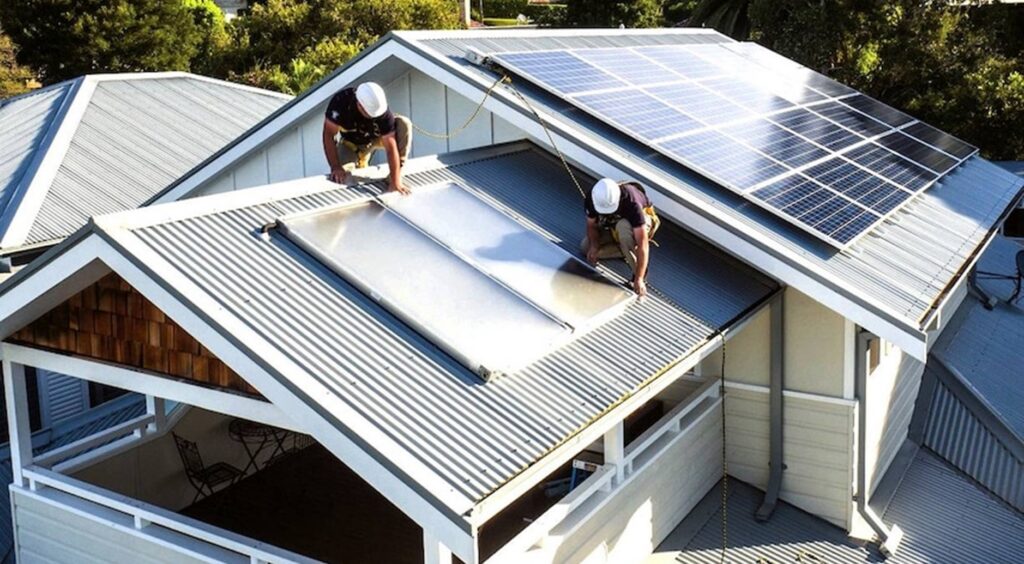
Solar Power Savings Smart Energy Answers June 11, 2026 Is Solar and Battery Installation Worth It? Here’s Why You Should Consider It Have you been considering installing a solar power system and battery at home? Solar is big right now, and it is here to stay. Solar power is a critical part of the renewable energy revolution sweeping across Australia. The growing industry has created thousands of jobs for upskilled Australians and has helped households around the country reduce their power bills. Power Bills: A Fact of Life? Whichever way you look at it, we all have to pay for the energy we use. That is why it makes sense to secure the best energy solution possible for your home. Traditionally, property owners pay for energy drawn from the grid. This energy is largely generated in fossil fuel-based power plants, converted to lower voltages at substations, and distributed through the electricity network, also known as the grid. But there is now a cleaner and greener way: solar. More Australians are realising that installing solar panels on their homes is not only great for the environment, but also a smart investment that can add value to their property and help reduce energy costs. Installing a solar system at home allows you to convert sunlight into clean and usable electricity. This electricity can help power energy-hungry appliances, heating and cooling systems, and everyday household needs, while helping you save on your energy bills. Even if you are not home during daylight hours while most solar energy is being generated, you can still benefit. Any unused solar energy can be exported back to the grid, with energy retailers paying feed-in tariffs, or FiTs, at a nominated rate for every kilowatt-hour, or kWh, sent back into the grid. The Next Level Installing a solar system is already a huge leap forward, but if you want to unlock even stronger long-term savings, it may be time to take your solar setup to the next level with battery storage. Using power-hungry appliances such as washing machines, heating systems, and cooling systems during daylight hours can help you make better use of the free energy your solar system is generating. The next step is deciding what to do with the excess energy produced by your system. Selling energy directly back to the grid is a simple option. However, storing excess solar energy in a battery for later use, or selling it back at the optimum time, can help boost long-term savings while reducing your reliance on drawing additional power from the grid. Smart Batteries and Virtual Power Plants Smart batteries can be connected to a Virtual Power Plant, or VPP, solution that allows you to maximise the value of your stored energy. This can help you sell additional energy back to the grid at the optimum time and potentially secure a premium feed-in tariff. You can also monitor your account usage and energy data at any time through a convenient smartphone app. Pay As You Save But is there still a large upfront cost associated with installing solar panels and a battery storage system? Not anymore. Smart Energy Answers’ Pay As You Save offer allows switched-on Australians to own their own solar power system from less than $2.96 per day. Smart Energy Answers has teamed up with lending partner Plenti to offer Australian households flexible finance solutions for installing home solar power systems with a low upfront cost and competitive interest rates. What is more, you can start benefiting from your solar system from day one. In many cases, it may be possible to install a system that is cash flow positive from the beginning. This means your solar savings and returns may be greater than the cost of purchasing and installing the system, while allowing you to pay it off through one simple fixed monthly payment. Discover what rebates and incentives may be available with Smart Energy Answers’ Solar Rebate Calculator. You can also see how much you could save on your next electricity bill with our Savings Calculator. What Do I Need to Get Started? Solar power really is the way of the future. In fact, it can almost sound too good to be true, so where is the catch? There is not one. All you need to get started on your journey towards a cleaner, greener future, reduced reliance on fossil fuels and the power grid, and better long-term energy savings is suitable roof space for your panels. As long as you have a suitable rooftop, installing a solar system can be a smart investment. You can start benefiting from your system while joining nearly three million Australian households that have already made the switch to rooftop solar panels. Nearly 30% of Australian energy is already renewable, and the country is on track to reach 50% renewable energy in the near future. No more “yes, but”. It is time to join the solar revolution today.
The Power of Big Data: Revolutionising Solar Energy

The Power of Big Data: Revolutionising Solar Energy Smart Energy Answers June 4, 2026 Change is coming, whether we like it or not. As awareness of climate change intensifies, one thing has become remarkably clear: using energy generated by renewable sources is essential to reducing destructive greenhouse gas emissions and improving the carbon footprint. While energy sources like wind and solar are increasingly valuable in this effort, they can also be unpredictable and irregular. For example, how much energy can any single panel or solar plant contribute to the grid on any specific day? The answer to that question has previously been complicated. To further rely on the sun and the wind and make the energy they create a bigger part of the grid, we must be able to understand how much power will be available, what the demand for it is, and then use this energy to meet consumer needs as efficiently as possible. This is where Big Data comes in. Through a brilliant combination of weather data, satellite feeds, predictive analytics, and machine learning, we’re entering a future where renewable power can reach the grid on a consistent basis. In fact, the latest forecasting technology may be the missing puzzle piece in the extensive adoption of solar energy. For example, using cloud-imaging technology and sky-facing cameras to predict the weather up to a month in advance can increase the renewable power stored or delivered to the grid by up to 10%, enough to power 14,000 homes. Big Data Analytics can also be used to detect underperformance and identify when inefficiencies happen without needing someone on site. This involves accumulating ground-level sunlight intensity data to signal when panels aren’t performing at expected rates and sending an alert when repairs or maintenance are needed. This kind of analysis can even be used to study whole communities and suggest where solar panels could be the most effective based on sun exposure and weather patterns. South Australia, for example, in a collaboration with Tesla, has built the world’s largest virtual power plant, connecting 50,000 Tesla batteries with panels and reducing costs associated with stabilising the energy grid by $28.9 million. It’s a collaboration that could eventually power the entire state. Related: How Virtual Power Plants Are Changing the Future of Electricity The better we can analyse these energy supply and demand models, the more a community’s backup energy needs can be accounted for as well. When energy demands are consistently met by renewable sources, companies can reduce their safety margins, which are usually made up of costly and environmentally damaging fossil fuels. This translates to cheaper, more efficient power for both companies and consumers. Big Data and machine learning have already begun to transform many industries, and now they are changing the way we think about and use solar energy. Energy companies, consumers, and investors who have all heard the plea for change finally have an answer for how they can harness technological advances to become less a part of the problem and more a part of the solution. For more information or to join our Smart Community Program, call us on 1300 948 619 today to start your innovative solar journey.
Bundle & Save: Solar & Pool Heat Pump
Bundle & Save: Solar & Pool Heat Pump Smart Energy Answers June 4, 2026 Smart Energy Answers Solar and Pool Heat Pump Bundle Starting From $9,870 Smart Energy Answers, or SEA, is offering a Solar and Pool Heat Pump Bundle starting from $9,870. SEA is excited to announce a new special offer for customers where they can combine solar panels and a pool heating pump in one affordable, convenient, and simple bundle. What Does the Limited-Time Offer Include? The bundle is the perfect solution for homeowners, offering customers a competitively priced option for those looking to go solar while also choosing a greener way to heat their pool. Prices start from $9,870 for our entry-level 6kW solar PV system plus 9kW Summer Eco pool heating, installed by SEA. The offer is available from now until 29 February 2020. Contact SEA on 1300 948 619 or at info@smartenergyanswers.com.au for more information about our terms and conditions. Which Solar Panels Are Eligible? SEA offers high-quality and efficient solar panels from leading manufacturers. Our range of solar panel products includes LG NeON 2, REC Solar, Seraphim, and Canadian Solar. We’re proud to be a CEC Approved Solar Retailer, as well as certified installers of Tesla Powerwall, LG Chem, and Sonnen batteries. All our products and services are subject to strict quality control to ensure our customers receive the best possible service. SEA is the number one ranked solar energy solutions provider in Australia. We’ve achieved this standard through our dedication to providing energy-saving solutions that benefit our customers and demonstrate our commitment to a more sustainable world. August 2019: SolarQuotes #1 National Installer, All Time. Highest Ranked Solar Installer in Australia on ProductReview.com.au. Key Features: Madimack Summer Eco Heat Pump Madimack is Australian owned and operated, providing highly energy-efficient solutions for homes, offices, and other commercial spaces. They offer an excellent solution for customers looking for efficient, affordable, and greener alternatives to heating their pool. Madimack’s pool heat pumps harvest natural heat from the air, making them highly eco-friendly. As they are energy efficient, the cost of running one is relatively low, especially when combined with solar. Their Summer Eco Series is perfect for energy-conscious households, enabling you to enjoy a relaxing and regenerating swim all year round despite the absence of heat and sunshine. Built with state-of-the-art anti-corrosion casing, the system is designed to last season after season. The series includes WiFi control, allowing you to switch your pool temperature and timers whether you’re at home or work. The models also come with an industry-leading four-year warranty on all parts and a 25-year warranty on the heat exchanger. Take Advantage of the Bundle Take advantage of the new Solar and Pool Heat Pump Bundle before the limited-time offer ends. For more information, contact us on 1300 948 619 or at info@smartenergyanswers.com.au.