
Skyrocketing Electricity Costs in Australia
Skyrocketing Electricity Costs in Australia Smart Energy Answers November 20, 2022 The Soaring Costs of Electricity in Australia: A Financial Crisis for Homeowners and Businesses Electricity prices have been increasing rapidly across Australia, with the average homeowner feeling the pinch. For households across the country, the rapid rise in power costs has placed noticeable pressure on the household budget. An unprecedented combination of events has impacted the energy industry, leading to price increases that have created financial challenges for many homeowners and business owners alike. Areas such as Queensland and New South Wales have already faced energy bill increases of 12% to 18%. However, the price hikes do not stop there. Local news reports have also warned of a potential 35% jump in electricity prices as wholesale electricity costs continue to rise. There are several contributing factors driving these energy price increases, including: The Russia-Ukraine war Unplanned energy plant outages Inflation Increased network costs Retailers seeking higher profits for owners and investors Wholesale gas and electricity prices increased by 200% in 2022 compared with the previous year, while gas prices rose by approximately 250%. For the average homeowner, this can equate to electricity bills increasing by as much as $180 to $260 per month. This sharp increase has sent many property owners searching for ways to save energy through home improvements and cheaper energy providers. It is not just homeowners who have been affected by the current economic climate. Some energy retailers have been unable to cope with soaring energy and operational costs, forcing them to close down operations. Companies such as Social Energy shut their doors earlier this year, with their customers transferred to an alternative energy retailer to maintain their service. Energy Retailers Under Pressure Elysian Energy has been one of the most recent casualties of rising energy costs, with its authorisation to trade halted in September. This affected approximately 2,500 customers across Queensland, New South Wales, Victoria, Tasmania, and South Australia, with customers transferred to other retailers. While this short-term strategy keeps customers supplied with essential energy services, it can worsen the crisis for retail customers who may have to deal with unfamiliar plans and higher pricing from new providers. Inflation and Cost of Living Pressures Compounding the already difficult situation, inflation is placing even more pressure on Australians. As the cost of living rises and interest rates continue to climb, the prices of essentials such as food and household supplies are steadily increasing. This leaves many consumers digging even deeper into already stretched cash reserves. Food products such as fruit, meat, and vegetables now cost more, while higher gas prices have caused major disruptions across the supply chain. Inflation has peaked at 7%, and with so much uncertainty around the country’s economy, the worst may not yet be over. The rising cost of services and the higher cost of borrowing may also reduce spending on luxury or non-essential items and slow down major purchases such as new cars or homes. A Global Energy Crisis Australia is not the only country affected, as rising energy prices have become a global issue. Many countries are also experiencing significant increases in energy costs. With sanctions imposed on Russian exports and the ongoing invasion of Ukraine, energy costs have spiralled out of control. Even though Australia is far from the ongoing war, the impact is still being felt through the rising costs of gas, oil, and coal. Global refusals to trade with Russia have also helped drive the price spike. Russia is the third-largest coal exporter in the world, and buyers are working to protect their supplies in case sanctions remain in place throughout the conflict in Ukraine. The Role of Renewable Energy In the face of this difficult situation, it is likely that the Australian government will continue increasing renewable energy efforts through higher investment in solar and wind energy. This can help make better use of sustainable resources and reduce reliance on volatile energy markets. While this may do little to immediately ease the current state of affairs, it can be a smart long-term strategy to future-proof the country. Greater investment in renewable energy may help protect Australians and the economy from similar energy crises in the future. We are all in this together, so any energy price reductions or even price stability, such as locked-in energy rates for up to five years, can be a valuable benefit for many customers. If you would like to discuss your current energy situation and explore ways to access cheaper energy bills, please give us a call to chat things through. Related topic: 4 Home Energy Saving Tips & Tricks
Choosing Between Blue, Black, or Smart Solar Panels: What You Need to Know
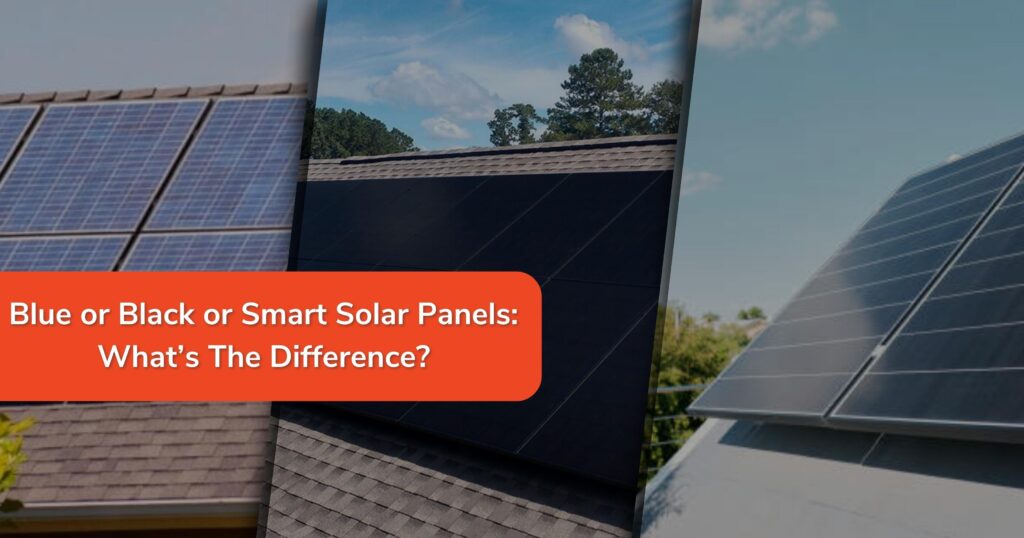
Choosing Between Blue, Black, or Smart Solar Panels: What You Need to Know Smart Energy Answers September 26, 2022 Choosing the Right Solar Panel Colour: Blue, Black, or Smart Panels For homeowners who have made the decision to switch to solar power, the benefits are clear. Clean energy, reduced grid consumption, and lower energy bills all make solar an attractive investment. However, choosing the right solar panel system is essential to getting the best long-term result. Some homes feature blue solar panels, while others use black panels, which can leave many homeowners wondering whether there is a real difference between the two. Understanding the difference between each panel starts with how they are manufactured and the materials used. Modern solar panels rely heavily on silicon because of its ability to effectively absorb sunlight and convert it into usable electricity. The colour and appearance of solar panels are influenced by the manufacturing process, including the use of anti-reflective coatings and how the panel reacts when exposed to light. The type of material used in a panel also affects its colour, giving it either a shiny blue appearance or a sleek black finish. Generally speaking, blue solar panels are often less expensive than black panels, but there can be trade-offs between heat performance and efficiency. Black panels tend to perform better in low-light conditions and warmer temperatures. Recent advancements in design and manufacturing have also led to the development of PERC monocrystalline smart panels. What Are Smart Panels? The latest energy research and innovation have used technology and connectivity to develop a new generation of smart all-black solar panels. These panels bring distinct advantages, combining a sleek and modern appearance with high efficiency and robust performance. Each panel is designed to deliver a more aesthetic look while remaining strong, reliable, and efficient. Constructed with PERC monocrystalline technology and aerospace-grade components, these high-spec panels are designed to withstand extreme weather conditions, including high winds. Their all-black finish also helps them blend seamlessly into almost any roof design. As a top performer for reliability, PERC panels are rigorously tested for strength and lasting durability. Longevity is a key consideration for homeowners, and with a 25-year full replacement warranty, PERC panels can offer greater peace of mind. Which Panels Are Better for Homes? One of the questions homeowners often ask is which type of solar panel is better for a home solar system. Due to their light-absorbing properties and efficient performance, many homeowners prefer black panels. In a typical installation, fewer black panels may be needed compared with blue panels, helping reduce the amount of roof space required. Although black panels can be more expensive upfront, they may deliver better long-term value through improved efficiency and performance. However, if cost is the main factor and the installation needs to stay within a limited budget, blue panels can require less upfront investment. While they may not be as efficient as black panels, blue panels can still be suitable for home solar systems and smaller commercial applications. What to Consider When Selecting Solar Panels When selecting solar panels, it is useful to have some key information at hand, such as: Which direction the sun travels over your home and when the peak sunlight hours occur. How much energy your household consumes. Whether efficiency and clean energy are key priorities. Whether your main goal is a lower upfront investment or stronger long-term savings. No matter which panels are chosen, some performance degradation will still occur over time due to weather, use, and environmental factors. This means solar panels may generate slightly less power as they age. However, most solar panels are designed to last for 25 years or more, and many can continue performing well beyond that period. Start Your Solar Journey Today Our expert consultants can help you make an informed decision based on your household needs, energy goals, and budget.
Smart Energy Answers: Empowering Killarney Vale with a 5 kW Solar System
Smart Energy Answers: Empowering Killarney Vale with a 5 kW Solar System Smart Energy Answers June 4, 2026 Empowering Killarney Vale With a 5kW Solar System: Smart Energy Answers Leads the Way As one of the leading companies in the solar industry, Smart Energy Answers empowers residential and commercial organisations to take control of their energy usage and costs. In March 2018, our customer approached Smart Energy Answers concerned about his bills being over a certain amount per quarter. Following a home consultation with our energy advisors, they assessed that a 5kW system would meet his requirements. Our energy advisors determined that a 6kW inverter would also enable the customer to expand the system to 8kW of panels in the future. That extra capacity will help meet the additional power demands required to charge electric vehicles. As a result of the successful installation, our customer is now averaging $40 credit per quarter. System Details Location: Killarney Vale, NSW System Average Output: 18kWh per day Feed-in Tariff: 20 cents per kWh Modules Used: Canadian Solar 275W x 18 Inverter Used: Fronius Primo 6.0-1