
Are Home Batteries Still Worth It if Daytime Power Is Free?
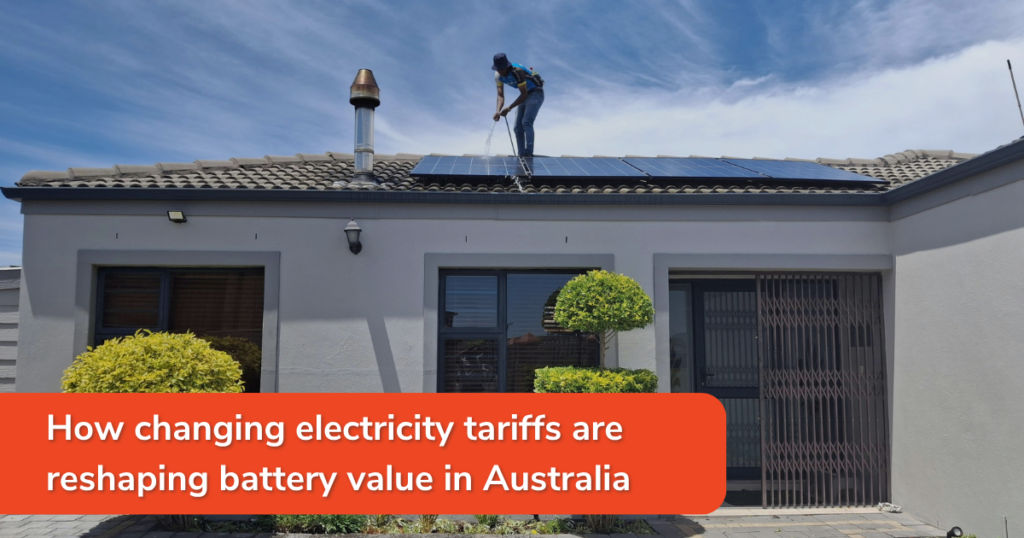
Are Home Batteries Still Worth It if Daytime Power Is Free? Smart Energy Answers June 3, 2026 Key Takeaways Daytime electricity is getting cheaper, but evening and peak prices remain high. A solar battery rebate can significantly reduce upfront costs, improving payback. Batteries are no longer just about solar storage. They’re about smart energy management. Systems like Tesla Powerwall 3 Australia and other advanced options adapt to changing tariffs. The best solar batteries in Australia are those that optimise when you charge and discharge, not just how much you store. Australia’s energy market is changing rapidly. With more rooftop solar feeding into the grid, select electricity retailers are now offering very low-cost or even free daytime power. At the same time, time-of-use tariffs are evolving, and households are starting to ask a new question: If power is cheap during the day, is a battery still worth it? The short answer: yes, but how you use your battery matters more than ever. Why Daytime Power Is Getting Cheaper Australia now has one of the highest levels of rooftop solar adoption in the world. During the middle of the day, solar generation can exceed demand in some regions and periods. This has led to: Lower wholesale electricity prices during daylight hours New retail plans offering cheap or free daytime electricity Reduced feed-in tariffs for exported solar While this might sound like a downside for solar owners, it actually creates new opportunities, especially when paired with battery storage. Is Self-Consumption Still the Main Strategy? It used to be simple: Use your solar during the day Store excess in a battery Avoid buying expensive grid power at night Now, the strategy is evolving. Self-consumption still matters, but it’s no longer the only way to maximise value. Instead, households are shifting toward energy arbitrage, meaning: Using cheap or free electricity during the day Storing energy from solar or grid Using that stored energy during expensive peak periods This is where modern batteries really shine. Do Batteries Still Make Sense if Daytime Power Is Cheap? Yes, because electricity isn’t cheap all day. Even with free daytime power: Evening tariffs are still high Peak demand charges can apply Grid outages and reliability still matter A battery allows you to: Avoid buying power during expensive periods Smooth your energy usage across the day Maintain backup power if needed, only if the system is configured for backup power or blackout protection This is why many homeowners still consider batteries among the best solar battery solutions in Australia for long-term savings and control. Solar Charging vs Grid Charging: What’s Better in 2026? This is one of the biggest mindset shifts happening right now. Option 1: Charge from Solar Clean, renewable energy Reduces exports at low feed-in tariffs Traditional battery strategy Option 2: Charge from the Grid Take advantage of free or cheap daytime electricity Store low-cost energy for evening use Works well with time-of-use tariffs Best Approach: Hybrid Strategy The smartest systems now do both. Depending upon battery model, inverter and system configuration, advanced batteries, including systems like Tesla Powerwall 3 Australia, can automatically: Charge when electricity is cheapest Discharge when prices are highest Optimise based on your usage and tariff This flexibility is what defines the best solar batteries in Australia today. How New Tariffs Are Changing Battery Payback In the past, battery payback was based mostly on: Solar self-consumption Avoiding peak electricity rates Now, payback depends on: Tariff structure, such as time-of-use vs flat rate Access to low-cost daytime electricity Smart battery control systems Your household energy patterns This means two households with the same battery could see very different results, depending on how their system is configured. Outcomes can also vary based on location, retailer pricing, available tariffs, and individual energy usage patterns. Where the Solar Battery Rebate Fits In The available government incentives plays a key role in this new equation. By reducing upfront cost, the rebate: Improves overall return on investment Shortens payback time Makes larger or smarter systems more accessible In a market where pricing dynamics are shifting, the rebate helps offset uncertainty and makes battery adoption more viable. What Makes a Battery “Worth It” in 2026 It’s no longer just about storing solar. The best systems now offer: Smart charging and discharging Tariff optimisation App-based monitoring and control Scalability for future needs That’s why many homeowners are comparing the best solar batteries in Australia based on features and flexibility, not just price. Final Thoughts Free daytime power doesn’t make batteries obsolete. It changes how they should be used. Instead of simply storing solar, batteries are becoming tools for: Managing electricity costs Responding to tariff changes Maximising energy flexibility If anything, the shift in pricing is pushing the market toward more advanced, more capable battery systems. However, whether a battery is financially worthwhile still depends on factors such as your household usage patterns, tariff structure, location, and system design. Ready to Find the Right Strategy for Your Home? If you’re wondering whether a battery still makes sense for your situation, and how to take advantage of new tariffs: Book a consultation or request a quote below. We’ll help you understand: Your tariff structure Your savings potential The best battery setup for your home In 2026, it’s not just about having a battery. It’s about using it the right way.
NSW Solar Battery Incentives in 2026: Cheaper Home Batteries Program, NSW VPP Incentive and Battery Rebate Updates

NSW Solar Battery Incentives in 2026: Cheaper Home Batteries Program, NSW VPP Incentive and Battery Rebate Updates Smart Energy Answers April 24, 2026 Key takeaways NSW upfront battery rebates have ended, but incentives still exist through federal and VPP pathways The Cheaper Home Batteries Program provides upfront savings but declines every six months from May 2026 The NSW VPP incentive offers ongoing financial benefits rather than upfront discounts Combining both delivers the strongest outcome VPP terms vary by provider. Always compare conditions before joining Not all battery systems are equal, system design and compatibility matter With battery adoption rising across Australia, many NSW homeowners are asking: Are there still battery rebates available in NSW? Can I combine federal support with state incentives? Is joining a Virtual Power Plant (VPP) worth it? The short answer: yes, but the structure of incentives has changed. What Battery Incentives Are Available in NSW in 2026? While NSW previously offered upfront battery rebates, these have now ended. However, two key pathways remain: 1. Australian Government’s Cheaper Home Batteries Program (via SRES) The primary national support is now delivered through the Cheaper Home Batteries Program, which operates under the Small-scale Renewable Energy Scheme (SRES). This program reduces the upfront cost of eligible battery systems, often delivering around 30% in total savings depending on system size and configuration. Important update (from 1 May 2026): The incentive declines every six months The discount is tiered based on battery size Earlier adoption typically results in higher savings This means timing now plays a key role in maximising your benefit. 2. NSW VPP Incentive (Peak Demand Reduction Scheme) While upfront rebates have ended, NSW continues to support batteries through the Peak Demand Reduction Scheme (PDRS). This is commonly accessed via Virtual Power Plant (VPP) programs, where: Your battery helps reduce grid demand during peak periods You receive financial benefits (credits or payments) This is often referred to as the NSW VPP incentive. Can You Combine Federal and NSW Incentives? Yes, but not in the traditional sense of stacking upfront rebates. Instead, homeowners can combine: ✔ Cheaper Home Batteries Program (upfront discount)✔ NSW VPP incentive (ongoing earnings or bill reductions) This combination shifts the focus from one-time savings to long-term energy value and performance. Should You Join a VPP in NSW? A Virtual Power Plant (VPP) connects your battery to a network that supports the grid during peak demand. Potential benefits: ✔ Additional income or bill credits✔ Improved system return over time✔ Contribution to grid stability What to consider: VPP participation is provider-dependent. Before joining, NSW guidance recommends reviewing: Payment structures Battery access conditions Control settings and override options Contract flexibility Some providers offer more flexibility than others, so comparing options is essential. Federal Rebate vs VPP Income: Where’s the Real Value? Think of it in two parts: Cheaper Home Batteries Program → reduces upfront cost NSW VPP incentive → provides ongoing financial return The strongest outcome comes from combining both, lowering initial investment while improving long-term savings and performance. Choosing the Right Battery System Not all battery systems are equal, especially when considering eligibility, usable capacity, and VPP compatibility. When evaluating options, homeowners should consider: System size and scalability Usable capacity vs nominal capacity Compatibility with VPP programs Integration with solar generation Common high-performance options in Australia include: Tesla Powerwall 3: known for integrated design and strong VPP compatibility, with pricing becoming more competitive Sigenergy battery systems: modular systems designed for scalability and advanced energy management Pairing these with high-efficiency panels such as AIKO solar panels can further improve system output, increasing the amount of energy available for storage or export. Is a Battery Still Worth It in NSW? Despite the end of upfront NSW rebates, batteries remain a strong investment when approached strategically. In 2026, value comes from: Reduced upfront cost through the Cheaper Home Batteries Program NSW Participation in NSW VPP incentive programs Smart system design tailored to household usage High-efficiency components working together The focus has shifted from short-term rebates to long-term savings and energy independence. Final Thoughts The NSW battery landscape in 2026 is less about one-off rebates, and more about ongoing optimisation. If your system is set up correctly, your battery can: Store more of your solar energy Reduce reliance on the grid Participate in VPP programs Deliver both savings and returns over time The key is choosing the right technology, the right setup, and the right partner. See What You Could Save (or Earn) If you’re considering a battery, the next step is understanding what you qualify for. 👉 See if your home qualifies for the Cheaper Home Batteries Program and NSW VPP incentive👉 Use our battery rebate calculator to estimate your savings👉 Explore how VPP programs could work for your system Ready to See What You Could Save? Book a consultation. Get In Touch
Federal Battery Rebate Australia 2026: What You Could Actually Save
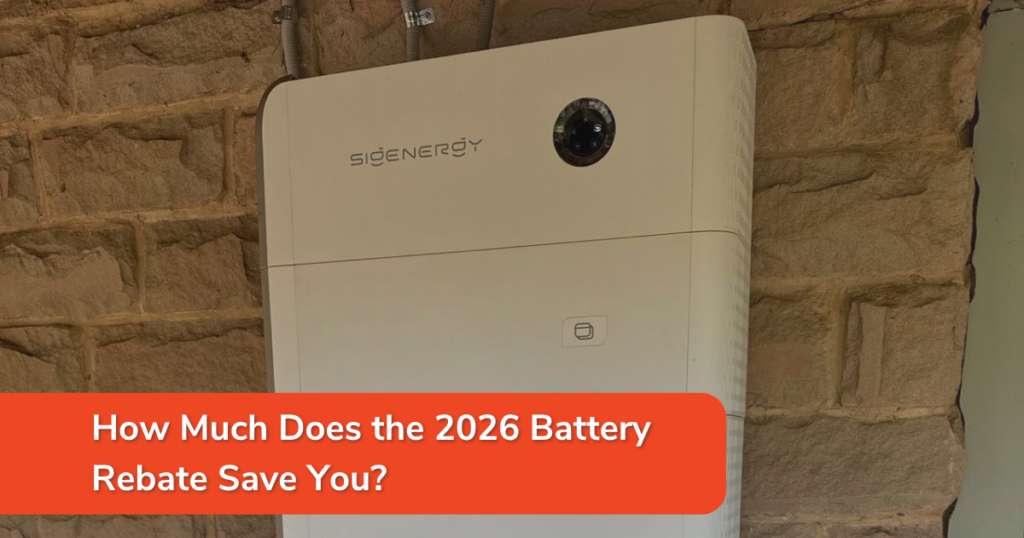
Federal Battery Rebate Australia 2026: What You Could Actually Save Smart Energy Answers March 27, 2026 Cheaper Home Batteries Program 2026: What Australian Households Need to Know Key Takeaways The federal Cheaper Home Batteries Program can reduce the upfront cost of eligible battery systems connected to new or existing rooftop solar. Eligibility depends on factors including battery size, solar connection, approved products, and installer accreditation. Bigger batteries do not automatically mean better value. The right size depends on your energy usage, solar generation, and system design. Changes commence from 1 May 2026, including revised STC factors and tapered support by battery size. Installation timing can affect the level of support available. With energy prices still top of mind for many Australians, the federal Cheaper Home Batteries Program has quickly become a major topic of interest across the energy market. Most customers are not looking for policy detail alone. They want clear answers on how the programme works, what they may save, whether they are eligible, and whether they should install before or after 1 May 2026. How does the rebate actually work? How much can I save? Am I eligible? And should I install now or wait? This guide breaks it all down in plain English so you can make a confident decision. What Is the Cheaper Home Batteries Program? The Australian Government’s Cheaper Home Batteries Program is designed to reduce the upfront cost of eligible small-scale battery systems installed alongside new or existing rooftop solar. The programme is delivered through the Small-scale Renewable Energy Scheme, or SRES, using STCs. In many cases, the benefit is passed on through the installer or retailer as an upfront discount, although the way it appears on quotes or invoices can vary. The programme has been available for eligible battery systems installed on or after 1 July 2025. How Much Can You Actually Save in 2026? The amount you could save in 2026 depends on several factors, including: Battery size and usable capacity. Whether the battery is installed with new or existing rooftop solar. Whether the products and installer meet programme requirements. The date the system is installed, particularly before or after 1 May 2026. Typical Savings Range While exact figures vary, eligible customers may receive a meaningful reduction in upfront battery cost, particularly where the system is appropriately sized and installed in accordance with programme requirements. For example, a 10kWh battery may attract support that suits an average household profile. A 20kWh battery may attract a larger total discount than a smaller system, but that does not automatically mean better value. Under the federal programme, batteries from 5kWh to 100kWh nominal capacity may be eligible, but STCs are only available on the first 50kWh of usable capacity. From 1 May 2026, support is also tapered by capacity bands, which makes correct sizing even more important. The key is not just the rebate amount, but how well the system matches your household usage. 10kWh vs 20kWh: Which Gives Better Value? This is one of the most common questions, and the answer depends on how much solar you produce, how much electricity you use after sunset, and whether the battery is appropriately matched to the site. 10kWh Battery Generally suited to average household usage profiles. Lower upfront cost than a larger system. May cover evening self-consumption needs where solar generation and load profile align. May offer a stronger balance of cost and value for some households. 20kWh Battery Higher storage capacity. May suit larger households or sites with higher evening or overnight usage. Can provide longer backup support where backup capability is included. May attract a larger total discount, but only represents better value if properly matched to the site. Important: Bigger is not always better. Oversizing a battery without matching it to the site’s load profile, solar production, and inverter setup can reduce value. Who Is Eligible for the Rebate? Eligibility depends on whether the battery system meets the federal programme requirements, including: Installation with new or existing rooftop solar PV. Battery size between 5kWh and 100kWh nominal capacity. Approved battery and inverter products. Installation by, or under the on-site supervision of, a Solar Accreditation Australia accredited battery installer. Compliance with applicable safety and programme requirements. For on-grid systems, technical capability to participate in a virtual power plant, or VPP. This federal programme is not limited to residential homes. It also applies to eligible installations for businesses and community organisations. Because requirements can change, eligibility should always be confirmed at the time of quoting and installation. What Changes Are Coming From 1 May 2026? One of the biggest reasons this topic is gaining attention is the confirmed change to the programme from 1 May 2026. From that date: The STC factor declines more frequently, every six months. The STC factor declines at a higher rate. Support is tapered according to battery size. 0 to 14kWh: 100% of the STC factor. Above 14 to 28kWh: 60% of the STC factor. Above 28 to 50kWh: 15% of the STC factor. This creates a common timing decision for customers: Install before 1 May 2026 under the current settings. Wait and assess how the revised settings affect the proposed system. For many households, installing earlier can provide both immediate savings and earlier bill reductions, rather than waiting for uncertain future changes. Should You Install Now or Wait? There’s no universal answer, but here’s how to think about it. Reasons to Install Before 1 May 2026 Lock in the current STC settings that apply before the next programme adjustment. Start using stored solar energy sooner. Potentially receive a higher level of support than an equivalent installation completed after 1 May 2026. Reduce the risk of delaying savings while policy settings taper over time. Reasons Waiting May Make Sense You are planning a broader solar or electrical upgrade. You are still assessing the right battery size or system design. Your installer needs to confirm how the post-1 May 2026 settings affect the proposed system. You are comparing battery options,
Why Post-Installation Support Is Important for Your Solar & Battery System
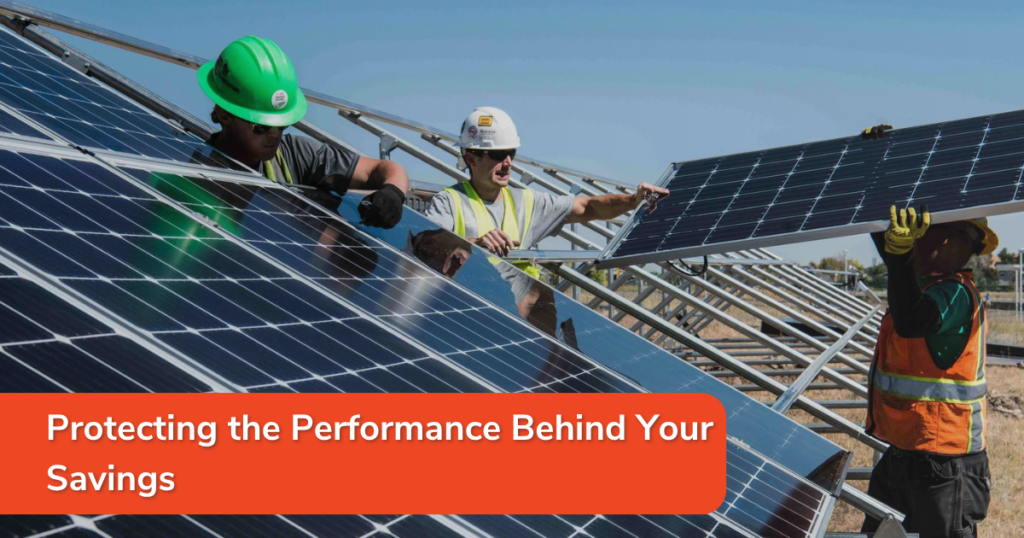
Why Post-Installation Support Is Important for Your Solar & Battery System Smart Energy Answers March 17, 2026 Why Post-Installation Support Matters for Solar and Battery Systems Key Takeaways Post-installation support ensures your solar and battery system continues performing efficiently for years. Systems like Tesla Powerwall 3 Australia and Sigenergy battery rely on proper monitoring and firmware updates to maintain performance. Warranty support and manufacturer coordination are important if faults arise. Regular performance checks help identify small issues before they impact savings. Software, app connectivity, and system optimisation require ongoing attention. Strong post-installation support protects your long-term investment and gives homeowners peace of mind. You’ve invested in solar panels and battery storage, a smart decision for energy independence, lower bills, and a cleaner home power supply. Whether your system includes premium solutions like Tesla Powerwall 3 installations or a modular Sigenergy battery, installation day isn’t the end of the journey. In fact, post-installation support is one of the most important factors in ensuring your system performs reliably and efficiently for years to come. Here’s why quality support after installation matters, what it should include, and how it protects your investment. 1. Solar and Battery Systems Are Long-Term Investments Unlike a TV or appliance you might replace every few years, solar panels are typically designed for decades of operation, while batteries and inverters have shorter lifecycles and benefit from proactive monitoring and support over time. Performance monitoring. Firmware updates. Warranty support. Troubleshooting unexpected issues. Whether you’re running a Tesla Powerwall 3 system or a Sigenergy battery, a system that worked great on day one can lose efficiency over time without proper support. Tech advancements, software changes, and evolving grid requirements all make ongoing servicing beneficial. For many households, it’s the difference between installed and optimised. 2. Issues Can Arise, Even With Great Installations No installer can eliminate every potential fault. Sometimes: Inverter firmware needs updates. Network connections can fail. Communication between components drops. Environmental factors impact performance. Monitoring portals show discrepancies. If these issues go unresolved, they can reduce your energy yield, increase unnecessary cycling, prevent your battery from operating as intended, or even trigger warranty complications. That’s where post-installation support steps in, helping catch small performance losses before they become big problems, regardless of whether your system includes Tesla, Sigenergy, or other components. 3. Warranty and Compliance Follow-Through Matters Different manufacturers and products have different warranty terms. Good post-installation support includes: Warranty claims handling. Coordination with manufacturers. Diagnostic reporting. Log retrieval and expert interpretation. Without support, many homeowners struggle to navigate the correct process when a component fault occurs, whether it’s an inverter issue or a battery component within a Sigenergy battery or Tesla Powerwall 3 system. This can lead to delays, added costs, or even warranty issues. A supportive provider ensures your system stays covered and compliant long after installation day. 4. Optimisation and Performance Evidence Systems don’t always perform to their theoretical best immediately. After installation, good support helps you: Monitor energy output and production trends. Identify shading, orientation, or inverter mis-tracking. Compare performance against expectations. Fine-tune settings for peak efficiency. Your installer should help interpret the data and adjust your system for better long-term results. 5. Software, Monitoring, and Smart Features Need Attention Most modern solar and battery systems include smart software, apps, and cloud portals that show generation, storage status, and consumption. Systems such as Tesla Powerwall 3 and advanced Sigenergy battery platforms rely heavily on software, monitoring, and connectivity to deliver their full value. Ongoing support covers: App setup and user onboarding. Dashboard interpretation. Notifications and alert management. Connectivity fixes. Without this support, many homeowners never truly use the full capability of their system. 6. System Ageing and Component Updates Systems change over time. Batteries age, inverters receive updates, and grid regulations evolve. Post-installation support helps you: Stay ahead of firmware updates. Recognise when a component is degrading. Plan ahead for maintenance and lifecycle requirements where needed. Maintain system safety and efficiency. This isn’t just about fixing faults. It’s about future-proofing your investment. 7. Peace of Mind for Homeowners This might be the most important benefit of all. When your system is new, most of the value is in performance and savings. But as time goes on, homeowners want confidence that: Their bills remain low. The system keeps performing as expected. They won’t be left handling technical issues alone. Good support isn’t just technical. It’s reassurance. What Great Post-Installation Support Should Look Like Look for a provider that offers documented commissioning, monitoring support, and warranty advocacy, not just an installation date. Here’s what you should expect from a professional support programme: Regular Check-Ins and System Health Reports Not just reactive fixes, but proactive insights into performance. Warranty Advocacy Support that helps you navigate manufacturer policies and claim resolutions. Remote Monitoring and Troubleshooting Fast diagnostics without long wait times or unnecessary call-outs. Clear Communication Plain-English explanations of what’s happening and why, not jargon. Upgrades and Optimisation Over Time Your system should improve, not stagnate. Why Choose a Provider That Offers Real Support You wouldn’t buy a car without servicing, a phone without updates, or a house without maintenance. A solar and battery system is no different. Post-installation support can: Maximise lifetime performance. Protect warranty validity. Prevent avoidable failures. Help you better understand your system. Save money in the long run. Your installer shouldn’t disappear after the hardware is on your roof. They should be part of your energy journey. Need Support or a System Health Check? If you want professional post-installation support, from monitoring and maintenance to troubleshooting and optimisation, we’re here to help. Contact us for support, servicing, or a system health check. Your system should work for you, not create more work for you.
Sigenergy Battery vs Tesla Powerwall: Which Works Better for ACT Homes?
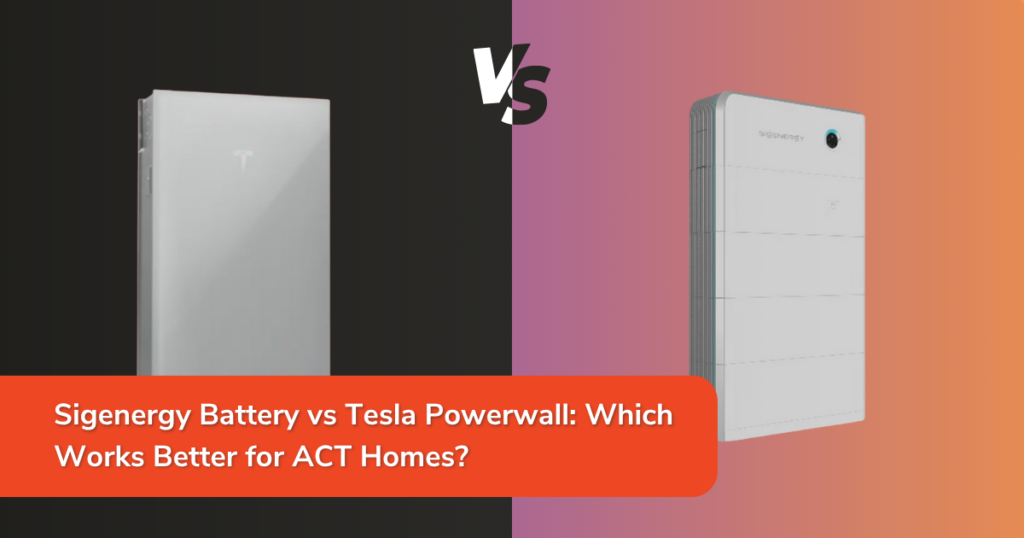
Sigenergy Battery vs Tesla Powerwall: Which Works Better for ACT Homes? Smart Energy Answers June 3, 2026 If you’re a homeowner in the ACT thinking about investing in a solar battery, you’re likely deciding between two standout contenders: the Tesla Powerwall and the Sigenergy Battery. Both are premium, high-performance options, but when it comes to Canberra’s unique climate, energy usage patterns, and eligibility for the federal solar battery rebate, one may be better suited to your needs than the other. Let’s break down how these two batteries compare and which might be a smarter choice for your ACT home. Built for ACT’s Weather Extremes ACT homes experience both scorching summers and below-freezing winters, something not all batteries are designed to handle. Sigenergy Batteries are engineered with smart thermal sensors and internal fire protection, offering excellent performance in extreme temperatures. Whether it’s a frosty -5°C morning or a 40°C summer peak, your system stays protected and efficient. Tesla Powerwall 3 performs reliably but can be sensitive to very high or very low temperatures unless installed in temperature-regulated areas like garages. Verdict: Sigenergy is better suited for outdoor installations in ACT’s diverse climate. Capacity & Scalability Tesla Powerwall 3: Offers around 13.5 kWh of storage per unit. You can stack multiple units, but the cost increases quickly. Sigenergy Battery: Offers modular capacity options, scaling up to 48 kWh+ depending on your household size and energy needs. Verdict: Sigenergy gives you more flexibility if you plan to expand or have a large home. Efficiency and Smart Features Tesla Powerwall 3: Known for its integration with the Tesla app and ecosystem. It’s intuitive, beautifully designed, and syncs well with Tesla solar systems. Sigenergy Battery: Offers AI-driven energy management via the Sigen EnergyOS platform. It’s designed to optimise self-consumption, battery health, and VPP earnings, all automatically. Verdict: Both are smart, but Sigenergy offers more control over your long-term energy strategy. Cost & Rebates in the ACT Federal Solar Battery Rebate: Both Tesla and Sigenergy batteries qualify for the Federal Government’s solar battery rebate, which can reduce the upfront cost by thousands. There are no additional ACT state battery rebates currently available, so choosing a battery that delivers maximum ROI over time is critical. Verdict: Both qualify for rebates, but Sigenergy’s higher capacity and modular options can deliver stronger long-term value. Aesthetic & Installation Tesla Powerwall 3: Sleek and modern. Ideal for homeowners who value brand reputation and aesthetics. Sigenergy: Clean, modern look with all-in-one hybrid inverter integration, reducing wiring mess and installation time. Verdict: Tesla wins slightly on brand familiarity, but Sigenergy offers a more integrated installation experience. Longevity in the Market: Why Track Record Matters When choosing a home battery, it’s not just about specs. The history and proven performance of the brand can be just as important. Tesla has been a dominant name in clean energy and EV innovation for over a decade. The Powerwall series has gone through multiple iterations, refining performance and reliability. For many homeowners, Tesla isn’t just a brand. It’s peace of mind, backed by a long history of delivering on promises. By August 2025, Tesla had installed 810,000 Powerwalls across the globe. Australia contributed strongly to this milestone, with July alone accounting for more than 4,000 new installations. Sigenergy, while newer to the residential battery market, has quickly gained attention for its advanced thermal management, high capacity, and intelligent design. It’s a fresh contender with cutting-edge features built for modern homes, especially in challenging climates like Canberra’s. Your criteria for selection should consider not only performance, warranty, and capacity, but also how much you value an established track record versus the innovation of a newer brand. Final Thoughts: Which One Should ACT Homeowners Choose? Feature Tesla Powerwall 3 Sigenergy Battery Max Capacity ~13.5 kWh per unit Up to 48 kWh Works in Extreme Weather Garage recommended Built for outdoor exposure Smart Features Tesla ecosystem AI energy management Aesthetic Sleek Sleek & integrated Rebate-Eligible Yes Yes Best For Brand lovers Long-term ROI + ACT climate Proven Track Record Has 800,000+ installs globally Relatively new in the market Which One Is Right for Your ACT Home? Both the Tesla Powerwall 3 and the Sigenergy Battery offer impressive features, but the best choice depends on your specific needs and preferences. If you’re looking for brand reputation, proven track record, sleek design, and seamless integration with the Tesla ecosystem, the Powerwall may be a perfect fit. On the other hand, if you prioritise larger capacity, smart thermal control, and a system built for Canberra’s diverse climate, the Sigenergy Battery could be the better option, especially when paired with high-performance panels like Aiko. Ultimately, both systems qualify for the federal solar battery rebate and can deliver excellent long-term value. Want to learn more about your eligibility or get a custom quote? Contact us today to get started on your solar battery journey.
Solar Power 101: What is kW, kWh, and Solar Energy Key Terms
Solar Power 101: What is kW, kWh, and Solar Energy Key Terms Smart Energy Answers December 12, 2024 Understanding Solar Energy Terms: kW vs kWh As solar energy becomes increasingly popular for homes and businesses, understanding its terminology is crucial. One common area of confusion is differentiating between kilowatts, or kW, and kilowatt-hours, or kWh. But that’s not all. There are several other important terms to know. Let’s dive in to help you navigate solar energy with confidence and make informed decisions. Kilowatts, or kW: Power Rating A kilowatt, or kW, is a measurement unit of power that indicates the rate at which energy is generated or consumed at any given moment. For example: A 5kW solar panel system can produce 5 kilowatts of instant power under optimal conditions. A 2kW appliance, like an air conditioner, uses 2 kilowatts of power while operating. Think of kilowatts as the capacity or strength of a system or appliance. It tells you how much energy can flow at a specific time. Kilowatt-Hours, or kWh: Energy Usage A kilowatt-hour, or kWh, measures how much energy is used or produced over time. This is what you see on your electricity bill. For example: Running a 2kW air conditioner for 3 hours consumes 6kWh, calculated as 2kW × 3 hours. A 5kW solar system operating at full capacity for 4 hours generates 20kWh, calculated as 5kW × 4 hours. While kW measures instantaneous power, kWh accounts for energy over a specific period. Choosing the Right Solar Panel System Size Confusing kilowatts, or kW, and kilowatt-hours, or kWh, can lead to costly mistakes when selecting a solar panel system. Interchanging these terms might result in purchasing a system that is either too large or too small for your needs. To determine the appropriate solar system size, start by examining your daily energy usage, measured in kWh, which can be found on your electricity bill. Once you know your average daily consumption, you can calculate the required system capacity, measured in kW, to generate enough energy to meet your needs. By understanding the relationship between kW and kWh, you can ensure you choose the right solar panel system size for your energy requirements. Choosing the Right Battery: Power vs Capacity When it comes to batteries, two specifications are critical: Energy storage capacity, or kWh: This indicates how much energy the battery can store. A larger capacity means you can power your home for longer. Power output, or kW: This measures how quickly energy can flow in or out of the battery. Higher power allows you to run more appliances simultaneously or charge the battery faster. For instance, a battery with 10kWh capacity and 5kW output can store enough energy for night-time use but has a maximum power limit of 5kW for appliances running at the same time. This battery will fully discharge within two hours if used at full power. To choose the right battery, balance storage capacity with power output to meet your household’s energy and peak power demands. Other Key Solar Energy Terms Here are additional terms to know that impact the performance and reliability of solar systems: Solar PV, or photovoltaic: Technology that converts sunlight into electricity, comprising solar panels, an inverter, and sometimes a battery. Inverter: A device that converts direct current, or DC, from solar panels into alternating current, or AC, for household use. Efficiency: The effectiveness of a solar panel in converting sunlight into electricity. High-efficiency panels are ideal for limited roof space. Peak sun hours: The amount of optimal sunlight available in a location, which determines how much energy a solar system can generate daily. MPPT, or Maximum Power Point Tracking: A technology in inverters that optimises solar panel power output for maximum efficiency. Backup power: Stored energy in a battery system used during grid outages to keep essential appliances running. Continuous output power: The maximum power a battery or inverter can deliver continuously without overheating. Net metering: A billing system where excess solar energy sent to the grid is credited, reducing your net energy costs. Feed-in tariff, or FiT: The rate energy providers pay you for exporting surplus solar energy to the grid. Why Understanding These Terms Matters Having a clear understanding of solar energy terminology is essential for anyone considering solar power. Here’s why it matters: Choosing the right solar system size: Knowing how power, or kW, and energy, or kWh, work ensures you pick a system that matches your energy needs without overspending. Evaluating energy savings: Understanding these terms helps you estimate potential savings and the efficiency of your system. Discussing options with providers: Familiarity with solar jargon allows you to ask informed questions and make confident decisions. Understanding your energy bills: Learning these terms makes it easier to track energy usage, savings, and credits on your bill. When considering solar energy, consult with trusted professionals to guide you through the process. A well-informed decision ensures your system is tailored to your energy needs, helping you achieve energy independence and long-term savings. At Smart Energy Answers, Australia’s leading, award-winning provider of smart solar solutions, we’ve helped over 7,000 customers transition to renewable energy with systems designed for optimal performance and savings. With over 700 five-star reviews, you can trust us to deliver exceptional service and expertise every step of the way. Take the first step toward a sustainable future today. Contact Smart Energy Answers for a free consultation and discover the perfect solar solution for your home or business.
Efficient and Sustainable: Benefits of Solar Heating Water
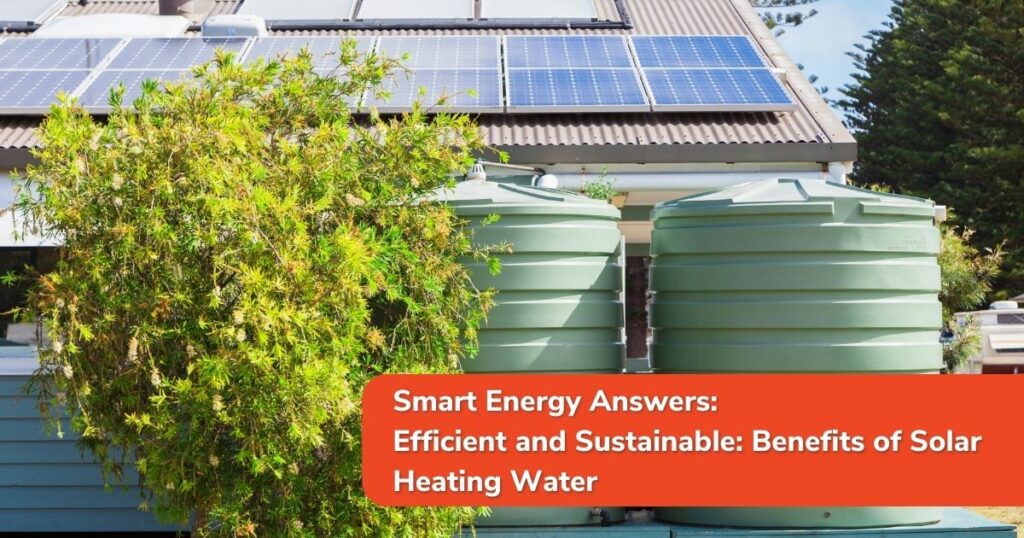
Efficient and Sustainable: Benefits of Solar Heating Water Smart Energy Answers June 3, 2026 Discover the Numerous Advantages of Utilising Solar Energy to Heat Water in Your Home The Advantages of Solar Water Heating Systems Solar water heating systems offer numerous advantages for homeowners. One of the key benefits is the significant reduction in energy costs. By harnessing the power of the sun to heat water, homeowners can save on their monthly utility bills. Additionally, solar water heating systems are environmentally friendly, as they reduce reliance on fossil fuels and decrease carbon emissions. Another advantage is the long-term cost savings. While the initial installation cost may be higher compared to traditional water heating systems, solar water heating systems have lower operating costs and can provide a return on investment over time. In addition to the cost savings, solar water heating systems also offer increased energy efficiency. These systems use the sun’s energy to heat water directly, eliminating the need to rely solely on electricity or gas. This makes them an ideal choice for homeowners looking to reduce their environmental impact and lower their carbon footprint. Furthermore, solar water heating systems require minimal maintenance and can last for decades with proper care. Overall, the advantages of solar water heating systems make them a smart choice for homeowners seeking an efficient and sustainable way to heat water in their homes. Understanding Solar Water Heating Technology Solar water heating technology utilises the energy from the sun to heat water for domestic use. The system consists of solar collectors, a heat transfer fluid, a storage tank, and a backup heating source. The solar collectors, typically mounted on the roof or ground, absorb sunlight and convert it into heat energy. The heat transfer fluid, which is often a mixture of water and antifreeze, circulates through the collectors and absorbs the heat. This heated fluid is then pumped into a storage tank, where it transfers the heat to the water supply. In cases where the solar energy is insufficient, a backup heating source, such as a gas or electric heater, can be used to ensure a constant supply of hot water. There are two main types of solar water heating systems: active and passive. Active systems use pumps to circulate the heat transfer fluid, while passive systems rely on natural convection to move the fluid. The choice between these two types depends on factors such as climate, available space, and budget. Understanding the technology behind solar water heating systems can help homeowners make an informed decision when considering this sustainable and efficient option for their homes. Lowering Energy Costs with Solar Water Heating One of the primary benefits of solar water heating is the significant reduction in energy costs. By using the sun’s energy to heat water, homeowners can decrease their reliance on traditional heating methods, such as electricity or gas. This can lead to substantial savings on monthly utility bills. Additionally, solar water heating systems have lower operating costs compared to conventional water heaters, as they require less energy to operate. The initial investment in installing a solar water heating system may be higher, but the long-term cost savings make it a financially wise choice for homeowners. In addition to the direct cost savings, solar water heating also has environmental benefits. By reducing the demand for electricity or gas, solar water heating systems help decrease carbon emissions and reliance on fossil fuels. This contributes to a cleaner and more sustainable future. Lowering energy costs with solar water heating not only benefits homeowners financially but also helps protect the environment. Environmental Benefits of Solar Water Heating Solar water heating systems offer significant environmental benefits. By utilising the sun’s energy to heat water, these systems reduce reliance on fossil fuels and decrease carbon emissions. This helps combat climate change and contributes to a cleaner and healthier environment. Solar water heating is a sustainable alternative to traditional water heating methods that rely on electricity or gas, which are often derived from non-renewable sources. In addition to reducing carbon emissions, solar water heating systems also conserve water. Conventional water heating methods often result in water wastage, as it takes time for the hot water to reach the desired temperature. With solar water heating, the water is heated directly, reducing the need for wasteful practices. By conserving water and reducing energy consumption, solar water heating systems play a crucial role in promoting sustainable living and protecting the planet for future generations. Exploring Different Types of Solar Water Heating Systems There are several different types of solar water heating systems available for homeowners to choose from. The most common types include flat plate collectors and evacuated tube collectors. Flat plate collectors consist of a dark-coloured metal plate that absorbs sunlight and transfers the heat to a heat transfer fluid. Evacuated tube collectors, on the other hand, use a series of glass tubes containing a heat transfer fluid, which absorbs the sunlight and transfers the heat to the water supply. Other types of solar water heating systems include batch collectors, which consist of a tank that directly heats the water, and heat pump systems, which use electricity to move heat from the surrounding air or ground to heat the water. Each type of system has its own advantages and considerations, such as efficiency, cost, and suitability for different climates. Exploring the different types of solar water heating systems can help homeowners determine the best option for their specific needs and preferences. Maximising Efficiency through Proper System Design Proper system design is crucial for maximising the efficiency of solar water heating systems. Factors such as the orientation and tilt of the solar collectors, the size of the storage tank, and the insulation of the system can all impact its performance. It is important to consider the local climate and solar radiation levels when designing a solar water heating system. Additionally, regular maintenance and care are essential to ensure optimal performance. This includes checking for any leaks or damage, cleaning the solar collectors,
Integrating Solar Power into Urban Infrastructure: A Sustainable Solution
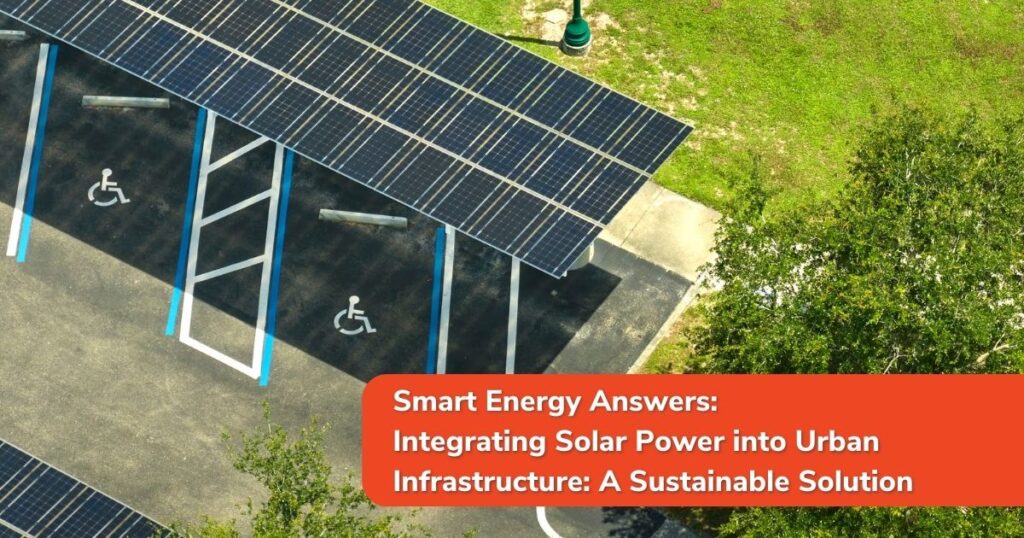
Integrating Solar Power into Urban Infrastructure: A Sustainable Solution Smart Energy Answers June 3, 2026 Discover How Integrating Solar Power into Urban Infrastructure Can Lead to a More Sustainable Future for Cities Addressing Urban Energy Needs with Solar Power Integration Delving into the possibilities of incorporating solar power into the fabric of urban infrastructure is not just a step towards meeting the energy needs of cities. It is a crucial leap towards building a sustainable future. By carefully examining both the advantages and obstacles of integrating solar solutions in urban settings, we can unlock the door to a realm of innovative and environmentally friendly energy options. This exploration is not merely about embracing a new technology. It is about reimagining the very essence of our cities and redefining their relationship with the environment. Understanding the Role of Urban Infrastructure in Sustainable Energy Solutions Understanding the role of urban infrastructure in sustainable energy solutions goes beyond just meeting energy demands. It is about creating a more resilient and environmentally conscious future for our cities. By integrating renewable energy sources like solar power into the very foundation of urban environments, cities can not only reduce their carbon footprint but also enhance their overall capacity to withstand the challenges of climate change. This proactive approach not only demonstrates a commitment to environmental stewardship but also sets a precedent for other cities to follow suit in embracing innovative and eco-friendly energy solutions. Ultimately, by leveraging their infrastructure to support renewable energy initiatives, cities can pave the way for a greener and more sustainable urban landscape for generations to come. Identifying Opportunities for Solar Integration in Urban Environments Exploring the myriad opportunities for integrating solar power into urban environments is not just a forward-thinking approach. It is a revolutionary step towards shaping a more sustainable and environmentally conscious future for our cities. By carefully pinpointing key areas within urban landscapes where solar solutions can seamlessly blend in, cities can tap into the abundant energy resource of the sun to power their infrastructure efficiently and effectively. Moreover, by proactively addressing and overcoming the challenges and barriers that may arise during the implementation of urban solar projects, cities can set the stage for a greener, cleaner, and more sustainable urban environment that prioritises renewable energy solutions. This strategic integration of solar power is not just a trend. It is a transformative journey towards a more resilient and eco-friendly urban landscape that benefits both current and future generations. Overcoming Challenges in Urban Solar Implementation Navigating the obstacles and hurdles of implementing solar power in urban environments is a multifaceted journey that requires a strategic and collaborative approach. Securing funding for solar projects can be a significant challenge, but by engaging with investors, government grants, and innovative financing options, cities can overcome financial barriers and make sustainable energy a reality. Additionally, navigating the regulatory processes involved in implementing solar solutions requires a deep understanding of local policies and regulations. By working closely with government officials and regulatory bodies, cities can streamline the approval process and ensure that solar projects comply with all necessary guidelines. Overcoming technical challenges is another crucial aspect of integrating solar power into urban infrastructure. From designing efficient solar panel layouts to optimising energy storage systems, cities must leverage the expertise of engineers, architects, and technology experts to ensure the successful implementation of solar solutions. By proactively addressing technical issues and embracing cutting-edge innovations, cities can harness the full potential of solar energy and reduce their reliance on fossil fuels. Collaboration with stakeholders is key to the successful integration of solar power in cities. By engaging with local communities, businesses, and non-profit organisations, cities can build partnerships that support the development and implementation of solar projects. These collaborative efforts not only foster a sense of ownership and pride among residents but also create a network of support that can help overcome challenges and drive sustainable change. In conclusion, by proactively addressing funding, regulatory, technical, and collaborative challenges, cities can pave the way for a brighter and more sustainable future powered by the sun. Through strategic planning, innovative solutions, and a commitment to environmental stewardship, urban environments can embrace solar power integration as a catalyst for advancing sustainable urban development. Integrating Solar Panels into Buildings and Rooftops Exploring the integration of solar panels into buildings and rooftops opens up a world of possibilities for harnessing solar energy in urban environments. By seamlessly incorporating solar solutions into the architecture of structures, cities can not only reduce their carbon footprint but also showcase a commitment to sustainable energy practices. Additionally, utilising rooftops as a platform for solar panels can maximise energy production and efficiency, further contributing to a greener and more environmentally conscious urban landscape. Incorporating Solar Solutions in Public Spaces and Facilities Exploring the integration of solar solutions in public spaces and facilities presents a myriad of opportunities to harness renewable energy in urban settings. By incorporating solar panels into public buildings and facilities, cities can not only showcase their commitment to sustainability but also provide a tangible example of environmentally conscious infrastructure. Additionally, utilising public spaces for solar installations can maximise energy production and efficiency, contributing to a greener and more sustainable urban landscape. Harnessing Solar Power for Street Lighting and Traffic Systems Harnessing solar power for street lighting and traffic systems is a game-changer in urban infrastructure development. By installing solar-powered street lights, cities can significantly reduce their energy consumption and greenhouse gas emissions. These lights can be equipped with sensors to automatically adjust brightness levels based on natural light conditions, ensuring optimal energy efficiency. In addition, solar-powered traffic systems, such as traffic lights and signage, can enhance safety on the roads while reducing the city’s reliance on traditional electricity sources. By harnessing the power of the sun for these critical urban functions, cities can take a proactive step towards a more sustainable and environmentally friendly future. Furthermore, integrating solar power into street lighting and traffic systems can also have a positive impact on the
Cost vs. Benefit Analysis of Solar Panels for Your Home

Cost vs. Benefit Analysis of Solar Panels for Your Home Smart Energy Answers June 3, 2026 Australia is witnessing a surge in interest in solar energy, fuelled by a shared commitment to sustainability and financial responsibility. Before delving into the world of solar panels, homeowners must conduct a comprehensive cost vs. benefit analysis. Let’s explore the environmental and financial advantages, potential costs, and how to make an informed decision. The Benefits of Solar Panels Investing in solar panels for your Australian home brings forth an array of compelling advantages that extend beyond the conventional realms of cost savings. Let’s delve deeper into the multifaceted benefits that solar energy has to offer: Environmental Impact At the forefront of solar advantages lies its profound positive impact on the environment. Solar panels harness the power of the sun, a clean and renewable resource, to generate electricity. By opting for solar energy, you significantly reduce your carbon footprint, mitigating the harmful effects of traditional energy sources. This conscientious choice contributes directly to a cleaner and more sustainable future, aligning with global efforts to combat climate change. Financial Advantages Beyond the altruistic benefits, embracing solar power translates into tangible financial gains. One of the most immediate perks is the substantial reduction in electricity bills. Solar panels convert sunlight into electricity, providing a reliable and renewable source that diminishes your reliance on grid-supplied power. As a result, your monthly energy expenses decrease, offering homeowners a consistent and long-term solution to rising energy costs. Furthermore, governments recognise the importance of solar energy adoption and often provide enticing incentives and rebates for solar installations. These financial rewards not only offset initial setup costs but also accelerate the overall return on investment, making solar energy an economically viable and financially prudent choice. Energy Independence Solar panels herald a paradigm shift towards energy independence. By harnessing the sun’s power directly on your property, you reduce dependence on traditional energy sources, such as coal or natural gas. This newfound autonomy empowers homeowners with increased control over their energy production and consumption. Solar-equipped households can generate their electricity, thereby mitigating the impact of external factors, such as energy price fluctuations or grid failures. The ability to produce clean and sustainable energy at your doorstep not only provides peace of mind but positions you as an active contributor to a more resilient and decentralised energy landscape. The Costs Associated with Solar Panels While the prospect of harnessing solar power for your home is undoubtedly appealing, it’s essential to navigate the associated costs with a clear understanding. Let’s explore the financial considerations involved in adopting solar panels and how they unfold over time: Initial Investment Undoubtedly, the initial cost of acquiring and installing solar panels can be a substantial investment. However, it’s crucial to view this expenditure not just as an expense but as a strategic investment in a sustainable future. Fortunately, various financing options exist to alleviate the upfront financial burden. From government-backed solar incentives to flexible financing plans or pay-as-you-save payment schemes offered by solar providers, homeowners have access to avenues that make the transition to solar energy financially viable. Maintenance and Operational Costs While the promise of clean energy is enticing, it’s important to acknowledge that solar panels do require regular maintenance to ensure optimal performance. Cleaning and occasional checks are necessary to keep the system operating efficiently. The good news is that these maintenance costs are relatively low compared to the potential savings on your electricity bills. Additionally, the expected lifespan of solar panels is impressive, making them a worthwhile, long-term investment. With proper care and maintenance, solar panels can continue to generate clean energy for your home for well over two decades. This longevity not only justifies the initial investment but also positions solar energy as a reliable and enduring solution. The Return on Investment, ROI, Analysis Calculating the Payback Period A crucial aspect of the financial equation is understanding the payback period, the time it takes to recoup your initial investment through energy savings. Assessing energy savings over time helps determine how quickly you’ll start seeing a return on your solar investment. Government incentives and rebates further expedite this process, enhancing the financial appeal of solar panels. Long-Term Financial Benefits Solar panels offer more than just immediate financial relief. They contribute to long-term financial stability. Beyond reducing your monthly electricity bills, solar-equipped homes often experience an increase in property value. The investment in renewable energy adds a valuable asset to your property, appealing to environmentally conscious buyers and providing a competitive edge in the real estate market. Moreover, as energy costs continue to rise, solar panels act as a safeguard against future increases. By generating your electricity, you insulate yourself from the impact of fluctuating energy prices, ensuring a consistent and controlled energy expenditure over the years. Understanding Your Energy Consumption Analysing Past Electricity Bills Dive into your previous electricity bills, dissecting the detailed information they provide. Look for patterns in energy consumption, considering both daily and seasonal fluctuations. Identify peak usage periods and scrutinise any major appliances or activities contributing significantly to your energy consumption. By scrutinising historical data, you’ll gain insights into how your household consumes energy, enabling you to make informed decisions when transitioning to solar power. Estimating Future Energy Needs Once armed with a comprehensive understanding of your historical energy usage, you can make informed projections for the future. Consider any upcoming changes in your household, such as the addition of new appliances, changes in occupancy, or plans for energy-intensive activities. Factor in seasonal variations, accounting for increased energy usage during hotter or colder months. Evaluating future energy needs ensures that your solar panel system is tailored to meet the demands of your evolving lifestyle, providing an optimal and cost-effective solution. Making an Informed Decision Weighing the Benefits Against the Costs: Consider the environmental and financial benefits against the initial and operational costs. Seeking Professional Advice: Consult with solar experts to receive personalised advice and quotes tailored to your home. Taking Advantage of
DIY Solar Installation: Is It Right for You?
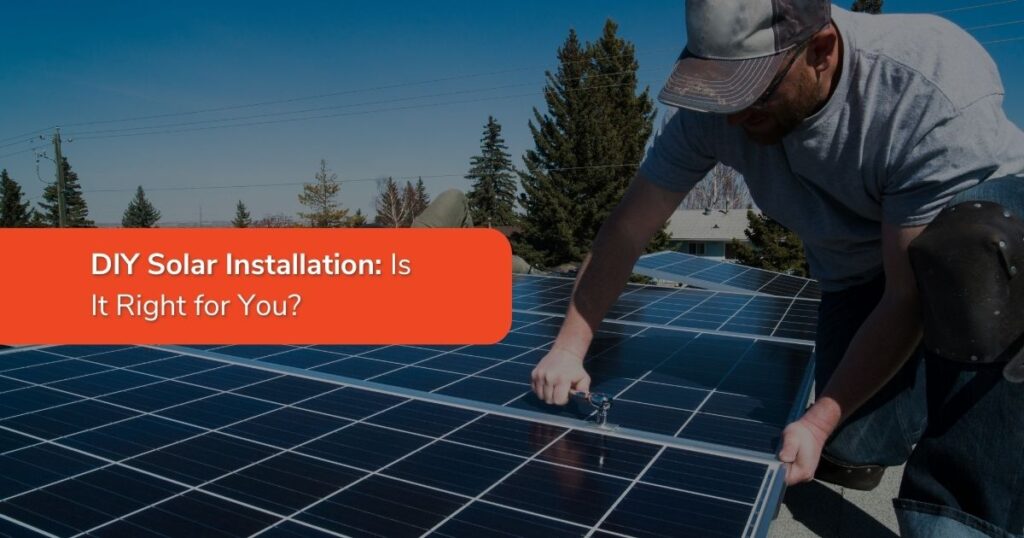
DIY Solar Installation: Is It Right for You? Smart Energy Answers June 3, 2026 In the sunny expanse of Australia, the conversation around solar energy has shifted from a niche interest to a pivotal part of the national energy dialogue. As homeowners across the country look for solutions to rising electricity costs and seek to reduce their environmental footprint, many are considering the leap into solar power. For some, this means engaging with professional solar installation services, but a few are drawn to the idea of taking the DIY route. But how do you know if DIY solar installation is the right path for you? Let’s illuminate this choice. The Benefits of DIY Solar Energy Embracing solar energy at home offers a multitude of benefits. Firstly, solar panels can significantly reduce your electricity bills over time. Secondly, they provide the valuable advantage of energy independence, making you less susceptible to the fluctuating costs of fossil fuel-based energy. However, it’s essential to understand that with these benefits comes a level of responsibility and decision-making that some may find daunting. DIY solar installation shines a light on independence, not only from energy suppliers but also from service providers, as you take total control of your energy production setup. Understanding DIY Solar Installation What exactly is DIY solar installation? This green technology involves purchasing and setting up your own solar panel system without the involvement of professional installers. It’s an endeavour that, when successful, can provide a great sense of satisfaction and substantial cost savings compared to systems installed by professionals. Moreover, it’s a tangible contribution to sustainability and the reduction of greenhouse gas emissions. Pros and Cons of DIY Installation Pros Cost Efficiency: The most apparent advantage is the potential savings on installation labour costs, which can be substantial. Learning Experience: DIY installation can be a great educational experience about how your home’s energy system works, and it allows you to tailor your system to your specific needs. Flexibility: With a DIY setup, you can expand or adapt your system over time, which may not be as easy with a professionally installed system. Cons Safety Concerns: Working with electrical systems and climbing on the roof can be dangerous. A professional installer is well-versed in safety protocols. Complexity: The process is complex, from system design to paperwork, and even the most committed DIY enthusiasts may find themselves in over their heads without proper knowledge and resources. Long-Term Performance: Poorly installed systems can underperform or have a shorter lifespan, which would negate any cost savings. Eligibility for Government Incentives: It can be quite challenging for individuals to claim government rebates due to the complex process and stringent eligibility criteria that need to be met. Grid Connection: If you plan to connect to the grid for surplus energy and credits, a licensed electrician must thoroughly inspect the installation. This ensures compliance with safety standards and regulations, giving you peace of mind for a smooth connection. Considerations for DIY Solar Installation in Australia Before you string up your own solar system, there are several critical factors to consider: Solar Panel Regulations and Permits Australia’s various states have different regulations surrounding solar panel installation, including permits that may be required. Understanding and complying with these rules is non-negotiable. Technical Knowledge and Skills Required A DIY solar project requires more than just watching a few YouTube videos and a couple of tools. You need to have a good understanding of electrical systems and the physical capability to perform the installation safely and effectively. Cost Comparison: DIY vs Professional Installation While DIY installation can save money upfront, it’s important to recognise that a professionally installed system may come with warranties and performance guarantees that DIY systems do not. The long-term value of this peace of mind is something to seriously weigh against the initial cost savings. Common Challenges and Solutions in DIY Solar Installation Even the most well-prepared DIYers may run into challenges. Common issues include unexpected roof configurations, uncooperative weather, or discovering needed permits late in the process. Potential Risks and Complications To deal with these challenges, flexibility and having a plan to seek professional help if necessary is crucial. Don’t hesitate to engage with experts for one-off consultations or to tackle specific tasks that are beyond your expertise. Troubleshooting Tips and Resources Fortunately, the community around renewable energy is full of people willing to share their experiences and best practices. Utilise online resources and forums to learn from the challenges and hear the victories of others. Is DIY Solar Installation Right for You? Ultimately, deciding whether to DIY your solar installation comes down to a personal assessment. Consider your budget, the time you can commit to the project, your comfort level with technical tasks, and your own skills and abilities. Not everyone is suited for a DIY solar installation, as it can be quite overwhelming for some. Conclusion and Recommendation If after careful consideration, a DIY solar installation feels out of your current scope, fear not. There are alternative paths, from community solar initiatives to striking the right balance in a partnership with professional installers. At Smart Energy Answers, we strongly recommend engaging professional installers for a guaranteed solar system setup. Professionals possess the technical knowledge, practical experience, and requisite understanding of local regulations and permits. They can ensure your solar system is installed correctly and safely, maximising its energy output and lifespan. Remember, an efficient and well-installed solar system will provide greater long-term benefits and savings. Ready to take the first step towards a sustainable future? Contact Smart Energy Answers today and let our team of professionals guide you through a hassle-free solar installation process, helping you maximise your energy efficiency and savings. Remember, a brighter future starts with a single, smart step.
Solar Panels 101: Understanding the Core of Smart Home Energy
Solar Panels 101: Understanding the Core of Smart Home Energy Smart Energy Answers June 3, 2026 Australia is basking in the brilliance of solar energy, and more homeowners are embracing the power of the sun to transform their homes into smart, eco-friendly havens. In this Solar Panels 101 guide, we’ll delve into the basics of solar energy, the heart of the system, solar panels, and explore how this technology integrates seamlessly into smart homes. Australia is witnessing a remarkable surge in the adoption of solar energy. As homeowners increasingly seek sustainable solutions, solar panels have emerged as the cornerstone of transforming ordinary residences into smart, energy-efficient homes. Basics of Solar Energy Solar energy, harnessed from the sun’s rays, offers a clean and renewable power source. At its essence, solar systems comprise vital components like solar panels, responsible for capturing sunlight, inverters converting it into usable electricity, and, in certain setups, battery storage ensuring surplus energy isn’t wasted. This harmonious blend transforms sunlight into a sustainable powerhouse, making solar energy an eco-conscious choice for powering homes. Solar Panels: The Heart of the System At the forefront of converting sunlight into viable energy for your home, solar panels are the pivotal starting point in the green revolution. Effective panel selection for capturing sunlight is crucial, and understanding the differences among the four main types is essential: Monocrystalline Panels: Known for high efficiency, making them ideal for limited spaces. Polycrystalline Panels: A cost-effective option that strikes a balance between cost and efficiency. Thin-Film Panels: Renowned for flexibility and versatility, suitable for various applications. PERC, Passivated Emitter Rear Cell, Panels: Maximising efficiency with enhanced light absorption, especially in low-light conditions. Choosing the right panel ensures optimal sunlight capture, setting the stage for transforming sunlight into a sustainable energy source. As the cornerstone of solar technology, these panels pave the way for a greener, eco-conscious future for your home. Benefits of Solar Energy for Australian Homeowners Aside from the obvious reduction in electricity bills, Australian homeowners can take advantage of government incentives and rebates, contribute to a greener environment, and enhance the resale value of their properties. Smart Home Integration Smart homes are the way of the future, and solar panels play a pivotal role in making homes smarter. Enabled by smart technology, homeowners can remotely monitor and control their panels, adjusting settings and receiving alerts for a connected, energy-efficient lifestyle. Smart solar panels revolutionise home energy management by constantly monitoring production and consumption, offering real-time insights for informed decision-making. Integrated with home automation, they efficiently distribute surplus energy to specific devices or store it for later use, preventing wastage. In some cases, appliances can automatically activate during peak production through smart apps connected to your solar system, therefore maximising solar-generated power. Conclusion As we wrap up our journey through Solar Panels 101, it’s evident that solar energy is not just a trend. It’s a sustainable solution that empowers homeowners. Embrace the power of the sun, and join the movement towards a brighter, greener future for Australia. Ready to make your home smarter and more eco-conscious? Explore smart solar energy options for your residence today. Talk to our energy experts at Smart Energy Answers and dive deeper into the world of sustainable living.
How Smart Meters Transform Solar Energy Management
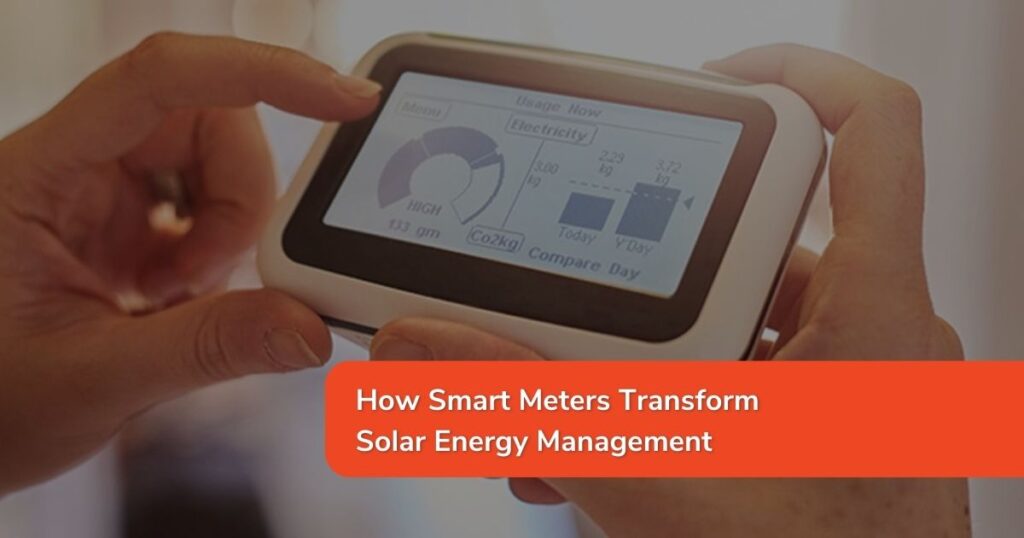
How Smart Meters Transform Solar Energy Management Smart Energy Answers June 3, 2026 Australia’s abundant sunshine makes it an ideal environment for harnessing solar power, and the country has seen remarkable growth in the adoption of solar energy systems. However, reaping the full benefits of solar technology requires more than just installing panels. Smart meters are becoming crucial tools in revolutionising how households and businesses manage their solar energy production and consumption. This article explores the impact of smart meters on solar energy management in the land down under. Understanding Smart Meters and Their Role in Solar Energy Management Smart meters are advanced energy meters that not only measure your electricity usage but also communicate that information back to your energy provider in real time. This real-time data empowers consumers to make informed decisions about their energy consumption and production. When combined with solar technologies, smart meters can lead to more efficient energy usage and management. Smart meters make it possible for homeowners and businesses to see precisely when and how much electricity they are using or exporting to the grid. This level of insight allows for better energy planning and a more seamless integration with renewable energy systems, such as solar panels and home battery storage technologies. Benefits of Smart Meters in Solar Energy Management The introduction of smart meters in Australia has brought several key advantages to solar energy management. Real-Time Monitoring of Energy Consumption Gone are the days of waiting for your bi-monthly bill to understand your energy consumption patterns. With a smart meter, you can track your usage in real time using your smartphone or computer. This immediate feedback helps in identifying energy-hungry appliances and behaviours, enabling you to make adjustments that can lead to substantial savings on your energy bill. Improved Energy Efficiency Understanding your consumption patterns is the first step to enhancing your home’s energy efficiency. Smart meters allow for the identification of energy leaks, indicating when electricity is being used unnecessarily or at peak times. This knowledge can drive the implementation of energy-saving practices and the use of appliances during off-peak times when electricity is generally cheaper. Accurate Billing and Cost Savings Smart meters ensure that your energy bills are accurate, reflecting precisely the amount of electricity used or fed back into the grid. This feature is particularly beneficial for solar power system owners, as it guarantees they are credited properly for the excess energy they generate. It also eliminates the risk of overcharging, which can happen sometimes with conventional meters due to estimated readings. Integration with Renewable Energy Sources Smart meters are essential for efficiently integrating solar panels and battery storage systems. They can detect when it’s optimal to use solar energy, store it, or feed it back into the grid, promoting a more robust and sustainable energy supply. Challenges and Considerations While the benefits of smart meters in the context of solar energy management are significant, there are also challenges to consider. Cost of Installation and Implementation Upfront installation costs can be a barrier for some consumers. While smart meters can lead to long-term savings, the initial outlay can be a deterrent, especially for those who have recently invested in solar panel systems. Privacy and Data Security Concerns Smart meters collect a wealth of data about your energy consumption, and this information must be kept secure. There have been concerns raised about data privacy in relation to smart meters, and it’s important for consumers to understand how their data is being used and protected. Regulatory and Policy Considerations The integration of smart meters into the energy network requires clear regulations and policies to ensure fair usage and data sharing. It also involves issues of network stability and grid management, which require careful consideration. Future Outlook As technology continues to evolve, the role of smart meters in Australia’s solar energy landscape is set to expand even further. Emerging Trends in Smart Meter Technology In the coming years, smart meters will likely become more sophisticated, incorporating new technologies such as artificial intelligence and Internet of Things, or IoT, connectivity. This could lead to even more precise energy consumption insights and more advanced control over energy use. Potential Impact on the Solar Energy Industry in Australia Smart meters can potentially stream energy consumption and solar production data to renewable energy service providers, fostering the growth of innovative energy service models. This could lead to a more dynamic and competitive solar energy market, benefiting both consumers and service providers alike. Conclusion Smart meters are an indispensable part of the modern solar energy ecosystem in Australia, offering a range of benefits from detailed energy insights to efficient energy usage. While there are challenges, as with any new technology, the potential for smart meters to transform the way Australians manage their solar energy is immense. As households and businesses continue to adopt solar technologies, the integration of smart meters will be a key driver in maximising the economic and environmental benefits of solar power. As we look to a future powered more and more by renewable energy, it’s clear that smart meters will play a pivotal role in shaping how we all interact with and manage our energy consumption. For those on the fence about investing in a smart meter, the long-term potential for saving money and contributing to a more sustainable energy future is certainly worth considering.
The Impact of Solar Energy on Home Resale Value
The Impact of Solar Energy on Home Resale Value Smart Energy Answers June 3, 2026 In the sun-soaked landscapes of Australia, the quest for sustainable living has taken centre stage, with an increasing number of homeowners opting to harness the power of the sun through solar energy. This shift not only aligns with environmental consciousness but also has tangible benefits for homeowners in the realm of real estate. This article delves into the remarkable impact of solar panels on home resale value in Australia, illustrating how this green initiative is not only eco-friendly but also a savvy financial investment. Solar Energy Landscape in Australia Australia’s commitment to sustainable energy solutions has propelled the adoption of solar panels in residential areas. The sun-drenched continent has become a hotspot for harnessing solar power, with homeowners maximising their roofs to capture abundant sunlight. Government incentives, including rebates and tax benefits, further encourage the installation of solar panels, making it an economically attractive proposition for households. Financial Benefits and Cost Savings The allure of solar energy lies not only in its environmental merits but also in the substantial financial gains it offers. Homeowners leveraging solar power witness a significant reduction in energy bills, providing an immediate return on their investment. The long-term financial advantages of solar installations are equally compelling, as households can maximise their savings over the life cycle of the solar panels. The financial aspect becomes a key consideration for potential homebuyers, contributing to the overall appeal of solar-equipped homes. Environmental Impact and Appeal Australia’s pristine natural beauty makes environmental consciousness a crucial factor in property valuation. Solar panels contribute positively to the environment by reducing carbon footprints and reliance on traditional energy sources. Beyond the ecological benefits, the aesthetic appeal of solar panels enhances a property’s overall charm. The juxtaposition of sleek solar panels against the azure Australian sky not only reflects a commitment to sustainability but also elevates the visual appeal of homes in the real estate market. Influence on Home Resale Value The impact of solar panels on home resale value is not merely anecdotal. It is supported by compelling data. Studies consistently show a correlation between solar installations and higher resale values. Solar-equipped homes are perceived as energy-efficient and forward-thinking, traits highly valued in the competitive real estate market. The presence of solar panels becomes a key selling point, attracting environmentally conscious buyers who are willing to pay a premium for homes with sustainable features. Government Policies and Incentives Australia’s government has been instrumental in fostering a solar-friendly environment. Policies supporting renewable energy initiatives significantly contribute to the desirability of solar-equipped homes. Keeping abreast of these policies is crucial for homeowners, as changes in government incentives can influence market dynamics. Staying informed about ongoing incentives ensures that homeowners can maximise their returns when it comes time to sell. Dispelling Myths and Misconceptions Despite the proven benefits, there are still common misconceptions surrounding solar energy in real estate. Addressing these myths is essential for fostering widespread acceptance. Modern solar panels are durable, reliable, and aesthetically pleasing. Dispelling doubts potential buyers may have about maintenance or effectiveness is key to promoting the widespread adoption of solar energy in homes. Conclusion In conclusion, the impact of solar energy on home resale value in Australia is substantial and multifaceted. Beyond contributing to a sustainable future, solar panels enhance financial returns, elevate a property’s aesthetic appeal, and position homes as forward-thinking in the real estate market. With government support and increasing environmental awareness, solar-equipped homes are becoming prized assets. As homeowners strive to maximise their investments, embracing solar energy emerges not only as a responsible choice but a strategic one, positioning properties at the forefront of Australia’s evolving real estate landscape. Ready to switch to solar and batteries? Talk to one of our energy experts today and let us help you make an informed decision.
How Smart Homes Utilise Solar Energy
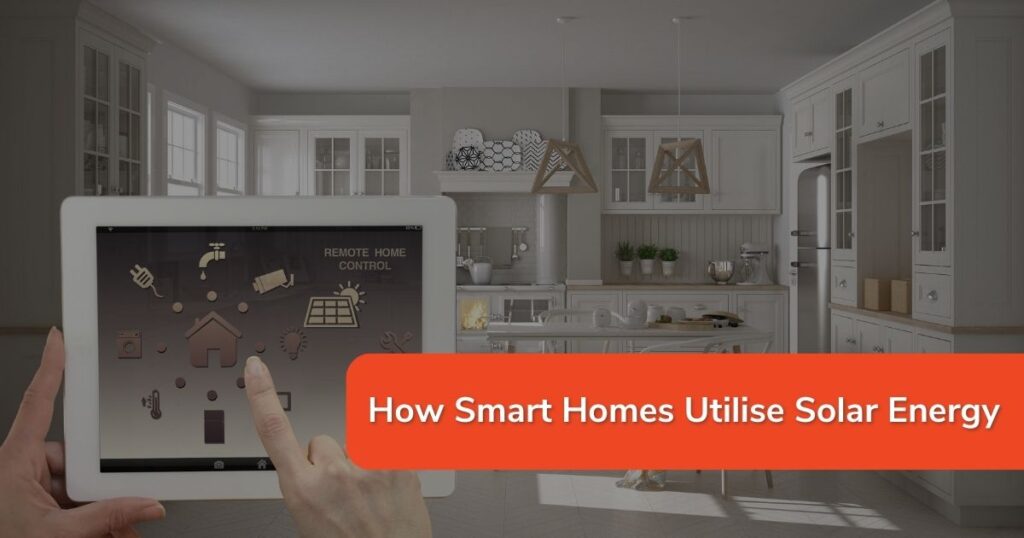
How Smart Homes Utilise Solar Energy Smart Energy Answers February 26, 2024 Smart Homes and Solar Energy in Australia Smart homes have become a cornerstone of modern living, offering residents greater control and efficiency in managing their households. In Australia, a country blessed with abundant sunlight, the integration of solar energy into smart homes has emerged as a game-changer. This article explores how smart homes in Australia leverage solar power to enhance sustainability and energy efficiency. The Integration of Solar Energy in Smart Homes Solar Panels At the heart of every solar-powered smart home are solar panels, the silent energy harvesters that convert sunlight into electricity. Australian homeowners have a variety of solar panel options, ranging from monocrystalline to polycrystalline, each with its own unique advantages. Careful consideration of factors such as efficiency and longevity guides the selection process. Equally important is the proper placement and orientation of solar panels, which helps optimise exposure to sunlight throughout the day. Smart Inverters and Energy Storage To maximise the benefits of solar energy, smart homes use sophisticated inverters that ensure the efficient conversion of direct current, or DC, from solar panels into alternating current, or AC, for household use. Additionally, energy storage solutions, such as advanced batteries, enable homeowners to store excess solar energy generated during peak sunlight hours for later use. This not only helps ensure a continuous power supply during periods of low sunlight, but also contributes to grid stability. Smart Home Automation and Solar Energy Energy-Efficient Appliances Smart homes seamlessly integrate solar energy into everyday activities through energy-efficient appliances. Smart lighting systems can adjust brightness based on natural light levels, reducing overall energy consumption. Similarly, smart thermostats can optimise heating and cooling based on solar availability. This creates a comfortable living environment while minimising energy wastage. Home Energy Management Systems Home Energy Management Systems, or HEMS, play a pivotal role in smart homes. They act as the central nervous system that monitors and controls energy consumption. These systems provide real-time data on energy production and usage, allowing homeowners to make informed decisions. Integration with solar production data enables HEMS to prioritise the use of solar-generated electricity, further reducing reliance on the grid. Advantages of Smart Homes Utilising Solar Energy Environmental Benefits The environmental advantages of solar-powered smart homes cannot be overstated. By harnessing the sun’s energy, homeowners can significantly reduce their carbon footprint and contribute to the fight against climate change. The adoption of solar energy on a large scale has the potential to transform Australia’s energy landscape, promoting cleaner and more sustainable living. Cost Savings It is also important to highlight the potential cost savings associated with solar-powered smart homes. Although the initial installation costs may seem significant, the long-term benefits can outweigh the investment. Homeowners can enjoy reduced electricity bills, while increased energy efficiency may also enhance the property’s overall value. Challenges and Solutions Initial Installation Costs One of the primary concerns for homeowners considering solar-powered smart homes is the initial installation cost. However, government incentives and rebates are available to help reduce this financial burden. These incentives are designed to encourage sustainable practices, making solar energy more accessible to a broader range of homeowners. Additionally, a thorough long-term cost analysis often reveals the economic benefits of investing in solar technology. Maintenance and Upkeep Ensuring the longevity and efficiency of solar systems requires regular maintenance. Homeowners are encouraged to schedule routine inspections and cleaning to remove dust and debris that may accumulate on solar panels. As technology advances, periodic upgrades may also be necessary to take advantage of the latest innovations in solar energy. Future Trends and Innovations Advancements in Solar Technology The solar energy landscape is continually evolving, with ongoing research leading to the development of next-generation solar panels. These panels promise higher efficiency, enhanced durability, and improved aesthetics. Homeowners can anticipate the integration of cutting-edge solar technology that maximises energy production while minimising environmental impact. Evolving Smart Home Capabilities The synergy between solar energy and smart home technologies will only deepen in the coming years. Artificial intelligence, or AI, will play a more significant role in optimising energy consumption based on user preferences and weather conditions. The Internet of Things, or IoT, will facilitate seamless communication between smart devices, creating a harmonised and energy-efficient living environment. Conclusion In conclusion, the integration of solar energy into smart homes represents a sustainable and forward-thinking approach to residential living in Australia. By leveraging the power of the sun and incorporating intelligent technologies, homeowners can reduce their environmental impact, enjoy cost savings, and contribute to a greener future. As solar technology continues to advance and smart homes become more sophisticated, the potential for creating eco-friendly, energy-efficient residences in Australia is limitless. Embracing solar-powered smart homes is not just a choice for today. It is an investment in a brighter and more sustainable tomorrow. Upgrade to a Smart Home With Solar Energy Upgrade to a smart home today with solar energy. For personalised smart solar solutions and assistance in making informed choices, get in touch with one of our energy experts. A sustainable future starts with you.
Why Solar Energy is the Smartest Investment for Your Home
Why Solar Energy is the Smartest Investment for Your Home Smart Energy Answers June 3, 2026 Australia, with its abundant sunshine, offers a unique opportunity for homeowners to tap into a sustainable and cost-effective energy source: solar power. In recent years, the combination of solar energy systems and smart battery storage has emerged as the smartest investment for households across the country. In this article, we’ll explore the reasons why making the switch to solar and investing in a reliable battery storage system can not only save you money but also contribute to a greener and more sustainable future. Sunshine Down Under: An Abundant Resource Australia is known for its vast and intense sunlight, making it an ideal location for solar energy harnessing. With an average of more than 200 sunny days a year in most regions, Australians have a golden opportunity to harness this abundant resource and transform it into clean, renewable energy for their homes. Moreover, with the country’s commitment to achieving net-zero emissions by 2050, solar energy plays a pivotal role in realising these ambitious sustainability goals, empowering communities to embrace a brighter, greener future. Reducing Energy Bills: A Win-Win Solution One of the primary reasons solar energy is gaining popularity in Australia is its significant impact on reducing electricity bills. By installing solar panels on your roof, you can generate your own electricity and, in some cases, even feed excess energy back into the grid, earning you credits. With rising energy costs, making the switch to solar becomes a strategic move that pays off in the long run, putting more money back in your pocket. Potentially Add Up to $125k on Your Home Value and Long-Term Savings While the initial investment in solar panels and battery storage might seem substantial, it’s crucial to view it as a long-term financial strategy. The savings on electricity bills, government incentives, and potential increases in property value all contribute to a return on investment that extends well into the future. Over time, the system pays for itself, offering a reliable and continuous source of energy for your home while future-proofing your property investment. Moreover, the accessibility of interest-free loans and pay-as-you-save schemes eliminates the need to dip into savings to install solar panels and batteries. These financing options allow homeowners to spread out the cost over time, making solar energy more attainable and affordable for all. Environmental Impact and Sustainable Investment Opting for solar energy and battery storage is a powerful commitment to environmental sustainability. Beyond the financial benefits, it’s a move towards reducing your carbon footprint, aligning your property investment with a greener, healthier planet. The long-term savings on energy bills, combined with potential increases in property value, ensure that your real estate investment remains sustainable and forward-thinking. Grid Independence: A Smart Property Investment Choice Australia’s energy infrastructure has faced challenges, leading to occasional blackouts and supply issues. The investment in smart battery storage alongside solar panels not only ensures a continuous power supply for your household but also grants you a level of independence from grid fluctuations. This grid independence becomes an additional asset, safeguarding your property investment against unforeseen energy-related disruptions. Government Incentives and Solar Energy Rebates: Making the Transition Affordable The Australian government understands the importance of solar energy, and thus, they offer various incentives and rebates to make the transition more affordable for homeowners. The Small-scale Technology Certificates, or STC, is a prime example, providing financial support for the installation of solar panels and effectively reducing your solar panel cost. These incentives, combined with the long-term savings on energy bills, make solar energy an attractive and accessible option for many Australians. Conclusion In Australia, where the sun’s brilliance is not just a sight but an abundant resource, the decision to invest in solar energy and battery storage, with the added benefits of government incentives and rebates, is a wise one. By harvesting this sunshine, reducing energy bills, gaining grid independence, and increasing your property value, you are not just making a sound investment for today but contributing to a sustainable and brighter future for generations to come. Let the sun power your home, and watch as your investment in solar energy pays off in more ways than one. Turn your home into a powerhouse of savings. Ready to make the switch? Contact us now to schedule your solar consultation and start saving.
How Solar Inverters Contribute to Energy Savings in Your Home
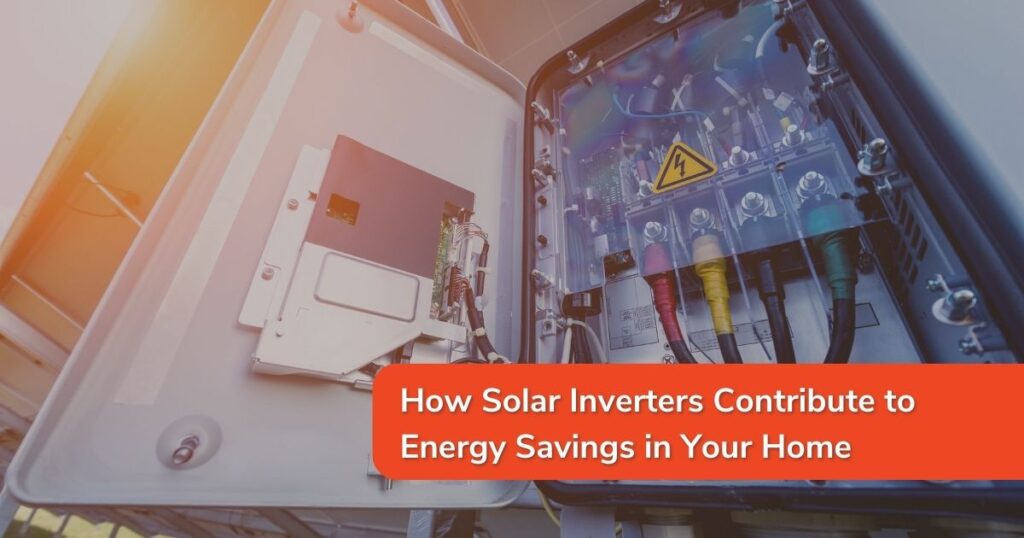
How Solar Inverters Contribute to Energy Savings in Your Home Smart Energy Answers June 3, 2026 As the Australian push for renewable energy gains strength, many homeowners are turning to solar power as a way to save money on their electricity bills and contribute positively to the environment. Central to any solar power system is the solar inverter, a vital component that converts the direct current, or DC, generated by solar panels into the alternating current, or AC, that powers the appliances in your home. But just how significant is the role of these small, boxy units in your quest for energy savings? Let’s shine a light on the sun-spun benefits that await within your home’s solar power system. Understanding Solar Inverters Solar inverters are the unsung heroes of residential solar power. They take the raw electricity generated by your solar panels and transform it into a usable form. Without them, the energy produced by the sun would be inaccessible to your regular household electronics. Their role is crucial not only for day-to-day energy consumption but also for feeding back into the grid, potentially earning you credit through feed-in tariffs, or FiTs. What Do They Do? Solar panels harvest sunlight and convert it into DC electricity. This energy flows through the solar inverter, where it’s turned into the AC electricity used by your appliances. Modern inverters with Module-Level Power Electronics, or MLPE, also harness Maximum Power Point Tracking, or MPPT, technology, enhancing energy production by ensuring that the system runs at its most efficient. Benefits of Solar Inverters The installation of a solar inverter in your home leads to a cascade of benefits, propelling your household toward a more sustainable and economical energy future. Increased Energy Efficiency By converting DC electricity to AC with minimal loss, solar inverters play a key role in your system’s overall efficiency. Newer models are designed to maximise the yield from your solar panels, ensuring that you make the most of every ray of sunshine. Reduction in Electricity Bills The Australian sun, a high yield, but earning you a high bill? A solar inverter could be the answer. By enabling the use of self-generated solar power, inverters can slash your dependence on the grid. If properly sized and optimally positioned, solar power systems could potentially eliminate your electricity bill. Environmental Impact and Sustainability Solar-powered homes significantly reduce their carbon footprint by cutting down on the greenhouse gas emissions associated with grid electricity. Solar inverters are a cornerstone of this eco-friendly approach, as they are instrumental in making solar energy a viable and greener choice. Different Types of Solar Inverters Not all solar inverters are created equal. Outdated models may not offer the efficiency and features of newer systems. Here’s a glimpse of the primary inverter types found in modern residential solar setups. String Inverters String inverters, the traditional workhorses of solar power systems, are connected to multiple solar panels wired in series, also known as strings. Despite being the oldest technology, they offer cost-effective and reliable performance for larger systems. However, a drawback is that if one panel fails, it affects the entire string. Microinverters Microinverters, on the other hand, are mounted on the back of individual solar panels. Unlike string inverters, each panel operates independently, which not only improves potential energy production but also reduces the risk of system-wide malfunctions. In the event of a panel failure, the other panels continue to operate at their maximum potential. Power Optimisers Power optimisers, similar to microinverters, work at the module level. However, instead of converting energy to AC, they optimise the DC power output. This offers some of the advantages of microinverters while still utilising a centralised inverter for energy conversion. In the case of a panel failure, the remaining panels can still operate at their maximum potential. Installation and Maintenance Thinking about going solar? The installation of your solar inverter is not a DIY project. Professional installers ensure the unit is not only placed correctly but also wired and programmed to suit your specific energy needs. Considerations for Installation The efficiency and longevity of your inverter depend on professional installation. Factors like shading, panel positioning, and the type of inverter chosen can all impact the performance of your solar power system. Regular Maintenance and Monitoring To squeeze the most value from your investment, regular maintenance is key. Monitoring your inverter and solar system performance can flag up issues early, and routine inspections can keep your solar power system running at peak efficiency. Case Studies and Success Stories Numbers speak volumes, and for Australian homeowners, the data often reveals substantial energy savings when a solar inverter enters the picture. Real-world examples like the Kingsford family in NSW, who documented annual savings of over $2,500, showcase the tangible impact of a Smart Solar Home on everyday electricity costs. Conclusion Solar inverters are more than just boxes on your wall. They’re the secret sauce that makes solar power systems hum with energy efficiency and financial savings. For anyone looking to bolster their home’s energy savings and take a powerful step toward environmental responsibility, a quality solar inverter is a non-negotiable part of the package. If you’re ready to harness the power of the sun in your home, Smart Energy Answers is here to guide you through the next steps. Our experts can help you navigate the world of solar energy solutions, ensuring you make an informed and beneficial choice for your household. Get in touch with us to learn more about how solar inverters can revolutionise your approach to home energy. Your brighter, greener tomorrow awaits.
Eco-Friendly Homes: The Impact of Solar Power

Eco-Friendly Homes: The Impact of Solar Power Smart Energy Answers June 3, 2026 Discover How Solar Power Is Revolutionising Household Energy Consumption Discover how solar power is revolutionising household energy consumption and its positive impact on the environment. Overview of the Growing Popularity of Solar Energy for Homes Solar power has become increasingly popular among homeowners as a sustainable and cost-effective energy solution. As more people recognise the benefits of harnessing the sun’s energy, residential solar power installations have seen a significant increase. This growing popularity can be attributed to various factors, including advancements in technology, government incentives, and a greater awareness of the environmental impact of traditional energy sources. By installing solar panels on rooftops or in open areas, homeowners can generate electricity for their own consumption. The excess energy produced can also be fed back into the grid, allowing homeowners to earn credits or receive compensation from utility companies. This has led to a shift in the way households consume and produce energy, making solar power an attractive option for many. Cost Savings Through Reduced Electricity Bills and Net Metering One of the most significant advantages of residential solar power is the potential for cost savings. By generating their own electricity, homeowners can reduce their reliance on traditional energy sources and save on monthly electricity bills. Additionally, through a process known as net metering, homeowners can earn credits for the excess energy they produce and feed back into the grid. These credits can then be used to offset future electricity bills, resulting in even greater savings. The cost savings associated with solar power are especially beneficial in the long term. While the initial investment may seem significant, the return on investment over time can be substantial. As electricity prices continue to rise, homeowners with solar power installations can enjoy stable and predictable energy costs. Potential for Increased Property Value An additional benefit of residential solar power is the potential for increased property value. Homes equipped with solar panels are often seen as more desirable by potential buyers, particularly those who prioritise energy efficiency and sustainability. The presence of solar power installations not only demonstrates the homeowner’s commitment to reducing their carbon footprint but also offers long-term energy savings, making the property more attractive in the real estate market. As environmental consciousness grows, more and more buyers are actively seeking homes with sustainable features, including solar power. By investing in solar energy, homeowners can not only enjoy the benefits of reduced electricity bills but also increase the value of their property. Empowering Homeowners to Generate Their Own Clean Energy One of the key advantages of residential solar power is the empowerment it provides to homeowners. By installing solar panels, individuals can take control of their energy consumption and reduce their reliance on traditional energy sources. This shift towards self-sufficiency allows homeowners to generate their own clean energy, contributing to a more sustainable future. Solar power installations enable homeowners to become active participants in the fight against climate change. By harnessing the sun’s energy, individuals can reduce their carbon footprint and make a positive impact on the environment. This sense of empowerment not only benefits homeowners on an individual level but also contributes to the collective effort of transitioning to a greener and more sustainable society. Integration of Smart Home Technologies The integration of smart home technologies with residential solar power systems offers numerous benefits for homeowners. Smart home devices, such as energy monitoring systems and smart thermostats, allow for optimised energy usage and management. These technologies enable homeowners to track their energy consumption in real time, identify areas of inefficiency, and make adjustments to maximise energy savings. By combining solar power with smart home technologies, homeowners can further enhance the efficiency and effectiveness of their energy systems. For example, smart thermostats can adjust temperature settings based on the availability of solar energy, ensuring optimal energy usage. This integration ultimately leads to greater energy savings and a more sustainable lifestyle. Rooftop Versus Ground-Mounted Installations When it comes to residential solar power installations, homeowners have the option to choose between rooftop and ground-mounted systems. Each option has its own advantages and considerations that should be taken into account. Rooftop installations are the most common choice for residential solar power. They utilise existing roof space, making them a convenient and space-efficient option. However, factors such as roof orientation, shading, and structural integrity need to be considered to ensure optimal energy production. On the other hand, ground-mounted installations offer greater flexibility in terms of orientation and positioning. They can be placed in areas with maximum sunlight exposure, regardless of roof conditions. However, ground-mounted systems require additional space and may involve more complex installation processes. Ultimately, the choice between rooftop and ground-mounted installations depends on various factors, including available space, structural considerations, and personal preferences. Navigating Utility Interconnection and Net Metering Policies Before installing a residential solar power system, homeowners need to navigate utility interconnection processes and understand net metering policies. These processes and policies vary depending on the location and utility company, so it is important to research and comply with the specific requirements. Utility interconnection processes involve the technical and administrative procedures of connecting a solar power system to the electrical grid. These processes ensure the safe and efficient integration of residential solar power with the existing utility infrastructure. Net metering policies determine how homeowners can earn credits for the excess energy they produce and feed back into the grid. Understanding these policies allows homeowners to maximise the financial benefits of their solar power systems. By familiarising themselves with utility interconnection processes and net metering policies, homeowners can ensure a smooth transition to solar power and fully capitalise on the advantages it offers. Practical Insights for Residential Solar Adoption For those considering the adoption of residential solar power, it is essential to gather inspiration and practical insights. Learning from the experiences of others who have already made the transition can provide valuable information and guidance. There are numerous resources available, including
Residential Solar Panel Installation: Step-by-Step Guide
Residential Solar Panel Installation: Step-by-Step Guide Smart Energy Answers June 3, 2026 The global wave towards renewable energy is hitting Australia’s shores with unprecedented momentum. As a homeowner in the land down under, you’re faced not only with the opportunity but also the responsibility to harness the power of the sun. Residential solar panel systems are not only a wise economic investment but also a crucial step towards a sustainable future. If the idea of solar energy has been shining in the background of your homeowner’s dreams, now is the time to turn that thought into action. This is your comprehensive guide to walking through the process of installing solar panels on your home, a journey that promises to be fulfilling, both for your pocket and for the planet. Understanding Residential Solar Panel Systems Before starting your journey towards solar independence, it’s vital to understand what a solar panel system entails. Solar panels work by converting sunlight into electricity through the photovoltaic effect. But the process is a bit more complex than it seems. How Solar Panels Work Sunlight consists of photons, little packets of energy that can be harnessed together to break the bonds between electrons and atoms, creating an electric current. Silicon, the main component of most solar panels, is made up of atomic structures that easily release an electron when struck by photons. The flow of these free electrons is what we know as electricity. Types of Solar Panels You might have heard about monocrystalline, polycrystalline, or even thin-film solar panels. Each has its advantages in terms of efficiency, cost, and space requirement, but all fundamentally do the same job, differing in their technologies and makeup. Determining Energy Needs and System Size To make the most out of your solar investment, understanding your energy needs and the size of the system required is crucial. This is a balance between your available roof space, the efficiency of your panels, and your typical energy consumption. A professional assessment can help you calculate the perfect fit for your household. Assessing Your Home’s Suitability for Solar Panels Not every home is created equal when it comes to solar panel installation. Several factors must be considered to ensure that solar is a viable option. Evaluating Roof Orientation and Shading Roofs that face north or northwest are ideal for solar panels in the southern hemisphere. Shading from tree cover or neighbouring buildings can significantly reduce a panel’s efficiency. Structural Integrity and Load-Bearing Capacity Solar panels add weight to your roof, so it’s important to ensure your roof can carry the load. Your solar installer will perform load calculations to guarantee your home can structurally support the system. Considering Local Regulations and Permits Every locality has its set of rules regarding solar panel installation. This can include building codes, historic district restrictions, and homeowner association bylaws. Finding the Right Solar Panel Installer Your choice of solar panel installer is as important as the panels themselves. Make sure to assess several installers before making a decision. Researching Reputable Installers Check reviews, ask for recommendations, and look into the longevity and reputation of each installer. Join Australian solar communities to get insights from other homeowners. Evaluating Experience and Certifications Your installer should be New Energy Tech Consumer Code, or NETCC, accredited. Their experience and history with solar installations can also give you confidence in their work. Obtaining Multiple Quotes Don’t settle for the first quote you receive. It pays to shop around and compare, not just on price but also on the quality of products and workmanship. Financing Options and Incentives The initial cost of installing solar panels can be significant, but there are various financial tools available to help shoulder the burden. Exploring Government Incentives and Rebates The Australian government offers attractive incentives, including the Small-scale Renewable Energy Scheme, or SRES, which can significantly reduce the upfront costs of your system. Financing Options, Including Loans and Leasing Programs If you don’t have the cash to pay for your system outright, loans, leasing programmes, and pay-as-you-save schemes can make solar more accessible. Always consider the interest rates and the overall cost of the financing. Calculating Return on Investment Look at your long-term savings, taking into account the cost of electricity, any increases in energy prices, and the payback period for your system. Typically, solar panels pay for themselves within 3 to 7 years. Preparing for Installation Once you’ve chosen your system and installer, it’s time to prepare for the big day. Pre-Installation Site Visit Your installer will conduct a site visit to confirm the details and schedule the installation. Ensuring Electrical Compatibility and Upgrades Your electrical system may need to be upgraded to accommodate the new solar system. This could include adding a new circuit, updating your electrical panel, or replacing your meter. Arranging Necessary Permissions and Paperwork Many aspects of the installation require official approval or connection, from obtaining the grid connection agreement to securing the feed-in tariff. Installation Process The day has arrived, and your solar panel installation is underway. Step-By-Step Guide to the Installation Process This will likely begin with securing the mounting system to your roof, followed by the installation of the panels and the inverter. The electrical components will be interconnected, and the system will be tested for safety and performance. Connection to the Electrical Grid Your system will be connected to the grid, usually with the installation of a bi-directional meter that allows you to be credited for the energy you produce. This is a significant milestone in energy independence. Safety Considerations Installers will follow strict safety protocols throughout the process. Be sure to discuss what to expect in terms of noise, accessibility, and the timeline for the work. Monitoring and Maintaining Your Solar System Your solar panel system is an investment that requires care to shine at its best. Monitoring Energy Production and Consumption Many systems come with monitoring tools that allow you to track energy production and usage. This can help you optimise your consumption and check
Solar Panel Orientation: Maximising Sun Exposure in Australia
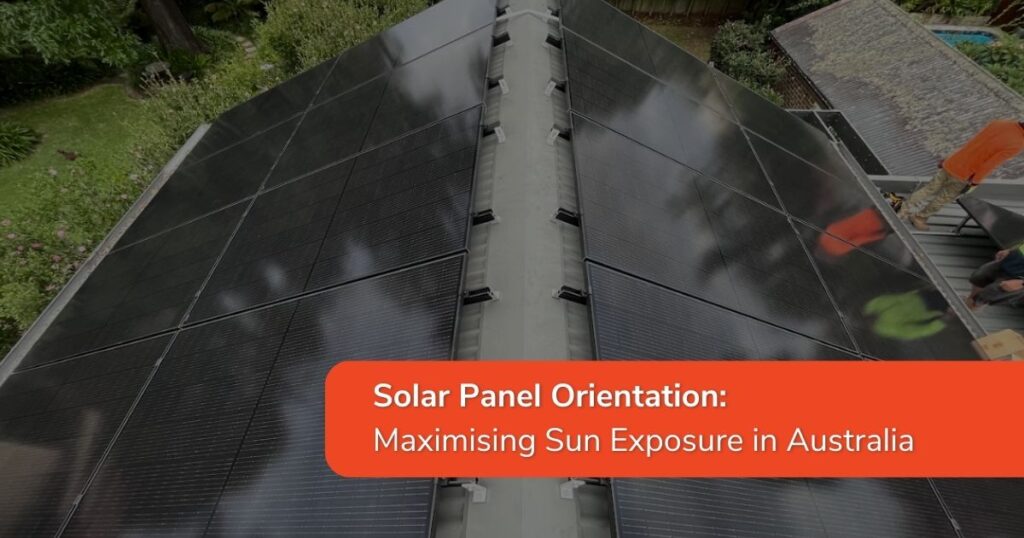
Solar Panel Orientation: Maximising Sun Exposure in Australia Smart Energy Answers June 3, 2026 As the demand for sustainable energy solutions grows, an increasing number of Australian homeowners are turning to solar panels to harness the power of the sun. However, a common myth often discourages potential adopters: the belief that solar panels only work when the sun is shining brightly. In this blog, we debunk this misconception, explore the optimal orientation for solar panels in Australia, and introduce advanced technologies that ensure panels operate efficiently even in less-than-ideal weather conditions. Debunking the Myth: Solar Panels and Sunlight One of the prevailing myths surrounding solar panels is that they are rendered useless on cloudy days or during overcast conditions. The truth is, solar panels can still generate power in diffuse sunlight. While direct sunlight is optimal, advancements in solar technology have made panels more efficient in converting sunlight into electricity, even in low-light situations. Real-life examples abound of solar panels continuing to produce energy on cloudy days, proving the resilience of this eco-friendly energy source. Optimal Solar Panel Orientation for Australian Homes To maximise sun exposure and energy production, homeowners must consider the optimal orientation for their solar panels. The angle and direction of panels, known as tilt and azimuth, play a crucial role in capturing sunlight efficiently. In the diverse climates across Australia, regional variations must be taken into account when determining the best orientation. Whether you reside in the sun-soaked regions of Queensland or the more temperate climates of Victoria, understanding the ideal panel orientation can significantly enhance your solar energy system’s performance. Smart Inverters: Module-Level Power Electronics To address concerns about shading or overcast conditions affecting solar panel efficiency, advanced technologies such as smart inverters with module-level power electronics have emerged. Innovations like power optimisers and microinverters optimise energy production by allowing each panel to operate independently, mitigating the impact of shading on the entire system. This means that even if part of your solar array is shaded, the unaffected panels can still generate power at their maximum potential, ensuring consistent energy output. Addressing Shading and Overcast: Case Studies Real-world examples illustrate the tangible benefits of incorporating smart inverters or module-level power electronics. Homeowners across Australia are experiencing increased energy production and efficiency despite occasional shading or overcast weather. By adopting these technologies, they not only optimise their solar panels’ performance but also contribute to a more sustainable and resilient energy infrastructure. Economic and Environmental Impact The economic advantages of investing in optimal solar panel orientation and advanced technologies are substantial. Higher energy production leads to greater savings on electricity bills, providing homeowners with a quicker return on their investment. Simultaneously, the environmental impact cannot be overstated. Harnessing more solar energy reduces reliance on conventional energy sources, lowering carbon footprints and contributing to a greener future. Tips for Eco-Conscious Homeowners For eco-conscious homeowners looking to maximise the benefits of their solar panels, a proactive approach is essential. Regular maintenance, monitoring, and consideration of advanced technologies can significantly impact overall system efficiency. By staying informed and taking advantage of innovative solutions, homeowners can ensure their solar panels operate at peak performance, even in less-than-ideal conditions. Conclusion In conclusion, with the right orientation and the incorporation of smart technologies, solar panels can operate efficiently in various weather conditions. By optimising solar panel performance, homeowners not only reap economic benefits but also contribute to a more sustainable and environmentally friendly energy landscape. Ready to maximise your solar panel’s potential and contribute to a cleaner, greener future? Contact Smart Energy Answers for personalised solutions tailored to your home. Visit our website or give us a call to start your journey towards a more efficient and sustainable energy solution today.
A Step-by-Step Guide to Installing Solar Panels at Home
A Step-by-Step Guide to Installing Solar Panels at Home Smart Energy Answers June 3, 2026 The gradual shift towards renewable energy is no longer just a trend but a necessity, especially for homeowners looking to reduce their carbon footprint and cut down on electricity bills in the long run. Installing solar panels can be a crucial step in this direction, converting abundant sunlight into sustainable power. If you’re in Australia, a country blessed with more than its fair share of sunshine, harnessing solar energy is both a logical and financially sound decision given the range of incentives offered. In this guide, we’ll walk you through the process of installing solar panels on your Australian home, from the initial assessment to maintaining your energy-producing infrastructure. Let’s embark on the journey to a greener, more energy-efficient future for your household. Step 1: Assessing Your Home’s Suitability Before diving into solar power, it’s important to assess your home’s readiness to support a solar system. Considerations like roof orientation and the absence of shading throughout the day are critical factors in maximising the sun’s energy. Furthermore, structural integrity is non-negotiable. Ensuring your roof can bear the weight and stress of the solar panel setup is a safety essential. Consulting with a professional installer or a structural engineer can provide the necessary expertise in this evaluation. Step 2: Calculating Your Energy Needs Understanding your household’s energy consumption patterns is the next step. In addition to examining your utility bills and identifying peak usage times, it’s important to also consider if there is a need for solar batteries. This will help you estimate the size of the solar panel system you’ll need. This system sizing is pivotal in ensuring that your panels can generate enough electricity to cover your consumption, with allowances for periods of low sunlight and potential future growth. Step 3: Researching and Selecting Solar Panel Providers Quality and reputation are crucial for solar panel providers, especially considering the strict Australian regulations on solar energy installations. It’s important to research and select a provider known for reliability and customer service, as well as holding the necessary certifications and accreditations. Look for a track record of installations similar to what you require, and ensure that the types of solar panels they offer, such as monocrystalline, polycrystalline, or thin-film, align with your home’s requirements. Step 4: Obtaining Necessary Permits and Approvals In Australia, solar panel installations are subject to local regulations and building codes. This means you may need to obtain a variety of permits, including planning permits and compliance with the Clean Energy Council’s guidelines. Your chosen solar installer should be well-versed in these requirements and can often assist with the paperwork and approval process. Step 5: Financing Options and Incentives The Australian government provides several avenues to make solar panel installations more affordable, including rebates, subsidies, and feed-in tariffs. Some solar providers also offer pay-as-you-save schemes and loans to offset initial costs. Investigate which financial programmes you’re eligible for, and consider getting multiple quotes to ensure you get the best financial deal from your solar provider. Step 6: Installation Process The installation itself is a job for professionals. From mounting the solar panels on the roof to installing inverters and connecting the system to your home’s electrical network, every step must be executed with precision. Safety is paramount during this phase, and a reputable installer will comply with industry standards and best practices. Step 7: Monitoring and Maintenance Once your solar panels are up and running, it’s important to monitor their performance regularly to catch any issues that may arise. Most modern systems come with monitoring software that allows you to track energy production. While solar panels are low-maintenance, periodic cleaning and inspections are necessary to ensure optimal efficiency. Conclusion In conclusion, the road to solar panel installation in Australia is not without its turns, yet the journey is so worth the destination. You’ll not only play your part in reducing greenhouse gas emissions but also enjoy significant savings on your electricity bills over the years. The time has never been better to embrace solar power, and our team at Smart Energy Answers is here to support your every step. Take control of your energy future, and let the sun be your guide to a more sustainable and smart home.
Navigating Summer Challenges: Harnessing the Power of Solar Energy

Navigating Summer Challenges: Harnessing the Power of Solar Energy Smart Energy Answers November 23, 2023 Stay Powered This Summer with Solar Energy and Batteries As the scorching Australian summer approaches, so do the challenges that come with it. Rising temperatures can place strain on power grids, while the looming threat of bushfires can increase the risk of potential outages. However, there is a shining solution on the horizon: solar energy and batteries. With the potential to keep your home powered when the grid goes dark, solar energy is not only an eco-friendly alternative but also a reliable source of power during the sweltering summer months. Join us as we explore the transformative potential of solar energy and discover how it can keep you powered when you need it most. The Impact of Summer on Power Distribution During the summer season in Australia, electricity demand can skyrocket due to the increased use of cooling systems, air conditioners running continuously, and reliance on power-intensive appliances. This puts tremendous strain on the power grid, which can lead to widespread blackouts and expose the limitations of traditional power sources during peak summer periods. The risk of power outages is further amplified by Australia’s susceptibility to bushfires, which can damage transmission lines and substations, causing prolonged power disruptions. To address these challenges effectively, it is crucial to take proactive measures that provide immediate relief while contributing to a sustainable, long-term energy strategy. The Importance of Solar Power and Battery Systems to Be Ready for Summer You can now say goodbye to power outages during the summer months with the help of solar energy and storage. Solar panels capitalise on the abundance of sunlight to deliver a steady stream of power, helping reduce the impact of grid disruptions. No longer will you need to endure sweaty discomfort during outages, and worries about food spoilage can become a thing of the past. By choosing solar and batteries, you gain greater energy independence from the traditional grid while demonstrating a commitment to cleaner, more sustainable energy sources. This aligns with a future-focused vision for reliable, efficient, and environmentally responsible energy use. In Australia, solar and battery prices are now more accessible and affordable, supported by government rebates, incentives, and innovative Pay As You Save options. Homeowners can offset a significant portion of the initial installation costs by taking advantage of these programmes. Moreover, the option to sell excess electricity generated by solar panels back to the grid enhances the financial advantages of going solar. This makes solar energy an attractive investment for homeowners seeking cost-effective and reliable power solutions. One notable advantage of embracing solar power is the substantial electricity cost savings it can offer. Solar energy with storage not only benefits your wallet but also helps provide a seamless and uninterrupted power supply when the traditional grid faces challenges. Additional Tips to Be Energy Efficient in Summer Beyond embracing solar energy and batteries, here are other practical steps you can take to prepare for the summer months. Air conditioning maintenance: Schedule regular maintenance for your air conditioning units to ensure they operate efficiently. Clean or replace filters, check for any issues, and consider upgrading to energy-efficient models. Sealing and insulation: Ensure your home is well insulated and sealed to prevent cool air from escaping. Seal gaps around windows and doors, and consider adding insulation to your attic if needed. Natural ventilation: Take advantage of cool evening breezes by strategically opening windows to promote cross-ventilation. This can help cool your home without relying solely on air conditioning. Energy-efficient appliances: Upgrade to energy-efficient appliances, especially those that generate heat, such as refrigerators and stoves. Look for appliances with high energy star ratings to reduce overall energy consumption. Shading solutions: Use blinds, curtains, or shades to block out the sun during the hottest parts of the day. This can significantly reduce the heat entering your home and lessen the load on your cooling systems. Hydration and health precautions: Stay hydrated and take necessary health precautions during heatwaves. Make sure your family understands the importance of staying cool and hydrated, especially vulnerable individuals such as the elderly and young children. Smart home technology: Invest in smart home technology that allows you to remotely control and monitor your home’s energy usage. Smart thermostats, for example, enable you to adjust temperatures based on your schedule, optimising energy consumption. Conclusion In the face of summer’s energy challenges, the choice is clear: embrace the power of the sun to secure a reliable and sustainable energy future. From reducing dependence on the grid and saving on electricity costs to mitigating the impact of bushfires, solar energy emerges as a resilient solution. By taking practical steps and adopting solar technology, you not only prepare for the summer months but also contribute to a cleaner, greener, and more energy-efficient Australia. Take the proactive step towards energy independence and a cleaner future. Contact us today for a consultation and discover how solar solutions can transform your summer experience.
Solar Batteries Decoded : Top FAQs & Insights for Savvy Consumers
Solar Batteries Decoded : Top FAQs & Insights for Savvy Consumers Smart Energy Answers September 6, 2023 Understanding Solar Batteries In an era where sustainability meets innovation, the demand for solar with batteries has increased significantly. More families in Australia want to use cleaner energy and take greater control of their power, which is why solar batteries are becoming increasingly popular. At Smart Energy Answers, we are excited to explain solar batteries in this blog. We are also here to share some of our customers’ top questions to help you make informed decisions about your energy future. Solar Battery FAQs FAQ 1: How Can Solar Batteries Save Me Money on Electricity Bills? Solar batteries offer potential savings on electricity bills by capturing surplus energy produced by your solar panels during sunny periods. This stored energy becomes available during less sunny hours, including nights, rainy days, and cloudy weather. By reducing reliance on grid power during peak periods, you can cut down on costly electricity expenses and move closer to energy independence. With a properly sized solar and battery system, some customers can aim for $0 electricity bills. FAQ 2: Do Solar Batteries Qualify for Incentives or Rebates in Australia? Yes, incentives are available in different states across Australia. In addition, some of our partners also offer special Virtual Power Plant, or VPP, rebates for specific networks and territories. FAQ 3: What Size Solar Battery Do I Need for My Home? The size of the solar battery you need for your home in Australia depends on several factors, including the following: Energy consumption: Understand your household’s daily energy consumption. Review your past electricity bills to see how much energy you use on average. A larger battery may be suitable if you have higher energy needs. Solar panel system size: The capacity of your solar panel system matters. A larger system can produce more surplus energy, which can then be stored in the battery. Usage patterns: Consider when you use the most electricity. If you typically consume more energy in the evening, a larger battery can help you rely less on grid power during those times. Grid connectivity: If you are aiming for energy independence and want to reduce grid reliance, a larger battery may be beneficial. Smaller batteries are often used for backup power during outages. Budget: Larger batteries tend to be more expensive. Balance your energy needs with your budget to find the right size that offers the best value. Future expansion: If you plan to expand your household or increase energy usage in the future, factor in potential changes when selecting the battery size. It is recommended to consult with a solar energy expert to determine the optimal battery size that aligns with your household’s needs and usage patterns. FAQ 4: What Factors Should I Consider When Selecting a Solar Battery for My Home? Capacity: Choose a battery with sufficient capacity to meet your energy needs. Efficiency: Look at how efficiently the battery stores and releases energy. Higher-efficiency batteries can save more of the energy generated by your solar panels. Installation and compatibility: Ensure the battery is compatible with your existing solar panel system and inverter. Consider installation requirements, space, and placement options. Scalability: If you plan to expand your solar system in the future, choose a battery that can be easily integrated with additional panels. Warranty and support: Research the manufacturer’s reputation, warranty terms, and customer support. A reliable warranty can provide peace of mind. Cost and value: Balance the upfront cost of the battery with the potential savings it can offer over its lifetime. Consider any available government incentives or rebates. Safety: Battery safety features are crucial. Look for batteries with built-in protection against overcharging, overheating, and other potential risks. Smart features: Some batteries come with smart management systems that optimise energy usage and enable remote monitoring and control, with the potential for additional revenue through VPPs. Brand and installer reputation: Choose well-established brands and installers known for quality and reliability. Check customer product and service reviews from reputable websites. FAQ 5: Are Lithium-Ion Batteries the Best Choice for Residential Solar Systems in Australia? Yes, lithium-ion batteries are often considered one of the best choices for residential solar systems in Australia due to their high energy density, efficiency, long lifespan, and compact size. FAQ 6: How Long Do Solar Batteries Typically Last in the Australian Climate? Solar batteries typically last around 15 to 25 years in the Australian climate. Factors such as battery chemistry, usage patterns, maintenance, and manufacturer quality can influence their lifespan. Regular maintenance and proper usage can help extend the life of solar batteries. In addition, manufacturers typically offer warranties of up to 15 years. FAQ 7: Is It Necessary to Have an Existing Solar Panel System to Install Solar Batteries in Australia? No, it is not always necessary to have an existing solar panel system to install solar batteries in Australia. While many people choose to combine solar panels with batteries to maximise energy self-sufficiency, you can also install a solar battery system on its own. However, without solar panels, the battery will primarily charge from the grid, and its effectiveness in reducing electricity bills may be limited compared to when it is paired with solar panels. It is recommended to consult with experts to determine the most suitable setup based on your energy needs and goals. FAQ 8: What Are the Installation Requirements and Costs Associated with Solar Batteries in Australia? The costs and installation requirements for solar batteries in Australia can vary based on factors such as available space, inverter compatibility, electrical upgrades, permits, and ventilation needs. The expenses typically include the battery unit cost, installation labour, potential inverter upgrades, additional components, permits, and maintenance. The total cost can range from several thousand to tens of thousands of dollars, with government incentives and financing options available to help offset expenses. It is advisable to seek quotes from professional installers for accurate cost estimates based on your specific circumstances. FAQ 9:
Solar Victoria Moves From Rebates to Interest-Free Loans For Batteries
Solar Victoria Moves From Rebates to Interest-Free Loans For Batteries Smart Energy Answers May 29, 2023 Solar Victoria’s Transition: From Rebates to Interest-Free Loans for Home Batteries Solar Victoria is ushering in a significant change to its incentive programme. By 30 June, the battery rebate worth up to $2,950 will come to an end, making way for interest-free loans of up to $8,800 starting from 1 July. This new Solar Homes Program is only open to the first 4,500 Victorian households. With the shift from the battery rebate to interest-free loans, Solar Victoria aims to enhance the affordability and accessibility of renewable energy storage systems. While the rebate offered a grant or discount on battery purchases, the interest-free loan opens the door to a larger funding option. This means homeowners can now explore more high-quality battery choices and overcome the upfront cost barrier. The Solar Homes Program remains focused on making renewable energy accessible to Victorians. Whether through the rebate or the interest-free loan, the goal is to enable individuals to harness the power of battery storage. By utilising battery storage, consumers can reduce their energy bills and protect themselves against rising electricity prices. Battery systems can also provide reliable backup during power outages, helping ensure an uninterrupted energy supply. Additionally, households can sell excess power back to the grid and earn credits or money from it. Solar Victoria’s incentive programme plays a crucial role in promoting sustainable energy practices. By encouraging the adoption of battery storage, the programme aims to reduce reliance on fossil fuel-based power generation, decrease greenhouse gas emissions, and help protect our planet. Conclusion Solar Victoria’s upcoming transition from the battery rebate to interest-free loans presents an exciting opportunity for Victorian households. To receive the state government grant, it is essential to act fast. The battery rebate worth $2,950 will only be available until 30 June. After that, interest-free loans of up to $8,800 will take effect from 1 July. Do not miss out on securing your preferred choice through this progressive initiative that promotes renewable energy adoption and empowers you to create a greener, more sustainable future. Talk to our energy experts today to get a personalised quote and guidance on the available battery storage systems. Our team can help you navigate the options available and choose the right solution for your home.
Reduce Energy Consumption: Key Steps Before Going Solar
Reduce Energy Consumption: Key Steps Before Going Solar Smart Energy Answers April 6, 2023 Before Going Solar: Key Steps to Reduce Energy Consumption As families and businesses seek to reduce their carbon footprint and lower energy costs, many are considering the installation of solar panels as a practical solution. While solar power can provide a significant reduction in energy costs and carbon emissions, it is important to note that it should not always be the first step in reducing energy consumption. Before you start considering solar as an option, it is important to ensure that you have taken steps to reduce your energy consumption as much as possible. This can be achieved through a number of simple changes, including improving air conditioning efficiency, replacing lights with LED bulbs, and improving insulation. By reducing energy consumption, you will not only lower your carbon footprint but also save money on energy costs. This can make the investment in solar panels and batteries even more financially viable. Improve Air Conditioning Efficiency Improving air conditioning efficiency is an easy way to reduce energy consumption. By regularly servicing your air conditioning system, you can help ensure it runs efficiently and does not waste energy. You may also want to consider installing programmable thermostats. These can automatically adjust the temperature of your home or building based on occupancy patterns, helping save energy when the space is unoccupied. Replace Traditional Light Bulbs with LED Bulbs Replacing traditional light bulbs with LED bulbs is another easy way to reduce energy consumption. LED bulbs use significantly less energy than traditional bulbs and last much longer, making them a cost-effective investment in the long run. In addition to replacing bulbs, consider installing motion sensors or timers to automatically turn off lights in areas that are not frequently used. Improve Insulation Improving insulation is also an important step in reducing energy consumption. By ensuring that your home or building is well insulated, you can help prevent energy from escaping through cracks and gaps in your walls and roof. This not only reduces energy consumption but also makes the space more comfortable for employees, customers, and occupants. Consider Solar and Batteries After Reducing Energy Use Once you have taken steps to reduce your energy consumption, it is time to consider solar and batteries as viable options. Solar panels can provide a significant reduction in energy costs and carbon emissions. Batteries allow you to store excess solar energy generated during the day and use it at night or during periods of low solar generation. You may also potentially generate additional income from your battery by selling excess energy back to the grid. Solar and battery systems can provide greater energy independence and help reduce your reliance on the grid. However, it is important to note that they require a significant upfront investment. By reducing your energy consumption first, you can help ensure that your investment in solar panels and batteries is as cost-effective as possible. Happily tearing his electricity bill. Conclusion Solar power and batteries can be a great way for your home or business to reduce energy costs and carbon emissions. However, it is important to note that they should be considered after taking steps to reduce energy consumption first. Before investing in solar and batteries, homes and businesses should consider improving air conditioning efficiency, replacing lights with LED bulbs, and improving insulation. By reducing energy consumption first, you can help ensure that your investment in solar panels and batteries is as cost-effective as possible should you decide to proceed.
New Energy Tech Consumer Code : Solar Industry Consumer Protection
New Energy Tech Consumer Code : Solar Industry Consumer Protection Smart Energy Answers March 22, 2023 Raising the Bar for Consumer Protection in Solar and Energy Tech The New Energy Tech Consumer Code, or NETCC, has been introduced in Australia, replacing the Clean Energy Council’s Approved Solar Retailer programme. The NETCC aims to regulate the sales and marketing practices of new energy technology companies and protect consumers from misleading or deceptive practices. This code plays a key role in promoting transparency and building confidence in the new energy technology industry. Smart Energy Answers is an approved seller under the NETCC. Smart Energy Answers continues to lead by example as an approved seller under the NETCC. This recognition confirms our commitment to adhering to the highest sales and marketing standards and providing our customers with accurate information about our products and services. As an approved seller, Smart Energy Answers is committed to: Providing clear, accurate, and relevant information to help you make informed choices. Encouraging you to be aware of your rights under the law and the NETCC. Ensuring that our sales practices are responsible. Ensuring that products, systems, services, and documentation provided under the NETCC are suitable and fit for purpose. Supporting staff training and work processes that ensure we comply with the law and the NETCC. Ensuring that we are responsive to your needs and take prompt, appropriate action if you make a complaint. The introduction of the NETCC is a positive step for Australia’s new energy technology industry. It demonstrates the government’s commitment to promoting growth, transparency, and sustainability across the sector. Consumers are encouraged to look for the NETCC logo when making purchases. This helps ensure they are protected by the code’s standards and are dealing with reputable companies.
The 5 Biggest Myths of Solar Energy: Debunking Misconceptions
The 5 Biggest Myths of Solar Energy: Debunking Misconceptions Smart Energy Answers February 7, 2023 Debunking 5 Common Solar Energy Myths The solar industry has grown rapidly in recent years. With that growth has come a number of misconceptions and myths about how solar energy works and the benefits it can provide. Here are the five biggest myths in the solar industry, along with the facts that debunk them. Myth 1: Solar Panels Only Work in Sunny Locations Fact: Solar panels are actually quite efficient at converting sunlight into electricity, even on cloudy days. In fact, some studies have shown that solar panels can produce up to 25% of their rated capacity on a cloudy day. So, even if you live in a location with less-than-ideal weather, you can still benefit from solar energy. Myth 2: Solar Energy Is Too Expensive Fact: The cost of solar energy has dropped significantly in recent years, making it a more affordable option for homeowners and businesses. In addition, many government incentives and rebates are available for installing solar panels, which can help offset the initial cost. With the savings on monthly energy bills, a solar energy system can pay for itself over time. Myth 3: Solar Panels Will Ruin the Appearance of Your Home Fact: Solar panels are available in a variety of styles and sizes to suit the appearance of different homes. Many homeowners find that adding solar panels can increase the value of their property while also giving the home a more eco-friendly look, depending on the design. Solar panels can also be installed on the roof or on the ground, allowing you to choose the location that works best for your home. Myth 4: Solar Energy Is Unreliable During a Power Outage Fact: Solar energy systems are reliable and can provide a steady supply of electricity to your home during normal operation. For power outages, many solar systems can be paired with battery backup solutions to keep essential appliances and devices running. With the right solar and battery setup, you can have greater peace of mind knowing you may still have access to stored electricity during an emergency. Image: CHOICE Australia has chosen Smart Energy Answers as their preferred solar energy provider, helping customers achieve more than $1 million in lifetime savings. Myth 5: Solar Energy Is Only for Homeowners, Not Businesses Fact: Solar energy can be a great option for businesses as well as homeowners. Many businesses are turning to solar energy to reduce their energy costs and improve their sustainability. As of 2023, more than 7,000 businesses have switched to solar, with IBISWorld showing 8.1% annualised growth in businesses adopting solar energy. With various incentives and rebates available for commercial solar installations, solar can be a cost-effective choice for businesses of all sizes. Conclusion Overall, solar energy is a clean, renewable, and affordable option for powering your home or business. Do not be fooled by the myths. The facts about solar energy speak for themselves.
Smart Energy Answers: A Tesla Premium Installer for 2023
Smart Energy Answers: A Tesla Premium Installer for 2023 Smart Energy Answers January 24, 2023 Smart Energy Answers: Your Trusted Tesla Powerwall Premium Installer for 2023 We are thrilled to announce that Smart Energy Answers will continue to be a Tesla Powerwall Premium Installer for 2023. This certification is a testament to our commitment to providing customers with outstanding service, exceptional installation quality, and extensive product knowledge. As a Tesla Powerwall Premium Installer, we have the honour of working with some of the most advanced technology in the renewable energy industry. Our team of certified installers is trained to install and maintain Tesla Powerwall battery systems for both residential and commercial properties. Our customers can trust that our dedicated team will provide a high level of customer service from start to finish. We ensure every installation is completed to the highest and safest standards, with the goal of delivering complete customer satisfaction. We are proud to continue our partnership with Tesla and are excited to help even more customers make the switch to clean energy in 2023. Choosing Smart Energy Answers as your Tesla Powerwall Premium Installer means you can expect high-quality service, expert product knowledge, and a professional installation completed to industry-leading standards. We take pride in helping our clients reduce their carbon footprint and increase their energy independence by providing efficient and reliable Tesla Powerwall systems. Talk to our energy expert today to learn more about Tesla Powerwall and how it can support your home or business energy needs.
3 Key Considerations for Installing Solar Panels
3 Key Considerations for Installing Solar Pane Smart Energy Answers January 19, 2023 3 Things to Keep in Mind When Installing Solar Installing solar panels on your property is a smart way to save on energy costs and reduce your carbon footprint. However, before making the investment, it is essential to consider a few key factors to ensure you are getting the most out of your solar panels. In this blog post, we will discuss three important things to keep in mind when installing solar: shading and performance, tilting and orientation, and the size of the system. Shading & Performance The electricity generated by your solar system is impacted by the amount of sunlight your panels receive. The more your panels are covered by shade, the less energy your system will generate. The effectiveness of your solar system also depends on where you live and how much sunlight your property receives throughout the year. If your property receives a decent amount of sun for most of the year, it is worth getting an assessment from a solar provider. A qualified solar provider should be able to estimate how much energy your system could produce and how much shading may affect its performance. Tip: Using microinverters or power optimisers on the panels, instead of relying on a single string inverter, can help reduce the impact of shading issues. Speak with your solar provider to see whether this could be a suitable solution for your solar system if you are concerned about shade. Tilting & Orientation For properties in the southern hemisphere, a north-facing roof is generally optimal for solar production. This orientation helps maximise the amount of usable sunlight your solar panels can receive throughout the day. Tilt frames may cost a little extra, depending on how many panels are included in the system and how the installer prices the labour and parts required. In most cases, panels are installed at the existing angle of the roof unless the roof is completely flat. For flat roofs, panels should usually be installed with a tilt to help improve performance and allow rain to wash away dust and debris more effectively. Flat installation is possible; however, dust and debris are less likely to be washed off when the panels are not tilted. Solar System Size Guide There are several factors to consider when deciding on the size of your solar system, including your budget, roof space, energy consumption patterns, and future plans. If you are looking to expand your system in the future, consider choosing a solar solution with expansion capability for batteries and electric vehicles. This can give you greater flexibility as your energy needs change over time. It is not always easy to calculate the exact capacity you will need for your solar panels. While the guide below can provide a rough starting point, it is still best to speak with a solar provider for a proper assessment tailored to your property and energy usage. Conclusion By considering these three factors, you can make an informed decision about whether to install solar and how to set up your system for the best possible performance. You can also reach out to our friendly energy experts to get customised solar solutions designed for your exact needs.
Solar Scams Exposed: Companies Promising 2-Week Installations
Solar Scams Exposed: Companies Promising 2-Week Installations Smart Energy Answers November 30, 2022 Beware of Solar Scams: Spotting Companies Promising Unrealistic 2-Week Installations It is that time of year again when some solar companies start promising quick and easy installations just in time for the end of the year. While going solar is a great way to save money on your power bill, it is important to be careful of scams and unrealistic promises. In this blog post, we will outline a common solar scam to look out for, so you can make an informed decision before going solar. What Has Been Happening with Solar Scams? Solar scams are unfortunately becoming more common as the industry continues to grow. Some solar companies take advantage of homeowners who are not familiar with the process or who are eager to save money on their energy bills. One of the most common warning signs is a company promising a 2-week installation time frame. In most cases, this is unrealistic for a quality solar installation. A reputable solar company will usually need around 4 to 6 weeks to properly design, approve, and install a solar system. Rushing the process can result in a poor-quality installation that may not function as intended and could even create safety risks. Watch Out for Unqualified Installers Another scam to watch out for is companies that use unqualified installers. These installers may not have the proper training, certification, or experience required to install a solar system safely and correctly. This can lead to property damage, poor system performance, and even voided warranties that you thought were included with your purchase. When this happens, homeowners can be left with expensive repair bills and a solar panel system that does not work as expected. How to Avoid Solar Scams The best way to avoid getting scammed is to do your research ahead of time. Make sure you understand the solar installation process and what a quality installation should involve. Get multiple quotes from different companies before making a decision, and always read the fine print carefully. If a solar company is pressuring you to sign a contract or make a deposit for an installation scheduled only a few weeks away, that is a warning sign. Do not risk your home or your investment for a few tempting promises. How Do I Know If I’m Speaking with a High-Quality Solar Installer? Solar panels are a great way to save money on your energy bill and do your part for the environment. However, not all solar companies are created equal. To make sure you are choosing a high-quality solar installer and panel system, there are a few key things you should look for. 1. Look for an Established Company with a Good Reputation Check how many reviews the company has on Google or ProductReview.com.au. Look at what customers are saying about their experience, installation quality, communication, and after-sales support. Do not rely on just one review. Read at least a dozen to get a clearer picture of the company’s reputation. 2. Make Sure the Company Uses High-Quality Products Solar technology has evolved significantly over the years, so it is important to understand what products and system design options are being recommended for your home. Some solar companies may offer basic string inverter systems because they can be cheaper upfront. However, the cheapest option is not always the best long-term solution, especially if your property has shading, complex roof layouts, or future energy needs to consider. If a company discusses technologies such as power optimisers or microinverters, this may be a sign that they are considering a more advanced and tailored solar solution for your home. These technologies can help improve system performance, monitoring, and long-term reliability, giving you greater peace of mind. Choosing up-to-date, high-quality solar technology can help your system stand the test of time while saving you money, time, and stress in the future. 3. Check That the Company Has a Solid Warranty Policy Most reputable solar companies will provide a 25-year performance warranty on solar panels. However, warranty length is not the only thing that matters. A solar company can close down, and when that happens, the support you expected from that warranty may become difficult to access. That is why it is important to choose a solar company with long-term interests and a proven track record. If an issue occurs 10 or 15 years down the road, you want to feel confident that the company is still operating and able to support you. 4. Ask for References from Past Clients Make sure to look through the company’s social media and customer reviews before making a decision. See if you can find examples of where they have installed solar systems and how many installations they have completed. This can give you a better understanding of their experience, workmanship, and consistency. At Smart Energy Answers, we have a dedicated page for completed installations, where we collect and display examples of our solar projects. Conclusion Solar scams are becoming more common as the industry grows. With so many options available, it is important to do your research before signing any contracts or making any payments. If something sounds too good to be true, it probably is. The best way to avoid solar scams is to get multiple quotes from different companies and compare more than just pricing. Make sure you also compare the terms, reputation, installation method, product quality, and level of technology before making a decision. Be aware of common scams, such as companies promising unrealistic installation timelines. You can protect yourself by doing your research ahead of time, reading trusted resources, and asking the right questions before committing. A little bit of knowledge can go a long way in helping you avoid solar scammers and choose a reputable installer.
5 Tips to Maximise Your Solar Energy and Save Money
5 Tips to Maximise Your Solar Energy and Save Money Smart Energy Answers November 23, 2022 You’ve Got Solar, Now What? It is time to get the most out of it. Solar panels are a great way to reduce your carbon footprint, save money on your energy bills, and power your home in a more sustainable way. The amount of energy your solar panels produce can be maximised by using them alongside other energy-saving measures. With these tips, you can make the most of your solar energy and run your home more efficiently. It is important to have an idea of how much electricity each appliance and device in your home uses. This can help you plan your electricity usage more effectively and make better use of the solar energy your system produces. 1. Take Advantage of Daytime Get the most out of your solar system when the sun is out. Use appliances that require a lot of electricity during the daytime, when your solar panels are generating the most power. 2. Stagger Your Use of High-Energy Appliances Avoid using high-energy appliances and devices all at once, as this can increase your electricity demand and cause you to draw power from the grid. This includes appliances such as washing machines, dishwashers, and tumble dryers. By staggering their use throughout the day, you can make better use of the solar energy your system is generating. 3. Maintain and Monitor Your Solar System Regularly It is important to keep your solar panels clean and free of debris so they can operate at maximum efficiency. Regularly check your panels and arrange cleaning when needed to help ensure your system is working properly. You should also monitor your solar system’s performance so you can quickly identify any issues and keep your energy production on track. 4. Invest in a Solar Battery Another way to get the most out of your solar panels is to store unused energy in a solar battery. Solar batteries allow you to keep excess energy generated by your solar panels and use it when needed, such as at night or during periods with less sunlight. This can help reduce your dependence on the grid and may help you save more on your energy bills over time. 5. Get a Heat Pump One way to optimise your solar panels is to install a heat pump hot water system. Heat pump hot water systems use a heat exchange process that absorbs heat from the surrounding air and uses it to heat your water. These electric water heaters can provide hot water very efficiently in most climates. Compared with a standard resistive element heater, a heat pump hot water system can help reduce energy use and may save up to 78% on hot water running costs. Conclusion Solar panels are a great way to help power your home and save on energy costs. By following these tips, you can maximise the amount of energy your solar panels produce and make your investment in solar power work even harder for you. Best of all, using solar energy helps create a better and more sustainable world for everyone.