
Major Update: NSW VPP Battery Rebate Now Stackable with Federal Battery Rebate
Major Update: NSW VPP Battery Rebate Now Stackable with Federal Battery Rebate Smart Energy Answers June 3, 2026 As solar battery adoption grows across Australia, many homeowners are turning to state and federal rebate programs to help reduce the upfront cost of battery installation. If you live in New South Wales, there’s a crucial update you need to be aware of, especially heading into the second half of 2025. The NSW Government and the Federal Government are both currently offering generous rebate programs to support the installation of home batteries. Even better, these new rebates can now be combined for maximum savings. The New Opportunity: Stackable Rebates for Bigger Savings The most recent change allows eligible NSW homeowners to combine the new NSW Virtual Power Plant (VPP) Battery Rebate with the Federal Government’s Cheaper Batteries program, a game-changer for those considering battery installation in 2025. Starting July 1, 2025, a new NSW VPP Battery Rebate will be available, offering up to $1,500 in upfront incentives. The only condition? You must connect your battery to an approved Virtual Power Plant. This means you can now: Claim the NSW battery rebate, which provides upfront discounts for installing eligible batteries up to 28kWh. Combine it with the Federal rebate, offering up to $17,500 off for systems like Sigenergy, Tesla Powerwall 3, and ESY Batteries. This dual-rebate opportunity allows homeowners to reduce the overall system cost significantly while maximising their return on investment. Understanding the Two Programs Here’s a quick overview of what each program offers: NSW Battery Rebate Aims to reduce upfront battery costs for eligible homeowners. Requires installation of approved battery models by Clean Energy Council (CEC)-certified installers. Can be stacked with the Federal rebate. Virtual Power Plant Incentive Effective 1 July 2025 From 1 July 2025, the NSW Government is significantly increasing the incentive to connect your battery to a Virtual Power Plant (VPP). For example, if you own a 27 kWh battery, your VPP payment will jump from around $750 to approximately $1,500, almost double the current support. This VPP rebate can also be combined with the Federal battery rebate, offering homeowners substantial savings and a quicker return on investment. By participating in a VPP, you’re not just saving more. You’re also helping stabilise the grid and contributing to a cleaner, more resilient energy future. What if I Already Have a Battery Installed? You can still join an eligible VPP and claim the rebate starting July 1. There is currently no minimum lock-in period. You can leave the VPP after receiving the payment. This applies especially to VPP programs like Amber. Federal Cheaper Batteries Rebate Offers up to $17,500 in savings, depending on your system and location. Available across Australia through the Federal Government’s Household Energy Upgrades Fund. Designed to promote uptake of high-quality battery systems. Covers systems like Sigenergy, Tesla Powerwall 3, and ESY. What This Means for NSW Homeowners If you’re considering adding a battery to your solar system, or upgrading your existing setup, this could be the most financially rewarding time to act. Not sure where you stand? Smart Energy Answers can help you check your eligibility and recommend the most cost-effective solution. How to Maximise Your Rebate Potential To take full advantage of these new rebate opportunities: Choose an Approved Battery: Ensure your system is listed as eligible under both rebate schemes, such as Sigenergy or Tesla Powerwall 3. Use a Trusted Installer: You must go through a CEC-accredited installer like Smart Energy Answers to claim either rebate. Act Before Funding Runs Out: Like all rebate programs, both the state and federal schemes are subject to budget limits. Apply early to avoid missing out. We’re Here to Help At Smart Energy Answers, we’ve helped thousands of Aussie households make smart, sustainable upgrades to their homes, and this includes navigating the ever-changing rebate landscape. Our team can: Assess your current setup and rebate history. Confirm your eligibility for the new NSW and Federal rebates. Design a tailored battery solution that maximises your savings. Conclusion This major update offers a massive opportunity for NSW homeowners to take advantage of stackable battery rebates and the new VPP incentive launching in July. If you’re ready to cut energy costs, boost your home’s independence, and claim thousands in rebates, Smart Energy Answers is here to guide you through every step.
Australia’s New Mandatory ESG Reporting Requirements for Business
Australia’s New Mandatory ESG Reporting Requirements for Business Smart Energy Answers June 3, 2026 Australia is entering a new era of corporate accountability with the introduction of mandatory ESG, Environmental, Social, and Governance, reporting requirements for businesses. These changes, which align Australia with international reporting standards, were rolled out in July 2024 and are now actively impacting thousands of companies across the country. What Is ESG Reporting? ESG reporting involves disclosing how a business is managing its environmental impact, social responsibilities, and governance practices. This includes carbon emissions, energy use, supply chain ethics, board diversity, and more. ESG has become a crucial benchmark for investors, regulators, and consumers alike. Who Is Affected? The new framework is being implemented in stages: Group 1, since July 2024: Large listed and unlisted companies with over 500 employees and over $1 billion in assets or turnover. Group 2, from July 2026: Companies with over 250 employees and over $500 million in turnover or assets. Group 3, from July 2027: Companies with over 100 employees and over $250 million in turnover or assets. Over time, more businesses, especially those aiming for government contracts or capital funding, will need to voluntarily report ESG performance. Why Does It Matter? Mandatory ESG reporting is more than a compliance requirement. It’s a powerful strategic lever for business growth and resilience. By proactively managing their environmental impact, businesses can not only reduce operational risks and align with evolving regulations, but also unlock new value. This includes enhancing brand reputation, attracting ESG-focused investors, improving stakeholder relationships, and opening doors to government contracts and sustainable financing. Companies that act early are also more likely to gain a competitive edge as sustainability becomes a core criterion in business evaluations. How Does This Relate to Smart Energy Solutions? With environmental impact being a key ESG pillar, energy consumption and emissions reporting will be closely scrutinised. That’s where Smart Energy Answers can help. Businesses that invest in clean energy solutions, like solar panels, solar battery storage, EV charging stations, and energy management systems, will be better positioned to: Lower operational emissions, Scope 1 and 2, reducing their carbon footprint Access solar battery rebates such as the Federal Battery Rebate and NSW Battery Rebate Improve ESG reporting scores through measurable reductions in energy usage and emissions Meet procurement criteria for ESG-conscious customers and governments How Smart Energy Answers Supports ESG Goals At Smart Energy Answers, we’ve helped hundreds of commercial clients reduce their emissions through: Tailored solar energy systems High-efficiency batteries like the Tesla Powerwall 3, Sigenergy, and Sungrow Monitoring tools to track and report savings and carbon offsets Guidance on rebates and incentives like the Cheaper Home Batteries Program We don’t just install solar. We help businesses build a cleaner, compliant, and future-ready energy profile. Final Thoughts Australia’s new ESG reporting mandates represent a turning point in how businesses approach sustainability. Whether your company already falls under the current requirements or is preparing for future phases, now is the time to take control of your environmental impact. Get a head start on ESG compliance and unlock long-term energy savings with Smart Energy Answers. Contact us today for a free commercial energy consultation.
Sigenergy vs Alpha ESS: The Best Solar Battery Choice for Aussie Homes in 2025
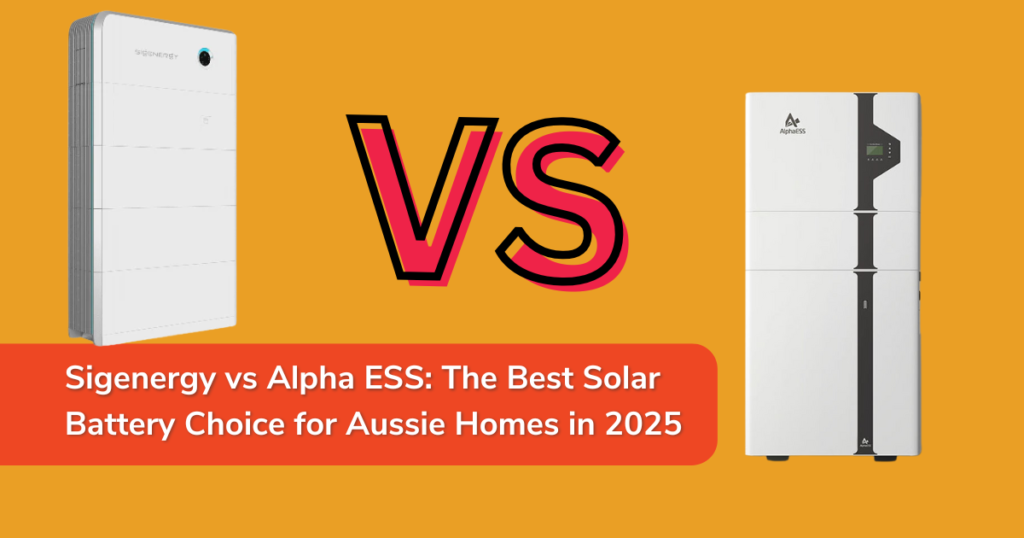
Sigenergy vs Alpha ESS: The Best Solar Battery Choice for Aussie Homes in 2025 Smart Energy Answers June 3, 2026 With electricity prices rising and energy independence becoming a top priority, more Australian homeowners and businesses are turning to solar batteries. Whether you’re trying to reduce your reliance on the grid, protect your home during blackouts, or simply get the most out of your solar system, choosing the right battery is crucial. Among the many options available today, two standout choices are the Sigenergy battery and the Alpha ESS battery. In this guide, we’ll dive deep into both to help you decide which one might be the best solar battery in Australia for your home or commercial property. Sigenergy Battery: A Premium but Affordable Smart Storage Solution Sigenergy is quickly emerging as a leader in Australia’s solar battery market, known for its cutting-edge technology and intelligent, all-in-one modular design. Its sleek tower structure combines a battery, hybrid inverter, EV charger, backup module, and advanced energy management, making it a true 5-in-1 energy storage solution. Key Features of Sigenergy All-in-One Modular System: Combines major energy components in one neat unit, reducing installation complexity and maximising space efficiency. Expandable Capacity: Start at 5kWh and scale up to 48kWh, ideal for growing households and commercial properties. AI-Driven Management: The Sigenergy app offers advanced monitoring and optimisation tools, using real-time data and predictive AI to reduce energy bills. Superior Efficiency: With over 97% round-trip efficiency, Sigenergy ensures you get the most out of every kilowatt-hour stored. Unrivalled Safety: Features built-in temperature sensors, AI-driven thermal regulation, aerogel insulation, and even an internal fire extinguisher, making it one of the safest solar batteries on the market. Thanks to its intelligent features, modular scalability, and market-leading safety, Sigenergy is now considered one of the best solar batteries in Australia, particularly for tech-savvy users and EV owners looking for a next-gen home energy solution. Alpha ESS Battery: Proven, Reliable & Budget-Friendly Alpha ESS has become a well-known name in Australia’s energy storage landscape, offering reliable, cost-effective battery systems for homes and small businesses. With storage capacities ranging from 5kWh to 30kWh+, Alpha ESS provides flexibility at a competitive price point. Key Features of Alpha ESS Flexible Compatibility: Works with a wide range of solar panel systems and hybrid inverters. Affordable Entry Point: Alpha ESS battery prices are generally lower than premium brands, making them a strong option for budget-conscious buyers. NSW Battery Rebate Eligible: Residents can access the solar battery rebate NSW, bringing down upfront costs significantly. Solid Warranty: 10-year warranty on most models provides peace of mind. Things to Consider Customer Support: Some users have reported difficulties with warranty claims and delayed responses from customer service. Basic Safety Design: While Alpha ESS uses Lithium Iron Phosphate (LFP) chemistry and meets standard safety regulations, it lacks some of the advanced safety technologies offered by newer premium systems like Sigenergy. App Experience: Monitoring features are available, but the interface and insights may not be as intuitive or robust as newer competitors. Alpha ESS is a practical option for those prioritising affordability and basic reliability. However, for homeowners seeking smart technology, enhanced safety, or long-term flexibility, it may be worth investing in a more advanced solution like Sigenergy. Sigenergy vs Alpha ESS: At a Glance Feature Sigenergy Alpha ESS Capacity Range 5kWh – 48kWh modular tower 5kWh – 30kWh+ modular wall unit Design Sleek, all-in-one stackable system Standard modular cabinet design Backup Capability Yes, instant switch during outage Yes, depending on model Efficiency 97%+ Around 90–95% Smart App & AI Yes Varies by model Warranty 10 years 10 years Pricing Mid-range / affordable Mid-range / affordable Rebate Eligibility Federal + NSW Rebates Federal + NSW Rebates Safety Advanced safety with internal fire extinguisher, 7 sensors, AI thermal control, and aerogel insulation Standard safety with stable LFP chemistry and UL9540A compliance Market Share & Popularity As of March 2025, Sigenergy has emerged as the leading battery manufacturer in Australia, capturing a 17.4% market share based on kilowatt-hours (kWh) blended capacity. This positions Sigenergy ahead of competitors like Sungrow at 17.1% and Alpha ESS at 15.2%. Alpha ESS, while slightly trailing in recent monthly data, has a strong track record in the Australian energy storage market. In 2022, Alpha ESS held a commanding 23% market share, ranking No. 1 in Australia’s energy storage installations. Which Is the Better Choice for You? Go with Sigenergy if: You’re looking for a future-ready system with premium features like EV integration, modular expansion, and smart AI optimisation. You want top-tier safety with advanced fire protection and real-time thermal monitoring. You prefer a sleek, all-in-one design that supports both on-grid and off-grid functionality. Choose Alpha ESS if: You’re on a tighter budget and need a reliable battery for basic energy storage needs. You’re eligible for the NSW Battery Rebate and want a system that helps lower upfront costs. You don’t need advanced features like AI-driven monitoring, EV charging, or scalable capacity. While Alpha ESS offers dependable performance at a more accessible price point, Sigenergy stands out as the smarter long-term investment, especially for homeowners seeking safety, advanced control, and future-ready flexibility. If you’re planning to grow your energy needs or integrate with an EV, Sigenergy delivers unmatched value among the best solar batteries in Australia. Federal and NSW Rebates: Lower the Cost of the Best Solar Batteries in Australia Both Sigenergy and Alpha ESS are eligible under the Federal Battery Rebate Australia, also known as The Cheaper Home Batteries Program, with homeowners and businesses able to claim up to $17,500 depending on the battery size and configuration. In New South Wales, additional incentives through the solar battery rebate NSW can reduce costs even further, making this a prime time to invest in clean, reliable energy storage. Final Thoughts Whether you prioritise smart features and sleek design or affordability and reliability, both Sigenergy and Alpha ESS offer compelling options among the best solar batteries in Australia. Your choice depends on your energy goals, budget, and whether you
How the Federal and NSW Battery Rebates Can Benefit Your Business

How the Federal and NSW Battery Rebates Can Benefit Your Business Smart Energy Answers June 3, 2026 With electricity prices rising and solar export tariffs, often referred to as the sun tax, cutting into feed-in profits, more Australian businesses are turning to solar battery storage for better energy control and long-term savings. Thanks to significant government support, including the Federal Battery Rebate through The Cheaper Home Batteries Program and the NSW Battery Rebate, businesses now have an unprecedented opportunity to invest in clean energy at a reduced upfront cost. Why Solar Batteries Make Business Sense For commercial properties, especially those with high daytime electricity usage, pairing solar with battery storage provides major financial and operational benefits: Energy cost savings by reducing reliance on the grid Avoidance of peak demand charges Backup power for operational resilience during outages Protection from the sun tax, which penalises grid exports Higher return on solar investment through greater self-consumption This is especially important now that many businesses face reduced feed-in tariffs and increased energy volatility. A battery allows you to store and use solar energy on your terms. The Federal Battery Rebate: Up to $17,500 Available The newly launched Cheaper Home Batteries Program is a Federal Government initiative offering generous battery rebates of up to $17,500, making solar battery systems significantly more affordable for eligible households and small businesses. This rebate covers a wide range of premium battery options, including: Tesla Powerwall 3 Sigenergy Battery ESY Sunhome Battery The rebate is scaled depending on your system size, location, and income eligibility, making it especially appealing for small to medium-sized businesses aiming to cut operating costs and future-proof against grid instability. Key Features of the Federal Rebate Covers batteries from an approved list of high-performing products Available for new installations or battery retrofits with existing solar Must be installed by accredited providers Available nationwide with some state-specific delivery partners The NSW Battery Rebate In addition to the Federal program, NSW businesses and households may also qualify for support under the NSW Battery Rebate, depending on their location and usage. This rebate is typically smaller, ranging from $1,600 to $4,000, but can be stacked with the Federal incentive for even greater savings. Eligible businesses must: Have an operational solar PV system or plan to install one Meet location and income eligibility for some programs Use approved batteries and accredited installers How the Sun Tax Impacts Your Business The introduction of solar export tariffs, or the so-called sun tax, means businesses are now being charged for sending excess solar energy back to the grid. This makes storing and consuming your own energy far more attractive. Rather than losing value through exports or being penalised, businesses with battery storage can store energy during the day and use it when needed, maximising returns and reducing grid dependency. Next Steps for Your Business If your business is considering a solar battery upgrade, now is the time to act. The combination of the Federal rebate, up to $17,500, and state-level programs like the NSW Battery Rebate makes premium battery systems more accessible than ever. At Smart Energy Answers, we’re helping businesses across Australia take advantage of these rebates, design high-efficiency systems, and simplify the application process. Final Thoughts Whether you’re running a commercial facility, warehouse, or small office, battery storage is no longer just a sustainability upgrade. It’s a smart financial decision. Get in touch today for a free business energy consultation and see how much you could save with Tesla Powerwall 3, Sigenergy, or ESY Battery, backed by the Federal and NSW battery rebate programs.
Solar Batteries vs. Generators: What’s Better for Backup Power?
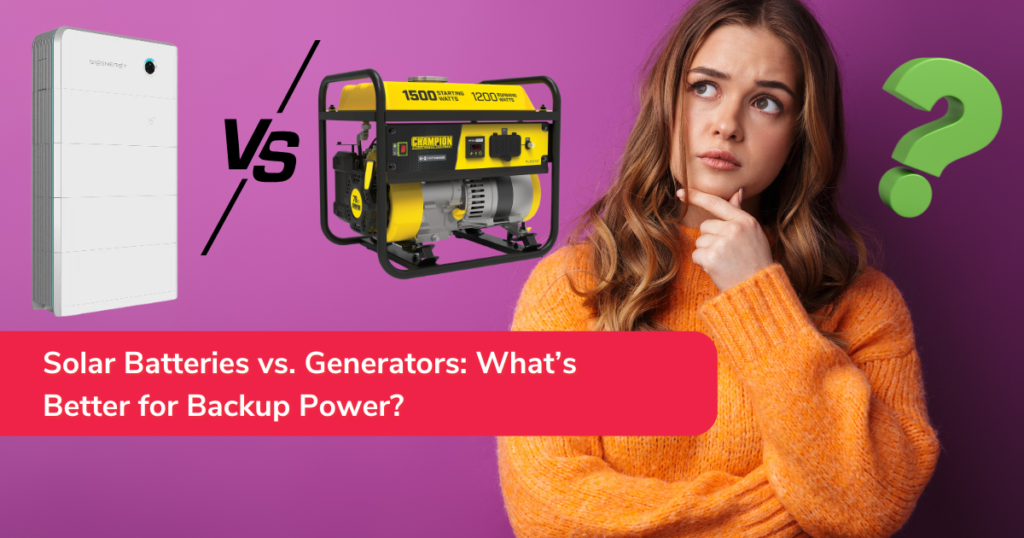
Solar Batteries vs. Generators: What’s Better for Backup Power? Smart Energy Answers June 3, 2026 As climate change accelerates and grid instability becomes more common, Australian homeowners are thinking seriously about energy resilience. Having a reliable backup power source is no longer a luxury, it’s a necessity. When the grid goes down, the two most popular options are solar batteries and generators. But which is better for your home: the clean, quiet technology of a solar battery, or the tried-and-tested generator? This blog will help you understand the differences between the two, comparing reliability, cost, efficiency, and environmental impact, so you can make a smart decision that suits your lifestyle and future energy needs. How They Work Solar batteries, like the Tesla Powerwall 3 or Sigenergy battery, store excess energy generated by your solar panels. During the day, your panels collect solar energy, and the battery stores the unused portion. When there’s an outage or at night, your home draws from this stored energy automatically and seamlessly. Generators, in contrast, use fuel, usually petrol, diesel, or gas, to power your home during an outage. They don’t require solar panels and are often standalone systems. Some advanced models can start automatically during a blackout, but many still require manual activation, less convenient if you’re not home when the power fails. Reliability and Performance When it comes to reliability, solar batteries offer instant backup power with virtually no interruption. Once installed, a battery like the Tesla Powerwall 3 Australia can detect an outage and begin powering your essential circuits in under a second. And because there’s no need to refuel or turn anything on, you’re always covered, day or night. Generators are effective, especially in prolonged outages, but have drawbacks. Many models require a manual start, and even automatic ones can take several seconds to activate. More importantly, they rely entirely on your ability to store and access fuel, which may not always be feasible or safe, especially during extreme weather events. Environmental Impact One of the biggest benefits of solar batteries is that they’re emission-free. The best solar batteries in Australia, such as Sigenergy or Tesla, are completely silent and non-polluting, making them ideal for urban households or environmentally conscious families. When paired with rooftop solar, they contribute to a cleaner grid and lower carbon footprint. In contrast, generators are noisy, smelly, and emit harmful greenhouse gases. They’re not only disruptive to your home environment but also contribute to air pollution. If sustainability is a factor in your energy decisions, solar batteries are the clear winner. Cost and Government Incentives While solar batteries have a higher upfront cost, typically ranging from $8,000 to $15,000, Australian homeowners can offset this with generous government incentives. The Federal Battery Rebate Australia, along with state-based programs like the solar battery rebate in NSW, significantly reduce installation costs. These rebates make long-term ownership far more affordable and help you recoup your investment faster through energy savings. On the other hand, generators are less expensive to purchase initially, often costing under $2,000. However, they incur ongoing fuel and maintenance costs, which can quickly add up. In the long term, the cost of running a generator, especially during frequent outages, can exceed that of a battery system. Maintenance and Convenience One of the most attractive aspects of solar batteries is their low maintenance. Modern systems like the Sigenergy battery or Tesla Powerwall 3 are designed for long-term, worry-free operation. There are no moving parts, no fuel to refill, and no regular servicing required. Generators, however, demand more upkeep. From changing oil and checking fuel lines to ensuring the generator is stored and operated safely, maintenance can be time-consuming. And if you forget to refuel or the fuel goes stale, your generator may fail right when you need it most. Which Option is Right for You? If you already have a solar system or are planning to install one, adding a battery makes perfect sense, especially with rebates like the solar battery rebate NSW or the Federal Battery Rebate Australia. You’ll enjoy clean, automatic backup power, lower energy bills, and a reduced carbon footprint. You’re also investing in energy independence and shielding yourself from rising electricity prices. If your needs are temporary, or you live in a rural area where solar access or battery installation isn’t practical, a generator may serve as a short-term backup solution. Just be prepared for the fuel, noise, and maintenance that come with it. Final Thoughts Between the two, solar batteries clearly offer the smarter, cleaner, and more future-proof solution. With options like the Tesla Powerwall 3 Australia, Sigenergy, and other top-performing brands, Australians have access to some of the best solar batteries in Australia. And thanks to state and federal solar battery rebates, these systems are now more accessible than ever before. If you’re ready to explore your backup power options, talk to the experts at Smart Energy Answers. We’ll guide you through available rebates, battery selection, and installation, helping you find the right system for your needs.
Top Reasons Commercial Properties Are Switching to Solar Batteries – Up to $18,000 in Rebates

Top Reasons Commercial Properties Are Switching to Solar Batteries – Up to $18,000 in Rebates Smart Energy Answers June 3, 2026 As electricity costs rise and energy security becomes a growing concern, more commercial properties across Australia are investing in solar and battery solutions. While solar panels have long been a favourite for reducing power bills, businesses are now turning to solar batteries to take control of their energy usage and future-proof their operations. Whether you’re running an office, warehouse, retail store, or school, integrating battery storage can provide substantial financial and operational benefits. Here’s why commercial properties are making the switch and how incentives like the solar battery rebate can make the transition even more affordable. 1. Slash Peak Demand Charges One of the most compelling reasons for switching to solar batteries is the ability to reduce peak demand charges. These are the fees energy retailers charge when your business draws large amounts of electricity during peak hours. A battery allows you to store excess solar power and use it during high-tariff periods, significantly reducing your dependence on the grid and saving thousands of dollars per year. 2. Maximise the ROI of Your Solar Investment Without battery storage, your excess solar energy is sent back to the grid, often for a low feed-in tariff. With a battery, you can store that energy for later use, such as after sunset or during overcast days. This improves your solar system’s return on investment and increases energy independence. If you’re looking for the best solar battery in Australia, it’s essential to consider usable capacity, efficiency, and compatibility with your solar setup. 3. Protection Against Power Outages In industries where uptime is critical, a blackout can cost thousands in lost revenue or damaged stock. Solar batteries provide backup power, ensuring your essential systems, such as security, refrigeration, lighting, or internet, stay operational. This resilience is especially valuable in regions prone to extreme weather or grid instability. 4. Greater Energy Independence Relying solely on the grid leaves your business exposed to volatile electricity prices and policy changes. With a solar battery system, you gain more control over when and how you use your energy. Many businesses are now aiming to become energy self-sufficient, and battery storage is a critical part of that journey. 5. Support Your Sustainability Goals Customers and investors increasingly expect businesses to operate sustainably. By storing and using your own clean energy, you’re actively reducing your carbon footprint and contributing to a greener future. For organisations focused on ESG, Environmental, Social and Governance, targets, a battery-supported solar system is a visible and measurable step toward your sustainability goals. 6. Earn From Virtual Power Plants (VPPs) Many of the best solar batteries in Australia are now VPP-ready. This means your business can join a Virtual Power Plant, which allows you to sell excess stored energy back to the grid during peak demand periods. Not only does this support a decentralised, resilient energy network, but it also creates additional revenue streams for your business. 7. Access up to $18,000 in Solar Battery Rebates and Incentives Incentives such as the NSW battery rebate and federal solar battery rebates can significantly reduce the upfront cost of installing a commercial battery system. Programs like the solar battery rebate NSW are designed to accelerate the adoption of energy storage by supporting eligible businesses with financial assistance. This means that switching to solar batteries is not only a smart long-term investment. It’s more affordable than ever. Our team at Smart Energy Answers stays up to date with the latest rebates and can help you access the maximum savings available. 8. Choose the Best Solar Battery for Your Needs The commercial battery market has evolved rapidly, with a growing range of products to suit different business sizes and energy profiles. From Tesla Powerwall to cutting-edge solutions like Sigenergy, choosing the best solar battery in Australia depends on factors like: Usable capacity Round-trip efficiency Warranty and lifespan Scalability and integration At Smart Energy Answers, we assess your current and future energy needs to recommend the most effective solution for your business. Is Your Business Ready to Switch to Solar Batteries? If you’re looking to cut energy costs, boost sustainability, and gain energy resilience, solar batteries are the next logical step. Whether you already have a commercial solar system or are planning a new installation, our expert team can design a solution tailored to your energy goals and help you take advantage of every available solar battery rebate. Start your solar battery journey today. Contact Smart Energy Answers for a free commercial energy consultation and discover how your business can benefit from solar battery storage in NSW and across Australia.
How Much Battery Storage Do I Need? Sizing Tips for Your Home
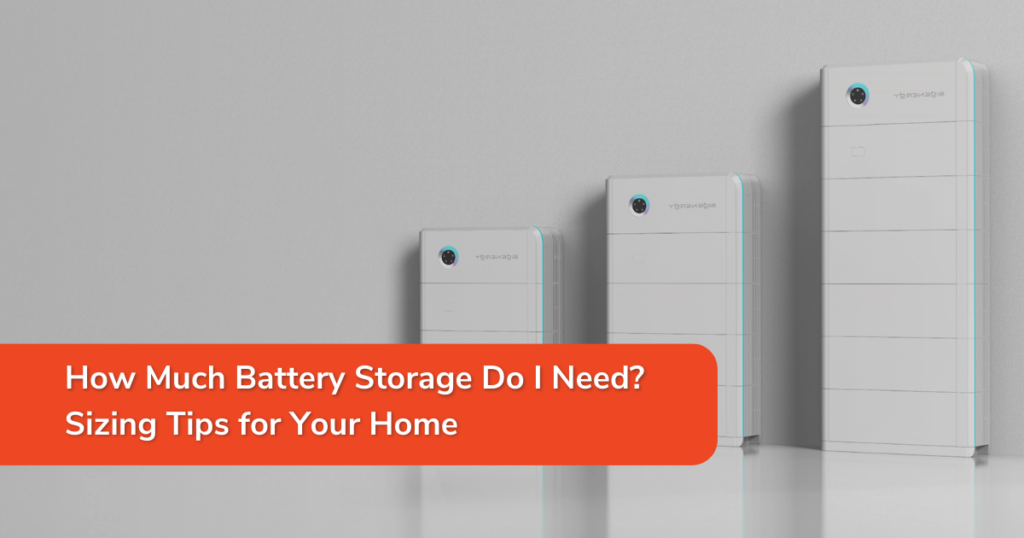
How Much Battery Storage Do I Need? Sizing Tips for Your Home Smart Energy Answers June 3, 2026 As solar adoption continues to rise, more homeowners are considering solar batteries to store their excess energy and gain greater energy independence. But how much battery storage do you actually need? The answer depends on a few key factors, your daily electricity usage, your solar system size, and how you plan to use your stored energy. 1. Understand Your Daily Energy Usage To accurately size your solar battery, start by reviewing your electricity bill and noting both your average daily usage and seasonal variations. The average Australian home uses between 15–25 kWh per day, but this can vary widely based on several factors. Larger families or homes with multiple high-consumption appliances, like electric water heaters, air conditioning, or pool pumps, may use more energy. Additionally, if you work from home or spend more time indoors during the day, your daytime consumption will be higher. Understanding your energy patterns across weekdays, weekends, and seasons is crucial for sizing a battery that truly meets your needs. 2. Consider Your Solar Panel Output If you already have solar panels, take a close look at how much energy your system generates on average each day. This will be key in determining the right battery size. Ideally, your battery should be large enough to store the surplus energy your panels produce after your daytime consumption needs are met. For example, a standard 6.6kW solar system might generate around 25 kWh per day. If your household uses about 10 kWh during daylight hours, that leaves approximately 15 kWh available for storage. Having a battery that can store this excess allows you to use your own solar energy at night, reducing reliance on the grid and maximising your return on investment. Seasonal production and orientation of panels can also impact this figure, so monitoring your solar generation over time helps inform a more precise battery sizing. 3. Think About How You’ll Use the Battery For Night-time Use Only A battery with 10–15 kWh capacity is often enough to power most homes through the evening and early morning. For Backup Power During Outages Consider a larger battery, such as a 13.5 kWh Tesla Powerwall or 24 kWh Sigenergy system, to run essential appliances during blackouts. For Going Off-Grid You’ll need significant battery capacity, often 30–50 kWh or more, especially with limited grid access. For VPP Use If you’re planning to connect your battery to a Virtual Power Plant (VPP) in order to maximise your return on investment (ROI), then it is advisable to consider a larger battery, typically 5–10 kWh extra. 4. Factor in Battery Efficiency and Depth of Discharge (DoD) Most lithium batteries don’t use 100% of their rated capacity. For example, a 10 kWh battery with a 90% DoD will deliver around 9 kWh of usable energy. Always check usable capacity when comparing systems, as this figure determines how much power you’ll actually be able to draw. Also consider the round-trip efficiency, which reflects energy losses during charging and discharging. Most modern batteries offer around 90–95% efficiency. 5. Plan for Future Usage If you’re planning to buy an EV, add new appliances like a pool pump or ducted air conditioning, or expand your household, it’s wise to oversize your battery slightly now to future-proof your investment. Batteries can last 10+ years, so planning ahead ensures you won’t need a costly upgrade later. Final Thoughts There’s no one-size-fits-all solution when it comes to battery storage. The right capacity for your home depends on your goals, usage patterns, and how self-sufficient you want to be. Our experts at Smart Energy Answers can help design a battery solution tailored to your energy needs. As the Federal Battery Rebate has just been announced, this is the perfect time to get a solar battery. Need help sizing your home battery? Contact us today for a free energy consultation and personalised quote.
Can You Charge an EV with Solar Power Alone? Here’s What You Need to Know
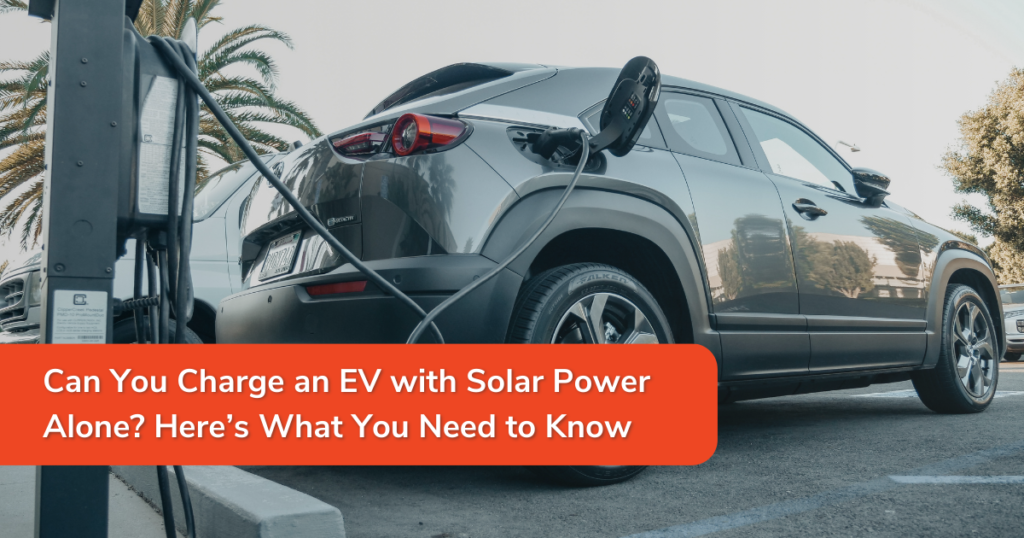
Can You Charge an EV with Solar Power Alone? Here’s What You Need to Know Smart Energy Answers June 3, 2026 With the rise of electric vehicles (EVs) and increasing interest in renewable energy, many homeowners wonder whether they can rely entirely on solar power to charge their EVs. The short answer is yes, charging an EV with solar panels alone is possible. However, factors like solar system size, battery storage, and energy consumption patterns play a crucial role in determining feasibility. In this guide, we explore how you can charge your EV with solar power and what you need to make it work efficiently. How Solar Charging Works for EVs? Solar panels generate electricity from sunlight, which can either be used immediately, stored in a home battery, or fed into the grid. To charge an EV using solar power alone, you need to ensure that your solar system produces enough electricity during the day to meet both your household and vehicle charging needs. This often requires a system with adequate capacity, ideally paired with battery storage to allow charging at night or on cloudy days. Key Factors to Consider Solar System Size and Energy Production The size of your solar panel system determines how much electricity you can generate. A standard EV requires around 15–20 kWh for a full charge, depending on the vehicle’s battery size and efficiency. To cover both home energy use and EV charging, an average household might need a solar system between 6 kW and 10 kW, though this varies based on location, sunlight exposure, and daily energy consumption. Battery Storage for Round-the-Clock Charging If you want to charge your EV at night, a home battery, such as the Tesla Powerwall 3, SolarEdge Battery, or Sungrow SBR, is essential. Batteries store excess solar energy during the day, allowing you to charge your EV when the sun isn’t shining. This maximises your solar usage and reduces reliance on the grid, helping you save on energy costs. Smart Charging and Energy Management Smart EV chargers, such as those compatible with solar systems, can optimise charging by prioritising solar energy use. Features like dynamic load balancing ensure that your EV charges when solar production is highest, reducing grid dependency. Some advanced systems even allow scheduling to align charging times with peak solar generation hours, further improving efficiency. Can Solar Power Alone Meet Your EV Charging Needs? For some homeowners, a well-sized solar system with battery storage can provide sufficient power for daily EV charging. However, those with high energy consumption or living in areas with limited sunlight may still need occasional grid support. The effectiveness of solar-only EV charging depends on several factors: Daily driving habits: If you drive long distances daily, your EV may require more energy than your solar panels can generate. Weather conditions: Cloudy days and seasonal variations can impact solar production, making backup energy sources necessary. Charging speed requirements: A Level 2 home EV charger requires more power than a standard wall outlet, influencing the feasibility of solar-only charging. Maximising Solar for EV Charging To make the most of your solar power for EV charging, consider upgrading to a high-efficiency solar system, investing in a home battery, and using a smart EV charger that integrates with solar energy management. Additionally, participating in a Virtual Power Plant (VPP) program can allow you to sell excess stored energy back to the grid, further offsetting costs and enhancing financial returns. Conclusion Charging an EV with solar power alone is achievable with the right setup. A properly sized solar system, battery storage, and smart energy management tools can help you maximise renewable energy use while reducing reliance on the grid. If you’re considering making the switch, Smart Energy Answers can help design a tailored solar and EV charging solution to suit your needs. Get in touch today to start your journey toward energy independence!
Battery Storage for Businesses: Is It Worth the Investment?
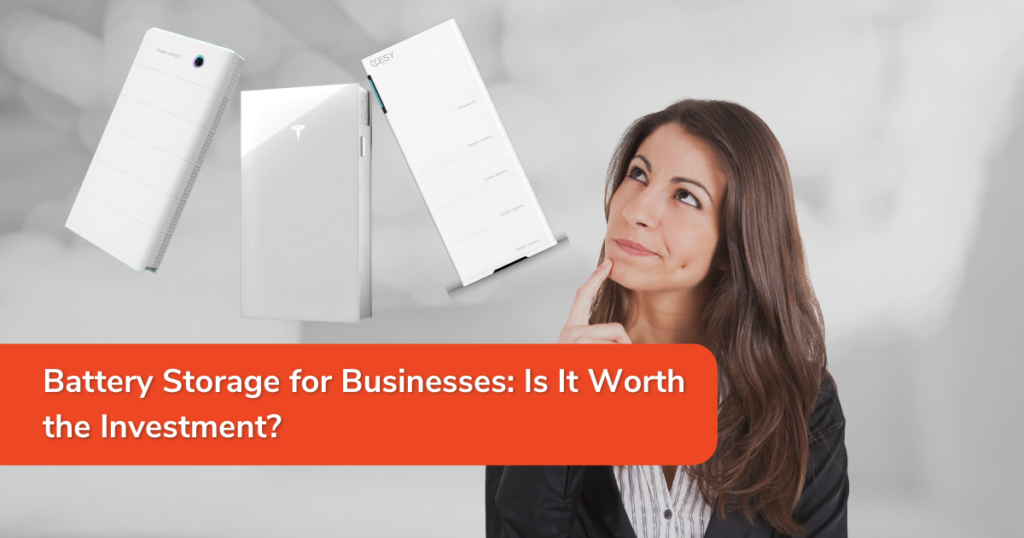
Battery Storage for Businesses: Is It Worth the Investment? Smart Energy Answers June 3, 2026 As energy costs continue to rise and businesses seek greater energy independence, battery storage has become an increasingly viable solution. Whether integrated with solar power or used independently, commercial battery storage systems can help businesses reduce electricity costs, enhance energy resilience, generate revenue by selling stored energy, and achieve sustainability goals. But is it worth the investment? Let’s explore the benefits, costs, and ideal use cases to help you determine if battery storage is right for your business. What Is Commercial Battery Storage? Battery storage systems allow businesses to store excess energy, either from on-site solar panels or the grid, for use during peak hours or power outages. Additionally, businesses can sell stored energy back to the grid, turning battery storage into a revenue-generating asset while also strategically managing energy consumption to significantly cut electricity expenses and improve operational efficiency. Key Benefits of Battery Storage for Businesses Lower Energy Costs & Revenue Generation Store cheap or excess solar energy and use it during peak demand hours, when electricity rates are highest. Reduce reliance on expensive grid power, especially in areas with high demand charges. Participate in energy arbitrage, storing electricity when prices are low and using it when prices are high. Sell stored energy back to the grid through Virtual Power Plant (VPP) programs, earning revenue while contributing to grid stability. Energy Resilience & Backup Power Protect operations from blackouts and power disruptions that could cause downtime. Essential for businesses with mission-critical operations, such as manufacturing plants, data centres, and hospitals. Maintain smooth operations in industries reliant on continuous power supply. Sustainability & ESG Compliance Reduces carbon footprint by maximising clean energy use. Helps businesses meet ESG, Environmental, Social, and Governance, goals and qualify for green incentives. Enhances corporate reputation and compliance with government sustainability policies. Supports renewable energy adoption while turning energy storage into a revenue stream. Cost & ROI: Is It Financially Viable? Upfront Costs vs Long-Term Savings Battery storage costs vary based on capacity, brand, and system integration. ROI depends on energy rates, demand charges, and how the business uses energy. Many businesses achieve payback within 5 to 8 years, especially with available government incentives. Revenue generation from stored energy sales through VPPs can further accelerate ROI. Government Incentives & Tax Benefits Businesses can leverage federal and state rebates to lower upfront costs. Additional benefits include tax write-offs and grants for businesses investing in renewable energy solutions. Ideal Industries for Battery Storage Adoption Manufacturing & Warehousing: Handles high energy use efficiently, reducing demand charges while selling stored energy for added revenue. Retail & Hospitality: Lowers operational costs while ensuring backup power and participating in energy trading programs. Agriculture: Stabilises energy supply for irrigation, refrigeration, and processing, with potential earnings from excess solar storage. Commercial Offices: Supports energy efficiency, sustainability branding, and revenue generation through stored energy sales. Best Recommended Batteries There are a wide variety of batteries to choose from. Here are a few options to make that decision easier for you: Tesla Powerwall 3 Higher power output compared to previous models. Integrated solar inverter for seamless system management. Supports whole-building backup capabilities. Sungrow SBR Battery High-performance lithium iron phosphate (LFP) battery for safety and longevity. Modular design, allowing businesses to expand storage over time. Works efficiently with both on-grid and off-grid systems. Sigenergy Battery Storage Smart energy management system for enhanced efficiency. Fast charging and discharging capabilities. Ideal for businesses looking for flexible and scalable solutions. ESY Battery Advanced lithium-ion technology for improved performance and durability. Modular and scalable design to adapt to business energy needs. High-efficiency energy conversion, maximising stored energy use and grid sales potential. How to Choose the Right Battery Storage System Capacity & Scalability: Ensure the system meets your current and future energy demands. Battery Chemistry: Choose between lithium-ion, higher efficiency and longer lifespan, and lead-acid, lower upfront cost. Warranty & Lifespan: Look for long-term reliability and manufacturer support. Integration with Solar: Maximise benefits when paired with solar PV systems. Potential for Revenue Generation: Assess whether the system supports VPP participation to sell stored energy back to the grid. Should Your Business Invest in Battery Storage? Battery storage offers significant cost savings, energy security, and sustainability benefits. If your business faces high electricity bills, demand charges, or grid reliability issues, investing in battery storage could be a smart move. Additionally, participating in a VPP program allows businesses to generate revenue from stored solar energy, making the investment even more financially attractive. Want to explore battery storage for your business? Contact Smart Energy Answers for a tailored assessment.
Turn Your Home into a Cash-Generating Powerhouse with Smart Battery Systems
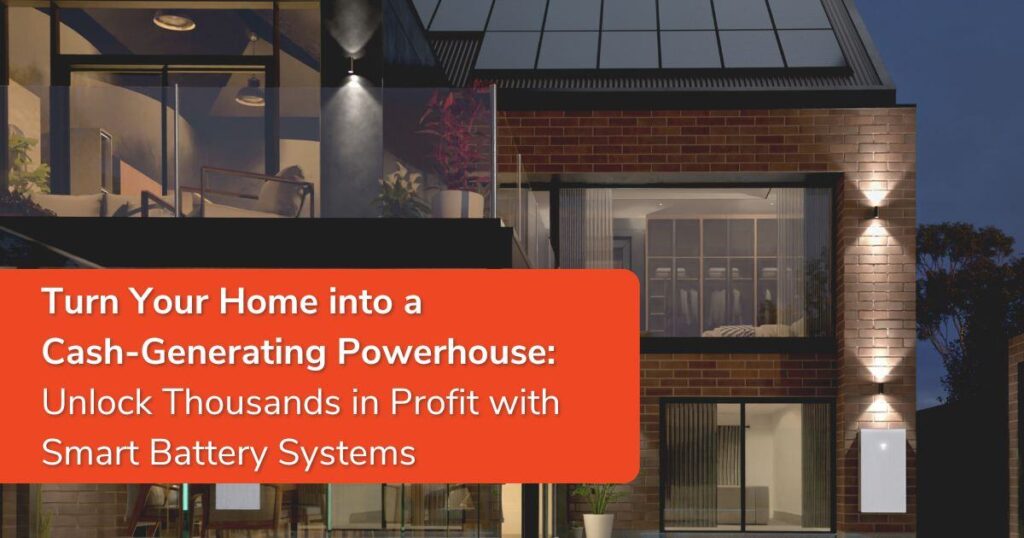
Turn Your Home into a Cash-Generating Powerhouse with Smart Battery Systems Smart Energy Answers September 13, 2024 Your Path to Energy Wealth Starts Here Discover how savvy Aussie homeowners are slashing bills and earning steady income with cutting-edge energy technology. In the sun-drenched landscapes of Australia, a quiet revolution is taking place. Solar power has long been our ally in the fight against rising energy costs, but now battery storage is changing the game entirely. It’s not just about keeping the lights on anymore. It’s about turning your home into a money-making powerhouse. This guide will show you how to join the ranks of forward-thinking Aussies who are not just saving on their electricity bills, but actually profiting from their energy systems. Slash Your Bills and Pad Your Wallet The Current State of Energy in Australia The Australian energy market is ripe for disruption, and homeowners are perfectly positioned to reap the rewards. Electricity prices continue to surge, with some states seeing increases of up to 20% in recent years. The national grid is under increasing strain, creating opportunities for homeowners to step in and provide valuable services. Government initiatives like the NSW Solar Battery Rebates 2024 are making it more affordable than ever to invest in battery technology. By taking control of your energy production and storage, you’re not just insulating yourself from these market forces. You’re positioning yourself to profit from them. Maximise Your Earnings: Smart Home Solutions for the Connected Aussie To truly capitalise on the potential of your battery system, you need to embrace the power of smart home technology. Here’s how a connected approach can boost your bottom line: Smart meters: These little wonders provide real-time data on your energy usage and production. By understanding your patterns, you can make informed decisions about when to use, store, or sell your energy for maximum profit. Energy management systems: Think of these as the brains of your operation. They automatically adjust your energy usage based on factors like time-of-use pricing and weather forecasts, ensuring you’re always getting the best deal. Smart appliances: From washing machines to air conditioners, these devices can be programmed to run when energy is cheapest or when your solar panels are producing excess power, maximising your savings and potential earnings. Financial Freedom Through Energy: Your Path to Independence and Profit Achieving energy independence isn’t just about going off-grid. It’s about having the flexibility to choose how and when you interact with the grid to maximise your financial benefits. Here’s your roadmap to energy autonomy and profitability: Invest in quality solar panels: The foundation of your energy system starts with a robust solar setup. Consider products from reputable manufacturers like Aiko Solar for optimal performance and longevity. Right-size your battery storage: Work with experts to determine the ideal battery capacity for your household’s needs and energy goals. The right size means maximum efficiency and stronger profit potential. Implement energy efficiency measures: Reduce your overall consumption through initiatives like LED lighting and improved insulation. Every kilowatt-hour saved is money in your pocket. Monitor and adjust: Regularly review your energy production and consumption patterns to fine-tune your system for maximum efficiency and profitability. Turn Your Battery Into a Money-Making Machine: The Power of Virtual Power Plants Virtual Power Plants, or VPPs, are revolutionising the way homeowners can benefit financially from their battery systems. By joining a VPP, you’re not just a consumer. You become an active participant in the energy market. Here’s how VPPs can help boost your return: Sell excess energy: When demand is high, sell your stored energy back to the grid at premium prices. It’s like having a mini power station in your home. Participate in demand response: Earn credits or cash by reducing your grid consumption during critical times. You’re getting rewarded for being energy-smart. Contribute to grid stability: By allowing your battery to help balance the grid, you can earn additional incentives from energy providers. It’s a win-win for you and your community. Automatic optimisation: VPP systems continuously analyse market conditions to help ensure you’re getting the best value from your stored energy. Pro tip: Look for VPP programmes that offer transparent pricing and flexible participation options to maximise your earnings potential. Some VPPs even offer guaranteed minimum earnings, providing a steady income stream from your battery investment. Real Numbers, Real Profits: What You Can Actually Earn While earnings can vary based on factors like location, system size, and energy usage patterns, here are some real-world examples of what Australians are achieving with their battery systems: Average annual savings: Many households report saving $800 to $1,500 per year on their electricity bills after installing a solar and battery system, depending on the battery size and VPP partner. VPP earnings: Participants in VPP programmes have reported additional earnings of $100 to $300 per year, with some high-performing systems earning up to $2,000 annually depending on spike events. Feed-in tariffs: While rates vary by state and provider, selling excess energy back to the grid can earn anywhere from 5c to 15c per kilowatt-hour. Long-term ROI: With proper maintenance, a well-designed solar and battery system can pay for itself in five to seven years, after which the savings continue to build. Last April 2024, it was reported that 2,900 NSW smart homeowners collectively made $525,424 in a single day while making their homes more efficient and sustainable, with some earning almost $1,000 each, just like Matt. Smart Energy Answers: Your Partner in Profitable Power At Smart Energy Answers, we’re committed to helping you maximise the financial benefits of your energy system. Our team of experts can: Design a customised solar and battery system tailored to your home and financial goals. Navigate the complexities of rebates and incentives, including the NSW Solar Battery Rebate 2024 and STCs. Integrate your system with smart home technologies for optimal performance and profitability. Connect you with reputable VPP programmes to maximise your earning potential. Provide ongoing support and optimisation to ensure your system continues to perform at its
The Future of Energy Prices: Why Installing a Battery Now Makes Sense
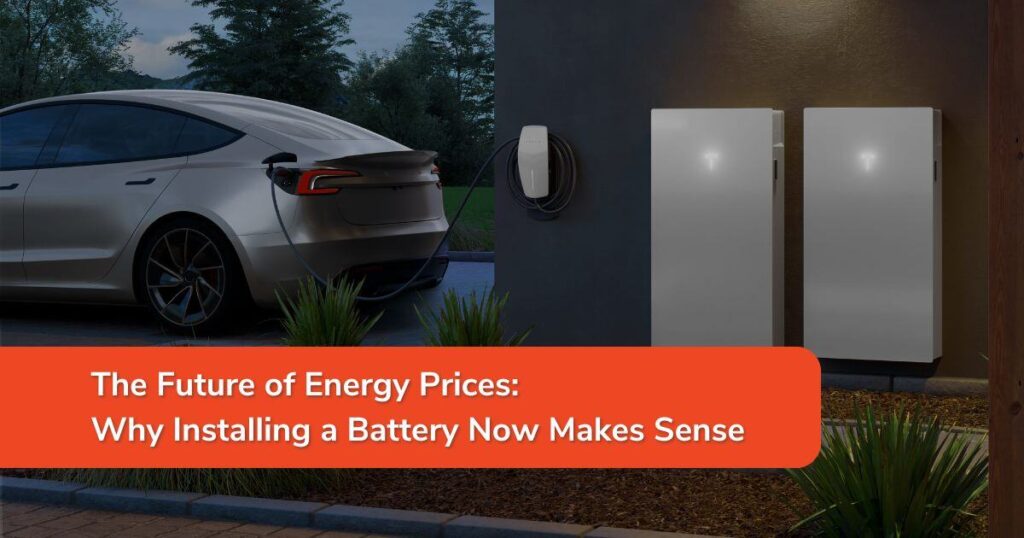
The Future of Energy Prices: Why Installing a Battery Now Makes Sense Smart Energy Answers August 23, 2024 Safeguarding Your Wallet Against Rising Costs At Smart Energy Answers, we’re not just about solving today’s energy challenges. We’re helping you prepare for tomorrow’s. With energy prices on a rollercoaster ride, many homeowners are wondering: is now the right time to invest in a solar battery? Thanks to the New South Wales Solar Battery Rebate 2024, the answer is a resounding yes. Let’s dive into why installing a battery now isn’t just smart. It’s economically savvy for your future. The Current State of Energy Prices in Australia Before we peer into the crystal ball, let’s look at where we stand. Australian energy prices have been volatile, with a general upward trend. Factors like ageing infrastructure, global energy markets, and the transition to renewables are all playing a role in this complex landscape. Want to understand how batteries fit into the broader energy picture? Read our blog on “Energy Independence: How Battery Rebates Are Empowering Australian Households”. Smart Home Solutions: Your Shield Against Price Hikes At Smart Energy Answers, we see solar batteries as a crucial component in protecting you from energy price volatility: Solar panels: Generate your own clean energy. Battery storage: Store excess energy for use during peak price periods. Smart inverter: Optimise energy flow for maximum savings. Energy management system: Intelligently use power when it’s cheapest. The Path to Price Protection: Trends in Energy Pricing Let’s break down the factors influencing future energy prices: Grid infrastructure costs: Ageing networks require expensive upgrades. Transition to renewables: Short-term costs may arise as the energy system shifts away from fossil fuels. Global energy markets: Volatility in coal and gas prices can affect electricity rates. Increased demand: Growing population and electrification are driving up energy usage. Projected Savings Over Time Installing a battery now can lead to significant long-term savings. Immediate reduction: Cut your reliance on grid power from day one. Compound savings: As prices rise, your savings can grow over time. Peak rate avoidance: Use stored energy during high-price periods. Future-proofing: Protect against potential energy price shocks. Hedging Against Future Price Increases A solar battery is like an insurance policy for your energy costs. Energy independence: Reduce exposure to market fluctuations. Fixed energy costs: Gain more predictability over your energy expenses for years to come. Inflation protection: Energy you generate yourself is less exposed to future price hikes. Rebate advantage: Lock in savings now while incentives are available. Smart Energy Answers: Your Partner in Future-Proofing As Australia’s solar and battery experts, we’re here to help you make a smart investment. Custom savings projections: Tailored analysis of your potential long-term savings. System optimisation: Design a setup that maximises your protection against price rises. Rebate maximisation: Help ensure you get the most out of current incentives. Ongoing support: Guidance to help you adapt to changing energy landscapes. The Future Is Bright and Economically Secure Looking ahead, the value of solar batteries is set to increase. Dynamic pricing: Batteries become more valuable as time-of-use rates evolve. Grid services: Potential to earn from supporting the electricity network. Energy trading: Peer-to-peer energy markets may open new revenue streams. Technological advancements: Improving efficiency and lifespan of battery systems. Conclusion Installing a solar battery now, with the help of the NSW Solar Battery Rebate 2024, isn’t just about immediate savings. It’s a strategic move to secure your energy future. As electricity prices continue their upward trend, a battery system becomes not just a nice-to-have, but a crucial component of financial planning and energy security. By taking action now, you’re not just saving money today. You’re building a hedge against future energy costs, ensuring predictable and manageable energy expenses for years to come. In a world of energy uncertainty, a solar battery offers peace of mind and financial stability. Ready to take control of your energy future and shield yourself from rising prices? Secure Your Energy Future With Smart Energy Answers Ready to protect yourself against rising energy costs and start saving now? Smart Energy Answers is here to guide you towards a more secure and affordable energy future. Free future savings assessment: Get a personalised projection of your long-term savings. Custom battery solution: We’ll design a system tailored to your energy needs and future goals. Rebate-optimised installation: Ensure you maximise current incentives for the best long-term value. Remember, with Smart Energy Answers and a solar battery system, you’re not just saving on energy. You’re investing in a more stable and affordable energy future. Let’s secure your energy costs together.
Solar Batteries & Property Value: An Investment in Your Home’s Future
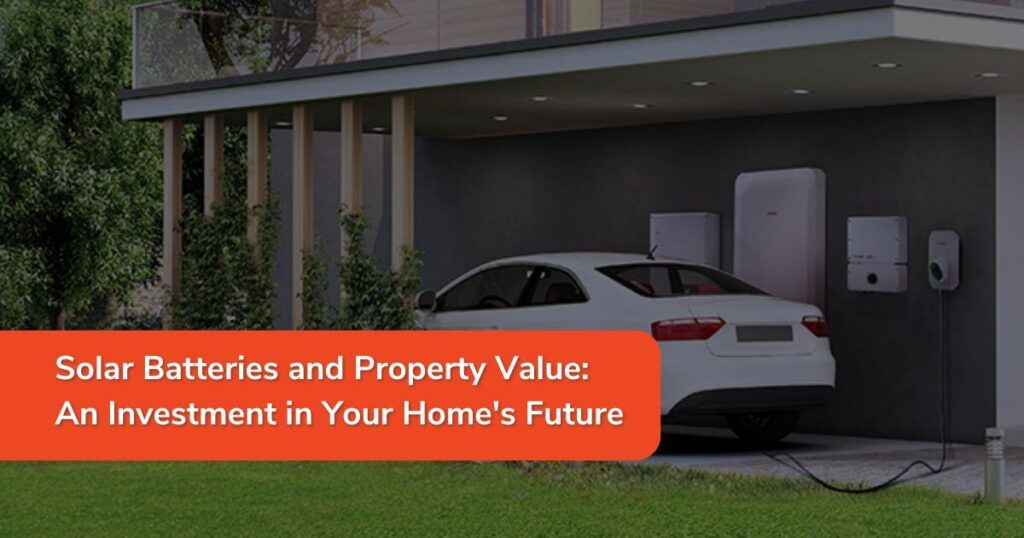
Solar Batteries & Property Value: An Investment in Your Home’s Future Smart Energy Answers August 23, 2024 Powering Up Your Real Estate Potential At Smart Energy Answers, we’re not just about cutting your energy bills. We’re here to boost your property’s value too. Thanks to the New South Wales Solar Battery Rebate 2024, adding a solar battery system to your home is more affordable than ever. But did you know it could also be a smart investment in your property’s future value? Let’s explore how solar batteries are becoming the new must-have feature in the real estate market. The Current State of Green Features in Australian Real Estate Before we dive in, let’s look at the bigger picture. Sustainability features are becoming increasingly important to Australian home buyers. With energy prices on the rise and climate consciousness growing, solar batteries are shifting from a nice-to-have to a must-have feature. Want to understand how this fits into broader energy trends? Read our blog on “The Future of Energy Prices: Why Installing a Battery Now Makes Sense”. Smart Home Solutions: The New Standard in Modern Living At Smart Energy Answers, we see solar batteries as a key component of the modern, high-value home. Here’s how it all adds up: Solar panels: Generate clean, cost-effective energy. Battery storage: Provide energy independence and backup power. Smart inverters: Optimise energy flow and enable grid interaction. Energy management systems: Offer control and visibility over energy use. The Path to Increased Property Value: Quantifying the Battery Boost Let’s break down how a solar battery system can increase your property’s value. Energy cost savings: Lower running costs make your property more attractive. Energy independence: A valuable selling point in areas with unreliable grids. Modernisation factor: Positions your home as up-to-date and future-ready. Green credentials: Appeals to environmentally conscious buyers. Attractiveness to Potential Buyers Solar batteries aren’t just a feature. They’re a selling point. Lower energy bills: A tangible financial benefit for new owners. Backup power: Peace of mind during outages. Tech appeal: Attracts buyers looking for smart home features, such as EV chargers or energy VPPs. Sustainability factor: Resonates with eco-conscious purchasers. Long-Term Real Estate Trends in Sustainable Homes The future looks bright for homes with solar batteries. Growing demand: Increasing interest in energy-efficient homes. Premium prices: Potential for higher sale prices of 10% to 14% compared to non-solar homes. Faster sales: Energy-efficient homes often sell quicker. Future-proofing: Preparing for potential energy rating requirements. Smart Energy Answers: Maximising Your Property’s Potential As Australia’s solar and battery experts, we’re here to help you boost your property’s value. Custom system design: Tailored solutions that complement your home’s aesthetics. ROI-focused installations: Systems designed to maximise property value increase. Documentation package: Provide all necessary information for property valuation. Ongoing support: Ensure your system continues to add value over time. The Future Is Bright and Valuable Looking ahead, the impact of solar batteries on property values is set to grow. Energy rating systems: Potential for mandatory energy ratings in property sales. Smart city integration: Homes with batteries could play a role in wider urban systems. Energy trading potential: Future ability to earn from energy markets. Evolving buyer preferences: Increasing importance of energy features in purchasing decisions. Conclusion The NSW Solar Battery Rebate 2024 isn’t just an opportunity to save on energy bills. It’s a chance to make a smart investment in your property’s future. By adding a solar battery system to your home, you’re not only reducing your carbon footprint and gaining energy independence. You’re also potentially increasing your property’s market value. From attracting environmentally conscious buyers to future-proofing against rising energy costs, a solar battery system is becoming an increasingly valuable asset in the real estate market. Ready to power up your property’s potential? Boost Your Property’s Value With Smart Energy Answers Ready to invest in your home’s future and increase its market appeal? Smart Energy Answers is here to help you maximise your property’s potential with a solar battery system. Free property value assessment: Discover how a solar battery could boost your home’s worth. Custom value-add solution: We’ll design a system that maximises both energy savings and property value. Future-proof installation: Ensure your investment continues to add value for years to come. Remember, with Smart Energy Answers and the Solar Battery Rebate, you’re not just investing in energy independence. You’re investing in your property’s future. Let’s power up your home’s value together.
Understanding the NSW Solar Battery Rebate 2024: A Comprehensive Guide
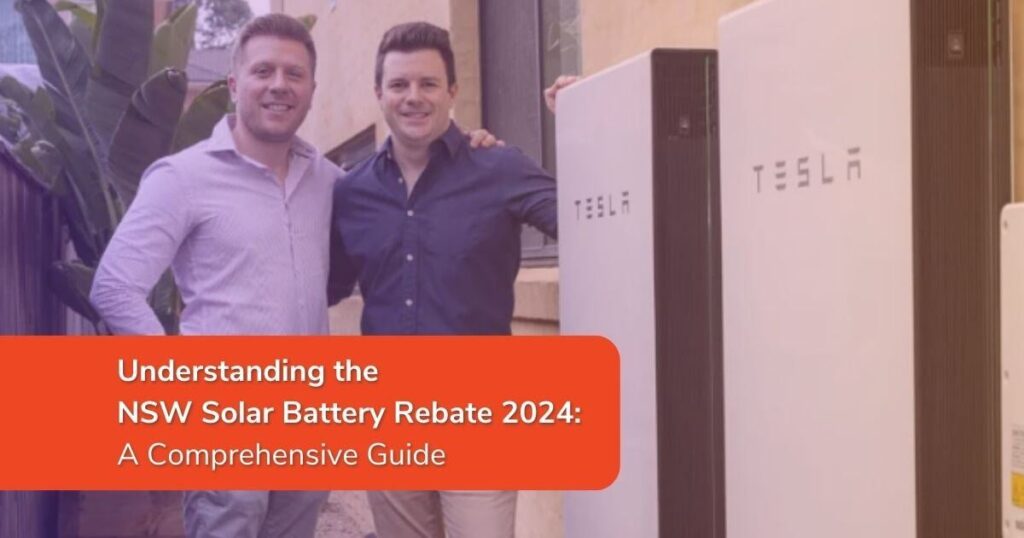
Understanding the NSW Solar Battery Rebate 2024: A Comprehensive Guide Smart Energy Answers August 12, 2024 Powering Your Future With Smart Energy Solutions Are you ready to take your energy independence to the next level? The New South Wales Solar Battery Rebate 2024 is here to supercharge your solar setup and slash your power bills. As Australia’s #1 solar retailer, Smart Energy Answers is excited to guide you through this game-changing opportunity. Let’s dive into the details of this rebate and see how it can brighten your energy future. For those interested in the cutting-edge technology behind modern solar systems, check out our blog on Aiko Solar’s revolutionary All Back Contact, or ABC, technology. The Current State of Energy in Australia Australia’s love affair with solar is no secret. We’re bathed in sunshine, after all. But as energy prices continue to rise, more Australians are looking to maximise their solar investment. That’s where battery storage comes in, allowing you to store your solar energy for use when the sun is not shining. The New South Wales Government has recognised the importance of battery storage in our renewable energy future. The New South Wales Solar Battery Rebate 2024 is a testament to this commitment, offering substantial financial incentives to make battery storage more accessible to Australian families and businesses. Curious about how solar batteries can work with cutting-edge panels? Read our blog on Aiko Solar’s high-efficiency modules and their compatibility with battery systems. Smart Home Solutions: The Connected Approach At Smart Energy Answers, we believe in a holistic approach to energy management. The Solar Battery Rebate 2024 fits perfectly into our smart home ecosystem: Solar panels: High-efficiency panels like those from Aiko Solar capture maximum sunlight. Battery storage: Store excess energy for use during peak hours or at night. Inverters and optimisers: Efficiently convert and manage your solar power. Smart energy management: Systems that optimise your energy use and maximise savings. The rebate makes adding battery storage to your solar system more affordable than ever, completing the smart home energy puzzle. The Path to Energy Independence: Rebate Overview The NSW Solar Battery Rebate 2024, available to NSW homes and businesses, is your ticket to true energy independence. Here’s what you need to know: Rebate amount: Up to $4,500 off upfront installation costs, depending on battery size. Additional incentives: Up to an extra $800 for connecting to a Virtual Power Plant, or VPP. Want to know how these batteries pair with top-tier solar panels? See our blog on Aiko Solar’s Partial Shading Optimisation for maximum efficiency. Earning From Surplus Energy: Virtual Power Plants The rebate doesn’t just save you money. It could help you earn money too. By connecting your battery to a Virtual Power Plant, or VPP, you can: Contribute to grid stability. Earn additional income by selling excess energy. Qualify for extra rebate incentives. VPPs are the future of energy management, and the NSW Solar Battery Rebate 2024 is your opportunity to join this energy revolution. Smart Energy Answers: Leading the Charge As Australia’s top solar retailer, Smart Energy Answers is perfectly positioned to help you make the most of the Solar Battery Rebate 2024. Our expertise includes: Comprehensive eligibility checks. Custom system design to maximise rebate benefits. High-quality components, including Aiko Solar panels and leading battery brands. Seamless installation and after-sales support. We’re committed to helping Australians achieve true energy independence, one battery at a time. The Future Is Bright and Fully Charged The NSW Solar Battery Rebate 2024 is more than just a cost-saving measure. It’s a glimpse into the future of energy. By incentivising battery adoption, we’re paving the way for: A more stable and resilient energy grid. Increased renewable energy uptake. Lower greenhouse gas emissions. Greater energy independence for Australian households. Conclusion The NSW Solar Battery Rebate 2024 is your opportunity to join the energy revolution. By combining cutting-edge solar technology like Aiko Solar panels with smart battery storage, you’re not just saving money. You’re investing in a cleaner, more sustainable future. Don’t let this opportunity slip through your fingers. The rebate is time-limited, and the sooner you act, the more you stand to save. Ready to take control of your energy future? Power Up Your Energy Independence With Smart Energy Answers Ready to slash your power bills and join the battery storage revolution? Smart Energy Answers is here to guide you through the Solar Battery Rebate 2024 process: Book a free consultation: Our solar experts will assess your eligibility and design a custom solution. Get a rebate-ready quote: Receive a comprehensive proposal that maximises your rebate benefits. Seamless installation: Let us handle the paperwork and installation, ensuring you’re up and running in no time. Don’t wait. The clock is ticking on this golden opportunity. Contact Smart Energy Answers today and start your journey to a fully charged future.
Energy Independence: How Battery Rebates Are Empowering Australian Households
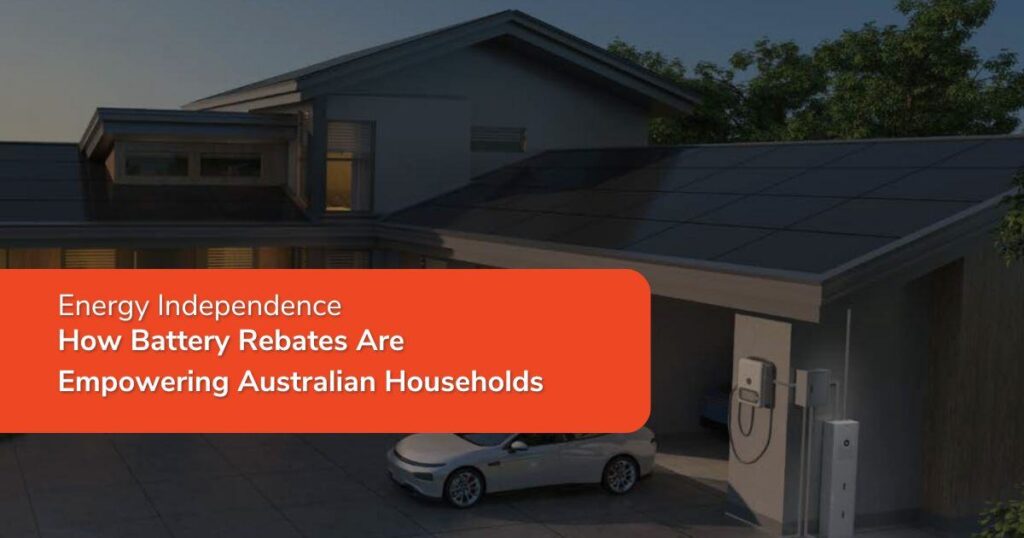
Energy Independence: How Battery Rebates Are Empowering Australian Households Smart Energy Answers August 12, 2024 Taking Control of Your Energy Future At Smart Energy Answers, we’re witnessing a revolution in how Aussie households power their lives. Thanks to the NSW Solar Battery Rebate 2024, more NSW families than ever are breaking free from the limits of traditional energy dependence. But what does true energy independence look like, and how can battery rebates help you achieve it? Let’s dive into the empowering world of home energy storage and discover how you can take control of your power supply. The Current State of Energy Dependence in Australia Before we explore the path to independence, let’s consider where we stand. Many Australian households are still at the mercy of rising energy prices and ageing grid infrastructure. But with the NSW Solar Battery Rebate offering up to $2,400 off battery installations, the power is shifting back to the people of New South Wales. Smart Home Solutions: The Building Blocks of Energy Independence At Smart Energy Answers, we see battery storage as a crucial component of a truly smart, independent home. Here’s how it all comes together: High-efficiency solar panels: Generate clean energy, with options such as Aiko Solar panels for premium performance. Battery storage: Store excess energy for use when you need it most. Smart inverter: Manage power flow between your panels, battery, and home. Energy management system: Optimise your energy use for maximum independence. The Path to Energy Independence: Reducing Grid Reliance Let’s break down how battery storage helps you break free: Daytime independence: Use solar power as it is generated. Night-time autonomy: Tap into stored energy when the sun goes down. Reduced grid purchases: Minimise the need to buy power from the grid. Blackout protection: Keep essential systems running during outages. Managing Peak Demand Periods One of the key benefits of battery storage is the ability to manage peak demand. Peak shaving: Use stored energy during high-price periods. Load shifting: Charge your battery when rates are low and use stored energy when rates are high. Demand response: Participate in utility programmes for additional savings. Self-consumption optimisation: Use more of your own solar energy instead of exporting it to the grid. Backup Power During Outages Energy independence truly shines during grid disruptions. Seamless transition: Automatic switchover to battery power when the grid goes down. Essential circuits: Keep critical systems running, such as your fridge, lights, internet, and other important appliances. Extended outage support: Combine battery storage with solar for longer-term resilience during prolonged outages. Peace of mind: Protect your home against increasingly common weather-related outages. Smart Energy Answers: Your Guide to Energy Independence As Australia’s solar and battery experts, we’re here to help you break free. Custom independence plan: A tailored solution based on your energy goals. Rebate maximisation: Help ensure you get every dollar you’re eligible for. Future-proof installation: Systems designed to grow with your needs. Ongoing support: Helping you maintain and optimise your independence. The Future Is Bright and Independent Looking ahead, energy independence is set to become the new normal. Micro-grids: Neighbourhood-level energy sharing and independence. Vehicle-to-home: Electric vehicles as mobile power sources. AI optimisation: Smarter systems for even greater efficiency. Policy support: Increasing government backing for energy independence. Conclusion The Australian Solar Battery Rebate 2024 isn’t just a financial incentive. It’s a ticket to energy freedom. By investing in battery storage, you’re taking control of your energy future, protecting yourself from price hikes and outages, and contributing to a more resilient energy system for all Australians. Energy independence isn’t just about saving money or being green. It’s about empowerment. It’s about having the freedom to power your life on your terms. With battery technology advancing and rebates making it more accessible than ever, there’s never been a better time to declare your energy independence. Are you ready to take control? Declare Your Energy Independence With Smart Energy Answers Ready to break free from grid dependence and take control of your energy future? Smart Energy Answers is here to guide you on your journey to energy independence. Free independence assessment: Discover your home’s potential for energy autonomy. Custom battery solution: We’ll design a system tailored to your independence goals. Rebate-optimised installation: Ensure you maximise your savings with available incentives. Don’t let another power bill or blackout remind you of your energy dependence. Contact us today to start your journey to true energy freedom. Remember, with Smart Energy Answers and the Solar Battery Rebate, energy independence isn’t just a dream. It’s a readily achievable reality. Let’s power up your independence together.
Myth-Busting: Common Misconceptions About Solar Batteries and Rebates
Myth-Busting: Common Misconceptions About Solar Batteries and Rebates Smart Energy Answers June 3, 2026 Shedding Light on the Truth Behind Energy Storage At Smart Energy Answers, we believe that informed decisions lead to the best outcomes. When it comes to solar batteries and the NSW Solar Battery Rebate 2024, there’s a fair bit of misinformation floating around. Today, we’re rolling up our sleeves to bust some myths, clarify misconceptions, and set the record straight. Let’s separate fact from fiction and empower you with the knowledge to make the best energy choices for your home or business! The Current State of Solar Battery Adoption in Australia Before we dive into myth-busting, let’s set the scene. Solar battery adoption in Australia is growing rapidly, driven by falling costs, improving technology, and generous rebates. However, misconceptions still abound, potentially holding some people back from embracing this game-changing technology. Smart Home Solutions: The Reality of Integrated Energy Systems At Smart Energy Answers, we promote a fact-based approach to smart energy solutions: Solar Panels: Generate clean, renewable energy Battery Storage: Store excess energy for later use Smart Inverters: Efficiently manage power flow Energy Management Systems: Optimise your entire energy ecosystem The Path to Truth: Busting Common Myths Let’s tackle some widespread misconceptions: Myth Fact Solar batteries are too expensive for the average homeowner. Batteries are more affordable than ever, often paying for themselves in energy savings. Batteries don’t work during power outages. Many modern solar batteries provide backup power during grid outages. Solar batteries are dangerous and prone to catching fire. Modern solar batteries are designed with multiple safety features and undergo rigorous testing. The technology is still too new and unreliable. Solar battery technology has been refined over years and is now highly reliable and efficient. Batteries require constant maintenance. Most solar batteries require minimal maintenance and come with lengthy warranties. Clarifying Misunderstandings About the Rebate Program Let’s clear up some common confusions about the Solar Battery Rebate: Myth Fact The rebate is only available for new solar installations. The rebate can be applied to battery additions to existing solar systems. You need a large home to qualify for the rebate. The rebate is available for various property sizes and types. The application process is too complicated. With expert help, the application process is straightforward and manageable. The rebate is the same for all battery sizes. The rebate amount varies based on the battery’s capacity. Facts vs. Fiction in Solar Battery Technology Let’s examine some technological truths: Fiction Fact All batteries degrade quickly and need frequent replacement. Many modern batteries have long lifespans with gradual, predictable degradation. Batteries don’t work well in extreme temperatures. While temperature affects performance, many batteries are designed to operate effectively in Australia’s climate. Solar batteries are bad for the environment. Batteries contribute to increased renewable energy use and many are recyclable at end-of-life. Smart Energy Answers: Your Source for Solar Facts As Australia’s solar and battery experts, we’re committed to providing accurate information: Educational Resources: Access to fact-checked, up-to-date information Personalised Assessments: Get accurate projections based on your specific situation Transparent Communication: We provide clear, honest information about costs, benefits, and limitations Ongoing Support: Stay informed with the latest factual updates in solar battery technology The Future is Bright and Based on Facts! Looking ahead, the truth about solar batteries is exciting: Continued Technological Advancements: Expect further improvements in efficiency and lifespan Increasing Grid Integration: Batteries will play a larger role in stabilising the energy grid Evolving Rebate Programs: Stay informed about changes to incentives and rebates Growing Environmental Benefits: Batteries will continue to support the transition to renewable energy Conclusion In the world of solar batteries and rebates, knowledge truly is power. By dispelling myths and clarifying misconceptions, we hope to empower you to make informed decisions about your energy future. The NSW Solar Battery Rebate 2024 offers a real opportunity to embrace this technology, and understanding the facts is key to maximising its benefits. Remember, in the rapidly evolving world of renewable energy, staying informed is crucial. Don’t let myths hold you back from potentially transforming your energy use and savings. Ready to embrace the facts and explore how solar batteries can benefit you? Get the Facts with Smart Energy Answers! Ready to cut through the myths and discover the true potential of solar batteries for your home or business? Smart Energy Answers is here to provide clear, factual information: Free Myth-Busting Consultation: Get answers to your questions and clarify any misconceptions Fact-Based System Design: We’ll create a solar battery solution based on real data and your specific needs Transparent Rebate Guidance: Understand exactly how the Solar Battery Rebate can benefit you Don’t let misinformation hold you back. Contact us today for the facts you need to make an informed decision! Remember, with Smart Energy Answers, you’re getting more than just a solar battery system. You’re getting the truth about your energy future. Let’s separate fact from fiction together!
8 Key Benefits of Using a Virtual Power Plant with Your Home Battery Storage
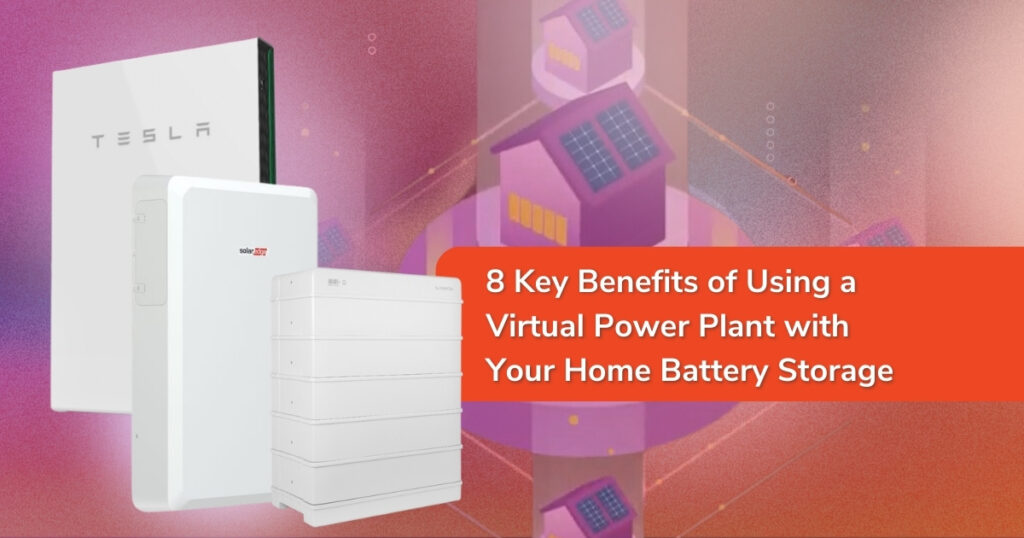
8 Key Benefits of Using a Virtual Power Plant with Your Home Battery Storage Smart Energy Answers June 7, 2024 As a homeowner, you are constantly looking for ways to reduce costs and improve efficiency in your household. With electricity prices expected to rise significantly year on year, now is the perfect time to consider integrating your home with a battery storage system and a Virtual Power Plant, or VPP. Transforming your house with a smart home upgrade using solar panels, home battery storage, and a VPP can be a game-changer. It can help you save money while speeding up the payback period of your system. A smart home upgrade also provides numerous other benefits. Here are eight key advantages of using a VPP with your home battery storage. 1. Earn Money From Your Electricity Retailer One of the most attractive benefits of using a VPP is the potential to earn money. By joining a VPP, your home battery storage system can contribute excess energy to the grid during peak demand periods. Electricity retailers pay for this energy, providing you with a new revenue stream. Essentially, you become a small-scale energy provider, selling surplus electricity from your solar panels and battery back to the grid. Reducing or even eliminating electricity bills is one thing, but is it possible to earn credits from your retailer and cash those credits out? Welcome to the next level of smart energy management. Take Matt’s experience as an example. He earned nearly $1,000 in a single day with Amber Electric’s VPP. Similarly, at Smart Energy Answers, our 99 kW system at our headquarters ensures that we no longer receive electricity bills. Instead, we receive cheques. 2. Reduce Your Electricity Bills With a VPP, your home battery storage system can optimise the way you use your energy. You can significantly reduce your electricity bills by strategically managing when you draw electricity from the grid and when you use stored energy. During times of peak electricity prices, the VPP can draw energy from your home battery rather than the grid, reducing the amount of expensive electricity you purchase. Electricity prices often vary throughout the day, with higher rates during peak demand periods. A VPP can shift your energy consumption to times when electricity prices are lower. For example, it can charge your battery during off-peak hours when electricity is cheaper and use this stored energy during peak hours, effectively lowering your overall energy costs. By leveraging these programmes, a VPP ensures you make the most of your stored energy and minimise your dependence on expensive grid electricity. Over time, these savings can add up to a substantial amount. Example Energy Usage Scenario Scenario Energy Source Battery Action Morning – Low Demand Solar + Grid Charge battery Noon – Mid Demand Solar Charge battery from solar and export excess energy Night – High Demand Grid + Battery Use battery 3. Increased Energy Independence A VPP reduces your reliance on the traditional power grid. By integrating your home battery storage system with a VPP, you can generate, store, and manage your own energy, making you less dependent on external electricity providers. This increased energy independence is especially beneficial during power outages or grid instability. It helps ensure your home remains powered even when the grid goes down. It also means you are less affected by fluctuations in energy prices. 4. Environmental Benefits Participating in a VPP contributes to a greener environment. By storing excess energy generated from renewable sources, such as solar panels, and feeding it back into the grid, you help reduce reliance on fossil fuels. VPPs effectively integrate renewable energy into the grid. This not only decreases your carbon footprint but also supports the transition to a more sustainable energy system. 5. Enhanced Grid Stability VPPs aggregate power from many home battery storage systems to provide a reliable source of energy to the grid. This helps stabilise the grid, especially during periods of high demand or unexpected power plant outages. By participating in a VPP, you play your role in enhancing overall grid stability and reliability. A notable example of this occurred in early May. According to the Australian Energy Market Operator, or AEMO, several major generation units in New South Wales went offline while transmission line maintenance was underway, leading to high demand for energy. During this critical period, VPPs played an important role in stabilising the grid. By drawing power from the distributed network of home battery storage systems, VPPs were able to supply much-needed electricity and reduce the impact of a power shortage. In fact, around 2,900 VPP participants in New South Wales collectively earned a staggering $525,424 in a single day because of their solar exports through their VPP. This win-win situation showcases the advantages of integrating home battery storage systems with VPPs. Homeowners earned income, enhanced their individual energy independence, and supported overall grid stability. 6. Access to Real-Time Energy Data Many VPP platforms provide homeowners with access to real-time data about their energy usage and production. This information can help you make informed decisions about your energy consumption, identify opportunities for further savings, and gain a better understanding of your household’s energy needs. This real-time data can also offer better bill transparency, allowing you to track and understand your energy billing charges more accurately. Additionally, it can support preventive maintenance by continuously monitoring system performance and identifying potential issues. This helps ensure your energy system operates efficiently and reliably. 7. Optimised Battery Usage A VPP can optimise the usage of your home battery storage system. Advanced AI-driven algorithms manage the charging and discharging of your battery to maximise efficiency and lifespan. This means you get the most out of your battery storage investment. The VPP helps ensure your battery performs at an optimal level for a longer period. 8. Support for Renewable Energy Integration The integration of your home battery storage system with a VPP supports the broader adoption of renewable energy sources. VPPs help manage the intermittent nature of
Residential vs. Commercial Solar Battery Applications
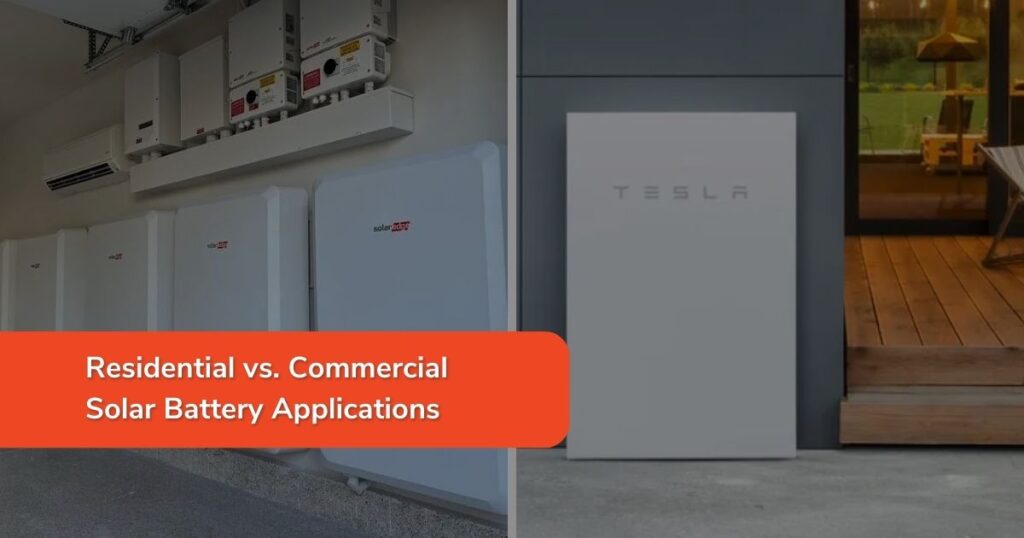
Residential vs. Commercial Solar Battery Applications Smart Energy Answers June 3, 2026 Australia’s abundant sunshine makes it a prime destination for solar energy solutions, playing a pivotal role in the country’s sustainable energy future. Among the innovative technologies transforming the landscape, solar battery systems stand out as an essential tool for harnessing and managing solar power effectively. In this comparison, we explore the unique applications and benefits of residential and commercial solar battery systems within the Australian context. The Power of Australian Solar Energy Solar power is a cornerstone of Australia’s energy mix, with a vast potential for growth and adoption. As a country blessed with extensive sunlight, Australia’s solar energy capacity has surged in recent years, bolstering the nation’s green profile. The move towards solar energy is not just an environmental imperative. It’s also an economic opportunity for Australians to reduce their energy bills and secure a more sustainable future. Residential Solar Battery Applications: A Bright Future for Homeowners For Australian homeowners, installing a solar battery system presents a compelling proposition. The benefits are manifold, from increased energy self-sufficiency to significant cost savings over the system’s lifetime. Let’s delve into what makes residential solar batteries so advantageous. Why Choose Residential Solar Batteries Energy Independence and Resilience One of the primary reasons homeowners opt for solar batteries is the promise of energy independence. With the ability to store excess solar energy for use during peak demand or at night, battery systems offer a local, reliable source of power that is immune to grid failures. Financial Returns and Environmental Impact In addition to reducing dependence on the grid, homeowners with solar batteries can maximise their return on investment. Excess energy can often be fed back into the grid, leading to further financial benefits. Furthermore, reduced reliance on fossil fuels contributes to a cleaner environment. Real-World Results: Case Studies In Pottsville, New South Wales, the installation of an 8.5kW Smart Solar and 13.5kWh Smart Battery system led to an annual saving of $2500. This system not only covered the household’s energy needs but also demonstrated the financial viability of residential solar batteries in the Australian market. Commercial Solar Battery Applications: Empowering Australian Businesses The applications of solar batteries in commercial settings in Australia are equally compelling. From small enterprises to large corporations, solar energy storage helps manage operational costs and enhances the sustainability profile of businesses. Benefits of Commercial Solar Batteries Scalability and Consistency Commercial solar battery systems can be tailored to the specific needs of a business. They provide a scalable energy solution that maintains a consistent power supply, crucial for businesses where downtime is not an option. Operational Cost Reduction and Peak Shaving By storing solar energy, businesses can significantly cut their operational costs, particularly during peak tariff periods when electricity is most expensive. This strategy, known as peak shaving, is an efficient way to manage energy expenses. Showcase of Success: Commercial Projects At Star Cosmetic Medicine, a solar battery integration of 13kW Smart Solar with a 13.5kWh Smart Battery resulted in annual savings exceeding $7000. The project stands as a testament to how commercial battery systems can deliver substantial economic value with a short payback period. Financial Accessibility and Government Initiatives Financially, residential and commercial solar solutions are becoming increasingly more accessible and affordable, thanks to several financing options and government initiatives. A variety of loans are available, tailored to both residential and commercial solar projects, making the initial setup costs manageable with flexible repayment plans. Innovative schemes such as Pay As You Save allow consumers to pay for the systems using the savings earned from their monthly energy bills, effectively causing no additional out-of-pocket expenses. Additionally, government incentives and rebates play a significant role in reducing the overall cost of solar installations. In Australia, the Small-scale Renewable Energy Scheme (SRES) and the Large-scale Renewable Energy Target (LRET) offer tradable certificates that can be sold to recoup a portion of the solar system costs. These financial mechanisms, combined, are making solar power more accessible to a wider demographic, accelerating the transition to a sustainable energy future. Conclusion Whether it’s for your home or business, integrating solar battery technology is a powerful move towards energy sustainability and financial autonomy. In Australia, where the sun shines plentifully, the potential for solar battery applications is undeniable. Ready to make the switch to solar? Contact our energy experts at Smart Energy Answers for tailored advice on how residential or commercial solar battery applications can benefit you. Embrace the power of the sun and take control of your energy future, one solar battery at a time.
Driving Towards Tomorrow: Solar Battery-Powered Transportation

Driving Towards Tomorrow: Solar Battery-Powered Transportation Smart Energy Answers June 3, 2026 Explore the Innovative Use of Solar Batteries in Revolutionising Transportation Towards a More Sustainable Future Importance of Sustainable Energy Solutions in Mitigating Environmental Impact and Promoting Energy Independence Sustainable energy solutions play a crucial role in mitigating the environmental impact of transportation and promoting energy independence. By harnessing renewable energy sources such as solar power, we can significantly reduce greenhouse gas emissions and dependence on fossil fuels. Using solar batteries to power electric vehicles, or EVs, is a prime example of a sustainable energy solution. Solar energy is clean, abundant, and can be harnessed with minimal environmental impact. By utilising solar batteries, EVs can operate without relying solely on the electricity grid, reducing carbon emissions and promoting energy independence. How Solar Batteries Power Vehicles and Extend Their Range Solar batteries power vehicles by converting sunlight into electricity. Photovoltaic cells within the solar panels absorb photons from sunlight, which then generate an electric current. This current is stored in the solar battery, which can be used to power the EV’s motor and other electrical components. Solar batteries also have the capability to extend the range of electric vehicles. By continuously charging the battery during daylight hours, EVs can operate for longer periods without needing to rely on grid electricity. This extended range makes EVs more practical and convenient for daily commuting and long-distance travel. Importance of Reliable Energy Storage for Enhancing the Efficiency and Sustainability of Transportation Systems Reliable energy storage is crucial for enhancing the efficiency and sustainability of transportation systems. Solar batteries provide a reliable and efficient means of storing solar energy for later use. By storing excess energy generated during daylight hours, solar batteries ensure a continuous power supply for EVs even during periods of low sunlight or at night. This reliable energy storage system not only increases the overall efficiency of transportation systems but also reduces reliance on the electricity grid. By utilising solar batteries, EVs can operate independently, reducing strain on the grid and enhancing the overall sustainability of transportation. Advancements in Solar Panel Efficiency and Vehicle Integration Advancements in solar panel efficiency have significantly contributed to the integration of solar power in vehicles. Over the years, the efficiency of solar panels has greatly improved, allowing for the generation of more electricity from a smaller surface area. This increased efficiency has enabled the integration of solar panels into various parts of electric vehicles, such as the roof, hood, or even the body. By maximising the surface area available for solar panels, EVs can generate more solar energy and increase their overall range and efficiency. Overview of Solar-Assisted Charging Systems for Electric Vehicles Solar-assisted charging systems for electric vehicles utilise solar energy to supplement grid electricity for charging. These systems typically consist of solar panels installed on charging stations or carports, which generate electricity to charge the EV’s battery. By incorporating solar-assisted charging systems, EV owners can reduce their reliance on the electricity grid and further decrease their carbon footprint. Additionally, these systems provide an opportunity for EV owners to utilise clean, renewable energy for charging, regardless of the availability of grid electricity. Pilot Projects and Initiatives Implementing Solar-Powered Public Transportation Pilot projects and initiatives implementing solar-powered public transportation have shown promising results in terms of reducing carbon emissions and promoting sustainable mobility. Many cities around the world have introduced solar-powered buses and trams, utilising solar panels installed on the vehicle’s roof to generate electricity for propulsion and other systems. These initiatives not only reduce the environmental impact of public transportation but also showcase the feasibility and benefits of solar-powered transportation. By analysing the success and challenges of these pilot projects, we can gain valuable insights into the implementation and scalability of solar-powered public transportation systems. Importance of Solar-Powered Commercial Vehicles in Reducing Operating Costs and Carbon Emissions for Businesses Solar-powered commercial vehicles offer significant benefits to businesses, including reduced operating costs and carbon emissions. By integrating solar panels on the roofs of delivery trucks, vans, or other commercial vehicles, businesses can generate electricity to power the vehicle’s operations. This solar power not only reduces the reliance on fossil fuels but also lowers operating costs by decreasing the need for grid electricity or fuel. Additionally, solar-powered commercial vehicles contribute to a greener brand image, attracting environmentally conscious customers. Scaling Up Infrastructure for Solar-Powered Transportation To fully realise the potential of solar-powered transportation, it is essential to scale up the infrastructure, including charging stations and energy storage systems. Increasing the number of charging stations equipped with solar panels enables more EV owners to access clean and renewable energy for charging. Furthermore, expanding the capacity of energy storage systems ensures a reliable and continuous supply of solar power for transportation. By investing in the infrastructure required for solar-powered transportation, we can accelerate the transition to a more sustainable and efficient mobility system. Market Trends and Consumer Demand for Solar-Powered Transportation Solutions Market trends and consumer demand play a crucial role in shaping the future of solar-powered transportation. As awareness of climate change and environmental issues grows, there is an increasing demand for sustainable transportation solutions. Assessing market trends and consumer demand helps identify the potential for growth in solar-powered transportation and enables stakeholders to tailor their offerings to meet the needs of consumers. By understanding the market dynamics, we can foster innovation and collaboration to drive the adoption of solar-powered transportation solutions. The Transformative Potential of Solar Battery Technology Solar battery technology has the transformative potential to drive the transition to a cleaner and more sustainable transportation future. By harnessing the power of the sun, we can reduce our dependence on fossil fuels, mitigate climate change, and improve air quality. To fully realise this potential, it is crucial for governments, businesses, and individuals to take action. Governments can incentivise the adoption of solar-powered transportation through policies and regulations. Businesses can invest in solar infrastructure and integrate solar-powered vehicles into their fleets. Individuals can choose solar-powered transportation
Harnessing Solar Power: Innovative Battery Solutions
Harnessing Solar Power: Innovative Battery Solutions Smart Energy Answers June 3, 2026 Discover the Latest Advancements in Solar Battery Solutions for Sustainable Energy Usage Significance of Battery Storage in Maximising the Efficiency of Solar Power Systems Battery storage plays a significant role in maximising the efficiency of solar power systems. By storing excess energy generated during the day, batteries provide a reliable source of power during periods of low sunlight or high energy demand. This helps to ensure a consistent and uninterrupted supply of electricity, reducing reliance on the grid and promoting energy independence. Additionally, batteries allow for the optimisation of solar power systems by enabling the capture and utilisation of excess energy that would otherwise go to waste. This improves the overall efficiency of the system and maximises the return on investment for solar panel installations. How Solar Power Batteries Store and Distribute Energy Solar power batteries store and distribute energy through a process known as charge and discharge. During periods of excess solar energy production, the batteries absorb and store the energy for later use. This stored energy can then be discharged when the demand for electricity exceeds the supply from the solar panels. The charging process involves converting the solar energy into chemical energy, which is stored in the battery cells. This chemical energy is then converted back into electrical energy when needed. The distribution of energy from the battery to the electrical system is facilitated through an inverter, which converts the direct current, or DC, stored in the battery into alternating current, or AC, that can be used to power household appliances and devices. High-Capacity and High-Efficiency Lithium-Ion Batteries for Solar Applications Lithium-ion batteries have emerged as a popular choice for solar applications due to their high capacity and efficiency. These batteries offer a greater energy density, allowing for more energy storage in a smaller physical footprint. This is particularly beneficial for residential solar installations where space is limited. Furthermore, lithium-ion batteries have a longer lifespan compared to other battery technologies, making them a reliable and cost-effective solution for long-term energy storage. Their ability to handle high charge and discharge rates also contributes to their suitability for solar applications, as they can efficiently handle the fluctuating energy demands of a solar power system. Advancements in Flow Battery Technology Flow battery technology has seen significant advancements in recent years, offering improved efficiency and lifespan for solar applications. Flow batteries utilise two electrolyte solutions that flow through separate chambers and are separated by a membrane. This design allows for the independent scaling of energy storage capacity and power output. The advancements in flow battery technology have led to increased energy efficiency, with higher round-trip efficiency rates and reduced energy losses during the charging and discharging process. Additionally, the lifespan of flow batteries has improved, enabling longer-term and more reliable energy storage solutions for solar power systems. Introduction to Solid-State Battery Technology Solid-state battery technology is an emerging innovation in the field of energy storage and holds great potential for solar applications. Unlike traditional lithium-ion batteries, solid-state batteries replace the liquid or gel electrolyte with a solid material, which enhances their performance and safety. The use of solid-state electrolytes in batteries offers several benefits for solar storage. Higher energy density: Solid-state batteries allow for increased energy storage capacity in a smaller size. Improved safety: The solid electrolyte is less prone to leakage or thermal runaway. Longer cycle life: Solid-state batteries offer greater longevity and durability for solar power systems. Importance of Solid-State Batteries for Solar Applications Solid-state batteries are of significant importance in the realm of solar applications due to their enhanced safety, energy density, and longevity. The use of solid-state electrolytes eliminates the risk of leakage or combustion associated with traditional liquid electrolytes, ensuring a safer energy storage solution for both residential and commercial solar installations. Furthermore, solid-state batteries offer a higher energy density, allowing for greater energy storage capacity in a smaller physical footprint. This is particularly advantageous for applications where space is limited, such as rooftop solar systems. Additionally, the longer cycle life of solid-state batteries ensures a more durable and sustainable energy storage solution for solar power systems. Integration of Multiple Battery Technologies into Hybrid Energy Storage Systems The integration of multiple battery technologies into hybrid energy storage systems offers a comprehensive solution for solar applications. By combining different types of batteries, such as lithium-ion and flow batteries, hybrid energy storage systems can leverage the unique advantages of each technology and optimise their performance. For example, lithium-ion batteries can provide high-power output and handle rapid charge and discharge rates, while flow batteries can offer long-duration energy storage and high energy capacity. This combination allows for a more flexible and efficient energy storage solution that can adapt to varying energy demands and maximise the utilisation of solar power. Hybrid Energy Storage Systems in Optimising Performance, Reliability, and Cost-Effectiveness Hybrid energy storage systems play a crucial role in optimising the performance, reliability, and cost-effectiveness of solar power systems. By integrating multiple battery technologies, these systems can achieve a balance between power output, energy capacity, and longevity. The combination of different battery technologies allows for better load management, ensuring a stable and reliable power supply even during periods of high energy demand. This enhances the overall performance of the solar power system and reduces the reliance on the grid. Moreover, hybrid energy storage systems can contribute to cost-effectiveness by maximising the utilisation of renewable energy sources. By storing excess solar energy and utilising it during peak demand periods, homeowners can reduce their reliance on grid electricity and potentially lower their energy bills. Current Market Landscape for Innovative Solar Power Battery Solutions The current market landscape for innovative solar power battery solutions is rapidly evolving, driven by the increasing demand for sustainable energy storage options. Various companies and manufacturers are developing and introducing new battery technologies that offer improved performance, efficiency, and safety. The market is witnessing advancements in lithium-ion batteries, flow batteries, and solid-state batteries, each offering
Harnessing Renewable Energy Storage through Solar Batteries
Harnessing Renewable Energy Storage through Solar Batteries Smart Energy Answers June 3, 2026 Discover How Solar Batteries Are Revolutionising Renewable Energy Storage Discover how solar batteries are revolutionising renewable energy storage and paving the way for energy independence. Significance of Solar Batteries in Achieving Energy Independence Solar batteries play a crucial role in achieving energy independence by allowing us to rely on renewable energy sources. As we transition away from fossil fuels and towards renewable energy, it becomes essential to find effective ways to store and utilise the energy generated from sources like solar power. Solar batteries provide the backbone of energy independence by storing excess energy produced during periods of high sunlight and making it available for use during low sunlight periods or when demand exceeds supply. This ability to store and distribute renewable energy is a game-changer in our journey towards a sustainable future. Furthermore, solar batteries help to reduce our dependence on the traditional electrical grid. By storing energy locally, we can provide electricity to areas without access to grid infrastructure, such as remote communities or disaster-stricken regions. This decentralisation of energy production and distribution not only enhances energy independence but also improves the resilience and reliability of our energy systems. In addition, solar batteries support load-shifting strategies, allowing us to align our energy usage with solar production. This means we can prioritise using stored solar energy when the sun is not shining, reducing our reliance on non-renewable energy sources during peak demand times. By implementing load-shifting strategies, we can optimise our energy consumption and minimise our carbon footprint. Overall, the significance of solar batteries in achieving energy independence cannot be overstated. They enable us to harness the power of renewable energy sources like solar power, store excess energy, and distribute it when needed. Solar batteries are the key to unlocking the full potential of renewable energy and paving the way towards a sustainable and independent energy future. Overview of Different Types of Solar Batteries Solar batteries come in various types, each with its own set of advantages and characteristics. Two commonly used types of solar batteries are lithium-ion batteries and lead-acid batteries. Lithium-Ion Batteries Lithium-ion batteries are known for their high energy density, long lifespan, and fast charging capabilities. They are commonly used in portable electronic devices and electric vehicles. When it comes to solar energy storage, lithium-ion batteries are preferred for their efficiency in storing and releasing energy. They are also lightweight and require minimal maintenance. Lead-Acid Batteries Lead-acid batteries have been used for decades and are known for their reliability and affordability. They are suitable for applications that require deep cycling, such as solar energy storage. While lead-acid batteries have a lower energy density compared to lithium-ion batteries, they make up for it with their lower cost and wide availability. It’s important to consider the specific requirements of your solar energy system when choosing between different types of solar batteries. Factors such as energy storage capacity, lifespan, cost, and maintenance requirements should be taken into account to ensure optimal performance and longevity of your solar battery system. Ability to Store Excess Solar Energy for Low Sunlight Periods One of the key advantages of solar batteries is their ability to store excess solar energy for use during periods of low sunlight. Solar power generation is dependent on sunlight availability, which can vary throughout the day and across seasons. During times of high solar power generation, such as sunny days, the excess energy can be stored in solar batteries instead of being wasted. When sunlight is limited or not available, such as during nighttime or cloudy days, the stored solar energy can be utilised to power homes and businesses. This ensures a consistent and reliable energy supply, even when direct solar power generation is insufficient. By storing excess solar energy, solar batteries help to maximise the utilisation of renewable energy and reduce reliance on non-renewable energy sources. Additionally, solar batteries enable homeowners and businesses to become more self-sufficient by reducing their dependence on the electrical grid. With a properly sized solar battery system, it is possible to meet a significant portion of energy needs through stored solar power, reducing electricity bills and providing energy security. Implementing Load-Shifting Strategies Load-shifting strategies involve adjusting energy usage patterns to align with solar production. By shifting energy-intensive activities to times when solar power generation is high, we can maximise the utilisation of solar energy and reduce reliance on non-renewable energy sources. For example, using appliances such as washing machines, dishwashers, or charging electric vehicles during daytime hours when solar power generation is at its peak can help to optimise energy consumption. By utilising solar energy directly, rather than relying on grid electricity, we can reduce our carbon footprint and lower energy costs. Load-shifting strategies can be implemented through smart energy management systems that monitor solar power generation and adjust energy usage accordingly. These systems can prioritise using stored solar energy and automatically switch to grid electricity only when necessary. By implementing load-shifting strategies, we can make the most of our solar energy production and contribute to a more sustainable and efficient energy system. Providing Electricity in Areas Without Traditional Grid Infrastructure One of the significant benefits of solar batteries is their ability to provide electricity in areas without access to traditional grid infrastructure. Remote communities, off-grid locations, and disaster-stricken regions often face challenges in accessing reliable electricity sources. Solar batteries offer a solution by storing solar energy and providing a consistent power supply even in the absence of grid connections. By installing solar panels and batteries, these communities can generate their own electricity and become self-sufficient. Solar power systems combined with batteries can power essential appliances, such as lights, refrigeration, and communication devices, improving the quality of life and enabling economic activities. Additionally, solar batteries can serve as a backup power source during emergencies, ensuring critical services such as healthcare facilities, schools, and community centres remain operational. The ability of solar batteries to provide electricity in areas without access
Solar Batteries vs. Traditional Backup Generators
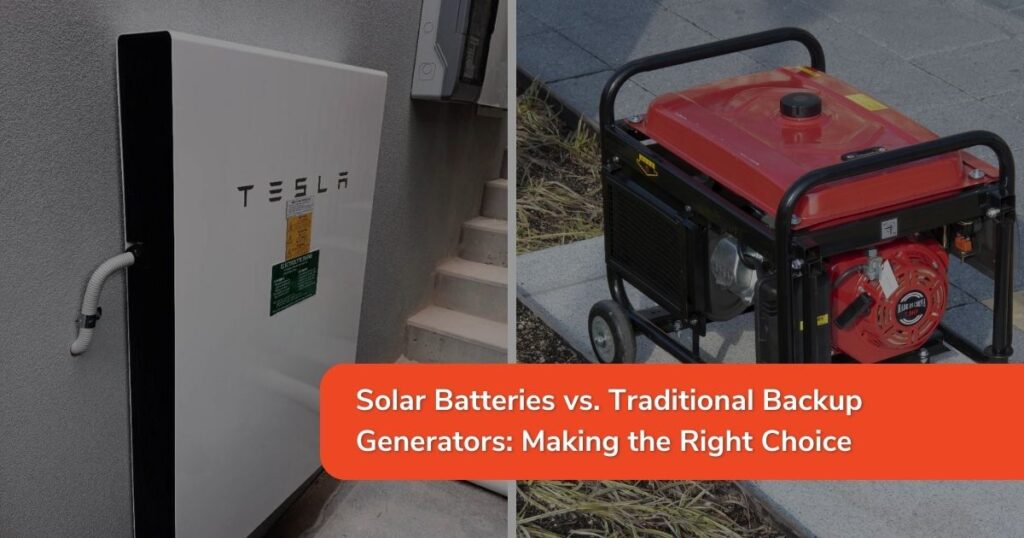
Solar Batteries vs. Traditional Backup Generators Smart Energy Answers June 3, 2026 In a country that’s no stranger to power outages due to extreme weather conditions, the decision between adopting solar batteries or sticking with traditional backup generators is becoming increasingly pertinent. As consumers weigh the environmental benefits against costs and practicality, it’s essential to understand which solution aligns best with their needs and values. Here, we dive into the specifics to help Australian homeowners navigate this pivotal choice. Traditional Backup Generators: The Workhorse of Blackouts When it comes to reliability during power cuts, traditional backup generators have long been the go-to solution for Australian homes. Known for their robustness and ability to deliver a significant amount of power, generators are undeniably effective. However, they do come with their own set of drawbacks. Pros of Generators Generators can offer a substantial and immediate power supply, particularly important for those needing to maintain critical electrical systems, such as medical equipment. They also do not rely on the sun or weather conditions, ensuring a constant energy supply even during prolonged overcast periods. Cons of Generators Despite their dependability, generators are not without fault. The need for regular maintenance and refuelling makes them a relatively high-maintenance investment. Moreover, their emissions contribute to air pollution, a growing concern for sustainability in Australia. Solar Batteries: The Rising Star of Renewable Resilience As the solar industry advances, solar batteries like SolarEdge Home Battery and Tesla Powerwall represent a significant leap in the efficiency and convenience of backup power solutions. Unlike generators, they harness the power of the sun, making them an environmentally friendly alternative with an edge in the long term. Pros of Solar Batteries Solar batteries store energy from your solar panels for use when the sun isn’t shining, effectively making them a clean, sustainable, and increasingly cost-effective solution. They require minimal upkeep, are virtually silent in operation, and can be seamlessly integrated into your existing solar system. Cons of Solar Batteries It’s not all sunshine with solar batteries, as their upfront cost remains a barrier for many. Additionally, their storage capacity can be limiting, especially if the frequency and duration of outages are unpredictable or varied. Comparison and Considerations: What Fits Your Lifestyle? The choice between solar batteries and traditional backup generators isn’t cut and dry. It depends on various factors, including your home’s energy consumption, budget, and commitment to sustainability. Cost Comparison In terms of initial cost, traditional backup generators are commonly cheaper to install. However, when considering the life cycle of the investment, ongoing fuel and maintenance costs may tip the balance in favour of solar batteries. Reliability and Performance Comparison In terms of reliability, generators offer immediate power, but they do require fuel that may not always be readily accessible. Conversely, solar batteries are constantly charged during daylight hours, ensuring a renewable and consistent supply of power. However, the system itself may be less powerful in a single burst than a generator. Suitability for Different Energy Needs For homeowners with high energy needs during outages, such as those with large families or extensive home office requirements, a generator’s high output capacity may be more suitable. Smaller households or those with more modest energy needs could easily be covered by a solar battery system. Making an Informed and Green Choice Ultimately, the decision between solar batteries and traditional backup generators is a personal one, guided by your specific needs and values. As Australia continues its green energy revolution, considering the long-term environmental impact of your choice is crucial. It’s about creating a resilient and sustainable energy plan that not only keeps the lights on but also ensures a brighter, greener future for all Australians. For expert guidance tailored to your specific needs, contact Smart Energy Answers today.
Common Myths and Misconceptions About Solar Batteries
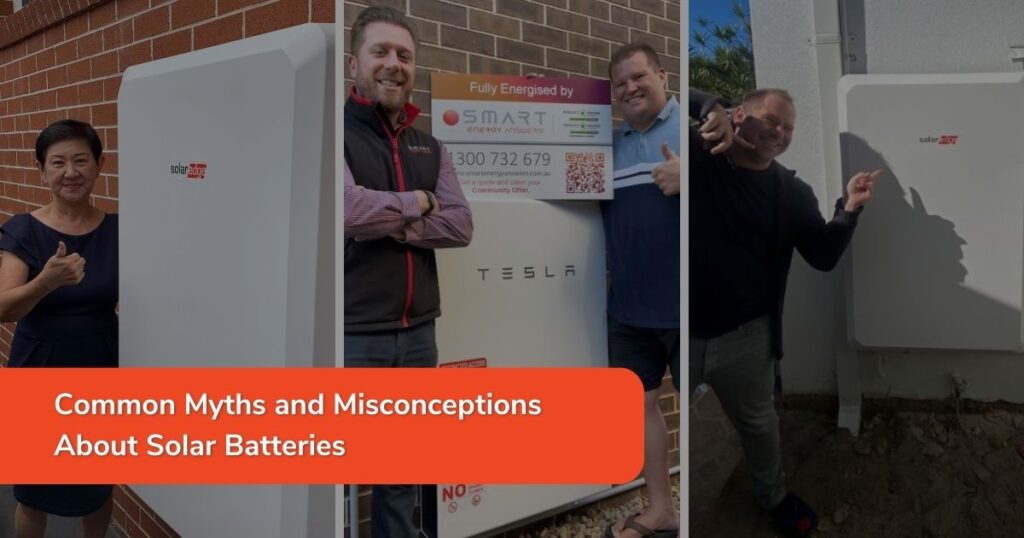
Common Myths and Misconceptions About Solar Batteries Smart Energy Answers June 3, 2026 Understanding the ins and outs of solar power is pivotal for Australian homeowners looking to harness renewable energy efficiently. Solar batteries represent a key factor in that equation, offering the ability to store the sun’s energy and use it when it’s most needed. However, misconceptions surrounding solar batteries can tarnish their reputation and dissuade many from making the shift to a greener energy approach. Let’s burst some of these myths to shed light on the true capabilities of solar batteries in the land down under. Myth 1: Solar Batteries Are Too Expensive One of the enduring myths is that solar batteries represent a significant upfront financial investment. While it’s true that there is a cost associated with purchasing and installing these systems, the long-term savings often outweigh the initial expense. Australian homeowners stand to make considerable financial gains over the lifespan of solar batteries. Not only can they reduce their electricity bills through self-consumption of solar power, but they can also take advantage of feed-in tariffs, which allow them to sell excess solar energy back to the grid. As battery technology advances, the cost of solar batteries is steadily declining, making them a more feasible choice for the average household. Additionally, there are potential government rebates and incentives that can further offset the cost. Myth 2: Solar Batteries Are Inefficient The belief that solar batteries are inefficient stems from the early days of battery technology when energy storage capabilities were indeed limited. However, modern solar batteries are anything but inefficient. Advancements in materials, science, and energy storage have led to batteries that can store more energy and do so with significantly less loss. Lithium-ion batteries, for example, are becoming the standard for their high charge and discharge efficiency, often exceeding 90%. Efficiency ratings continue to rise, ensuring that the energy stored from your solar panels is available to use when you need it most. Myth 3: Solar Batteries Don’t Work During Blackouts A common misconception is that during a power outage, a residential solar system with a battery won’t be able to provide electricity. In actuality, many modern solar battery systems are designed with blackout protection, like Tesla Powerwall and SolarEdge Home Battery. These systems automatically switch to battery power when they detect that the grid is down, keeping key appliances and electronics running during an outage. For areas prone to severe weather or other disruptions, this feature can be a game-changer, providing peace of mind and continuity of essential electrical needs. It’s essential for homeowners to verify the blackout capabilities of their selected solar battery system before purchase and installation. Myth 4: Solar Batteries Are Harmful to the Environment Opponents of solar batteries often argue that the environmental cost of manufacturing and disposing of these devices outweighs the benefits of stored solar energy. In reality, the environmental impact of solar battery production is decreasing as the industry becomes more efficient and as recycling processes develop. Moreover, the environmental benefits of solar batteries, particularly when used in combination with solar panels, cannot be ignored. By enabling homeowners to reduce their reliance on fossil fuels and lower their carbon footprint, solar batteries contribute to a more sustainable and eco-friendly energy landscape. Myth 5: Solar Batteries Require High Maintenance Switching to solar power can sound intimidating, especially if it’s accompanied by the belief that solar batteries are high maintenance. In most cases, however, this couldn’t be further from the truth. Modern solar batteries require minimal maintenance. Unlike traditional lead-acid batteries, which may need regular water checks and other upkeep, most lithium-ion batteries are virtually maintenance-free. They do not require water refills, and their internal systems are monitored and managed automatically. Periodic check-ups by a qualified technician are typically all that’s needed to keep a solar battery system in prime working condition. Conclusion As we’ve addressed these common myths and misconceptions about solar batteries in Australia, it’s clear that these systems are not only increasingly affordable and efficient, but they also offer significant environmental advantages with little maintenance required. For homeowners looking to save on energy costs and reduce their carbon footprint, embracing the technology behind solar batteries is a smart move. Making the switch to solar energy is an investment in a sustainable future, and by understanding the realities of solar battery systems, you are better equipped to make an informed decision. Whether you’re looking to reduce your electricity bills, provide emergency power, or simply live more sustainably, solar batteries have a lot to offer. If you’re ready to explore how solar batteries can benefit your home, contact us at Smart Energy Answers today and take the first step towards a greener, cost-effective energy solution.
Exploring Lithium-Ion vs. Lead-Acid Batteries for Solar
Exploring Lithium-Ion vs. Lead-Acid Batteries for Solar Smart Energy Answers June 3, 2026 Choosing the right battery for your solar energy system is a crucial decision that can have a lasting impact on your system’s performance and your long-term energy goals. As solar energy gains popularity across Australia, the comparison between the two primary alternatives in energy storage becomes increasingly significant. This discussion revolves around the choice between lithium-ion batteries, such as Tesla Powerwall and SolarEdge Home Battery, and lead-acid batteries. Let’s delve into the details to help you make an informed decision tailored to your needs and environmental concerns. Lithium-Ion Batteries: The Pinnacle of Solar Storage When it comes to lithium-ion batteries and solar energy, the buzzword is efficiency. These batteries have set a new standard in energy storage technology, and for good reason. Advantages of Lithium-Ion High Energy Density Compared to lead-acid batteries, lithium-ion batteries can store more energy per unit volume. This high energy density is a game-changer for homeowners with limited space or those aiming to store a large amount of solar energy for later use. Longer Lifespan The durability of lithium-ion batteries is impressive. They can withstand thousands of charge cycles, potentially outlasting the solar panels they support. Their resilience makes them a cost-effective option in the long run. Faster Charging Lithium-ion batteries can be charged at a significantly faster rate than lead-acid counterparts, making them more effective at capturing and storing the intermittent energy produced by solar panels. Disadvantages of Lithium-Ion Higher Initial Cost The downside of lithium-ion technology is the initial investment, which can be quite steep. However, the plummeting prices due to technological advancements are making them more accessible over time. Temperature Sensitivity Extreme temperatures can degrade the performance of lithium-ion batteries. While some models come with built-in temperature control, this is a factor to consider, particularly in the Australian climate. Lead-Acid Batteries: Traditional Reliability Lead-acid batteries have been the go-to for solar energy storage for decades, and they still hold their own against their newer, flashier lithium-ion rivals. Advantages of Lead-Acid Lower Initial Cost Perhaps the most significant advantage of lead-acid batteries is their cost. The lower upfront investment can be an attractive proposition for those on a tighter budget or for whom immediate affordability is a priority. Wide Availability Lead-acid batteries are ubiquitous, with a robust infrastructure designed to support them. This means easier access to replacement parts and a wider network of service providers. Tolerance to High Temperatures Unlike lithium-ion batteries, lead-acid batteries are less likely to be negatively affected by the hotter Australian climate. This can translate to greater operational stability, especially in regions with extreme weather. Disadvantages of Lead-Acid Lower Energy Density One of the main drawbacks of lead-acid batteries is their larger size and weight for the same energy storage capacity provided by lithium-ion batteries. This can limit their use, particularly in residential settings with space constraints. Shorter Lifespan Lead-acid batteries typically offer fewer charge cycles than lithium-ion batteries, which means more frequent replacements and a potentially higher long-term cost of ownership. Slower Charging The charging speed of lead-acid batteries can be a sticking point when it comes to efficient use of solar power, especially during periods where rapid energy storage is crucial. Critical Factors to Weigh The decision between lithium-ion and lead-acid batteries isn’t just about the technology. It’s about finding the best fit for your unique scenario. Cost Evaluate not only the initial cost but the total cost of ownership over the battery’s lifespan. Consider maintenance, replacement, and energy savings when making your calculations. Additionally, it’s crucial to explore available government rebates or interest-free loans for solar battery storage, as these incentives can significantly impact the overall financial equation. Energy Efficiency Higher energy efficiency means more of your solar energy is stored for use. Lithium-ion batteries’ ability to charge and discharge without significant energy loss could be a significant factor in the return on investment of your solar investment. Lifespan A more extended battery lifespan might justify a higher upfront cost. Compare warranties and expected lifespans to determine which option aligns with your financial and environmental objectives. Environmental Impact For eco-conscious homeowners, the environmental impact of the manufacturing and disposal of batteries is a key concern. Lithium-ion batteries tend to have a smaller carbon footprint, but the entire lifecycle must be considered. Making the Right Investment in Solar Energy The benefits of incorporating a battery into your solar energy system are increasingly clear, not only for personal energy independence but also for the health of our planet. As you explore lithium-ion and lead-acid batteries, keep in mind the unique strengths and weaknesses of each technology. Consider consulting a professional to conduct an energy audit and help you select the best storage solution. Your solar energy system should be tailored to meet your specific needs, climate conditions, and long-term sustainability goals. It’s time to take charge, literally and figuratively, of your energy future. Ready to invest in sustainable solar storage? Make sure to weigh your options carefully and don’t shy away from embracing the technology that will take your solar energy game to the next level. Contact us today to help you make an informed decision on your solar and battery needs.
Enhancing Home Resilience with Solar Battery Backup
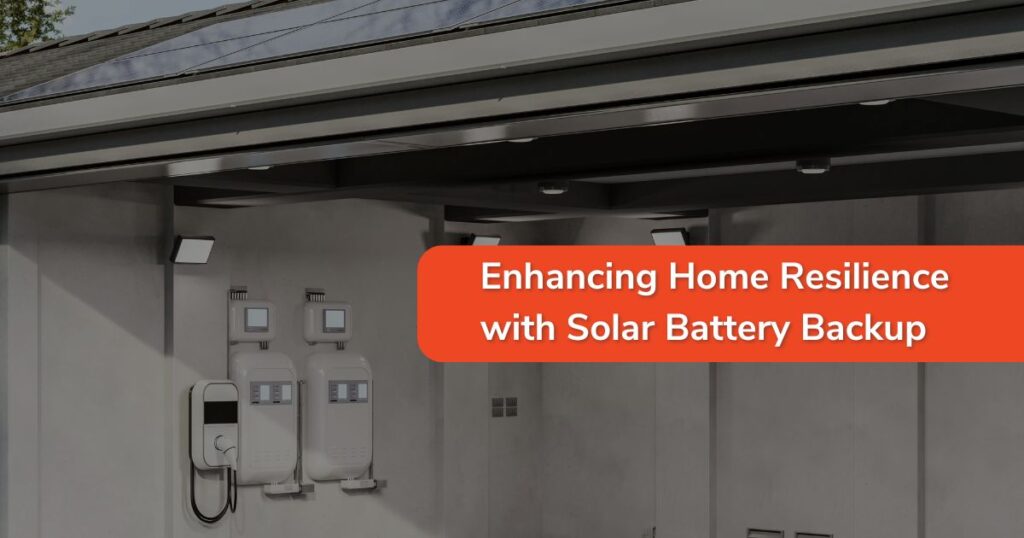
Enhancing Home Resilience with Solar Battery Backup Smart Energy Answers June 3, 2026 In our ever-changing world, resilience has become a virtue, especially when it comes to our homes and the energy that powers them. As the environmental landscape shifts and our power grids are tested, the quest for sustainable and reliable energy solutions takes centre stage. This desire for stability is driving a surge in home solar technologies, particularly those equipped with battery backup systems capable of turning homes into self-sustaining power hubs. Smart Energy Answers, a leader in the Australian market, is at the forefront of this green revolution, offering homeowners Smart Solar Panels, SolarEdge Home Battery, the Tesla Powerwall Battery, Enphase Microinverters, SolarEdge Power Optimisers, SolarEdge Inverters, and EV chargers. The selection is vast, but the message is clear: solar battery technology has evolved, and it’s ready to transform the way we think about home energy. The Solar Revolution Down Under In Australia, the allure of solar energy is undeniable. With its abundant sunshine and a community that increasingly values environmental stewardship, solar power is not just a trend. It’s a movement. The Australian government’s commitment to sustainability through initiatives like the Renewable Energy Target has further fuelled the adoption of solar technologies. But harnessing the sun is only half the battle. The key to unlocking solar energy’s full potential lies in storage, securing a way to capture and reuse solar power even when the sun sets. This is where solar battery backup systems shine, promising homes an uninterrupted and self-generated power supply. The Power Players: Solar Battery Choices for Modern Homes As homeowners set out to embrace this solar narrative, they are presented with a critical choice: the device that will store their solar energy and safeguard their energy independence. Here’s a closer look at two standout options: SolarEdge Home Battery The SolarEdge Home Battery combines cutting-edge efficiency with an easy-to-use interface. With an impressive 94.5% round-trip efficiency and the ability to stack up to 3 batteries per inverter, SolarEdge’s offering is positioned for homes with a substantial energy appetite. The battery’s DC-coupled technology not only averts the triple-conversion efficiency penalty but also generates up to 30 days’ worth of additional power annually. One of the first residential batteries to meet the stringent UL9540A unit level test for fire safety, the SolarEdge Home Battery is designed for indoor installations, making it an ideal space-saving solution. Integrate the SolarEdge Home Battery with the Home Hub Inverter and Home Backup Interface, and your home will have a reliable backup system that ensures your essentials keep running during outages. Tesla Powerwall Battery The Tesla Powerwall is a symbol of innovation and modern design. Boasting 13.5 kWh of energy capacity and 90% round-trip efficiency, the Powerwall has the muscle to power homes through the night and beyond. Its quick backup transition ensures a seamless switch to battery power when the grid falters, and its compact design offers versatile mounting options for indoor or outdoor use. More than just a battery, the Powerwall is a smart energy hub. With its app, homeowners can monitor their energy usage, set customised preferences, and control their power system remotely. Whether used in tandem with solar panels or as a standalone solution, the Powerwall keeps homes running with clean energy. Why Choose Smart Energy Answers for Your Solar Journey? Smart Energy Answers goes beyond providing a mere transaction. It offers a partnership in the solar journey. Superior Products for Longevity The Smart Energy Answers product range is carefully curated to offer the best value and performance. From the longevity of HT Smart Solar Panels with their 30-year warranty, to the reliability of SolarEdge and the streamlined efficiency of Enphase Microinverters, the company takes pride in offering quality that lasts. Expertise in Solar Systems and Beyond With a team of seasoned consultants, Smart Energy Answers simplifies the complexities of solar installation. From the initial assessment to choosing the right system and guiding through sun-power financing, the company’s expertise is a reassuring hand in the solar journey. Tailored Solutions for Financial Freedom The financial landscape should not be a barrier to sustainable energy. Through innovative partnerships like the one with Nectr, Smart Energy Answers brings solar within financial reach. The pay-as-you-save model allows for low upfront costs at zero interest, a testament to the company’s dedication to accessibility. Steadfast Commitment to Customer Comfort A solar system is more than a transaction. It’s a lifestyle enhancement. Smart Energy Answers focuses on ensuring customers are delighted with their choice. The commitment to a smooth experience, from installation to post-sales support, encapsulates the company’s ethos of customer satisfaction. Embracing the Future with Solar Resilience The solar battery market not only represents the vanguard of renewable energy but also the forefront of home resilience. As we navigate a future that demands adaptability, the security and sustainability that solar battery backups offer are indispensable. For homeowners in Australia, the decision to embrace solar energy transcends a financial or environmental investment. It paves the way for an empowered lifestyle. With options like those provided by Smart Energy Answers, the transition to solar becomes not just a practical upgrade, but a smart, thoughtful, and resilient leap into the future. If you’re ready to make the solar shift, Smart Energy Answers stands ready to be your ally. Contact us today to start your solar journey and fortify your home with the power of the sun.
Analysing Data for Enhanced Solar Performance
Analysing Data for Enhanced Solar Performance Smart Energy Answers June 4, 2026 Explore the Importance of Data Analysis in Optimising Solar Panel Performance Explore the importance of data analysis in optimising solar panel performance and maximising energy output. Benefits of Data Analysis in Solar Panel Efficiency Data analysis plays a crucial role in ensuring the optimal performance of solar panels. By analysing the data generated by solar panel monitoring systems, solar energy system operators can identify patterns, trends, and potential issues that may affect the efficiency of the panels. This proactive approach allows for timely interventions to be made, ultimately leading to improved energy output and cost savings. Furthermore, data analysis can help in identifying opportunities for system optimisation, such as adjusting panel angles or cleaning panels to maximise sunlight absorption. Overall, the benefits of data analysis in solar panel efficiency are undeniable, making it a key component of any successful solar energy system. Key Data Metrics to Monitor When monitoring solar panel performance, there are several key data metrics that should be closely monitored. These metrics include, but are not limited to, solar panel output, temperature, sunlight intensity, and system voltage. By tracking these metrics over time, operators can gain valuable insights into the health and efficiency of their solar energy systems. Additionally, monitoring data metrics such as shading analysis and inverter performance can help in identifying potential issues that may be impacting energy production. By staying on top of these key data metrics, operators can ensure that their solar panels are operating at peak performance levels. Utilising Machine Learning for Predictive Analysis Machine learning algorithms can be incredibly valuable in predicting potential issues with solar panels before they occur. By analysing historical data and patterns, machine learning models can forecast when maintenance is needed or when energy output may be compromised. This predictive analysis can help in preventing system failures and minimising downtime, ultimately leading to increased energy production and cost savings. Furthermore, machine learning can also be used to optimise energy production by adjusting panel angles or tracking sunlight patterns. By harnessing the power of machine learning for predictive analysis, solar energy system operators can take proactive steps to ensure optimal performance of their panels. Implementing Real-Time Monitoring Systems Real-time monitoring systems are essential for maintaining the efficiency and performance of solar panels. These systems provide operators with immediate access to critical data metrics, allowing them to quickly identify and address any issues that may arise. By implementing real-time monitoring systems, operators can ensure that their solar panels are operating at peak efficiency at all times. Additionally, real-time monitoring systems can provide alerts and notifications for any anomalies detected in the data, enabling operators to take swift action to rectify the situation. This proactive approach to monitoring can help in maximising energy output and prolonging the lifespan of solar panels. Case Studies: Successful Data-Driven Solar Panel Installations Several case studies have demonstrated the effectiveness of data-driven approaches in optimising solar panel performance. For example, a solar energy company implemented data analysis techniques to identify and rectify shading issues on their panels, resulting in a significant increase in energy output. Another case study showcased how machine learning algorithms were used to predict maintenance needs for solar panels, leading to reduced downtime and increased energy production. These success stories highlight the importance of data analysis in enhancing solar panel performance and achieving maximum energy efficiency.
Advancements in Battery Chemistry for Solar Applications
Advancements in Battery Chemistry for Solar Applications Smart Energy Answers June 4, 2026 The Australian solar landscape is evolving, and nowhere is this more apparent than in the dynamic advancements of battery chemistry within the solar energy industry. As the world seeks sustainable and efficient power solutions, the role of cutting-edge battery technology cannot be overstated. This blog post dives deep into the intricacies of battery chemistry, exploring not just the science but also the practical impact of the latest innovations in solar applications. Understanding Battery Chemistry Basics Before we can grasp the significance of advancements, it is vital to understand the fundamental battery chemistries at play in solar applications. These chemistries, though diverse, share a common goal: to store the energy harvested by solar panels for later use. The Chemistry of Lead-Acid Batteries Historically significant in the storage of solar energy, lead-acid batteries are renowned for their robustness and cost efficiency. The simple chemical reaction between lead dioxide, sulphuric acid, and lead provides a reliable means of energy storage, albeit with limitations in cycle life and energy density. Lithium-Ion’s Reign in Energy Storage Lithium-ion, or Li-ion, batteries have revolutionised energy storage with superior energy density and longer cycle life compared to lead-acid batteries. They operate on the transfer of lithium ions between the positive and negative electrode materials, typically graphite and a high-energy cathode, during charge and discharge. Vanadium Redox Flow Batteries Flow batteries conceptually differ from traditional Li-ion technology. They use vanadium dissolved in an acid electrolyte, with the energy storage taking place in two separate tanks, making the battery’s energy capacity and power independent of each other. The Emergence of Solid-State Batteries Solid-state batteries, an exciting frontier in solar applications, avoid the liquid electrolytes of traditional batteries in favour of solid electrolytes. This offers the potential for safer, denser, and more robust energy storage devices. The Cutting Edge: Advancements in Battery Chemistry With the basics in our arsenal, we now explore the significant strides being made in battery chemistry and what they mean for solar in Australia. The Lithium-Ion Leap Lithium-ion batteries continue to see advancements not just in energy density, which is crucial for increasing the amount of renewable energy that can be effectively stored, but also in safety features. These include solid ceramic electrolytes that help prevent the growth of dendrites, which can cause short circuits. The Rise of Solid-State Batteries Solid-state batteries present the possibility of an order-of-magnitude jump in energy density due to the elimination of flammable liquid components and the use of lithium metal anodes. Furthermore, solid-state design may allow for wider temperature ranges, a critical factor for solar applications in variable environments. Flow Batteries: A Long-Duration Play Flow batteries, with a focus on decoupling power and energy, offer extended cycle life and are not as susceptible to performance degradation over time as Li-ion batteries. This technology may prove pivotal in storing solar energy for long durations, a key requirement for grid stability. Impact on Solar Energy Systems Advanced battery chemistries are not mere theoretical concepts. They have tangible impacts on the efficacy and sustainability of solar energy systems. Unleashing Greater Energy Storage The most immediate impact is expanded storage capacity. Batteries built on advanced chemistries can store more energy in less space, which is critical for residential applications where space is a premium. Enhancing Efficiency and Performance Lithium-ion’s high charge and discharge efficiency translates to lower energy losses, especially when coupled with solar panels. Additionally, the ability of smart batteries to learn usage patterns and optimise charging and discharging further boosts performance. Democratising Solar with Cost-Effective Solutions As advancements drive down costs, solar with storage becomes more accessible. Homeowners in Australia can now equip systems that harness renewable energy and reduce dependency on the grid, even during peak demand hours. Case Studies and Real-World Examples To understand the practical implications of advanced battery chemistry, case studies provide crucial insights. Off-Grid Solutions Redefined Remote Australian communities that were once reliant on expensive and environmentally harmful diesel generators are now turning to solar paired with advanced batteries to ensure a reliable power supply. The Suburban Powerhouse Residential properties with solar and storage solutions are achieving unprecedented energy independence. Not only are they minimising their carbon footprint, but they’re also gaining a degree of power security that was once the preserve of large corporations. The Industrial Sector Awaits Large-scale solar installations, coupled with cutting-edge storage solutions, are poised to transform the industrial sector. They offer clean and reliable power, reduce operational costs, and contribute to a greener economy. Looking to the Future As we gaze towards the horizon, the potential for even more transformative battery technologies is compelling. Beyond Lithium: Other Future Perspectives Lithium, though the current poster child of battery chemistry, is not the only contender for the future. Research into post-lithium technologies like sodium, zinc, and even organic compounds could further diversify the energy storage landscape. The Synergy of Electric Mobility and Solar As electric vehicles, or EVs, proliferate, the synergy between EV batteries and solar systems presents yet another avenue for sustainable power solutions. The bidirectional charging capability of future EVs could turn them into mobile energy storage units, enhancing grid stability. Australian Innovations at the Vanguard Australia’s unique energy challenges and abundance of renewable resources position it as a crucible for innovation in solar battery technology. Market leaders including SolarEdge and Tesla are at the forefront, developing and deploying solutions that are shaping the future of solar energy, not just in the country, but globally. The Path Forward for Australian Consumers Understanding the trajectory of battery technology allows Australian consumers to make informed decisions about embracing solar. It’s an exciting time to harness the power of the sun, converting it into clean, reliable, and efficient energy to power our everyday lives. Embracing Advanced Solar and Storage Solutions For Australians considering a switch to solar energy, the message is clear: advanced battery technology like the SolarEdge Home Battery and Tesla Powerwall can make your solar investment more effective and future-proof.
Beat the Energy Game: Real Hack to Escape Rising Electricity Costs

Beat the Energy Game: Real Hack to Escape Rising Electricity Costs Smart Energy Answers February 20, 2024 Taking Control Amid Rising Energy Bills Struggling to keep the lights on amid rising bills while energy corporations like AGL report billions in profit? Adding to the frustration, there are allegations of “price gouging” within the sector, suggesting that households may be paying higher rates than businesses. While the energy giants deny any wrongdoing, the concern around fairness remains. Recent figures from the Australian Bureau of Statistics paint a sobering picture. The Consumer Price Index, or CPI, surged by 4.1% in the year leading up to December 2023, with energy costs emerging as a significant driver of this increase. It is clear that many consumers feel the current system is not designed with them in mind. We deserve better, and we have the power to demand it. Reality Check: Taking Control of Your Energy There is a way to fight back, break free from the system, and power your home on your own terms. The answer is shining bright right above you: solar panels and batteries. Before you dismiss this as just another expense, let’s talk about reality. AGL’s significant profit is not a coincidence. It is a symptom of a market where many consumers feel like pawns, paying high prices with little control. This is not just about saving money, although that is a major benefit. It is also about taking control of your energy and moving closer to independence from the grid. Imagine not having to rely on the grid anymore. Wipe out bills, not savings: No more skyrocketing costs. Generate your own clean energy from the sun and store it for later, reducing your reliance on the grid and potentially eliminating your electricity bills altogether. Blackouts? No problem: Power outages can become less stressful with battery storage, helping keep essential lights and appliances running even when the grid is down. Planet power: Go green by choosing renewable energy. Reduce your carbon footprint and become part of the solution. Yes, the upfront cost of getting solar and battery storage is a common concern. But the good news is that government rebates, zero-interest loans, and green pay-as-you-save options are making these solutions more accessible than ever. The long-term savings on energy bills can also help offset the initial investment. Outsmart the System and Earn From Energy Companies Here is the real advantage: don’t just save with solar, earn from the energy companies too. With solar panels and batteries, you can generate more energy than you use and sell that excess back to the grid. This can earn credits that further reduce your bills or even help eliminate them completely. At Smart Energy Answers, we know this firsthand. We have consistently received credits and zero balance due on our energy bills. Think about it: energy companies like AGL report major profits while many households continue to struggle with rising bills. But with solar and batteries, you can turn the tables. You can outsmart the system, take control of your energy usage, and potentially profit from it. It is time to break free from rising energy costs and take control of your energy future. Ready to Join the Solar Revolution? Here’s what to do: Explore your options: Talk to reputable local installers, compare quotes, and find the right fit for your budget and specific needs. Become an energy expert: Learn more about solar panels, batteries, and government incentives. Knowledge is power. Make the switch: Don’t wait any longer. Embrace the future and join the growing movement towards energy independence and sustainability. Remember, even small changes in your home can have a big impact. Let’s rewrite the energy narrative, one smart home at a time. Don’t just survive rising energy costs. Thrive with solar and battery power. Contact us today and let’s get you started on your journey to energy freedom. Our energy experts can provide a tailored solution specific to your needs and help you make an informed decision. Together, we can create a brighter future powered by the sun.
Smart Energy Answers: Tesla Premium Certified Installer in 2024
Smart Energy Answers: Tesla Premium Certified Installer in 2024 Smart Energy Answers February 2, 2024 Smart Energy Answers Retains Tesla Premium Certified Installer Status in 2024 At Smart Energy Answers, we are proud to retain our prestigious title as a Tesla Premium Certified Installer in 2024. This certification is not just a badge of honour. It is a testament to our unwavering commitment to excellence and innovation in the renewable energy sector. We are excited to share this news with you, and we have a special offer just for you. You will not want to miss this incredible opportunity. Our Journey to Certification Becoming a Tesla Premium Certified Installer is no easy achievement. It requires fulfilling rigorous criteria, including: Exceptional installation quality. In-depth product knowledge. Outstanding customer experience. A long-standing partnership with Tesla. Most importantly, alignment with Tesla’s mission. This alignment goes beyond believing in the product. It reflects a dedication to pushing the boundaries of sustainability. Through our rigorous training and certification programmes, we have demonstrated proficiency and unwavering dedication to every aspect of the solar energy ecosystem. This helps us guarantee premium service to our valued clients. The Significance of Tesla Certification Why does being a Tesla Premium Certified Installer matter? Apart from its exclusivity, this certification represents a seal of quality. It assures customers that the certified installer has the necessary expertise and training to handle Tesla products and technologies with precision. For customers, our certification provides assurance that they are dealing with a reputable company with a proven track record of successful installations. With Tesla’s innovative line of energy products, our designation as a Premium Certified Installer means we are at the forefront of technology. It allows us to offer the latest and best solutions to our customers. A Partnership With Countless Benefits Choosing to work with a Tesla Premium Certified Installer brings numerous advantages for those investing in solar and renewable energy solutions. The primary consideration is the guarantee of quality. By having Tesla products installed by a certified installer, you can be confident that the product will reach its full potential without compromising performance. Moreover, the extensive training our installers undergo translates into an enhanced customer experience. They are equipped to address queries with confidence and offer valuable advice throughout the process. Exceeding Certification Standards At Smart Energy Answers, our commitment to maintaining our Tesla certification goes beyond satisfactory compliance. It represents a promise to surpass benchmark standards. We continually invest in our team to ensure they remain at the forefront of product knowledge. We also continuously enhance our installation processes to align with the latest Tesla guidelines and product updates. These continuous improvements not only help us retain our certification, but also drive growth, innovation, and best service practices for our valued customers. Your Premium Partner for Sustainable Solutions With Smart Energy Answers’ Tesla Premium Certification, the future of renewable energy in 2024 and beyond shines brightly. As the world increasingly embraces sustainable living, companies like ours play an important role in unlocking the potential of clean energy solutions. This accreditation not only acknowledges our hard work, but also serves as a clear signal to those looking to invest in renewable energy. It shows that they have a premium partner in their sustainability journey. It is not just about the title. It is about the capability that comes with it. Smart Energy Answers’ Tesla Premium Certification ensures that when you choose us, you get a partner who is trained, trusted, and at the forefront of technology. So, why settle for less when you can have one of the best in the business to power your progress towards a greener future? Celebrating With an Exclusive Offer We are thrilled to announce an exclusive offer for our Tesla Powerwall 2 installations. To celebrate our prestigious title as a Tesla Premium Certified Installer, we are offering a $750 rebate on the installation of Tesla Powerwall 2, making it even more affordable to switch to renewable energy. You can secure this cutting-edge technology with just a $750 deposit and enjoy interest-free payments of $235 monthly for 5 years. For our customers in the Sydney Metro area, we’re delivering an additional bonus: an extra $750 rebate if the system is installed before 29 February 2024. This is our way of helping you make the move towards a more sustainable future. Ready to make a positive change for the planet and your pocket? Don’t delay. Contact one of our energy experts today. We’re eager to provide a personalised solar energy solution tailored to your home’s specific needs. Experience the difference of working with a Tesla Premium Certified partner: Smart Energy Answers. Make the switch to a sustainable future now. Contact us today.
2024 Best-Value Solar Battery Prices in Australia
2024 Best-Value Solar Battery Prices in Australia Smart Energy Answers January 19, 2024 Best-Value Solar Battery Prices for 2023 to 2024 In the quest for a sustainable future, the combination of solar energy and batteries should be a top priority. Adopting a solar battery is a powerful move towards energy resilience. It is essential for households to consider energy storage to save more on electricity bills, earn credits, and become more environmentally friendly. In this in-depth blog, we’re uncovering the best-value solar battery prices for 2023 to 2024. So, take a seat, relax, and let’s navigate the solar battery landscape together for the most value. What Is a Solar Battery? Ever wish you could bottle up sunshine? Solar batteries are the next best thing. These advanced devices present a practical solution for those exploring solar energy for the first time. By efficiently storing surplus energy generated by solar panels, solar batteries serve as a dependable reservoir, helping ensure continuous power availability even when faced with cloudy skies. For experienced solar users, this can feel like having a virtual power plant readily accessible. The stored energy becomes a valuable asset during peak-demand periods and offers a strategic solution when grid reliability falters. Whether you’re new to solar or a seasoned enthusiast, solar batteries empower you with greater control, regardless of weather conditions. The Absolute List of Solar Battery Prices in 2023 to 2024 It does not take an economics degree to understand that electricity prices are likely to become more expensive over time. This is because solar and other green energy sources are now preferred over non-renewable sources to help protect the planet. So, if you’re in the market for home solar batteries, it is smart to stay informed, not just for the environment but also for your wallet. Below, you will find a list of popular solar battery prices by brand, along with their key features. Alpha ESS B3+ 5 kWh Approximate installation cost: $6,500 Tailored for retrofit applications, the SMILE-B3-PLUS is a cost-effective and easily installable solution. With a 3 kW AC-coupled design and a built-in 5.04 kWh battery, it caters to various retrofit needs. It also offers scalability, with the option to expand its capacity up to 30.24 kWh. Modular Design Battery for Easy Installation and Expansion Compatible with all solar inverters: The Alpha Smile B3 Plus offers versatility by being compatible with all solar inverters, ensuring seamless integration with various solar power systems for maximum energy efficiency. All-in-one module: This residential energy storage system combines multiple functions into a single, compact unit, streamlining its design and providing users with a comprehensive solution that optimises space and functionality. VPP ready: With Virtual Power Plant, or VPP, readiness, the Alpha Smile B3 Plus enables users to participate in advanced energy management systems, contribute to grid stability, and access potential benefits through demand response programmes. Slim but powerful: Despite its sleek and space-saving design, the Alpha Smile B3 Plus delivers strong performance with its 3 kW capacity, helping homeowners effectively store and utilise solar energy without compromising on performance. Franklin Home 13.6 kWh Approximate installation cost: $12,000 Franklin Home Power extends beyond the need for secure backup. It prioritises the optimisation of daily household energy management for comprehensive whole-home energy independence. At the core of Franklin Home Power are the aGate intelligent controller, aPower batteries, and the FranklinWH app. Energy Independence and Security Robust: Franklin Home Power offers a robust solution with a remarkable 12-year product and performance warranty, ensuring long-term reliability and peace of mind for users. Safe: Safety is prioritised with Franklin Home Power’s cobalt-free Lithium Iron Phosphate, or LFP, battery, providing a secure and environmentally conscious energy storage solution. Reliable: The system provides a level of reliability comparable to Uninterrupted Power Supply, or UPS, standards, helping ensure a continuous and stable power source. Versatile: Franklin Home Power is generator-compatible, supports full off-grid scenarios, and provides comprehensive blackout backup for entire homes. Scalable: With a scalable 13.6 kWh battery and the capability for up to 15 parallel connections, Franklin Home Power offers adaptability to various energy needs, making it suitable for a range of applications. Smart: The system’s intelligence is demonstrated through auto load-shedding, a smart feature that optimises backup time by dynamically adjusting to changing power demands and ensuring efficient energy utilisation. Qcells Q.HOME – 6.86 kWh Approximate installation cost: $7,000 This AC-coupled storage solution seamlessly integrates with any solar system and offers an exclusive 15-year product warranty. The modular Q.SAVE battery, with a base capacity of 6.86 kWh, can be easily scaled up to a maximum of 20.5 kWh by combining up to three units. The Q.SAVE system is complemented by the high-performance Q.VOLT H5 inverter, providing a robust 5 kW of charge and discharge power. Performance and Flexibility Without Compromise Easy installation: The improved design ensures convenience and a straightforward installation process for an optimal user experience. Dynamic optimiser mode: Leveraging real-time weather data, the dynamic optimiser mode is designed to maximise energy yields through an algorithmic approach. Scalable battery: The battery is scalable, offering options ranging from 6.8 kWh, 13.7 kWh, and 20.5 kWh, ensuring a tailored solution to meet your unique energy requirements. ATS-free seamless control: Experience continuous and stable backup without the need for an Automatic Transfer Switch, or ATS, during grid faults and restoration. Extended warranty: Benefit from an extended 15-year product and performance warranty, supported by rigorous quality control measures for added assurance. Enhanced reliability: The system offers outstanding reliability through the use of Samsung SDI battery cells, helping ensure consistent performance. Tesla Powerwall – 13.5 kWh Approximate installation cost: $15,000 Tesla’s dominance in solar storage and solar battery systems is the result of combining sophisticated design with exceptional functionality and market-leading features. Renowned for reliability, Tesla has emerged as a leading name in solar storage solutions. Tesla home batteries come into their own when solar panels face limitations, such as during nighttime, overcast weather, or power outages. This helps ensure a seamless and continuous power supply, even when
Solar Batteries Decoded : Top FAQs & Insights for Savvy Consumers
Solar Batteries Decoded : Top FAQs & Insights for Savvy Consumers Smart Energy Answers September 6, 2023 Understanding Solar Batteries In an era where sustainability meets innovation, the demand for solar with batteries has increased significantly. More families in Australia want to use cleaner energy and take greater control of their power, which is why solar batteries are becoming increasingly popular. At Smart Energy Answers, we are excited to explain solar batteries in this blog. We are also here to share some of our customers’ top questions to help you make informed decisions about your energy future. Solar Battery FAQs FAQ 1: How Can Solar Batteries Save Me Money on Electricity Bills? Solar batteries offer potential savings on electricity bills by capturing surplus energy produced by your solar panels during sunny periods. This stored energy becomes available during less sunny hours, including nights, rainy days, and cloudy weather. By reducing reliance on grid power during peak periods, you can cut down on costly electricity expenses and move closer to energy independence. With a properly sized solar and battery system, some customers can aim for $0 electricity bills. FAQ 2: Do Solar Batteries Qualify for Incentives or Rebates in Australia? Yes, incentives are available in different states across Australia. In addition, some of our partners also offer special Virtual Power Plant, or VPP, rebates for specific networks and territories. FAQ 3: What Size Solar Battery Do I Need for My Home? The size of the solar battery you need for your home in Australia depends on several factors, including the following: Energy consumption: Understand your household’s daily energy consumption. Review your past electricity bills to see how much energy you use on average. A larger battery may be suitable if you have higher energy needs. Solar panel system size: The capacity of your solar panel system matters. A larger system can produce more surplus energy, which can then be stored in the battery. Usage patterns: Consider when you use the most electricity. If you typically consume more energy in the evening, a larger battery can help you rely less on grid power during those times. Grid connectivity: If you are aiming for energy independence and want to reduce grid reliance, a larger battery may be beneficial. Smaller batteries are often used for backup power during outages. Budget: Larger batteries tend to be more expensive. Balance your energy needs with your budget to find the right size that offers the best value. Future expansion: If you plan to expand your household or increase energy usage in the future, factor in potential changes when selecting the battery size. It is recommended to consult with a solar energy expert to determine the optimal battery size that aligns with your household’s needs and usage patterns. FAQ 4: What Factors Should I Consider When Selecting a Solar Battery for My Home? Capacity: Choose a battery with sufficient capacity to meet your energy needs. Efficiency: Look at how efficiently the battery stores and releases energy. Higher-efficiency batteries can save more of the energy generated by your solar panels. Installation and compatibility: Ensure the battery is compatible with your existing solar panel system and inverter. Consider installation requirements, space, and placement options. Scalability: If you plan to expand your solar system in the future, choose a battery that can be easily integrated with additional panels. Warranty and support: Research the manufacturer’s reputation, warranty terms, and customer support. A reliable warranty can provide peace of mind. Cost and value: Balance the upfront cost of the battery with the potential savings it can offer over its lifetime. Consider any available government incentives or rebates. Safety: Battery safety features are crucial. Look for batteries with built-in protection against overcharging, overheating, and other potential risks. Smart features: Some batteries come with smart management systems that optimise energy usage and enable remote monitoring and control, with the potential for additional revenue through VPPs. Brand and installer reputation: Choose well-established brands and installers known for quality and reliability. Check customer product and service reviews from reputable websites. FAQ 5: Are Lithium-Ion Batteries the Best Choice for Residential Solar Systems in Australia? Yes, lithium-ion batteries are often considered one of the best choices for residential solar systems in Australia due to their high energy density, efficiency, long lifespan, and compact size. FAQ 6: How Long Do Solar Batteries Typically Last in the Australian Climate? Solar batteries typically last around 15 to 25 years in the Australian climate. Factors such as battery chemistry, usage patterns, maintenance, and manufacturer quality can influence their lifespan. Regular maintenance and proper usage can help extend the life of solar batteries. In addition, manufacturers typically offer warranties of up to 15 years. FAQ 7: Is It Necessary to Have an Existing Solar Panel System to Install Solar Batteries in Australia? No, it is not always necessary to have an existing solar panel system to install solar batteries in Australia. While many people choose to combine solar panels with batteries to maximise energy self-sufficiency, you can also install a solar battery system on its own. However, without solar panels, the battery will primarily charge from the grid, and its effectiveness in reducing electricity bills may be limited compared to when it is paired with solar panels. It is recommended to consult with experts to determine the most suitable setup based on your energy needs and goals. FAQ 8: What Are the Installation Requirements and Costs Associated with Solar Batteries in Australia? The costs and installation requirements for solar batteries in Australia can vary based on factors such as available space, inverter compatibility, electrical upgrades, permits, and ventilation needs. The expenses typically include the battery unit cost, installation labour, potential inverter upgrades, additional components, permits, and maintenance. The total cost can range from several thousand to tens of thousands of dollars, with government incentives and financing options available to help offset expenses. It is advisable to seek quotes from professional installers for accurate cost estimates based on your specific circumstances. FAQ 9: