
A Greener World: 1000 Smart Batteries by Smart Energy Answers
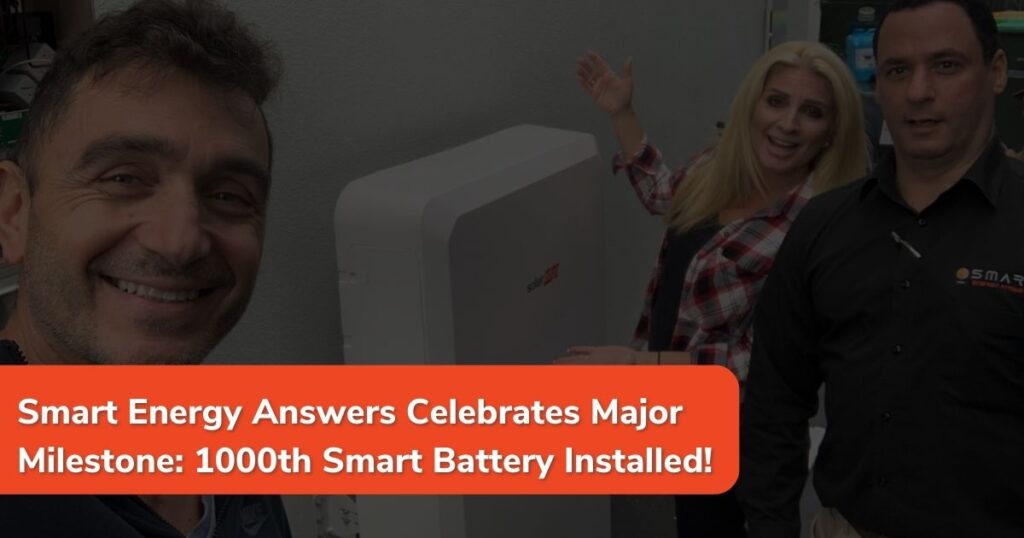
A Greener World: 1000 Smart Batteries by Smart Energy Answers Smart Energy Answers June 16, 2023 Smart Energy Answers Reaches 1,000 Smart Battery Installations Smart Energy Answers is thrilled to share that we have successfully installed 1,000 smart batteries, and counting. This remarkable achievement marks a major step towards a greener and more energy-independent future. With the installation of 1,000 smart batteries, Smart Energy Answers has become a trusted solar energy solutions partner for homeowners and businesses alike. These cutting-edge batteries help reduce energy bills and promote energy independence by harnessing renewable energy more efficiently. Through the power of smart solar technology, Smart Energy Answers enables customers to take control of their energy consumption and contribute to a cleaner planet. These 1,000 smart batteries represent our collective effort towards mitigating climate change and reducing carbon footprints. We extend our heartfelt gratitude to all the homeowners and businesses who have trusted us as their partners on this journey towards sustainability. Together, Smart Energy Answers and our customers are making a tangible difference in the fight against climate change. In addition to expressing gratitude to our valued customers, we would like to extend a special thank you to our esteemed partners who have played a vital role in our journey towards sustainability. Tesla, SolarEdge, Alpha ESS, and Qcells have been instrumental in providing us with cutting-edge technologies and innovative solutions that have helped shape the success of our smart energy installations. Their unwavering commitment to sustainability, reliability, and efficiency has been invaluable in achieving this significant milestone. This milestone further powers our drive to keep pushing the boundaries of innovation. Our team of energy experts will continue to explore and introduce groundbreaking energy solutions. We remain committed to staying at the forefront of the industry, empowering individuals and businesses to embrace sustainable energy practices.
Solar Victoria Moves From Rebates to Interest-Free Loans For Batteries
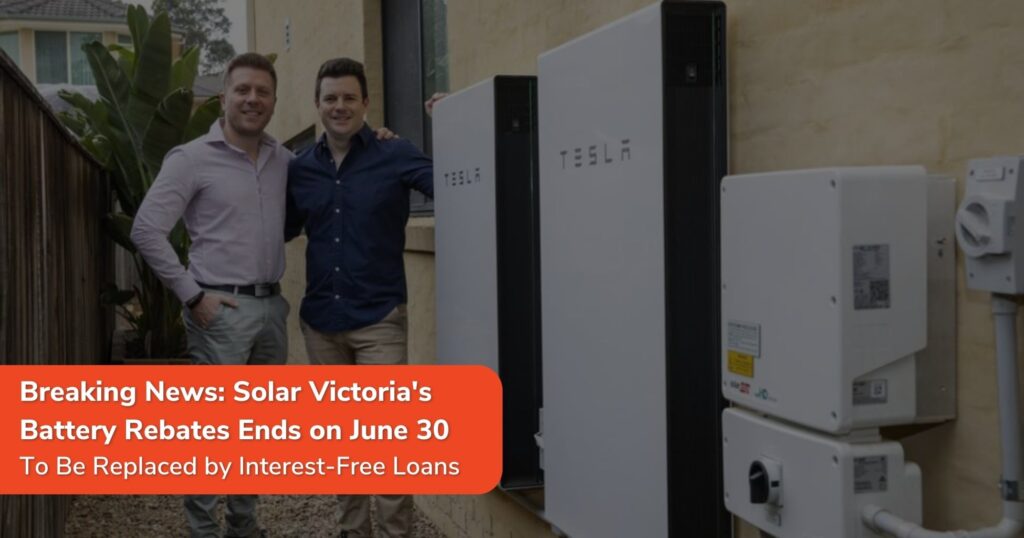
Solar Victoria Moves From Rebates to Interest-Free Loans For Batteries Smart Energy Answers May 29, 2023 Solar Victoria’s Transition: From Rebates to Interest-Free Loans for Home Batteries Solar Victoria is ushering in a significant change to its incentive programme. By 30 June, the battery rebate worth up to $2,950 will come to an end, making way for interest-free loans of up to $8,800 starting from 1 July. This new Solar Homes Program is only open to the first 4,500 Victorian households. With the shift from the battery rebate to interest-free loans, Solar Victoria aims to enhance the affordability and accessibility of renewable energy storage systems. While the rebate offered a grant or discount on battery purchases, the interest-free loan opens the door to a larger funding option. This means homeowners can now explore more high-quality battery choices and overcome the upfront cost barrier. The Solar Homes Program remains focused on making renewable energy accessible to Victorians. Whether through the rebate or the interest-free loan, the goal is to enable individuals to harness the power of battery storage. By utilising battery storage, consumers can reduce their energy bills and protect themselves against rising electricity prices. Battery systems can also provide reliable backup during power outages, helping ensure an uninterrupted energy supply. Additionally, households can sell excess power back to the grid and earn credits or money from it. Solar Victoria’s incentive programme plays a crucial role in promoting sustainable energy practices. By encouraging the adoption of battery storage, the programme aims to reduce reliance on fossil fuel-based power generation, decrease greenhouse gas emissions, and help protect our planet. Conclusion Solar Victoria’s upcoming transition from the battery rebate to interest-free loans presents an exciting opportunity for Victorian households. To receive the state government grant, it is essential to act fast. The battery rebate worth $2,950 will only be available until 30 June. After that, interest-free loans of up to $8,800 will take effect from 1 July. Do not miss out on securing your preferred choice through this progressive initiative that promotes renewable energy adoption and empowers you to create a greener, more sustainable future. Talk to our energy experts today to get a personalised quote and guidance on the available battery storage systems. Our team can help you navigate the options available and choose the right solution for your home.
Tesla Powerwall 2 Price Drops Again: Time to Add Home Batteries
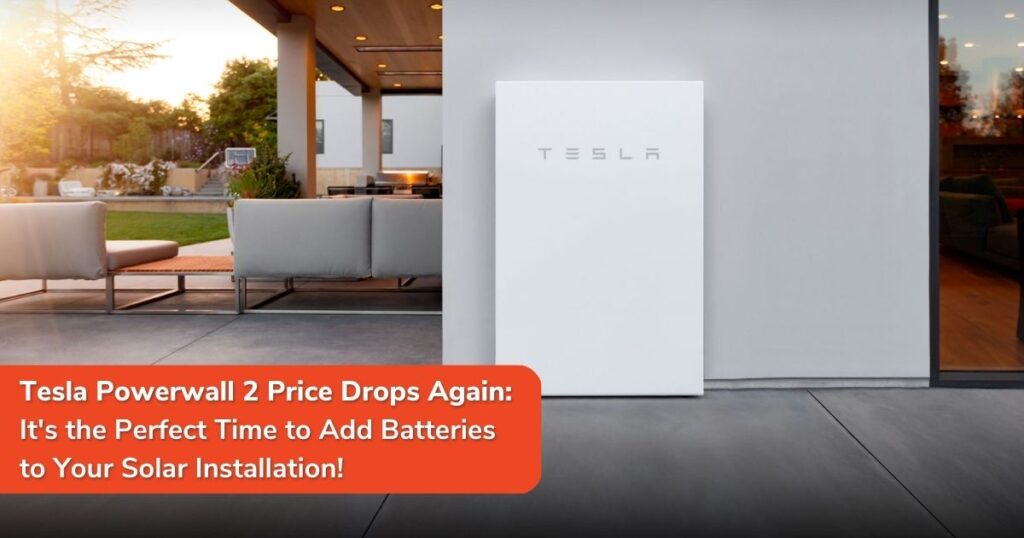
Tesla Powerwall 2 Price Drops Again: Time to Add Home Batteries Smart Energy Answers April 18, 2023 Tesla Powerwall 2 Price Drops Again: Upgrade Your Solar Installation with Battery Storage Now Are you considering adding batteries to your solar installation? Or maybe you are thinking about getting a new solar installation with batteries? We have some fantastic news for you. Tesla has announced another price reduction for the Powerwall 2. As a Tesla Premium Installer in 2023, Smart Energy Answers is here to share all the details with you. Tesla has reduced the price of the Powerwall 2 by a significant $1,699, effective from 12 April. This comes on top of the earlier price drop in February, which means the Powerwall 2 has now dropped in price by a total of $3,330 this year alone. This presents an incredible opportunity for battery buyers in the market right now. This opportunity becomes even more attractive when combined with our Amber Battery Program offer. The Amber Battery Program is an AI-driven energy trading system that allows customers to earn from their battery by using the extra stored energy in their Tesla Powerwall 2. It can sell stored energy when electricity prices are high and buy energy when prices are low. This means you do not have to worry about a thing; you can simply sit back and watch the credits roll in. As an example, one of our members, Adam, was able to generate $700 in credits within 2 months of installing his Tesla Powerwall and joining Amber’s battery programme. This is especially important as electricity prices across Australia are set to increase by up to 22% from 1 July, as permitted by the Australian Energy Regulator. By installing your battery now and joining the Amber Battery Program, you can help protect yourself as much as possible from future uncertainty in the energy market. For both small and large households, as well as small and medium-sized enterprises, the Tesla Powerwall 2 is a robust battery solution. If your business operates until 8 pm or late into the night, the Powerwall 2 can help offset electricity demand charges and save you even more on your energy bills. It is a smart investment that not only helps you save money but also contributes to a more sustainable future. As a Tesla Premium Installer for the past 3 years, Smart Energy Answers has been a trusted partner in delivering leading Tesla installations in the market. We have a proven track record of delivering high-quality solar installations with batteries, and our team of experts is ready to help you make the most of this incredible offer. Do not miss out on the opportunity to add batteries to your solar installation or get a new solar installation with batteries at a discounted price. Contact us today to learn more and take advantage of this amazing deal. Conclusion With the recent price drops of the Tesla Powerwall 2, combined with our Amber Battery Program, now is an incredible time to invest in a solar installation with batteries. You can enjoy savings on your energy bills, protect yourself from rising electricity prices, and contribute to a greener future. Do not wait until electricity prices go up on 1 July. Secure the best investment for your home or business now with Smart Energy Answers, a trusted Tesla Premium Installer. Contact us today to claim your quote and your $3,330 in savings.
New Energy Tech Consumer Code : Solar Industry Consumer Protection
New Energy Tech Consumer Code : Solar Industry Consumer Protection Smart Energy Answers March 22, 2023 Raising the Bar for Consumer Protection in Solar and Energy Tech The New Energy Tech Consumer Code, or NETCC, has been introduced in Australia, replacing the Clean Energy Council’s Approved Solar Retailer programme. The NETCC aims to regulate the sales and marketing practices of new energy technology companies and protect consumers from misleading or deceptive practices. This code plays a key role in promoting transparency and building confidence in the new energy technology industry. Smart Energy Answers is an approved seller under the NETCC. Smart Energy Answers continues to lead by example as an approved seller under the NETCC. This recognition confirms our commitment to adhering to the highest sales and marketing standards and providing our customers with accurate information about our products and services. As an approved seller, Smart Energy Answers is committed to: Providing clear, accurate, and relevant information to help you make informed choices. Encouraging you to be aware of your rights under the law and the NETCC. Ensuring that our sales practices are responsible. Ensuring that products, systems, services, and documentation provided under the NETCC are suitable and fit for purpose. Supporting staff training and work processes that ensure we comply with the law and the NETCC. Ensuring that we are responsive to your needs and take prompt, appropriate action if you make a complaint. The introduction of the NETCC is a positive step for Australia’s new energy technology industry. It demonstrates the government’s commitment to promoting growth, transparency, and sustainability across the sector. Consumers are encouraged to look for the NETCC logo when making purchases. This helps ensure they are protected by the code’s standards and are dealing with reputable companies.
Smart Energy Answers: A Tesla Premium Installer for 2023
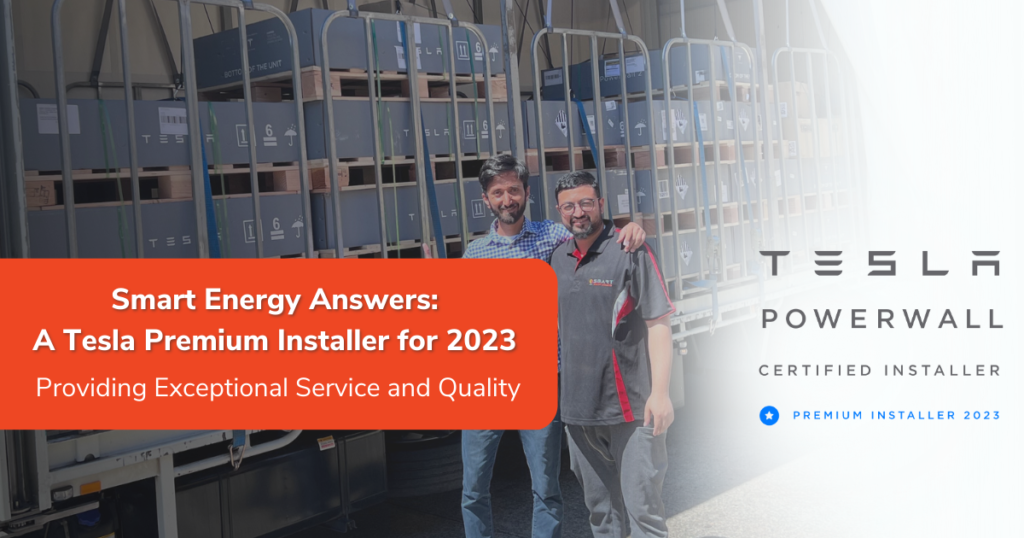
Smart Energy Answers: A Tesla Premium Installer for 2023 Smart Energy Answers January 24, 2023 Smart Energy Answers: Your Trusted Tesla Powerwall Premium Installer for 2023 We are thrilled to announce that Smart Energy Answers will continue to be a Tesla Powerwall Premium Installer for 2023. This certification is a testament to our commitment to providing customers with outstanding service, exceptional installation quality, and extensive product knowledge. As a Tesla Powerwall Premium Installer, we have the honour of working with some of the most advanced technology in the renewable energy industry. Our team of certified installers is trained to install and maintain Tesla Powerwall battery systems for both residential and commercial properties. Our customers can trust that our dedicated team will provide a high level of customer service from start to finish. We ensure every installation is completed to the highest and safest standards, with the goal of delivering complete customer satisfaction. We are proud to continue our partnership with Tesla and are excited to help even more customers make the switch to clean energy in 2023. Choosing Smart Energy Answers as your Tesla Powerwall Premium Installer means you can expect high-quality service, expert product knowledge, and a professional installation completed to industry-leading standards. We take pride in helping our clients reduce their carbon footprint and increase their energy independence by providing efficient and reliable Tesla Powerwall systems. Talk to our energy expert today to learn more about Tesla Powerwall and how it can support your home or business energy needs.
Solar Scams Exposed: Companies Promising 2-Week Installations
Solar Scams Exposed: Companies Promising 2-Week Installations Smart Energy Answers November 30, 2022 Beware of Solar Scams: Spotting Companies Promising Unrealistic 2-Week Installations It is that time of year again when some solar companies start promising quick and easy installations just in time for the end of the year. While going solar is a great way to save money on your power bill, it is important to be careful of scams and unrealistic promises. In this blog post, we will outline a common solar scam to look out for, so you can make an informed decision before going solar. What Has Been Happening with Solar Scams? Solar scams are unfortunately becoming more common as the industry continues to grow. Some solar companies take advantage of homeowners who are not familiar with the process or who are eager to save money on their energy bills. One of the most common warning signs is a company promising a 2-week installation time frame. In most cases, this is unrealistic for a quality solar installation. A reputable solar company will usually need around 4 to 6 weeks to properly design, approve, and install a solar system. Rushing the process can result in a poor-quality installation that may not function as intended and could even create safety risks. Watch Out for Unqualified Installers Another scam to watch out for is companies that use unqualified installers. These installers may not have the proper training, certification, or experience required to install a solar system safely and correctly. This can lead to property damage, poor system performance, and even voided warranties that you thought were included with your purchase. When this happens, homeowners can be left with expensive repair bills and a solar panel system that does not work as expected. How to Avoid Solar Scams The best way to avoid getting scammed is to do your research ahead of time. Make sure you understand the solar installation process and what a quality installation should involve. Get multiple quotes from different companies before making a decision, and always read the fine print carefully. If a solar company is pressuring you to sign a contract or make a deposit for an installation scheduled only a few weeks away, that is a warning sign. Do not risk your home or your investment for a few tempting promises. How Do I Know If I’m Speaking with a High-Quality Solar Installer? Solar panels are a great way to save money on your energy bill and do your part for the environment. However, not all solar companies are created equal. To make sure you are choosing a high-quality solar installer and panel system, there are a few key things you should look for. 1. Look for an Established Company with a Good Reputation Check how many reviews the company has on Google or ProductReview.com.au. Look at what customers are saying about their experience, installation quality, communication, and after-sales support. Do not rely on just one review. Read at least a dozen to get a clearer picture of the company’s reputation. 2. Make Sure the Company Uses High-Quality Products Solar technology has evolved significantly over the years, so it is important to understand what products and system design options are being recommended for your home. Some solar companies may offer basic string inverter systems because they can be cheaper upfront. However, the cheapest option is not always the best long-term solution, especially if your property has shading, complex roof layouts, or future energy needs to consider. If a company discusses technologies such as power optimisers or microinverters, this may be a sign that they are considering a more advanced and tailored solar solution for your home. These technologies can help improve system performance, monitoring, and long-term reliability, giving you greater peace of mind. Choosing up-to-date, high-quality solar technology can help your system stand the test of time while saving you money, time, and stress in the future. 3. Check That the Company Has a Solid Warranty Policy Most reputable solar companies will provide a 25-year performance warranty on solar panels. However, warranty length is not the only thing that matters. A solar company can close down, and when that happens, the support you expected from that warranty may become difficult to access. That is why it is important to choose a solar company with long-term interests and a proven track record. If an issue occurs 10 or 15 years down the road, you want to feel confident that the company is still operating and able to support you. 4. Ask for References from Past Clients Make sure to look through the company’s social media and customer reviews before making a decision. See if you can find examples of where they have installed solar systems and how many installations they have completed. This can give you a better understanding of their experience, workmanship, and consistency. At Smart Energy Answers, we have a dedicated page for completed installations, where we collect and display examples of our solar projects. Conclusion Solar scams are becoming more common as the industry grows. With so many options available, it is important to do your research before signing any contracts or making any payments. If something sounds too good to be true, it probably is. The best way to avoid solar scams is to get multiple quotes from different companies and compare more than just pricing. Make sure you also compare the terms, reputation, installation method, product quality, and level of technology before making a decision. Be aware of common scams, such as companies promising unrealistic installation timelines. You can protect yourself by doing your research ahead of time, reading trusted resources, and asking the right questions before committing. A little bit of knowledge can go a long way in helping you avoid solar scammers and choose a reputable installer.
5 Tips to Maximise Your Solar Energy and Save Money
5 Tips to Maximise Your Solar Energy and Save Money Smart Energy Answers November 23, 2022 You’ve Got Solar, Now What? It is time to get the most out of it. Solar panels are a great way to reduce your carbon footprint, save money on your energy bills, and power your home in a more sustainable way. The amount of energy your solar panels produce can be maximised by using them alongside other energy-saving measures. With these tips, you can make the most of your solar energy and run your home more efficiently. It is important to have an idea of how much electricity each appliance and device in your home uses. This can help you plan your electricity usage more effectively and make better use of the solar energy your system produces. 1. Take Advantage of Daytime Get the most out of your solar system when the sun is out. Use appliances that require a lot of electricity during the daytime, when your solar panels are generating the most power. 2. Stagger Your Use of High-Energy Appliances Avoid using high-energy appliances and devices all at once, as this can increase your electricity demand and cause you to draw power from the grid. This includes appliances such as washing machines, dishwashers, and tumble dryers. By staggering their use throughout the day, you can make better use of the solar energy your system is generating. 3. Maintain and Monitor Your Solar System Regularly It is important to keep your solar panels clean and free of debris so they can operate at maximum efficiency. Regularly check your panels and arrange cleaning when needed to help ensure your system is working properly. You should also monitor your solar system’s performance so you can quickly identify any issues and keep your energy production on track. 4. Invest in a Solar Battery Another way to get the most out of your solar panels is to store unused energy in a solar battery. Solar batteries allow you to keep excess energy generated by your solar panels and use it when needed, such as at night or during periods with less sunlight. This can help reduce your dependence on the grid and may help you save more on your energy bills over time. 5. Get a Heat Pump One way to optimise your solar panels is to install a heat pump hot water system. Heat pump hot water systems use a heat exchange process that absorbs heat from the surrounding air and uses it to heat your water. These electric water heaters can provide hot water very efficiently in most climates. Compared with a standard resistive element heater, a heat pump hot water system can help reduce energy use and may save up to 78% on hot water running costs. Conclusion Solar panels are a great way to help power your home and save on energy costs. By following these tips, you can maximise the amount of energy your solar panels produce and make your investment in solar power work even harder for you. Best of all, using solar energy helps create a better and more sustainable world for everyone.
Solar Power & Electric Vehicle Charging
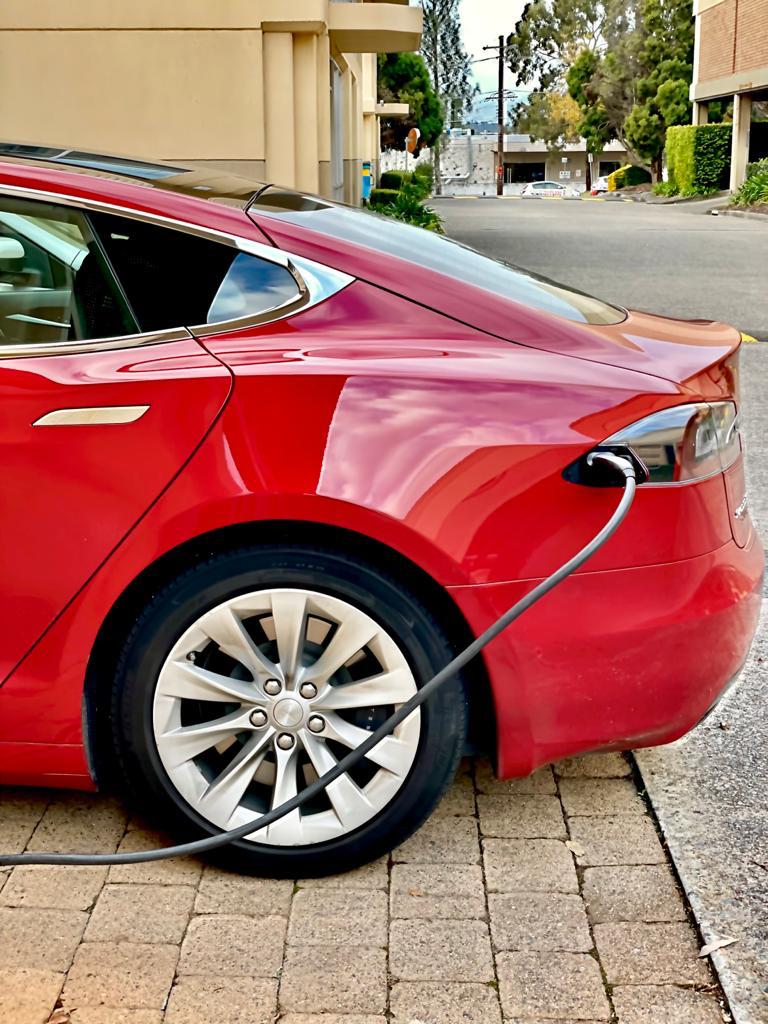
Solar Power & Electric Vehicle Charging Smart Energy Answers January 17, 2022 Can You Charge an EV with Solar Power? With Australia’s share of electric vehicles, or EVs, continuing to increase and more private rooftop solar power systems in use than ever before, it is natural that energy-conscious homeowners are starting to look at how these two technologies can work together. The transport sector is Australia’s third-largest source of greenhouse gas emissions, and these emissions have been increasing faster than any other sector. The large-scale uptake of EVs can clearly make a significant impact. EVs are a cleaner option for the environment, even when powered fully by energy from the grid. Using solar power to charge EV batteries is an even greater improvement and can help homeowners reduce reliance on traditional energy sources. CSIRO Supported One of the challenges that must be addressed for large-scale EV adoption in Australia is the need for widespread charging infrastructure. A collaboration between CSIRO, Nissan Australia, and Delta Electronics, with funding from the Victorian Government, is trialling a renewable energy system in Victoria. The system links solar photovoltaic, or PV, panels, batteries, and smart charging technology. According to CSIRO, this creates a solar-powered EV charging system that can use renewable energy to charge a vehicle at any time of day and in different weather conditions, while placing minimal impact on the electricity grid. CSIRO researchers developed and tested the system and implemented the thermal management controls. Three solar charging modules have been installed at Nissan Headquarters in Dandenong, with each module capable of charging four vehicles at a time. The modules will be evaluated over 200 days, including the peak summer period, before the project partners determine the next steps for this technology. Charging Your EV at Home As owners of private solar power systems understand, meaningful change in renewable energy adoption often begins at home. Just as it is possible to install solar panels and a storage battery at home, it is also possible to use your solar power system to charge your EV. The simplest way to charge your EV is to plug it in at home during the day while the sun is shining and solar energy is being generated. If the capacity of your home solar power system is greater than the charging input required by your EV, no additional energy from the grid may be needed. Grid power can still be used to make up any shortfall, which can be useful on cloudy days or during periods when household energy usage is particularly high. The amount of energy used to power an EV over a certain distance is known as kilowatt-hours per kilometre, or kWh per km. This rate varies between EV models, although on average, many EVs can achieve around 6 km of range from 1 kWh of energy in their battery pack. An average Australian driver is said to drive around 50 km per day, which would require approximately 8 kWh of electricity. Solar power system owners could offset the charging needs of an EV driven 50 km per day by installing an additional 2 kW of solar panels, which is roughly around eight panels depending on the panel size. EV Charger Levels 1, 2 & 3 In reality, most energy-conscious EV owners will charge their vehicles primarily at home for everyday driving needs. However, they may still rely on external charging facilities from time to time when driving longer distances. There are three different levels of EV chargers currently available, with Level 1 being the slowest and Level 3 being the fastest. Level 1 charging uses a standard power point and charges an EV battery pack at the slowest commonly available rate. On average, Level 1 chargers can add around 20 km of range per hour of charging time. This means charging an EV for 24 hours using a Level 1 charger could add around 480 km of range. Level 2 charging is achieved by installing a specialised EV charger. These chargers are around twice as powerful as basic Level 1 chargers and can add approximately 40 km of range in an hour. Over 24 hours, this could add approximately 960 km of range. The cost of installing a Level 2 charger at home can vary, but has been trending downwards in recent years. Most of the cost is usually the hardware itself, which can range from around $1,000 to $2,500. Level 3 charging refers to rapid EV charging using specialised public chargers, such as Tesla Superchargers. These high-powered chargers are capable of adding around 400 km of range per hour of charging. Level 3 chargers are ideal for drivers travelling longer distances than usual. However, users should be aware of where public Level 3 chargers are located, as the network is not yet widely distributed throughout Australia. Smart Energy Answers EV Charging Offer Smart Energy Answers has played a key role in the development and testing of the SolarEdge inverter with built-in EV charging. This unit comes with all the features of standard SolarEdge inverters, as well as a powerful EV charging feature, making it ideal for current and future EV owners. The device is plug and play, easy to use, and quick to charge. It also includes a monitoring app that provides instant and accurate system information. The inverter is available in 3 kW and 5 kW single-phase versions. It can also be combined with one or two standard SolarEdge inverters to integrate with larger solar systems. Buyers are protected with an impressive 12-year warranty on the inverter and charger, as well as a 25-year warranty on the individual power optimisers installed under each panel. Interested in This Unique Solar EV Charging Solution? If you are interested in a quote for this unique solar EV charging solution offered by Smart Energy Answers, contact our team today. Our energy experts can help assess your home, solar system, and EV charging needs to recommend the right solution for you.
Using Batteries To Increase Your Solar Earnings
Using Batteries To Increase Your Solar Earnings Smart Energy Answers December 15, 2021 Maximising Solar Earnings: The Power of Batteries in Australia’s Clean Energy Future Small-scale solar power is critical in Australia’s transition to a clean energy future. Australia already has one of the highest uptakes of rooftop solar panels globally, and renewable energy can account for up to half of the power supplied to the national energy grid during peak periods. The uptake of solar is happening at a grassroots level. Many thousands of individual households and businesses have done their research and chosen to install private solar power systems on their properties. The growth of Australia’s renewable energy industry has continued strongly, with the Clean Energy Council’s Clean Energy Australia 2021 Report indicating that in 2020, more than a quarter of Australia’s total energy generation came from renewable sources for the first time. Much of this renewable energy came from the small-scale solar sector, which added more than 3 GW of new capacity that year, marking a fourth straight record-breaking year. Energy Commission Charging Solar Households As reported in October, controversial plans by the Australian Energy Market Commission, or AEMC, to charge solar households for exporting power back into the grid were scaled back earlier in the year to help protect the investments of private solar system owners. The commission’s initial draft determination addressed the issue of “traffic jams” within the power network, which can occur during peak times when energy is being exported back to the grid. The proposed reforms were designed to change distribution network incentives and help users send power back to the grid more effectively. The reforms also introduced the idea of two-way pricing, where users could be rewarded for sending power to the grid when it is needed and charged for sending power back when the system is busy. The initial proposal received significant pushback from lobbyists and consumers. This resulted in an updated package that allowed power networks to offer private solar power users a range of options, including a free basic service, to encourage users to limit solar waste, save money, and support the grid. “We’ve listened to the feedback we have received and have tightened protections for consumers to increase certainty,” AEMC Chief Executive Ben Barr said. “This means that networks will have to offer a free basic service alongside any paid solar export plans, so people won’t have to pay if they don’t want to.” Batteries = Smart Solar While the reforms help protect solar households from being charged for exporting power back to the grid, Australia’s energy landscape has changed dramatically. In the past, small-scale rooftop solar power systems made sense for many private households on their own. However, as energy demands and costs increase, and technology continues to improve, fully integrated solar power systems with batteries are becoming the smarter long-term solution. The ability to capture as much solar energy as possible during sunny periods and then store a portion of that energy for later use when the sun is not shining is a practical and powerful advantage. Not only does adding a battery reduce reliance on the traditional power grid, it can also help users increase the value and profitability of their solar system. Smart Batteries, More Income Smart Energy Answers has partnered with selected smart energy retailers to help solar users capitalise on their investments. These solutions can help users sell solar-generated power back to the grid at the optimum time to maximise returns. Our smart batteries, together with Virtual Power Plant, or VPP, solutions, can offer users premium solar feed-in tariffs, profit sharing on energy trading, or credits for participating. With a new Tesla Powerwall installation from 1 December, eligible customers can receive a $2,000 upfront credit when signing up with one of the smart energy retailer VPPs. With an Alpha battery installation, customers may be eligible for $1,300 in credits over time. Users can monitor and manage their account and check usage data online at any time using an intuitive smartphone app. Choosing a System Choosing a battery and solar power system that perfectly matches your needs is very important. Ask for a tailored consultation to learn which solar energy solutions best suit your power consumption, budget, roof space, and savings goals.
ProductReview.com.au 2022 Solar Installer Award Winner
ProductReview.com.au 2022 Solar Installer Award Winner Smart Energy Answers June 4, 2026 Smart Energy Answers: 2022 Solar Installer Award Winner for Outstanding Customer Service and Satisfaction Smart Energy Answers’ continued focus on customer service and satisfaction, transparency, and execution has once again been recognised by Australia’s leading consumer feedback website. SEA has been awarded the ProductReview.com.au 2022 Solar Installer of the Year after previously winning the same award in both 2021 and 2020. An ongoing drive to bring the best products to market from the most innovative and reliable manufacturers, paired with an unrelenting commitment to providing high-quality installations and customer service, has ensured that SEA continues to lead the industry. ProductReview has built a reputation as a truly consumer-led platform designed to keep providers honest. Customers provide raw feedback on their dealings with thousands of Australian companies, ensuring that dishonest or lacklustre operators are quickly exposed. The awards are judged independently and impartially by the ProductReview data and content team. The awards cannot be bought or influenced by commercial relationships. Award winners must be listed in a category selected to be judged on ProductReview.com.au, have had full retail availability to the Australian public throughout 2021, have a minimum rating score of 4.1 stars on 01/10/2021, and have 10 or more approved reviews written and approved during the award period from 01/11/2020 to 01/10/2021. The team worked their way through more than 75,000 eligible nominations to select just 202 products and services across 143 categories as winners of the 2022 awards. According to ProductReview’s press release, “These winners represent the best and most reliable purchasing choices available to Australian consumers in 2021.” 2020, 2021, and 2022 Award Winner SEA’s Chief Executive Officer, Daniel Lanzetta, is immensely proud of the achievement and the continued recognition the awards have generated. “I am so proud of our company winning this award for an unprecedented third year in a row. I feel it reflects the absolute commitment we have as part of our core values, that our customers would always receive the best experience possible,” explained Mr Lanzetta. “We have won a number of industry awards and accolades, but this ongoing recognition from our customers means so much more.” “Impressing our customers is our goal throughout their solar journey, from the initial consultation through to installation and beyond.” Continual Customer Satisfaction Chief Operating Officer at SEA, Sam Husband, explains why customer satisfaction and feedback are important to the company’s modus operandi. “It isn’t always easy to maintain the highest standards when this industry is full of companies cutting corners in the race to be the cheapest before they are quickly forced out of business.” “However, our customers appreciate that spending a little more with us means the best quality installation with guaranteed long-term support and peace of mind.”
Green Crypto Mining & Solar Power
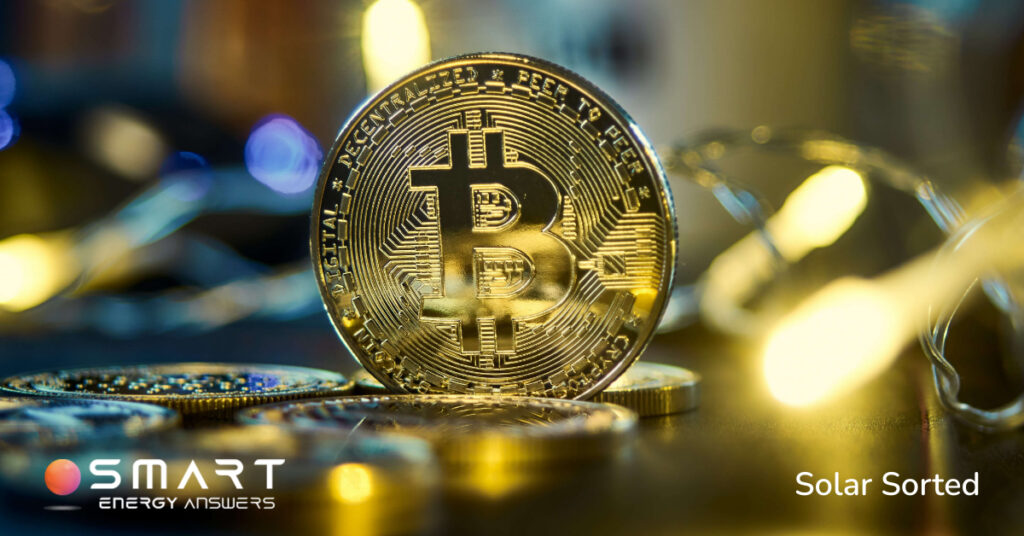
Green Crypto Mining & Solar Power Smart Energy Answers June 4, 2026 Rooftop Solar and Cryptocurrency Mining: A New Path for Clean Energy The Commonwealth Bank of Australia, or CBA, recently announced that it will be making an official foray into the world of cryptocurrency. This was the first move of its kind by a major Australian financial institution. The largest of Australia’s big four banks announced that it will begin offering cryptocurrency exchange services to customers as part of the CommBank app. CommBank customers will have direct access through the platform to ten cryptocurrencies, including Bitcoin, Ethereum, Bitcoin Cash, and Litecoin. A statement from CBA’s CEO, Matt Comyn, confirmed that the new offering was a response to increasing demand for access to popular digital assets. “We believe we can play an important role in crypto to address what’s clearly a growing customer need and provide capability, security and confidence in a crypto trading platform,” said Mr Comyn. Legitimacy CBA’s announcement lends a degree of legitimacy to the notoriously volatile digital currencies, at least in the eyes of some more conservative investors. Regulatory bodies, including the Australian Securities and Investments Commission, or ASIC, have also begun taking a harder look at crypto in recent times. ASIC recently released official guidance for companies offering cryptocurrency exchange and custodial services, helping them meet compliance obligations. Additionally, ASIC has created a new crypto-asset category in the application for responsible entities licensing. Is Bitcoin Still Crypto King? Satoshi Nakamoto’s Bitcoin is the original cryptocurrency and has retained the largest share of the crypto market since its introduction in 2009, although the original token’s dominance has waned in recent months. Bitcoin’s share in the total cryptocurrency market cap contracted from approximately 68% at the beginning of 2021 to around 40% as the year drew towards its end. According to data from CoinMarketCap, the market share of several leading altcoins, including Ethereum, Cardano, and Tether, increased significantly. Ethereum’s market share increased from around 10% to almost 19%. Cardano’s increased from 0.70% to 3.67%, while Tether’s increased from 2.77% to 3.67% of an overall cryptocurrency market cap of $1.91 trillion. The Environmental Cost of Bitcoin Mining Bitcoin miners earn fractional amounts of the currency by solving complex mathematical problems in order to show proof of work. Mining the currency requires intense computing power, and most miners employ dedicated mining rigs, which are powerful computers set up to solve problems and passively earn Bitcoin around the clock. Millions of machines around the world are competing full time, every second, to work out the next number required in complex sequences, thus creating new blocks for the Bitcoin blockchain. A huge amount of energy is required to power the process. The issue made headlines earlier in the year when tech billionaire Elon Musk publicly tweeted that his electric vehicle company, Tesla, would stop accepting Bitcoin as payment, citing environmental concerns around the energy-intensive mining process. A New Path While the concept of proof of work being required to add to the Bitcoin blockchain and mine currency is a foundational aspect of the legacy cryptocurrency, it appears there is a new path. According to Kathleen Breitman, co-founder of the Tezos blockchain network, “no cryptocurrency that has launched in the last four or five years has used proof of work, and that’s because it’s antiquated technology.” “Using a technology that creates an unnecessary amount of tax on the environment, which, as someone who believes in man-made climate change, I’m very inclined to not endorse,” Breitman added. Ethereum, the most popular cryptocurrency after Bitcoin, also uses a lot of energy to mine. However, its developers have planned a transition to a new mining method that requires considerably less energy and is much cleaner for the environment. Ethereum’s share of the cryptocurrency market almost doubled throughout 2021. The network is moving to a consensus mechanism called proof of stake. Ethereum’s developers claim that a move to proof of stake will result in improved energy efficiency, lower barriers to entry with reduced hardware requirements for mining, stronger immunity to centralisation, and an upgrade when it comes to scaling the Ethereum network. Rooftop Solar and Crypto Mining As the environmental unfriendliness of standard, energy-intensive crypto mining has become a hot-button issue and hit the mainstream media, each new crypto or mining venture aims to have a green aspect. Some are more legitimate than others. One possibility that meshes well with crypto’s central tenet of decentralisation is the use of solar power as a source of energy to power crypto mining operations. There are many thousands of rooftop solar systems around Australia, and millions more around the world, pumping out huge amounts of clean, renewable, carbon-free electricity. It’s well known that energy networks don’t always pay huge sums of money for the power that’s fed back into the grid by private households and businesses using rooftop solar. In the past, most solar users chose to simply fit a solar system that would produce enough energy to power the household’s needs and not bother fitting a much larger system. Now that high-quality solar batteries are far less prohibitively expensive than in the past, many users are matching solar batteries to their systems in order to store energy for later use. Another potential use for excess power generated by private solar power systems would be to power cryptocurrency mining operations. This could be in the form of a few extra panels added to a home system in order to power a full-time mining rig computer, but could obviously be scaled up for commercial operations. Most private and commercial solar power system owners use only a fraction of their available rooftop real estate for their current systems, leaving plenty of space to fit additional panels that could potentially be used to power cryptocurrency mining operations. Entry-level mining rigs are sold for just a few thousand dollars on Amazon and eBay. By far, the largest commitment for the private user would be the fitment of additional solar panels, batteries, and
Scaled-Back Plans to Charge Solar Households for Exporting Energy
Scaled-Back Plans to Charge Solar Households for Exporting Energy Smart Energy Answers June 4, 2026 Securing Solar Futures: Revised Approach to Charging Solar Households for Energy Export Controversial plans by the Australian Energy Market Commission, or AEMC, to charge households using rooftop solar panel systems for exporting energy back into the power grid have been scaled back in order to protect the investments of current and future solar system owners. Plans to reduce the impact of the proposed reforms on solar users came in an announcement from the commission in August. The AEMC’s initial plans were outlined in a draft declaration back in March, with the goal of determining how to integrate more small-scale solar and other new energy technologies, such as batteries, into the electricity grid. In the draft declaration, AEMC Chief Executive Ben Barr claimed, “We can decarbonise the electricity sector faster and cheaper if we connect more small solar customers and make it worthwhile for them to install batteries. But to do that we need to make some changes to the power system.” The draft determination addressed the issue of traffic jams on the network, when energy was being exported back onto the grid during busy times. It included a package of reforms designed to change distribution networks’ existing incentives to help households send power back into the grid. This would allow networks to offer two-way pricing, rewarding solar households for sending power back to the grid when it was needed and charging for sending power back when the system was too busy. Solar Reforms Finalised In a statement released in August, the AEMC released the finalised details of the reforms. According to the statement, “the reforms will put tough new obligations on power network companies to make their networks smarter.” “They will now be accountable for getting their businesses solar- and battery-friendly so everyone benefits. A key part of the changes is removing the companies’ ability to put blanket bans on customers sending solar energy back to the grid.” The reform package means that power networks can offer solar households a range of options, including a free basic service, in order to encourage users to limit solar waste and save money while benefiting the grid. AEMC Chair Anna Collyer claimed, “These new measures to drive smart solar are fundamental to enabling a modern electricity grid that delivers out to 2030 and beyond.” “They represent a profound change to the way poles and wires businesses must think about how they manage their network and turn the current one-way street delivering power to people’s homes into a two-way superhighway where energy flows in both directions.” “Power network companies will need to deliver services to support solar, and they’ll be judged on their performance on how much solar exports they allow into the grid.” The reforms acknowledge the fact that Australia has the fastest uptake rate of household solar power systems in the world. They also address concerns from users requesting more certainty on what the changes will mean for current and future solar investments. “We’ve listened to the feedback we have received and have tightened protections for consumers to increase certainty,” said AEMC Chief Executive Benn Barr. “This means networks will have to offer a free basic service alongside any paid solar export plans, so people won’t have to pay if they don’t want to.” Solar Batteries Are Becoming the New Normal While the AEMC scaling back the severity of the reforms protects the interests of current solar users, the fact remains that the Australian renewable energy sector has progressed in leaps and bounds in recent years. While simple, small-scale solar panel systems were sufficient for the needs of many households through the early years of Australia’s solar power revolution, it’s clear that going forward, fully integrated solar power systems equipped with batteries will be a much more profitable option. Any residential or commercial users considering installing a solar system should do their research and consider having a battery installed at the same time. This can help pay off the investment as quickly as possible and maximise profits. Virtual Power Plants Are the Future Virtual power plants function as a collective of separate solar batteries that are networked together in a sophisticated system. This allows them to function individually while also working together to store energy and efficiently trade or sell it to the grid. A virtual power plant, or VPP, is software that connects a collection of batteries localised in a community and allows them to function as a local virtual power plant. Individual solar households can band together to pool their power generation and storage capacities. This can benefit each other and reduce reliance on purchasing expensive traditionally generated power from the grid. The Smart Community Program VPP Smart Energy Answers has launched The Smart Community Program, a virtual power plant designed to help empower solar households. The programme turns individual systems into potent energy generators, reducing household costs while adding extra credit to users’ power bills. During times of high power demand, the energy provider can access the excess storage capacity of the individual batteries within the VPP and feed the power back into the network. Moving to virtual power plants allows individual households and their communities to benefit by cutting costs, utilising locally sourced power, avoiding power outages altogether, and enjoying high feed-in tariffs of up to 45c. Interested in joining the Smart Community Program or want more information? Call us on 1300 948 619.
The Game-Changer – Set To Make New Houses More Energy Efficient

The Game-Changer – Set To Make New Houses More Energy Efficient Smart Energy Answers September 16, 2021 The Game-Changer: Revolutionising Energy Efficiency in New Australian Homes New houses across Australia are set to be better built to withstand climate change, incorporating solar power, water and energy efficiency features, and minimal toxins under a world-first agreement. The new scheme, acclaimed as a national game-changer in the housing market, could mean buyers have much healthier homes and see their energy bills reduced by as much as 75%, or more than $2,000 per year, according to one study. “This is a real game-changer for the industry, bringing more liveable, affordable homes to all Australians,” said Davina Rooney, Chief Executive of the Green Building Council of Australia, or GBCA. The Green Star Home Standard certification system, the world’s first mass-market residential climate-positive certification, has already been accepted by some of the construction industry’s major players. These companies have vowed to produce houses to higher specifications. This means many more homes built in the future by companies signing up to the standard will be well-ventilated, insulated, fully electric, and powered by renewables. Industry Leaders Supporting Sustainable Homes Leading residential developer Stockland is already a stakeholder in the initiative. “We’re seeing people spending more time at home and they’re really concerned about the health and well-being impacts of the houses they live in,” said Andrew Whitson, Stockland’s Group Executive and CEO Communities. “They’re starting to wonder how they can live more healthily and more sustainably environmentally and reduce their carbon footprint. It was something already happening, but COVID-19 has really amplified it, and we felt we wanted to show leadership in the country in these issues.” Australia’s largest volume builder, Metricon, has also joined the initiative. “This is the way the industry and the world are moving, towards more sustainable living,” said David McKibbin, National Product Development Manager of Metricon Homes. “We saw this as an opportunity to get involved and help the industry evolve in this area, and further educate our customers and help drive the whole sustainability issue. As consumers see the benefits, they’re likely to promote it to family and friends as well.” Why Energy-Efficient Homes Matter Research has found that the residential sector accounts for 57% of Australia’s building emissions. Australians also spend around 90% of their time indoors under normal circumstances, with two-thirds of that time spent at home. During pandemic lockdowns, this increased even further. To meet the new Green Star certification, homes will need to be more comfortable to live in and include smarter air conditioning, LED lights, and efficient electric appliances. These features can help make homes far cheaper to run. The GBCA is now working with the federal government to bring the scheme into the regulatory framework. Currently, the National Construction Code requires a 6-star NatHERS rating, which describes the level of insulation in the home. “Getting the volume builders of housing on board will give the scheme so much more momentum going forward rather than just going with architect-designed, bespoke buildings,” said Kerryn Wilmot, Research Principal at the Institute for Sustainable Futures at the University of Technology Sydney. “This is where most Australians get their housing from, so signing up volume builders is a brilliant idea with a great chance of shifting the market.” Start Your Solar Journey with Smart Energy Answers Smart Energy Answers is one of Australia’s leading solar solutions providers, based in Sydney. We are proud to have attained one of the highest accreditation levels in Australia and remain committed to helping communities gain energy independence through the latest technologies and high-quality services. To get started on your solar journey, contact Smart Energy Answers today on 1300 948 619 or get in touch with our team below.
Should I install solar and batteries?
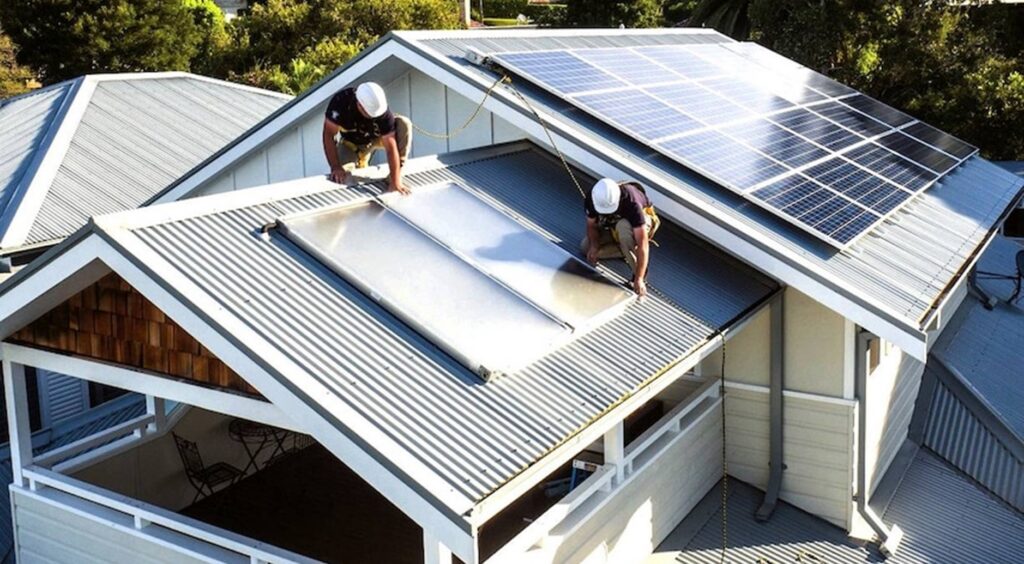
Solar Power Savings Smart Energy Answers June 11, 2026 Is Solar and Battery Installation Worth It? Here’s Why You Should Consider It Have you been considering installing a solar power system and battery at home? Solar is big right now, and it is here to stay. Solar power is a critical part of the renewable energy revolution sweeping across Australia. The growing industry has created thousands of jobs for upskilled Australians and has helped households around the country reduce their power bills. Power Bills: A Fact of Life? Whichever way you look at it, we all have to pay for the energy we use. That is why it makes sense to secure the best energy solution possible for your home. Traditionally, property owners pay for energy drawn from the grid. This energy is largely generated in fossil fuel-based power plants, converted to lower voltages at substations, and distributed through the electricity network, also known as the grid. But there is now a cleaner and greener way: solar. More Australians are realising that installing solar panels on their homes is not only great for the environment, but also a smart investment that can add value to their property and help reduce energy costs. Installing a solar system at home allows you to convert sunlight into clean and usable electricity. This electricity can help power energy-hungry appliances, heating and cooling systems, and everyday household needs, while helping you save on your energy bills. Even if you are not home during daylight hours while most solar energy is being generated, you can still benefit. Any unused solar energy can be exported back to the grid, with energy retailers paying feed-in tariffs, or FiTs, at a nominated rate for every kilowatt-hour, or kWh, sent back into the grid. The Next Level Installing a solar system is already a huge leap forward, but if you want to unlock even stronger long-term savings, it may be time to take your solar setup to the next level with battery storage. Using power-hungry appliances such as washing machines, heating systems, and cooling systems during daylight hours can help you make better use of the free energy your solar system is generating. The next step is deciding what to do with the excess energy produced by your system. Selling energy directly back to the grid is a simple option. However, storing excess solar energy in a battery for later use, or selling it back at the optimum time, can help boost long-term savings while reducing your reliance on drawing additional power from the grid. Smart Batteries and Virtual Power Plants Smart batteries can be connected to a Virtual Power Plant, or VPP, solution that allows you to maximise the value of your stored energy. This can help you sell additional energy back to the grid at the optimum time and potentially secure a premium feed-in tariff. You can also monitor your account usage and energy data at any time through a convenient smartphone app. Pay As You Save But is there still a large upfront cost associated with installing solar panels and a battery storage system? Not anymore. Smart Energy Answers’ Pay As You Save offer allows switched-on Australians to own their own solar power system from less than $2.96 per day. Smart Energy Answers has teamed up with lending partner Plenti to offer Australian households flexible finance solutions for installing home solar power systems with a low upfront cost and competitive interest rates. What is more, you can start benefiting from your solar system from day one. In many cases, it may be possible to install a system that is cash flow positive from the beginning. This means your solar savings and returns may be greater than the cost of purchasing and installing the system, while allowing you to pay it off through one simple fixed monthly payment. Discover what rebates and incentives may be available with Smart Energy Answers’ Solar Rebate Calculator. You can also see how much you could save on your next electricity bill with our Savings Calculator. What Do I Need to Get Started? Solar power really is the way of the future. In fact, it can almost sound too good to be true, so where is the catch? There is not one. All you need to get started on your journey towards a cleaner, greener future, reduced reliance on fossil fuels and the power grid, and better long-term energy savings is suitable roof space for your panels. As long as you have a suitable rooftop, installing a solar system can be a smart investment. You can start benefiting from your system while joining nearly three million Australian households that have already made the switch to rooftop solar panels. Nearly 30% of Australian energy is already renewable, and the country is on track to reach 50% renewable energy in the near future. No more “yes, but”. It is time to join the solar revolution today.
Smart Energy Answers: Premium Certified Installers of Tesla Powerwall
Smart Energy Answers: Premium Certified Installers of Tesla Powerwall Smart Energy Answers March 10, 2021 Maximising Solar Power and Savings with Tesla Powerwall 2: Smart Energy Answers’ Premium Certified Installers Smart Energy Answers is proud to have been selected as a Tesla Premium Certified Installer. For years, Smart Energy Answers has been providing high-quality products and excellent customer service. In recognition of this commitment, Tesla has appointed Smart Energy Answers as one of its select Premium Certified Installers. Tesla is a well-known and trusted brand that uses innovative technology, including solar batteries, to promote clean and sustainable energy solutions for customers. Tesla’s Virtual Power Plant is a network of homes like yours that supports the grid with clean renewable energy. What Is A Virtual Power Plant? A virtual power plant is a network of solar power and battery systems installed at homes and businesses. The systems are coordinated by a central control software system run by the VPP operator that taps into the stored energy of the batteries during periods of peak demand to supply the mains grid. Tesla’s world leading technology optimises the use of your Powerwall based on your energy needs, market conditions and anticipated grid events to ensure it benefits your home first, while also supporting the community. In return, you receive competitively low energy rates and monthly Grid Support Credits.https://vimeo.com/615560515 Tesla Premium Certification The unique Premium Certification is a result of meeting the following criteria: Outstanding distributed customer experience Exceptional installation quality Extensive product knowledge The Tesla Powerwall 2 is one of the leading battery storage solutions available, providing efficient electricity day and night, including during unexpected power outages. The battery has the capability to store up to 13.5 kWh of energy, helping support household electricity needs and improve energy independence. By partnering with Tesla, Smart Energy Answers can offer the following key benefits: Maximise your solar power system: Use your solar generation more effectively and continue generating significant savings. Instead of sending excess energy to the grid, the Powerwall can store it for use at any time. User-friendly monitoring: Monitor and manage your electricity production and consumption in real time through the Tesla app. You can also receive alerts, prepare for severe weather, and control your system while on the go. Blackout protection: Protect your home from power outages and keep essential appliances running, such as lights, Wi-Fi, and refrigerators. The battery can provide emergency backup when the power goes down. Easy installation: The Tesla Powerwall battery comes with a built-in inverter, which means it can be retrofitted to new or existing systems. Multiple installation options also make the process more flexible. Ready to join Australia’s largest Virtual Power Plant, purpose-built for Powerwall owners? You can join the Virtual Power Plant today through Smart Energy Answers. For more information, call Smart Energy Answers now on 1300 948 619.
The Most Desired Solar Battery On The Market – Tesla Powerwall
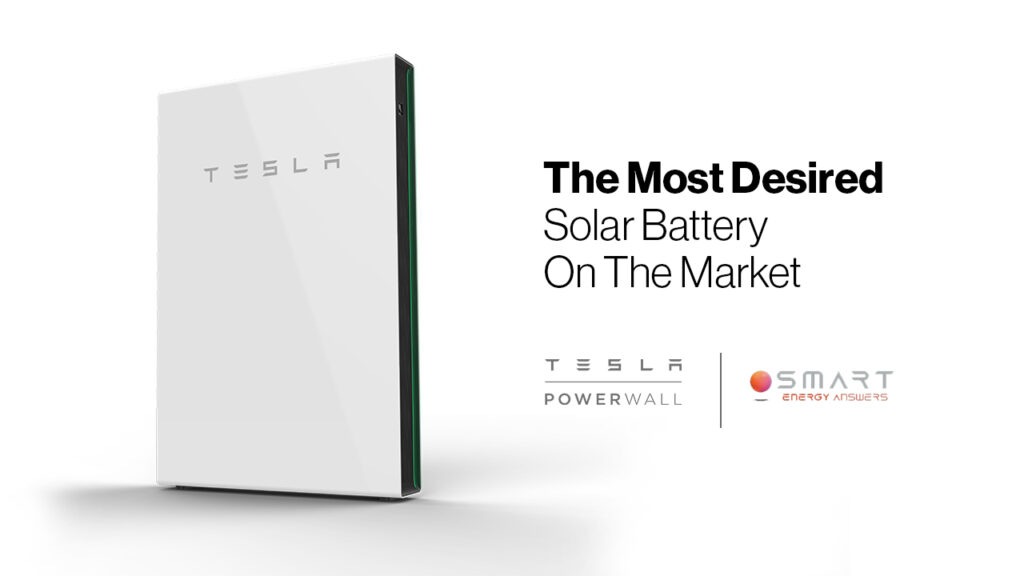
The Most Desired Solar Battery On The Market – Tesla Powerwall Smart Energy Answers June 4, 2026 Tesla Powerwall: The Ultimate Solar Battery Solution Lead by example and power your home with clean and sustainable energy 24/7 with the Tesla Powerwall. Featuring a modern and compact design, twice the storage capacity compared to its predecessor, and a built-in inverter, it is one of the best battery storage systems on the market. It can deliver electricity during cloudy days, at night, or during a power outage. Here, we discuss the top three features of the Tesla Powerwall. Compact, Sleek Design and Plug-and-Play Functionality This fully integrated battery system for residential or commercial use comes with state-of-the-art components. Not only does it have a modern and slim design, but it can also withstand Australian weather conditions if installed outdoors. The Powerwall comes with a built-in inverter, which means it can be retrofitted to homes with existing solar installations. These plug-and-play systems make the process of installing solar easier, faster, and less expensive. Full Control Over Your Home Energy Use With the Tesla app, you can monitor and manage your solar electricity use in real time from your mobile, whether you’re at home or at work. It also enables you to integrate your electric vehicle and store electricity to power up your car when you’re low on battery. With the advanced time-based control feature, homeowners can further maximise their savings by selecting two modes. The Balanced mode uses stored solar when electricity is expensive and when the sun goes down. The Cost Saving mode uses low-cost energy when electricity is expensive to help you maximise your savings. Reliable and Superior Performance Store excess energy produced throughout the day for use during the evening or on cloudy days when your system is not generating enough electricity. With a sensational 13.5kWh of storage capacity, the Tesla Powerwall can cover most of a household’s electricity needs. It is also the only battery system to incorporate liquid cooling, enabling it to operate in a wide range of temperatures. If you’re looking for a compact and sophisticated system that doesn’t compromise on performance, Tesla Powerwall is one of the best battery storage systems on the market. Smart Energy Answers is proud to be certified installers of Tesla Powerwall, LG Chem, and Sonnen batteries. Our Operations Director, Sam Husband, has installed and coordinated some of the largest Tesla Powerwall installations in Australia. As a CEC Approved Solar Retailer, we’re committed to providing customers with high-end products, tailored solutions, quality installations, and outstanding customer service. Contact us today on 1300 948 619 for more information and to find out how to get the best return for your investment.
Check out the Sonnen 9.43 on-grid home battery systems
Check out the Sonnen 9.43 on-grid home battery systems Smart Energy Answers June 4, 2026 Introducing sonnen 9.43: The On-Grid Home Battery System for Aussie Households The new sonnen 9.43 is now available in Australia, with an exclusive price at Smart Energy Answers. One of the great features of this new battery system is that it’s compatible with all existing solar inverters. Another key benefit is that it’s the only storage system we know of that can be used to access the first nine weeks of the new subsidies in South Australia from mid-October 2018. This subsidy is definitely worth checking out. While most people will receive a $500 subsidy per kWh of battery capacity, pensioners will receive $600 per kWh. With prices of battery systems rapidly falling across Australia, it’s South Australians who will reap the benefits first with these great subsidies. What Does the sonnen 9.43 Offer Aussie Households? Sonnen battery systems are available in five different storage capacities. They start at 5kWh and increase to 15kWh in 2.5kWh increments, with a 90% usable capacity. Depending on your overnight usage, many households can get away with the smallest capacity of 5kWh, drawing from the grid only on the rare occasions when they need more power than what is stored in the system. If you think that going for the biggest capacity sonnen 9.43 battery might get you over the line, that may not always be the best approach. Even if you produce a large excess amount of solar energy on a really sunny day, the batteries can only absorb this energy at a set rate, determined by the inverter capacity. To avoid buying a system that is too big for your needs, it is best to speak to a specialist solar consultant in your area. Another great feature of sonnen batteries is scalability. You can install a large cabinet for your battery system, bigger than the actual battery, and then add additional storage capacity as needed. The sonnen battery system can also be installed indoors or outdoors. Once you see its ultra-sleek design, you may not want to hide it outdoors. For more information on the 9th generation sonnen battery systems, call Smart Energy Answers on 1300 948 619 or send us an email.