
Can the Solar Battery Rebate 2026 Replace Diesel Generators in Rural?
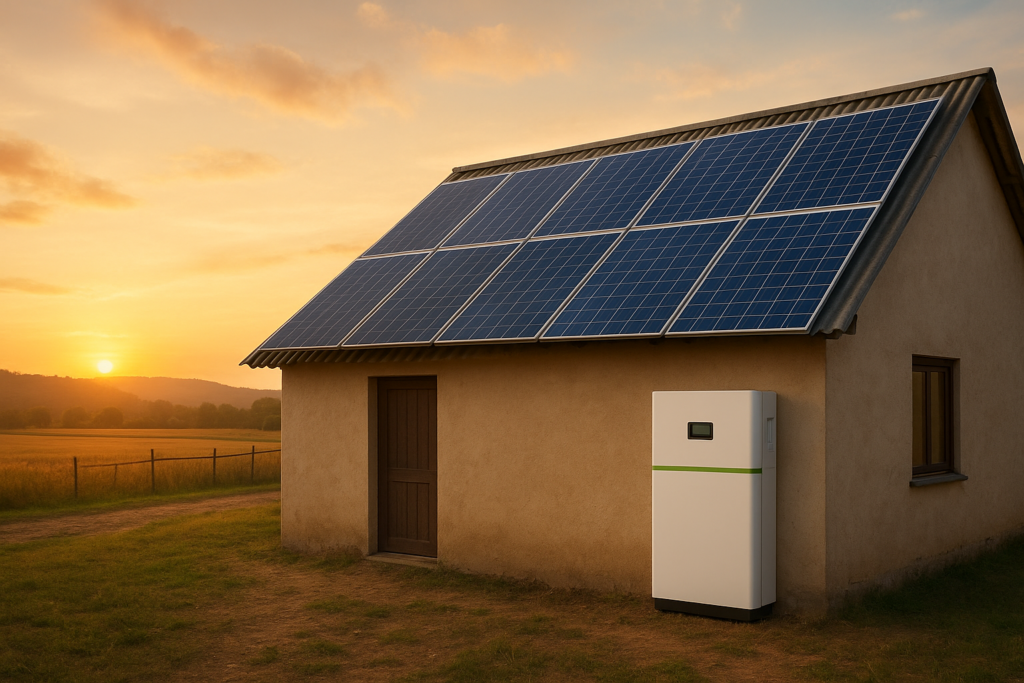
Can the Solar Battery Rebate 2026 Replace Diesel Generators in Rural? Smart Energy Answers December 29, 2025 Solar Batteries vs Diesel Generators: The Future of Rural Power in Australia For decades, diesel generators have been the primary power source for many rural and remote areas in Australia. They can provide flexible power in locations where grid access is limited, but they also come with rising costs, regular maintenance, noise, emissions, and fuel delivery challenges. They can also become harder to rely on during extreme weather events or supply disruptions. As energy prices rise and climate impacts become more visible, rural homeowners and businesses are asking a new question: Is there a more sustainable and cost-effective power alternative? With the federal solar battery rebate now active and expected to change in 2026, this question is becoming financially important. Why Diesel Generators Are Losing Ground in Rural Australia Diesel generators were designed for a time when rural power needs were simpler and grid access was often limited. Modern rural properties now use more energy across irrigation systems, workshops, refrigeration, electric vehicles, internet connectivity, and modern household appliances. However, diesel is not becoming cheaper. Fuel costs are unpredictable, and delivery expenses can be high, particularly in remote areas. Generators also require regular maintenance, and failures often happen at the worst possible time, such as during storms, road disruptions, or supply chain delays. Noise, fumes, and constant upkeep make diesel less appealing for families and businesses. Rural Australians are increasingly seeing generators not as the most reliable answer, but as an expensive trade-off they would prefer to reduce or avoid. How Solar Batteries Transform the Rural Energy Equation Solar battery systems allow rural homes and businesses to generate electricity from the sun, store it, and use it when they need it most, such as at night, during peak periods, or when the grid goes out. With a well-designed solar and battery system: You are not fully dependent on fuel deliveries There is no daily fuel cost once the system is installed The system runs quietly and cleanly with minimal servicing Smart controllers and remote monitoring help maximise performance Modern battery systems offer increased usable capacity, improved charge and discharge functionality, longer life, and smart controls. This can provide reliable power even in demanding rural and off-grid conditions. Solar Batteries vs Diesel Generators in Real-World Rural Use There are three factors that are almost always important when rural customers are making energy decisions. Reliability When It Counts Diesel generators operate until fuel is depleted, which can become a vulnerable point during emergencies. Solar batteries are charged by the sun each day and, when combined with a properly sized solar array, can continue operating even when fuel deliveries are disrupted. Long-Term Cost Diesel generators can be cheaper to purchase upfront, but they are often costly to operate over time. Fuel, servicing, repairs, and maintenance can add up quickly. Solar batteries usually have a higher upfront cost, but their operating costs are much lower and more predictable over a 10 to 15-year period. Environmental and Lifestyle Impact Diesel generators produce fumes, noise, and vibration, which can affect comfort and working conditions. Solar batteries operate quietly, produce no onsite emissions during use, and can help make rural living cleaner and more comfortable. How the Solar Battery Rebate 2026 Changes Affordability One of the biggest obstacles to battery adoption has been upfront cost. The federal Cheaper Home Batteries Program helps reduce this cost by allowing eligible battery installations to generate Small-scale Technology Certificates, or STCs, which create an upfront discount on the system price. Important Update Starting on 1 May 2026, the rebate system is expected to change. Instead of a fixed approach, rebates are expected to be tiered based on battery size, and the number of STCs awarded will reduce at a faster rate over time. Under the post-May 2026 rules: 0 to 14 kWh usable capacity: Full STC rebate factor applied 14 to 28 kWh usable capacity: 60% of the rebate factor applied 28 to 50 kWh usable capacity: 15% of the rebate factor applied This means smaller and right-sized battery systems may retain stronger rebate support, while larger systems installed after May 2026 may receive a reduced effective rebate per kilowatt-hour. Installers and rural customers should understand that the rebate is not removed, but delaying installation may result in lower overall support compared with acting before 1 May 2026. Hybrid Systems: A Practical Transition Away From Diesel For many rural users, moving away from diesel completely overnight may not be realistic, particularly where heavy machinery or high peak loads are involved. That is where hybrid systems can help. In a hybrid system: Solar and battery storage cover everyday power needs Diesel is retained only for rare extended low-sun periods Diesel run hours drop dramatically Fuel use and servicing costs are reduced Hybrid systems provide a practical, gradual pathway towards greater battery reliance. The 2026 rebate can also make the battery component of that transition more cost-effective when planned correctly. Can Solar Batteries Fully Replace Diesel Generators? In many cases, yes. With battery technology advancing, prices improving, and government support available, solar and battery systems are becoming a strong long-term option for rural power. Over time, diesel may increasingly become a reserve power source rather than the main source of energy. The direction is clear: rural energy systems are moving towards solar storage and away from dependence on fossil fuels. Final Thoughts Rural Australia deserves access to reliable, sustainable, and affordable energy solutions that are not tied to unpredictable fuel markets and rising operating costs. The solar battery rebate 2026 provides an opportunity to build a stronger financial case today and design energy systems that are ready for the future. Whether the goal is to replace diesel completely or achieve substantial energy independence, solar batteries are no longer on the edge of technology. They are now a reliable and practical answer to many rural power requirements. Timing matters: before rebate values begin declining in May 2026,
How Coastal Weather Impacts the Performance of the Best Solar Battery in Australia?
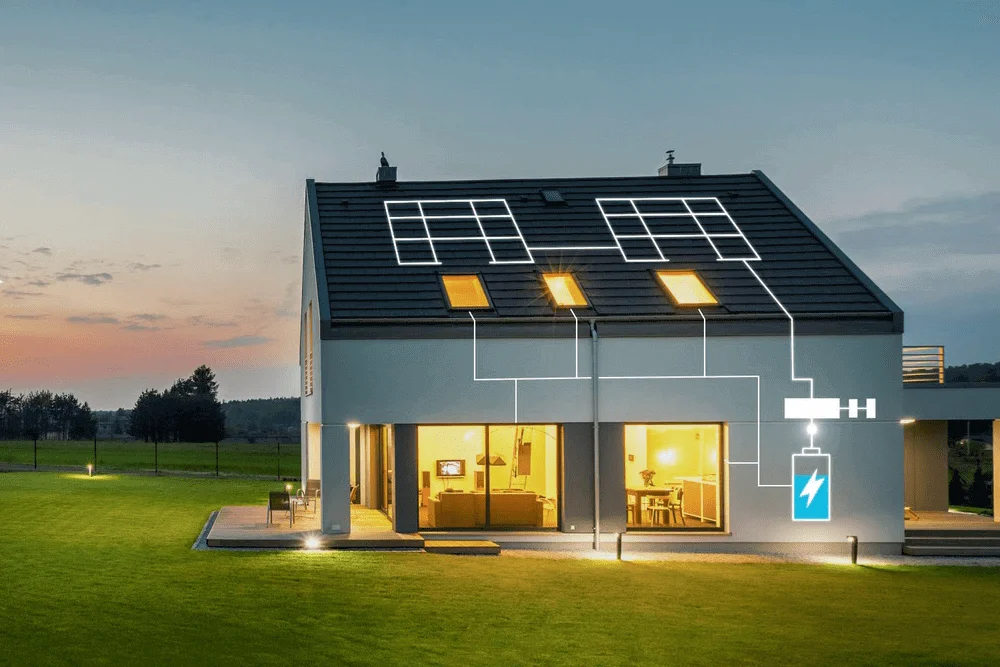
How Coastal Weather Impacts the Performance of the Best Solar Battery in Australia? Smart Energy Answers December 29, 2025 How Coastal Weather Affects Solar Battery Performance in Australia Life on Australia’s stunning coastline brings sun-kissed days and refreshing sea breezes. However, coastal weather can create challenges for home solar systems, especially when batteries are involved. Many people first consider battery size or cost, but to keep your solar battery working well in Australia, it is important to choose equipment that can withstand humidity, salty air, storms, and temperature shifts. At Smart Energy Answers, we help Australians set up solar and battery systems designed for long-term savings and performance. With more than 2,000 battery installations nationwide, we understand how coastal weather can impact battery performance and how the right design can help protect your investment. Why Coastal Conditions Demand Extra Attention Homes near the beach often face harsher conditions than homes located further inland. Ocean air is salty and humid, and coastal areas can also experience strong winds, high summer moisture, and noticeable temperature changes between day and night. These conditions can affect battery systems over time if they are not considered during product selection, system design, and installation. In short, what works well inland may not always suit coastal areas. You need to choose the right battery type and install it with protection in mind. Humidity: A Hidden Performance Drag Moisture levels are often higher along Australia’s coastline. This moisture can seep into equipment that is not properly sealed, which may affect: Electrical connections Internal components Thermal controls that help the battery manage heat Even when solar panels are performing well, homeowners may notice battery performance decline during moist seasons. This is often due to moisture disrupting charging efficiency and long-term reliability. To help reduce this risk, we recommend choosing the best solar battery in Australia for your location and looking for models with a high ingress protection rating, such as IP65 or higher. This helps protect internal components from moisture and corrosion. Salt Air Corrosion: The Coast’s Silent Threat Salt particles in ocean air can gradually corrode metal contacts, wiring, and circuitry over time. This is not usually a sudden issue. It develops gradually and can shorten system lifespan if the battery is not properly protected. That is why we often recommend: Installing the battery indoors where possible Using weatherproof enclosures or cabinets Adding shields that help reduce exposure to salt-laden breezes These steps help preserve performance and protect your investment over the long term. Temperature Fluctuations: Steady Performance Matters Coastal areas can experience noticeable day-to-night temperature variations. These changes can place strain on battery chemistry, particularly lithium-based systems commonly used in residential solar batteries. Ideal battery systems should: Remain stable when temperatures vary Offer consistent charging and discharging rates Reduce the risk of premature ageing At Smart Energy Answers, we consider thermal management features during system design so your battery can operate more reliably throughout the year. Storms, Winds, and Power Outages Storms and strong winds are more common in many coastal areas of Australia. These weather conditions can sometimes lead to grid outages, which is where a solar battery can provide valuable backup support. A high-quality battery with suitable backup and surge capacity can help ensure: Essential circuits continue operating during outages Your home stays powered when the grid goes down Peak demand and price spikes have less impact on your energy costs Choosing high-quality battery systems such as Tesla Powerwall, SolarEdge Home Battery, or other premium systems can provide better peace of mind when reliability, performance, and safety matter most. Installation: Where Weather Meets Workmanship No matter how advanced your battery is, poor installation can compromise long-term performance, especially in coastal environments. Our installations can include: Weather-resistant conduits Proper ventilation and airflow management Elevated or sheltered mounting locations Sealed electrical entries to reduce moisture ingress These practical measures help reduce the risk of coastal conditions causing performance issues over time. Maintenance Tips for Coastal Solar Battery Owners With a few simple checks, you can help your battery last longer and work harder. Look for early signs of rust or corrosion on the casing Check for salt and moisture build-up around terminals Ensure vents are not blocked by debris Wipe down cabinets during routine solar panel cleaning Schedule professional servicing at least annually These practices can help reduce wear and extend the life of your system. Conclusion: Coastal Life and Solar Batteries Can Go Hand in Hand Living by the coast should not mean compromising on solar battery performance. The key is choosing the right product, ensuring professional installation, and maintaining the system over time. At Smart Energy Answers, we help homeowners match their location’s conditions with the right battery, whether that is Tesla Powerwall, SolarEdge Home Battery, or another premium system backed by trusted installation and support. If you are near the coast and considering a solar battery, we are here to help every step of the way, from honest advice to complete system design and installation.
The Federal Battery Rebate Cuts From 1 May 2026

The Federal Battery Rebate Cuts From 1 May 2026 Smart Energy Answers December 18, 2025 There’s been a major update from the Federal Government for homeowners and businesses considering battery storage in 2026 Following the latest announcement from the Department of Climate Change, Energy, the Environment and Water (DCCEEW), the government has confirmed that current solar battery rebate levels will remain in place until the end of April 2026. This gives Australians valuable breathing room to plan, purchase, and install battery systems before scheduled changes take effect. However, from 1 May 2026, the structure of the rebate will begin to change significantly. What’s Locked In Until April 2026 The good news first. Current rebate values remain unchanged until 30 April 2026 Systems installed before this date will receive the full current STC value This applies across residential and eligible commercial battery installations For households considering systems like Tesla Powerwall, Sigenergy battery solutions, or other premium storage options, this effectively creates a clear window to lock in today’s higher rebate levels. Recent installations, including projects similar to our Amber-powered battery systems, are already being designed to maximise this opportunity. What Changes From May 1, 2026 From May 2026 onward, the rebate will taper every six months and, importantly, it will become tiered based on battery size. This tiered STC structure is designed to slow rebate overspending and discourage oversized, rebate-driven installations. New Tiered STC Structure (From May 2026) The rebate will now apply differently depending on total usable battery capacity: 0–14 kWh → 100% STC factor applied 14–28 kWh → 60% STC factor applied 28–50 kWh → 15% STC factor applied In simple terms: Smaller and right-sized batteries retain strong support Larger systems still qualify — but with progressively lower rebate value per kWh This change has direct implications for modular systems where total capacity can scale quickly, including higher-capacity configurations often discussed when comparing sigenergy battery price options. Scheduled STC Taper Timeline In addition to the tiered structure, the STC factor itself reduces over time, regardless of system size. Period Proposed STC Factor Jan–Apr 2026 8.4 May–Dec 2026 6.8 Jan–Jun 2027 5.7 Jul–Dec 2027 5.2 Jan–Jun 2028 4.6 Jul–Dec 2028 4.1 Jan–Jun 2029 3.6 Jul–Dec 2029 3.1 Jan–Jun 2030 2.6 Jul–Dec 2030 2.1 👉 The takeaway: the rebate was always designed to come down — now we know exactly when and how. Why This Matters for Homeowners Battery sizes have increased rapidly over the past 12 months. What used to be a typical 10–16 kWh system has grown closer to 25–30 kWh installs. Under the new structure: Oversizing purely for rebate maximisation becomes far less attractive Smart system design becomes critical to maximise ROI Early movers retain the strongest financial advantage For example, systems like Tesla Powerwall 3 sit neatly within the highest rebate tier, making the overall tesla powerwall 3 price significantly more compelling when installed before April 2026. Pairing batteries with high-efficiency hardware such as an Aiko solar panel further improves long-term performance and value. Even by the end of the decade, rebates won’t disappear, but today’s rebate levels are the most generous the program will ever be. The Smart Play: Right-Size, Don’t Rush The government’s direction is clear: Reward appropriate battery sizing Reduce budget blowouts Avoid an abrupt “guillotine cut” that would destabilise the industry For customers, this means the smartest strategy is: Install before May 2026 where possible Choose battery capacity based on actual energy use — not rebate chasing Work with accredited installers who understand the new rules We’re already seeing this approach applied across systems ranging from flexible Sigenergy battery configurations to value-focused solutions like the ESY Sunhome range. Bottom Line: The Window Is Open — But It Won’t Stay That Way This announcement brings certainty, not panic. The rebate is not ending tomorrow But the days of maximum incentives are numbered From May 2026, rebate values reduce and large systems attract significantly less support At Smart Energy Answers, we’re already designing systems with these changes in mind, helping customers secure today’s benefits while future-proofing their energy setup. If you’ve been considering a home battery, now you know the timeline.
Are You Overpaying for Power? How to Audit Your Energy Costs in 30 Minutes (Free Checklist + Template)

Are You Overpaying for Power? How to Audit Your Energy Costs in 30 Minutes (Free Checklist + Template) Smart Energy Answers December 4, 2025 For many Australian businesses, electricity is one of the largest—and most unpredictable—operational expenses. Yet most organisations have no idea what they’re actually paying for, what’s driving their peak costs, or where unnecessary charges are hiding. The good news? You can uncover hidden waste—and often find thousands in annual savings—with a simple 30-minute energy audit. This guide gives you: A quick, practical checklist A downloadable-style audit template The key areas where businesses routinely overspend What to do next if the numbers don’t look right Let’s get started. Step 1: Gather Your Essentials (5 Minutes) Before analysing anything, pull together your latest: Electricity bills (last 3–12 months) Meter data or usage reports (if available) Tariff schedule from your retailer Operating hours for your business List of major equipment loads (HVAC, refrigeration, machinery, lighting, servers, etc.) Tip: Even if you only have the last 3 bills, it’s enough to reveal patterns. Step 2: Identify Your Main Cost Drivers (10 Minutes) Most businesses overpay because of three key culprits: 1. Peak Demand Charges You Didn’t Know You Were Paying Demand charges are based on your highest short burst of energy use during the billing period. This means a single spike—like all machinery starting at once—can set your demand fee for the entire month. Look for: “kVA demand” or “peak demand” line items Unexplained bill spikes Equipment turning on simultaneously 2. Being on the Wrong Tariff Structure If you haven’t reviewed your tariff in over a year, you’re likely paying more than you should. Common issues: Outdated time-of-use tariffs Demand plans that don’t match your operating hours Retailers not shifting you to newer, cheaper plans 3. Equipment Running After Hours (Silent Energy Leaks) These small loads add up: HVAC left on Refrigeration not optimised Lights running after-hours Servers and IT equipment at full power Machinery on standby High overnight baseline usage A quick scan of your bills for “overnight minimum load” can reveal these leaks fast. Step 3: 30-Minute Business Energy Audit Checklist Usage & Tariffs Do you know your average monthly kWh? Are demand charges climbing? Are you on the correct tariff? Have you compared retailers in the last 12 months? Peak Demand Do usage spikes match machinery start-up? Is HVAC running at maximum during peak hours? Are EVs charging during peak periods? Operational Load Are lights & HVAC off after hours? Is refrigeration efficient? Is IT equipment scheduled for low-power mode? Is overnight usage unusually high? Infrastructure LED lighting installed? Efficient HVAC? Proper building insulation? Energy Strategy Assessed solar potential? Considered batteries for demand reduction? Tracking energy monthly? Step 4: Quick Energy Audit Template Copy/paste into your spreadsheet: 1. Monthly Snapshot Metric Value Avg. monthly usage (kWh) Avg. bill ($) Peak demand (kVA) Highest bill in last 12 months Tariff type Retailer 2. Peak Demand Analysis Highest usage time: Avoidable spikes: Yes/No Equipment causing spikes: 3. Operational Waste Area Issue? Notes HVAC Y/N Lighting Y/N Refrigeration Y/N Machinery Y/N IT Y/N Overnight baseline H/N/L 3. Opportunities Better tariff Shift equipment schedules Reduce peak loads Fix after-hours usage Add solar Add commercial battery storage Install an energy management system Estimated savings: Low / Medium / High Step 5: What If You Are Overpaying? Most Australian businesses end up paying 10–35% more than necessary due to preventable inefficiencies. Here’s where major savings come from: 1. Solar to Reduce Expensive Daytime Grid Use Solar offers predictable long-term energy costs. Pairing solar with advanced battery solutions—like the best solar battery Australia options—helps businesses cut their grid dependence further. 2. Battery Storage to Reduce Peak Demand Today’s top systems such as: Tesla Powerwall 3 Sigenergy Battery (SigenStor) ESY SunHome give businesses major demand-charge reductions, backup protection, and flexible energy management. These systems are increasingly recognised as candidates for the best solar battery Australia—especially when paired with rebates and VPP programs. 3. Take Advantage of the Federal Battery Rebates Many businesses now qualify for significant incentives that reduce payback periods dramatically. See if you’re eligible: 👉 https://www.smartenergyanswers.com.au/federal-battery-rebates-2025 4. Energy Management for Real-Time Insights Energy dashboards and IoT-enabled monitoring can: Find hidden consumption patterns Track peaks Automate load shifting Identify equipment faults early This is often the missing piece in ongoing savings. Want a Full Commercial Energy Assessment? If you’re ready to stop overspending and start taking control of your business’s energy costs, Smart Energy Answers can run a tailored commercial audit and build a high-ROI strategy using solar, batteries, and advanced energy management tools. Book a quick 15–20 minute call with our team, and we’ll help you uncover your savings potential, compare the right technologies—including Powerwall 3, Sigenergy, and ESY—and show you exactly how much your business can reduce its operating costs. Let us know a time that suits you, and we’ll gladly work around your schedule.
How to Check if You Really Need Solar Inverter Repair Near NSW?
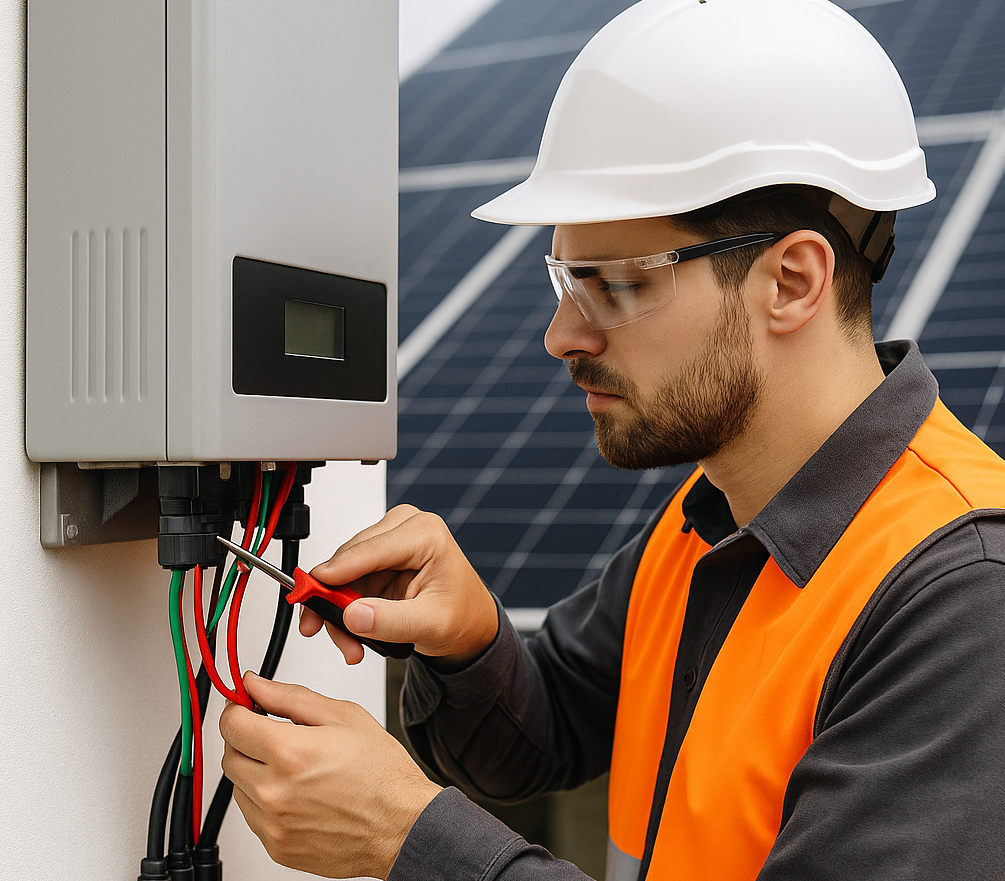
How to Check if You Really Need Solar Inverter Repair Near NSW? Smart Energy Answers November 18, 2025 At Smart Energy Answers, we understand how vital your solar power system is for ensuring minimal utility bills and a cleaner, more environmentally friendly home. However, even the best solar systems can experience performance issues and in many cases, the inverter is the first component to check. Acting as the heart of your system, the inverter converts solar energy into usable electricity, so any fault can directly affect your savings and daily comfort. That’s why it’s important to know when to seek solar inverter repair near NSW and how to identify issues before they escalate. In this blog, we’ll guide you through the simple steps to check your inverter and spot early warning signs. Knowing these signs can help you avoid costly downtime, protect your investment, and keep your solar system operating at peak efficiency. Why the Solar Inverter Matters Most It is your solar inverter that converts the direct current (DC) generated by your panels into alternating current (AC), which is the type of electricity that powers your home. Your solar panels cannot operate effectively without it. When something goes wrong with your inverter, your panels may still receive sunlight and produce energy, but your home will not be able to use it. This is why solar inverter repair is a common service request in Australia, especially in areas with high solar energy use such as NSW. Signs That You May Need Solar Inverter Repair Near NSW The most common symptoms that we request homeowners to be aware of are: 1. Warning Lights or Error Messages Modern inverters usually feature LED indicators or an LCD screen that displays system performance. If the lights turn red or orange instead of green, or if you notice unusual error messages, this is an early sign that you may require solar inverter repair near NSW. 2. Unusual Noises Inverters normally operate quietly. If you begin hearing buzzing, humming, or clicking sounds, this can indicate damage to internal components or overheating. Ignoring these noises may lead to bigger issues and costly replacements. 3. Lower Than Expected Power Output If your electricity bills increase even on sunny days, your inverter may not be using energy efficiently. This is often the clearest sign that your system needs repair from a qualified solar inverter specialist in Australia. 4. System Shutting Down Frequently An inverter that switches off multiple times a day is not functioning correctly. Short interruptions can happen due to power surges or grid issues, but repeated shutdowns usually suggest a deeper problem. In these cases, you should get an expert to inspect the system. 5. Overheating Problems All inverters produce some heat, but excess heat, burning smells, or visible smoke should never be ignored. Overheating can damage internal circuits and may lead to system failure. This makes solar inverter repair a priority for homeowners in and around NSW. Simple Checks Before Calling for Repair In many situations, homeowners can perform a few simple checks before booking a service with Smart Energy Answers. Sometimes the issue is minor and does not require a full repair. Check your solar monitoring system:If you use an app or web portal, confirm that your system’s performance matches past trends. Sudden drops often point to inverter issues. Inspect the inverter location:Make sure the inverter is not placed in direct sunlight all day or in dusty, enclosed, or poorly ventilated areas. These conditions often lead to unnecessary overheating. Check the breaker switch:A tripped breaker can sometimes look like an inverter failure. Reset the breaker safely and see if normal operation returns. Confirm grid power:Inverter performance can drop due to unstable grid conditions or power outages. Once power stabilises, the system may resume normal function. If none of these actions resolve the issue, it is time to contact a solar inverter repair specialist in NSW to inspect and fix the problem professionally. How We Handle Solar Inverter Repair Near NSW If you hire Smart Energy Answers for a restoration job, here is what you can expect: Initial DiagnosticsOur team checks your error codes, system monitoring data, and inverter performance history. On-Site InspectionWe inspect the wiring, connections, and overall physical condition of the inverter. Root Cause IdentificationThe issue may be a blown fuse, a faulty fan, a software malfunction, or an internal board problem. We identify the exact source of the failure. Professional Repair or ReplacementDepending on what we find, we repair faulty components or recommend a replacement if it is the most economical option. Performance TestingAfter repairs are completed, we conduct a full performance test to ensure your system is running at its optimal level again. This process ensures all solar inverter repairs in NSW are completed to a high standard and built to last. Preventing Future Repairs Although no inverter lasts forever, you can extend its life and reduce the need for repairs by following a few simple practices: Arrange annual maintenance with an accredited company. Protect your inverter from direct exposure to harsh weather conditions. Keep the surrounding area clean to prevent dust buildup. Monitor your energy output regularly so you can spot issues early. Preventive maintenance helps you avoid frequent repair costs and keeps your system performing efficiently over the long term. When to Consider Replacement Instead of Repair Repairs are not always the most cost-effective option. Replacement may be the better choice if your inverter is more than ten years old. Modern inverters offer improved features, intelligent monitoring, and higher efficiency. During our service call, we provide clear and honest advice on whether repairing your solar inverter in NSW is worthwhile or if a full replacement will give you better long-term value. Final Thoughts Understanding the early signs of inverter issues helps you protect your solar investment. If you notice warning lights, unusual noises, frequent shutdowns, or reduced energy production, act quickly. At Smart Energy Answers, we specialise in identifying and resolving these problems with speed and accuracy. Whether you
Can You Stack Multiple Incentives with the Solar Battery Rebate in NSW?
Can You Stack Multiple Incentives with the Solar Battery Rebate in NSW? Smart Energy Answers November 18, 2025 Can You Stack Incentives With the Solar Battery Rebate NSW? The question we hear most often at Smart Energy Answers is: can I combine different financial incentives with the Solar Battery Rebate NSW? It is a smart question, especially now that energy prices continue to rise and homeowners want to maximise the return on their solar and battery investment. The good news is that, in many situations, incentives can be stacked. However, the rules depend on eligibility, programme conditions, and how rebates interact with each other. In this blog, we break down how stacking works, why it matters, and how Smart Energy Answers helps you unlock available benefits, including the new Federal Battery Rebate, which has replaced state-level incentives such as the Solar Battery Rebate NSW. Why the Solar Battery Rebate in NSW Exists The original Solar Battery Rebate NSW was designed to help households install energy storage systems by subsidising part of the upfront cost. This encouraged more homeowners to adopt batteries, reduce grid reliance, and lower their bills while contributing to a cleaner energy future in NSW. Although the state rebate has been phased out, demand for solar storage has continued to grow. Now, more homeowners are asking how they can take advantage of nationwide incentives, especially the Federal Battery Rebate, which may offer even greater long-term benefits. Understanding Incentive Stacking Incentive stacking means combining multiple financial benefits, such as rebates, feed-in tariffs, Virtual Power Plant credits, council schemes, and the Federal Battery Rebate, to help reduce upfront costs. While the Solar Battery Rebate NSW played an important role in the past, today’s homeowners may have access to a broader range of incentives. Stacking these incentives can help shorten your payback period and maximise your return on investment. Ways to Stack Incentives With the Solar Battery Rebate in NSW The most popular and effective incentive combinations include the following: 1. Feed-In Tariffs If your solar panels produce more energy than your home uses, the excess electricity can flow back to the grid. Your electricity retailer may then provide credits for this exported energy. When combined with the benefits that previously came from the Solar Battery Rebate NSW, and now with the Federal Battery Rebate, feed-in tariffs can help lower your overall energy costs even further. 2. Virtual Power Plant Programmes Virtual Power Plants, or VPPs, connect your battery to a network of other systems and may reward you for supplying stored energy during peak demand periods. This can improve your payback period and multiply the value of your battery investment. Many homeowners previously combined VPP programmes with the Solar Battery Rebate NSW, and today these programmes may pair well with the Federal Battery Rebate. 3. State and Federal Incentives The now phased-out Solar Battery Rebate NSW has been replaced by new federal incentives available under Australia’s Cheaper Home Batteries Program, also known as the Federal Battery Rebate. From 1 July 2025, eligible batteries could generate Small-scale Technology Certificates, or STCs, delivering an upfront discount on the cost of a battery system. To qualify, the battery must be paired with a new or existing solar photovoltaic, or PV, system and installed with a valid certificate of electrical compliance. Because STCs can significantly lower the total installation cost, they make it easier for households to invest in one of the best solar batteries in Australia while still stacking additional savings from feed-in tariffs, VPP credits, or council programmes where available. 4. Low-Interest Green Loans Many banks and financial institutions offer low-interest or interest-free green loans for solar and battery systems. These loans can help reduce upfront costs while still allowing homeowners to access the long-term advantages of clean energy. Green loans may combine well with the incentives that replaced the Solar Battery Rebate NSW. 5. Local Council Programmes Some NSW councils offer additional sustainability or solar-support programmes. These vary by region, but they may be stacked with federal incentives and VPP programmes for additional savings where eligible. Why Stacking Incentives Makes Sense High-quality battery systems can be a significant investment, and premium batteries often provide stronger performance, safety, and longevity. By combining incentives, including the Federal Battery Rebate, feed-in tariffs, and VPP credits, your total upfront cost may decrease while your long-term return on investment improves. Imagine installing one of the best solar batteries in Australia, receiving federal incentives, earning VPP credits, and lowering your power bill at the same time. The combined effect can significantly improve affordability and long-term value. Common Misconceptions About Stacking Incentives Myth 1: You can only claim one rebate. Most incentives are separate programmes, so they can often work together. While the Federal Battery Rebate can generally only be claimed once for an eligible system, that does not necessarily prevent homeowners from accessing other incentives alongside it. Myth 2: Stacking incentives is too confusing. With the right installer, the process can be much easier. At Smart Energy Answers, we can walk you through the available options and help you understand what may apply to your home. Myth 3: Incentives are not worth it. When layered properly, especially with the Federal Battery Rebate, incentives can help save homeowners thousands of dollars. Choosing the Right Battery to Maximise Incentives Stacking incentives is most effective when you choose a high-quality battery built for efficiency and long-term performance. Cheaper systems may not qualify for certain rebates or could cost more in maintenance or replacement over time. We recommend selecting from leading battery brands that are among the best solar batteries in Australia and having them installed by Smart Energy Answers. How We Help You at Smart Energy Answers At Smart Energy Answers, we simplify the entire process. We assess your energy usage to help determine your eligibility for the Federal Battery Rebate. We explain the process clearly so you understand how to receive the maximum available benefit based on your eligibility. We help you choose from Australia’s leading battery brands
ESY vs FOXESS: Which Home Battery Gives You More for Your Money?
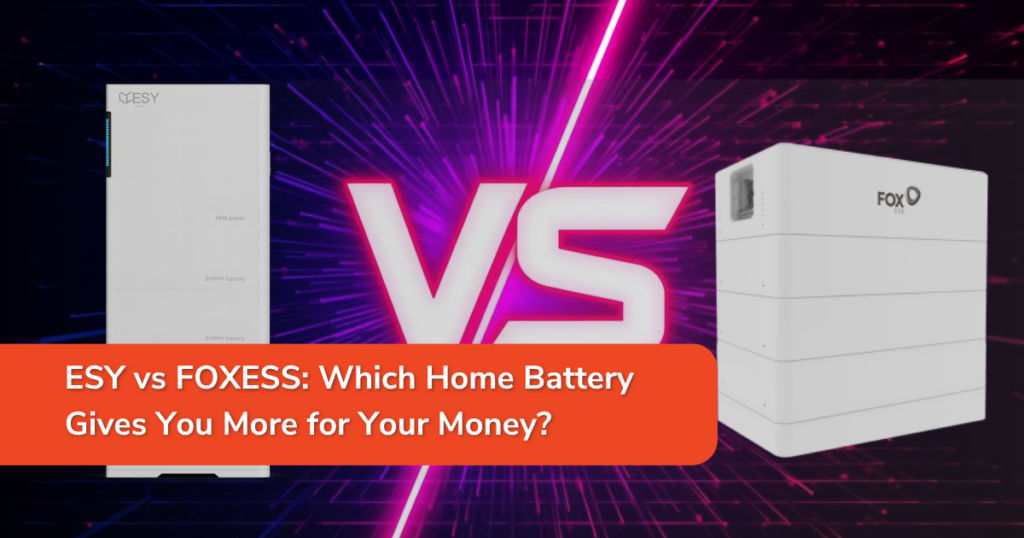
ESY vs FOXESS: Which Home Battery Gives You More for Your Money? Smart Energy Answers November 14, 2025 When it comes to choosing a home battery system in Australia, two standout contenders are the ESY Sunhome range and FOXESS home batteries. Both promise reliability, energy independence, and strong performance, but which one truly offers better value for Australian households? At Smart Energy Answers (SEA), our goal is to help Australians transition to smarter, cleaner energy through transparent advice and tailored solar + battery solutions. Let’s take a closer look at how these two options compare. 1. Price & Value One of the biggest deciding factors for most homeowners is cost. The ESY Sunhome range offers one of the most competitive battery prices in its category, especially when combined with available solar battery rebates. FOXESS batteries are similarly priced but can edge slightly higher when installation and compatibility requirements are added. When comparing ESY vs FOXESS, ESY delivers exceptional long-term value with its lower upfront cost, superior integration, and Smart Energy Answers’ expert installation support. 2. Technology & Performance The ESY Sunhome system uses cutting-edge LiFePO₄ chemistry, providing higher safety, longer cycle life, and consistent output. Its modular design allows you to scale from 5 kWh to over 30 kWh, perfect for growing households. FOXESS batteries also offer stackable modularity, but many users note that ESY’s IP66-rated build and intuitive energy management features give it an edge in real-world reliability and protection against Australia’s climate. For homeowners planning to expand into EV charging or whole-home energy automation, ESY provides future-ready scalability at a better price point. 3. Warranty & After-Sales Support Both brands offer 10-year warranties, but ESY stands out for its reliability and local after-sales support provided through SEA, ensuring faster service and greater peace of mind for Australian customers. This means faster response times, streamlined maintenance, and dedicated Australian-based support, a major advantage over FOXESS, which still relies on developing its local service infrastructure. With SEA, every ESY installation is backed by a full performance guarantee, ensuring long-term peace of mind. 4. Compatibility & Integration The ESY Sunhome range integrates effortlessly with a wide variety of inverters and solar systems and is fully compatible with premium panel brands like Aiko and other high-efficiency PV modules. FOXESS batteries, while versatile, can face occasional compatibility challenges with mixed-brand setups. By choosing SEA’s integrated systems, you’ll get end-to-end assurance that your battery, inverter, and solar setup are optimised for maximum yield. 5. Return on Investment (ROI) Affordability is important, but the true measure of value lies in performance over time. Homeowners using ESY systems benefit from reduced grid reliance, improved self-consumption, and the potential to join virtual power plant (VPP) networks in the future. When combined with the solar battery rebate your payback period can shorten significantly. FOXESS provides similar capabilities but may require additional components or configuration costs to achieve the same result, slightly impacting ROI. The Verdict: ESY Wins on Value and Support Both ESY and FOXESS offer capable, modular home battery solutions. However, for Australian households focused on value, performance, and service, ESY holds a clear advantage: Lower upfront cost and superior scalability Australian-based warranty and service through Smart Energy Answers Compatibility with smart solar systems and the federal home battery rebate Reliable backup power with strong performance in Australian conditions At Smart Energy Answers, we don’t just install batteries, we design complete energy systems tailored to your home, your lifestyle, and your budget. Explore the ESY Sunhome battery or learn more about SEA Smart Batteries and solar battery rebates available today.
Breathwork Breakthrough: A Powerful Reset for the SEA Sales Team
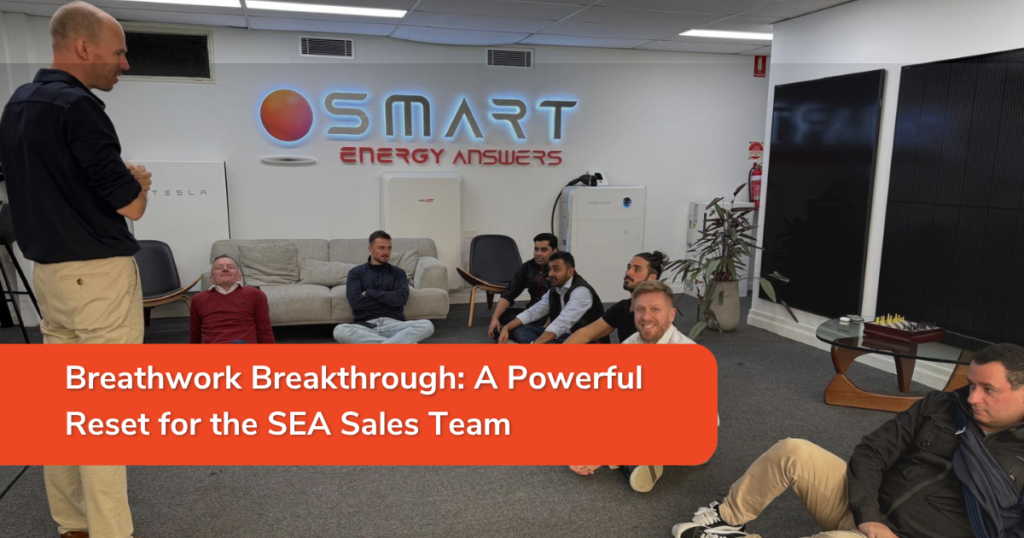
Breathwork Breakthrough: A Powerful Reset for the SEA Sales Team Smart Energy Answers June 24, 2025 In the middle of one of the busiest and most high-pressure periods of the year, the Smart Energy Answers Sales Team did something truly radical: we paused and took a deep breath. We had the incredible privilege of welcoming Sjoerd Coenders, a seasoned and inspiring breath coach, to lead our team through a much-needed reset. With his calm energy and wealth of experience, Sjoerd introduced our sales team to the profound yet simple power of breathwork, a practice many of us hadn’t yet explored but quickly came to appreciate. From Overwhelm to Clarity The session was perfectly timed. Amid targets, deadlines, and high-volume campaigns, stress can creep in quickly. But Sjoerd’s guided techniques offered an immediate and tangible shift, from tension and mental clutter to calmness and clear focus. The techniques were practical, easy to apply, and most importantly, effective. Within minutes, the entire team experienced a reset. Minds settled. Breathing deepened. Energy recalibrated. Sjoerd’s core message resonated deeply: “Your breath is always with you. Use it.” Just a few conscious minutes a day can be enough to recharge and re-centre, especially in a fast-paced sales environment. Why It Mattered As a team that prides itself on being high-performing, innovative, and customer-first, it’s easy to forget the foundation of all our success: our people. This session served as a reminder that caring for our wellbeing isn’t a luxury. It’s a necessity. The feedback from the session was overwhelmingly positive. Many described it as “eye-opening” and “exactly what we needed.” In fact, the experience was so impactful that we’re now exploring the idea of incorporating breathwork into our regular monthly sales meetings. A New Kind of Energy At SEA, energy is our business: solar energy, battery storage, and smart solutions. But we also believe in cultivating personal energy, the kind that drives creativity, focus, and resilience. Thanks to Sjoerd, we’ve discovered a powerful new tool to fuel that energy from within. Here’s to More Mindful Moments As we continue to grow and support thousands of customers on their journey to cleaner energy, we remain committed to also supporting our team mentally, emotionally, and physically. Because when we care for our people, the results take care of themselves. Here’s to a more balanced, focused, and energised SEA team, one breath at a time.
Is Sigenergy Battery Price a Smart Investment in 2025?
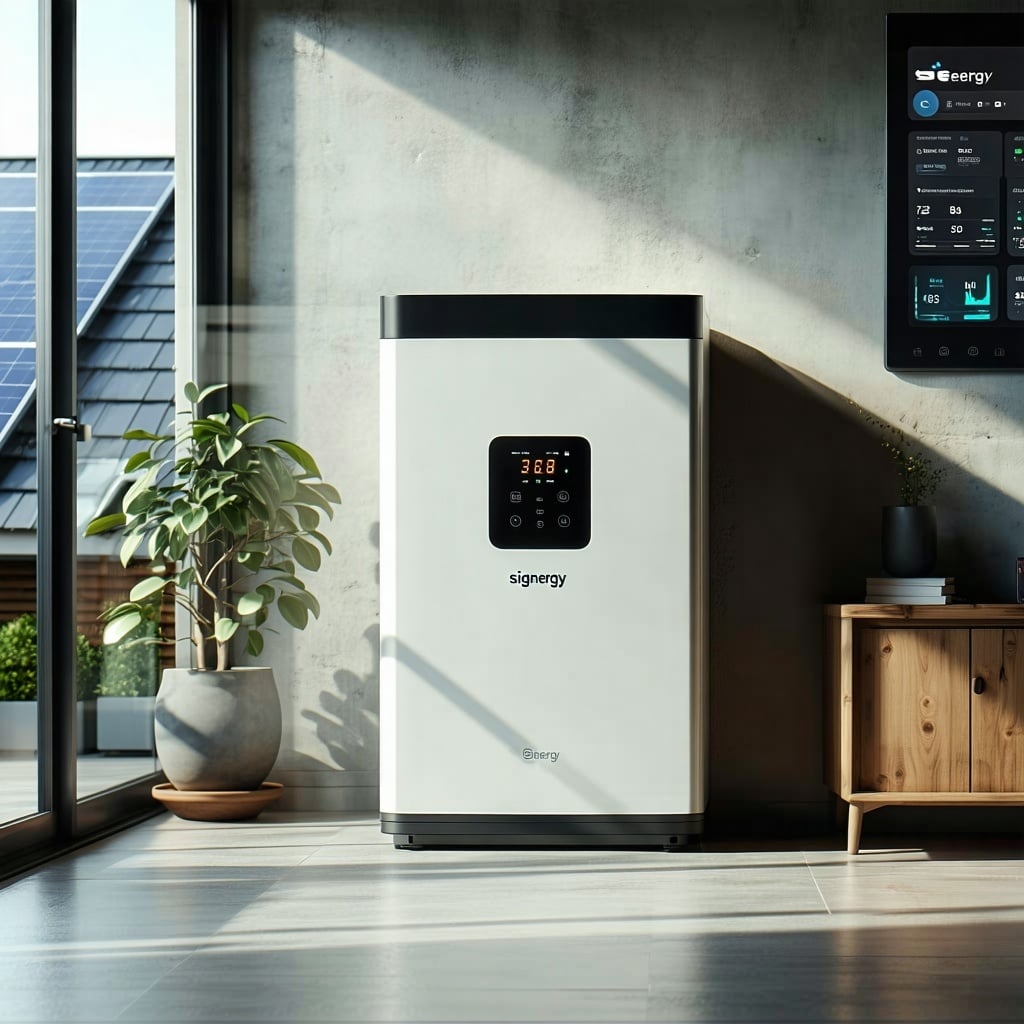
Is Sigenergy Battery Price a Smart Investment in 2025? Smart Energy Answers June 3, 2026 In the rapidly growing world of renewable energy, battery storage solutions are becoming a vital part of any solar setup. Among the many battery technologies available today, the Sigenergy Battery stands out for its innovation, performance, and smart energy management. But with all its features and benefits, many potential buyers are still left wondering, is the Sigenergy battery price truly a smart investment in 2025? The answer depends on multiple factors, including your energy usage, solar setup, long-term savings, and environmental goals. Let’s break it down to understand why more Australians are exploring the Sigenergy battery and how its price reflects value. What is the Sigenergy Battery? The Sigenergy battery is a high-performance lithium-ion energy storage solution designed for both residential and commercial use. Known for its modular design, high efficiency, and smart control features, the battery integrates seamlessly with solar systems and helps users store excess solar energy for later use. It’s built with safety, flexibility, and scalability in mind, allowing homeowners and businesses to expand capacity as needed. What Makes the Sigenergy Battery Special? Before diving into the Sigenergy battery price, it’s important to understand what sets it apart: Modular Capacity: You can scale it from 5kWh up to 48kWh or more based on your needs. All-in-One System: Includes hybrid inverter and energy management in one compact unit. High Round-Trip Efficiency: More usable energy stored and returned. Smart Monitoring: Mobile and web-based apps give users complete control. Advanced Safety: Designed with robust protection features and reliable lithium iron phosphate (LiFePO4) chemistry. These features explain why many energy-conscious consumers are asking if the Sigenergy battery price is worth it, especially when compared to traditional battery brands. Understanding the Sigenergy Battery Price in 2025 The Sigenergy battery price in 2025 is influenced by several factors such as battery size, installation charges, integration with existing solar systems, and regional rebates or incentives. Smart Energy Answers, a leading solar solutions provider, helps customers understand these costs upfront and offers tailored packages that optimise both value and performance. Is the Sigenergy Battery Price Worth It? Here’s why many consider the Sigenergy battery price a smart investment in 2025: 1. Rising Energy Costs Electricity prices continue to rise across Australia, making energy independence more appealing. By installing a Sigenergy battery, you can store excess solar energy during the day and use it at night or during peak demand times, significantly reducing your grid dependence and saving on energy bills. 2. Government Incentives Various Australian states are offering rebates and incentives for home battery storage systems. These schemes reduce the upfront Sigenergy battery price, making it more affordable for homeowners. Smart Energy Answers helps clients identify and apply for all eligible rebates to lower investment costs. 3. Increased Self-Consumption With a battery, you use more of the solar energy you produce. This means greater savings and less wastage. The Sigenergy battery also offers time-of-use optimisation, allowing you to use stored energy when electricity prices are highest. 4. Reliable Backup Power The Sigenergy battery provides power backup during blackouts, which is becoming increasingly important in regions with unstable grids. You gain peace of mind knowing your essentials, including lights, fridge, Wi-Fi, and medical devices, will continue running when the grid goes down. 5. Environmental Benefits Investing in solar and storage reduces your carbon footprint. Using the Sigenergy battery helps maximise your use of clean solar energy, which is good for the planet and future generations. Sigenergy Battery vs Other Brands When compared to similar systems like Tesla Powerwall or Sonnen, the Sigenergy battery price is competitive, especially when you factor in its built-in inverter, modularity, and advanced monitoring features. It’s not just a battery, it’s a comprehensive energy storage system, which can reduce the need for extra components and installations. Customers working with Smart Energy Answers often note that the Sigenergy battery offers more value per dollar compared to other high-end brands, particularly in larger systems where scalability becomes crucial. Real-World Performance and Reviews Customers who have installed the Sigenergy battery report: Smooth integration with rooftop solar Consistent backup during outages Noticeable savings on power bills within months Intuitive app for energy usage tracking The Sigenergy battery price is further justified by its long-term warranty, often 10 years or more, which adds to the peace of mind and investment reliability. Smart Energy Answers: Your Trusted Partner Choosing the right battery and installation partner is just as important as the product itself. Smart Energy Answers has helped hundreds of Australian households and businesses switch to smarter solar energy systems. From the initial consultation to post-installation support, we guide customers through understanding battery choices, system design, installation, and rebate applications. With Smart Energy Answers, you’ll get a transparent quote on the Sigenergy battery price, customised to your energy needs and budget. We also ensure the installation is done by certified professionals, backed by strong warranties and after-sales support. Final Verdict: Is It a Smart Investment? In 2025, the answer is yes, the Sigenergy battery price is a smart investment for anyone looking to: Lower energy bills Gain energy independence Prepare for outages Increase solar self-consumption Support a sustainable future While the upfront cost may seem high, the long-term financial, environmental, and security benefits make it well worth the price. Especially when installed by a trusted name like Smart Energy Answers, the Sigenergy battery becomes not just a product, but a strategic energy asset. Ready to Make the Switch? If you’re considering energy storage, now is the time to act. Contact Smart Energy Answers today to learn more about the Sigenergy battery price, available packages, and how you can create a smarter, greener home or business.
Aiko Solar Leadership Visits SEA: Powering the Future of Premium Solar Panels in Australia
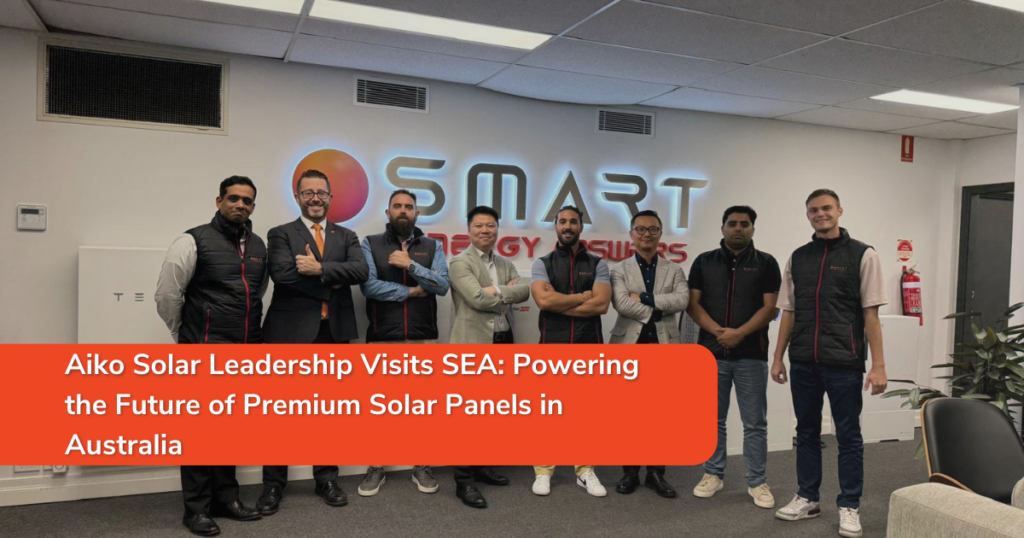
Aiko Solar Leadership Visits SEA: Powering the Future of Premium Solar Panels in Australia Smart Energy Answers May 2, 2025 Smart Energy Answers Welcomes Aiko Solar Leadership to Our Headquarters Smart Energy Answers was honoured to welcome the Vice President and Managing Director of Aiko Solar to our headquarters last month. This visit marks a significant milestone in our growing partnership and our shared commitment to bringing the world’s most advanced solar technology to Australian homes and businesses. Who Is Aiko Solar? Aiko Solar is a global leader in solar innovation, best known for producing some of the world’s most efficient solar panels. With a strong focus on research and development, Aiko solar panels are at the forefront of renewable energy technology, offering higher efficiency, sleek design, and exceptional durability. Their patented ABC, or All Back Contact, technology sets them apart as a top-tier solar manufacturer. Why This Visit Matters The visit of Aiko’s senior leadership to Smart Energy Answers reflects our close collaboration and mutual commitment to excellence. During the visit, we discussed strategic initiatives, upcoming technologies, and how we can continue to deliver exceptional value to Australian customers using Aiko panels. From cutting-edge solar panel technology to energy optimisation, the meeting showcased our shared vision for a smarter, cleaner energy future. “We’re proud to be working with Aiko, one of the most innovative companies in the solar industry. Their advanced products allow us to offer our customers unmatched performance and value,” said our CEO during the visit. A High-Level Exchange of Ideas and Direction The meeting brought together senior leadership from Aiko, creating a valuable opportunity to exchange ideas, discuss direction, and strengthen alignment for the Australian solar market. Henry Xia, Head of Global Sales at Aiko, shared his global vision, sparking inspiration across the room. His insights reaffirmed Aiko’s commitment to redefining solar excellence. Alex Hang, President of APAC, outlined a strategic roadmap for the region. He explained how Aiko aims to lead the solar market through product innovation and market responsiveness. Thomas Bywater brought a grounded local perspective tailored to the needs of the Australian market. His alignment with SEA’s mission created strong synergies for future growth. Ivan Zhang was also in attendance, adding depth to the discussion and ensuring all strategic points were explored in detail. The Future of Solar With Aiko Panels As one of the select partners offering Aiko solar panels in Australia, Smart Energy Answers is excited to integrate their latest technology into our residential and commercial solar solutions. Whether you’re looking for higher energy yields, stunning aesthetics, or future-ready solar systems, Aiko solar panel products deliver on every front. Ready to Upgrade? If you’re considering premium solar solutions for your home or business, now is the time to explore the benefits of Aiko solar panels. Reach out to our expert team for a free consultation and discover how Aiko’s technology can maximise your energy savings.
Smart Energy Answers Recognised Among Top 3 Sigenergy Battery Retailers
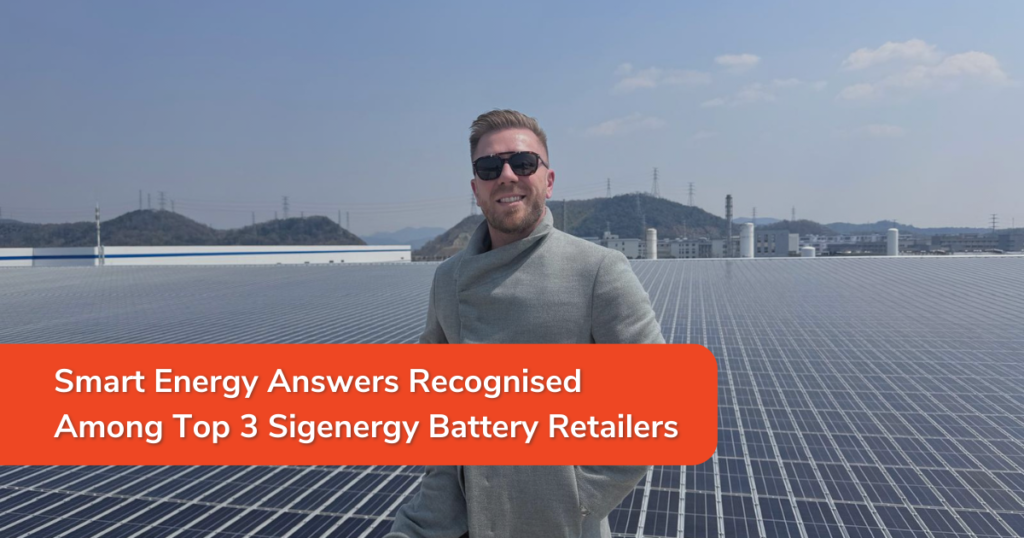
Smart Energy Answers Recognised Among Top 3 Sigenergy Battery Retailers Smart Energy Answers April 11, 2025 At Smart Energy Answers, we’re thrilled to share that we’ve been officially recognised as one of the Top 3 retailers for Sigenergy battery installations in Australia. This achievement highlights our ongoing commitment to delivering the best in smart energy storage solutions for Australian homes and businesses. A Visit to Sigenergy Headquarters As part of this recognition, our team had the incredible opportunity to visit Sigenergy’s headquarters and factory line. This behind-the-scenes experience gave us firsthand insight into the cutting-edge technology, innovation, and quality control that goes into every Sigenergy product. From research and development to final assembly, we were impressed by Sigenergy’s dedication to performance, safety, and scalability. These are values that align perfectly with ours. An Unforgettable Experience in Shanghai The highlight was our partner Energy Spurt, Australia’s largest Sigenergy distributor, hosting Smart Energy Answers and fellow partners for an unforgettable experience in Shanghai. From exploring the city’s vibrant local cuisine to witnessing the adrenaline-pumping Shanghai Formula 1 Grand Prix, it was an incredible mix of culture, connection, and celebration. Why Sigenergy? Sigenergy is an industry-leading manufacturer of smart energy storage systems, known for its powerful, modular battery units designed for both residential and commercial applications. With fast charging and discharging capabilities, seamless solar integration, and advanced energy management features, Sigenergy batteries help customers take full control of their energy use. These systems are ideal for those looking to maximise solar self-consumption, reduce reliance on the grid, and future-proof their energy setup with scalable solutions. Ready to Learn More? If you’re considering a high-performance, future-ready battery solution for your home or business, Sigenergy is one of the smartest choices available. Learn more about Sigenergy batteries here or contact our team to see if it’s the right fit for your setup.
SEA Analysis: Amber Acquires Charge HQ to Evolve EV Charging in Australia
SEA Analysis: Amber Acquires Charge HQ to Evolve EV Charging in Australia Smart Energy Answers February 17, 2025 Amber’s Acquisition of Charge HQ: What It Means for EV Charging in Australia Amber’s recent acquisition of Charge HQ marks a significant milestone in the electric vehicle, or EV, charging industry in Australia. This strategic move has the potential to revolutionise the way EV owners manage their charging costs and optimise their use of renewable energy. As a leading provider of smart energy solutions, Smart Energy Answers has conducted an in-depth analysis of this development to provide valuable insights for our readers. Smart Energy Answers has also partnered with Amber Electric, sharing a common mission to help shift Australia to 100% renewable energy. This collaboration aims to empower solar and battery customers to earn greater rewards for their excess solar energy and accelerate their payback period. With fully automated systems, customers can store energy and sell it back to the grid at peak times, generating extra income. The Significance of the Acquisition Amber’s primary objective is to seamlessly integrate Charge HQ’s advanced smart charging technology into its existing energy retail model. By combining Charge HQ’s cloud-based platform with Amber’s real-time wholesale pricing, EV owners will be able to: Optimise their charging schedules based on electricity prices, leading to significant cost savings. Charge their vehicles directly from their rooftop solar or during off-peak hours when renewable energy is more readily available on the grid. Enjoy automated convenience through the set-and-forget functionality, eliminating the need for constant manual intervention. Compatibility and User-Centric Features One of the key strengths of Charge HQ’s platform is its broad compatibility with Open Charge Point Protocol, or OCPP, EV chargers, which are widely used across Australia. This ensures that a large majority of EV owners can benefit from the integrated solution without additional hardware investments. Furthermore, as Amber continues to refine the platform, users can expect: Expanded compatibility with additional EV models. Introduction of new demand-side management features aimed at further increasing cost savings and efficiency. A user-friendly and intuitive interface that simplifies the management of charging needs. In addition to EV charging, Amber offers attractive solutions for solar and battery customers. With Amber, these customers can earn greater rewards for their excess solar energy and turbocharge their payback period through a fully automated system that stores energy and sells it back to the grid during peak price periods. Amber for Batteries Amber’s battery programme accelerates the payback time for battery investments through wholesale rates, smart automation, and enhanced control via the Amber app. This offering caters to various customer segments: New to Solar and Batteries Energy independence with solar and batteries allows customers to reduce or eliminate power bills, earn extra money by generating, storing, and selling their own energy, and rely less on the grid while using clean, renewable energy. Considering Adding a Battery to Existing Solar Adding a battery with Amber to a current solar system can enhance return on investment by accessing feed-in tariffs, or FiTs, that can reach $15/kWh. Customers can store energy for self-use when it is worth more or send it to the grid when a premium can be earned. Already Have Solar and Batteries Amber for Batteries offers a tailored battery plan that gets the battery working smarter for the customer, not the energy retailer. It eliminates falling fixed-rate FiTs, provides access to wholesale rates, and offers more control with no lock-in, manual charge and discharge controls, and the ability to turn battery automation on or off. Amber for EV Charging Amber for EVs is a software-based intelligent EV charging solution that connects to the car remotely, optimising charging to automatically take advantage of the lowest-cost and lowest-emission times. For those with solar, or solar and a battery, Amber is the first energy retailer to deliver the added benefit of charging the car from any excess solar energy the system might be producing without requiring additional hardware. This holistic solution makes the most of the home energy setup. With Amber for EV Charging, customers can: Charge when it is best for both them and the grid, taking advantage of excess renewable energy and getting paid to charge when the grid has too much supply. Unlock free kilometres by using solar energy to power the car instead of selling it for less. Enjoy smart, price-aware EV charging that automatically ensures charging at the lowest-cost and lowest-emission times. Benefit from effortless, set-and-forget functionality with easy access to excess solar charging for EV owners with solar, with no additional hardware needed. Track costs and impacts, allowing them to see and share the EV’s effects on their bottom line and the planet. Complementing Amber’s Existing Services The integration of Charge HQ is set to complement and enhance the functionality of Amber’s existing Amber for EVs platform, rather than replacing it. Charge HQ’s features, such as FiT-aware solar charging and refined demand window management, will likely be incorporated into Amber’s ecosystem, providing users with a more comprehensive and efficient charging solution. For existing Amber customers, this means: No longer needing to manually track wholesale electricity prices or adjust charging schedules. The integrated platform will intelligently optimise charging sessions on their behalf. A simplified user experience that seamlessly combines home energy management with EV charging. The Future Outlook for Smart EV Charging As the adoption of EVs continues to rise in Australia, the demand for smart and efficient charging solutions will only continue to grow. Amber’s acquisition of Charge HQ positions them at the forefront of this rapidly evolving industry, setting a new standard for smart EV charging that aligns financial savings with sustainable energy practices. Amber’s offerings, such as SmartShift and Amber for Batteries, contribute to a more sustainable and cost-effective future for EV owners while helping accelerate the transition to renewable energy. By enabling customers to optimise their energy usage, maximise the value of their solar and battery investments, and charge their EVs with clean, low-cost electricity, Amber is driving the shift towards a
Future-Proofing Your Investment: Aiko Solar’s Compatibility with Emerging Technologies
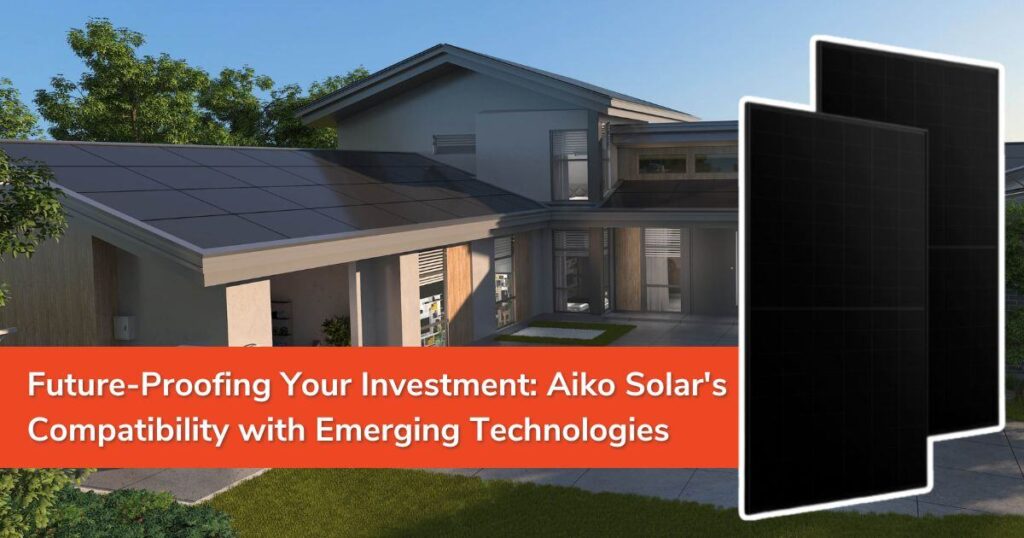
Future-Proofing Your Investment: Aiko Solar’s Compatibility with Emerging Technologies Smart Energy Answers November 28, 2024 Staying Ahead of the Curve in Solar Innovation In the fast-paced world of renewable energy, staying ahead of the curve is crucial. That’s why at Smart Energy Answers, we’re thrilled to spotlight Aiko Solar’s forward-thinking approach to panel design and technology. These aren’t just solar panels. They’re gateways to the future of energy management. From smart home integration to cutting-edge storage solutions, Aiko is ensuring your investment stays relevant for years to come. Let’s explore how Aiko Solar panels are paving the way for a smarter, more connected energy future. Cross-reference: Curious about the current performance of these future-ready panels? Check out our blog on Aiko Solar’s world-leading efficiency levels to see how they’re excelling today while preparing for tomorrow. The Current State of Solar Technology in Australia Before we jump into the future, let’s consider where we are. Australia is at the forefront of solar adoption, but the technology is evolving rapidly. From smart inverters to home batteries and Virtual Power Plants, or VPPs, the solar ecosystem is becoming increasingly sophisticated. With the NSW Solar Battery Rebate 2024 encouraging more homes to adopt integrated solar solutions, there’s never been a better time to invest in future-proof technology. Smart Home Solutions: The Hub of Future Energy Management At Smart Energy Answers, we see Aiko Solar panels as the cornerstone of a future-proof smart home. Here’s how they fit into an evolving energy ecosystem: Intelligent solar panels: Aiko’s ABC technology shifts all electrical contacts to the back of the panel, maximising light absorption, partial shading optimisation, and overall efficiency to deliver exceptional performance. Advanced inverters: With integrated Module-Level Power Electronics technology, your system optimises the performance of each individual solar panel, ensuring peak energy output even in challenging conditions such as shading or mismatched panels. Smart battery integration: Seamless connectivity with current and future storage technologies enables efficient energy storage and usage for your home or business. Home energy management systems: AI-driven solutions optimise energy production and consumption, ensuring your energy usage is smart, efficient, and sustainable. Aiko panels aren’t just part of your home. They’re the foundation of your smart energy future. The Path to Energy Independence: Compatibility Features Explained Let’s break down what makes Aiko Solar panels so adaptable to future technologies: Flexible communication protocols: Ready to integrate with various smart home systems. Modular design: Allows for easy upgrades and additions to your system. Grid support functions: Prepared for future grid stability requirements. Smart Energy Answers: Your Partner in Future-Proof Solar As Australia’s solar experts, we’re committed to keeping you ahead of the curve. Technology roadmap consultations: We’ll help you plan for future upgrades. Scalable system designs: Ensure your initial installation can grow with new technologies. Regular tech updates: Keep your system optimised with the latest software and hardware. Future tech integration support: Assistance in connecting new devices and services as they become available. Aiko Solar panels aren’t just a solution for today. They’re an investment in tomorrow’s energy landscape. By choosing Aiko, you’re not just installing solar panels. You’re laying the groundwork for a smarter, more connected, and more efficient energy future. In a world where technology evolves at lightning speed, Aiko Solar ensures your investment stays relevant, adaptable, and valuable for decades to come. Ready to future-proof your energy independence?
Double Your Savings with Randwick Sustainability Rebate & NSW Battery Rebate
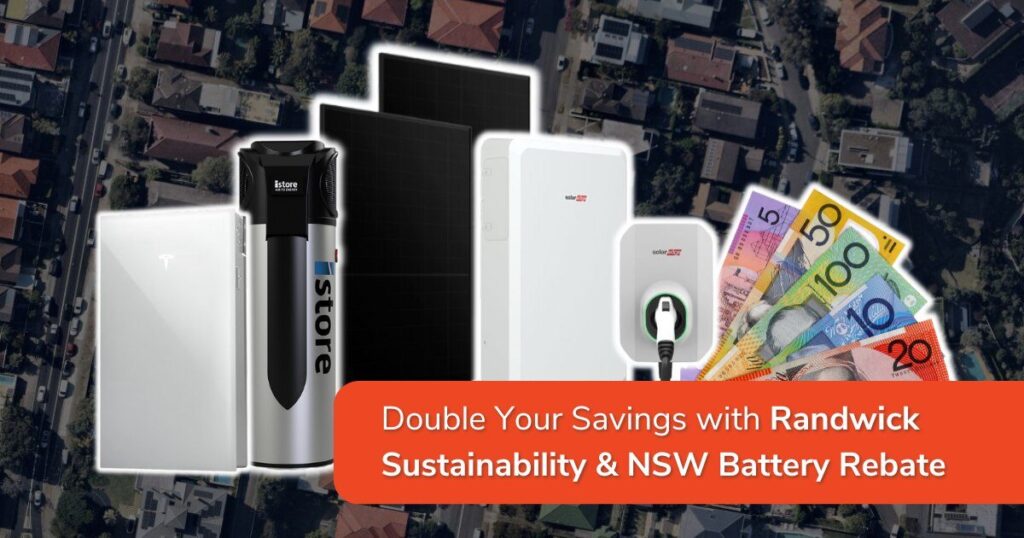
Double Your Savings with Randwick Sustainability Rebate & NSW Battery Rebate Smart Energy Answers November 4, 2024 With the NSW Solar Battery Rebate launching this November, Randwick residents are in a prime position to maximise their savings by combining state and local rebates. The NSW rebate offers up to $4,800 for solar battery installations, plus up to an additional $800 when you join a Virtual Power Plant (VPP). Pair this with Randwick City Council’s sustainability rebates—covering solar panels, batteries, heat pumps, and EV chargers—offering up to $2,250 in savings. Together, these rebates can provide homeowners with almost $7,500 in total savings, making solar, battery storage, and smart energy solutions more affordable than ever. Here’s how you can take full advantage of these incentives! Unlock Your Rebates and Savings Now.Find out how to qualify for up to $7,500 rebates with our energy experts. Get a Quote Randwick Sustainability Rebates Randwick City Council offers sustainability rebates to promote eco-friendly technologies and reduce carbon footprints. These incentives help residents afford solar panels, batteries, heat pumps, and EV chargers, making green energy more accessible. This initiative supports both individual households and a community shift towards renewable energy. Household EV Charger – Rebate Up to $250 Why install an EV Charger? Installing an EV charger at home offers unmatched convenience and helps future-proof your property for the growing electric vehicle market. Home charging provides flexibility and allows you to take advantage of lower electricity rates during off-peak hours. Randwick residents can claim up to $250 of the cost of installing an EV charger, making it an affordable way to prepare your home for the future of electric mobility. Eligibility: Only available in properties in the Randwick Local Government Area Must be an electric vehicle charger or EV infrastructure for apartment blocks Must be installed by a licensed electrician Installation must have occurred within the past 12 months Household Heat Pump – Rebate Up to $500 Why install a Heat Pump? Heat pumps are one of the most energy-efficient ways to heat water in your home, using far less electricity than traditional hot water systems. They help reduce your energy bills and your environmental impact, making them an excellent choice for sustainability. Randwick residents can claim up to $500 of the cost of an electric heat pump or rooftop solar hot water system. Additionally, you can benefit from the Federal Government’s Small-Scale Technology Certificates (STC) rebate and the State Government’s Energy Savings Scheme (ESC) rebate, organised by your installer. Eligibility: Only available in properties in the Randwick Local Government Area Must be a Clean Energy Council (CEC) accredited electric heat pump or rooftop solar hot water system Excludes swimming pool heat pumps Installation must have occurred within the past 12 months Unlock Your Rebates and Savings Now.Find out how to qualify for up to $7,500 rebates with our energy experts. Get a Quote Household Rooftop Solar – Rebate Up to $500 Why install Rooftop Solar? Rooftop solar allows you to generate clean energy for your home, reducing your reliance on the grid and cutting down your electricity bills. Solar power also increases the value of your property, and with the upcoming NSW Solar Battery Rebate in November, it’s a smart investment to pair solar with battery storage for even more savings. Randwick homeowners can claim 10% of the cost of installing rooftop solar, up to $500, making it easier than ever to adopt renewable energy. Eligibility: Only available in properties in the Randwick Local Government Area Must be a Clean Energy Council (CEC) accredited installer Must have minimum system capacity of 5kW Installation must have occurred within the past 12 months Household Solar Battery – Rebate Up to $1,000 Why install a Solar Battery? Installing a solar battery allows you to store excess energy generated by your solar panels and use it when the sun isn’t shining, helping you further reduce energy costs and become more independent from the grid. Solar battery systems also offer greater energy security during power outages. Randwick residents can claim 10% of the cost of installing a solar battery, up to $1,000, making energy storage a more affordable investment for long-term savings. Eligibility: Only available in properties in the Randwick Local Government Area Must be a Clean Energy Council (CEC) accredited installer Installation must have occurred within the past 12 months NSW Battery Rebate 2024 Starting November 1, 2024, the NSW government will offer new battery incentives for homes and businesses with rooftop solar systems. Part of the Peak Demand Reduction Scheme, these incentives support battery storage installation and Virtual Power Plant connections, helping reduce electricity bills and enhance solar energy use. NSW Battery Installation Incentive Amount: Up to $4,500 off the upfront installation costs, depending on the size of your battery of choice. Eligibility: Homes and businesses in NSW with existing solar system but without existing battery. Battery must be listed on an approved product list and battery capacity must be between 2 kWh and 28 kWh. Battery must be internet connectable and controllable by a Demand Response Aggregator. Must have a warranty of at least 10 years and guarantee that at least 70% of the Usable Capacity is retained 10 years from the date of installation. Warranty must define the normal use conditions as not being less than a minimum ambient temperature of -10°C to 50°C; and minimum warranted throughput of 3.65 MWh per kWh of Usable Battery Capacity. Note: Incentive is provided as an upfront discount by approved suppliers. For homes and businesses without existing solar, the incentive can be included in the quote for a new solar and battery system. NSW Virtual Power Plant (VPP) Connection Incentive Amount: Up to $800 incentive for connecting to a VPP. Frequency: Available twice, at least 3 years apart. Eligibility: Applies to both new and existing batteries that will join a VPP. Battery must be listed on an approved product list and battery capacity must be between 2 kWh and 28 kWh. Battery must have a minimum 6 years remaining
When Will Tesla Powerwall 3 Be Released?
When Will Tesla Powerwall 3 Be Released? Smart Energy Answers October 24, 2024 Tesla’s Powerwall has been a game-changer in the home energy storage industry, providing homeowners with a reliable and efficient solution for managing their energy usage and costs. With the success of the Powerwall 2, many are now eagerly anticipating the release of the Tesla Powerwall 3. In this article, we’ll explore the latest information on when the Powerwall 3 will be released and its expected availability. Tesla Powerwall 3 Launch Date The wait is over! Tesla has officially launched the Powerwall 3 in Australia as of August 2024. This highly anticipated release brings the latest advancements in home energy storage technology to the Australian market, offering homeowners a powerful and efficient solution for optimising their energy consumption and reducing their reliance on the grid. Powerwall 3 Availability in Australia With the official launch of the Powerwall 3, Australian homeowners can now purchase this cutting-edge home battery system through authorised Tesla retailers and certified installers nationwide. The widespread availability of the Powerwall 3 ensures that homeowners across the country can take advantage of its advanced features and benefits. To begin the process of installing a Tesla Powerwall 3 in your home, follow these simple steps: Research and compare: Take the time to research the features and specifications of the Powerwall 3 to ensure it aligns with your home energy needs and goals. Schedule a consultation: Contact an authorised Tesla retailer or certified premium installer to schedule a consultation. During this meeting, a knowledgeable specialist will assess your energy requirements and provide personalised recommendations. Place your order: Once you’ve decided to move forward with the Powerwall 3, place your order with your chosen retailer or installer. A deposit may be required to secure your spot in the installation queue. Installation process: Your certified installer will coordinate with you to schedule the installation of your Powerwall 3. The installation typically takes 1-2 days, depending on the complexity of your home’s energy setup. Enjoy the benefits: With your Powerwall 3 up and running, you can start enjoying the numerous benefits it offers, such as increased energy independence, potential cost savings, and reliable backup power during outages. Why Choose the Tesla Powerwall 3? The Tesla Powerwall 3 offers several compelling reasons for Australian homeowners to invest in this advanced home energy storage solution: Built-In Inverter: The Powerwall 3 features an integrated solar inverter that boosts efficiency by transforming solar energy directly into usable electricity, allowing the system to capture and store more solar power than previous models. Increased continuous power output: The Powerwall 3 boasts an impressive 10 kW of continuous power output, enabling it to power more appliances and devices simultaneously. Advanced technology: Tesla has incorporated state-of-the-art technology in the Powerwall 3 to improve its efficiency, performance, and longevity. Sleek and compact design: The Powerwall 3 features a sleek and compact design, making it easier to integrate into your home’s exterior or garage without compromising on aesthetics. Potential electricity bill savings: By storing solar energy and participating in Tesla’s Virtual Power Plant (VPP) program, Powerwall 3 owners can potentially reduce their electricity bills by up to 77%. Embrace the Future of Home Energy Storage The release of the Tesla Powerwall 3 in Australia marks an exciting milestone for homeowners looking to embrace sustainable energy solutions and take control of their energy consumption. If you’re ready to embark on this transformative journey, Smart Energy Answer is here to support you every step of the way. As a trusted provider of home energy solutions in Australia, Smart Energy Answer has the knowledge and expertise to guide you through the process of purchasing and installing your Tesla Powerwall 3. Our team of certified professionals will work closely with you to assess your energy needs, provide tailored recommendations, and ensure a smooth and efficient installation process. Don’t miss out on this opportunity to be at the forefront of the home energy storage revolution. Contact Smart Energy Answer today to schedule your consultation and discover how the Tesla Powerwall 3 can help you achieve your energy goals and contribute to a more sustainable future. Contact us today to learn more about the Tesla Powerwall 3 and how it can help you take control of your energy future. Phone: 1300 732 679 Email: info@smartenergyanswers.com.au
How Powerwall 3 Has Changed the Game
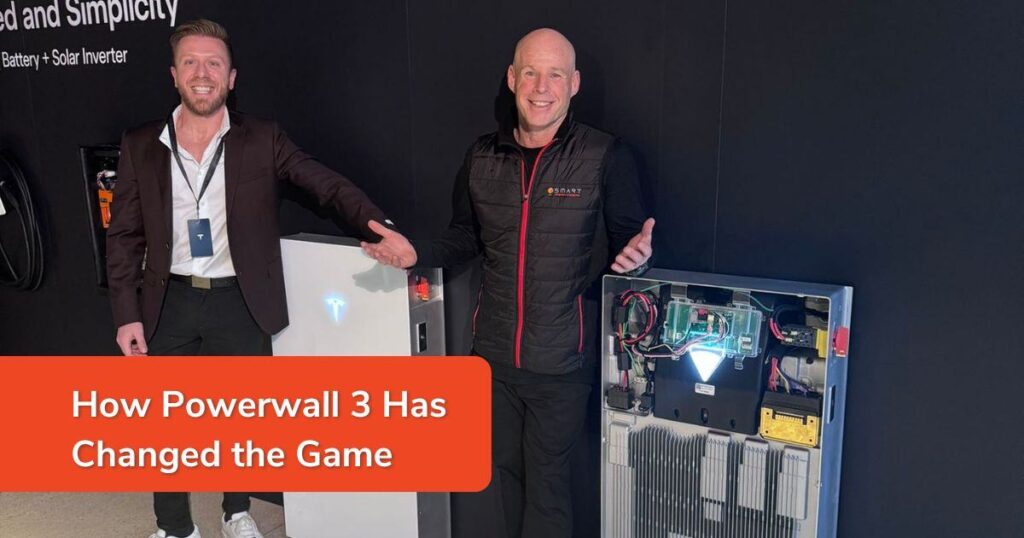
How Powerwall 3 Has Changed the Game Smart Energy Answers September 3, 2024 Tesla Powerwall 3: Redefining Home Energy Management Tesla has been at the forefront of innovation in the renewable energy sector for years, and its Powerwall series has consistently set the standard for home energy storage. With the launch of the Powerwall 3 on August 16, 2024, Tesla has once again redefined the boundaries of what is possible in home energy management. This latest iteration of the Powerwall not only builds on the success of its predecessors, but also introduces groundbreaking innovations that make it a game-changer in the industry. The Evolution of Tesla’s Powerwall When Tesla first introduced the Powerwall in 2015, it was a revolutionary product that allowed homeowners to store energy generated from solar panels for use when the sun was not shining. The Powerwall 2 followed in 2016, doubling the storage capacity and improving efficiency, solidifying Tesla’s dominance in the market. However, Powerwall 3 represents a significant leap forward, with innovations that make it more powerful, efficient, and easier to use than ever before. Integrated Solar Inverter: Revolutionising Home Energy Systems One of the most significant innovations in Powerwall 3 is the integration of a solar inverter. This built-in inverter efficiently converts solar energy into stored electricity, allowing the system to capture more solar energy than ever before. The integrated design simplifies installation by reducing the number of components needed, which not only lowers installation costs but also minimises potential points of failure. In previous Powerwall models, homeowners needed to install a separate solar inverter, adding complexity and cost to the system. Powerwall 3’s all-in-one solution streamlines the process, making it more accessible for a broader range of homeowners. This innovation places Powerwall 3 ahead of competitors, offering a seamless and efficient energy storage solution that maximises the benefits of solar energy. Enhanced System Expansion and Flexibility While Powerwall 3 maintains the same storage capacity as its predecessor, Powerwall 2, it brings enhanced flexibility to your home energy system. With the ability to easily stack up to four units, Powerwall 3 allows homeowners to expand their storage capacity as their energy needs grow. This scalability ensures that your energy system can adapt over time, providing a future-proof solution that evolves with your household. Whether you’re looking to power more appliances during a grid outage or reduce your reliance on the grid, Powerwall 3 offers the flexibility to meet your energy needs. By allowing for easy system expansion, Tesla ensures that your investment in Powerwall 3 remains versatile and capable of adapting to your changing energy demands. Compact Yet Powerful Design Tesla has managed to pack more power into a smaller, sleeker package with Powerwall 3. Despite its compact size, Powerwall 3 delivers up to 10kW of continuous power, making it one of the most powerful home batteries on the market. This is a significant increase from previous models, allowing homeowners to power more appliances simultaneously, even during an outage. The compact design not only saves space but also makes the Powerwall 3 more versatile in terms of installation options. Whether you need it installed indoors or outdoors, Powerwall 3’s design is engineered to fit seamlessly into your home environment without compromising on aesthetics or performance. Future-Proofing With Continuous Software Updates One of the hallmarks of Tesla products is their ability to improve over time through software updates, and Powerwall 3 is no exception. Tesla’s approach to continuous improvement means that your Powerwall 3 will receive new features and enhanced functionality long after it is installed. For example, Tesla regularly updates the software to optimise energy management, enhance safety features, and improve the overall user experience. This commitment to continuous improvement ensures that your investment in Powerwall 3 remains cutting-edge, delivering ongoing value as new advancements are made. Advanced Safety and Durability Features Safety and durability are critical considerations in home energy systems, and Tesla has gone above and beyond with Powerwall 3. The new model is equipped with advanced safety features, including a flood-resistant shell that can withstand up to 60cm of water, helping ensure your energy storage system remains operational in challenging conditions. Additionally, Powerwall 3 is designed to perform across a wide range of temperatures, making it suitable for various climates. Whether you’re dealing with scorching heat or freezing cold, Powerwall 3 is engineered to deliver reliable performance, protecting your home and ensuring that you have access to power when you need it most. Maximising Value and Savings Powerwall 3 is not just about power and performance. It’s also about maximising value. Tesla has made the Powerwall 3 more cost-effective by integrating the solar inverter, reducing installation complexity and simplifying the overall system. Additionally, with available rebates and incentives, such as the NSW battery rebate coming in November 2024, homeowners can further reduce the upfront cost of installation. Powerwall 3 also allows you to optimise your energy usage through features like time-based controls. These controls enable you to store energy when electricity rates are low and use it when rates are high, helping maximise savings on your electricity bill. The ability to participate in virtual power plant programmes can also add an extra revenue stream, further enhancing the financial benefits of owning a Powerwall 3. Conclusion The Tesla Powerwall 3 has truly broken the mould of what’s possible in home energy storage. With its integrated solar inverter, enhanced storage capacity, compact design, and continuous software updates, Powerwall 3 is a powerful and versatile solution that meets the needs of modern homeowners. Its advanced safety features and cost-effectiveness make it an attractive option for those looking to take control of their energy future. As Tesla continues to push the boundaries of innovation, Powerwall 3 stands as a testament to what’s possible when cutting-edge technology meets thoughtful design. If you’re considering a home energy storage solution, Powerwall 3 should be at the top of your list, offering more power, more savings, and more backup than ever before. Secure your Powerwall 3 for as
Firsthand Look at Innovation: SEA CEO Visits AIKO & Sungrow Factories
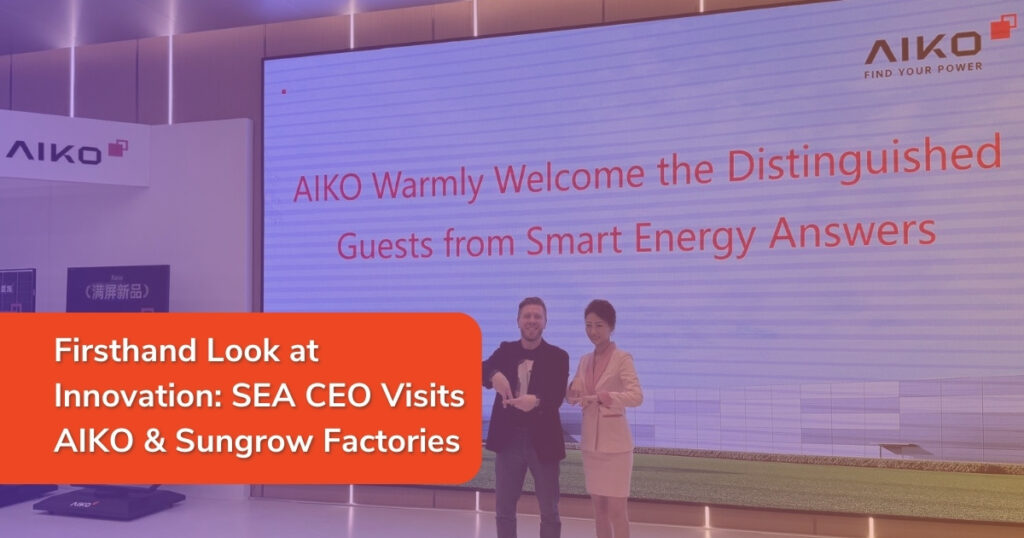
Firsthand Look at Innovation: SEA CEO Visits AIKO & Sungrow Factories Smart Energy Answers August 28, 2024 Daniel Lanzetta Visits AIKO and Sungrow Headquarters in China In the ever-evolving landscape of solar energy, staying ahead of technological advancements is crucial. This was the driving force behind Daniel Lanzetta, CEO of Smart Energy Answers, embarking on a journey to China to visit AIKO’s headquarters in Zhuhai and Sungrow’s global headquarters in Hefei. These visits offered Daniel an invaluable opportunity to witness firsthand the groundbreaking innovations and stringent quality control measures that go into producing some of the world’s most advanced solar technologies. A Glimpse Into AIKO’s World-Class Solar Panel Manufacturing Daniel’s first stop was at AIKO’s state-of-the-art factory, where the company’s renowned ABC technology-based solar panels are produced. Henry Xia, Vice President of AIKO, and Thomas Bywater, Head of AIKO Australia, welcomed Daniel to the factory. AIKO has set a new benchmark in the industry with its vertically integrated manufacturing process, allowing for exceptional quality control and efficiency. All-Back Contact Technology for Enhanced Performance One of the most significant innovations at AIKO is its use of All-Back Contact, or ABC, technology. This design feature ensures that all electrical contacts are placed on the rear side of the panels, reducing shading and improving light absorption. As a result, AIKO’s panels deliver superior efficiency and advanced shading optimisation, even in less-than-ideal lighting conditions. Vertical Integration for Superior Quality Unlike many other solar panel manufacturers, AIKO produces its solar cells from scratch within its own facility. This vertical integration means that from raw silicon to the final product, every step of the process is carefully controlled. Daniel was particularly impressed by this approach, noting how it helps ensure a high level of quality across the entire production line. Cutting-Edge Laser Technology Another standout feature of AIKO’s manufacturing process is its use of advanced laser technology. The precision of this technology allows for the creation of highly efficient solar cells with integrated diodes that optimise performance, even in shaded conditions. Daniel highlighted this innovation as a key differentiator, emphasising how it contributes to the overall reliability and efficiency of AIKO’s solar panels. The Role of Copper in Enhancing Durability AIKO’s commitment to quality is further demonstrated by its use of copper in the back contact cells. Copper offers superior conductivity and durability compared to traditional materials like aluminium. This choice not only improves the performance of the panels but also helps ensure they have a longer lifespan, providing greater value to customers. Ethical Workforce Practices and Employee Welfare at AIKO In addition to its technological innovations, AIKO is deeply committed to the ethical treatment of its workforce. During his tour, Daniel was particularly impressed by AIKO’s Anti-Slavery Policy, which ensures first-class treatment of employees. This commitment to social responsibility is evident not only in the company’s policies, but also in the quality of life provided to its workforce. Daniel had the opportunity to see the apartments and housing facilities provided by AIKO to its employees, reflecting the company’s dedication to their wellbeing and comfort. This holistic approach underscores AIKO’s status as a leader in both innovation and ethical business practices. Exploring Sungrow’s Pioneering Inverter and Energy Storage Technology Following his visit to AIKO, Daniel toured the Sungrow factory, a global leader in inverter technology. Inverters are a critical component of any solar energy system, converting the direct current, or DC, generated by solar panels into alternating current, or AC, that can be used by household appliances. Sungrow stands at the forefront of solar inverter innovation, backed by one of the largest dedicated research and development teams in the industry. With a diverse product portfolio that includes PV inverter solutions and energy storage systems for utility-scale, commercial, industrial, and residential applications, Sungrow has established a strong presence in over 170 countries. Boasting a 27-year track record in the solar sector, the company’s commitment to research and development is evident, with 40% of its personnel dedicated to R&D. Sungrow also features its own in-house testing centre, accredited by SGS, CSA, and TÜV Rheinland, and operates one of the world’s largest inverter manufacturing facilities. Sungrow Ranked as a Leading Solar Inverter Brand Sungrow has secured the top spot as the leading solar inverter brand for 2024, according to the PVBL 12th Global Photovoltaic Brand Rankings. This prestigious ranking, held in Shanghai, recognises Sungrow’s remarkable achievement, with 2023 revenue reaching 27.65 billion yuan, an impressive 61% year-on-year growth. The company also reported shipments totalling 130GW. This top ranking reflects Sungrow’s excellence across various indicators, including sales, research and development, product quality, and service. These were assessed through the comprehensive evaluation system of the Photovoltaic Brand Lab, or PVBL. What This Means for Smart Energy Answers and Its Customers Daniel’s visits to AIKO and Sungrow reaffirmed Smart Energy Answers’ commitment to providing the highest quality solar products to its customers. By partnering with industry leaders who prioritise innovation, quality, and sustainability, Smart Energy Answers ensures that its customers receive solar energy systems that are efficient, reliable, and designed to last. Empowering Australian Homes With the Best in Solar Technology For homeowners in Australia, this means access to solar solutions that are at the forefront of technological advancement. The insights gained from these factory visits allow Smart Energy Answers to offer products like AIKO’s high-efficiency solar panels and Sungrow’s innovative inverters and batteries. These solutions are tailored to meet the unique needs of Australian homes, including challenging roof spaces and varying levels of sunlight. Building Trust Through Transparency Daniel’s hands-on approach to evaluating these products underscores Smart Energy Answers’ commitment to transparency and trust. By taking the time to visit these factories and understand the production processes, Daniel can confidently recommend these products to customers, knowing they meet high standards of quality and performance. A Bright Future With Smart Energy Answers As Smart Energy Answers continues to lead the way in the Australian solar market, partnerships with companies like AIKO and Sungrow will play a crucial role in delivering innovative,
Shading No Longer a Concern: Aiko Solar’s Innovative Partial Shading Optimisation Explained
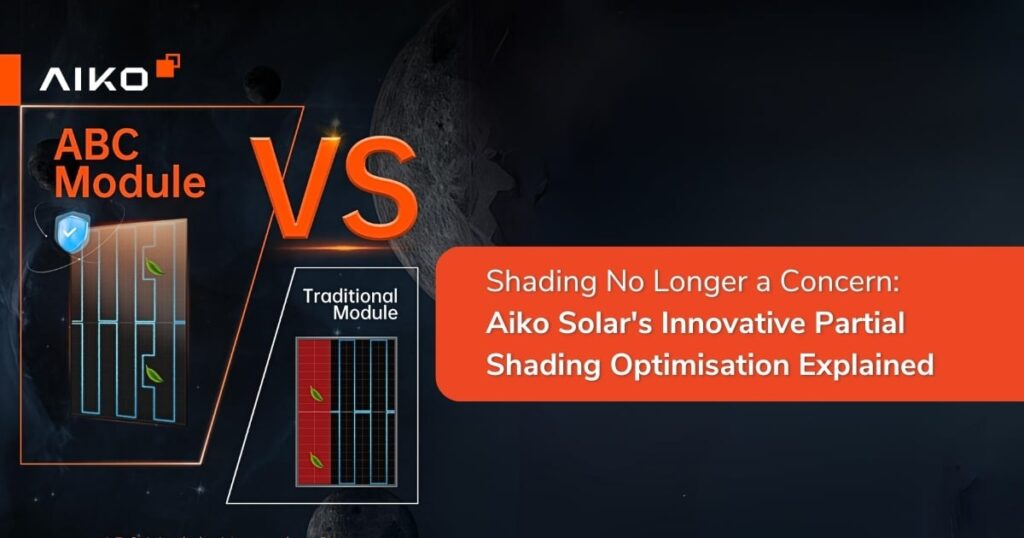
Shading No Longer a Concern: Aiko Solar’s Innovative Partial Shading Optimisation Explained Smart Energy Answers July 18, 2024 Shedding Light on Shadow Solutions Ever noticed how a single shadow can affect the performance of your solar setup? Aiko Solar has introduced a smarter way to manage this common challenge. As Australia’s #1 solar retailer, Smart Energy Answers is thrilled to introduce you to Aiko’s groundbreaking Partial Shading Optimisation technology. This innovation is set to revolutionise how your panels perform, even when the odds and shadows are stacked against them. Let’s explore how this technology is turning shade from a solar challenge into a manageable part of your energy system. The Current State of Solar Shading in Australia Before we explore Aiko’s innovation, let’s look at the shading challenge in the Australian context. Our sunburnt country may be blessed with abundant sunshine, but urban living, trees, nearby buildings, and even occasional cloudy days can cast shadows on solar performance. According to the Clean Energy Council, while over 3 million Australian homes have embraced solar, many still deal with less-than-ideal conditions. Partial shading from nearby structures, vegetation, or even accumulated dust can significantly impact a system’s performance, reducing energy output by up to 30% in some cases. This issue has been a persistent challenge for solar adoption, particularly in densely populated urban areas. Smart Home Solutions: The Connected Approach At Smart Energy Answers, we believe in a holistic approach to energy management. Our smart home solutions integrate various components to create a seamless and efficient energy ecosystem: Solar panels: The heart of your energy production system. Battery storage: Store excess energy for use when the sun is not shining. Inverters and optimisers: Convert and manage your solar power efficiently. EV chargers: Power your electric vehicle with clean solar energy. Smart heating solutions: Optimise your home’s climate control. Aiko Solar’s Partial Shading Optimisation technology fits perfectly into this ecosystem. It enhances the performance of your solar panels, even in less-than-ideal conditions, while maximising the benefits of your entire smart home setup. The Path to Energy Independence: Understanding Partial Shading To truly appreciate Aiko’s innovation, we need to understand the problem it solves. Partial shading occurs when a portion of a solar panel or array is obstructed from direct sunlight. This can happen due to: Nearby structures, such as chimneys, antennas, and neighbouring buildings. Vegetation, including trees and shrubs. Temporary obstructions, such as leaves, bird droppings, and dust. Cloud cover affecting part of the array. In traditional solar panels, shading on even a small portion of a panel can disproportionately affect the entire system’s output. This is because solar cells in a panel are typically connected in series, and like a chain, the system is only as strong as its weakest link. Aiko’s Partial Shading Optimisation: How It Works Now, let’s shed some light on Aiko’s clever solution: Smart cell design: Aiko’s panels incorporate an innovative cell layout that minimises the impact of partial shading. Bypass diodes: Advanced bypass diodes are strategically placed to isolate shaded areas, allowing unshaded portions to continue operating at full capacity. Intelligent power routing: The system dynamically routes power around shaded cells, ensuring maximum energy harvest from the unaffected areas. Real-time monitoring: Sophisticated software continuously assesses panel performance, adjusting for changing shadow patterns throughout the day. Real-World Scenarios: Partial Shading Optimisation in Action Let’s look at some common scenarios where Aiko’s technology makes a real difference: The urban jungle: In densely packed suburbs, neighbouring buildings often cast shadows on rooftop solar arrays. With Aiko’s technology, panels can still perform strongly in unshaded areas, minimising energy loss. The tree-change dream: For Australians embracing a greener lifestyle, trees are a must. Aiko’s panels help ensure that dappled shade from nearby gum trees does not significantly impact energy production. The cloudy conundrum: On partly cloudy days, when shadows rapidly move across your array, Aiko’s panels can adapt in real time, helping maintain consistent energy output. The dusty dilemma: In Australia’s dry climate, dust accumulation is common. Aiko’s technology helps reduce the impact of uneven dust distribution on panel performance. Quantifying the Benefits: 30% More Power in Partially Shaded Conditions Aiko Solar’s Partial Shading Optimisation technology is not just a marginal improvement. It is a game-changer. In partially shaded conditions, these innovative panels can produce up to 30% more power than traditional panels. Here’s what this means for you: Increased energy yield: More power from the same roof space, even in less-than-ideal conditions. Improved ROI: Faster payback on your solar investment, regardless of your roof’s orientation or surrounding obstacles. Greater flexibility: Expand your options for panel placement, making solar viable for more homes and businesses. Enhanced reliability: More consistent energy production throughout the day, reducing reliance on grid power. Earning From Surplus Energy: Optimised Panels and Virtual Power Plants The increased efficiency of Aiko’s panels doesn’t just mean lower electricity bills. It could also boost your earning potential through Virtual Power Plants, or VPPs. Here’s how: More consistent output: Even on partially cloudy days, your system can contribute reliably to the VPP network. Increased surplus energy: Higher efficiency in all conditions means more excess power to feed into VPPs. Grid stability: By maintaining output during variable conditions, these panels help stabilise the grid during peak demand periods. Smart Energy Answers: Leading the Charge With Aiko’s Innovation As Australia’s leading solar retailer, Smart Energy Answers is proud to offer Aiko Solar’s cutting-edge technology to our customers. Our commitment to providing advanced and efficient solar solutions aligns perfectly with Aiko’s innovative approach. By integrating these optimised panels into our comprehensive solar and battery packages, we’re helping Australians overcome traditional solar challenges and take a major step towards true energy independence. Whether you’re dealing with a shady backyard or a less-than-ideal roof orientation, Aiko’s technology offers a powerful solution. The Future Is Bright, Even in the Shade As we look to the future, it’s clear that innovations like Aiko Solar’s Partial Shading Optimisation will play a crucial role in Australia’s energy future. By overcoming traditional
Breaking Records: Aiko Solar’s World-Leading Efficiency Levels & What They Mean for You
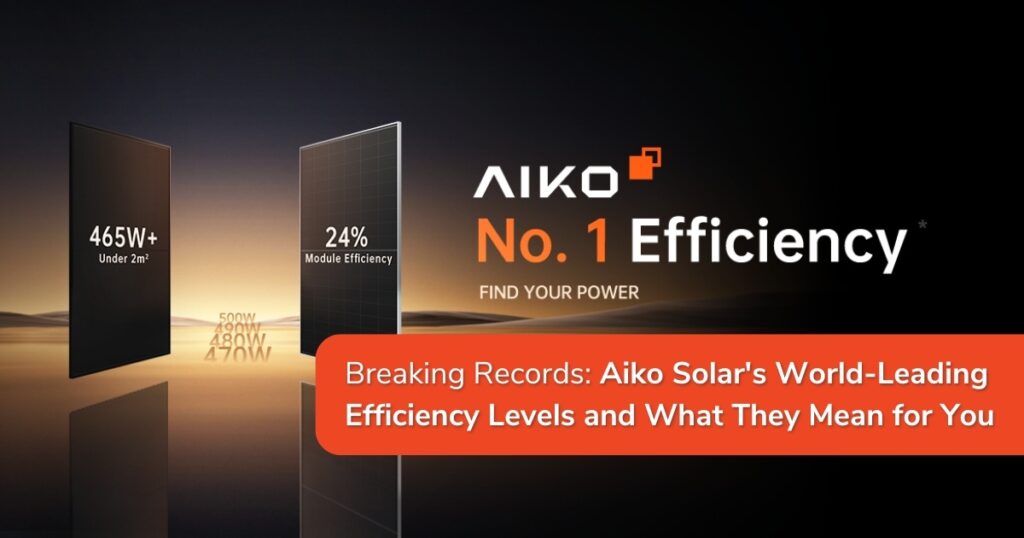
Breaking Records: Aiko Solar’s World-Leading Efficiency Levels & What They Mean for You Smart Energy Answers July 18, 2024 Harnessing More Sun for Your Buck Ready to shine a light on the cutting edge of solar technology? At Smart Energy Answers, we’re thrilled to introduce you to Aiko Solar’s record-breaking efficiency levels. With a 25.2% efficiency rating, these panels are changing the game in solar power. But what does this mean for you and your energy bills? Let’s dive in and unpack the sunny side of high-efficiency solar. The Current State of Solar Efficiency in Australia Before we explore Aiko’s performance, let’s set the scene. The average solar panel efficiency in Australia hovers around 15% to 20%. This means that for every 100 watts of sunlight hitting your panels, around 15 to 20 watts are converted into usable electricity. That is already a strong result, but Aiko Solar is taking efficiency to the next level. With energy prices on the rise and roof space at a premium, getting more power from every ray of sunshine has never been more important. That’s where Aiko’s world-leading efficiency comes into play, offering a game-changing solution for Australian homes and businesses. Smart Home Solutions: The High-Efficiency Advantage At Smart Energy Answers, we believe in a holistic approach to energy management. Here’s how Aiko’s high-efficiency panels fit into the smart home puzzle: High-efficiency solar panels: Aiko’s 25.2% efficient panels capture maximum sunlight. Smart battery storage: Store more energy with less roof space. Intelligent inverters: Convert more solar power efficiently. Energy management systems: Optimise your abundant solar yield. With Aiko panels, you’re starting your energy journey with a powerful efficiency advantage. The Path to Energy Independence: Efficiency Explained Let’s break down what 25.2% efficiency really means: More power, same space: Generate up to 25% more energy than standard panels. Fewer panels needed: Achieve your energy goals with a smaller system. Future-proof investment: Stay ahead of the curve as energy demands increase. Faster ROI: Higher energy production means quicker payback on your investment. Earning From Surplus Energy: Efficiency Meets VPPs High efficiency isn’t just about saving money. It’s about earning potential too. Greater surplus energy: More power to feed into Virtual Power Plants, or VPPs. Higher feed-in tariffs: Potentially earn more from your excess energy. Increased self-sufficiency: Power more of your home, even during peak times. Smart Energy Answers: Leading the Charge With Cutting-Edge Tech As Australia’s solar experts, we’re excited to offer Aiko’s high-efficiency solutions. Customised high-performance systems: Tailored to maximise your roof’s potential. Expert installation: Ensuring optimal placement for peak efficiency. Future-ready setups: Designed to integrate with emerging technologies. Ongoing optimisation: Regular check-ins to ensure your system is performing at its best. The Future Is Bright and Highly Efficient Looking ahead, Aiko’s high-efficiency panels are set to revolutionise the solar landscape. Urban solar solutions: Power high-energy homes with limited roof space. Commercial powerhouses: Maximise energy production for businesses. Grid support: Contribute more clean energy to Australia’s power network. Technological advancements: Pave the way for even higher efficiencies in the future. Conclusion Aiko Solar’s world-record 25.2% efficiency isn’t just a number. It’s a leap towards a more sustainable, energy-independent future. By harnessing more of the sun’s power, these panels offer increased savings, greater energy autonomy, and a smaller carbon footprint. In the world of solar, efficiency is king, and Aiko Solar wears the crown. Ready to take control of your energy bills with the power of high-efficiency solar? Get the Highest Efficiency Panels for Your Home With Smart Energy Answers Ready to harness the power of world-record efficiency? Smart Energy Answers is here to bring Aiko’s cutting-edge technology to your rooftop. Free efficiency assessment: Discover how much more you could save with high-efficiency panels. Custom system design: We’ll tailor an Aiko Solar solution to maximise your energy production. Future-proof installation: Ensure your system is ready for the next generation of energy technology. Don’t settle for average when you can have record-breaking efficiency. Contact us today to start your high-efficiency solar journey.
The ABC of Efficiency: How Aiko Solar’s All Back Contact Technology Revolutionises Solar Panels
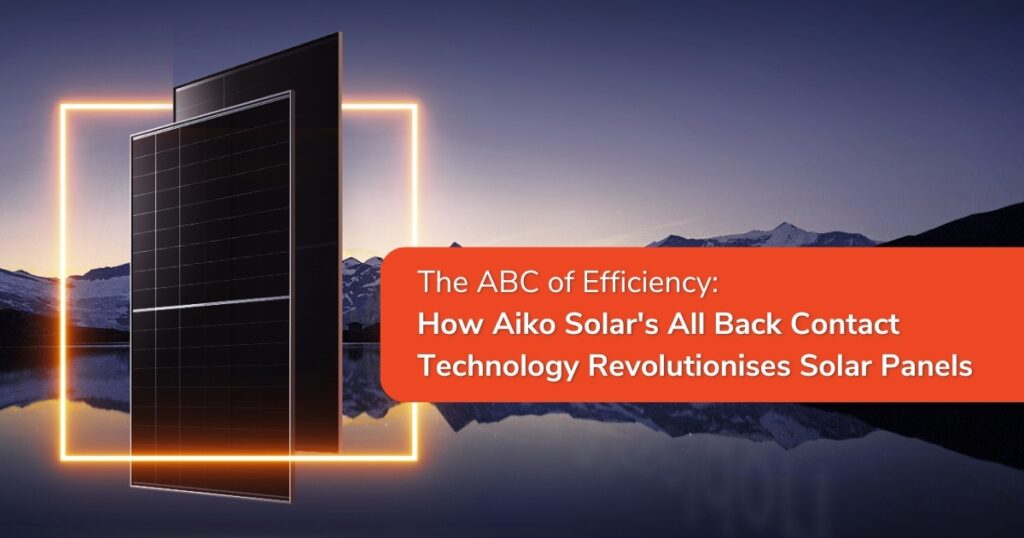
The ABC of Efficiency: How Aiko Solar’s All Back Contact Technology Revolutionises Solar Panels Smart Energy Answers July 17, 2024 Powering the Future, One Cell at a Time Ever wondered how we could squeeze more power from the sun without expanding your roof space? Aiko Solar’s All Back Contact, or ABC, technology is helping change what is possible in solar panel performance. As Australia’s #1 solar retailer, Smart Energy Answers is always looking for groundbreaking innovations that can help you achieve true energy independence. Today, we’re diving deep into the ABC of efficiency and how this technology can help maximise your solar potential. The Current State of Solar in Australia Before we explore ABC technology, let’s take a quick look at where Australia stands with solar. Australia’s love for solar power is no secret. We are blessed with abundant sunshine, and according to the Clean Energy Council, over 3 million Australian homes have embraced solar PV systems, making the country a global leader in residential solar adoption. But as more households join the solar revolution, the pressure is on to make every ray of sunshine count. That is where cutting-edge technologies like Aiko Solar’s ABC technology come into play, helping boost solar panel performance and extract more energy from the sun. Smart Home Solutions: The Connected Approach At Smart Energy Answers, we believe in a holistic approach to energy management. Our smart home solutions integrate various components to create a seamless and efficient energy ecosystem: Solar panels: The heart of your energy production system. Battery storage: Store excess energy for use when the sun is not shining. Inverters and optimisers: Convert and manage your solar power efficiently. EV chargers: Power your electric vehicle with clean solar energy. Smart heating solutions: Optimise your home’s climate control. Aiko Solar’s ABC technology fits perfectly into this ecosystem. It enhances the performance of your solar panels and helps maximise the benefits of your entire smart home setup. The Path to Energy Independence: ABC Technology Explained Now, let’s explore the main innovation: All Back Contact, or ABC, technology. ABC is a revolutionary approach to solar cell design that is set to change the game for solar efficiency. Here’s how it works: Relocating contacts: Traditional solar cells have electrical contacts on both the front and back. ABC technology moves all contacts to the rear of the cell. Maximising light absorption: By eliminating front-side metallisation, ABC cells present a clean, unobstructed surface to incoming sunlight. This means more photons can be captured and converted into electricity. Reducing resistive losses: The optimised contact layout on the rear of the cell leads to lower resistive losses, meaning less energy is wasted as heat. Improving aesthetics: ABC cells offer a sleeker, more uniform appearance without visible gridlines, enhancing the visual appeal of your solar array. Comparing Apples and Oranges: ABC vs Traditional Cells To truly appreciate the ABC advantage, let’s compare it directly with traditional solar cell designs. Features ABC Cells Traditional Cells Light absorption Can absorb up to 95% of incoming light thanks to the unobstructed front surface. Typically absorb 80% to 90% of incoming light due to front-side metallisation. Efficiency Push the boundaries with efficiencies reaching 22% to 24% or even higher. Commercial panels usually offer 15% to 20% efficiency. Temperature performance Better temperature coefficient, meaning they maintain higher efficiency even on scorching Australian summer days. Efficiency drops as temperature rises. Durability More resilient structure with reduced risk of microcracks. Prone to microcracks along the front-side metallisation. Earning From Surplus Energy: ABC and Virtual Power Plants The increased efficiency of ABC panels doesn’t just mean lower electricity bills. It could also boost your earning potential through Virtual Power Plants, or VPPs. Here’s how: Greater surplus energy: Higher efficiency means more excess power to feed into VPPs. Increased reliability: Better performance in varying conditions makes ABC panels ideal VPP contributors. Enhanced grid support: The superior output of ABC panels can help stabilise the grid during peak demand periods. By participating in VPPs with your ABC-equipped solar system, you’re not just saving money. You’re actively contributing to a more stable and sustainable energy future for Australia. Smart Energy Answers: Leading the Charge With ABC Technology As Australia’s leading solar retailer, Smart Energy Answers is thrilled to be at the forefront of bringing Aiko Solar’s ABC technology to Australian homes and businesses. Our commitment to providing cutting-edge, connected smart home solutions aligns perfectly with the advanced capabilities of ABC panels. By integrating ABC panels into our comprehensive solar and battery packages, we’re helping Australians take a major step towards true energy independence. Whether you’re a family looking to reduce power bills or a business aiming to boost your green credentials, ABC technology offers a powerful solution. The Future Is Bright and Efficient As we look to the future, it’s clear that innovations like Aiko Solar’s ABC technology will play a crucial role in Australia’s energy future. With abundant sunshine and a strong national appetite for new technology, Australia is perfectly positioned to lead the world in solar adoption and efficiency. The impact of ABC technology on overall panel performance and energy output is significant: Increased energy yield: ABC panels can produce up to 10% more energy than traditional panels of the same size. Better low-light performance: Improved light absorption means better performance during cloudy days, early mornings, and late afternoons. Reduced heat-related losses: The superior temperature coefficient of ABC cells supports better performance in hot Australian summers. Longer lifespan: With reduced stress on the cell structure, ABC panels may enjoy a longer operational life, providing better long-term value. Conclusion From the ABCs of preschool to the ABC of solar efficiency, we’ve come a long way in harnessing the power of the sun. Aiko Solar’s All Back Contact technology represents a significant leap forward in solar panel design, offering increased efficiency, improved aesthetics, and better performance in the harsh Australian climate. As we continue to push the boundaries of what is possible in solar energy, Smart Energy Answers remains committed to
Sydney to Tokyo: Smart Energy Answers’ Journey Through Energy Expos
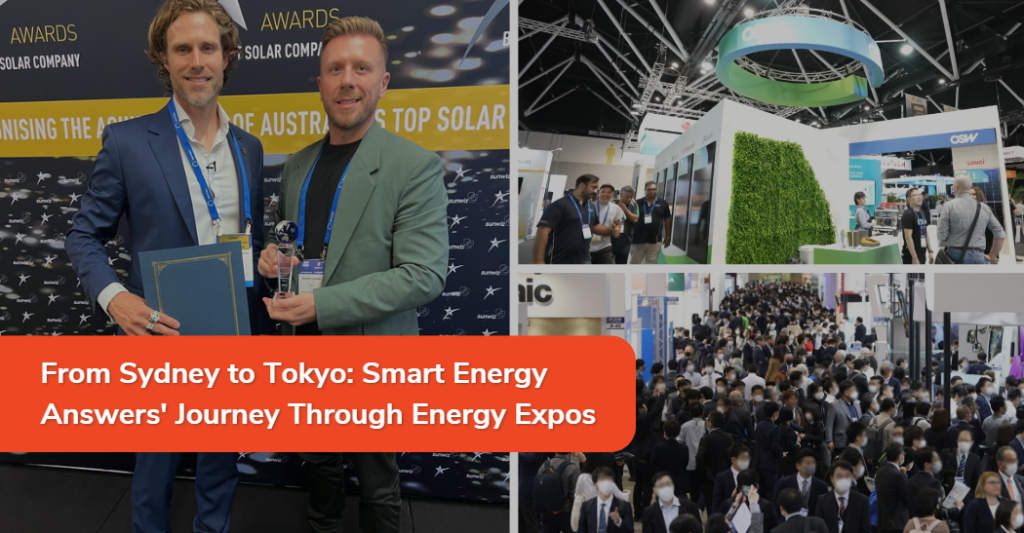
Sydney to Tokyo: Smart Energy Answers’ Journey Through Energy Expos Smart Energy Answers May 19, 2024 Renewable Energy Momentum Across Sydney and Tokyo The renewable energy sector is experiencing a period of explosive growth, driven by a global push for sustainability and advancements in clean technology. This excitement was evident at two recent prestigious energy expos: the Smart Energy Council Conference & Exhibition in Sydney and World Smart Energy Week in Tokyo. These events brought together industry leaders, showcased cutting-edge innovations, and highlighted the immense potential of renewable energy to power a more sustainable future. Smart Energy Answers: Success at the Sydney Conference Smart Energy Answers is proud to have participated in these back-to-back energy events. However, the real highlight for Smart Energy Answers was achieving outstanding recognition from SunWiz as a Local Solar Hero for 2023 at the Sydney conference. We’re incredibly proud to announce that we were awarded the #1 retailer title in not just one, but two Sydney locations: the Eastern Suburbs and Ryde. We also secured 2nd place in Inner West and Inner South. This remarkable achievement is a tangible example of our core values of dedication and integrity in serving our customers. Recognised as one of the best solar installers, we ensure our customers experience peace of mind and guaranteed satisfaction with every installation. Top Solar Company This isn’t the first time Smart Energy Answers has been recognised for its excellence. In fact, we were honoured with a total of four Top Solar Installer awards from SunWiz last year. These awards solidify our position as a leader in the Sydney clean energy market, consistently exceeding customer expectations and delivering exceptional service. We are dedicated to staying at the forefront of the industry, and these awards fuel our passion to continue providing customers with the best possible clean energy solutions. World Smart Energy Week Tokyo 2024 Our journey began on the global stage at World Smart Energy Week, held at Tokyo Big Sight in Japan from 28 February to 1 March 2024. This major event featured over 1,500 exhibitors representing the entire clean energy spectrum and welcomed a global audience. Here, we had the privilege of witnessing the latest advancements shaping the future of clean energy. From breakthroughs in solar PV systems and wind energy technologies to the exciting potential of biomass power, the event showcased solutions paving the way for a more sustainable world. Our CEO, Daniel Lanzetta, actively participated in this global exchange of knowledge and networking with industry leaders. Unveiling the Future: Technologies Shaping a Sustainable World The key themes at World Smart Energy Week resonated deeply with our mission at Smart Energy Answers. Renewable powerhouses: The ever-increasing efficiency of solar PV systems and wind energy technologies offers immense potential for clean energy generation. Smart grid and energy storage revolution: The integration of smart grid technology and rechargeable battery storage allows for optimal energy distribution and better utilisation of excess renewable energy. Efficiency first: Energy-saving technologies and the concept of Virtual Power Plants, or VPPs, are crucial for reducing overall energy consumption and creating a more sustainable energy landscape. Smart Energy Council Conference & Exhibition Sydney 2024 Transitioning back to the energy landscape in Australia, the Smart Energy Council Conference & Exhibition in Sydney from 6 to 7 March 2024 provided valuable insights tailored to the unique opportunities and challenges of the Australian energy market. Charting the Course for a Sustainable Future in Australia The focus on the Australian context at the Smart Energy Council Conference & Exhibition highlighted key areas that Smart Energy Answers is actively engaged in: Policy and leadership: The participation of Australian policymakers and industry leaders at the event underscored the importance of shaping renewable energy policy and fostering innovation for the nation’s energy future. Cutting-edge technologies: The event showcased the latest breakthroughs in renewable energy technologies, with a focus on solar advancements particularly suitable for Australian conditions. Networking and collaboration: The event served as a valuable platform for forging connections and fostering collaboration within the Australian clean energy sector. Knowledge sharing and education: Side events and training sessions on microgrids and EV charging provided a wealth of knowledge. https://www.youtube.com/watch?v=FwsWAEZi_Tk Smart Energy Answers: A Champion for Clean Energy Solutions Smart Energy Answers’ participation and recognition at both expos were not just prestigious achievements. They reflect our commitment to driving innovation and delivering sustainable energy solutions. Leveraging the knowledge and advancements showcased at these events, Smart Energy Answers is continuously innovating to empower our customers. We translate cutting-edge concepts into tangible solutions. We stay updated on the latest advancements in solar PV systems and battery storage to ensure our customers receive efficient and reliable solar solutions. Most importantly, we take a personalised approach, tailoring clean energy solutions to your specific needs and budget. By bridging the gap between global innovation and local needs, Smart Energy Answers empowers you to make a positive impact on the environment. We invite you to partner with Smart Energy Answers. Contact us to learn more about how we can help you embrace clean energy solutions and contribute to a sustainable future for all.
Tesla Powerwall: Should Consumers Get? Guide for Australian Homeowners
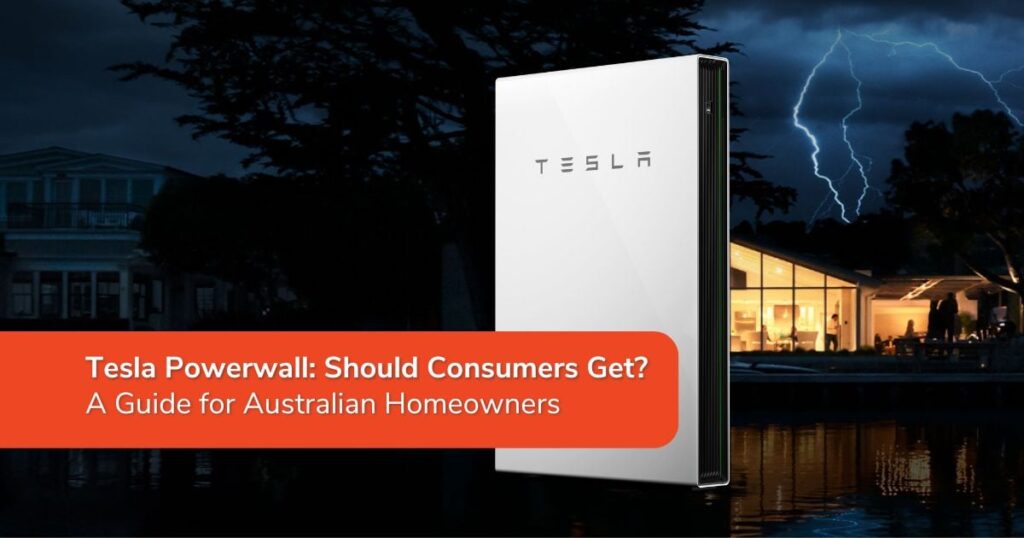
Tesla Powerwall: Should Consumers Get? Guide for Australian Homeowners Smart Energy Answers March 13, 2024 https://www.youtube.com/watch?v=45GPL7Qfw2Y As energy costs in Australia continue to rise, the country is seeing a significant increase in interest in Tesla solar batteries. Among the energy storage solutions available in the market, Tesla Powerwall has emerged as a popular choice. It offers residents and businesses a path towards a more sustainable and self-sufficient energy future. Understanding the Powerwall The Tesla Powerwall is a home battery storage system that allows you to store excess solar energy generated during the day for use later, such as during peak evening hours or power outages. Compatible with solar panels and the grid, it serves as a reliable backup during blackouts and an efficient way to maximise the self-consumption of your solar energy during both day and night. Since Tesla Powerwall reduces your reliance on the grid, it can also help lower your electricity bills. Key Features of the Powerwall Capacity: 13.5 kWh high-capacity storage with 100% depth of discharge and 90% round-trip efficiency. Power: 7 kW peak power and 5 kW continuous power with quick backup transition. Lifespan: Tesla offers a 10-year warranty on the Powerwall, guaranteeing at least 70% capacity retention after a decade. Smartphone app control: The Tesla app allows you to monitor your energy usage, track battery charge levels, and control your Powerwall remotely. Comparing Powerwall Generations The transition from Powerwall 1 to Powerwall 2 marked significant advancements in home battery storage technology. These improvements were designed to meet the evolving needs of consumers seeking sustainable energy solutions. Powerwall 2 stands out with notable upgrades, including a higher capacity of 13.5 kWh compared to the original version’s 7 kWh. The Future of Powerwall: Tesla Powerwall 3 Looking ahead, anticipation for the Tesla Powerwall 3 price in Australia is remarkable, with availability expected around December 2024. This latest version maintains the 13.5 kWh capacity of its predecessor but introduces several innovative features. Notably, Powerwall 3 offers a maximum continuous power output of 11.5 kW for both on-grid and backup operations, helping ensure reliable performance in various scenarios. It also introduces flood resistance up to 2 feet, or approximately 0.6 metres. In terms of scalability, Powerwall 3 can connect up to four units, compared to Powerwall 2, which can scale up to ten units. However, the most important innovation is its integrated DC solar inverter. While Powerwall 2 is an ideal solution for add-on battery installations in homes with existing solar, Powerwall 3 is designed with an integrated DC solar inverter instead of an AC-coupled inverter. This makes Powerwall 3 a strong solution for new solar and battery installations. It eliminates the need for an additional DC solar inverter and can increase efficiency in energy conversion. As Tesla continues to push the boundaries of renewable energy technology, Powerwall 3 represents a promising step forward in empowering homeowners with sustainable, reliable, and cost-effective energy solutions. At this stage, the price for Powerwall 3 is not confirmed. However, there are market rumours about its launch price being around $16,000 fully installed. Powerwall 2 Pricing in Australia In recent years, Tesla has made significant reductions in the Tesla Powerwall 2 price, making it more accessible to Australian homeowners and businesses. Currently, the installed cost of a Powerwall 2, including the battery, inverter, and installation, can range from $13,000 to $15,000. However, it is important to remember that this is an estimate. The actual Tesla Powerwall 2 price in Australia can vary based on factors such as installation complexity and location. Furthermore, Smart Energy Answers offers an exclusive $750 rebate and an additional $750 rebate for Sydney Metro installations before 30 March. Several government rebates and incentives are also available to make Powerwall ownership even more attractive. These incentives vary across states and territories, so it is recommended to research the specific programmes applicable to your region. Powerwall Performance in Australia The adoption rate of Powerwall in Australia is steadily increasing, driven by its potential to reduce reliance on the grid, manage energy bills, and contribute to a more sustainable future. Recent case studies show that Tesla Powerwall can effectively help homeowners and businesses lower their reliance on the grid and reduce energy bills. With Tesla smart monitoring apps, users can also maximise their solar energy usage by optimising their time of use. Tesla Powerwall Alternatives While Tesla Powerwall is undeniably a popular choice for home battery storage, there are other battery solutions available in the Australian market, such as Alpha and SolarEdge. It is good to know that there are options, each with its own features and capabilities. Therefore, it is important to assess your energy needs, research available options, and select the battery solution that fits your specific requirements. Conclusion While the initial cost of a Powerwall system may seem high, the potential long-term benefits in terms of energy savings, grid independence, and environmental impact are significant. With recent price decreases and various solar battery rebates, the Tesla Powerwall presents an increasingly attractive option for Australian homeowners looking to take control of their energy future. However, it is important to carefully consider your specific needs and conduct thorough research before making an investment. Consulting with a qualified solar installer can provide personalised guidance and help ensure the Powerwall is the right fit for your home.
Sustainable Land Use Practices: Harnessing Solar Energy for a Greener Future
Sustainable Land Use Practices: Harnessing Solar Energy for a Greener Future Smart Energy Answers March 1, 2024 Discover how the integration of solar energy into sustainable land use practices can pave the way for a more environmentally friendly future. The Intersection of Sustainable Land Use and Solar Energy Sustainable land use practices and solar energy are two important aspects of creating a greener future. By combining these two elements, we can maximize the benefits for both the environment and society. Sustainable land use involves managing land resources in a way that meets the needs of the present generation without compromising the ability of future generations to meet their own needs. Solar energy, on the other hand, is a renewable and clean source of power that can help reduce our reliance on fossil fuels and mitigate climate change. The intersection of sustainable land use and solar energy offers numerous opportunities for innovation and sustainability. By harnessing solar energy on sustainable land, we can generate clean electricity while minimizing the environmental impact. This integration can contribute to a more sustainable and resilient energy system that supports the transition to a greener future. Understanding the Potential of Solar Energy in Land Use Planning Solar energy has immense potential when it comes to land use planning. Understanding this potential is crucial for developing effective strategies to harness solar power while maintaining sustainable land use practices. Solar energy can be harnessed through various methods, such as photovoltaic (PV) panels and solar thermal systems. These technologies can be integrated into buildings, infrastructure, and open spaces to generate clean electricity and heat. In land use planning, it is important to identify suitable sites for solar installations. Factors such as solar resource availability, land suitability, and proximity to electricity infrastructure play a crucial role in determining the feasibility of solar projects. By understanding the potential of solar energy and considering these factors, we can optimize the placement of solar installations to maximize energy generation and minimize environmental impacts. Identifying Suitable Sites for Solar Installations Identifying suitable sites for solar installations is a key step in integrating solar energy into sustainable land use practices. Several factors need to be considered during site selection, including solar resource availability, land characteristics, and environmental considerations. Solar resource availability refers to the amount of sunlight a site receives throughout the year. Sites with high solar resource availability are ideal for solar installations as they can generate more electricity. Land characteristics, such as slope, orientation, and shading, also play a role in determining the suitability of a site for solar installations. Flat and unshaded areas are generally more favorable for solar projects. Environmental considerations are crucial in order to minimize the impact of solar installations on natural ecosystems. It is important to avoid sensitive areas such as protected habitats, wetlands, and prime agricultural land. By identifying suitable sites that have high solar resource availability, favorable land characteristics, and minimal environmental impact, we can ensure the effective integration of solar energy into sustainable land use practices. Maximising Solar Energy Generation on Different Types of Land Solar energy generation can be maximized on different types of land by adopting appropriate strategies and technologies. The suitability of land for solar installations depends on its characteristics and existing land use. Here are some approaches to maximize solar energy generation on different types of land: Rooftop Solar: Installing solar panels on rooftops of buildings can utilize underutilized space and generate clean electricity without occupying additional land. Brownfield Solar: Converting brownfield sites, such as abandoned industrial areas, into solar power plants can repurpose underutilized land for renewable energy generation. Floating Solar: Installing solar panels on bodies of water, such as lakes and reservoirs, can maximize land use efficiency and reduce water evaporation. Agrivoltaics: Integrating solar panels with agricultural activities can optimize land use by utilizing the same area for both solar energy generation and crop cultivation. By adopting these approaches and technologies, we can maximize solar energy generation on different types of land while minimizing the use of additional land resources. Balancing Solar Development with Environmental Conservation Balancing solar development with environmental conservation is crucial to ensure the long-term sustainability of solar energy projects. While solar energy offers numerous environmental benefits, it is important to minimize any potential negative impacts on ecosystems and biodiversity. To achieve this balance, it is important to conduct thorough environmental assessments before initiating solar projects. These assessments can help identify potential risks and develop appropriate mitigation measures. Additionally, incorporating nature-friendly design features into solar installations can help minimize impacts on wildlife and their habitats. Collaboration between solar developers, environmental organizations, and local communities is key to achieving a balance between solar development and environmental conservation. By working together, we can ensure that solar energy projects contribute to a greener future without compromising the integrity of our natural ecosystems. Integrating Solar Energy into Agricultural and Rural Landscapes Integrating solar energy into agricultural and rural landscapes offers numerous benefits for farmers, landowners, and the environment. Solar installations can be strategically placed in agricultural areas to generate clean electricity while allowing for continued farming activities. Agrivoltaics, which combines solar energy generation and crop cultivation, is a promising approach to integrate solar energy into agricultural landscapes. By utilizing the same land for both solar panels and crops, agrivoltaics optimizes land use efficiency and provides additional income streams for farmers. In rural landscapes, solar installations can provide decentralized and renewable energy sources, reducing reliance on centralized power grids. This can lead to increased energy independence and resilience in rural communities. By integrating solar energy into agricultural and rural landscapes, we can promote sustainable land use practices while contributing to the development of a cleaner and more resilient energy system. Benefits of Solar Land Use Agreements for Landowners and Communities Solar land use agreements offer several benefits for landowners and communities. These agreements provide opportunities for landowners to generate income from their land while contributing to the transition to renewable energy. For landowners, solar land use agreements can provide long-term
Solar Energy for Beginners: A Simple Guide to Getting Started
Solar Energy for Beginners: A Simple Guide to Getting Started Smart Energy Answers February 21, 2024 In the heart of Australia’s sun-drenched landscape, solar energy emerges as a beacon of sustainability and cost-efficiency for homeowners. This clean energy solution, powered by the sun’s endless rays, stands at the forefront of an eco-friendly revolution, redefining residential energy consumption. With the urgency of environmental conservation and the allure of reduced utility bills, understanding solar energy’s basics becomes indispensable for those considering a greener alternative. What is Solar Energy? Solar energy represents the pinnacle of harnessing the sun’s power, transforming sunlight into electricity through two primary methods: photovoltaics (PV) and concentrated solar power (CSP). This renewable energy source plays a critical role in curbing carbon emissions and slashing our reliance on fossil fuels. Its adoption is a step toward a sustainable future, mitigating the impacts of climate change. Benefits in Australia Australia’s unique geographical position, bathed in abundant sunshine, creates an ideal setting for solar power generation. Homeowners stand to gain substantially, with benefits including slashed electricity bills, enhanced property value, and a significant contribution to environmental preservation. The nation’s solar-friendly climate is not just a matter of convenience but a call to action for sustainable living. The Basics of Solar Power Systems For those new to the solar energy journey, grasping the fundamentals of solar power systems is essential. These systems are marvels of engineering, designed to convert sunlight into electrical power with remarkable efficiency. Components of Solar Systems A typical solar power setup comprises several key components: solar panels, an inverter, battery storage, and a monitoring system. Each element plays a pivotal role in the seamless conversion of solar energy into electricity, ensuring that homes are powered sustainably and efficiently. How Solar Power Works The process begins with solar panels capturing sunlight and converting it into direct current (DC) electricity. The inverter then transforms this DC into alternating current (AC), the form of electricity used to power homes. Surplus energy can either be stored in batteries for later use or fed back into the grid, often yielding credits on electricity bills. Evaluating Solar Potential Before taking the leap into solar, assessing your home’s solar potential is a step you cannot skip. This evaluation ensures that your investment is not only wise but tailored to your specific needs. Assessing Your Location Key factors such as roof space, orientation, and potential shading must be considered. In Australia, north-facing roofs are prime real estate for solar panels, capturing maximum sunlight throughout the year. Sunlight Availability in Australia Australia’s generous sunlight hours make it a veritable goldmine for solar energy production. Understanding the sunlight patterns specific to your region can significantly enhance the efficiency of your solar panel installation. Types of Solar Energy Systems Solar energy systems come in two main varieties, each suited to different residential needs and circumstances. Grid-Connected Systems Connected to the national electricity grid, these systems allow homeowners to feed excess energy back, often receiving a credit. This setup is ideal for those looking to reduce their energy bills while staying connected to the grid. Standalone Systems For those in remote locations or preferring complete independence from the grid, standalone or off-grid systems are the answer. These systems require battery storage to ensure a continuous power supply, regardless of sunlight availability. Financial Considerations The decision to go solar is as much a financial consideration as it is environmental. Costs and Savings Though the initial setup cost can be substantial, the long-term savings on energy bills and the added value to your property make solar systems a sound investment. Government Incentives in Australia To encourage the adoption of solar energy, the Australian government offers various incentives, including rebates and feed-in tariffs, reducing the financial burden on homeowners. Choosing the Right Solar Panels The efficiency of your solar system hinges on selecting the appropriate solar panels. Panel Types and Efficiency Solar panels come in different types, such as monocrystalline and polycrystalline, each with its efficiency levels. Choosing the right type depends on your energy needs and budget considerations. Size and Placement The efficiency of solar panels is also influenced by their size and placement. Professional assessment is recommended to ensure optimal installation, maximizing energy production. Installation Process The installation of solar panels is a critical process that should ideally be entrusted to professionals. Professional vs. DIY Installation Though the DIY route may seem appealing for its cost-saving potential, professional installation guarantees safety, efficiency, and regulatory compliance, safeguarding your investment. Permits and Regulations Navigating local regulations and obtaining the necessary permits is a crucial step in the installation process, ensuring that your solar system is legally compliant and operationally safe. Maintenance and Care The longevity and efficiency of your solar system depend on regular maintenance and care. Regular Maintenance Tips Routine cleaning of solar panels and system check-ups are vital for optimal performance, ensuring that your system operates at peak efficiency year-round. Troubleshooting Common Issues Being familiar with common issues and their solutions, or consulting a professional when necessary, can help maintain your system’s performance and longevity. Environmental Impact The environmental benefits of solar energy cannot be overstated. Reduction in Carbon Footprint By switching to solar, homeowners can significantly reduce their reliance on fossil fuels, leading to a substantial decrease in greenhouse gas emissions. Sustainable Living Solar energy is at the heart of sustainable living, offering a clean, renewable energy source that minimizes environmental impact and promotes a healthier planet. Future of Solar Energy in Australia The landscape of solar energy in Australia is rapidly evolving, promising an even brighter future. Trends and Developments Ongoing technological advancements are making solar energy more efficient and affordable, paving the way for wider adoption and innovative applications. Community Solar Projects For those unable to install individual solar systems, community solar projects offer a shared solution, democratizing access to clean energy. Case Studies Real-life success stories of residential solar energy adoption underscore the tangible benefits of going solar, from environmental impact to financial savings. Overcoming Common Concerns
Solar & Battery Retailers: Who Can You Trust in a Crowded Market?

Solar & Battery Retailers: Who Can You Trust in a Crowded Market? Smart Energy Answers November 6, 2023 In a world increasingly concerned about energy efficiency and sustainability, harnessing the power of the sun has become a popular choice. Solar energy and storage, with its promise of clean and renewable power, is changing the way we power our homes and businesses. But in an industry brimming with options, how can you trust a solar energy solutions provider? Let’s explore the key factors to consider when choosing the best solar energy retailer and how to decipher the claims from reality. The Solar Industry Landscape The solar industry is experiencing explosive growth, with over 4000 solar providers competing for your attention. This growth is not surprising given the increasing demand for renewable energy solutions. However, not all solar providers are reputable businesses in this industry, unfortunately there are a lot of cowboys. Some are pioneers with decades of experience, while others are newcomers looking to capitalize on the renewable energy trend. Why Your Choice Matters Selecting the right installer is crucial. A solar and battery system is a long-term investment that can power your home for decades. The quality of your installation and components will directly impact your system’s efficiency, longevity and return on investment. More importantly, this system is installed on your most valuable asset, your home, and it will increase the value of your property if installed properly with good quality products. Therefore, making an informed decision is of utmost importance. Factors to Consider Reputation and Experience: Seek providers with a solid reputation and years of experience in the industry. Established companies are known for their high-quality solar solutions backed by a history of successful projects. Take the time to check the projects they have completed. This will offer valuable insights into their expertise, work quality, and their ability to deliver on promises. Warranties and Guarantees: Pay attention to the warranties and guarantees offered. These not only safeguard your investment but also provide peace of mind when it comes to servicing and maintenance. For instance, Smart Energy Answers provides a 10-year Workmanship Warranty and a 5-year “whole of system” warranty, ensuring that your entire solar energy setup is protected. Additionally, our exclusive HT Smart N-type panels come with an impressive 30-year warranty, demonstrating our commitment to your long-term satisfaction and energy needs Customer Reviews and Testimonials: Look for genuine customer reviews and testimonials to gauge the level of satisfaction with a provider’s services. When reading online reviews and testimonials, be cautious of potential biases or fake reviews. Look for specific details in reviews and cross-reference information across multiple platforms to assess the authenticity of the feedback. Pricing and Financing Options: Compare pricing and financing options from various providers to find the best fit for your budget and energy needs. Legal and Regulatory Aspects Ensuring compliance with local regulations is vital when choosing a solar provider. Look for accreditation by the New Energy Tech Consumer Code, indicating a commitment to ethics and consumer protection. Confirm their status as legitimate distributors of reputable renewable brands like Tesla, SolarEdge, and Enphase to ensure product authenticity and provider credibility. This guarantees your solar investment aligns with high industry standards. Eco-Friendly and Sustainable Practices If sustainability is a priority for you, select a solar provider committed to eco-friendly and sustainable practices. At SEA, sustainability is a top priority. We exclusively partner with eco-conscious brands, ensuring that your solar solution aligns with environmentally friendly production practices. Moreover, our commitment to sustainability extends to partnerships with foundations dedicated to positive environmental impact, including bringing solar power to remote schools in Pacific Islands and supporting the Foundation for National Parks & Wildlife. Choosing our solar provider not only reduces your carbon footprint but also contributes to significant environmental initiatives. Community Recommendations Don’t underestimate the power of community recommendations. Seek advice from neighbors, friends, or online forums where homeowners share their experiences with solar providers. This can help you identify reputable local companies. Watch this video endorsement from the Founder of Sunwiz and the President of the Smart Energy Council. Conclusion Selecting the best solar energy provider may seem daunting in a crowded market, but with careful consideration of factors like reputation, warranties, customer reviews, transparency, and sustainability, you can make a confident choice. Don’t rush the decision—research, seek recommendations, and request quotes to ensure your solar journey is as bright as the sun itself.
Maximizing Solar Efficiency in Australia: Microinverter and Optimisers
Maximizing Solar Efficiency in Australia: Microinverter and Optimisers Smart Energy Answers September 28, 2023 Solar Excellence in Australia: Unleashing the Power of Microinverters and Optimisers for Optimal Efficiency Australia is no stranger to the power of solar energy. With its abundant sunlight, the country is a prime location for harnessing the sun’s energy to power homes and businesses. However, to truly maximize the benefits of solar power, it’s essential to have the right components in your solar energy system. In this blog post, we’ll explore two key components that play a significant role in making solar energy systems in Australia more efficient: microinverters and optimisers. Understanding Solar Inverters Before delving into the specifics of microinverters and optimisers, let’s briefly understand the role of inverters in a solar energy system. Inverters are the heart of any solar power setup, as they are responsible for converting the direct current (DC) electricity generated by solar panels into alternating current (AC) electricity that can be used to power your home or business. Traditionally, solar systems in Australia have used central inverters, which are responsible for the conversion of DC to AC for the entire array of solar panels. While central inverters have been the go-to choice for many years, they do have their drawbacks, especially in Australia’s diverse climate. The Power of Microinverters Microinverters, like those from Enphase, represent a significant advancement in solar technology. Unlike central inverters, which handle the entire solar array, microinverters are installed on an individual panel basis. This means that each solar panel in your system has its dedicated microinverter. The advantage of this approach is that it allows each panel to operate independently. Even if one panel is partially shaded or experiences reduced efficiency, it won’t drag down the performance of the entire system. In Australia, where variable weather conditions are common, this is a game-changer. Microinverters optimise energy production by ensuring that each panel is performing at its peak, regardless of external factors. This translates to higher energy yields and, ultimately, greater savings on your energy bills. https://www.youtube.com/embed/cmvacfke1mY?feature=oembed Optimizing with SolarEdge and Optimisers SolarEdge, a leader in solar technology, takes a slightly different approach to optimise solar panel performance. Instead of individual microinverters, SolarEdge uses power optimisers. These devices are installed at the panel level and work in tandem with a central inverter. Power optimisers maximize the energy output of each panel by regulating its voltage and current. This ensures that each panel operates efficiently and independently, even in less-than-ideal conditions. With SolarEdge technology, you not only get increased energy production but also advanced monitoring capabilities to keep a close eye on your system’s performance. https://www.youtube.com/embed/oFDHqmDymrY?feature=oembed Efficiency in Australia’s Climate Australia’s climate can be challenging for solar energy systems. From scorching heat waves to intermittent cloud cover, it’s essential to have a system that can adapt to these conditions. Microinverters and optimisers are well-suited to tackle these challenges. In regions with variable weather, where clouds can roll in and out, microinverters and optimisers shine. They ensure that your solar panels produce the maximum energy possible, even when some panels are shaded or affected by passing clouds. This adaptability is crucial for maximising your solar investment in Australia. Cost-Effectiveness and Long-Term Savings While microinverters and optimisers may represent a slightly higher upfront investment compared to traditional string inverters, the long-term cost savings are substantially higher. Improved energy production means you’ll save more on your energy bills, and the return on investment becomes evident over time. Additionally, it’s worth exploring any government incentives or rebates available in Australia for solar installations. These incentives can further reduce the initial cost and accelerate your path to energy independence. Conclusion In the pursuit of energy independence and a cleaner, more sustainable future, microinverters and optimisers have emerged as key players in the solar energy landscape. Their ability to maximize energy production, adapt to Australia’s climate, and deliver long-term cost savings make them essential components of efficient solar energy systems. If you’re considering a solar installation in Australia, be sure to explore the benefits of microinverters and optimisers like those offered by Enphase and SolarEdge. These technologies can make a significant difference in the performance and efficiency of your solar energy system. Ready to harness the power of solar energy with smart solar solutions? Talk to one of our energy experts today. Let’s work together to make your energy simpler, cleaner, and cheaper.
Its Time Foundation Partnership: Solar Power to Pacific Island Schools

Its Time Foundation Partnership: Solar Power to Pacific Island Schools Smart Energy Answers August 7, 2023 At Smart Energy Answers, we believe in harnessing the power of the sun to create a brighter and more sustainable future. That is why we are proud of our partnership with It’s Time Foundation, an organisation dedicated to bringing solar energy to remote schools in the Pacific Islands. For every successful solar system installation by Smart Energy Answers, our customers can choose to make a donation to It’s Time Foundation. These donations help provide solar panels and clean energy solutions to schools and communities across the Pacific region. Empowering Pacific Schools The recent update from It’s Time Foundation showcases the incredible impact of our partnership. During the second quarter of this year, they successfully commissioned 8 new school solar systems, bringing clean and reliable electricity to these educational institutions. These solar installations not only enhance the learning environment for students but also reduce the schools’ reliance on costly and polluting fossil fuels. Brightening Lives Through the generosity of our customers and the hard work of It’s Time Foundation, 7 of the schools have been fully wired, allowing for efficient distribution of solar energy to power classrooms and facilities. Additionally, the wiring of 6 boarding hostels and 41 teachers’ homes means that the benefits of solar energy extend beyond the school premises. This positively impacts the lives of both students and educators. Embracing Sustainable Technology To ensure a sustainable and efficient energy storage system, It’s Time Foundation replaced old battery technology in 6 early installations with new batteries. This upgrade significantly improves energy storage capacity, enabling schools to harness solar energy even during overcast days or nighttime. Embracing advanced technology helps ensure that these institutions have a reliable and continuous power supply. This fosters an ideal environment for learning and growth. Raffle for Solar Additionally, we are excited to share that It’s Time Foundation is running an exclusive raffle promotion. By purchasing a raffle ticket, you not only get the chance to win an incredible vacation in the Fiji Islands but also contribute to a truly meaningful cause. The funds raised through the raffle will directly support the installation of solar systems in the Pacific Islands, furthering the mission to bring sustainable energy to schools and communities in need. It is a win-win opportunity to experience paradise while making a positive impact on the environment and the lives of others. Click here to join this unique initiative and be part of creating a brighter and more sustainable future for everyone. Gratitude and Commitment We extend our heartfelt gratitude to all our customers and partners who have chosen to go solar with Smart Energy Answers. Every solar system installation not only benefits Australian households but also contributes to a noble cause in the Pacific Islands. By choosing renewable energy, our customers are actively participating in the mission to make a real difference in the lives of those who need it most. Smart Energy Answers is more than just a solar company; we are committed to making a positive impact on a global scale. https://vimeo.com/848257295 Our partnership with It’s Time Foundation allows us to extend the benefits of solar energy beyond Australian borders and brighten the future for schools and communities in the Pacific Islands. Together, we are creating a cleaner, greener, and more sustainable world, one solar panel at a time. Thank you for being part of this journey towards a brighter and more promising future.
Planting Trees, Building Schools: Smart Energy Answers Powers Change

Planting Trees, Building Schools: Smart Energy Answers Powers Change Smart Energy Answers February 27, 2023 Smart Energy Answers Gives Back Through Sustainability Partnerships Smart Energy Answers has been at the forefront of the sustainable energy revolution for over a decade. As part of our commitment to social responsibility, we have recently partnered with two charities: the Foundation for National Parks & Wildlife, or FNPW, and It’s Time Foundation. Through these partnerships, we aim to give back to the community and the environment. We believe that social responsibility and environmental sustainability go hand in hand, and we are committed to making a positive impact through our business. As part of our partnership with FNPW, we will plant trees in areas affected by historic bushfires. This initiative will help bring the green canopy back to life, provide a nurturing habitat for wildlife, and restore the balance of the natural environment across Australia. Foundation for National Parks & Wildlife The Foundation for National Parks & Wildlife is a leading charity dedicated to protecting Australia’s unique wildlife and heritage. Through its Plant a Tree for Me programme, FNPW has been working to replant forests and restore wildlife habitat that has been lost due to bushfires, drought, and deforestation. Partnership with It’s Time Foundation In addition to our partnership with FNPW, we are also proud to announce our new partnership with It’s Time Foundation. It’s Time Foundation is an organisation committed to delivering renewable power solutions for remote Pacific Island schools, helping transform education outcomes and reduce carbon emissions. Many island schools in the Pacific struggle with no electricity supply, or rely on diesel generators they can barely afford to run for a few hours per day. As a result, many children have little or no access to the tools needed for a modern education. It’s Time Foundation, with the generous support of its partners, provides clean and free electricity for lighting and computers. This helps transform education outcomes and improve future opportunities for these children. While these schools are not major emitters on a global scale, the projects help communities take diesel generators offline and drastically reduce their carbon footprint. With these new partnerships, Smart Energy Answers is taking its commitment to social responsibility to the next level. For every new system installed from February 2023, Smart Energy Answers will donate a portion of the profits to either the Foundation for National Parks & Wildlife or It’s Time Foundation, depending on the customer’s choice. This is just the latest step in Smart Energy Answers’ vision for an Australia with 100% solar adoption. With a team of experts and a commitment to innovation, Smart Energy Answers has been working towards this goal for over a decade. Through our dedication to customer service and the use of cutting-edge technology, Smart Energy Answers has become a trusted leader in the sustainable energy sector. Looking to the future, our commitment to social responsibility and sustainability is stronger than ever. With new partnerships and initiatives in the works, Smart Energy Answers is poised to continue making a positive impact on the environment and the community. If you are looking to make the switch to solar energy and want to support a company that is actively working to make a difference, look no further than Smart Energy Answers. https://www.youtube.com/watch?v=-SxyPart46c Not only will you be doing your part to reduce your carbon footprint, but you will also be supporting important causes that are making a real difference in the world.
3 Key Considerations for Installing Solar Panels
3 Key Considerations for Installing Solar Pane Smart Energy Answers January 19, 2023 3 Things to Keep in Mind When Installing Solar Installing solar panels on your property is a smart way to save on energy costs and reduce your carbon footprint. However, before making the investment, it is essential to consider a few key factors to ensure you are getting the most out of your solar panels. In this blog post, we will discuss three important things to keep in mind when installing solar: shading and performance, tilting and orientation, and the size of the system. Shading & Performance The electricity generated by your solar system is impacted by the amount of sunlight your panels receive. The more your panels are covered by shade, the less energy your system will generate. The effectiveness of your solar system also depends on where you live and how much sunlight your property receives throughout the year. If your property receives a decent amount of sun for most of the year, it is worth getting an assessment from a solar provider. A qualified solar provider should be able to estimate how much energy your system could produce and how much shading may affect its performance. Tip: Using microinverters or power optimisers on the panels, instead of relying on a single string inverter, can help reduce the impact of shading issues. Speak with your solar provider to see whether this could be a suitable solution for your solar system if you are concerned about shade. Tilting & Orientation For properties in the southern hemisphere, a north-facing roof is generally optimal for solar production. This orientation helps maximise the amount of usable sunlight your solar panels can receive throughout the day. Tilt frames may cost a little extra, depending on how many panels are included in the system and how the installer prices the labour and parts required. In most cases, panels are installed at the existing angle of the roof unless the roof is completely flat. For flat roofs, panels should usually be installed with a tilt to help improve performance and allow rain to wash away dust and debris more effectively. Flat installation is possible; however, dust and debris are less likely to be washed off when the panels are not tilted. Solar System Size Guide There are several factors to consider when deciding on the size of your solar system, including your budget, roof space, energy consumption patterns, and future plans. If you are looking to expand your system in the future, consider choosing a solar solution with expansion capability for batteries and electric vehicles. This can give you greater flexibility as your energy needs change over time. It is not always easy to calculate the exact capacity you will need for your solar panels. While the guide below can provide a rough starting point, it is still best to speak with a solar provider for a proper assessment tailored to your property and energy usage. Conclusion By considering these three factors, you can make an informed decision about whether to install solar and how to set up your system for the best possible performance. You can also reach out to our friendly energy experts to get customised solar solutions designed for your exact needs.
Smart Energy Answers Wins ProductReview Award 4th Year in a Row
Smart Energy Answers Wins ProductReview Award 4th Year in a Row Smart Energy Answers December 1, 2022 Smart Energy Answers Celebrates 4th Consecutive Year as Best Solar Retailer in Australia Recognising exceptional customer service and commitment for the fourth year in a row, ProductReview.com.au has presented Smart Energy Answers with the 2023 Best Solar Retailer Award. This is a momentous occasion, especially as ProductReview.com.au is one of Australia’s most comprehensive consumer opinion sites. Its annual awards are recognised as a valuable guide to some of the best businesses from a customer viewpoint. Winning a ProductReview.com.au award carries a level of prestige that is highly respected by Australian companies. When presented with the award, Smart Energy Answers CEO Daniel Lanzetta expressed his gratitude for the acknowledgement of the high level of service the company provides. “We are truly proud of this achievement and, more importantly, immensely thankful for the numerous 5-star reviews from our happy customers. To win this award for four years straight means we must be doing things right,” he said. Sales Manager Rodrigo Candi also shared his excitement over the news. “We are extremely happy, as we work hard every day to surpass customer expectations, and this award is a true reward for our efforts as a team.” Looking back over the past 12 months, Operations Manager Basit Ali recalled how the team maintained motivation after winning the third award in 2021. “We stayed customer-focused, striving to provide that seamless customer experience. Even though we had grown substantially over the years, we never compromised on our quality and integrity.” Daniel summarised it best when asked what the future holds. “Going the extra mile to keep winning this award has become a matter of personal pride amongst our team members. Positive customer feedback is rewarding and infectious, and it drives our enthusiasm for what we do. If we continue to give our customers a delightful experience, they will continue to vote for us as the very best in the solar industry.” Sharing the Happiness The customer experience is at the core of this success. To celebrate, we are kicking off a 5-star solar journey for our next 50 customers with a $500 cashback offer starting today. Contact us now to speak with one of our energy experts.