
Are Home Batteries Still Worth It if Daytime Power Is Free?
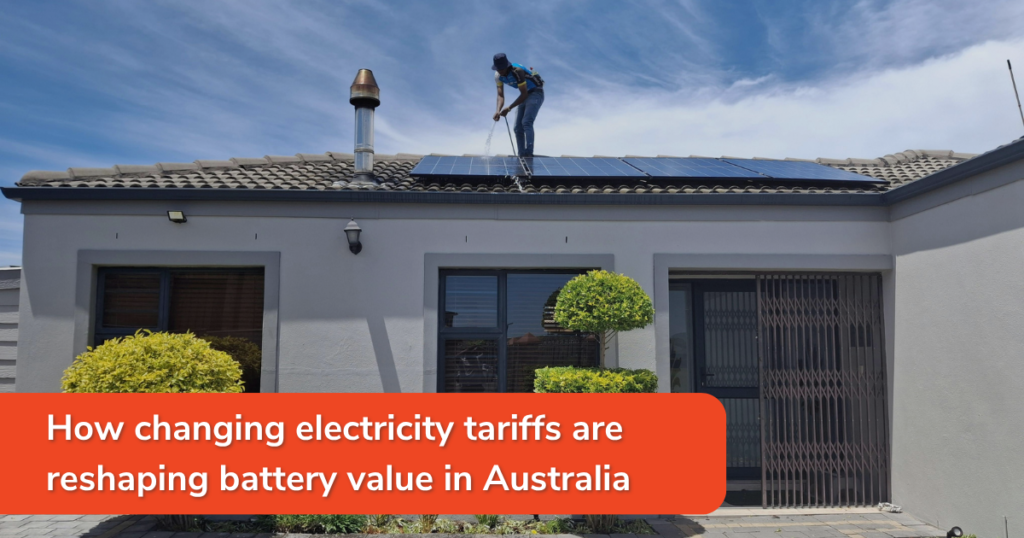
Are Home Batteries Still Worth It if Daytime Power Is Free? Smart Energy Answers June 3, 2026 Key Takeaways Daytime electricity is getting cheaper, but evening and peak prices remain high. A solar battery rebate can significantly reduce upfront costs, improving payback. Batteries are no longer just about solar storage. They’re about smart energy management. Systems like Tesla Powerwall 3 Australia and other advanced options adapt to changing tariffs. The best solar batteries in Australia are those that optimise when you charge and discharge, not just how much you store. Australia’s energy market is changing rapidly. With more rooftop solar feeding into the grid, select electricity retailers are now offering very low-cost or even free daytime power. At the same time, time-of-use tariffs are evolving, and households are starting to ask a new question: If power is cheap during the day, is a battery still worth it? The short answer: yes, but how you use your battery matters more than ever. Why Daytime Power Is Getting Cheaper Australia now has one of the highest levels of rooftop solar adoption in the world. During the middle of the day, solar generation can exceed demand in some regions and periods. This has led to: Lower wholesale electricity prices during daylight hours New retail plans offering cheap or free daytime electricity Reduced feed-in tariffs for exported solar While this might sound like a downside for solar owners, it actually creates new opportunities, especially when paired with battery storage. Is Self-Consumption Still the Main Strategy? It used to be simple: Use your solar during the day Store excess in a battery Avoid buying expensive grid power at night Now, the strategy is evolving. Self-consumption still matters, but it’s no longer the only way to maximise value. Instead, households are shifting toward energy arbitrage, meaning: Using cheap or free electricity during the day Storing energy from solar or grid Using that stored energy during expensive peak periods This is where modern batteries really shine. Do Batteries Still Make Sense if Daytime Power Is Cheap? Yes, because electricity isn’t cheap all day. Even with free daytime power: Evening tariffs are still high Peak demand charges can apply Grid outages and reliability still matter A battery allows you to: Avoid buying power during expensive periods Smooth your energy usage across the day Maintain backup power if needed, only if the system is configured for backup power or blackout protection This is why many homeowners still consider batteries among the best solar battery solutions in Australia for long-term savings and control. Solar Charging vs Grid Charging: What’s Better in 2026? This is one of the biggest mindset shifts happening right now. Option 1: Charge from Solar Clean, renewable energy Reduces exports at low feed-in tariffs Traditional battery strategy Option 2: Charge from the Grid Take advantage of free or cheap daytime electricity Store low-cost energy for evening use Works well with time-of-use tariffs Best Approach: Hybrid Strategy The smartest systems now do both. Depending upon battery model, inverter and system configuration, advanced batteries, including systems like Tesla Powerwall 3 Australia, can automatically: Charge when electricity is cheapest Discharge when prices are highest Optimise based on your usage and tariff This flexibility is what defines the best solar batteries in Australia today. How New Tariffs Are Changing Battery Payback In the past, battery payback was based mostly on: Solar self-consumption Avoiding peak electricity rates Now, payback depends on: Tariff structure, such as time-of-use vs flat rate Access to low-cost daytime electricity Smart battery control systems Your household energy patterns This means two households with the same battery could see very different results, depending on how their system is configured. Outcomes can also vary based on location, retailer pricing, available tariffs, and individual energy usage patterns. Where the Solar Battery Rebate Fits In The available government incentives plays a key role in this new equation. By reducing upfront cost, the rebate: Improves overall return on investment Shortens payback time Makes larger or smarter systems more accessible In a market where pricing dynamics are shifting, the rebate helps offset uncertainty and makes battery adoption more viable. What Makes a Battery “Worth It” in 2026 It’s no longer just about storing solar. The best systems now offer: Smart charging and discharging Tariff optimisation App-based monitoring and control Scalability for future needs That’s why many homeowners are comparing the best solar batteries in Australia based on features and flexibility, not just price. Final Thoughts Free daytime power doesn’t make batteries obsolete. It changes how they should be used. Instead of simply storing solar, batteries are becoming tools for: Managing electricity costs Responding to tariff changes Maximising energy flexibility If anything, the shift in pricing is pushing the market toward more advanced, more capable battery systems. However, whether a battery is financially worthwhile still depends on factors such as your household usage patterns, tariff structure, location, and system design. Ready to Find the Right Strategy for Your Home? If you’re wondering whether a battery still makes sense for your situation, and how to take advantage of new tariffs: Book a consultation or request a quote below. We’ll help you understand: Your tariff structure Your savings potential The best battery setup for your home In 2026, it’s not just about having a battery. It’s about using it the right way.
NSW Solar Battery Incentives in 2026: Cheaper Home Batteries Program, NSW VPP Incentive and Battery Rebate Updates

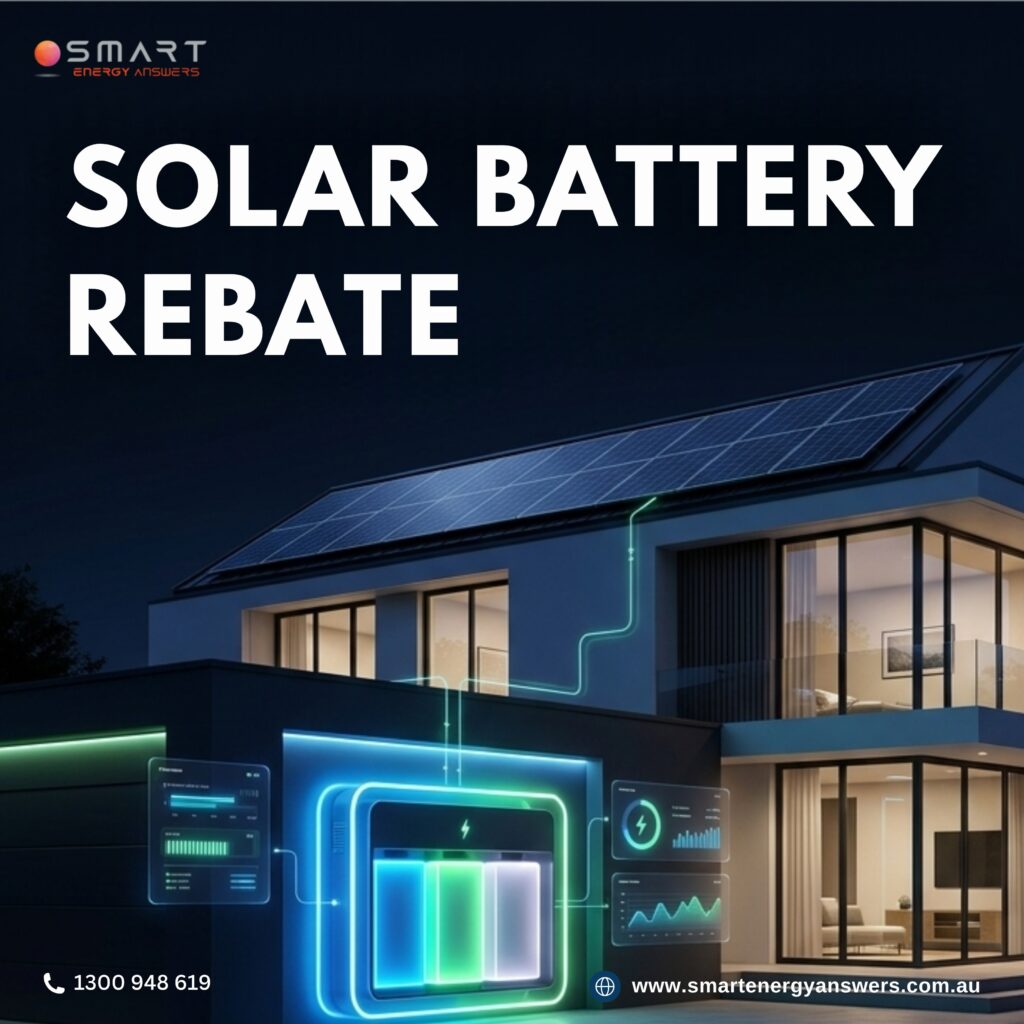
NSW Solar Battery Incentives in 2026: Cheaper Home Batteries Program, NSW VPP Incentive and Battery Rebate Updates Smart Energy Answers April 24, 2026 Key takeaways NSW upfront battery rebates have ended, but incentives still exist through federal and VPP pathways The Cheaper Home Batteries Program provides upfront savings but declines every six months from May 2026 The NSW VPP incentive offers ongoing financial benefits rather than upfront discounts Combining both delivers the strongest outcome VPP terms vary by provider. Always compare conditions before joining Not all battery systems are equal, system design and compatibility matter With battery adoption rising across Australia, many NSW homeowners are asking: Are there still battery rebates available in NSW? Can I combine federal support with state incentives? Is joining a Virtual Power Plant (VPP) worth it? The short answer: yes, but the structure of incentives has changed. What Battery Incentives Are Available in NSW in 2026? While NSW previously offered upfront battery rebates, these have now ended. However, two key pathways remain: 1. Australian Government’s Cheaper Home Batteries Program (via SRES) The primary national support is now delivered through the Cheaper Home Batteries Program, which operates under the Small-scale Renewable Energy Scheme (SRES). This program reduces the upfront cost of eligible battery systems, often delivering around 30% in total savings depending on system size and configuration. Important update (from 1 May 2026): The incentive declines every six months The discount is tiered based on battery size Earlier adoption typically results in higher savings This means timing now plays a key role in maximising your benefit. 2. NSW VPP Incentive (Peak Demand Reduction Scheme) While upfront rebates have ended, NSW continues to support batteries through the Peak Demand Reduction Scheme (PDRS). This is commonly accessed via Virtual Power Plant (VPP) programs, where: Your battery helps reduce grid demand during peak periods You receive financial benefits (credits or payments) This is often referred to as the NSW VPP incentive. Can You Combine Federal and NSW Incentives? Yes, but not in the traditional sense of stacking upfront rebates. Instead, homeowners can combine: ✔ Cheaper Home Batteries Program (upfront discount)✔ NSW VPP incentive (ongoing earnings or bill reductions) This combination shifts the focus from one-time savings to long-term energy value and performance. Should You Join a VPP in NSW? A Virtual Power Plant (VPP) connects your battery to a network that supports the grid during peak demand. Potential benefits: ✔ Additional income or bill credits✔ Improved system return over time✔ Contribution to grid stability What to consider: VPP participation is provider-dependent. Before joining, NSW guidance recommends reviewing: Payment structures Battery access conditions Control settings and override options Contract flexibility Some providers offer more flexibility than others, so comparing options is essential. Federal Rebate vs VPP Income: Where’s the Real Value? Think of it in two parts: Cheaper Home Batteries Program → reduces upfront cost NSW VPP incentive → provides ongoing financial return The strongest outcome comes from combining both, lowering initial investment while improving long-term savings and performance. Choosing the Right Battery System Not all battery systems are equal, especially when considering eligibility, usable capacity, and VPP compatibility. When evaluating options, homeowners should consider: System size and scalability Usable capacity vs nominal capacity Compatibility with VPP programs Integration with solar generation Common high-performance options in Australia include: Tesla Powerwall 3: known for integrated design and strong VPP compatibility, with pricing becoming more competitive Sigenergy battery systems: modular systems designed for scalability and advanced energy management Pairing these with high-efficiency panels such as AIKO solar panels can further improve system output, increasing the amount of energy available for storage or export. Is a Battery Still Worth It in NSW? Despite the end of upfront NSW rebates, batteries remain a strong investment when approached strategically. In 2026, value comes from: Reduced upfront cost through the Cheaper Home Batteries Program NSW Participation in NSW VPP incentive programs Smart system design tailored to household usage High-efficiency components working together The focus has shifted from short-term rebates to long-term savings and energy independence. Final Thoughts The NSW battery landscape in 2026 is less about one-off rebates, and more about ongoing optimisation. If your system is set up correctly, your battery can: Store more of your solar energy Reduce reliance on the grid Participate in VPP programs Deliver both savings and returns over time The key is choosing the right technology, the right setup, and the right partner. See What You Could Save (or Earn) If you’re considering a battery, the next step is understanding what you qualify for. 👉 See if your home qualifies for the Cheaper Home Batteries Program and NSW VPP incentive👉 Use our battery rebate calculator to estimate your savings👉 Explore how VPP programs could work for your system Ready to See What You Could Save? Book a consultation. Get In Touch
Smart Energy Answers Visits Sigenergy Shanghai HQ
Smart Energy Answers Visits Sigenergy Shanghai HQ Smart Energy Answers April 8, 2026 Smart Energy Answers has taken another major step in strengthening its relationship with Sigenergy, following a strategic visit to the manufacturer’s Shanghai headquarters and factory. The visit reflects a growing partnership between one of Australia’s leading solar and battery providers and one of the fastest-rising battery brands in the local market. For Smart Energy Answers, this was more than an international visit. It was an opportunity to deepen alignment with a key technology partner, gain firsthand insight into the innovation behind the product, and reinforce the confidence the business brings to Australian customers choosing advanced battery storage solutions. Smart Energy Answers Recognised Among Sigenergy’s Top Australian Partners Earlier in 2025, Smart Energy Answers publicly announced that it had been recognised as one of the Top 3 Sigenergy battery retailers in Australia. The company later confirmed it had also been recognised as a Top Gold Partner, marking another milestone in the relationship. That recognition is important because it positions Smart Energy Answers as a trusted installation and supply partner for Sigenergy products in Australia. It also signals a strong level of performance, product confidence, and alignment between both businesses as battery demand continues to accelerate nationwide. Why the Shanghai HQ Visit Matters As part of this recognition, Smart Energy Answers visited Sigenergy’s headquarters and manufacturing facility in Shanghai. According to SEA’s own public update, the visit gave the team direct exposure to the technology, production standards, and leadership vision behind Sigenergy’s product ecosystem. In practical terms, this kind of access matters. For an Australian installer, seeing the factory operations and meeting directly with the manufacturer creates a deeper understanding of product quality, system engineering, safety standards, and future direction. That is valuable in a market where customers are increasingly looking for more than just a battery. They want confidence in the brand behind it. Beyond the Factory: A Milestone in Shanghai The trip was not solely focused on the production line. It was also a celebration of the high-performance culture that both Smart Energy Answers and Sigenergy share. Our team was incredibly proud to attend the Formula 1 Grand Prix during the visit. It was a true honour to be in the stands to witness a piece of sporting history: the first-ever race win by rising Italian talent Kimi Antonelli. Much like the rapid advancement of Sigenergy in the battery market, seeing such a breakthrough performance on the track was an inspiring highlight of our time in Shanghai. Sigenergy’s Rise in the Australian Battery Market The timing of the visit is especially relevant given Sigenergy’s recent momentum in Australia. In May 2025, the Smart Energy Council reported that Sigenergy had become the No. 1 battery brand in Australia by market share for March 2025, based on SunWiz reporting. That rapid rise has made Sigenergy one of the most watched battery brands in the country. Smart Energy Answers has also referenced this growth in its own public content, positioning the brand as one of the strongest choices for Australian homes seeking advanced battery storage and energy management capability. What This Means for Smart Energy Answers Customers For customers, strong manufacturer relationships can create real value. They can mean stronger product knowledge, better technical alignment, improved installation confidence, and a clearer understanding of the long-term direction of the platform being installed. That is particularly relevant in the battery market, where the quality of both the hardware and the installer relationship matters. Smart Energy Answers has built its reputation around premium partnerships, aftercare, and expert guidance. Its continued recognition by Sigenergy supports that positioning and helps differentiate the business in a crowded residential energy market. A Partnership Built for the Future of Battery Storage in Australia The visit to Shanghai reflects something bigger than a single milestone. It points to a partnership built around shared growth and a shared belief in where the Australian energy market is heading. As homeowners increasingly invest in smarter, more connected battery systems, partnerships like this will matter more. For Smart Energy Answers, the value of this visit lies in what comes next: deeper collaboration, stronger product expertise, and an even more confident offering for customers looking to future-proof the way they power their homes. Looking for a Sigenergy Battery Installer in Australia? Smart Energy Answers is one of Sigenergy’s leading Australian partners and has been publicly recognised among the brand’s top local retailers. For homeowners considering a Sigenergy battery system, that partnership offers an added layer of assurance backed by direct brand alignment and proven local experience. If you are exploring battery storage for your home, Smart Energy Answers can help you understand whether Sigenergy is the right fit for your energy needs, usage profile, and long-term goals.
Powerwall Techtalk: A Big Step Forward for Powerwall Owners
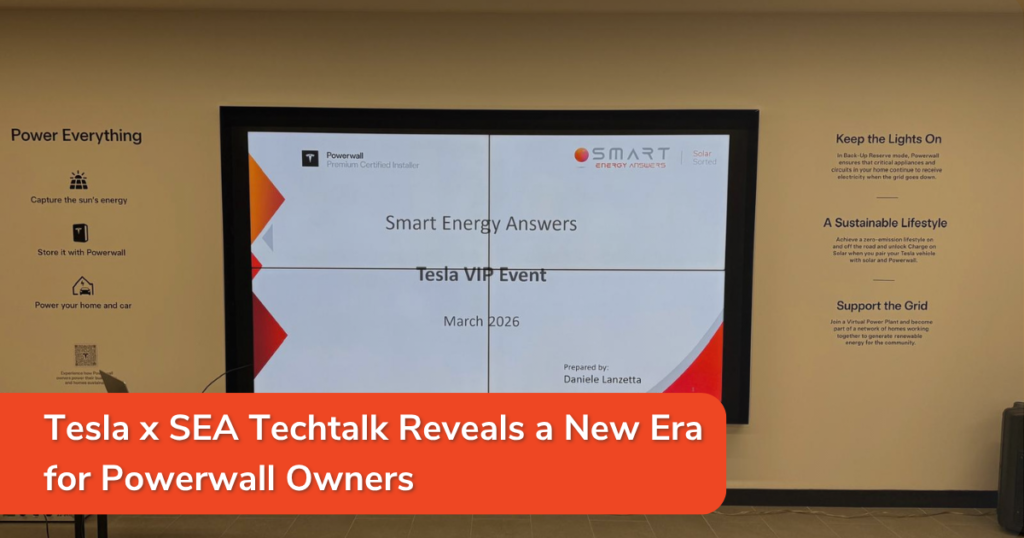
Powerwall Techtalk: A Big Step Forward for Powerwall Owners Smart Energy Answers April 1, 2026 Smart Energy Answers and Tesla Host Exclusive Powerwall Techtalk in Sydney Smart Energy Answers recently partnered with Tesla to host an exclusive Powerwall Techtalk in Sydney, bringing together existing customers, energy enthusiasts, and industry experts to share the latest developments in home battery technology. It was a fantastic evening filled with insights, updates, and meaningful conversations about the future of home energy. A Major Update for Powerwall Owners One of the biggest highlights of the event was the announcement that Powerwall 2 will soon be fully compatible with Powerwall 3. This update opens up new opportunities for existing Powerwall 2 customers, allowing them to: Expand their battery storage capacity. Improve backup coverage across more circuits. Maximise solar energy usage. Future-proof their energy system. For many homeowners, this means their existing system can now evolve without needing a complete replacement. Strong Turnout and Engagement The event saw a great turnout, with Powerwall owners eager to understand how these updates apply to their homes. From technical discussions to real-world scenarios, attendees gained clarity on: Upgrade pathways and system expansion. Compatibility requirements. How to optimise their energy setup. What to consider before upgrading. It was encouraging to see so many customers actively planning the next stage of their energy journey. A Continued Partnership With Tesla We’d like to extend a big thank you to Tesla for their ongoing collaboration and support. As a Tesla Premium Certified Installer, Smart Energy Answers has installed over 1,000 Powerwall 2 systems across Australia. This long-standing partnership has allowed us to deliver reliable, high-performance energy solutions to thousands of homeowners. With the introduction of Powerwall 3 compatibility, this partnership continues to bring even more value to our customers. What This Means Moving Forward The ability to combine Powerwall 2 and Powerwall 3 marks a significant step forward in home energy flexibility. Homeowners now have more control than ever, with the ability to: Scale their system as energy needs grow. Increase energy independence. Adapt to changing energy prices and technologies. This is a clear move toward more modular, future-ready energy systems. Missed the Event? If you couldn’t attend the Techtalk, our team is here to help. We can walk you through: Your upgrade options. System compatibility. The best next step for your home.
Federal Battery Rebate Australia 2026: What You Could Actually Save
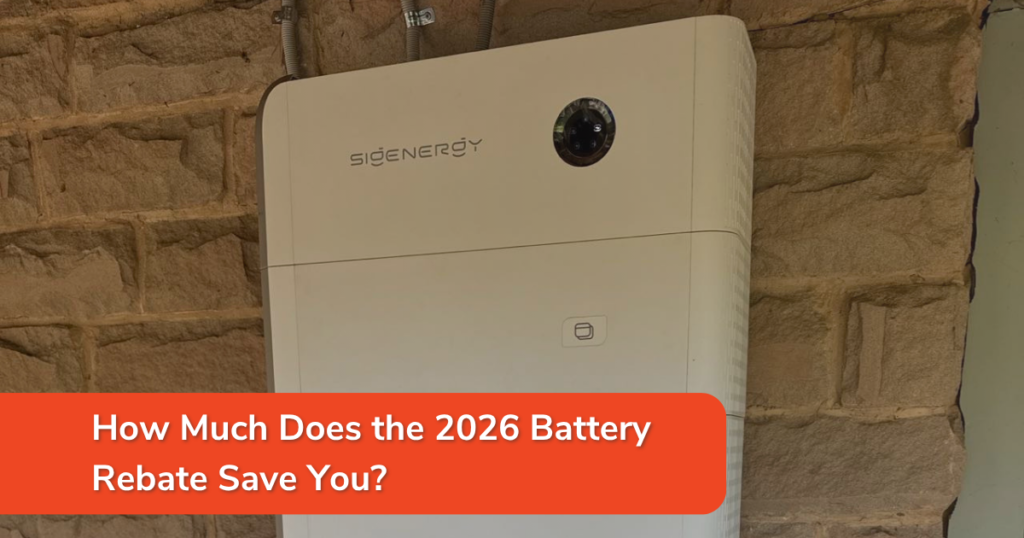
Federal Battery Rebate Australia 2026: What You Could Actually Save Smart Energy Answers March 27, 2026 Cheaper Home Batteries Program 2026: What Australian Households Need to Know Key Takeaways The federal Cheaper Home Batteries Program can reduce the upfront cost of eligible battery systems connected to new or existing rooftop solar. Eligibility depends on factors including battery size, solar connection, approved products, and installer accreditation. Bigger batteries do not automatically mean better value. The right size depends on your energy usage, solar generation, and system design. Changes commence from 1 May 2026, including revised STC factors and tapered support by battery size. Installation timing can affect the level of support available. With energy prices still top of mind for many Australians, the federal Cheaper Home Batteries Program has quickly become a major topic of interest across the energy market. Most customers are not looking for policy detail alone. They want clear answers on how the programme works, what they may save, whether they are eligible, and whether they should install before or after 1 May 2026. How does the rebate actually work? How much can I save? Am I eligible? And should I install now or wait? This guide breaks it all down in plain English so you can make a confident decision. What Is the Cheaper Home Batteries Program? The Australian Government’s Cheaper Home Batteries Program is designed to reduce the upfront cost of eligible small-scale battery systems installed alongside new or existing rooftop solar. The programme is delivered through the Small-scale Renewable Energy Scheme, or SRES, using STCs. In many cases, the benefit is passed on through the installer or retailer as an upfront discount, although the way it appears on quotes or invoices can vary. The programme has been available for eligible battery systems installed on or after 1 July 2025. How Much Can You Actually Save in 2026? The amount you could save in 2026 depends on several factors, including: Battery size and usable capacity. Whether the battery is installed with new or existing rooftop solar. Whether the products and installer meet programme requirements. The date the system is installed, particularly before or after 1 May 2026. Typical Savings Range While exact figures vary, eligible customers may receive a meaningful reduction in upfront battery cost, particularly where the system is appropriately sized and installed in accordance with programme requirements. For example, a 10kWh battery may attract support that suits an average household profile. A 20kWh battery may attract a larger total discount than a smaller system, but that does not automatically mean better value. Under the federal programme, batteries from 5kWh to 100kWh nominal capacity may be eligible, but STCs are only available on the first 50kWh of usable capacity. From 1 May 2026, support is also tapered by capacity bands, which makes correct sizing even more important. The key is not just the rebate amount, but how well the system matches your household usage. 10kWh vs 20kWh: Which Gives Better Value? This is one of the most common questions, and the answer depends on how much solar you produce, how much electricity you use after sunset, and whether the battery is appropriately matched to the site. 10kWh Battery Generally suited to average household usage profiles. Lower upfront cost than a larger system. May cover evening self-consumption needs where solar generation and load profile align. May offer a stronger balance of cost and value for some households. 20kWh Battery Higher storage capacity. May suit larger households or sites with higher evening or overnight usage. Can provide longer backup support where backup capability is included. May attract a larger total discount, but only represents better value if properly matched to the site. Important: Bigger is not always better. Oversizing a battery without matching it to the site’s load profile, solar production, and inverter setup can reduce value. Who Is Eligible for the Rebate? Eligibility depends on whether the battery system meets the federal programme requirements, including: Installation with new or existing rooftop solar PV. Battery size between 5kWh and 100kWh nominal capacity. Approved battery and inverter products. Installation by, or under the on-site supervision of, a Solar Accreditation Australia accredited battery installer. Compliance with applicable safety and programme requirements. For on-grid systems, technical capability to participate in a virtual power plant, or VPP. This federal programme is not limited to residential homes. It also applies to eligible installations for businesses and community organisations. Because requirements can change, eligibility should always be confirmed at the time of quoting and installation. What Changes Are Coming From 1 May 2026? One of the biggest reasons this topic is gaining attention is the confirmed change to the programme from 1 May 2026. From that date: The STC factor declines more frequently, every six months. The STC factor declines at a higher rate. Support is tapered according to battery size. 0 to 14kWh: 100% of the STC factor. Above 14 to 28kWh: 60% of the STC factor. Above 28 to 50kWh: 15% of the STC factor. This creates a common timing decision for customers: Install before 1 May 2026 under the current settings. Wait and assess how the revised settings affect the proposed system. For many households, installing earlier can provide both immediate savings and earlier bill reductions, rather than waiting for uncertain future changes. Should You Install Now or Wait? There’s no universal answer, but here’s how to think about it. Reasons to Install Before 1 May 2026 Lock in the current STC settings that apply before the next programme adjustment. Start using stored solar energy sooner. Potentially receive a higher level of support than an equivalent installation completed after 1 May 2026. Reduce the risk of delaying savings while policy settings taper over time. Reasons Waiting May Make Sense You are planning a broader solar or electrical upgrade. You are still assessing the right battery size or system design. Your installer needs to confirm how the post-1 May 2026 settings affect the proposed system. You are comparing battery options,
Why Post-Installation Support Is Important for Your Solar & Battery System

Why Post-Installation Support Is Important for Your Solar & Battery System Smart Energy Answers March 17, 2026 Why Post-Installation Support Matters for Solar and Battery Systems Key Takeaways Post-installation support ensures your solar and battery system continues performing efficiently for years. Systems like Tesla Powerwall 3 Australia and Sigenergy battery rely on proper monitoring and firmware updates to maintain performance. Warranty support and manufacturer coordination are important if faults arise. Regular performance checks help identify small issues before they impact savings. Software, app connectivity, and system optimisation require ongoing attention. Strong post-installation support protects your long-term investment and gives homeowners peace of mind. You’ve invested in solar panels and battery storage, a smart decision for energy independence, lower bills, and a cleaner home power supply. Whether your system includes premium solutions like Tesla Powerwall 3 installations or a modular Sigenergy battery, installation day isn’t the end of the journey. In fact, post-installation support is one of the most important factors in ensuring your system performs reliably and efficiently for years to come. Here’s why quality support after installation matters, what it should include, and how it protects your investment. 1. Solar and Battery Systems Are Long-Term Investments Unlike a TV or appliance you might replace every few years, solar panels are typically designed for decades of operation, while batteries and inverters have shorter lifecycles and benefit from proactive monitoring and support over time. Performance monitoring. Firmware updates. Warranty support. Troubleshooting unexpected issues. Whether you’re running a Tesla Powerwall 3 system or a Sigenergy battery, a system that worked great on day one can lose efficiency over time without proper support. Tech advancements, software changes, and evolving grid requirements all make ongoing servicing beneficial. For many households, it’s the difference between installed and optimised. 2. Issues Can Arise, Even With Great Installations No installer can eliminate every potential fault. Sometimes: Inverter firmware needs updates. Network connections can fail. Communication between components drops. Environmental factors impact performance. Monitoring portals show discrepancies. If these issues go unresolved, they can reduce your energy yield, increase unnecessary cycling, prevent your battery from operating as intended, or even trigger warranty complications. That’s where post-installation support steps in, helping catch small performance losses before they become big problems, regardless of whether your system includes Tesla, Sigenergy, or other components. 3. Warranty and Compliance Follow-Through Matters Different manufacturers and products have different warranty terms. Good post-installation support includes: Warranty claims handling. Coordination with manufacturers. Diagnostic reporting. Log retrieval and expert interpretation. Without support, many homeowners struggle to navigate the correct process when a component fault occurs, whether it’s an inverter issue or a battery component within a Sigenergy battery or Tesla Powerwall 3 system. This can lead to delays, added costs, or even warranty issues. A supportive provider ensures your system stays covered and compliant long after installation day. 4. Optimisation and Performance Evidence Systems don’t always perform to their theoretical best immediately. After installation, good support helps you: Monitor energy output and production trends. Identify shading, orientation, or inverter mis-tracking. Compare performance against expectations. Fine-tune settings for peak efficiency. Your installer should help interpret the data and adjust your system for better long-term results. 5. Software, Monitoring, and Smart Features Need Attention Most modern solar and battery systems include smart software, apps, and cloud portals that show generation, storage status, and consumption. Systems such as Tesla Powerwall 3 and advanced Sigenergy battery platforms rely heavily on software, monitoring, and connectivity to deliver their full value. Ongoing support covers: App setup and user onboarding. Dashboard interpretation. Notifications and alert management. Connectivity fixes. Without this support, many homeowners never truly use the full capability of their system. 6. System Ageing and Component Updates Systems change over time. Batteries age, inverters receive updates, and grid regulations evolve. Post-installation support helps you: Stay ahead of firmware updates. Recognise when a component is degrading. Plan ahead for maintenance and lifecycle requirements where needed. Maintain system safety and efficiency. This isn’t just about fixing faults. It’s about future-proofing your investment. 7. Peace of Mind for Homeowners This might be the most important benefit of all. When your system is new, most of the value is in performance and savings. But as time goes on, homeowners want confidence that: Their bills remain low. The system keeps performing as expected. They won’t be left handling technical issues alone. Good support isn’t just technical. It’s reassurance. What Great Post-Installation Support Should Look Like Look for a provider that offers documented commissioning, monitoring support, and warranty advocacy, not just an installation date. Here’s what you should expect from a professional support programme: Regular Check-Ins and System Health Reports Not just reactive fixes, but proactive insights into performance. Warranty Advocacy Support that helps you navigate manufacturer policies and claim resolutions. Remote Monitoring and Troubleshooting Fast diagnostics without long wait times or unnecessary call-outs. Clear Communication Plain-English explanations of what’s happening and why, not jargon. Upgrades and Optimisation Over Time Your system should improve, not stagnate. Why Choose a Provider That Offers Real Support You wouldn’t buy a car without servicing, a phone without updates, or a house without maintenance. A solar and battery system is no different. Post-installation support can: Maximise lifetime performance. Protect warranty validity. Prevent avoidable failures. Help you better understand your system. Save money in the long run. Your installer shouldn’t disappear after the hardware is on your roof. They should be part of your energy journey. Need Support or a System Health Check? If you want professional post-installation support, from monitoring and maintenance to troubleshooting and optimisation, we’re here to help. Contact us for support, servicing, or a system health check. Your system should work for you, not create more work for you.
500 Sigenergy Installations in 12 Months: What That Really Means for Your Solar & Battery System

500 Sigenergy Installations in 12 Months: What That Really Means for Your Solar & Battery System Smart Energy Answers February 11, 2026 We’re proud to share a milestone that reflects more than just growth: 500 Sigenergy battery installations completed in the past 12 months. For us, it’s an achievement. For homeowners, it’s reassurance. This milestone represents experience, consistency, and a refined process, the kind that only comes from working on hundreds of real homes, real roofs, and real energy needs across Australia. Why This Milestone Matters for You Completing 500 Sigenergy installations in a year means our team has: Worked across a wide variety of roof types, switchboards, and home layouts. Designed systems for different energy usage patterns and future needs. Streamlined installation processes for efficiency and precision. Strengthened expertise in products, performance optimisation, and compliance. For customers, that translates to smoother installations, fewer surprises, and systems built on real-world knowledge, not guesswork. What Being a Sigenergy Gold Installer Means Alongside this milestone, we’re proud to be recognised as a Sigenergy Gold Installer, a status that reflects both installation volume and quality standards. In practice, this means: Installers receive specific training on Sigenergy systems. Systems are designed according to manufacturer best practice. Installations follow strict safety and performance standards. Ongoing familiarity with the technology ensures confident support. For homeowners, it means your system is installed by a team that understands the product inside and out, helping ensure reliable performance long after installation day. A Note on Choosing the Right Installer Australia’s solar industry is growing rapidly, which is fantastic, but it also means standards can vary. Most installers work hard to deliver great outcomes, but homeowners should stay mindful of operators who: Offer unusually low prices without clear system details. Can’t clearly explain system design or battery sizing. Avoid discussing certifications, compliance, or warranties. Subcontract work without accountability. Rush installations without proper testing or commissioning. A solar and battery system is a long-term investment. Taking time to choose an experienced and accountable installer helps protect both safety and performance. Our Approach: Experience Backed by Process Behind every one of those 500 installations is a structured approach designed to deliver consistent quality. 1. Thoughtful System Design Each home’s energy usage, roof space, and future plans are assessed to ensure the system is correctly sized. 2. Compliance and Safety All work is completed to Australian standards, including grid approvals and documentation. 3. Professional Workmanship Installations follow consistent methods, with careful mounting and cable management to support both performance and appearance. 4. Testing and Quality Assurance Every system is tested and commissioned before handover to confirm safe and efficient operation. 5. Ongoing Support We remain available after installation for monitoring support and guidance as you get the most from your system. A Milestone Built on Trust Reaching 500 Sigenergy installations in 12 months reflects the trust placed in us by hundreds of households. Combined with our Sigenergy Gold Installer status, it reinforces our commitment to doing things properly every time. Solar and battery systems perform best when installed with care, experience, and attention to detail, and that’s exactly what this milestone represents.
Breaking News: Changes to the Federal Battery Rebate could happen soon!
Breaking News: Changes to the Federal Battery Rebate could happen soon! Smart Energy Answers December 11, 2025 Australia’s Cheaper Home Batteries rebate has driven one of the fastest adoptions of solar batteries in the world, outpacing the expectations of policymakers. This week, the Smart Energy Council, or SEC, held an urgent seminar outlining the current reality: funding is being consumed at an unprecedented rate, battery sizes have ballooned, and without intervention, the entire $2.3 billion scheme could exhaust months, or even years, ahead of schedule. At Smart Energy Answers, we support reforms that protect consumers, ensure long-term industry stability, and secure continued access to quality storage solutions like the Tesla Powerwall 3, Sigenergy batteries, and ESY Sunhome systems, all available through our curated SEA Smart Batteries range. Below is a clear breakdown of what the new information means for Australian households. Why the Rebate Has Been So Popular and Why That Can Cause Issues The Cheaper Home Batteries rebate aims to make energy storage more accessible by offering a discount of around 30% off eligible systems through the Small-scale Renewable Energy Scheme, or SRES. Recent data shows that households are choosing larger batteries than before, with the average system installed since October sitting at around 28kWh. At the same time, a big share of the rebate budget is being used on large batteries of 50kWh and above in larger homes and commercial property settings. The Smart Energy Council, a key industry group, says that without sensible updates, the rebate risks a boom-bust cycle that could hurt both consumers and the battery industry. SEC CEO John Grimes has called for tweaks to system sizing and rebate settings to ensure the programme remains sustainable and continues to deliver value. 1. The Rebate Was Always Meant to Come Down, But Not Like This From day one, the federal solar battery rebate was designed to taper gradually, following this original glide path before administration and trading costs: 2025: $372/kWh 2026: $336/kWh 2027: $296/kWh 2028: $260/kWh 2029: $224/kWh 2030: Approximately $188/kWh Even in 2030, a typical 20kWh battery would still receive more than $3,500 in support. But right now, that same system attracts more than $7,000, almost double what was planned. The problem isn’t that the rebate is decreasing. The problem is that the scheme expected a controlled descent, and instead, demand has gone vertical. 2. Why the Current Settings Are Unsustainable This is where the SEC’s warning becomes stark. Battery Sizes Have Surged Early in the scheme: approximately 16kWh average size. Today: approximately 28kWh and rising. At around $300 to $350 per kWh, that frequently means rebates of $8,400 or more per installation. The November Blowout 36,000 batteries installed. Approximately 2,000 installs per day. $350 million to $360 million spent in one month. Official figures show $850 million to $900 million already paid out. But once systems already sold and deposits taken are included, total committed spend is closer to just under $2 billion. That leaves roughly $400 million to $600 million uncommitted, which means only weeks of funding at current burn rates, not months. This is why the Federal Government is alarmed. 3. The Tiered Rebate: The Least Bad Option The Smart Energy Council presented a tiered rebate structure as the fairest and most stabilising solution. Proposed Tier Model 100% rebate for the first 14kWh. 50% rebate for the next 14kWh, up to 28kWh. 10% rebate from 28kWh to 50kWh. This model: Preserves choice for families needing larger systems. Slows the funding burn dramatically. Reduces oversized, rebate-maximising installs. Pushes cheap, low-quality installations out of the market. Keeps the scheme operational for longer. It targets the extremes, from the $4,000 low-end, low-quality installations to the $20,000-plus oversized rebate harvesters, and creates a more balanced landscape. The question is whether the government will allocate another approximately $500 million to extend the scheme into late 2026. 4. Why a Sudden Cutoff Is a Real and Dangerous Possibility The SEC was crystal clear: hard caps or abrupt cuts would be catastrophic. They risk: Stranded batteries and unsellable stock. Broken customer contracts. Installers and wholesalers collapsing under cashflow pressure. Imported inventories becoming instantly non-viable. The SEC is urging the government to avoid a sudden guillotine. However, they also admitted that warnings do not control the Federal Government. 5. The Political Reality Driving the Federal Government’s Thinking This is no longer just an energy decision. It is a Federal Government budget-protection decision. The government recently cut a $300 household energy bill rebate that would have supported: 8 to 9 million households. Approximately 20 million Australians. If that programme could not survive the budget process, the Federal Government may not protect a battery rebate helping a much smaller group while burning $350 million per month. The maths is sobering. A three-month taper would add approximately $700 million to $1 billion more in unplanned budget spend. The Federal Government may simply not accept that. 6. The Long-Term Reality: Batteries Are Essential Infrastructure Despite the rebate crisis, one truth remains. Australia cannot meet its renewable energy goals without batteries. Home batteries are: Supporting the grid during transmission delays. Filling the gap while large-scale renewable projects stall. Providing backup during extreme weather. Enabling electrification of homes and vehicles. Killing the scheme outright would be: A short-term budget win. A long-term energy system failure. This is the difficult crossroads Australia now faces. What You Can Do Now If you are considering a battery, acting sooner rather than later is the safest option while the rebate is still high and before any sudden policy change. Explore SEA’s recommended systems: Premium Storage Options SEA Smart Batteries Federal Battery Rebate Guide Federal Battery Rebates 2025 Powerwall 3 for Advanced Home Backup Tesla Powerwall 3 Solar Storage Sigenergy High-Capacity Systems Sigenergy ESY Sunhome for Long-Life Performance ESY Sunhome
Smart Energy Answers Passes 1,000 Tesla Powerwall 3 Installations
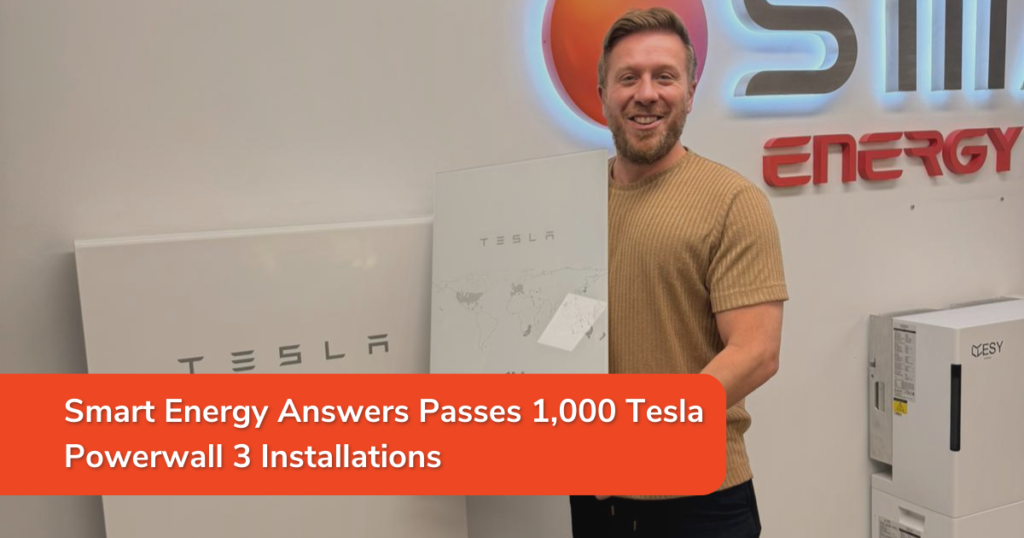
Smart Energy Answers Passes 1,000 Tesla Powerwall 3 Installations Smart Energy Answers November 27, 2025 This week, we’re excited to share a milestone that means a lot to our team, our customers, and Australia’s clean energy future: Smart Energy Answers has officially installed more than 1,000 Tesla Powerwalls. To recognise this achievement, Tesla has awarded us a special “1M Global Install” plaque, celebrating one million Powerwall installations worldwide. Smart Energy Answers was the only NSW retailer to receive this recognition, and SEA is honoured to be part of that movement. A Milestone That Reflects a Bigger Mission From day one, Smart Energy Answers has believed in giving Australians access to the most reliable, future-proof energy technology. The Tesla Powerwall remains at the forefront of that vision, delivering industry-leading backup power, deep energy independence, and seamless solar integration. With Powerwall 3 in Australia rolling out nationwide, and families increasingly searching for the best solar battery Australia has to offer, hitting 1,000 installs isn’t just a number. It represents thousands of households taking control of their energy future. Helping Australians Save More With Rebates Demand has accelerated as more homes take advantage of incentives like the solar battery rebate, helping reduce the price of a Tesla Powerwall and making clean energy more accessible than ever. Our team helps homeowners navigate every step of the rebate process, ensuring they maximise savings while investing in long-term energy security. Designed and Installed by Australia’s Trusted Solar and Battery Experts Behind every installation is a team of engineers, designers, and accredited installers who ensure each Powerwall performs at its full potential. This milestone reflects their skill, dedication, and commitment to excellence. Whether you’re choosing a Powerwall for blackout protection, bill reduction, or total grid independence, SEA ensures every system is carefully designed for your lifestyle, home, and long-term goals. A Thank You to Our Community This achievement belongs not only to SEA, but to: Homeowners who trusted us with their energy future. Businesses building smarter systems with Powerwall. Partners who continue to innovate alongside us. Our installation teams who bring these projects to life. Your support has helped us become one of Australia’s leading Powerwall installers and a proud contributor to Tesla’s global milestone. Here’s to the Next Thousand and a Cleaner, Smarter Future With Tesla’s innovation accelerating and battery rebates expanding, the future of energy is changing fast. Smart Energy Answers is committed to helping Australians stay ahead with better technology, better support, and better long-term savings. Here’s to the next 1,000 Powerwalls and to a nation powered by clean, reliable renewable energy.
Three Hours of Free Power a Day: What It Means for Solar + Battery Owners in Australia

Three Hours of Free Power a Day: What It Means for Solar + Battery Owners in Australia Smart Energy Answers June 3, 2026 Australia’s energy landscape is about to experience a major shift. Starting July 2025, millions of households will gain access to three hours of free power every day, under a new initiative introduced by the federal government and supported by leading energy retailers. It’s a move that’s already being described as one of the biggest shake-ups in the Australian energy market — and for homeowners with solar and battery systems, it could mean free nightly energy, lower bills, and faster returns on investment. What the “Three Hours of Free Power” Scheme Means Under the new scheme, electricity retailers will offer Australian households three hours of free energy use per day, typically during off-peak daylight hours when renewable generation is highest. According to ABC News and The Guardian, the goal is simple, make better use of Australia’s abundant daytime solar generation while reducing grid pressure during peak demand at night. This new program is not just a win for energy retailers. It’s a massive opportunity for homeowners with batteries. By pairing your solar panels with an intelligent battery system, you can charge your battery for free during those three hours, then use that stored power in the evening when grid prices spike. In other words: free energy in, zero-cost power out. Why This Matters for Homeowners with Batteries For those who already own a Tesla Powerwall 3 or Sigenergy battery, this initiative could drastically improve your savings. If you’re considering an upgrade or new installation, the timing couldn’t be better. The solar battery rebate already helps lower upfront costs, and this new federal policy adds another layer of value, free daily charging that can offset hundreds of dollars in annual energy bills. Meanwhile, modern batteries like the ESY Sunhome and Sigenergy models are designed for intelligent charging, allowing you to automatically schedule energy storage during those no-cost hours. Real-World Impact: Turning Policy into Savings Let’s take a typical Sydney household with a 13.5 kWh Tesla Powerwall 3. If that system is fully charged during the free window and used during evening hours, it could save up to $700–$900 annually, depending on local energy rates. For those in NSW or Victoria, where tariffs can exceed 35 ¢ / kWh during peak demand, these savings quickly add up, especially when paired with an energy-efficient home setup and smart solar management tools. Choosing the Right Battery to Maximise the Benefit Not all batteries are created equal, and to take full advantage of the free power scheme, you’ll want a system that can charge quickly, store efficiently, and integrate seamlessly with your solar setup. Sigenergy batteries are engineered for smart, flexible energy control, offering outstanding capacity and advanced AI-based management. The ESY Sunhome provides robust performance at a competitive Sigenergy battery price, making it ideal for households focused on long-term ROI. And of course, the Tesla Powerwall 3 continues to set the benchmark for performance, with intelligent energy dispatch and grid-ready compatibility. To unlock even greater benefits, homeowners can pair these batteries with Amber’s Virtual Power Plant (VPP). By joining the Amber VPP, your battery can automatically trade energy during high-demand periods, earning credits or payments while supporting grid stability. When combined with the new three hours of free power policy, this creates a powerful cycle of free charging, smart trading, and round-the-clock savings — turning your home into a truly intelligent energy hub. What Homeowners Should Do Now Assess Your Energy Usage: Identify your peak energy times and total daily demand. Upgrade to a Smart Battery System: Look for batteries with advanced charging controls to make the most of the free power period. Check Your Eligibility: Rebates and incentives are available for eligible households. Our team at Smart Energy Answers can help guide you through the solar battery rebate process. Plan Your System Now: With the Tesla Powerwall 3 price and Sigenergy battery price becoming more competitive, now’s the perfect moment to install before demand surges in mid-2025. The Bigger Picture: A Smarter, Greener Australia This three-hour-free-power initiative isn’t just about cost savings. It’s a strategic step toward a cleaner, more efficient energy grid. By encouraging households to store and use renewable energy during off-peak hours, Australia moves closer to achieving its national net-zero goals while empowering everyday Australians to take control of their energy future. At Smart Energy Answers, we’re proud to be part of this transition, helping homeowners integrate technologies like Tesla Powerwall 3, Sigenergy batteries, and ESY Sunhome into systems that deliver real independence, savings, and sustainability. Ready to Make the Most of Australia’s Free-Power Future? Explore your options with our Smart Battery Solutions today, and turn your solar system into a 24/7 energy powerhouse.
How AI and IoT Are Transforming Commercial Solar Energy Management
How AI and IoT Are Transforming Commercial Solar Energy Management Smart Energy Answers June 3, 2026 As commercial energy systems evolve, Artificial Intelligence (AI) and the Internet of Things (IoT) are reshaping how businesses manage solar generation, storage, and consumption. No longer limited to static power systems, commercial solar is now dynamic, powered by intelligent automation that delivers real-time optimisation, cost efficiency, and sustainability. Smart Energy Answers is leading this transformation, helping businesses deploy advanced energy management solutions that combine solar, batteries, and smart data to reduce costs and enhance resilience. The Shift Toward Intelligent Energy Systems Traditional solar systems produced energy without much control over how it was stored or used. Now, with AI and IoT integration, businesses can actively manage and optimise every aspect of their energy use. IoT sensors continuously collect performance data from solar panels, inverters, and batteries. AI algorithms then process this data to predict demand, manage battery charge and discharge cycles, and forecast savings opportunities, all automatically. The result is a self-optimising ecosystem where power flows intelligently, supporting grid stability, lowering operating costs, and maximising renewable energy use. Smarter Energy Storage with Sigenergy Batteries and Tesla Powerwall 3 Energy storage is where AI and IoT deliver their biggest advantages. Batteries such as the Sigenergy Battery and Tesla Powerwall 3 play a crucial role in enabling energy independence for commercial sites. AI-driven systems can decide the ideal moments to store excess solar energy and when to discharge it during peak demand, reducing reliance on the grid and avoiding high electricity tariffs. The Sigenergy Battery, for instance, offers superior scalability and efficiency, making it ideal for multi-site businesses and commercial facilities. Its intelligent management system allows seamless coordination with other assets, ensuring that stored energy is always used in the most cost-effective way. Meanwhile, companies comparing options are often interested in Sigenergy battery price and Tesla Powerwall 3 price, both representing premium but high-return investments that deliver rapid payback through energy savings and grid support incentives. AI and IoT for Predictive Energy Management In commercial applications, predictive analytics powered by AI allows businesses to move beyond reactive energy use. By analysing data from IoT-connected systems, AI can forecast energy consumption patterns, predict peak demand, and even anticipate system maintenance needs. Imagine a system that adjusts battery output, building lighting, and HVAC consumption automatically based on predicted weather and operational schedules. That’s the power of AI-driven energy management. At Smart Energy Answers, we enable clients to achieve this kind of efficiency by integrating intelligent battery platforms like Sigenergy batteries with renewable generation assets and advanced software dashboards. Integrating Solar and Battery Technologies Combining smart batteries with high-efficiency solar panels, such as Aiko Solar, creates the foundation for next-generation commercial energy systems. These solutions allow businesses to capture more solar energy, store it efficiently, and use it precisely when needed. Complementary technologies like the Esy Sunhome and Sigenergy Battery integrate seamlessly into larger energy networks, giving organisations a future-ready infrastructure that adapts in real time. Data-Driven Insights for Business Efficiency The intelligence of AI and IoT doesn’t stop at automation. It also delivers valuable insights. Businesses can now track energy performance across multiple sites, benchmark improvements, and forecast ROI using detailed dashboards. These insights empower decision-makers to: Identify energy wastage and efficiency gaps Plan investments based on predictive savings data Streamline sustainability reporting for compliance and ESG goals By leveraging this data through Smart Energy Answers’ commercial energy platforms, organisations can convert solar and storage assets into measurable competitive advantages. Future-Proofing Commercial Operations The integration of AI and IoT ensures businesses are prepared for a more decentralised energy future. Smart batteries like Sigenergy batteries are designed to evolve, supporting virtual power plants (VPPs), dynamic tariffs, and future grid participation. With ongoing innovations, businesses can look forward to greater energy autonomy, enhanced operational resilience, and better returns on their sustainability investments. Partnering with Smart Energy Answers At Smart Energy Answers, we specialise in delivering fully integrated commercial energy solutions that combine cutting-edge technology, real-world expertise, and measurable results. From premium panels like Aiko Solar to advanced storage systems like Tesla Powerwall 3 and Sigenergy Battery, our systems are designed to work intelligently together. By incorporating AI-driven monitoring and IoT connectivity, we help our commercial clients future-proof their operations, lower energy costs, and take control of their sustainability journey. Conclusion AI and IoT are no longer futuristic ideas. They’re the driving forces behind today’s smartest commercial solar energy systems. With advanced storage solutions like Sigenergy batteries and Tesla Powerwall 3, businesses can transform their operations into intelligent, self-managing energy networks that maximise performance and sustainability. Partnering with Smart Energy Answers means gaining the tools, insights, and technologies to lead confidently into a cleaner, more connected energy future.
5 Hidden Costs in Solar Battery Quotes (And How to Avoid Them)

5 Hidden Costs in Solar Battery Quotes (And How to Avoid Them) Smart Energy Answers June 3, 2026 As more Australians turn to solar and battery storage to cut power bills and achieve energy independence, comparing quotes has never been more important or more confusing. A growing number of suppliers now offer solar + battery packages that look affordable on paper, but once you dive into the details, you’ll often find hidden costs that can dramatically change the total price. At Smart Energy Answers (SEA), transparency is at the heart of everything we do. We want homeowners to make fully informed decisions and that starts with understanding what’s really behind a solar battery quote. 1. The Real Cost of Hardware and Compatibility Not all batteries are created equal, and not all quotes include premium technology. Many installers advertise lower prices by using entry-level batteries that offer limited performance, shorter warranties, or poor compatibility with future upgrades. High-efficiency systems like the Tesla Powerwall 3 or Sigenergy batteries are built for scalability and long-term reliability, which means lower lifetime costs. When comparing, make sure your quote specifies exact models and performance guarantees, not just “10 kWh battery.” It’s also worth noting that the Tesla Powerwall 3 price may seem higher upfront, but it includes advanced software, integrated backup features, and superior power output, giving you far better long-term ROI than cheaper alternatives. 2. Installation and Electrical Upgrade Fees Some companies provide quotes that exclude essential installation work, such as switchboard upgrades, smart meters, or rewiring. These “add-ons” can easily add thousands of dollars after you’ve signed the contract. At SEA, all quotes are fully inclusive. Whether you choose an Aiko Solar panel system with battery storage or a high-capacity backup solution like ESY SunHome 1, our team provides a complete site assessment and transparent installation plan, so there are no surprises later. 3. Software, Monitoring, and Connection Fees A modern solar-plus-battery system isn’t just about the hardware. It’s about smart energy management. Some providers charge extra for cloud-based monitoring apps, system analytics, or grid-connection setup. With SEA, all systems, including the Sigenergy battery range, come with integrated monitoring that helps you visualise your savings and track performance in real time. You’ll know exactly how much solar energy you’re using, storing, or sending back to the grid without hidden subscription fees. 4. Maintenance and Warranty Limitations Not all warranties are equal. Some quotes only cover parts, not labour. Others may require paid annual maintenance to remain valid. Always review the warranty terms carefully. Premium systems such as the Sigenergy battery lineup provide up to 10-year performance warranties and higher cycle ratings — ensuring stable output even after years of heavy use. SEA also offers professional after-sales support and performance checks to ensure your investment stays protected. 5. Missed Incentives and Rebates One of the most overlooked “hidden costs” is actually the missed opportunity to claim available government support. The solar battery rebate and regional incentives can significantly reduce the upfront price of your installation, but not all providers help you apply for them. At Smart Energy Answers, our experts handle rebate applications for you — ensuring you get every eligible saving. Whether you’re investing in a Sigenergy battery, exploring Sigenergy battery price options, or considering a Tesla Powerwall 3, we’ll guide you through every available incentive to make your upgrade as affordable as possible. Avoiding Hidden Costs with Smart Energy Answers The cheapest quote isn’t always the best value and often, it’s not even the cheapest in the long run. At Smart Energy Answers, our quotes are transparent, all-inclusive, and tailored to your energy goals. We combine leading-edge technologies such as Aiko Solar panels, the Tesla Powerwall 3, and Sigenergy batteries to create systems that maximise efficiency and savings, backed by clear pricing and dedicated customer support. Your solar battery should be a source of empowerment, not confusion. Let’s make your switch to clean energy simple, transparent, and rewarding.
The Future of Smart Cities Powered by Sigenergy Batteries
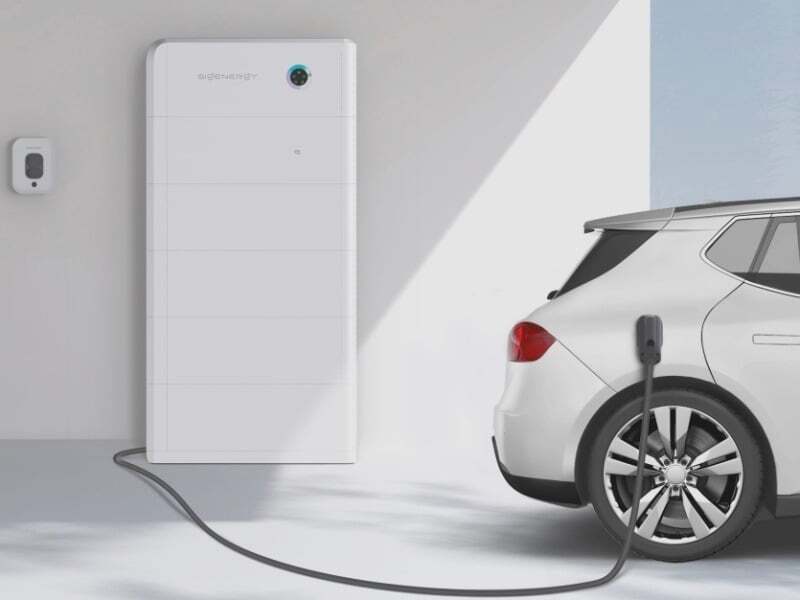
The Future of Smart Cities Powered by Sigenergy Batteries Smart Energy Answers June 3, 2026 The rapid expansion of urban areas and the development of technology have hastened the transition of the idea of smart cities of the future from a concept to a reality. The city is capable of deploying sophisticated infrastructure in the domain of spatial planning, optimising the use of energy to a maximum, and working with advanced technologies to improve the comfort and quality of life of its people. A Smart City and the rest of the world have to contend with the management and storage of energy as a significant challenge. In this regard, Smart Energy Answers is pioneering the future of urban life. Understanding the Energy Needs of Smart Cities Smart cities will be those that combine digital technologies and physical infrastructure, including transportation and waste management. Nevertheless, energy is the foundation of these cities. The demand for high-quality power is increasing exponentially, driven by the growing number of machines, electricity-powered automobiles, and automated systems in operation every day. Conventional energy systems are typically unable to cope with periods of sudden high demand or unpredictable disruptions. Cities become inefficient and unstable without the help of reliable storage solutions. That is why highly developed energy storage systems are invaluable. They are the balancing factor between supply and demand, ensuring that power is accessible at the point and time it is needed most. Why Sigenergy Batteries Are Game-Changers The emergence of Sigenergy batteries can be considered one of the most thrilling innovations in this sphere. They support scalability, high efficiency, and long lifespan, unlike traditional storage options. Smart cities must have adaptive systems that can be changed according to changing needs, and that is precisely what these batteries provide. They ensure that nothing goes to waste by capturing excess energy produced from renewable energy sources, such as solar and wind. When the demand becomes high, the stored energy can be discharged without any issue. This renders the whole system more stable, as well as less reliant on fossil fuels. To urban planners, such solutions are not only a matter of efficiency but also a matter of resilience in the event of power outages. The Role of Renewable Energy Integration Sustainability is a key characteristic of a smart city. Solar farms, rooftop solar panels, and wind turbines are becoming increasingly common in urban settings. Nonetheless, renewable energy itself can be unreliable, as sunlight and wind are not always available. This is where Sigenergy batteries form a powerful bridge. They enable renewable energy systems to run at full capacity by processing the additional energy whenever possible. This accumulated energy can be utilized on rainy nights or even when the weather is calm, allowing for decreased generation. The outcome is that a city will be able to depend more on clean energy and not be interrupted by it. In the case of a solar retail leader, such as Smart Energy Answers, the next logical step in developing smarter, greener communities is the integration of advanced battery solutions. Smart Grids and Energy Efficiency Smart cities are based on systems, and smart grids are an exemplary example. A smart grid is an electricity grid that manages electricity flow using sensors, data analytics, and real-time monitoring. These grids can better balance the loads with the help of reliable storage and decrease the amount of energy wasted. Sigenergy batteries will be a perfect fit in this vision. They also offer storage backup that enables smart grids to operate without failure. Consider a city with streetlights that turn off when no one is present, a building that does not require electricity, and electric vehicle charging stations that adjust their output according to the state of the grid. All these inventions cannot be successful without reliable energy storage. Enhancing Urban Resilience The increasing urban population and climate change are new challenges. Cities need to be ready to face uncertainty, whether it is extreme weather or spiking power usage. Governments and planners worldwide have made energy resiliency a priority. Smart cities can also resist disruptions by adding state-of-the-art storage, such as Sigenergy batteries. Energy reserves enable the continuation of emergency services, hospitals, and other necessary infrastructure during power outages. This strength not only saves lives but also reduces economic losses in a crisis. Supporting Electric Mobility Electric mobility is another characteristic feature of future cities. As electric buses, cars, and even scooters move to the mainstream, they are putting increased pressure on the charging infrastructure. Uncontrolled charging would easily overload the available power grids. Here, energy storage will be invaluable. Sigenergy batteries have the capacity to supply charging networks in response to demand, thereby preventing grid overloading. They can store energy during low-demand periods and discharge it when thousands of vehicles are connected to the plug simultaneously. This preconditions the even more direct implementation of electric mobility on a massive scale. Economic and Social Benefits The real investment in energy storage development is not just a matter of technology, but also of people. With new solutions implemented by cities, residents can access lower energy rates, improved air quality, and more reliable services. The ability to have a stable power supply that minimizes downtime is advantageous to businesses, whereas the ability of governments to allocate resources more efficiently is beneficial. The achievement of these benefits is possible with Sigenergy batteries. They generate renewable energy viable for large-scale applications, reduce emissions, and provide an ecosystem in which sustainability promotes economic development. In the case of Smart Energy Answers, this translates to delivering practical solutions that transform the nature and prosperity of communities. Looking Ahead The key to smart cities in the future lies in the ability to combine sustainability and innovation. It is centered on energy storage, whether through integration of renewable energy systems, smart grids, electric mobility, or resilience of urban areas. The Sigenergy batteries are not only a technological improvement, but also a shift in the perception of future cities. The value of refined batteries
Sigenergy vs ESY Batteries: 2026 Rebate Comparison & What It Means for You
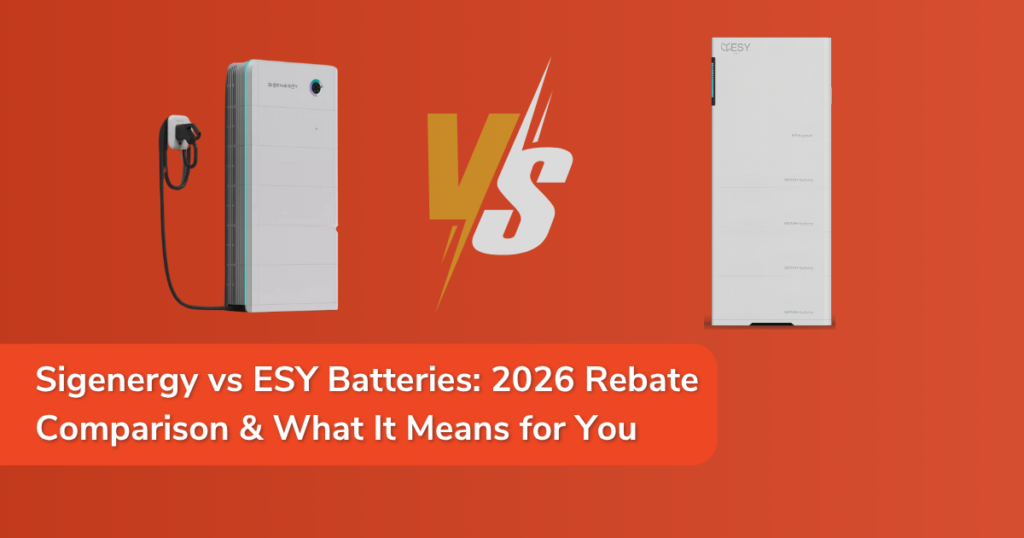
Sigenergy vs ESY Batteries: 2026 Rebate Comparison & What It Means for You Smart Energy Answers June 3, 2026 As Australia heads into 2026, home battery systems are at a major turning point. With rebate changes on the horizon, rapidly evolving technology, and more homeowners comparing value vs features, choosing the right system has never been more important. In this guide, we’ll compare two of the most talked-about systems, the Sigenergy Battery and the ESY Sunhome Battery, and explore how the 2026 rebate structure could affect your decision. Why This Comparison Matters in 2026 Battery prices have dropped significantly, but federal and state solar battery rebates will gradually reduce after January 2026. Choosing the right battery system now can lock in savings before the rebate cut-off. The best decision balances upfront cost, long-term performance, scalability, and warranty support. If you’re exploring solar batteries in Australia, names like Sigenergy, ESY, and Tesla Powerwall 3 stand out for their reliability, smart features, and eligibility under current rebate programs. 2026 Solar & Battery Rebate Updates According to recent policy updates, the federal solar and battery rebates will begin to step down from 1 January 2026. For solar panels via STCs, the value of credits will reduce annually. For batteries, the upfront rebate value based on energy capacity will also decrease. This means that households planning an upgrade in 2026 can still access substantial support, but the earlier you act, the higher your rebate return. You can learn more about SEA’s installation process and rebate support at Smart Energy Answers. Sigenergy Battery: Smart, Scalable & Future-Ready The Sigenergy Battery is redefining home and business storage systems in Australia. Designed for intelligent, modular energy management, it’s one of the best solar batteries in Australia for flexibility and control. Key Advantages Modular, scalable design from 5 kWh to 60 kWh+ Built-in EV-charger compatibility and full-home backup capabilities Smart thermal sensors and fire protection for safe operation in extreme weather Seamless integration with Virtual Power Plant (VPP) programs Long warranties backed by a global innovation leader While the Sigenergy battery price is slightly higher than some competitors, its superior features and longevity make it a future-proof investment for both homes and businesses. ESY Sunhome Battery: Efficient, Reliable & Value-Focused For homeowners prioritising affordability and solid performance, the ESY Sunhome Battery delivers impressive value. Highlights Competitive upfront pricing Compact, efficient design ideal for smaller homes Simple interface and straightforward installation Eligible for the federal solar battery rebate Reliable performance backed by industry-standard warranties If your goal is to lower upfront costs without compromising reliability, ESY offers a cost-effective entry point into home energy storage. Sigenergy vs ESY: 2026 Comparison Table Feature Sigenergy Battery ESY Sunhome Battery Upfront Cost 10 kWh ~$14,000–$15,500 ~$9,000–$10,500 Rebate Eligibility Federal + VPP options Federal rebate Design Modular, scalable, high-tech Compact, efficient EV-Charger Integration Yes No Full-Home Backup Yes Partial Ideal For High-usage or commercial sites Budget-conscious homes Typical Rebate Amounts 2026 Module Approximate Rebate 20 kWh ~$6,000 30 kWh ~$9,000 40 kWh ~$12,000 50 kWh ~$15,000 Don’t Forget Your Solar Panels Pairing your battery with the right panels maximises your savings. Aiko Solar Panels offer record-breaking efficiency and work seamlessly with both Sigenergy and ESY systems. For those exploring hybrid or premium setups, SEA also installs the Tesla Powerwall 3, another top-tier option for whole-home backup, long lifespan, and easy energy monitoring. Why Rebate Timing Matters Installing your battery in 2025 or early 2026 can help you: Secure the highest rebate tier before step-down Maximise your system ROI over 10+ years Avoid potential price increases on components as demand spikes SEA Case Study: Real Results For example, one of Smart Energy Answers’ retail clients reduced their annual energy spend by 28% after implementing a centralised battery system across multiple NSW locations. The result? Better performance tracking, lower grid reliance, and a faster payback period, proof that the right technology mix pays off. Final Thoughts Both the Sigenergy battery and the ESY Sunhome battery represent excellent pathways to energy independence in 2026. Sigenergy is ideal for those seeking performance, scalability, and future-readiness. ESY suits homeowners prioritising simplicity and affordability. If you’re exploring solar battery rebates or want help comparing systems before incentives decrease, now’s the time to act. Contact Smart Energy Answers today for a tailored quote and expert advice.
Smart Energy Answers Neighbourhood Breakfast: Powering Connections Over Good Food

Smart Energy Answers Neighbourhood Breakfast: Powering Connections Over Good Food Smart Energy Answers October 14, 2025 On Thursday, October 2nd, Smart Energy Answers hosted our very first Neighbourhood Breakfast BBQ, and what a success it was. From sunrise to mid-morning, our office buzzed with energy, great food, and meaningful conversations about the future of solar and battery power in Australia. Over 70 attendees, including neighbouring businesses, long-term clients, and community partners, joined us for a relaxed morning that celebrated both innovation and local connection. Bringing the Community Together At Smart Energy Answers, we believe sustainability starts at the local level. Our goal is to build stronger relationships with the businesses and households helping shape Australia’s clean energy transition. Guests enjoyed a delicious BBQ breakfast while connecting with our expert team to learn how solar and battery solutions are transforming energy independence for Australian communities. This included high-performance technologies like the Sigenergy Battery and the Tesla Powerwall 3. We also shared insights into the solar battery rebate programmes helping more families and businesses unlock savings and take control of their energy bills. Technology That’s Driving the Future From advanced Aiko Solar Panels to some of the best solar batteries in Australia, our guests saw firsthand how SEA integrates cutting-edge products into smarter energy systems. Our experts discussed practical ways solar storage can future-proof homes and commercial spaces while maximising return on investment. This includes Sigenergy’s modular flexibility and Tesla’s proven reliability. A Big Thank You We want to extend a heartfelt thank you to everyone who attended and made the morning such a success. Your support and curiosity continue to inspire us to innovate and deliver energy solutions that truly make a difference. Looking Ahead The Neighbourhood Breakfast is just the beginning. We’re excited to continue hosting more community-focused events that inspire collaboration and create lasting impact. If you missed this one, stay tuned. More SEA community events are on the way soon. Until then, the Smart Energy Answers team thanks you for being part of our journey toward a brighter, more sustainable Australia.
How Multi-Site Businesses Can Centralise Solar Energy Management

How Multi-Site Businesses Can Centralise Solar Energy Management Smart Energy Answers June 3, 2026 For Australian enterprises with multiple sites, from warehouses and retail outlets to office campuses, managing energy efficiently across all locations is both a challenge and an opportunity. As energy prices fluctuate and sustainability targets tighten, centralising your solar energy management can unlock major operational, environmental, and financial benefits. Here’s how multi-site organisations can optimise performance, cut energy costs, and maximise ROI using today’s most advanced solar and battery technologies. The Rise of Distributed Solar Energy Systems As more businesses adopt solar across multiple facilities, energy generation and consumption become increasingly decentralised. Each site produces, stores, and consumes its own energy, but without a central management system, it can be difficult to monitor and optimise performance. By unifying all your energy systems under one centralised monitoring platform, companies can: Gain real-time visibility across all sites Track energy production, battery storage, and usage patterns Identify inefficiencies and performance gaps instantly Streamline maintenance, forecasting, and sustainability reporting This integrated approach ensures energy decisions are data-driven, not reactive. Pairing Solar with the Best Battery Technology To truly maximise efficiency across multiple locations, businesses need the right combination of solar panels and battery storage systems. Modern batteries are no longer just about backup power. They are strategic assets for load shifting, demand reduction, and energy trading. Smart Storage Options for Businesses At Smart Energy Answers, we partner with world-leading manufacturers to deliver commercial-grade energy storage systems tailored for enterprise needs. The Sigenergy Battery offers intelligent storage, smart energy management, and modular scalability, ideal for businesses that need flexible capacity expansion. For companies seeking a globally proven solution, the Tesla Powerwall 3 combines cutting-edge efficiency with robust reliability. Businesses can also integrate advanced Aiko Solar Panels, known for their high conversion efficiency and durability, to ensure maximum power output even in variable conditions. Together, these systems represent some of the best solar batteries in Australia, allowing multi-site organisations to balance power generation and storage seamlessly. Centralised Monitoring and Analytics A key step in managing multi-site solar assets is investing in a smart monitoring platform. This technology provides a single dashboard to track solar generation, battery status, and consumption data across all locations. Benefits include: Unified Energy Oversight: View the performance of every system in real time. Automated Alerts: Receive notifications about maintenance issues or performance drops. Optimised Load Management: Shift energy between sites or from battery to grid at the most profitable times. Simplified Reporting: Easily compile energy savings, sustainability metrics, and compliance data for ESG reporting. When integrated with smart batteries like the Sigenergy Battery, which features intelligent AI-based management and predictive maintenance, your system becomes even more efficient and self-optimising. Financial Advantages and Rebates Commercial solar and battery systems don’t just reduce electricity costs, they can also qualify for valuable financial incentives. The federal solar battery rebate can cover up to 30% of system costs, while businesses may also access Large-scale Generation Certificates (LGCs), offering additional financial benefits for clean energy generation. When paired with top-tier technologies like Sigenergy Batteries, Aiko Solar Panels, and the Tesla Powerwall 3, these incentives can significantly improve ROI. And with competitive finance options available through SEA, businesses can scale faster without heavy upfront investment. Why Centralisation Matters for Sustainability For corporations pursuing net-zero emissions and ESG leadership, centralised energy management ensures that sustainability isn’t siloed, it’s embedded across all operations. By integrating monitoring, analytics, and automation, multi-site organisations can: Reduce total emissions and grid dependence Track renewable energy performance against sustainability KPIs Simplify ESG disclosures with centralised data Strengthen brand reputation and compliance Mini Case Study: Planning & Co, NSW One of SEA’s commercial clients, Planning & Co Pty Ltd in New South Wales, installed a 12.76 kW solar array plus a 13.5 kWh Tesla Powerwall 3 across a regional site. Check out the full case study here: Planning & Co, NSW. By connecting this site to a centralised energy management platform, they cut their annual energy costs by 28%, leveraging smart battery discharge control to avoid high-cost grid usage during peak demand. This demonstrates how even one site, when integrated centrally, can deliver meaningful savings, and when scaled across many, the impact compounds. Partnering with SEA for Scalable Energy Management At Smart Energy Answers, we help Australian enterprises design, install, and optimise solar and storage systems across multiple locations. Whether you’re integrating Sigenergy Batteries, Tesla Powerwall 3, or Aiko Solar Panels, our experts ensure every site operates at peak efficiency, all managed under one intelligent platform. Ready to centralise your energy strategy? Contact Smart Energy Answers today to see how we can help you design, install, and manage a solar system that saves money and supports your sustainability goals across every site.
How to Combine Aiko Solar Panels with the Best Solar Batteries in Australia
How to Combine Aiko Solar Panels with the Best Solar Batteries in Australia Smart Energy Answers June 3, 2026 Pairing high-performance solar panels with a smart battery storage solution is one of the best investments in 2025. When you use Aiko solar panels together with top-tier storage solutions like Tesla Powerwall 3 Australia or Sigenergy batteries, you maximise your energy independence, ROI, and resilience. Below is a guide on how to make that combination effective — what to look for, how to size systems, and which battery options are top contenders in Australia. Why Start with Aiko Solar Panels Aiko panels are a strong foundation for any solar + storage system because they offer: High efficiency and consistent output per module Low degradation rates over time Good performance under partial shade Strong warranties that align well with battery lifespans Aiko’s reputation makes them a reliable partner when selecting a battery system — you don’t want your batteries overworked if your panels underperform. Learn more about Aiko panels via SEA’s Aiko product page: Aiko Solar Panels. What to Consider in a Battery Match When selecting a battery to go with your Aiko panels, keep an eye on: Capacity vs usage: Match your evening loads. Round-trip efficiency: Higher efficiency means less energy lost. Thermal management & safety: Good cooling and safety systems are essential for Australia’s climate. Warranty & support: Look for long warranties and local service. Cost & incentives: Always factor in the solar battery rebate and your expected savings. Top Battery Options That Work Well with Aiko Panels These batteries pair especially well when used alongside Aiko solar through a smart system: Sigenergy batteries: Modular, smart, with strong thermal control. The Sigenergy battery price often offers excellent value. Check out SEA’s Sigenergy page: Sigenergy. Tesla Powerwall 3 Australia: A premium option with solid reputation and integration. To see details and pricing, visit SEA’s Tesla page: Tesla Powerwall 3 Solar Storage. These are widely considered among the best solar batteries in Australia, but the right choice depends on your home’s load profile, budget, and goals. How to Size & Configure the System Oversize panels slightly so you generate enough energy even under light conditions Size storage based on your evening usage patterns Prioritise self-consumption over exporting to the grid, especially with low FiTs Add backup or VPP functionality if you want resilience and extra earnings Cost, Payback & Incentives in 2025 The solar battery rebate helps reduce upfront battery cost significantly When comparing Sigenergy battery price vs Tesla Powerwall 3 price, applying rebates often narrows the net difference Combined systems, solar + battery, shorten payback periods compared to solar alone SEA also offers solar and battery system design and quotes. You can explore more via their main site: Smart Energy Answers. Final Thoughts When you combine Aiko solar panels with top batteries like Sigenergy batteries or Tesla Powerwall 3, you’re leveraging some of the best solar batteries in Australia to build a more reliable, efficient, and future-ready energy system. With incentives like the solar battery rebate and smart system design, the combination becomes even more compelling in 2025. Need help modelling your system, comparing Sigenergy battery price vs other options, or designing your solar + storage setup? Feel free to reach out. Contact Smart Energy Answers to get started.
Solar or Battery: Which Is the Best Investment for Businesses in 2025?

Solar or Battery: Which Is the Best Investment for Businesses in 2025? Smart Energy Answers June 3, 2026 By 2025, more and more Australian businesses are weighing up the benefits of solar panels and battery storage solutions. Some are choosing one, while many are pairing the two to maximise financial savings, energy independence, and environmental impact. With electricity prices continuing to rise and feed-in tariffs falling, storing excess solar power on-site is becoming a smarter commercial strategy, but which investment makes the most sense for your business? Comparing Solar and Battery Benefits Although solar panels require a significant upfront investment, they remain one of the most effective tools for achieving long-term savings on electricity bills. Solar also increases property value and reduces emissions associated with energy generation. Businesses considering solar should look at their energy consumption patterns, roof orientation, and available tariffs before deciding on system size. When solar is combined with a commercial battery, the benefits grow even further. A battery allows you to store energy for later use, giving your business independence from the grid, protection from outages, and stronger returns as feed-in tariffs decline. For many businesses, modern solutions like the Sigenergy battery or the Tesla Powerwall 3 Australia provide scalable, intelligent storage designed for real-world performance. With more companies exploring options like Sigenergy batteries, the market is shifting toward integrated solutions that deliver both savings and resilience. Costs and Incentives in 2025 Commercial solar panel costs depend on system size, technology, and installation complexity. Smaller systems may start around $25,000, while larger-scale systems vary significantly. On the battery side, commercial installations typically begin from $20,000, though final pricing depends on size and brand. Options like the Sigenergy battery price remain competitive compared to alternatives, with businesses also considering well-known technologies like the Tesla Powerwall 3 price for medium-scale needs. Government incentives have also reshaped the playing field. The federal solar battery rebate helps businesses cut up to 30% off upfront battery installation costs. While there is no dedicated solar battery rebate NSW anymore, businesses in all states can now access this federal support. For solar panels, programs like STCs, Small-scale Technology Certificates, continue to lower upfront costs, while commercial installations can also take advantage of LGCs, Large-scale Generation Certificates, to offset investment costs and improve overall ROI. Feed-in Tariffs vs Self-consumption As feed-in tariffs (FiTs) continue to decline, exporting energy back to the grid is no longer the most profitable strategy. Instead, businesses now save far more by consuming their own solar energy. With grid electricity costing 25–35c/kWh compared to FiTs averaging just 4–6c/kWh, batteries are becoming essential to maximising savings. This is why businesses are increasingly adopting the best solar batteries in Australia, such as the Sigenergy battery and Tesla Powerwall 3 Australia, to store energy during off-peak periods and use it during times of highest demand. By optimising self-consumption, companies reduce exposure to volatile electricity prices and improve operational resilience. Which Is the Better Investment? A solar-only system for businesses typically achieves payback within three to seven years, depending on consumption patterns and system size. Budget systems offer faster returns but may compromise on long-term reliability. Pairing solar with a battery usually extends payback to 5–10 years, still attractive when weighed against the security, resilience, and independence it provides. The choice between solar, battery, or both ultimately depends on your business goals. If immediate cost reduction is the priority, solar-only may be the right first step. But if energy security, long-term savings, and future-proofing operations are central, combining solar with storage is the smarter investment. The Business Case for 2025 At Smart Energy Answers, we’ve seen first-hand how businesses are leveraging both solar and battery storage to stay ahead of energy market shifts. From integrating high-performance options like Aiko solar panels for maximum efficiency to deploying advanced solutions like Sigenergy batteries, companies are building systems that cut costs and enhance sustainability. Through the federal solar battery rebate, businesses can now access meaningful savings upfront while reducing long-term energy expenses. By investing in the best solar batteries in Australia, businesses position themselves for both immediate and future gains. The bottom line? In 2025, solar and battery investments are no longer just about reducing energy bills, they’re about resilience, competitiveness, and leadership in sustainability.
Are Warranty Terms Influencing Sigenergy Battery Price Perception?
Are Warranty Terms Influencing Sigenergy Battery Price Perception? Smart Energy Answers June 3, 2026 Over the past 15 years, we have assisted hundreds of customers in comparing solar and storage options, and we have realised that warranty terms can have a larger impact on a purchase decision. Regarding the cost of a Sigenergy battery, most homeowners believe that they are merely paying for hardware and installation costs. But as a practical matter, some part of what you are paying is assurance, and a warranty is a large part of this assurance. This blog will examine how warranty conditions affect customer perceptions on Sigenergy battery price, its importance to long-term value, and what makes it competitive with other energy storage options. Let’s Start! 1. The Role of Warranties in Customer Decision-Making Warranties are not mere fine print. They are mind bait. A good warranty on a product like Sigenergy batteries sends a message to the customer that the manufacturer is confident in the product’s durability and performance. This guarantee can help to create a more acceptable price of a higher Sigenergy battery. We have observed that customers are usually ready to pay a higher repair or pre-replacement price when they understand that they will never have to pay a sudden replacement expense in the future. An example of this would be a 10-year warranty or a 15-year warranty that would indicate that the battery is calculated to last far longer than the payback period on the solar investment. 2. How Warranty Length Affects Price Perception A longer warranty doesn’t just provide peace of mind, it changes the perceived value. If two batteries cost roughly the same but one has a 5-year warranty and the other has a 12-year warranty, most people will naturally see the longer-term option as better value, even if the Sigenergy battery price is slightly higher. From a customer’s point of view, the warranty is an investment in reliability. It tells them they’re buying a product that’s less likely to fail and more likely to deliver consistent energy savings over time. This is one reason why Sigenergy batteries with strong warranty terms are often perceived as worth their price tag. 3. Warranty Coverage Details Matter It’s not just about how many years the warranty lasts. It’s about what’s actually covered. Some warranties are full replacement, while others are prorated. Some cover both parts and labour, while others only cover certain components. When we break down the details for our customers, they often realise that a slightly higher Sigenergy battery price can be justified if the warranty covers labour, parts, and transport, because those costs can add up significantly if a repair is needed. Comprehensive warranties protect the total investment, not just the battery hardware. 4. Performance Guarantees and Capacity Retention Many homeowners don’t realise that battery warranties often include performance guarantees, such as ensuring the battery will still have 70 to 80% of its original capacity after 10 years. With Sigenergy batteries, these capacity retention clauses give customers added confidence that their battery will perform as expected for the long term. When this guarantee is factored in, the Sigenergy battery price starts to look more like a future-proof purchase rather than a risky expense. People begin to view it as paying not just for a product, but for guaranteed performance. 5. Warranties as a Marketing Differentiator Warranties are a form of marketing tool in the solar and battery market as well. A manufacturer with a superior warranty can charge a higher price for Sigenergy batteries relative to others. As installers, a good warranty makes it easier to recommend a product confidently. This is why we frequently find customers benchmarking Sigenergy batteries not only on their capacity or compatibility, but also on their warranty. A superior warranty can make the cost seem like a good business decision, not just a short-term expense. 6. The Trust Factor The issue of trust has a massively significant role in the decision to make the purchase. In case a brand has an established history and provides a strong warranty, the customers will feel less threatened investing in it. To most people, the warranty is a guarantee of quality. The warranty in the case of the Sigenergy battery serves to address the gap between the technical specifications and the comfort level in the price of the Sigenergy battery. It informs them that the company believes sufficiently in its product to support it over the years, and that guarantee can be greater than the cost issue. Warranties and Resale Value A factor that is mostly overlooked is that good warranties can effectively contribute to the overall value of a property, especially as it relates to reselling. Consumers who want to purchase a home with solar and storage will be keen to shell out more money when they understand that the battery system will still have a significant portion of its warranty life. This is a way the warranty indirectly adds perceived value to the Sigenergy battery price, as it is not only associated with the product itself but also amplifies the future marketability of the home. How We Help Customers See the Full Picture At Smart Energy Answers, we make it a point to explain how warranty terms should be factored into the total cost analysis. If you only look at the Sigenergy battery price without considering warranty coverage, you might think a cheaper alternative is better value, until you have to pay out of pocket for a repair that a better warranty would have covered. We often run comparisons showing the cost of ownership over the warranty period. This approach makes it clear that a higher initial price can lead to greater savings in the long run if the warranty reduces repair or replacement expenses. Final Thoughts Technical documentation is just a part of the warranty documentation. Warranties are not just pieces of paper. Customers base their attitude towards this Sigenergy battery price on them. The length and coverage of the performance guarantee
Why Installers Sometimes Have Different Tesla Powerwall 2 Availability Timelines?
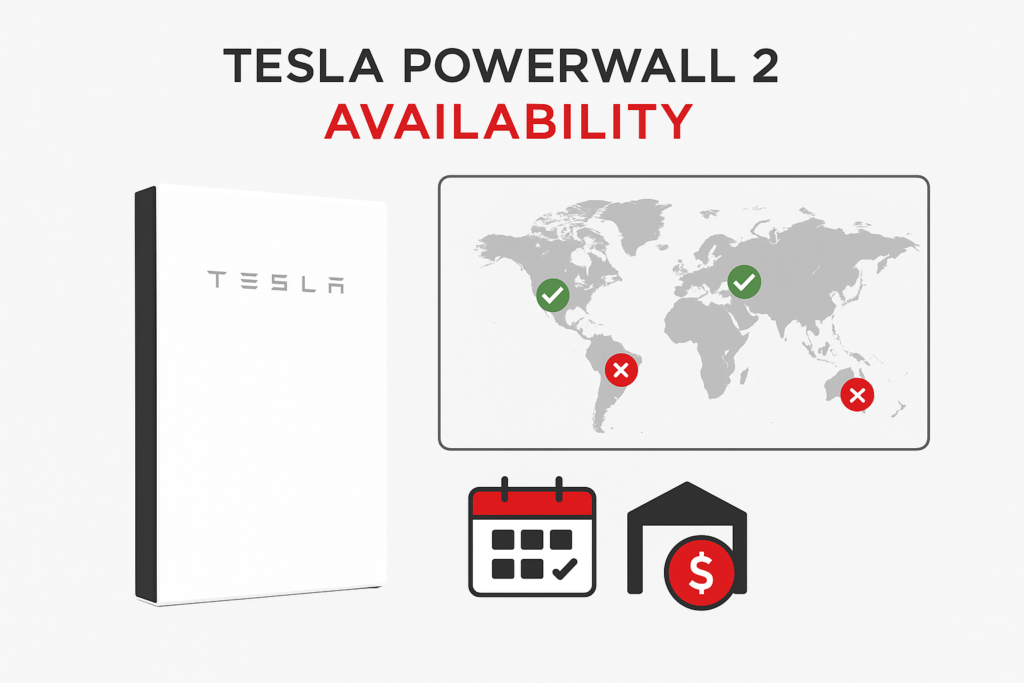
Why Installers Sometimes Have Different Tesla Powerwall 2 Availability Timelines? Smart Energy Answers June 3, 2026 Being one of the major solar and battery installation companies, a question that we receive very often is: Why can one installer say they will deliver it in two months, and another will take six months? Here is the answer: Tesla Powerwall 2 availability might depend on the installer, and the reasons might be much more than just having the material in stock. In our years at Smart Energy Answers, we have had first-hand experience of why these timelines are different, and we owe a clear answer to our customers. In this blog, we will present the primary factors that determine these differences and explain how you will select the most suitable choice depending on your requirements. So, Let’s Begin! 1. Direct Supply Channels vs. Distributor Networks The source of Powerwalls by the installers is one of the greatest factors that changes timelines. Tesla has a direct supply relationship with some businesses, wherein they are shipped first. Others will depend on the third-party distributors, who should be awaiting their allocation of stocks. We can usually get units quicker than small firms at later stages of the chain, since we have direct contact with suppliers. It implies that the availability of our Tesla Powerwall 2 is more consistent, and we can offer a shorter waiting period to our clients. 2. Order Volume and Priority Allocations Tesla allocates Powerwall units based on the installer’s past sales performance. High-volume installers often receive shipments more regularly, while those with fewer orders may wait longer. Because we install a large number of Tesla Powerwalls each year, our allocation priority is higher, and that helps us maintain better Tesla Powerwall 2 availability for our customers. 3. Regional Demand Fluctuations Not all regions experience the same demand for battery storage. Some areas see spikes during summer months or after major blackouts. In those areas, installers might face longer lead times simply because demand outweighs supply. We’ve seen this first-hand. When a region experiences a heatwave or grid instability, demand soars. During these periods, Tesla Powerwall 2 availability may temporarily tighten. By strategically managing stock across different areas, we reduce delays for our customers even in high-demand regions. 4. Installation Crew Scheduling Even with the unit in hand, when you want to install it depends much on the availability of crews. In case the installer is overloaded with orders, your installation may be delayed. Our team schedules are planned, and we maintain flexibility to meet rush installations so that when your unit is here, installation begins immediately with no time to waste. Through this strategy, we can transform Tesla Powerwall 2 availability into tangible outcomes for our clients. 5. Local Regulations and Approval Times Local councils or electricity authorities may need permits to install energy storage. The time taken to receive approval may also differ significantly and take weeks beyond the schedule. We manage these permits as soon as possible throughout the process to avoid any regulatory issues holding up your installation. So this means that though Tesla Powerwall 2 availability may be good, it also means we have already done the paperwork work, etc, to get you up and running fast. 6. Pre-Orders vs. In-Stock Units Some installers operate on a pre-order model. They only order the Powerwall after a customer signs the contract. Others keep units in stock to speed up installations. We take a hybrid approach. We keep a steady inventory for faster installations but also manage pre-orders for larger projects. This ensures Tesla Powerwall 2 availability remains consistent for both residential and commercial customers. 7. Competition Between Projects Within large companies, multiple projects sometimes compete for the same resources. Installations may be prioritised based on deadlines, project size, or contractual obligations. We prioritise projects based on a clear schedule, ensuring every customer gets a fair and realistic timeline. This keeps our Tesla Powerwall 2 availability consistent without favouring one customer over another. How We Help Customers Get the Fastest Timeline We know that when you invest in a Tesla Powerwall 2, you want it installed as soon as possible. That’s why we’ve developed strategies to keep our timelines competitive: Strong Supplier Relationships: Our direct channels with Tesla give us priority access to units. Efficient Scheduling: We align delivery and crew availability to minimise waiting. Proactive Permits: We start the approval process early to prevent last-minute delays. Smart Stock Management: We balance in-stock units with forecasted orders to ensure smooth supply. By combining these strategies, we help customers avoid long waitlists that can occur elsewhere. Why Smart Energy Answers Stands Out We’ve built our business on reliability, transparency, and speed. When customers ask about Tesla Powerwall 2 availability, we don’t just give an estimated date. We explain the process, the factors that could affect it, and how we’re actively managing those factors. Because of our scale and experience, we often have shorter timelines than smaller or less connected installers. More importantly, we keep our customers informed every step of the way so they know exactly when to expect their installation. Final Thoughts The delivery and installation of a Tesla Powerwall 2 can vary a lot across different installers. It is not just who has stock in hand, but supplier chain relationships, volume of orders, local demand, flight crew rosters, and local regulations. We strive to ensure that Tesla Powerwall 2 availability is not a figure on paper at Smart Energy Answers. It is something that will bring you one step closer to energy independence. We enable you to get the most reliable and efficient installation possible with strong supplier relationships, proactive project planning, and customer-first scheduling.
Smart Energy Answers Wins the Sustainable Innovation Award at the Italian Business Excellence Awards 2025
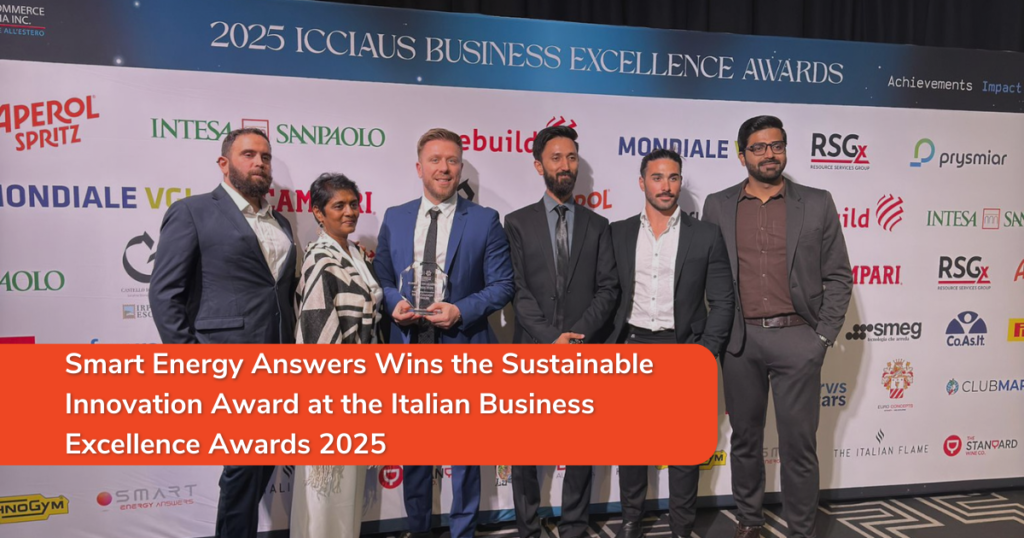
Smart Energy Answers Wins the Sustainable Innovation Award at the Italian Business Excellence Awards 2025 Smart Energy Answers September 16, 2025 Smart Energy Answers Wins Sustainable Innovation Award at the Italian Business Excellence Awards 2025 We are proud to share that Smart Energy Answers, or SEA, has officially been awarded the Sustainable Innovation Award at the Italian Business Excellence Awards 2025, hosted by the Italian Chamber of Commerce and Industry in Australia, or ICCIAUS. This recognition is especially meaningful for us, as our CEO Daniel is proudly Italian. It makes this celebration of sustainability and innovation within the Italian-Australian business community even closer to our hearts. Why This Award Matters The Sustainable Innovation Award honours businesses that are pushing boundaries in renewable energy, technology, and environmental responsibility. At SEA, our mission has always been clear: to empower households and businesses with smarter solar and battery solutions. This includes helping Australians embrace some of the best solar batteries in Australia, from advanced systems like the Sigenergy battery and Tesla Powerwall 3 Australia to integrated solar solutions that make homes and businesses more resilient. Winning this award validates our ongoing commitment to: Delivering cutting-edge solar and battery technology. Creating innovative solutions that reduce energy costs and carbon emissions. Supporting customers with programmes like the solar battery rebate to make clean energy more affordable. A Shared Celebration We’d like to extend our congratulations to all finalists and winners at this year’s awards, including DFV Australia. Together, we are proving that sustainable business practices and innovation can drive lasting change for both communities and industries. Looking Ahead This award is not just a milestone. It’s a motivator. We’re more inspired than ever to continue leading Australia’s clean energy transformation with: Smarter technologies such as Sigenergy batteries. Transparent guidance on the Tesla Powerwall 3 price and other leading solutions. A commitment to helping Australians access the solar battery rebate where available. Thank you to ICCIAUS for this recognition and to our incredible team, partners, and customers who made this achievement possible. Here’s to powering a greener, brighter future together.
5 Essential Questions to Ask Before Choosing a Commercial Solar Provider

5 Essential Questions to Ask Before Choosing a Commercial Solar Provider Smart Energy Answers June 3, 2026 Commercial solar and battery storage is one of the smartest investments a business can make. It helps reduce energy costs, hedge against rising electricity prices, and strengthen sustainability credentials. But while the benefits are clear, choosing the right solar provider isn’t always straightforward. With dozens of providers competing for your attention, how do you separate the trustworthy, long-term partners from the rest? Here are five key questions every business should ask before signing a solar contract. 1. Do They Offer Proven, Bankable Technology? Commercial solar is a 20+ year investment. That means the panels, inverters, and batteries you choose must be reliable, scalable, and backed by strong warranties. Look for Tier-1 products with long performance guarantees and a track record in the Australian market. Premium options like Aiko solar panels, Sigenergy batteries, and the Tesla Powerwall 3 are not just efficient. They represent some of the best solar batteries in Australia, ensuring your business benefits from reliable storage and maximum ROI. 2. Who Handles the Installation and Compliance? Some providers outsource commercial jobs to subcontractors, which can create risks around safety, quality, and compliance. A provider with in-house engineers, accredited designers, and experienced installation teams is far more likely to deliver a system that performs as promised. Check for NETCC accreditation and ask about their experience with projects of similar size and complexity. 3. What Warranties and Service Commitments Are Provided? Downtime can cost businesses significantly, so it’s essential to know how warranty claims and after-sales support will be managed. Key things to look for include: Long-term product warranties, 20–30 years for panels and 10+ years for batteries Workmanship guarantees Local service teams with fast response times A solar provider should be transparent about their service commitments and able to demonstrate how they’ll support you for the life of your system. 4. What Financing Options Are Available? Cashflow is a key consideration for businesses. While paying upfront maximises long-term savings, flexible financing can make solar accessible without impacting day-to-day operations. Ask providers about available finance structures, such as loans, leases, or power purchase agreements (PPAs). Compare repayment schedules, tax benefits, and interest rates to find the option that aligns with your energy and financial goals. 5. Will the Provider Still Be Around in 10+ Years? Solar is a long-term asset. Unfortunately, many solar companies close their doors within a few years, leaving customers without warranty support or servicing. Look for a provider with proven stability, strong partnerships, and recognition from reputable industry bodies. Longevity in the market is one of the clearest indicators that a company can be trusted with your investment. The Bottom Line Asking the right questions helps businesses protect their investment, secure reliable performance, and maximise ROI from solar and battery storage. At Smart Energy Answers (SEA), we pride ourselves on meeting these standards, offering premium technologies like Aiko solar panels, Sigenergy batteries, and the Tesla Powerwall 3, backed by strong warranties, transparent finance options, and decades of combined expertise. Whether your business pays upfront or finances through SmartEase, we design tailored solutions that deliver savings from day one while supporting Australia’s transition to clean energy. Get in touch with SEA today to explore how commercial solar can future-proof your business.
Can You Still Get a Solar Battery Rebate in ACT? What Homeowners Need to Know
Can You Still Get a Solar Battery Rebate in ACT? What Homeowners Need to Know Smart Energy Answers June 3, 2026 If you’re a homeowner in the ACT looking to install a solar battery, the good news is that you can still access a rebate in 2025. While the ACT does not have its own state-based program, households here are eligible for the Australian Government’s Cheaper Batteries for Homes Program. This federal rebate offers thousands in savings to help reduce upfront installation costs, making it easier for ACT homeowners to invest in clean energy storage and cut electricity bills. The Federal Solar Battery Rebate Explained The solar battery rebate covers up to 30% of the cost of an eligible battery system and inverter. For many households, this can mean savings of up to $18,000, depending on the battery size and installation. Key Points for ACT Households Available now across Australia, including Canberra and the ACT Covers batteries like the Sigenergy battery and Tesla Powerwall 3 Likely includes income-based eligibility Must be installed by an approved provider This rebate significantly lowers upfront costs and makes it easier to invest in the best solar batteries in Australia. Popular Battery Choices for ACT Homes When comparing systems, ACT homeowners often weigh up options like: Sigenergy batteries: Built for extreme weather, with smart thermal management that keeps systems safe in Canberra’s scorching summers and freezing winters. The Sigenergy battery price varies depending on size and configuration, but the rebate makes them far more affordable. Tesla Powerwall 3: Backed by Tesla’s global track record and strong market presence. The Tesla Powerwall 3 price in Australia is competitive once the rebate is applied, making it an attractive option for peace of mind and brand reliability. Both options are among the best solar batteries in Australia, and the right choice for you will depend on your energy usage, budget, and long-term goals. Virtual Power Plants (VPPs): An Optional Bonus Even though the ACT doesn’t have its own rebate program, residents can still join VPPs. By connecting your battery to a VPP, such as Amber for Batteries, you can earn ongoing payments by exporting power during peak demand. This creates an additional income stream and helps balance the grid, another way to boost your return on investment. Final Thoughts So, can you still get a solar battery rebate in ACT? Absolutely, but it comes only from the federal program, not from state incentives. With generous rebates already launched, and with technologies like the Sigenergy battery and Tesla Powerwall 3 available, now is the perfect time for ACT homeowners to make the switch. Save thousands upfront with the solar battery rebate Compare leading systems like the Sigenergy battery and Tesla Powerwall 3 Consider joining a VPP for ongoing income Future-proof your home with one of the best solar batteries in Australia
SEA Named Finalist for the Sustainable Innovation Award at the Italian Business Excellence Awards 2025

SEA Named Finalist for the Sustainable Innovation Award at the Italian Business Excellence Awards 2025 Smart Energy Answers June 3, 2026 We’re honoured to share that Smart Energy Answers (SEA) has been named a Finalist for the Sustainable Innovation Award at the Italian Business Excellence Awards 2025, hosted by the Italian Chamber of Commerce and Industry in Australia (ICCIAUS). A Recognition Close to Our Hearts This recognition is especially meaningful for us as our CEO, Daniel, is proudly Italian. It represents more than just an industry accolade. It’s a celebration of sustainability, innovation, and the strong ties within the Italian-Australian business community. Driving Australia’s Clean Energy Transition At Smart Energy Answers, our mission has always been clear: to empower households and businesses with smarter solar and battery solutions that make clean energy more accessible and affordable. As part of this, we continuously test, evaluate, and deliver the best solar battery Australia has to offer. From the advanced Sigenergy battery to the innovative Tesla Powerwall 3 Australia, we bring our customers the best solar batteries in Australia, solutions that deliver long-term value, resilience, and efficiency. By guiding our clients toward the best solar batteries Australia can provide, we ensure every installation is future-ready and built to perform in real-world conditions. Celebrating Innovation Together We’d like to extend a big congratulations to our fellow finalist, DFV Australia. Together, we’re proving that innovation and sustainability go hand in hand, paving the way for progress across industries. We look forward to celebrating with ICCIAUS and the wider community at the awards night this month, 11th September 2025.
SEA Achieves Sigenergy Gold Installer Status: Powering Australia’s Clean Energy Future

SEA Achieves Sigenergy Gold Installer Status: Powering Australia’s Clean Energy Future Smart Energy Answers August 28, 2025 We’re excited to announce that Smart Energy Answers, or SEA, is now officially a Sigenergy Gold Installer, a recognition that reflects both our technical expertise and our commitment to delivering world-class clean energy solutions. This milestone isn’t just about an installer badge. It’s about aligning with technology and partnerships that are setting new benchmarks for performance, reliability, and scalability in the energy industry. Why This Matters for Our Clients At SEA, we’ve always believed in going beyond solar panels. The clean energy transition demands integrated systems that combine cutting-edge solar generation with intelligent storage. By partnering with Sigenergy, a global leader in battery innovation, we’re able to deliver systems that: Provide smarter energy management with real-time monitoring and optimisation. Ensure resilience against blackouts and price spikes. Scale effortlessly to meet both today’s needs and tomorrow’s growth. Strengthening Our Partnership: Visit to Sigenergy Headquarters in China Earlier this year, our leadership team had the privilege of visiting the Sigenergy Headquarters in China. Seeing firsthand the depth of research and development, manufacturing innovation, and commitment to safety gave us even greater confidence in bringing the Sigenergy battery range to Australia. This visit reaffirmed our belief that Sigenergy’s technology is shaping the future of energy storage. It combines world-class engineering with a vision aligned to Australia’s transition to clean energy. Technology That Raises the Bar Sigenergy battery systems are designed with safety, efficiency, and longevity in mind. From smart thermal management that protects performance in extreme climates to modular scalability that adapts to different business and household needs, their solutions are transforming what’s possible in renewable energy. With the competitive Sigenergy battery price, homeowners and businesses can access premium performance without compromising on value, making clean energy adoption more attractive than ever. As a Sigenergy Gold Installer, SEA has demonstrated the highest standards of design, installation, and aftercare. That means our customers can trust that their investment in solar and storage is supported by the very best in both technology and expertise. A Shared Vision for Australia’s Clean Energy Future This achievement is not just about SEA. It’s a testament to collaboration across the supply chain, from manufacturers like Sigenergy to installers, energy retailers, and ultimately, the homeowners and businesses embracing clean energy. Together, we’re accelerating Australia’s transition to a more sustainable, secure, and affordable energy future. A huge thanks to our partners at Sigenergy. Your innovation and leadership make milestones like this possible. And to our clients, thank you for trusting us to bring the latest clean energy technologies, including the Sigenergy battery, into your homes and businesses. Ready to Explore Sigenergy Batteries? Want to learn more about the Sigenergy battery price or explore the full range of Sigenergy batteries for your property? Contact SEA today and discover the Gold Installer difference.
VPP Incentives in NSW: How to Earn Up to $1,500 Starting This July 2025

VPP Incentives in NSW: How to Earn Up to $1,500 Starting This July 2025 Smart Energy Answers June 3, 2026 From 1 July 2025, NSW households and small businesses can earn up to $1,500 just by connecting their solar battery to a Virtual Power Plant (VPP), and yes, this can be stacked with the Federal Government’s battery rebate. Here’s how to make the most of these combined savings. What Is a Virtual Power Plant (VPP)? A Virtual Power Plant (VPP) connects home solar batteries into a virtual energy network. Instead of your stored solar power sitting idle, your battery can export electricity back to the grid when demand spikes, and you’ll be paid for the contribution. VPPs help: Reduce pressure on the energy grid Stabilise electricity prices Support a cleaner and more resilient energy future What’s Changing in NSW’s VPP Incentive? The NSW Government has boosted the incentive starting 1 July 2025, with new, upfront rebates available through the Peak Demand Reduction Scheme (PDRS). New Structure: Incentives now range from $400–$550 for 10 kWh batteries and up to $1,000–$1,500 for 27 kWh systems. One-Time Payment: Homeowners can now receive up to 6 years’ worth of VPP incentive payments upfront. Eligibility: Only batteries installed and connected after 1 July 2025 via an Accredited Certificate Provider (ACP) are eligible. NSW VPP + Federal Battery Rebate = Massive Savings This new VPP incentive can now be stacked with the Federal Government’s Cheaper Batteries Program, which offers up to $17,500 off eligible battery installations. Important: The older NSW battery installation rebate has ended and cannot be combined with the federal rebate. Example Savings Battery Size Usable kWh NSW VPP Incentive Federal Rebate* 10 kWh $400–$550 ≈ $3,300 27 kWh $1,000–$1,500 ≈ $9,000 *Estimated 30% of installed system value. Why Consider a VPP? When you join a VPP, you’re not just saving money. You’re also contributing to a smarter energy future: Ongoing Payments: After the initial rebate, VPP members continue to earn money by exporting energy during peak demand periods. Grid Support: Help reduce blackouts and support renewable integration. Lower Emissions: Reduce fossil fuel dependency across NSW. Maximise Your Benefits with Smart Energy Answers As a leading solar and battery retailer in Australia, Smart Energy Answers helps you: Navigate NSW VPP and Federal rebate schemes Choose VPP-eligible batteries like the Sigenergy Battery or Tesla Powerwall 3 Pair with high-efficiency Aiko Solar Panels for maximum return Frequently Asked Questions Can I stack NSW VPP incentives with the federal battery rebate? Yes. As of 1 July 2025, the NSW VPP incentive can be combined with the federal Cheaper Batteries Program. How much is the VPP payment per kWh? Roughly $40–$55 per usable kWh. A 10 kWh battery earns around $400–$550, while a 27 kWh battery earns around $1,000–$1,500. Who is eligible for the VPP rebate? Homeowners or small businesses installing an eligible battery system after July 1, 2025, and connecting through an ACP. Is there a lock-in period for joining a VPP? No. You may exit the VPP after receiving your upfront payment. Final Thoughts With the NSW battery rebate, solar battery rebate NSW, and federal incentives working together, there has never been a better time to invest in smart energy storage. Smart Energy Answers is here to guide you through every step, from choosing a top-performing Sigenergy Battery to unlocking every available incentive. Speak with our expert team today to check eligibility, claim your rebate, and start saving. Let’s make clean energy smarter, and more rewarding, together.
Comparing Solar Financing Options for Businesses: Finding the Best Fit for Your Energy Goals
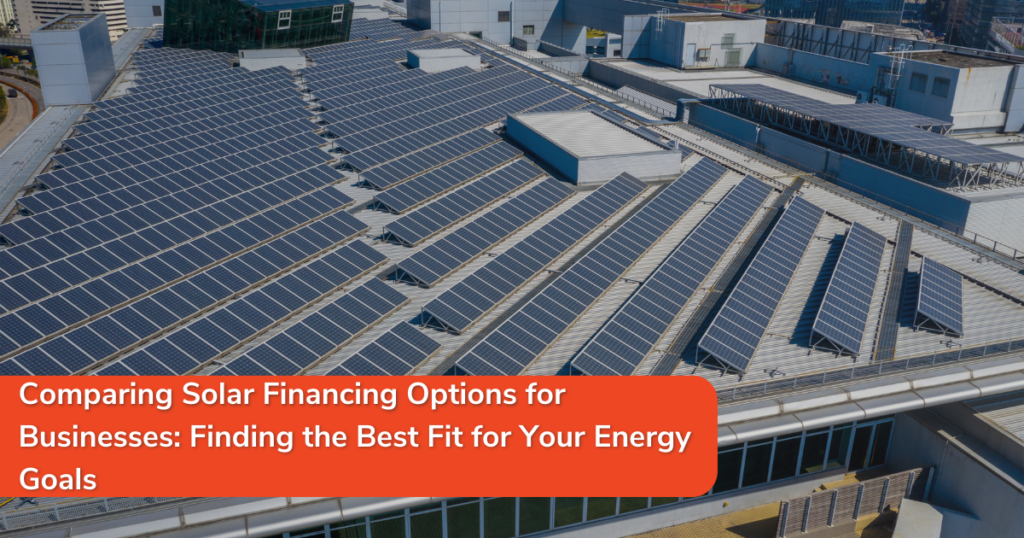
Comparing Solar Financing Options for Businesses: Finding the Best Fit for Your Energy Goals Smart Energy Answers June 3, 2026 Investing in solar energy can deliver long-term savings, reduce operational costs, and enhance your business’s sustainability profile. But for many companies, the key question isn’t whether to go solar. It’s how to finance it. From outright purchases to long-term agreements, each financing model comes with its own advantages, costs, and implications for your return on investment (ROI). Here’s a breakdown of the most common options for commercial solar financing. 1. Outright Purchase (Cash Payment) If your business has available capital, paying for a solar system upfront can be the most cost-effective option over the system’s lifetime. Pros No ongoing finance costs or interest Immediate ownership of the asset Maximum benefit from incentives like LGCs, Large-scale Generation Certificates, and the solar battery rebate Cons Requires substantial upfront cash flow May tie up funds that could be invested elsewhere Best suited for: Businesses with strong liquidity that want maximum savings over the life of the system. 2. Commercial Solar Loans A traditional loan spreads the cost of your solar system over several years, allowing you to preserve working capital while still owning the system from day one. Pros Ownership from the start Interest may be tax-deductible, consult your accountant System qualifies for incentives such as the solar battery rebate and other government programs Cons Interest costs can increase total system price Requires credit approval 3. Power Purchase Agreements (PPAs) A PPA allows your business to host a solar system owned by a third party. You pay only for the electricity generated, often at a lower rate than the grid. Pros No upfront capital required Predictable energy pricing Maintenance handled by the system owner Cons You don’t own the asset Savings are generally smaller compared to owning Long-term contracts can limit flexibility Best suited for: Businesses wanting zero upfront cost and minimal involvement in system management. 4. Leasing Under a lease arrangement, you pay a fixed monthly fee for use of the solar system, similar to leasing equipment or vehicles. Pros No large upfront outlay Fixed costs make budgeting easier Cons You don’t own the system until the lease ends Total cost may be higher than purchase Less benefit from incentives compared to ownership Choosing the Right Model for Your Business When comparing solar financing options, consider: Cash flow: How much capital can you commit upfront? Ownership goals: Do you want to own the system for maximum long-term benefit? Incentives: Which financing methods let you claim LGCs and rebates, such as the solar battery rebate or solar battery rebate NSW if applicable? Technology preferences: Are you looking for premium solar panels like Aiko solar panel products, advanced storage like the Sigenergy battery, or the proven performance of the Tesla Powerwall 3 Australia and its competitive Tesla Powerwall 3 price? Energy goals: Are you aiming for maximum savings, energy independence, or sustainability leadership? A tailored financial analysis will help you determine which model delivers the fastest payback and highest ROI for your business. Final Word Commercial solar is no longer just an environmental choice. It’s a financial strategy. Whether you fund it outright, finance it through a commercial loan, or enter into a PPA, the right structure can make your project cash-flow positive from day one. Ready to explore your financing options? Contact us today to run the numbers for your business and discover how quickly your solar investment can pay for itself.
Sigenergy Battery vs Tesla Powerwall: Which Works Better for ACT Homes?
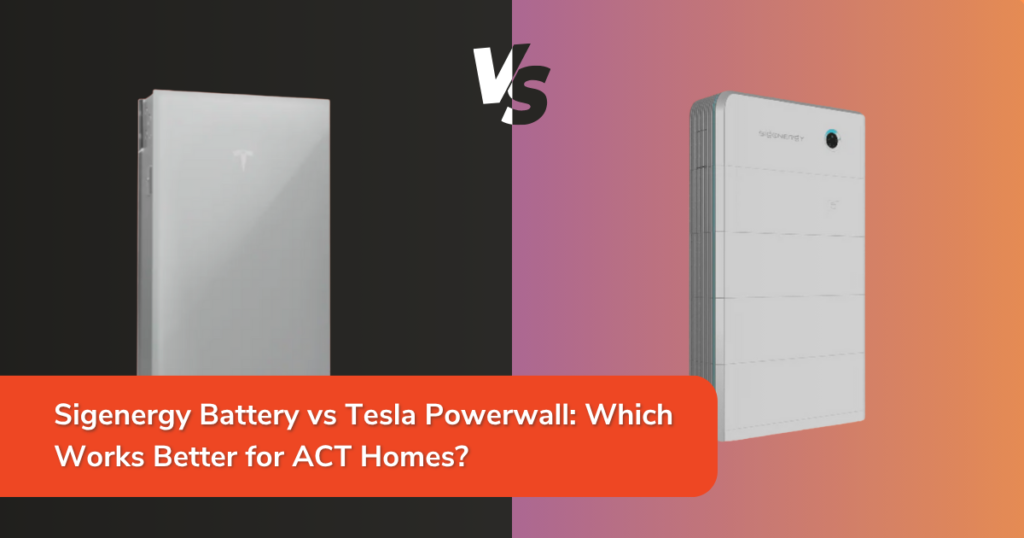
Sigenergy Battery vs Tesla Powerwall: Which Works Better for ACT Homes? Smart Energy Answers June 3, 2026 If you’re a homeowner in the ACT thinking about investing in a solar battery, you’re likely deciding between two standout contenders: the Tesla Powerwall and the Sigenergy Battery. Both are premium, high-performance options, but when it comes to Canberra’s unique climate, energy usage patterns, and eligibility for the federal solar battery rebate, one may be better suited to your needs than the other. Let’s break down how these two batteries compare and which might be a smarter choice for your ACT home. Built for ACT’s Weather Extremes ACT homes experience both scorching summers and below-freezing winters, something not all batteries are designed to handle. Sigenergy Batteries are engineered with smart thermal sensors and internal fire protection, offering excellent performance in extreme temperatures. Whether it’s a frosty -5°C morning or a 40°C summer peak, your system stays protected and efficient. Tesla Powerwall 3 performs reliably but can be sensitive to very high or very low temperatures unless installed in temperature-regulated areas like garages. Verdict: Sigenergy is better suited for outdoor installations in ACT’s diverse climate. Capacity & Scalability Tesla Powerwall 3: Offers around 13.5 kWh of storage per unit. You can stack multiple units, but the cost increases quickly. Sigenergy Battery: Offers modular capacity options, scaling up to 48 kWh+ depending on your household size and energy needs. Verdict: Sigenergy gives you more flexibility if you plan to expand or have a large home. Efficiency and Smart Features Tesla Powerwall 3: Known for its integration with the Tesla app and ecosystem. It’s intuitive, beautifully designed, and syncs well with Tesla solar systems. Sigenergy Battery: Offers AI-driven energy management via the Sigen EnergyOS platform. It’s designed to optimise self-consumption, battery health, and VPP earnings, all automatically. Verdict: Both are smart, but Sigenergy offers more control over your long-term energy strategy. Cost & Rebates in the ACT Federal Solar Battery Rebate: Both Tesla and Sigenergy batteries qualify for the Federal Government’s solar battery rebate, which can reduce the upfront cost by thousands. There are no additional ACT state battery rebates currently available, so choosing a battery that delivers maximum ROI over time is critical. Verdict: Both qualify for rebates, but Sigenergy’s higher capacity and modular options can deliver stronger long-term value. Aesthetic & Installation Tesla Powerwall 3: Sleek and modern. Ideal for homeowners who value brand reputation and aesthetics. Sigenergy: Clean, modern look with all-in-one hybrid inverter integration, reducing wiring mess and installation time. Verdict: Tesla wins slightly on brand familiarity, but Sigenergy offers a more integrated installation experience. Longevity in the Market: Why Track Record Matters When choosing a home battery, it’s not just about specs. The history and proven performance of the brand can be just as important. Tesla has been a dominant name in clean energy and EV innovation for over a decade. The Powerwall series has gone through multiple iterations, refining performance and reliability. For many homeowners, Tesla isn’t just a brand. It’s peace of mind, backed by a long history of delivering on promises. By August 2025, Tesla had installed 810,000 Powerwalls across the globe. Australia contributed strongly to this milestone, with July alone accounting for more than 4,000 new installations. Sigenergy, while newer to the residential battery market, has quickly gained attention for its advanced thermal management, high capacity, and intelligent design. It’s a fresh contender with cutting-edge features built for modern homes, especially in challenging climates like Canberra’s. Your criteria for selection should consider not only performance, warranty, and capacity, but also how much you value an established track record versus the innovation of a newer brand. Final Thoughts: Which One Should ACT Homeowners Choose? Feature Tesla Powerwall 3 Sigenergy Battery Max Capacity ~13.5 kWh per unit Up to 48 kWh Works in Extreme Weather Garage recommended Built for outdoor exposure Smart Features Tesla ecosystem AI energy management Aesthetic Sleek Sleek & integrated Rebate-Eligible Yes Yes Best For Brand lovers Long-term ROI + ACT climate Proven Track Record Has 800,000+ installs globally Relatively new in the market Which One Is Right for Your ACT Home? Both the Tesla Powerwall 3 and the Sigenergy Battery offer impressive features, but the best choice depends on your specific needs and preferences. If you’re looking for brand reputation, proven track record, sleek design, and seamless integration with the Tesla ecosystem, the Powerwall may be a perfect fit. On the other hand, if you prioritise larger capacity, smart thermal control, and a system built for Canberra’s diverse climate, the Sigenergy Battery could be the better option, especially when paired with high-performance panels like Aiko. Ultimately, both systems qualify for the federal solar battery rebate and can deliver excellent long-term value. Want to learn more about your eligibility or get a custom quote? Contact us today to get started on your solar battery journey.
Maximising ROI with Commercial Solar Installations
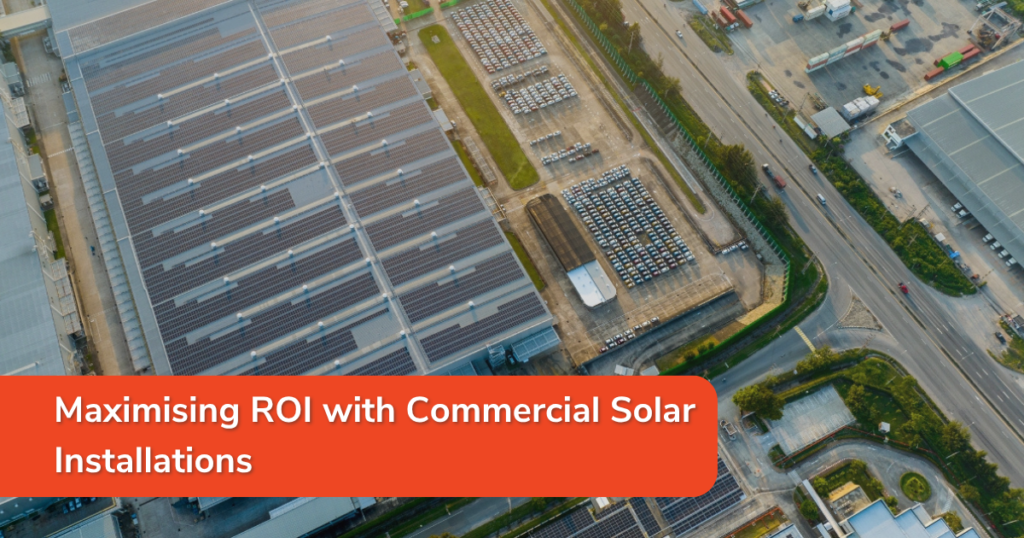
Maximising ROI with Commercial Solar Installations Smart Energy Answers June 3, 2026 With electricity prices continuing to rise and sustainability targets becoming standard across industries, more businesses are turning to solar as a long-term investment. But going solar isn’t just about reducing carbon emissions, it’s about generating real, measurable returns. Whether you’re operating a retail chain, warehouse, school, farm, or manufacturing plant, a well-designed solar system, especially when paired with a solar battery rebate, can deliver substantial ROI in just a few short years. In this guide, we’ll break down how to calculate return on investment from commercial solar and what steps to take to maximise value, from choosing the right components like Aiko solar panels and the Sigenergy battery, to accessing rebates and VPP revenue streams. Why ROI Matters in Commercial Solar For businesses, solar energy is a capital investment that must be justified with hard numbers. Calculating ROI helps you: Understand how quickly your investment pays off Forecast total lifetime energy savings Position solar as both a sustainability and financial asset Many businesses are pleasantly surprised to find that solar isn’t just environmentally sound, it’s one of the most financially strategic moves they can make today. 1. Key Factors That Influence Solar ROI Energy Usage and System Sizing A right-sized system ensures maximum self-consumption and minimal waste. Oversizing can reduce ROI, while undersizing limits your savings. Electricity Tariffs If your business is paying premium daytime rates, solar can dramatically offset those costs, especially in industries with high machinery or HVAC usage. Installation Costs & Rebates Federal incentives such as the solar battery rebate and solar battery rebate NSW, where applicable, significantly reduce upfront expenses. This makes it easier for businesses to see returns within 3 to 5 years. VPP Programs Selling excess stored energy through Virtual Power Plant (VPP) participation is an additional income stream. Devices like the Tesla Powerwall 3 Australia and the Sigenergy battery are VPP-compatible, allowing commercial systems to become revenue-generating assets. Large-Scale Generation Certificates (LGCs) For systems over 100 kW, businesses can earn LGCs for every megawatt-hour (MWh) of renewable electricity generated. These certificates can be sold on the open market, providing an ongoing financial incentive and boosting ROI. Unlike STCs, typically for residential or small commercial systems, LGCs create long-term revenue potential for larger commercial operations. 2. How to Calculate ROI on Commercial Solar Here’s a simplified formula to estimate your ROI: ROI (%) = (Total Savings Over Time – Initial Investment) / Initial Investment x 100 For example: Upfront system cost: $100,000 Estimated federal/state rebates: $25,000 Net investment: $75,000 Annual savings: $25,000 Year 1 ROI = (25,000 / 75,000) x 100 = 33.3% At this pace, the system pays for itself in 3 years, with 20+ years of savings ahead. 3. Tips to Maximise Solar ROI Invest in High-Performance Panels Modern Aiko solar panels are engineered for ultra-high efficiency, even in low-light conditions, helping you squeeze more power and value from your roof space. Use Smart Batteries Products like the Sigenergy battery offer modular scalability, smart thermal protection, and seamless VPP integration, ideal for commercial environments where performance and safety are non-negotiable. Access All Eligible Rebates If your business is located in New South Wales, the solar battery rebate NSW can cut a significant chunk from your initial investment. All commercial sites nationwide can also access federal rebates and STCs to reduce costs. Add Monitoring & Maintenance Plans Real-time energy monitoring ensures peak performance, while proactive maintenance protects your long-term ROI. 4. Sample ROI Table for Different Businesses Business Type System Size Total Cost Post-Rebate Annual Savings Payback Period Retail Franchise 50 kW $60,000 $15,000 4 years Manufacturing Plant 100 kW $120,000 $30,000 4 years Agriculture Facility 80 kW $90,000 $22,000 4.1 years After the payback period, these systems continue to produce clean energy and savings for 15 to 20 more years, all while reducing your carbon footprint. Conclusion Commercial solar is no longer just a sustainability measure, it’s a smart financial strategy. With careful planning, the right technology, and access to rebates, your solar system can deliver fast, consistent, and long-term returns. Here’s how to maximise your commercial solar investment: Choose proven components like Aiko solar panels and Sigenergy batteries Leverage all available rebates, including the solar battery rebate NSW for VPP Participate in VPPs using smart batteries like the Tesla Powerwall 3 Australia or Sigenergy Work with a trusted installer to ensure precision design and future-proof scalability Ready to calculate ROI for your site? Talk to our commercial solar specialists today for a tailored assessment and rebate guidance.
Melbourne Homeowners: Here’s How to Save Thousands on Solar Battery Installation

Melbourne Homeowners: Here’s How to Save Thousands on Solar Battery Installation Smart Energy Answers June 3, 2026 Thinking about installing a solar battery in Melbourne? Now’s the perfect time to act. Thanks to generous federal incentives, Melbourne residents can now save up to $17,500 on solar battery installation. On top of that, programs like Virtual Power Plants (VPPs) allow you to earn ongoing income from your system, turning your home into an active part of Australia’s clean energy future. Let’s break down how it all works. Step 1: Take Advantage of the Federal Solar Battery Rebate Federal Solar Battery Rebate: Cheaper Batteries for Homes Program The Federal Government’s “Cheaper Batteries for Homes” rebate has officially launched and is already transforming energy affordability for homeowners across the country, including Victorians. The rebate covers up to 30% of the cost of eligible battery and inverter systems. Depending on the battery size and system specs, that means you could receive anywhere between $6,000 to $9,000 off your installation. Key details as we know them: Available across all states, including Victoria Likely to include income-based eligibility Must be installed with or connected to a solar system This rebate significantly reduces the upfront investment, opening the door for more Melbourne households to embrace clean energy and energy independence. Step 2: Choose the Best Solar Battery in Australia for Melbourne Weather Melbourne’s climate is famously unpredictable, with scorching heat in summer and freezing nights in winter. That’s why it’s crucial to install a battery that’s designed to handle temperature extremes safely and efficiently. Enter Sigenergy batteries: Built with smart thermal management to protect your system in hot and cold conditions Equipped with internal fire protection and safety sensors for peace of mind Scalable modular design from 5 kWh to 60 kWh+ Fully compatible with solar panels and EV chargers Whether you’re a solo homeowner or running a busy household, Sigenergy batteries adapt to your energy needs while keeping your home powered year-round. Step 3: Join a Virtual Power Plant (VPP) and Get Paid Once your battery is installed, you can take things a step further by enrolling in a Virtual Power Plant (VPP) program. VPPs allow your battery to export stored energy back to the grid during times of high demand, and you get paid for it. Programs like Amber for Batteries offer: Monthly income for grid participation Access to high wholesale energy rates when exporting Smart technology to maximise your battery’s performance and revenue It’s not just about savings, it’s about earning. And the best part? You’re helping balance the energy grid and contribute to a more sustainable future. Sample Savings Breakdown for Melbourne Homes Battery Size Federal Rebate Est. Potential VPP Earnings Est./Yr 10 kWh $3,000–$3,300* $300–$600 15 kWh $4,500–$5,000* $500–$800 20+ kWh $6,000–$8,000* $700+ *Final rebate figures may vary based on system configuration and eligibility. Final Thoughts: Make 2025 the Year You Go Battery-Ready There’s never been a better time to take charge of your home’s energy. With the new federal solar battery rebate now launched and no competing state rebate in Victoria, this incentive fills a crucial gap, helping Victorian homeowners finally make the switch. Save thousands upfront with the federal solar battery rebate Earn regular income with VPP programs like Amber for Batteries Protect your home with a durable, smart battery like Sigenergy batteries Boost your energy resilience and reduce reliance on the grid Want to learn more about your eligibility or get a custom quote? Contact us today to get started on your solar battery journey.