
How NSW’s $25M Apartment Solar Scheme Could Slash Your Electricity Bills

How NSW’s $25M Apartment Solar Scheme Could Slash Your Electricity Bills Smart Energy Answers June 3, 2026 For too long, apartment residents have been left in the dark when it comes to reaping the benefits of rooftop solar. But a new $25 million solar support scheme, jointly funded by the Federal and NSW governments, is set to change that. This groundbreaking initiative offers grants of up to $150,000 per project for the installation of shared rooftop solar systems in multi-unit dwellings, potentially saving participating households up to $600 per year on their electricity bills. Who Can Benefit? The scheme is open to owners’ corporations and strata managers of apartment buildings with 3–55 units that haven’t had solar installed in the past 10 years. With over 20% of Australians living in apartments, this initiative has the potential to make a significant impact on both household budgets and the environment. “Apartment residents have been missing out on the solar revolution, but this scheme is a game-changer,” says Daniel Lanzetta, CEO of Smart Energy Answers. “By providing financial support for shared systems, it breaks down the barriers to entry and enables more people to access clean, affordable energy.” Application Process and Eligibility Criteria To be eligible for the NSW solar support scheme, apartment buildings must meet the following criteria: Located within New South Wales Have 3–55 units No solar installed in the past 10 years The application process involves submitting a proposal with detailed information about the property, ownership, and the planned shared solar system. Required documentation includes proof of ownership and compliance with performance standards for the solar system components. “Applications are usually processed within a few weeks, with decisions communicated shortly thereafter,” notes Taimoor Ahmed, Sales Manager at Smart Energy Answers. “It’s important to ensure that the proposed system meets the required energy efficiency standards and will be installed by accredited providers.” Real-World Success Stories Several apartment buildings across NSW have already successfully implemented shared solar systems, demonstrating the potential benefits of this approach. Based on our aggregate data, system sizes range from 2kWh to 28kWh, resulting in significant reductions in electricity bills and reliable energy storage. One example is a 12-unit apartment building in Sydney’s eastern suburbs, which installed a 20kWh shared solar system last year. The system has generated over 30,000 kWh of clean energy and saved residents an average of $500 per year on their electricity bills. “The key challenges we faced were gaining approval from our strata committee and ensuring the system could be safely installed on our roof,” says Sarah, one of the apartment owners. “But with the help of expert consultants and the technical guidance provided by the government, we were able to overcome these hurdles and enjoy the benefits of clean, affordable energy.” Long-Term Impacts and Industry Growth Experts predict that the NSW solar support scheme will lead to widespread adoption of shared solar systems in apartment buildings across the state. This could result in substantial cumulative energy savings and emissions reductions, contributing to Australia’s goal of reaching 82% renewable electricity by 2030. “The scheme is also expected to stimulate growth in the local solar industry, creating jobs and driving technological advancements,” says Lanzetta. “As more apartment buildings embrace shared solar, we anticipate increased demand for related technologies and services, such as energy storage systems and smart metering solutions.” Complementary Initiatives and Support In addition to the $25 million solar support scheme, there are several complementary initiatives and resources available to help apartment owners and strata managers navigate the world of shared solar. These include: Educational resources explaining the benefits and processes involved in installing shared solar systems Additional financial incentives, such as rebates and grants, to further reduce upfront costs Technical assistance and consulting services from organisations like Smart Energy Answers to ensure systems are designed and installed optimally “We understand that the process of implementing shared solar can be complex, which is why we offer comprehensive support to our clients,” says Taimoor. “From feasibility assessments to system design and installation, our team is here to help at every step of the way.” Learning from Other Regions NSW’s solar support scheme is just one of many initiatives aimed at promoting the adoption of shared solar in multi-unit dwellings. Similar programs exist in other Australian states, such as Victoria, as well as internationally. By comparing the design and outcomes of these programs, policymakers and industry experts can identify best practices and areas for improvement. For example, some schemes have found success by offering incentives to renters as well as owners, expanding the potential beneficiaries of shared solar. “Collaborating and sharing knowledge with other regions is key to maximising the impact of these initiatives,” says Lanzetta. “By learning from each other’s successes and challenges, we can refine our approach and accelerate the transition to a cleaner, more sustainable energy future.” Looking to the Future As the NSW solar support scheme gets underway, there are already plans to extend its reach and impact in the coming years. This could involve expanding eligibility to other types of multi-unit dwellings, such as townhouses and duplexes, as well as integrating shared solar with other sustainability initiatives like energy efficiency upgrades and electric vehicle charging infrastructure. “The potential for growth and innovation in this space is immense,” says Taimoor. “By continuing to support the adoption of shared solar and other renewable energy technologies, we can create a more resilient, affordable, and sustainable energy system for all Australians.” Get Started Today If you’re an apartment owner, resident, or strata manager in NSW, now is the time to explore how the solar support scheme could benefit your building. With the help of Smart Energy Answers, you can navigate the application process, access additional incentives, and unlock the full potential of shared solar. “Our mission is to empower apartment communities to take control of their energy future and join the clean energy revolution,” says Lanzetta. “Whether you’re just starting to explore your options or ready to take the next step, we’re here
NT’s $12,000 Battery Scheme: A Game-Changer or a Costly Experiment?
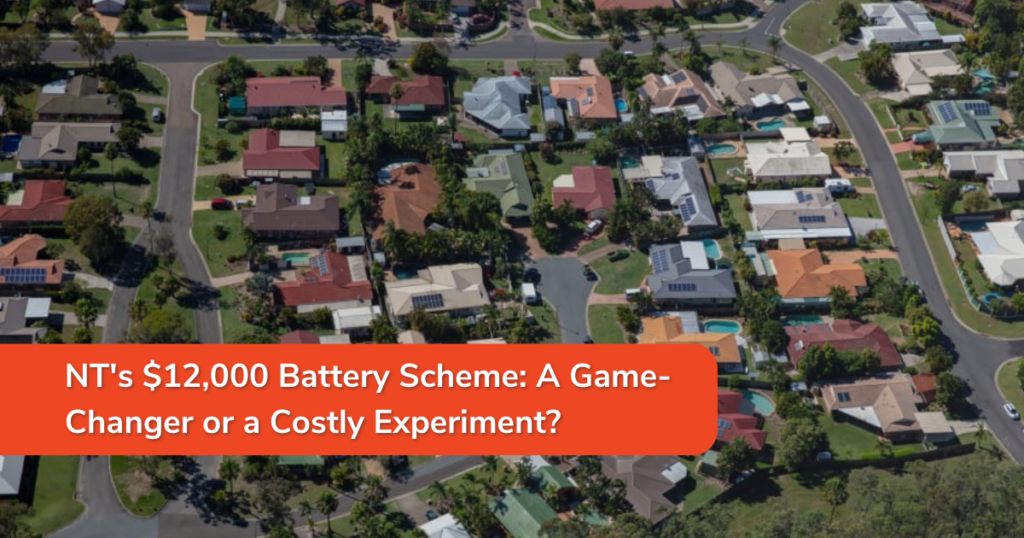
NT’s $12,000 Battery Scheme: A Game-Changer or a Costly Experiment? Smart Energy Answers June 3, 2026 The Northern Territory (NT) is leading the charge towards a cleaner, more energy-independent future with its Home and Business Battery Scheme. This groundbreaking initiative offers grants of $400 per kilowatt-hour (kWh), up to $12,000, to help homeowners, businesses, and not-for-profit organisations install solar battery storage systems. As an approved supplier in the Northern Territory, Smart Energy Answers is uniquely positioned to guide residents and businesses through the application process and help them maximise the benefits of this exciting opportunity. Breaking Down the Grant: How It Works The Home and Business Battery Scheme provides funding of $400 per kWh of usable battery capacity, with a maximum grant of $12,000. Eligible systems must be on the Clean Energy Council’s (CEC) approved list and be Virtual Power Plant (VPP)-capable. The scheme supports both new solar installations and existing solar setups, allowing applicants to install solar photovoltaic (PV) systems with battery storage or battery-only systems if they already have solar panels. Who Can Apply? Eligible applicants include: NT homeowners, owner-occupied or investment properties Businesses registered in the NT Not-for-profit organisations in NT-owned or leased premises Previous grant recipients under the Home and Business Battery Scheme are not eligible for this new round. Maximising Savings: How This Grant Reduces Energy Costs By investing in battery storage, homes and businesses can store excess solar energy for use at night or during peak demand hours, significantly reducing electricity bills. Any surplus power can be exported back to the grid, earning feed-in tariff credits. From 1 July 2025, the new feed-in tariff will be 18.66 cents per kWh for electricity exported between 3 PM and 9 PM. Homes using stored solar power instead of grid electricity can save up to 50% on power bills. “Battery storage systems typically provide a return on investment over 5 to 10 years,” says Daniel Lanzetta, CEO of Smart Energy Answers. “With increasing electricity prices, homeowners and businesses can achieve significant savings by reducing reliance on grid power and utilising stored energy during peak pricing periods.” Key Considerations Before Applying Choose an Approved Battery & Inverter: Ensure your selected battery is compatible with your existing inverter or plan for an inverter upgrade. Work with a Qualified Installer: All installations must be done by an NT WorkSafe-certified provider. One Application Per Property: Homeowners with businesses can apply separately for their home and business. Strict Timeframe: Installations must be completed within 6 months of receiving the grant voucher. “The Clean Energy Council’s list includes top-rated batteries like Tesla Powerwall 2, known for its high capacity and efficiency,” notes Rodrigo Candi, Business Development Manager at Smart Energy Answers. “As an approved supplier, we have extensive experience working with the best battery models on the market and can help you select the ideal system for your needs.” How to Apply in 3 Steps Check Eligibility: Review terms on the NT Government website. Get a Quote: From an accredited system provider like Smart Energy Answers. Submit an Online Application: Through GrantsNT and wait for approval. Applications are processed in the order they are received, and incomplete submissions will delay approval. Smart Energy Answers can guide you through the application process, ensuring a smooth and hassle-free experience. Why This Scheme Matters: Environmental & Grid Benefits The Home and Business Battery Scheme supports the NT’s commitment to renewable energy adoption by reducing reliance on fossil fuels and improving grid stability. Key benefits include: Lower carbon emissions by reducing fossil fuel dependence. Reduced strain on the grid during peak hours. Financial incentives that make battery storage accessible to more people. Comparing NT’s Scheme to Other States NT’s $12,000 grant cap is one of the most generous incentives in Australia, making it an attractive option for homeowners and businesses looking to invest in battery storage. State Max Grant Feed-in Tariff Special Conditions NT $12,000 18.66c/kWh, 3 PM–9 PM Must be VPP-compatible Victoria $8,800 0% loan Varies by provider Solar Homes Battery Rebate NSW $5,500 Varies by provider Interest-free battery loans SA $2,000 Varies Home Battery Scheme Potential Challenges & Solutions Barrier: Upfront costs remain high even with the grant. Solution: Pair the grant with financing options or leasing models to spread costs. Barrier: Complexity in choosing the right system. Solution: Work with accredited installers like Smart Energy Answers and consult the Clean Energy Council’s list to ensure compatibility. Barrier: Some properties may lack space for battery installation. Solution: Consider community battery solutions or explore solar banks as an alternative. The Bigger Picture: Australia’s Renewable Future The Home and Business Battery Scheme aligns with Australia’s broader goal of achieving 82% renewable electricity by 2030. Expanding access to battery storage is a crucial step in ensuring that all households, not just standalone homes, benefit from the renewable energy transition. Final Thoughts: Is This Grant Right for You? If you’re an NT resident, business, or non-profit looking to reduce your power bills and become more energy-independent, this grant offers a rare financial opportunity to invest in battery storage at a significantly reduced cost. Act Now: Applications are processed on a first-come, first-served basis, so securing a spot early is essential. As an approved supplier in the Northern Territory, Smart Energy Answers is here to help you every step of the way. Our team of experts can guide you through the application process, help you select the best battery storage solution for your needs, and ensure a seamless installation experience. Don’t miss this opportunity to unlock energy independence and join the renewable energy revolution. Contact Smart Energy Answers today to learn more about how we can help you take advantage of the Home and Business Battery Scheme and start saving on your energy bills.
Double Your Savings with Randwick Sustainability Rebate & NSW Battery Rebate
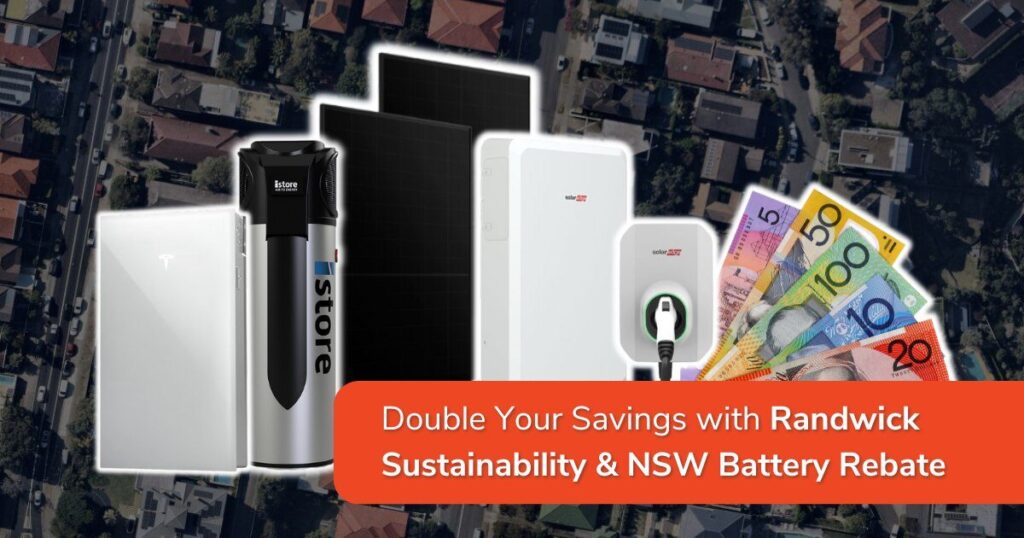
Double Your Savings with Randwick Sustainability Rebate & NSW Battery Rebate Smart Energy Answers November 4, 2024 With the NSW Solar Battery Rebate launching this November, Randwick residents are in a prime position to maximise their savings by combining state and local rebates. The NSW rebate offers up to $4,800 for solar battery installations, plus up to an additional $800 when you join a Virtual Power Plant (VPP). Pair this with Randwick City Council’s sustainability rebates—covering solar panels, batteries, heat pumps, and EV chargers—offering up to $2,250 in savings. Together, these rebates can provide homeowners with almost $7,500 in total savings, making solar, battery storage, and smart energy solutions more affordable than ever. Here’s how you can take full advantage of these incentives! Unlock Your Rebates and Savings Now.Find out how to qualify for up to $7,500 rebates with our energy experts. Get a Quote Randwick Sustainability Rebates Randwick City Council offers sustainability rebates to promote eco-friendly technologies and reduce carbon footprints. These incentives help residents afford solar panels, batteries, heat pumps, and EV chargers, making green energy more accessible. This initiative supports both individual households and a community shift towards renewable energy. Household EV Charger – Rebate Up to $250 Why install an EV Charger? Installing an EV charger at home offers unmatched convenience and helps future-proof your property for the growing electric vehicle market. Home charging provides flexibility and allows you to take advantage of lower electricity rates during off-peak hours. Randwick residents can claim up to $250 of the cost of installing an EV charger, making it an affordable way to prepare your home for the future of electric mobility. Eligibility: Only available in properties in the Randwick Local Government Area Must be an electric vehicle charger or EV infrastructure for apartment blocks Must be installed by a licensed electrician Installation must have occurred within the past 12 months Household Heat Pump – Rebate Up to $500 Why install a Heat Pump? Heat pumps are one of the most energy-efficient ways to heat water in your home, using far less electricity than traditional hot water systems. They help reduce your energy bills and your environmental impact, making them an excellent choice for sustainability. Randwick residents can claim up to $500 of the cost of an electric heat pump or rooftop solar hot water system. Additionally, you can benefit from the Federal Government’s Small-Scale Technology Certificates (STC) rebate and the State Government’s Energy Savings Scheme (ESC) rebate, organised by your installer. Eligibility: Only available in properties in the Randwick Local Government Area Must be a Clean Energy Council (CEC) accredited electric heat pump or rooftop solar hot water system Excludes swimming pool heat pumps Installation must have occurred within the past 12 months Unlock Your Rebates and Savings Now.Find out how to qualify for up to $7,500 rebates with our energy experts. Get a Quote Household Rooftop Solar – Rebate Up to $500 Why install Rooftop Solar? Rooftop solar allows you to generate clean energy for your home, reducing your reliance on the grid and cutting down your electricity bills. Solar power also increases the value of your property, and with the upcoming NSW Solar Battery Rebate in November, it’s a smart investment to pair solar with battery storage for even more savings. Randwick homeowners can claim 10% of the cost of installing rooftop solar, up to $500, making it easier than ever to adopt renewable energy. Eligibility: Only available in properties in the Randwick Local Government Area Must be a Clean Energy Council (CEC) accredited installer Must have minimum system capacity of 5kW Installation must have occurred within the past 12 months Household Solar Battery – Rebate Up to $1,000 Why install a Solar Battery? Installing a solar battery allows you to store excess energy generated by your solar panels and use it when the sun isn’t shining, helping you further reduce energy costs and become more independent from the grid. Solar battery systems also offer greater energy security during power outages. Randwick residents can claim 10% of the cost of installing a solar battery, up to $1,000, making energy storage a more affordable investment for long-term savings. Eligibility: Only available in properties in the Randwick Local Government Area Must be a Clean Energy Council (CEC) accredited installer Installation must have occurred within the past 12 months NSW Battery Rebate 2024 Starting November 1, 2024, the NSW government will offer new battery incentives for homes and businesses with rooftop solar systems. Part of the Peak Demand Reduction Scheme, these incentives support battery storage installation and Virtual Power Plant connections, helping reduce electricity bills and enhance solar energy use. NSW Battery Installation Incentive Amount: Up to $4,500 off the upfront installation costs, depending on the size of your battery of choice. Eligibility: Homes and businesses in NSW with existing solar system but without existing battery. Battery must be listed on an approved product list and battery capacity must be between 2 kWh and 28 kWh. Battery must be internet connectable and controllable by a Demand Response Aggregator. Must have a warranty of at least 10 years and guarantee that at least 70% of the Usable Capacity is retained 10 years from the date of installation. Warranty must define the normal use conditions as not being less than a minimum ambient temperature of -10°C to 50°C; and minimum warranted throughput of 3.65 MWh per kWh of Usable Battery Capacity. Note: Incentive is provided as an upfront discount by approved suppliers. For homes and businesses without existing solar, the incentive can be included in the quote for a new solar and battery system. NSW Virtual Power Plant (VPP) Connection Incentive Amount: Up to $800 incentive for connecting to a VPP. Frequency: Available twice, at least 3 years apart. Eligibility: Applies to both new and existing batteries that will join a VPP. Battery must be listed on an approved product list and battery capacity must be between 2 kWh and 28 kWh. Battery must have a minimum 6 years remaining
NSW Battery Rebates Reach $5,300, Not $2,400: Setting the Record Straight
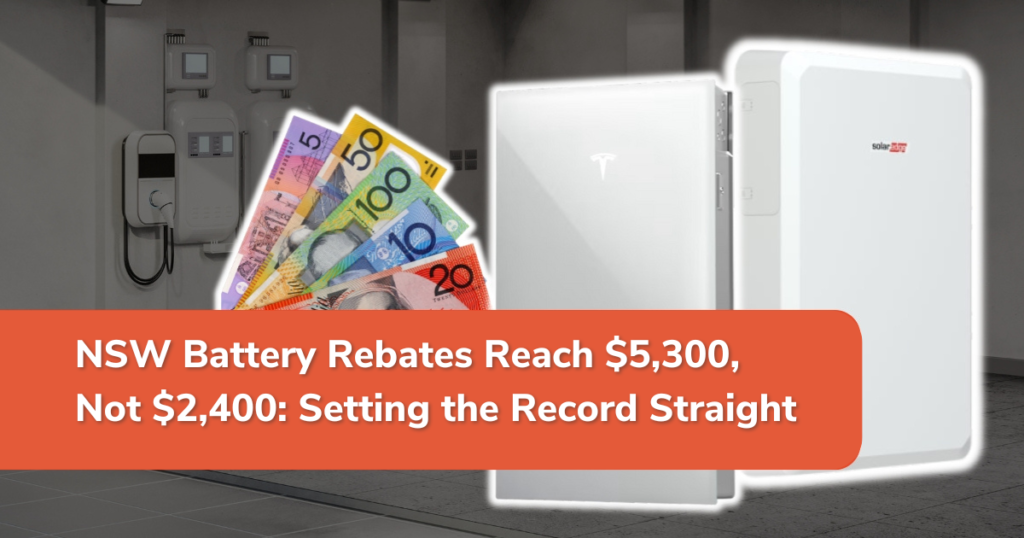
NSW Battery Rebates Reach $5,300, Not $2,400: Setting the Record Straight Smart Energy Answers November 1, 2024 Recent confusion in the NSW battery rebate scheme has led many homeowners and businesses to underestimate their potential benefits. The NSW Government website presents examples showing rebates between $1,600 and $2,400 based on a 13.5kWh battery system. However, Smart Energy Answers clarifies that eligible households and businesses can access total rebates of up to $5,300. This includes up to a $4,500 battery rebate plus an $800 Virtual Power Plant, or VPP, bonus when installing larger systems up to 28kWh. Understanding the Confusion Current Website Examples The NSW Government website shows examples of $1,600 to $2,400 in rebates. These examples specifically reference a 13.5kWh battery system. Many homeowners and businesses are making decisions based on these lower example figures. The Complete Rebate Structure The battery rebate scales based on system size, up to $4,500 for 28kWh systems. An additional VPP bonus of $800 may be available. Total available rebates can reach up to $5,300. System size eligibility ranges from 2kWh to 28kWh. Why This Matters The difference between the example figures and the maximum available rebate is significant. Example shown on website: $1,600 to $2,400 for a 13.5kWh system. Maximum available: Up to $5,300 for a 28kWh system. Potential difference: Up to $3,700 more than the example indicates. This substantial difference means many households and businesses may have: Miscalculated their potential rebate based on example figures. Underestimated the financial support available. Delayed their battery installation unnecessarily. Missed opportunities for greater energy independence. Eligibility Requirements To access the rebates: The property must have, or be installing, solar panels. The system must be grid-connected. The battery size must be between 2kWh and 28kWh. Installation must be completed by an accredited supplier. Equipment must meet Clean Energy Council standards. Understanding System Sizes and Rebates The rebate structure scales with battery size. 13.5kWh Systems Receive a proportional rebate of approximately $1,600 to $2,400. Suitable for average households. Used in the government website examples. Larger Systems up to 28kWh Eligible for the maximum battery rebate of up to $4,500. May also qualify for the additional $800 VPP bonus. Suitable for larger homes or businesses. Smart Energy Answers’ Role As specialists in maximising battery rebates, Smart Energy Answers provides expert guidance, professional services, and documentation support to help homeowners and businesses make the most of available incentives. Expert Guidance Accurate rebate calculations based on your chosen system size. Clear explanation of available incentives. Custom system sizing recommendations. Virtual Power Plant, or VPP, programme enrolment assistance. Professional Services Free site assessment. System design and specifications. Professional installation. Warranty support. After-sales service. System monitoring. Documentation Support Rebate application assistance. VPP enrolment processing. Warranty documentation. Compliance certificates. Making an Informed Decision When considering a battery system, homeowners and business owners should: Understand their energy usage patterns. Consider future energy needs. Evaluate different battery sizes and corresponding rebates. Calculate total available rebates for their chosen system. Assess VPP participation benefits. Next Steps for Homeowners and Businesses To explore your eligible rebate amount of up to $5,300, Smart Energy Answers can help you: Assess your eligibility. Calculate your specific rebate based on system size. Design an optimal system for your property. Review VPP benefits. Schedule installation. Contact Smart Energy Answers today to get started. Conclusion The NSW Government website examples showing $1,600 to $2,400 rebates for a 13.5kWh system have led to misconceptions about the maximum available support. With total rebates of up to $5,300 available for larger systems, including up to a $4,500 battery rebate plus an $800 VPP bonus, the financial case for battery storage is significantly more attractive than these examples suggest. Smart Energy Answers stands ready to help homeowners and businesses understand their exact eligible rebate amount based on their chosen system size. Contact us today to learn how you can maximise your benefits from the available rebate package. Smart Energy Answers — powering Australian homes and businesses with smart solutions.
8 Key Reasons to Not Wait for the NSW Battery Rebate Starting on November 2024
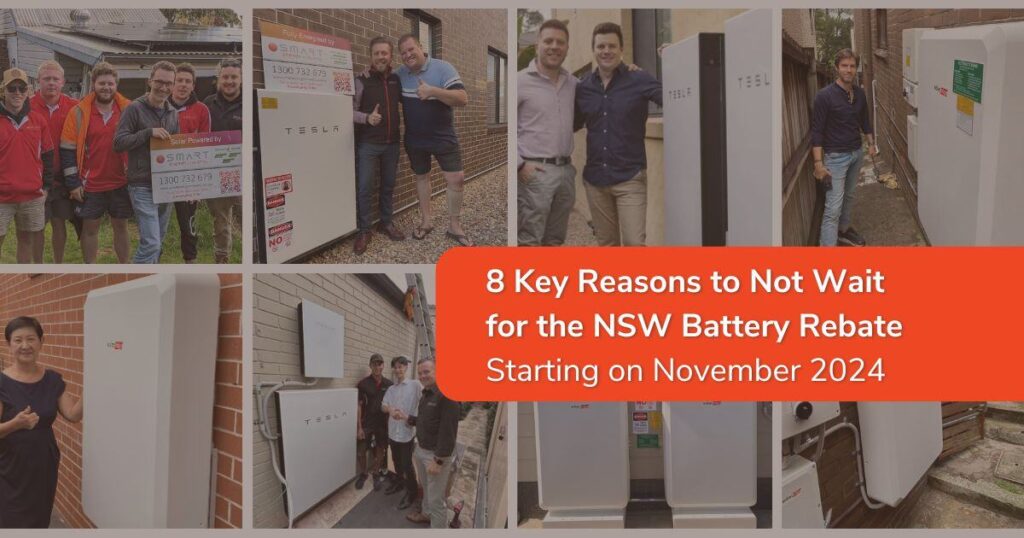
8 Key Reasons to Not Wait for the NSW Battery Rebate Starting on November 2024 Smart Energy Answers June 20, 2024 The announcement of the forthcoming New South Wales battery rebate has generated significant interest among home and business owners. However, there are several reasons why you may not want to wait for this rebate before installing a battery system across New South Wales. 1. Scheme Design The New South Wales Battery Rebate is not a straightforward rebate. Unlike a fixed rebate amount, this scheme operates similarly to the Small-scale Technology Certificate, or STC, market. When you apply, you create certificates under the New South Wales Energy Efficiency Scheme. This design encourages the adoption of energy efficiency measures, similar to those seen in the renewable sector with heat pumps and optimised energy use. The scheme has an annual target that increases over time. For example, the starting level is a 1% energy efficiency dividend, which rises to 1.5% the following year. However, the complexity of the scheme and the need to generate certificates can be challenging for consumers to understand and navigate. Why Act Now? Avoid learning curve delays: By acting now, you can avoid the delays and potential pitfalls associated with understanding and complying with the scheme’s requirements. Early adopters can benefit from simplified processes and avoid the rush of applications once the rebate starts. Benefit from lower targets: The scheme’s targets increase annually. By adopting now, you may be able to take advantage of the current lower targets, making it easier to achieve compliance and benefit from the scheme. Simplified process: Early adoption allows you to avoid the administrative burden and potential delays caused by the scheme’s complexities. This helps ensure you receive your benefits sooner and with less hassle. Financial predictability: Immediate action can provide financial savings right away, without the uncertainty of navigating the new rebate system. This financial predictability is important for effective planning and budgeting, giving you peace of mind and more stable energy costs. 2. Actual Rebate Value to Customers A significant number of customers may be left disappointed if they expect a fixed rebate, such as the announced maximum amount of $2,400. Instead, they may receive a certificate with an uncertain value. The actual rebate amount could be significantly lower, possibly around $1,600. This variability can be misleading and is a major concern for potential applicants. Why Act Now? Avoid rebate uncertainty: Installing a battery system today ensures you understand the exact savings and costs upfront, providing a more predictable and secure financial benefit. Stable financial planning: Immediate installation allows for accurate budgeting and financial planning. Without relying on variable rebate amounts, you can make informed decisions about your energy investment. Immediate savings: Acting now provides immediate financial benefits. You do not have to wait for a rebate that may not meet your expectations. Instead, you can start saving money right away, improving your overall financial stability. Current incentives: By not waiting for an uncertain rebate, you can take advantage of existing incentives and avoid potential future changes in policy or rebate amounts. This helps you maximise your financial benefits. Avoid administrative hassles: Early adoption helps you bypass the administrative burden and potential delays, ensuring you receive your financial benefits smoothly and promptly. 3. Market Saturation There is a risk that battery support could overwhelm other forms of energy savings support, such as heat pumps or other energy efficiency measures. This saturation could limit the overall effectiveness of the energy savings scheme. With a heavy focus on battery installations, other important energy-saving measures may be neglected. Why Act Now? Balanced energy savings: By acting now, you help ensure your energy efficiency measures are not compromised by market saturation. Installing a battery system today allows you to benefit from a balanced approach, maximising all available energy-saving opportunities. Effective strategy: Early adoption helps maintain a balanced and effective energy savings strategy. By securing your battery system now, you can ensure other energy efficiency measures, such as heat pumps and optimised energy use, are not overlooked. Prevent system overload: By installing your battery system now, you can avoid potential system overloads caused by a surge in demand after the rebate starts. This helps ensure your installation is completed promptly and efficiently. Maximise impact: Acting now ensures you are part of a diversified approach to energy savings, enhancing the overall impact of your initiatives. This holistic approach can lead to greater long-term savings and improved energy efficiency. Avoid delays: Market saturation can lead to longer waiting periods for installations. By acting now, you can avoid these delays and ensure your energy-saving measures are implemented without extended timelines. 4. Manufacturers Adjusting Prices Only CEC-approved products installed by qualified professionals will be eligible for the rebate. This scrutiny will likely increase the base price of CEC-approved battery products. There are market expectations of a price increase in the battery market starting in Q3 2024, which could affect the overall cost-benefit analysis for consumers. As manufacturers adjust prices in anticipation of the rebate, waiting could lead to higher costs for consumers. Why Act Now? Lock in current prices: By acting now, you can lock in current prices before potential increases caused by market adjustments and increased demand. This helps ensure you get the best deal available and avoid rising costs. Avoid price hikes: The anticipated price increases in the battery market, expected to start in Q3 2024, could significantly increase the cost of battery systems. Purchasing now allows you to avoid these increases and save money on your investment. Better cost-benefit analysis: Early adoption provides a clearer cost-benefit analysis for your battery system. With current prices secured, your overall investment can become more financially advantageous compared to waiting and facing higher prices. Maximise savings: Acting now helps you maximise your financial savings by avoiding additional expenses associated with increased product prices. This makes your investment in a battery system more affordable and beneficial in the long run. Quality products: The requirement for CEC-approved products means only high-quality battery
Top 10 Reasons For Selecting The Best Battery Installer to Access NSW’s 2024 Battery Incentives
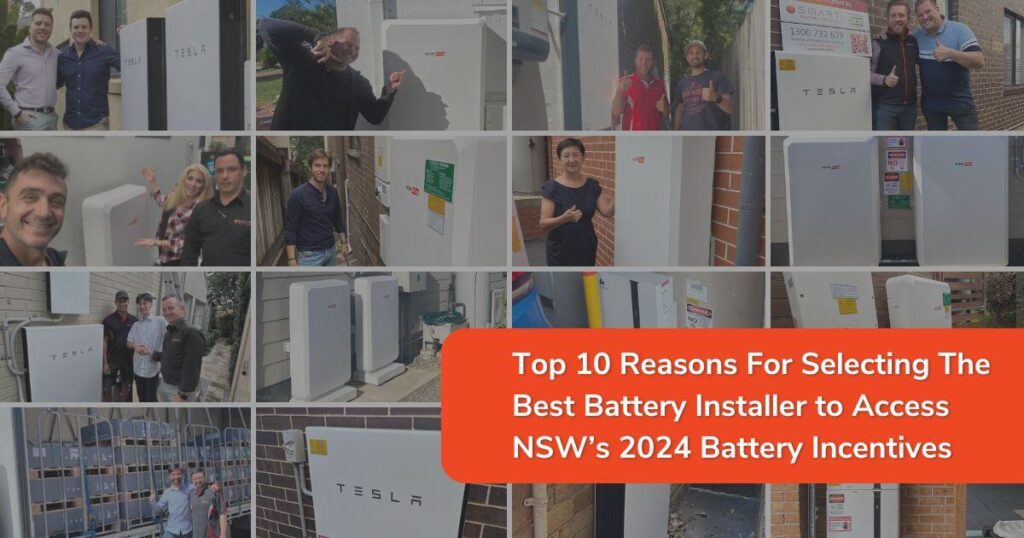
Top 10 Reasons For Selecting The Best Battery Installer to Access NSW’s 2024 Battery Incentives Smart Energy Answers June 3, 2026 Essential Tips to Help You Choose the Right Supplier and Maximise Your Financial Benefits In November 2024, NSW will introduce new battery incentives designed to make solar energy storage more accessible and affordable. With these incentives, you can save up to $2,400 on battery installation and further reduce your electricity bills by connecting to a Virtual Power Plant (VPP). To fully benefit from these incentives, choosing the right solar supplier is crucial. Here are the top 10 tips to help you select the best supplier and maximise your financial benefits. 1. Check Accreditation When selecting a solar supplier, the first and most crucial step is to verify their accreditation. Accredited suppliers have been vetted for their ability to meet stringent industry standards, ensuring that they provide high-quality and safe installations. Accreditation is not just a formality; it is a guarantee of the supplier’s commitment to excellence and adherence to best practices. Working with accredited suppliers also means that you are eligible for various incentives and rebates that are often contingent upon the use of certified professionals. Why Accreditation Matters: Accredited suppliers are vetted for quality and reliability, ensuring safe and efficient installations. Resources: Check supplier accreditation through the Clean Energy Council and other official bodies. Why Choose Smart Energy Answers? We are recognised as a Tesla Certified Premium Installer and SolarEdge Preferred Partner, demonstrating our commitment to quality and adherence to the highest industry standards. 2. Look for Experience Experience is a key indicator of a supplier’s reliability and capability. When evaluating potential suppliers, consider how long they have been in the business and the breadth of their project portfolio. Experienced suppliers are more likely to have encountered and resolved a variety of challenges, making them better equipped to handle your specific needs. Additionally, companies with a proven track record are often more stable and dependable. Look for industry recognition and awards, which are good indicators of a supplier’s reputation and quality of work. Years of Experience: Look for suppliers with at least 5+ years of experience and a proven track record. Industry Recognition: Awards and recognitions, such as the Local Solar Hero Award from Sunwiz, indicate a high level of expertise. Project Examples: Suppliers focusing on smart solar and integrated home solutions demonstrate forward-thinking and comprehensive service. Why Choose Smart Energy Answers? With multiple industry awards, the prestigious Top Brand PV Installer by EUPD, and a history of successful projects, Smart Energy Answers exemplifies reliability and expertise in the solar industry. 3. Read Reviews and Testimonials Customer reviews and testimonials provide real-world insights into a supplier’s performance and reliability. These reviews can highlight the quality of customer service, the efficiency of installations, and the overall satisfaction of past clients. Positive reviews and high ratings are strong indicators of a supplier’s commitment to customer satisfaction. Pay attention to detailed reviews that discuss specific aspects of the service, such as responsiveness, professionalism, and post-installation support. Testimonials from satisfied customers can give you confidence in your choice of supplier. Preferred Platforms: Google Reviews, ProductReview.com.au, and industry-specific review sites such as Solar Choice are great sources for customer feedback. Why Choose Smart Energy Answers? Our consistently high ratings of 4.9 out of 5 stars and positive testimonials reflect our dedication to delivering top-notch service and ensuring customer satisfaction. 4. Ask for Case Studies Case studies offer a deeper look into a supplier’s capabilities by showcasing their successful projects. These detailed accounts demonstrate the supplier’s problem-solving skills, technical expertise, and ability to deliver on promises. By reviewing case studies, you can assess how a supplier handles projects similar to yours and the results they achieve. Look for case studies that highlight a variety of project types and sizes, indicating the supplier’s versatility and competence. Importance of Case Studies: They provide detailed examples of past work, demonstrating expertise and reliability. See Smart Energy Answers Case Studies: Residential projects can help you understand the quality and outcome of previous installations. Why Choose Smart Energy Answers? Our extensive portfolio of case studies showcases our ability to deliver successful projects across diverse settings, ensuring reliable and high-quality installations. 5. Evaluate Technical Expertise Technical expertise is critical for the successful installation and operation of solar and battery systems. Suppliers with the right qualifications and certifications are better equipped to handle the complexities of solar installations, ensuring efficiency and safety. Certifications from recognised bodies such as Tesla and SolarEdge signify that the supplier has met rigorous standards. When evaluating suppliers, ask about the qualifications of their installation team and their experience with the latest technologies. Important Certifications: Look for suppliers with certifications from recognised bodies such as Tesla, SolarEdge, and industry awards. Smart Energy Answers Expertise: Awarded for our technical expertise and recognised for our high standards in installation. Why Choose Smart Energy Answers? Our numerous certifications and awards for technical expertise ensure that you receive top-tier service and reliable installations. 6. Compare Quotes Comparing quotes from different suppliers allows you to find the best value for your investment. However, it’s important to look beyond the price tag. Detailed quotes that outline all costs, including installation, equipment, and maintenance, provide a clearer picture of what you’re paying for. Avoid suppliers with exceptionally low prices, as they may compromise on quality. Instead, focus on finding a balance between cost and value, ensuring you get high-quality products and services. What to Look For: Detailed quotes that outline all costs, including installation, equipment, and maintenance. Beware of Low Prices: Extremely low quotes may lead to hidden costs and lower quality. Smart Energy Answers: We provide comprehensive assessments and quotes that consider both current and future energy needs. Why Choose Smart Energy Answers? Our detailed quotes ensure transparency and value, helping you make an informed decision without hidden costs. 7. Check for Comprehensive Support Comprehensive support and maintenance services are essential for the long-term performance of your solar system. Suppliers who offer
How Australia’s 2024 Rebate Programs Accelerate Shift Towards Renewable Energy

How Australia’s 2024 Rebate Programs Accelerate Shift Towards Renewable Energy Smart Energy Answers June 3, 2026 Australia is a country blessed with abundant sunshine and a commitment to a cleaner future. The Australian government has set an ambitious goal of achieving net zero emissions by 2050, and sustainable living practices play a crucial role in reaching that target. Sustainable living isn’t just good for the environment. It can also save you money on your energy bills and contribute to a healthier planet for future generations. To encourage Australians to embrace a more sustainable lifestyle, the government offers a variety of benefits across different categories. These categories include incentives for installing solar power systems, such as the solar panel rebate, switching to electric vehicles, and making energy-efficient upgrades to your home. This comprehensive guide will explore the various government benefits available in Australia to help you live more sustainably. We’ll delve into national schemes and break down the specific programs offered in each state, making it easy for you to find the support that best suits your needs. National Benefits Australia offers two key nationwide benefits to incentivise renewable energy adoption: Small-scale Technology Certificates (STCs) and Feed-in Tariffs. Small-scale Technology Certificates (STCs) The STC scheme is a market-based system that rewards you for generating renewable electricity with a small-scale system, typically under 100kW, in your home or business. Here’s how it works: When you install a solar panel system or other eligible renewable energy system, you receive STCs based on the system’s size and expected electricity generation. These STCs are tradable certificates that represent one megawatt hour (MWh) of renewable electricity. You can sell your STCs on the open market to electricity retailers or other entities that need them to meet their renewable energy targets. The income from selling STCs helps offset the upfront cost of installing your renewable energy system, effectively acting as a solar energy rebate. Feed-in Tariffs Feed-in tariffs are a financial incentive offered by electricity retailers. These tariffs pay you a certain rate for each unit of electricity your solar power system generates and feeds back into the grid. This can be anywhere between 4 to 12 cents, depending on the area. The exact rate you receive depends on the specific retailer and your location. Feed-in tariffs essentially allow you to earn money from the clean energy your system produces. Combined Impact STCs and Feed-in Tariffs work together to make renewable energy systems more financially attractive. STCs provide an upfront cost reduction, while Feed-in Tariffs offer ongoing financial rewards for generating clean electricity. It’s important to note that not all electricity retailers offer Feed-in Tariffs, so it’s crucial to compare plans when choosing a provider. New South Wales Energy Savings Scheme (ESS) New South Wales has its own program called the Energy Savings Scheme (ESS) that goes beyond national benefits. This initiative, also known as NSW Energy Savings Scheme, aims to help both households and businesses in NSW become more energy efficient, leading to lower energy bills and a reduced environmental footprint. Through the Service NSW solar rebate, residents can access financial support for solar installations. Here’s how the ESS works: The scheme offers financial incentives for installing or upgrading to more energy-efficient appliances and products. This can include everything from LED lighting and air conditioning units to hot water systems and pool pumps. Essentially, you’re rewarded for choosing energy-saving options, making your home or business more sustainable and lowering your long-term energy costs. Electric Vehicle (EV) Rebates While the NSW government’s $3,000 EV rebate program ended on December 31st, 2023, there’s a chance you can still benefit if you placed a deposit on an eligible electric vehicle before that date. Applications for these rebates can be lodged until June 30th, 2024. So, if you were considering an EV purchase with a deposit placed earlier, be sure to check the eligibility criteria and application process. Victoria Victorian Solar Panel Rebate Under the Solar Homes Program, Victorians can receive rebates of up to $1,400 towards the installation of solar panel (PV) systems, known widely as the Vic solar rebate. This rebate, part of the broader Victoria solar rebates, is available for existing homes, homes under construction, and even rental properties. What’s more, eligible applicants can also opt for an interest-free loan equivalent to the rebate amount, helping to further reduce installation costs. As of April 2024, there are still 1,500 rebates, referred to as solar panel rebates Victoria, available for solar panel installations. Solar Battery Loans To encourage the adoption of solar battery storage systems, the Victorian Government is offering interest-free loans of up to $8,800. These loans can help eligible households offset the upfront costs of installing a solar battery, with repayments spread over a four-year period. As of April 2024, there are still 2,500 solar battery loans available. Hot Water Rebate The hot water rebate, formerly known as the solar hot water rebate, offers eligible Victorians up to $1,000 towards the installation of efficient heat pumps and hot water systems. As of April 2024, there are still 1,900 rebates available to upgrade to a more energy-efficient hot water system. Victorian Energy Upgrades (VEU) Program The VEU program offers discounts on energy-saving products to help Victorian households cut power bills and reduce greenhouse gas emissions. The program supports Victorians to upgrade and switch to more energy efficient appliances and equipment, including lighting, space heating and cooling, water heating, and draft sealing. Australian Capital Territory Home Energy Support Program The Home Energy Support Program offers substantial rebates to eligible homeowners, including those holding an Australian Government Pensioner Concession Card, Department of Veterans’ Affairs Gold Card, or an Australian Government Health Care Card. These rebates can be utilised to offset the upfront costs of installing a variety of energy-efficient products. Here’s what’s covered: A rebate of 50% of the total installation cost, with a maximum of $2,500, for rooftop solar. A rebate of 50% of the total installation cost, up to $2,500, for reverse cycle heating and cooling
Don’t Miss Out: Time Running Out for Solar Tax Break for Businesses
Don’t Miss Out: Time Running Out for Solar Tax Break for Businesses Smart Energy Answers April 4, 2023 Instant Asset Write-Off for Australian Businesses If you are a business owner in Australia, you may have heard about the instant asset write-off programme. This programme allows businesses to claim an immediate deduction for the business portion of the cost of an asset in the year the asset is first used or installed and ready for use. It has been particularly useful for businesses looking to invest in renewable energy solutions, such as solar power. However, the instant asset write-off is set to end on 30 June 2023. This means businesses looking to take advantage of the programme must act quickly. Investing in solar power can be expensive, but the instant asset write-off programme can help businesses save a significant amount of money. By installing solar power before the end of the financial year, businesses may be able to write off the full cost of the installation in the same year, helping reduce their tax bill. Solar power is an excellent way for businesses to reduce their energy costs. With electricity prices continuing to increase, businesses that invest in solar power can achieve significant savings on their electricity bills. Furthermore, solar power is a sustainable energy source that can help businesses reduce their carbon footprint and demonstrate their commitment to sustainability. Solar Rebates for Businesses In addition to the instant asset write-off programme, the government also offers solar rebates for businesses. These incentives, such as Small-scale Technology Certificates, or STCs, can help businesses save even more on their solar installation costs. STCs are tradeable, meaning businesses can sell them to generate additional value from their solar investment. If you are considering investing in solar power for your business, working with a reputable solar installer who can guide you through the installation process is essential. A good installer can advise you on the best system for your business, help you apply for government incentives, and ensure that your system is installed to the highest standard. Many of our clients have claimed up to $60,000 immediately upon installing a solar solution by leveraging government incentives such as the instant asset write-off and STCs. We encourage all business owners to speak with a tax accountant or financial advisor to fully understand the potential savings. You can also book a consultation with one of our energy experts to explore the best solar options for your business. Conclusion The instant asset write-off programme for businesses installing solar power in Australia is coming to an end soon. Business owners who have yet to invest in solar power should act fast to take advantage of this programme before it is too late. With additional solar rebates offered by the government and continuously increasing electricity prices, investing in solar power is an excellent opportunity for businesses to save money on energy bills while contributing to a more sustainable future. Do not wait any longer. Take advantage of this opportunity today.
2020 Government Rebates & Incentives
2020 Government Rebates & Incentives Smart Energy Answers April 22, 2020 The potential to save money over the long term is a major incentive for many people considering solar. Beyond long-term energy savings, you may also be eligible for government rebates that can help contribute to the cost of purchasing a solar system. Eligibility can depend on where you live and which programmes are currently available. Once your system is installed, you can also export excess solar energy back to the grid. Your energy retailer may compensate you for the exported electricity through a feed-in tariff, or FiT. Solar Government Rebates and Incentives Available in Australia 1. Government Rebates National Solar Incentive The Federal Government provides financial incentives for people who invest in solar through Small-scale Technology Certificates, or STCs. The number of STCs available is based on your location and the amount of energy your solar system is expected to generate. Under this scheme, customers may be able to significantly reduce the upfront cost of installing a solar system. Installers generally sell the certificates on behalf of the customer and deduct the value from the installation cost. To be eligible, your system must be less than 100 kW in size, installed by a Clean Energy Council, or CEC, accredited professional, and use solar components approved for use in Australia by the CEC. Solar Rebates by State Some additional incentives are also available through state and territory governments. These are applied independently from the national rebate programme. State or Territory Rebates & Incentives NSW The Empowering Homes Solar Battery Loan offers eligible households interest-free loans of up to $14,000 towards a solar PV and battery system, and up to $9,000 towards retrofitting a battery to an existing system. The Solar for Low Income Households programme is also being trialled for eligible concession card holders. QLD The Solar for Rentals trial offers rebates of up to $3,500 for eligible landlords. The Queensland Government has also offered interest-free loans for solar and storage. VIC Victoria offers a Solar Homes Rebate of up to $1,888 and a Solar Battery Rebate of up to $4,838. Solar Hot Water Rebates of up to $1,000 may also be available for eligible households. Rebates may be combined with interest-free loans of up to $1,888, repayable over four years. WA Western Australia does not offer additional rebates beyond the Federal STC programme. SA South Australia’s Home Battery Scheme offers rebates of up to $4,000, with low-interest loans also available. NT The Northern Territory does not offer additional rebates beyond the Federal STC programme. TAS Tasmania does not offer additional rebates beyond the Federal STC programme. ACT The ACT Solar for Low Income Program offers a subsidy of up to $2,500. The Next Generation Energy Storage programme also offers a rebate of up to $825 per kW for systems up to 30 kW. 2. Feed-In Tariffs Another way you can save money with solar is through a feed-in tariff, or FiT. A FiT is a credit you receive for excess solar energy generated by your system and exported back to the grid. This credit is paid by your electricity retailer and is usually deducted from your electricity bill. For each kilowatt-hour, or kWh, of energy your household exports to the shared grid, you may receive a FiT between 7 and 22 cents per kWh. Prices can vary depending on your circumstances, the state you live in, and your electricity retailer. The value of a FiT can be an important factor to consider, as it can influence the overall financial outcome of owning a solar system. Make sure to compare retailers to determine the best available FiT rate for your household. You can also ask your solar provider what your expected self-consumption to export ratio may be, and what financial outcome you could achieve. Alternatively, you can compare energy plans through Energy Made Easy to see how much FiT you may be able to receive. Start Your Solar Journey with Smart Energy Answers Smart Energy Answers is one of Australia’s leading solar solutions providers based in Sydney. We are proud to have attained one of the highest accreditation levels in Australia. As a CEC Approved Solar Retailer, we are committed to helping communities gain energy independence through the latest technologies and high-quality service. To get started on your solar journey, contact Smart Energy Answers today on 1300 948 619 or email info@smartenergyanswers.com.au.
VIC Solar/Battery Rebates | SEA
VIC Solar/Battery Rebates | SEA Smart Energy Answers June 6, 2019 Unlock Huge Savings on Solar and Battery Rebates in VIC With sonnen’s fixed-price energy package now available to Victorian households, combined with government incentives and rebates, investing in a solar home system has become more accessible. As one of the leading solar system providers in Australia, Smart Energy Answers is excited to announce our ongoing national collaboration with renowned home battery provider sonnen. sonnen recently opened a new manufacturing facility in South Australia, further supporting the growth of battery storage solutions across the country. Following the programme’s success in New South Wales and South Australia, sonnen has now launched the offer in Victoria. For customers interested in signing up for sonnenFlat packages, sonnenBatteries can be installed through Smart Energy Answers. Electricity Rates as Low as $49 per Month Through sonnenFlat The sonnenFlat energy plan offers households a guaranteed annual energy allowance that includes solar, storage, and grid energy usage for a fixed fee. Monthly electricity rates can be fixed from as low as $49 per month for 7,500 kWh, or $69 per month for 12,500 kWh. For the month of June, sonnen is also offering a sonnenFlat Energy Bundle, where eligible customers can claim $1,000 off their new sonnenBatterie purchase. See the table below to find out which packages you may be eligible for. To learn more about the sonnenCommunity, visit sonnenCommunity. Government Incentives & Solar Rebates From 1 July, eligible Victorian households may be able to receive support through the Solar Homes rebate, helping reduce the cost of a solar home battery system. This may be available in addition to the Federal Government Small-scale Renewable Energy Scheme. Once the Solar Homes Program resumes, the new battery rebate will be worth up to $4,839 and will be open to eligible renters. As part of the scheme, an interest-free loan may also enable households to install solar with no upfront cost. Please note that homeowners will only be eligible for one rebate across the Solar Homes Program. These rebates will be applicable to solar and batteries installed after 1 July 2019, and households will need to confirm their eligibility. With fixed-price energy packages available for Victorian households, combined with government incentives and rebates, there has never been a better time to shift to renewable energy sources. Contact Smart Energy Answers today on 1300 948 619 or email us for more information on solar installations and how to get the best return on your investment.
The Benefits of Expanding the Instant Asset Write-off for Commercial Solar
The Benefits of Expanding the Instant Asset Write-off for Commercial Solar Smart Energy Answers June 4, 2026 With rising electricity prices and increasing environmental concerns, switching to renewable energy is no longer just a conscious decision but a smart economic one. More businesses now have the opportunity to take advantage of the instant asset write-off, thanks to the recent extension of the threshold. Instant Tax Deductions on Solar Systems The recent expansion of the instant write-off scheme allows more businesses to be eligible for the programme. The extension enables companies to claim a tax deduction on the cost of solar installations, provided the cost is under the threshold through to the 30 June 2020 cut-off. The scheme was recently broadened again to include companies with less than $50 million in annual revenue. Previously, it applied to companies with less than $10 million in annual revenue. The instant tax write-off level has also increased from $25,000 to $30,000. More Incentives Through STCs and FiTs In addition to the instant asset write-off, more support is available for businesses looking to install solar panels through Small-Scale Technology Certificates, or STCs. STCs can be used to recoup some of the cost when installing solar systems. Businesses may also benefit from feed-in tariffs, or FiTs. FiTs are payments you receive from your electricity retailer for feeding excess solar electricity back into the grid. Falling Costs for Commercial Solar The dramatic reduction in costs for commercial solar, combined with rising electricity prices, is encouraging more Australian businesses to look into solar panels. Commercial solar battery installation costs have also fallen, with further reductions predicted over the coming year. According to the Clean Energy Australia Report 2019, there has been a 45% increase in commercial solar installations. With the instant asset write-off, extra incentives for businesses through STCs and FiTs, and the falling costs of commercial solar, there’s no better time to shift to renewable energy sources. For more information on commercial solar installations and how to get the best return for your investment, contact us today on 1300 948 619 or via email.
New solar and battery rebates announced – NSW
New solar and battery rebates announced – NSW Smart Energy Answers June 4, 2026 New Solar and Battery Rebates in NSW: Promoting Clean Energy and Saving Money With both sides of the government gearing up for the NSW March election, it’s no surprise that they are unveiling plans to sweeten the pot and stir up votes. Early February is a good example, where both the Coalition and the Labor Party announced plans for more solar and battery rebates if elected into government. Labor’s Election Promises First off the ranks was the Labor Party, which promised to continue the rollout of rooftop solar panels over the next 10 years to half a million homes, providing rebates of up to $2,200 per household. This will mean that more than one million homes will be fitted with solar panels, adding 2GW to NSW’s grid by 2028, similar to the expectations of Victoria’s Labor government. These rebates, however, will be restricted to owner-occupiers with a combined income of no more than $180,000. They are expected to result in savings of between $600 and $1,000 per household on annual power bills. Coalition’s Election Promises The very next day, the Berejiklian government announced that if they are re-elected in March, they will provide interest-free loans for household solar and battery systems of up to $14,000, as well as rooftop solar panel loans of up to $9,000. Their 10-year plan will result in the installation of solar battery storage in 300,000 homes, with the same income restrictions as those for the Labor Party. With the continuing increase in electricity prices across NSW, both of these policies will provide welcome relief to homeowners. Not only will they help households reduce their power bills, but they will also promote clean energy, renewables, and sustainability. Whichever policy is enacted after the election in March, it will be good news for homeowners, NSW’s solar industry, and the climate. For more information on installing solar rooftop panels and battery systems in your home, call Smart Energy Answers on 1300 948 619 or send us an email today. Get a free quote today.
Grants for Home Battery Installations in Adelaide: Powering the Future
Grants for Home Battery Installations in Adelaide: Powering the Future Smart Energy Answers June 4, 2026 Empowering Adelaide’s Future: Grants Available for Home Battery Installations The long-awaited grants for home battery installations in Adelaide have finally seen the light of day. The South Australian Liberal Government has announced that its Home Battery Scheme is ready to go live. This includes the installation of battery storage systems for 40,000 households in South Australia, all capable of participating in a virtual power plant to address network issues and balance out peak power demands. Households Receive Up to $6,000 Individual subsidies of up to $6,000 will be available to households for the purchase of these battery systems. These will be graded at $600 per kWh for energy concession holders and $500 per kWh for everyone else. These grants for home battery installations in Adelaide will also depend on the size of the battery purchased. However, they will most probably equate to more than half of the purchase costs. Sonnen Opens Manufacturing Plant in Adelaide Demonstrating that Adelaide is clearly the renewable energy capital of Australia, Sonnen has announced that it will manufacture up to 10,000 battery storage units each year at the old Holden car manufacturing plant in Adelaide. The key drivers for this move are the new government grants for home battery installations in Adelaide and the CEFC loans, which together create an ever-expanding market for renewable energy in Australia. While Australians have embraced solar panels on their rooftops, the next step is to add battery storage to these systems. However, costs have been prohibitive for most households. The new Sonnen manufacturing plant in Adelaide, along with the grants for home battery installations in Adelaide and the CEFC loans, is set to change this situation. These initiatives will help promote a more decentralised grid in a country that seems to have been designed to benefit from renewable solar energy. For more information on installing solar panels or battery systems in your Sydney home, call us on 1300 948 619 or send us an email.
What are the STCs – Small Scale Technology Certificates?
What are the STCs – Small Scale Technology Certificates? Smart Energy Answers June 4, 2026 Understanding STCs: Small-Scale Technology Certificates Explained Under a federal government programme introduced under the Renewable Energy Act 2000, the cost of purchasing a solar system for your home is subsidised up to a maximum dollar value. This is called STCs, or Small-Scale Technology Certificates. However, the government says that this isn’t a rebate. It is simply a reduction in the cost of buying a solar system. How Are Small-Scale Technology Certificates Calculated? STC certificate values can go up or down and may even be eliminated completely. The number of STCs allocated to your new solar system is calculated based on where you live, the size of your system, the deeming period, and market conditions. We will discuss these last two points in the next section. Generally, each STC is equivalent to one megawatt hour of generated renewable electricity. So, the larger the solar system you install, the more STCs you receive and the greater the subsidy. If you know the size of your installation, you can calculate the number of allocated STCs on the REC Registry website under the Renewable Energy Target. What Is the Actual Value of the STC Incentive? By law, each STC can’t be greater than $40, but it can be as low as $0. Currently, each single STC is worth $33, but it has been higher and it has been lower. As mentioned above, the actual redeemable cost of each STC is partly dependent on the deeming period and market conditions, both of which change over time. The deeming period runs from January 2017 to January 2030, decreasing every year until zero STCs will be created for new solar systems in 2030. Since the value of the STCs is calculated on the amount of renewable electricity the solar system can generate over the remaining deeming period, the value of the STC reduces as this timeframe gets shorter. This means that the longer you leave your solar installation, the lower the STC subsidy you will receive. Your solar installer usually deducts the dollar value of the STCs from your purchase and installation quote. For example, hypothetically, the total cost of installation might be $10,000, but the installer only quotes $6,000 because of a $4,000 STC reduction. However, there is no guarantee STCs are going to be around until 2030. Scott Morrison, the new Prime Minister, has also proposed removing the STCs instead of waiting for the end of the scheme. Since the new Prime Minister was elected, the STC value has dropped from $37.50 to $32. Therefore, getting a solar installation now is more important than ever. For more information on installing solar, call us on 1300 948 619 or send us an email.
Half Price Solar Panels in Victoria: A Game-Changer for Homeowners
Half Price Solar Panels in Victoria: A Game-Changer for Homeowners Smart Energy Answers August 30, 2018 Half Price Solar Panels in Victoria: A Game-Changer for Homeowners The continuing rise in energy prices has led many Australians to turn to solar energy for relief from high electricity bills. Not all homeowners, however, have the ability to fund this type of installation upfront. This can leave households exposed to escalating electricity costs with no clear end in sight. Until recently, Victorians were in the same position as many other homeowners across Australia. However, from the end of August 2018, many homeowners in Victoria became able to install solar panels at almost half the price compared with regular installation costs. So, how is this possible, and how does the scheme work? The Victorian Government Comes to the Rescue Premier Daniel Andrews announced a $1.24 billion scheme to help Victorian households install solar panels. Under the scheme, eligible Victorians could receive a benefit of $2,225 towards the cost of installing solar panels for their home. The amount would be refunded after the installation was completed by a Clean Energy Council, or CEC, accredited installer. This could amount to more than a 50% discount on solar panel installations for eligible Victorian households. To qualify, applicants must be owner-occupiers with a combined household income of less than $180,000, and the home must be valued at less than $3 million. Unfortunately, Victorian households that already have solar panels may not qualify for a system upgrade under this scheme. Premier Andrews estimated that more than 650,000 homes would benefit from heavily discounted solar installations over the next 10 years. This could help families save up to $890 per year on electricity bills. An independent agency would also be set up to oversee the scheme. In addition, the Andrews Government committed an extra $9 million to provide accreditation for 4,500 electricians, helping support the safe installation of these solar systems. Victorian Environment Chief Executive Mark Wakeham said that adding an additional 2,000 MW of solar energy into the grid could help reduce energy costs for all Victorians, not just those with solar panels. For information on installing solar panels in your Melbourne, Sydney, Wollongong, Newcastle, or Central Coast home, call Smart Energy Answers on 1300 948 619 or send us an email.