
Why Installers Sometimes Have Different Tesla Powerwall 2 Availability Timelines?
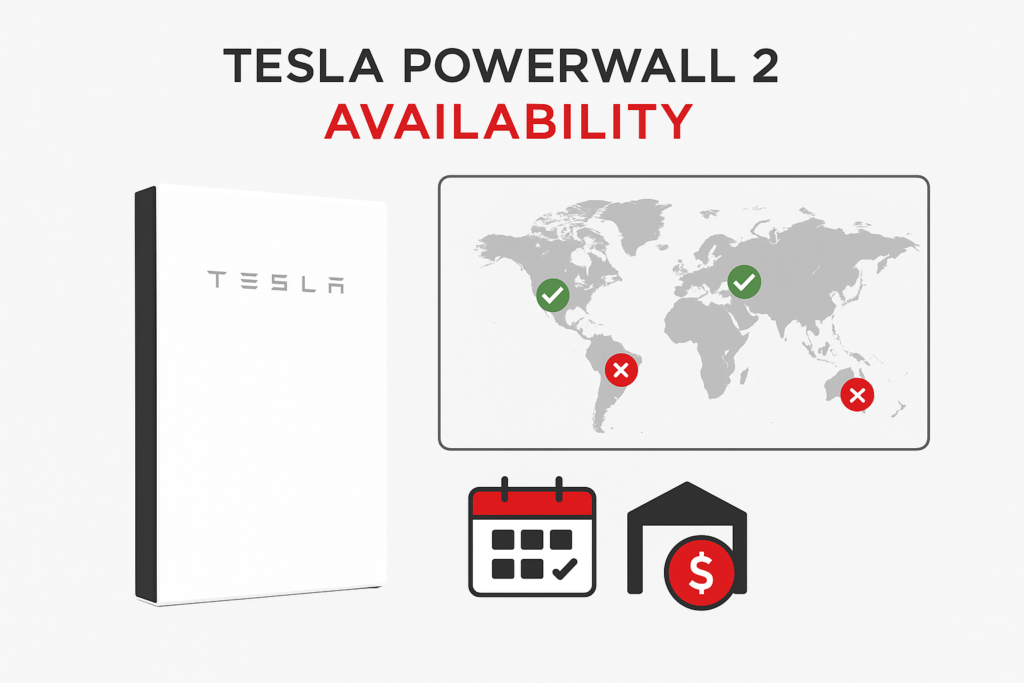
Why Installers Sometimes Have Different Tesla Powerwall 2 Availability Timelines? Smart Energy Answers June 3, 2026 Being one of the major solar and battery installation companies, a question that we receive very often is: Why can one installer say they will deliver it in two months, and another will take six months? Here is the answer: Tesla Powerwall 2 availability might depend on the installer, and the reasons might be much more than just having the material in stock. In our years at Smart Energy Answers, we have had first-hand experience of why these timelines are different, and we owe a clear answer to our customers. In this blog, we will present the primary factors that determine these differences and explain how you will select the most suitable choice depending on your requirements. So, Let’s Begin! 1. Direct Supply Channels vs. Distributor Networks The source of Powerwalls by the installers is one of the greatest factors that changes timelines. Tesla has a direct supply relationship with some businesses, wherein they are shipped first. Others will depend on the third-party distributors, who should be awaiting their allocation of stocks. We can usually get units quicker than small firms at later stages of the chain, since we have direct contact with suppliers. It implies that the availability of our Tesla Powerwall 2 is more consistent, and we can offer a shorter waiting period to our clients. 2. Order Volume and Priority Allocations Tesla allocates Powerwall units based on the installer’s past sales performance. High-volume installers often receive shipments more regularly, while those with fewer orders may wait longer. Because we install a large number of Tesla Powerwalls each year, our allocation priority is higher, and that helps us maintain better Tesla Powerwall 2 availability for our customers. 3. Regional Demand Fluctuations Not all regions experience the same demand for battery storage. Some areas see spikes during summer months or after major blackouts. In those areas, installers might face longer lead times simply because demand outweighs supply. We’ve seen this first-hand. When a region experiences a heatwave or grid instability, demand soars. During these periods, Tesla Powerwall 2 availability may temporarily tighten. By strategically managing stock across different areas, we reduce delays for our customers even in high-demand regions. 4. Installation Crew Scheduling Even with the unit in hand, when you want to install it depends much on the availability of crews. In case the installer is overloaded with orders, your installation may be delayed. Our team schedules are planned, and we maintain flexibility to meet rush installations so that when your unit is here, installation begins immediately with no time to waste. Through this strategy, we can transform Tesla Powerwall 2 availability into tangible outcomes for our clients. 5. Local Regulations and Approval Times Local councils or electricity authorities may need permits to install energy storage. The time taken to receive approval may also differ significantly and take weeks beyond the schedule. We manage these permits as soon as possible throughout the process to avoid any regulatory issues holding up your installation. So this means that though Tesla Powerwall 2 availability may be good, it also means we have already done the paperwork work, etc, to get you up and running fast. 6. Pre-Orders vs. In-Stock Units Some installers operate on a pre-order model. They only order the Powerwall after a customer signs the contract. Others keep units in stock to speed up installations. We take a hybrid approach. We keep a steady inventory for faster installations but also manage pre-orders for larger projects. This ensures Tesla Powerwall 2 availability remains consistent for both residential and commercial customers. 7. Competition Between Projects Within large companies, multiple projects sometimes compete for the same resources. Installations may be prioritised based on deadlines, project size, or contractual obligations. We prioritise projects based on a clear schedule, ensuring every customer gets a fair and realistic timeline. This keeps our Tesla Powerwall 2 availability consistent without favouring one customer over another. How We Help Customers Get the Fastest Timeline We know that when you invest in a Tesla Powerwall 2, you want it installed as soon as possible. That’s why we’ve developed strategies to keep our timelines competitive: Strong Supplier Relationships: Our direct channels with Tesla give us priority access to units. Efficient Scheduling: We align delivery and crew availability to minimise waiting. Proactive Permits: We start the approval process early to prevent last-minute delays. Smart Stock Management: We balance in-stock units with forecasted orders to ensure smooth supply. By combining these strategies, we help customers avoid long waitlists that can occur elsewhere. Why Smart Energy Answers Stands Out We’ve built our business on reliability, transparency, and speed. When customers ask about Tesla Powerwall 2 availability, we don’t just give an estimated date. We explain the process, the factors that could affect it, and how we’re actively managing those factors. Because of our scale and experience, we often have shorter timelines than smaller or less connected installers. More importantly, we keep our customers informed every step of the way so they know exactly when to expect their installation. Final Thoughts The delivery and installation of a Tesla Powerwall 2 can vary a lot across different installers. It is not just who has stock in hand, but supplier chain relationships, volume of orders, local demand, flight crew rosters, and local regulations. We strive to ensure that Tesla Powerwall 2 availability is not a figure on paper at Smart Energy Answers. It is something that will bring you one step closer to energy independence. We enable you to get the most reliable and efficient installation possible with strong supplier relationships, proactive project planning, and customer-first scheduling.
Navigating NSW’s New Solar Tax: What Homeowners Need to Know
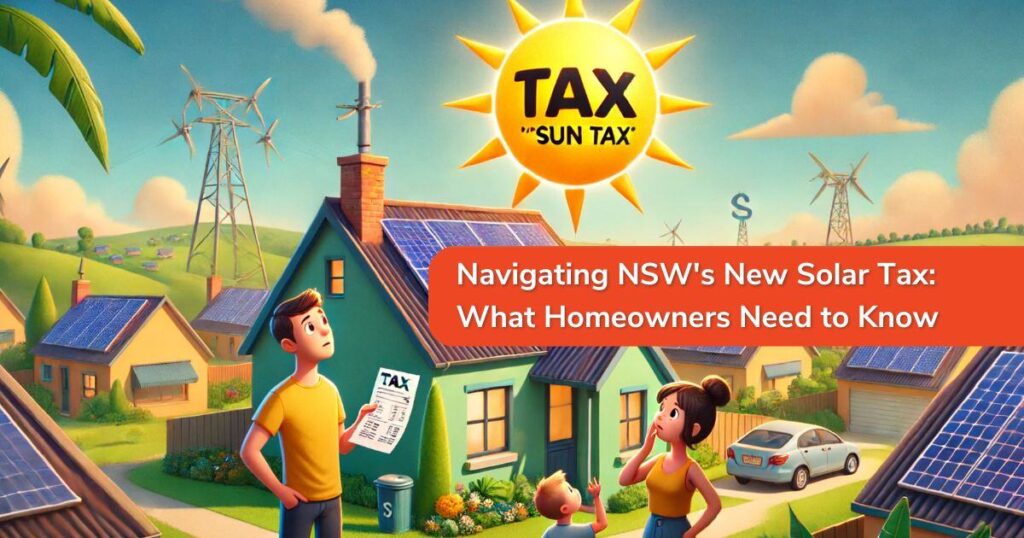
Navigating NSW’s New Solar Tax: What Homeowners Need to Know Smart Energy Answers June 3, 2026 New South Wales solar landscape is set to undergo change with the introduction of a new two-way solar tax. Dubbed the “Sun Tax” by critics, this tax has raised concerns among homeowners and solar energy advocates. In this article, we will delve into the details of the new solar tax, its potential impact on homeowners, and strategies to mitigate its financial effects. What is the New Solar Tax? The new solar tax took effect from 1st July 2024, and it is a levy on the amount of solar energy exported back to the grid by homeowners. This tax aims to address grid stability issues and ensure that solar energy production is fairly integrated into the national energy system. However, it has been met with resistance from many who see it as a deterrent to solar adoption. Key Details The tax targets excess solar energy sent back to the grid during peak times. It was developed to reduce congestion in the electricity network. The average solar home is expected to be about $70 worse off annually, though they will still save around $900 on power bills. According to a report by A Current Affair, about 3.5 million Australian solar panel owners currently receive payments from power companies for every extra kilowatt of electricity they send to the grid. However, this is set to change as the “Sun Tax” will charge solar panel owners who send their extra electricity back to the grid during peak times, typically during the day. The tax was developed to reduce congestion in the electricity network, which is struggling to handle the influx of power being sent to the grid at times of high demand. Impact on Homeowners The introduction of this tax could have several implications for homeowners: Increased Costs: Homeowners may see an increase in their energy bills as they are taxed on the energy they export to the grid. Reduced ROI: The return on investment, or ROI, for solar systems may decrease. Adoption Rates: There is a risk that the tax will increase year on year. Homeowners like Markus, who have invested in solar systems following government recommendations and receiving rebates, feel punished by this new tax. Markus expressed his frustration, stating, “It’s ridiculous now that they encouraged us to do solar for 15 years and now they’re going to smack us if we want to export it.” Markus also highlighted that this tax might force him to give away his excess power to avoid being charged. Anna Collyer, Chair of the Australian Energy Market Commission, defended the tax, stating that the rapid uptake of solar exceeded expectations and doing nothing was not an option. The grid would get congested, and no more solar would be able to be exported, resulting in a worse position for everyone. The new tariff system marks a significant shift in how solar energy is managed and monetised. An Ausgrid spokesperson noted that other energy distribution businesses are adopting this pricing framework for similar reasons, as the number of home solar systems is forecast to increase across Australia. This widespread adoption of similar tariffs highlights the importance of finding effective solutions to mitigate the financial impact on solar homeowners. Strategies to Mitigate Financial Impact While the new tax presents challenges, there are several strategies homeowners can adopt to mitigate its impact: Dynamic Flexible Exports Utilising technologies like SolarEdge’s Dynamic Export can help homeowners manage and control the amount of solar energy they export. This system adjusts the output from the solar inverter based on grid requirements, ensuring compliance and optimising financial returns. How It Works: SolarEdge’s Dynamic Export uses energy management technology to monitor and regulate the export of solar power in real time automatically. It adjusts the output from the solar inverter based on the limits set by the grid or the energy company, ensuring that the export stays within the required limits. Benefits: Ensures compliance with grid requirements, maximises financial returns, enhances energy independence, reduces energy waste, and integrates with smart energy management platforms. Energy Storage Systems Investing in battery storage systems can help homeowners store excess solar energy for later use, reducing the amount of energy exported to the grid and thus minimising tax liability. The benefits of solar batteries extend far beyond avoiding Ausgrid’s new policy, including enhancing energy independence, promoting environmental sustainability, supporting grid stability, and future-proofing against policy changes. Maximising Self-Consumption By increasing the amount of solar energy consumed within the home, homeowners can reduce their dependency on the grid and the amount of energy exported. This can be achieved through energy-efficient appliances, smart home technologies, and time-of-use optimisation. Smart Energy Management Integrating smart energy management platforms can help homeowners align their energy production with consumption patterns, making the most of their solar energy and reducing waste. This includes features like Time-of-Use, or TOU, optimisation, energy export limitation, and remote system monitoring and management. Government Incentives and Rebates Staying informed about any government incentives or rebates that can offset the cost of solar installations and upgrades is crucial. These incentives can help alleviate the initial financial burden and improve ROI. SolarEdge Technologies has announced that its products have met the new Dynamic Export requirements as part of the South Australian Government’s plan to stabilise the grid with sophisticated, remote cloud control technologies. SolarEdge’s smart inverters achieve this capability without the complexity and additional costs of adding third-party controllers. Zvi Lando, SolarEdge’s CEO, emphasised the company’s commitment to helping network operators solve congestion issues and further increase solar adoption. Conclusion The new New South Wales two-way solar tax represents a shift in the solar energy landscape, with financial impacts for solar homeowners. However, by adopting smart strategies and leveraging advanced technologies, homeowners can navigate these changes and continue to benefit from their solar investments. It is essential to stay informed and proactive to maximise the economic and environmental benefits of solar energy.
Beat the Energy Game: Real Hack to Escape Rising Electricity Costs

Beat the Energy Game: Real Hack to Escape Rising Electricity Costs Smart Energy Answers February 20, 2024 Taking Control Amid Rising Energy Bills Struggling to keep the lights on amid rising bills while energy corporations like AGL report billions in profit? Adding to the frustration, there are allegations of “price gouging” within the sector, suggesting that households may be paying higher rates than businesses. While the energy giants deny any wrongdoing, the concern around fairness remains. Recent figures from the Australian Bureau of Statistics paint a sobering picture. The Consumer Price Index, or CPI, surged by 4.1% in the year leading up to December 2023, with energy costs emerging as a significant driver of this increase. It is clear that many consumers feel the current system is not designed with them in mind. We deserve better, and we have the power to demand it. Reality Check: Taking Control of Your Energy There is a way to fight back, break free from the system, and power your home on your own terms. The answer is shining bright right above you: solar panels and batteries. Before you dismiss this as just another expense, let’s talk about reality. AGL’s significant profit is not a coincidence. It is a symptom of a market where many consumers feel like pawns, paying high prices with little control. This is not just about saving money, although that is a major benefit. It is also about taking control of your energy and moving closer to independence from the grid. Imagine not having to rely on the grid anymore. Wipe out bills, not savings: No more skyrocketing costs. Generate your own clean energy from the sun and store it for later, reducing your reliance on the grid and potentially eliminating your electricity bills altogether. Blackouts? No problem: Power outages can become less stressful with battery storage, helping keep essential lights and appliances running even when the grid is down. Planet power: Go green by choosing renewable energy. Reduce your carbon footprint and become part of the solution. Yes, the upfront cost of getting solar and battery storage is a common concern. But the good news is that government rebates, zero-interest loans, and green pay-as-you-save options are making these solutions more accessible than ever. The long-term savings on energy bills can also help offset the initial investment. Outsmart the System and Earn From Energy Companies Here is the real advantage: don’t just save with solar, earn from the energy companies too. With solar panels and batteries, you can generate more energy than you use and sell that excess back to the grid. This can earn credits that further reduce your bills or even help eliminate them completely. At Smart Energy Answers, we know this firsthand. We have consistently received credits and zero balance due on our energy bills. Think about it: energy companies like AGL report major profits while many households continue to struggle with rising bills. But with solar and batteries, you can turn the tables. You can outsmart the system, take control of your energy usage, and potentially profit from it. It is time to break free from rising energy costs and take control of your energy future. Ready to Join the Solar Revolution? Here’s what to do: Explore your options: Talk to reputable local installers, compare quotes, and find the right fit for your budget and specific needs. Become an energy expert: Learn more about solar panels, batteries, and government incentives. Knowledge is power. Make the switch: Don’t wait any longer. Embrace the future and join the growing movement towards energy independence and sustainability. Remember, even small changes in your home can have a big impact. Let’s rewrite the energy narrative, one smart home at a time. Don’t just survive rising energy costs. Thrive with solar and battery power. Contact us today and let’s get you started on your journey to energy freedom. Our energy experts can provide a tailored solution specific to your needs and help you make an informed decision. Together, we can create a brighter future powered by the sun.
Solar Victoria Moves From Rebates to Interest-Free Loans For Batteries
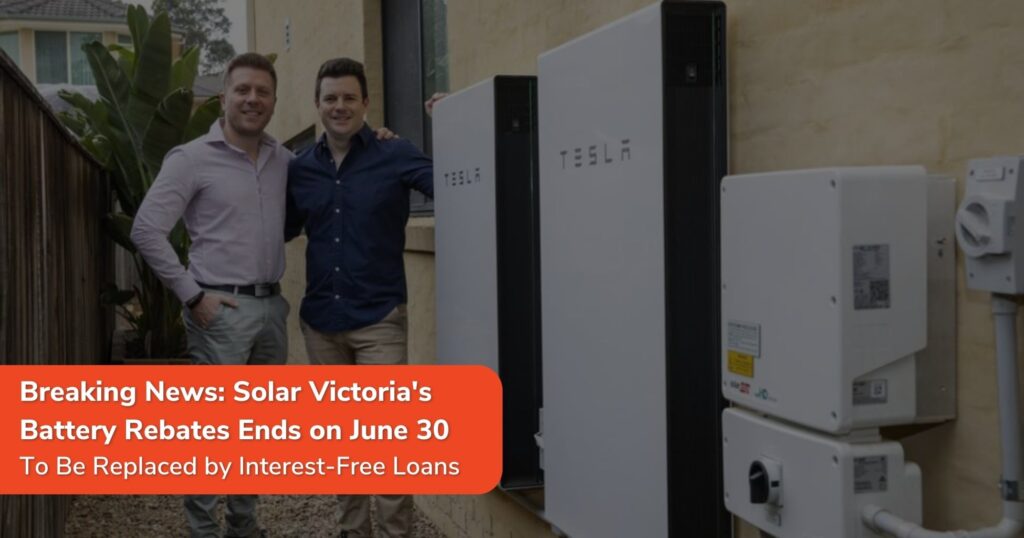
Solar Victoria Moves From Rebates to Interest-Free Loans For Batteries Smart Energy Answers May 29, 2023 Solar Victoria’s Transition: From Rebates to Interest-Free Loans for Home Batteries Solar Victoria is ushering in a significant change to its incentive programme. By 30 June, the battery rebate worth up to $2,950 will come to an end, making way for interest-free loans of up to $8,800 starting from 1 July. This new Solar Homes Program is only open to the first 4,500 Victorian households. With the shift from the battery rebate to interest-free loans, Solar Victoria aims to enhance the affordability and accessibility of renewable energy storage systems. While the rebate offered a grant or discount on battery purchases, the interest-free loan opens the door to a larger funding option. This means homeowners can now explore more high-quality battery choices and overcome the upfront cost barrier. The Solar Homes Program remains focused on making renewable energy accessible to Victorians. Whether through the rebate or the interest-free loan, the goal is to enable individuals to harness the power of battery storage. By utilising battery storage, consumers can reduce their energy bills and protect themselves against rising electricity prices. Battery systems can also provide reliable backup during power outages, helping ensure an uninterrupted energy supply. Additionally, households can sell excess power back to the grid and earn credits or money from it. Solar Victoria’s incentive programme plays a crucial role in promoting sustainable energy practices. By encouraging the adoption of battery storage, the programme aims to reduce reliance on fossil fuel-based power generation, decrease greenhouse gas emissions, and help protect our planet. Conclusion Solar Victoria’s upcoming transition from the battery rebate to interest-free loans presents an exciting opportunity for Victorian households. To receive the state government grant, it is essential to act fast. The battery rebate worth $2,950 will only be available until 30 June. After that, interest-free loans of up to $8,800 will take effect from 1 July. Do not miss out on securing your preferred choice through this progressive initiative that promotes renewable energy adoption and empowers you to create a greener, more sustainable future. Talk to our energy experts today to get a personalised quote and guidance on the available battery storage systems. Our team can help you navigate the options available and choose the right solution for your home.
Don’t Miss Out: Time Running Out for Solar Tax Break for Businesses

Don’t Miss Out: Time Running Out for Solar Tax Break for Businesses Smart Energy Answers April 4, 2023 Instant Asset Write-Off for Australian Businesses If you are a business owner in Australia, you may have heard about the instant asset write-off programme. This programme allows businesses to claim an immediate deduction for the business portion of the cost of an asset in the year the asset is first used or installed and ready for use. It has been particularly useful for businesses looking to invest in renewable energy solutions, such as solar power. However, the instant asset write-off is set to end on 30 June 2023. This means businesses looking to take advantage of the programme must act quickly. Investing in solar power can be expensive, but the instant asset write-off programme can help businesses save a significant amount of money. By installing solar power before the end of the financial year, businesses may be able to write off the full cost of the installation in the same year, helping reduce their tax bill. Solar power is an excellent way for businesses to reduce their energy costs. With electricity prices continuing to increase, businesses that invest in solar power can achieve significant savings on their electricity bills. Furthermore, solar power is a sustainable energy source that can help businesses reduce their carbon footprint and demonstrate their commitment to sustainability. Solar Rebates for Businesses In addition to the instant asset write-off programme, the government also offers solar rebates for businesses. These incentives, such as Small-scale Technology Certificates, or STCs, can help businesses save even more on their solar installation costs. STCs are tradeable, meaning businesses can sell them to generate additional value from their solar investment. If you are considering investing in solar power for your business, working with a reputable solar installer who can guide you through the installation process is essential. A good installer can advise you on the best system for your business, help you apply for government incentives, and ensure that your system is installed to the highest standard. Many of our clients have claimed up to $60,000 immediately upon installing a solar solution by leveraging government incentives such as the instant asset write-off and STCs. We encourage all business owners to speak with a tax accountant or financial advisor to fully understand the potential savings. You can also book a consultation with one of our energy experts to explore the best solar options for your business. Conclusion The instant asset write-off programme for businesses installing solar power in Australia is coming to an end soon. Business owners who have yet to invest in solar power should act fast to take advantage of this programme before it is too late. With additional solar rebates offered by the government and continuously increasing electricity prices, investing in solar power is an excellent opportunity for businesses to save money on energy bills while contributing to a more sustainable future. Do not wait any longer. Take advantage of this opportunity today.
New Energy Tech Consumer Code : Solar Industry Consumer Protection
New Energy Tech Consumer Code : Solar Industry Consumer Protection Smart Energy Answers March 22, 2023 Raising the Bar for Consumer Protection in Solar and Energy Tech The New Energy Tech Consumer Code, or NETCC, has been introduced in Australia, replacing the Clean Energy Council’s Approved Solar Retailer programme. The NETCC aims to regulate the sales and marketing practices of new energy technology companies and protect consumers from misleading or deceptive practices. This code plays a key role in promoting transparency and building confidence in the new energy technology industry. Smart Energy Answers is an approved seller under the NETCC. Smart Energy Answers continues to lead by example as an approved seller under the NETCC. This recognition confirms our commitment to adhering to the highest sales and marketing standards and providing our customers with accurate information about our products and services. As an approved seller, Smart Energy Answers is committed to: Providing clear, accurate, and relevant information to help you make informed choices. Encouraging you to be aware of your rights under the law and the NETCC. Ensuring that our sales practices are responsible. Ensuring that products, systems, services, and documentation provided under the NETCC are suitable and fit for purpose. Supporting staff training and work processes that ensure we comply with the law and the NETCC. Ensuring that we are responsive to your needs and take prompt, appropriate action if you make a complaint. The introduction of the NETCC is a positive step for Australia’s new energy technology industry. It demonstrates the government’s commitment to promoting growth, transparency, and sustainability across the sector. Consumers are encouraged to look for the NETCC logo when making purchases. This helps ensure they are protected by the code’s standards and are dealing with reputable companies.
Skyrocketing Electricity Costs in Australia
Skyrocketing Electricity Costs in Australia Smart Energy Answers November 20, 2022 The Soaring Costs of Electricity in Australia: A Financial Crisis for Homeowners and Businesses Electricity prices have been increasing rapidly across Australia, with the average homeowner feeling the pinch. For households across the country, the rapid rise in power costs has placed noticeable pressure on the household budget. An unprecedented combination of events has impacted the energy industry, leading to price increases that have created financial challenges for many homeowners and business owners alike. Areas such as Queensland and New South Wales have already faced energy bill increases of 12% to 18%. However, the price hikes do not stop there. Local news reports have also warned of a potential 35% jump in electricity prices as wholesale electricity costs continue to rise. There are several contributing factors driving these energy price increases, including: The Russia-Ukraine war Unplanned energy plant outages Inflation Increased network costs Retailers seeking higher profits for owners and investors Wholesale gas and electricity prices increased by 200% in 2022 compared with the previous year, while gas prices rose by approximately 250%. For the average homeowner, this can equate to electricity bills increasing by as much as $180 to $260 per month. This sharp increase has sent many property owners searching for ways to save energy through home improvements and cheaper energy providers. It is not just homeowners who have been affected by the current economic climate. Some energy retailers have been unable to cope with soaring energy and operational costs, forcing them to close down operations. Companies such as Social Energy shut their doors earlier this year, with their customers transferred to an alternative energy retailer to maintain their service. Energy Retailers Under Pressure Elysian Energy has been one of the most recent casualties of rising energy costs, with its authorisation to trade halted in September. This affected approximately 2,500 customers across Queensland, New South Wales, Victoria, Tasmania, and South Australia, with customers transferred to other retailers. While this short-term strategy keeps customers supplied with essential energy services, it can worsen the crisis for retail customers who may have to deal with unfamiliar plans and higher pricing from new providers. Inflation and Cost of Living Pressures Compounding the already difficult situation, inflation is placing even more pressure on Australians. As the cost of living rises and interest rates continue to climb, the prices of essentials such as food and household supplies are steadily increasing. This leaves many consumers digging even deeper into already stretched cash reserves. Food products such as fruit, meat, and vegetables now cost more, while higher gas prices have caused major disruptions across the supply chain. Inflation has peaked at 7%, and with so much uncertainty around the country’s economy, the worst may not yet be over. The rising cost of services and the higher cost of borrowing may also reduce spending on luxury or non-essential items and slow down major purchases such as new cars or homes. A Global Energy Crisis Australia is not the only country affected, as rising energy prices have become a global issue. Many countries are also experiencing significant increases in energy costs. With sanctions imposed on Russian exports and the ongoing invasion of Ukraine, energy costs have spiralled out of control. Even though Australia is far from the ongoing war, the impact is still being felt through the rising costs of gas, oil, and coal. Global refusals to trade with Russia have also helped drive the price spike. Russia is the third-largest coal exporter in the world, and buyers are working to protect their supplies in case sanctions remain in place throughout the conflict in Ukraine. The Role of Renewable Energy In the face of this difficult situation, it is likely that the Australian government will continue increasing renewable energy efforts through higher investment in solar and wind energy. This can help make better use of sustainable resources and reduce reliance on volatile energy markets. While this may do little to immediately ease the current state of affairs, it can be a smart long-term strategy to future-proof the country. Greater investment in renewable energy may help protect Australians and the economy from similar energy crises in the future. We are all in this together, so any energy price reductions or even price stability, such as locked-in energy rates for up to five years, can be a valuable benefit for many customers. If you would like to discuss your current energy situation and explore ways to access cheaper energy bills, please give us a call to chat things through. Related topic: 4 Home Energy Saving Tips & Tricks
HT-SAAE Partnership: Empowering Australian Market with Solar Energy

HT-SAAE Partnership: Empowering Australian Market with Solar Energy Smart Energy Answers October 13, 2022 HT-SAAE Partnership: Revolutionising the Australian Market with Solar Energy Solutions We have an exciting update to share. Smart Energy Answers is proud to be part of the recently signed 150 MWp solar module partnership between HT-SAAE and ASC Energy Pty Ltd for the Australian market. This strategic partnership agreement will help strengthen product availability and support for solar energy needs across Australia. We are honoured to be part of this distribution network and to be recognised among the few accredited local partners. This partnership will pave the way for more Australians to go solar and fully energise their homes with renewable energy systems. More product availability and support means that more can take the step towards a greener, better, and more sustainable future for our planet. With this agreement, the Australian market can be confident that they will have trustworthy local support and maintenance through Smart Energy Answers for their HT-SAAE solar investments. Exclusive HT-Smart All-Black 415 W Smart Energy Answers and HT-SAAE have partnered to bring you a premium solar panel without the premium price. The HT-Smart All-Black 415 W solar panel is available exclusively through Smart Energy Answers. Unlike standard solar modules, the HT-Smart panel features half-cut PERC technology and aerospace-grade connections, making it more robust, compact, and visually appealing. With its sleek all-black design, this exclusive solar module is built to impress and built to last. Module efficiency: 21.2% Product warranty: 25 years Power output warranty: 25 years Cell technology: PERC monocrystalline Durability: Microcrack resistant Structure: Double-glass design enhances reliability Quality control: Triple EL tested for high-quality assurance Load rating: Certified to withstand extreme wind loads of 2,400 Pa and snow loads of 5,400 Pa About Our Partner HT-SAAE HT-SAAE is a world leader in the research and development of solar technologies. With 60 years of industry experience, HT-SAAE has developed solar modules that have been utilised for Chinese satellites. Today, the company has more than 500 engineers working across four research and development technology centres. HT-SAAE entered the Australian market in 2009, with ASC Energy serving as the sole domestic point of contact for sales and service in the country.
Prepare for a Major Power Bill Price Hike: What You Need to Know
Prepare for a Major Power Bill Price Hike: What You Need to Know Smart Energy Answers May 27, 2022 Households Face Power Bill Shock as Energy Costs Rise Households across the country are set for a power shock after the energy regulator gave providers permission to pass on soaring generation costs. From 1 July, electricity bills could rise by as much as 18.3%, or $369 per year, for some homes in New South Wales. Households in South Australia and Queensland are also in the firing line as energy providers move to protect their margins. The Australian Energy Regulator recently released its Default Market Offer, or DMO, price. The DMO outlines the maximum amount electricity retailers can charge residential customers and small businesses who have not shopped around for a better deal. Rising wholesale costs, combined with decade-high inflationary pressures, mean the news is difficult for customers on standing contract offers. This includes around 550,000 homes and 93,000 small businesses across the three affected states. Wholesale Prices to Blame The rise comes after new Treasurer Jim Chalmers acknowledged the likelihood of rising power prices, despite both major parties campaigning heavily on lowering the cost of living during the federal election campaign. The regulator said rising wholesale costs were the main cause of the increase in the DMO price. Since DMO 2021, wholesale costs for retailers have risen by 41.4% in New South Wales, 49.5% in Queensland, and 11.8% in South Australia. This is due to several factors, including reductions in thermal generation caused by unplanned outages, higher coal and gas prices, slower investment in new capacity, and increasingly peaky demand. These pressures have driven up the cost of wholesale electricity contracts for retailers. “These wholesale market conditions have persisted since the AER’s draft determination in February and have been compounded by the ongoing war in Ukraine, which has led to significant pressure on coal and gas prices globally,” the regulator said. Extreme weather in New South Wales and Queensland has also affected coal supplies and electricity demand, while further unplanned outages at multiple generators have added more pressure to the market. The Australian Energy Regulator is set to make a Default Market Offer announcement on Thursday. This government price cap outlines how much retailers can charge electricity customers on standing offers. The three biggest retailers, Origin, EnergyAustralia, and AGL, are expected to announce their price increases in mid-June, with hikes expected to be around 15%. But It’s Not All Doom and Gloom Energy experts are recommending that households consider fixing their energy rates to avoid being hit hard by price rises. 9News has also uncovered some of the top electricity deals currently available, including: OVO Energy: The One Plan at 28% below the reference price. Tango Energy: Home Select at 27% below the reference price. Nectr: 100% Clean at 24% below the reference price, with a $50 referral credit. Ready to Beat This? Smart Energy Answers has also partnered with Nectr to offer competitive energy rates and clean, affordable energy at the same time. This partnership is designed to further assist households looking for smarter ways to manage their electricity costs.
Boost Your Savings with the City of Parramatta Home Solar Rebate

Boost Your Savings with the City of Parramatta Home Solar Rebate Smart Energy Answers May 19, 2022 Elevate Your Savings: Seize the City of Parramatta Home Solar Rebate Opportunity For those living in the City of Parramatta, now could be a great time to start thinking about installing solar panels on your home. The local council is now offering an added incentive to residents. As part of the Sustainability Rebates and Small Grants programme, the council aims to boost renewable energy adoption and improve environmental outcomes in the community. The rebate is worth up to $500 for eligible residents. The programme also offers a range of financial support options to local residents, schools, and businesses. These initiatives are designed to improve environmental outcomes across areas such as waste and recycling, renewable energy, water and energy efficiency, biodiversity, food security, and sustainable transport. How Do You Apply for This Rebate? To be eligible for the rebate, your solar system will need to be greater than 3 kW and installed by a Clean Energy Council accredited installer, such as Smart Energy Answers. The property owner must also obtain pre-approval for the rebate from the council before the installation begins. Once pre-approval has been granted, the system needs to be installed within 60 days. Smart Energy Answers can assist with this process and help guide eligible customers through the rebate requirements. When Should You Apply for the Rebate? The council’s incentive is only available for a limited time and funding is limited. If you want to be included in this offer, it is important to act quickly. Smart Energy Answers can help you get started with your application and guide you through the process. Why Invest in Solar in Parramatta? Whether your application for the council’s rebate incentive is successful or not, solar panels can still be a great long-term investment. For example, a 6.6 kW solar system installed in Parramatta and supported by the Australian solar rebate may achieve a simple payback period of just over five years. With the City of Parramatta incentive added, the payback period could be even faster. The end goal of the council’s rebate initiative is to reduce community emissions by 60% and meet 50% of electricity demand with renewable energy by 2038. Currently, there is still room for growth in residential and small-scale commercial solar power across the local government area compared with many other jurisdictions. In Parramatta’s postcode area, 2150, only a few hundred small-scale systems have been installed to date. Approximately 18% of compatible dwellings across the council area have had solar installations, compared with around 27% across New South Wales. An estimated 38.4% of the population live in flats or apartments, compared with 19.9% across New South Wales. The City of Parramatta Council has also installed solar panels on several of its assets, with a collective capacity of 371 kW. Other emissions reduction efforts include a smart and LED street-lighting upgrade project, which the council states was the largest ever seen in New South Wales.
Advantages of Smart Pool Heating: Swim Year-Round, Sun-Free

Advantages of Smart Pool Heating: Swim Year-Round, Sun-Free Smart Energy Answers June 4, 2026 The Benefits of Smart Pool Heating: Swim All Year Round, Powered by the Sun Installing a backyard swimming pool is a big decision. Not only does the finished product offer a major lifestyle upgrade, but the boost to the homeowner’s property value is rarely insignificant. Sounds like a win-win, right? It can be, but it’s important to do your research and plan the project properly to maximise efficiency and keep costs down. Running inefficient pumps, filters, and heating for a pool can quickly add thousands of dollars to annual electricity bills. It doesn’t have to be this way. Smart pool heating is the way of the future. Efficient, environmentally friendly pool heating powered by the sun is the answer to the pool owner’s conundrum faced by thousands of Aussie families. If you’re putting in the effort and covering the expense of installing a pool, it only makes sense that you’d expect to use your asset for most of the year. What Are the Options? The climate of Australia’s southern states means that unheated pools are only really usable for a few months of the year. To make the most of your investment, some form of pool heating is required to extend the comfortable swimming season. Solar pool heating, gas pool and spa heating systems, and electric pool heating systems are the three main options available to homeowners. Each system uses different technology and functions differently, appealing to the needs and priorities of different types of customers. Solar Pool Heating Solar pool heating is a great concept in theory. These systems are cost-effective and appeal to customers in northern parts of the country, where the climate is warmer for much of the year and pool temperatures generally do not dip too low. These systems pump water from the pool to the roof of the house, where it is run through a network of tubes and heated before being pumped back into the pool. They function best in areas that get a lot of consistent, long sunny days. Under ideal conditions, they’re able to increase the temperature of a pool by around two degrees Celsius. While they’re energy and cost-efficient, these systems generally don’t provide enough heating power for use in southern states with cooler climates and less consistent sunshine for more than half of the year. Gas Pool and Spa Heating Gas heating systems are effective but very expensive and inefficient to run. They are popular for heating spas and outdoor hot tubs, as well as combined pool and spa setups. While gas systems can heat a pool to virtually any temperature regardless of ambient conditions, they’re costly to maintain and rely on fossil fuel energy to run. These systems are not environmentally friendly and aren’t popular with those who prefer smarter, renewable energy solutions. Smart Electric Pool Heating Electric heat pumps are the most popular pool heating option for Australian homeowners living in cooler southern climates. They’re efficient and effective and can be powered by renewable energy generated from a private solar power system. Electric heating systems work by collecting heat from the air and transferring it to the pool’s water via a heat exchanger. These systems can still effectively collect heat in cloudy conditions and even at night, making them more functional than solar heating systems in areas where warm, sunny weather is not as consistent. Madimack Pool Heating Systems Madimack is an Australian-owned company that provides excellent solutions for customers looking for efficient, affordable, and greener alternatives to heating their pool. The company offers a range of reliable and high-performance heat pumps to suit different customer needs. Their pumps are eco-friendly, requiring only a small amount of power to extract heat from the air and recycle that heat through your pool water. Madimack heat pumps are extremely energy efficient, averaging 90% free energy. They’re functional at temperatures as low as 10°C and are built tough, with an anti-corrosion casing to ensure performance season after season. The pumps are lightweight, compact, and simple to install. They also include WiFi control functionality, allowing you to adjust your pool’s temperature and timers remotely. The company offers customers peace of mind with one of the longest heat pool pump warranties on the market. Their heat pumps come with a four-year warranty on all parts, plus a 25-year warranty on the titanium heat exchanger. Madimack Eco The Eco offers efficient, powerful, and stable pool heating performance. It’s the most affordable unit in the Madimack range. Available in five models up to 24kW, Eco pumps feature a built-in flow and safety system, inverter, compressor and fan, extra-large heat sink, and an auto-defrost function. They’re built tough with a sturdy ABS casing and stainless steel screws, and include WiFi functionality and automation inputs. Madimack Elite V3 The Elite series offers additional features, including a signature diamond touch screen controller and revolutionary airflow engineered to reduce spatial requirements. The Elite pumps operate near silently, look great, and deliver the highest COP. They also include WiFi, a backwash alert feature, and a slick marine-grade aluminium alloy casing. Madimack Eclipse The Eclipse pumps are designed and engineered to meet the highest requirements for pool heating and cooling. They feature a full inverter compressor and top discharge fans for streamlined, efficient airflow. These compact units have a high power-to-low-space ratio, allowing for simpler and more discreet installations. Heat Your Pool for Free Madimack pool heating systems provide an eco-friendly solution to your pool heating needs. They’re engineered for maximum efficiency, and when paired with an appropriately sized solar PV system, they can completely neutralise your pool heating costs.
Smart EV Charging Solutions for Your Home
Smart EV Charging Solutions for Your Home Smart Energy Answers April 28, 2022 The Rise of Smart EV Charging Solutions for Your Home While electric vehicles, or EVs, have not quite taken over the Australian motoring landscape just yet, the shift is clearly coming. EVs took some years to gain a foothold in the Australian market, but the tide has certainly turned. More commercial and private buyers are going electric year after year. Several European countries have already set dates in the not-too-distant future to ban the sale of traditional combustion engine vehicles. Norway is leading the charge, with a stated plan to go all-electric by 2025. Toyota was the first car company to introduce Australians to the idea of EVs, with the launch of the hybrid-powered Prius back in 2001. In the two decades since, the Japanese automaker has sold well over 100,000 hybrid-powered cars to Australians. Other global car manufacturers have also pledged to move towards 100% EV manufacturing in the coming years, including Jaguar as early as 2025, followed by Volvo and Mazda in 2030. Consumers Want EVs Demand for EVs has surged in Australia in recent years, particularly due to rising fuel prices that significantly impacted motorists in 2022. Australia’s uptake of EVs accelerated rapidly in 2021. With more manufacturers catering to this growing market, battery-powered vehicles are becoming the cars of the future, giving buyers more choices in the coming years. At the start of 2022, 31 different EV models were available for purchase in Australia. A range of new EV designs from various manufacturers was also expected to reach Australian shores by the end of 2022. The number of electric models available for sale was expected to almost double by the end of the year. Solar + EVs = A Green Future EVs often appeal to the same people who embrace solar power. These are people who are willing to adapt to new technologies and support the move towards a cleaner, greener future. A big part of the appeal of owning an EV is the ability to charge it at home. For many households, a private home solar power system with battery storage, an inverter, and an EV charging station is the renewable energy dream. However, buyers need to be aware that not all EV chargers are compatible with solar power systems. In fact, a standard EV charger may still charge a car battery using fossil-fuel-generated power, even when solar-generated power is available. This can be frustrating for users who specifically purchase EVs and invest in private solar power systems to reduce their reliance on coal-based energy. SolarEdge Inverter with EV Charging SolarEdge is one of the most well-regarded manufacturers in the industry and once again demonstrated its reputation for innovation with the development of the world’s first EV charging inverter. This product is ideal for households and businesses that want to ensure their vehicles can be charged using renewable energy. The device is easy to use, charges quickly, and includes a monitoring app that provides instant and accurate information. SolarEdge EV Charging Inverters are available in 3 kW and 5 kW single-phase versions. They can also be incorporated into larger systems by coupling with one or more standard SolarEdge inverters, combining available power to charge your EV while also powering your home or business. These sleek units offer Wi-Fi communication functionality and come with a 12-year product warranty for added peace of mind. SolarEdge EV Charging Inverters can charge up to four times faster than a typical Level 1 EV charger. Installing one may also help avoid the need to upgrade your switchboard compared with installing a separate stand-alone charger. Read more: SolarEdge EV Charging Inverters. Zappi EV Charger Installing a Zappi EV Charger is an ideal solution for those looking to charge an EV at home while using energy generated from a private solar power system. Zappi EV Chargers provide users with excellent flexibility, with 7 kW single-phase and 22 kW three-phase models available. Each variant is available with either a tethered or untethered connector, and comes in black or white. There are eight total models in the range. The units have three separate charging modes: ECO, ECO+, and FAST. ECO+ mode is the most environmentally friendly charging mode. Charge power is continually adjusted in response to changes in energy generation or power consumption elsewhere in the home. Charging will pause if too much imported power is being used and will continue only when surplus free power is available. ECO mode also adjusts charge power in response to changes in generation or power consumption around the home. Charging will continue until the vehicle is fully charged, drawing power from the grid if necessary. FAST mode prioritises charging the vehicle as quickly as possible using maximum power. In this mode, the Zappi EV Charger functions like an ordinary Mode 3 charging point. Features Zappi EV Chargers are available with tethered or untethered connectors and include a range of impressive features. Set timers: Use the boost timer function to schedule charging at certain times of the day and take advantage of time-of-use energy tariffs. Remote access: Use the remote control and monitoring add-on option. The smartphone app and hub allow you to access your information, including easy-to-read visual graphs, from anywhere in the world. PIN code protected: A 5-digit PIN code is integrated as a security feature to help prevent the charger from being tampered with or used without permission. Additional features: Each charger includes a tap-operated display backlight, built-in residual current device, or RCD, protection, and an integral cable holster. Read more: Zappi EV Charger model specifications. Considering fitting a Zappi EV Charger at home, or looking for an optimised solar power system with EV charging capability?
Preparing for a future of building sustainability with ESG in Solar
Preparing for a future of building sustainability with ESG in Solar Smart Energy Answers April 14, 2022 Building a Sustainable Future with ESG in Solar There is not a day that goes by when the three letters “ESG” are not in the headlines. ESG stands for Environmental, Social, and Governance. ESG has become an important measure of corporate responsibility and a key influence on customer and shareholder trust. A growing number of Fortune 500 companies are issuing ESG reports to track how well they are performing in these areas, and investors are taking notice. The International Financial Reporting Standards, or IFRS, is expected to issue ESG standards in the coming months. This will provide guidance for ESG audits for companies worldwide. Over the past few decades, businesses “going green” and building sustainability have transformed from simple marketing ideas into full market trends. Industries across the globe, from transport to food production and even clothing, have seen companies with environmental responsibility at their centre grow dramatically in market share. Sustainability is not just popular right now. It is here to stay, and every industry will need to address its carbon footprint. As companies commit to reducing their environmental impact and set deadlines for becoming carbon neutral, commercial real estate businesses will also need to move towards more sustainable operations in the coming years. What Is Driving the Sustainability Market Trend? Even outside of regulatory requirements, companies across the globe have spent the past few years making and executing sustainability promises. In March 2021, 30 of the UK’s FTSE 100 companies committed to becoming carbon neutral by 2050, setting the stage for businesses across Europe and beyond to follow suit. Another factor driving the sustainability market trend is a shift in affordability. While technology aimed at reducing carbon emissions was once considered prohibitively expensive, the cost of monitoring energy usage has steadily decreased over the past several years. At the same time, the cost of fossil fuels has continued to rise. Green energy technologies such as solar and wind are proving to be reliable, while the price of oil continues to fluctuate. An investment in renewable energy is a direct investment in the sustainability of our planet, delivering a positive financial return along with significant environmental benefits. The renewable energy transition is already underway. Wind and solar installations are booming, supported by government programmes and growing investment across the industry. These renewable technologies are now able to produce energy more economically than coal and natural gas in many cases. Public support for the environmental movement has also continued to grow, further strengthening the shift towards cleaner energy solutions. Making a Difference with Solar Renewable energy projects offer more than just electricity. They help stimulate the economy by creating new jobs across every sector of the industry, while also producing zero greenhouse gas emissions during operation. Many companies are now seeking to include renewable electricity in their ESG efforts. This can help reduce the environmental harm associated with fossil fuels, lower greenhouse gas emissions, increase the supply of renewable energy, and support a just transition towards an ESG-driven economy. Procuring renewable energy from offsite sources, often through a local electricity utility, can help a company uphold its environmental responsibilities to people and the planet. If you are a business owner or company employee exploring sustainability options and would like to investigate solar or renewable energy solutions, contact Smart Energy Answers.